

How In-Home Care Helps Seniors Maintain Mobility and Prevent Falls at Home
In-home care for fall prevention combines daily strength routines, home environment adjustments, and hands-on caregiver support to help seniors stay mobile and safe. Mobility decline is one of the leading triggers for loss of independence among older Canadians, and falls remain the number one cause of injury-related hospitalization for adults over 65.
This article covers the early warning signs of mobility loss, the daily habits caregivers use to maintain strength, and practical home modifications that reduce fall risk.
What Is Mobility-Focused In-Home Care?
Mobility-focused in-home care is a proactive approach where trained caregivers help seniors maintain physical strength, balance, and confidence through daily activities in their own home. Rather than waiting for a fall to happen, this type of care builds movement into everyday routines, from morning stretches to supervised walks to safe bathroom transfers.
Unlike facility-based care, in-home care services allow caregivers to identify and address the specific environmental and physical risks inside each senior’s living space. The goal is to keep seniors active, independent, and safe where they feel most comfortable.
TL;DR
- Falls are the top injury risk for Canadian seniors. In 2022, 7,621 adults aged 65 and older died from falls in Canada, a 51% increase from 2017. (Public Health Agency of Canada, 2024)
- Mobility decline is a system, not a single event. It involves balance, muscle strength, home hazards, and confidence working together.
- Daily caregiver routines reduce fall risk by up to 30%. Regular balance and strength activities prevent age-related mobility decline. (Aging Clinical and Experimental Research)
- Home modifications make an immediate difference. Grab bars, improved lighting, and clutter removal address the physical environment where most falls occur.
- Falling once doubles the chance of falling again. Early intervention through in-home care breaks this cycle before it starts.
Early Warning Signs of Mobility Decline
Most families notice a fall after it happens. But mobility decline starts well before that first incident. Recognizing the early signs gives families time to act.
Grip Strength and Balance Changes
A senior who grabs furniture when standing up, hesitates at stairs, or avoids walking on uneven surfaces is showing early balance changes. Reduced grip strength, such as difficulty opening jars or turning doorknobs, often accompanies these shifts.
Slower Movement and Shorter Steps
Shuffling feet, shorter stride length, and noticeably slower walking speed are measurable indicators of declining mobility. Research shows that gait speed is one of the strongest predictors of fall risk in older adults.
Avoidance Behaviour
When a senior stops going for walks, avoids the stairs, or no longer wants to leave the house, fear of falling may already be shaping their daily choices. This avoidance creates a cycle: less movement leads to weaker muscles, which increases the actual risk of falling.
Unexplained Bruises or Caught Falls
Small bruises, holding walls for support, or admitting to “almost falling” are signals that balance is already compromised. These near-misses often go unreported until a serious fall occurs.
Daily Routines Caregivers Use to Maintain Strength
In-home caregivers do more than assist with tasks. They build movement into the daily rhythm of a senior’s life in ways that feel natural rather than clinical.
Morning Mobility Routine
A caregiver might guide a senior through seated leg lifts, ankle circles, and gentle stretches before getting out of bed. These movements activate muscles, improve circulation, and reduce the stiffness that makes morning transfers risky.
Supervised Walking
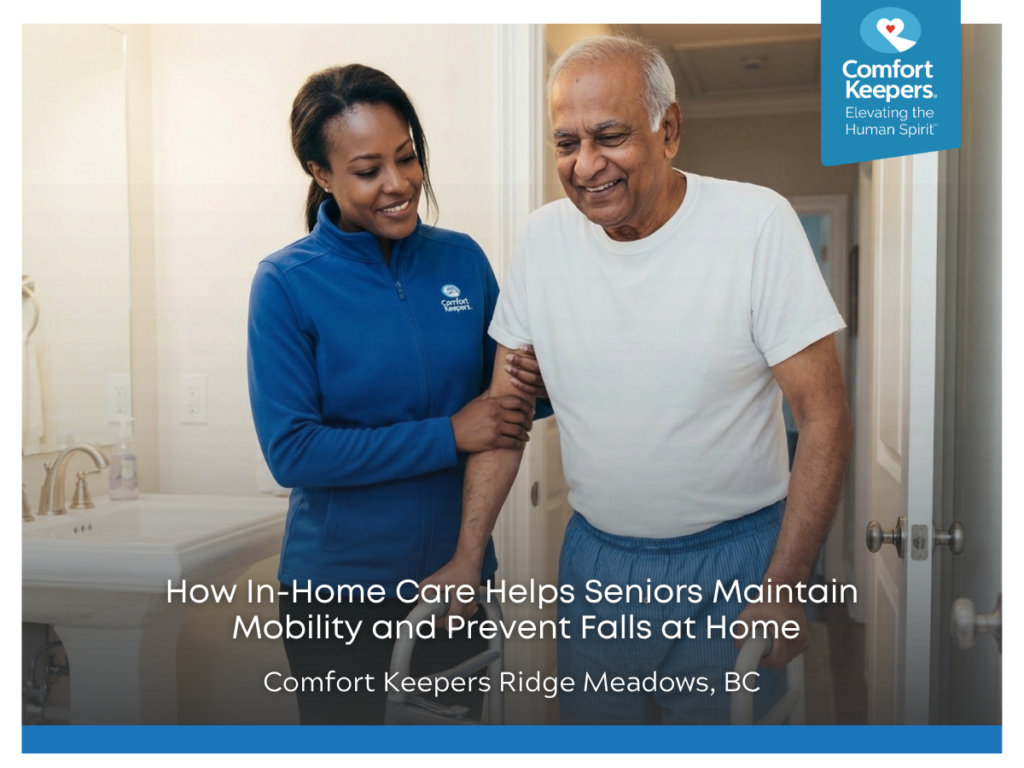
Short, regular walks through the home or around the neighbourhood maintain cardiovascular health and leg strength. A caregiver provides a steady arm, monitors gait changes, and adjusts pace based on how the senior is feeling that day.
Functional Strength Through Daily Tasks
Folding laundry while standing, reaching for items on shelves (with support), and walking to the kitchen for meals all count as functional movement. Caregivers encourage these activities rather than doing everything for the senior, preserving both strength and independence.
Balance Practice During Transfers
Every time a senior stands from a chair, gets in or out of bed, or moves to the bathroom, there is an opportunity to practise balance. Trained caregivers use these moments to reinforce safe transfer techniques and build the senior’s confidence.
Home Environment Adjustments That Reduce Fall Risk
The physical home environment accounts for a significant percentage of senior falls. In-home care providers assess and address these hazards as part of their service.
Bathroom Safety
The bathroom is the highest-risk room in the home for falls. Key modifications include:
| Modification | Purpose | Impact |
| Grab bars near toilet and shower | Provides stable support during transfers | Reduces fall risk during the most vulnerable moments |
| Non-slip mats | Prevents slipping on wet surfaces | Addresses the #1 bathroom fall cause |
| Raised toilet seat | Reduces the depth of sit-to-stand movement | Easier for seniors with knee or hip weakness |
| Handheld shower head | Allows seated bathing | Eliminates the need to stand in a wet tub |
Lighting Improvements
Poor lighting contributes to missteps, especially during nighttime bathroom trips. Motion-sensor nightlights in hallways, brighter bulbs in stairwells, and consistent lighting between rooms help seniors see where they are stepping.
Stairway and Hallway Modifications
Secure handrails on both sides of stairs, removal of loose rugs, and clear pathways through hallways eliminate common tripping hazards. Caregivers also help keep walkways free of clutter, cords, and pet items that accumulate over time.
Furniture Arrangement
Stable furniture placed at strategic points gives seniors something to hold as they move through the home. Caregivers ensure chairs have armrests for easier standing, and that the path between the bedroom and bathroom is obstacle-free.
The Role of Companionship in Staying Active
Loneliness and isolation accelerate physical decline. A senior who lives alone is far less likely to get up and move than one who has a companion encouraging activity throughout the day.
Movement Through Social Engagement
A caregiver who suggests a walk to the garden, helps prepare a meal together, or plays a seated card game is promoting movement without it feeling like exercise. These shared activities keep joints mobile, muscles engaged, and spirits lifted.
Reducing Fear of Falling
Many seniors restrict their own movement because they are afraid of falling with no one around to help. Having a caregiver present removes that fear. Knowing someone is there to assist if needed gives seniors the confidence to stay active.
Cognitive Benefits of Physical Activity
Regular movement also supports cognitive health. Walking, light stretching, and even standing activities increase blood flow to the brain, which helps maintain alertness, memory, and decision-making, all of which contribute to safer movement.
How In-Home Care Integrates Mobility Into Daily Life
The most effective fall prevention does not look like a clinical program. It looks like a well-supported daily life where movement is built into every routine.
Personalized Care Plans
Every senior’s mobility level, health conditions, and home environment are different. Comfort Keepers Ridge Meadows develops individualized care plans that account for specific risks, from arthritis-related stiffness to post-surgery recovery to progressive conditions like Parkinson’s.
Ongoing Monitoring and Adjustment
Caregivers track changes in mobility over time. If a senior’s gait slows, grip weakens, or balance shifts, the care plan adjusts. This ongoing monitoring catches decline early, before a fall occurs.
Coordination With Healthcare Providers
In-home caregivers communicate with physiotherapists, occupational therapists, and physicians to ensure mobility exercises align with medical recommendations. This team approach keeps everyone working toward the same goal: safe, independent living at home.
Medication Management
Some medications cause dizziness, drowsiness, or blood pressure drops that increase fall risk. Caregivers help seniors take medications on schedule and watch for side effects that could affect balance or alertness.
Common Mistakes Families Make With Fall Prevention
1. Waiting for a Fall Before Taking Action
Many families only seek help after a fall has already happened. By then, the senior may have fractures, reduced confidence, or a hospital stay that accelerates decline. Proactive assessment and in-home care support can prevent that first fall entirely.
2. Restricting Movement Instead of Supporting It
Well-meaning family members sometimes respond to fall risk by telling a senior to “just sit down” or “don’t go outside.” This approach weakens muscles faster and increases fall risk over time. The better approach is supervised, supported movement.
3. Ignoring Home Hazards
Loose rugs, poor lighting, cluttered hallways, and missing grab bars are fixable problems. Many families overlook these hazards because they have lived with them for years. A fresh assessment from a caregiver identifies risks the family no longer notices.
Frequently Asked Questions
What are the first signs that a senior needs fall prevention support?
Early signs include grabbing furniture for balance, shuffling feet, avoiding stairs, slower walking speed, and unexplained bruises. If a senior has had one near-miss or fall, the risk of a second fall doubles, making early intervention essential.
How does in-home care reduce fall risk compared to living alone?
In-home caregivers provide supervised movement, daily strength routines, home hazard assessments, and medication monitoring. Research shows that regular balance and strength activities with caregiver support can reduce fall risk by up to 30%. (Aging Clinical and Experimental Research)
What home modifications help prevent senior falls?
The most effective modifications include grab bars in bathrooms, non-slip mats, motion-sensor nightlights, secure stair handrails, removal of loose rugs, and raised toilet seats. A caregiver can assess the home and recommend changes specific to the senior’s mobility level.
Can exercise really prevent falls in older adults?
Yes. Targeted balance and strength exercises reduce both the risk and rate of falls in seniors. Even simple daily activities like seated leg lifts, supervised walks, and standing stretches build the muscle strength and coordination needed to prevent falls.
How often should a senior receiving in-home care do mobility exercises?
Daily movement is ideal. This does not mean formal exercise sessions every day, but rather building movement into regular routines such as walking to meals, stretching in the morning, and practising safe transfers. Consistency matters more than intensity.
What role does companionship play in fall prevention?
Companionship directly reduces fall risk by encouraging movement, reducing isolation-related inactivity, and eliminating the fear of falling alone. Seniors who have a caregiver present are more likely to stay active throughout the day, which maintains the strength and balance needed to prevent falls.
Are falls really that dangerous for seniors?
Falls are the leading cause of injury-related hospitalization for Canadians over 65. In 2022, 7,621 older adults died from falls in Canada. Beyond physical injury, falls often trigger a cycle of fear, reduced activity, muscle loss, and further falls. (Public Health Agency of Canada, 2024)
Action Steps
- Watch for early warning signs. Grip changes, shuffling, avoidance behaviour, and near-misses signal declining mobility before a fall occurs.
- Build movement into daily routines. Morning stretches, supervised walks, and functional tasks maintain strength without formal exercise programs.
- Assess and modify the home environment. Install grab bars, improve lighting, remove loose rugs, and clear pathways to eliminate common hazards.
- Address fear of falling with companionship. A caregiver’s presence gives seniors the confidence to stay active rather than restrict movement.
- Start in-home care before a fall happens. Proactive support from Comfort Keepers Ridge Meadows prevents the first fall instead of reacting to one.
In-home care keeps seniors mobile, confident, and safe by weaving fall prevention into the daily routines and living spaces where it matters most, before a fall ever happens.