


Overnight Home Care for Seniors: What Happens While Your Family Sleeps
Overnight home care for seniors provides trained, awake caregivers who stay in your loved one’s home through the night to assist with safety monitoring, medication, restroom visits, and dementia-related needs – so your family can finally rest. For families in Maple Ridge, Pitt Meadows, Mission, and surrounding communities, Comfort Keepers Chilliwack offers compassionate overnight care that keeps your parent safe and comfortable while everyone else sleeps soundly.

What Is Overnight Home Care for Seniors?
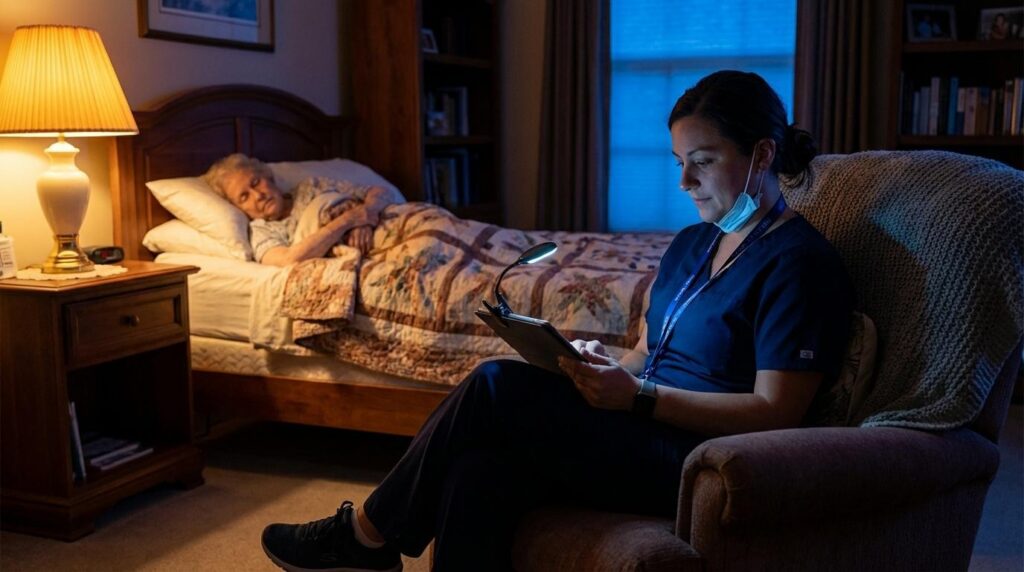
Overnight home care for seniors is a professional caregiving service where a trained caregiver stays in your loved one’s home during the evening and nighttime hours. Unlike a sleeping shift, overnight caregivers remain awake and attentive, ready to respond the moment your parent or grandparent needs help – whether that means assistance getting to the bathroom, managing medication, or simply offering a reassuring presence when anxiety strikes at 2 a.m.
At Comfort Keepers Chilliwack, overnight care is built around the same Interactive Caregiving philosophy that guides all of their services. Caregivers don’t just watch over your loved one – they engage with them, maintain familiar routines, and treat every interaction with warmth and dignity.
The Quick Version
- Overnight caregivers stay awake all night. A trained professional remains alert and attentive in your loved one’s home, ready to help at a moment’s notice.
- Nighttime is the riskiest period for seniors living alone. Falls, medication errors, and dementia-related wandering all spike after dark, making overnight support essential for many families.
- Your family gets to sleep again. Overnight care relieves the exhaustion that builds when family members try to provide round-the-clock supervision on their own.
- Care plans are fully personalized. Every family’s situation is different, and Comfort Keepers Chilliwack tailors overnight care to your parent’s specific health needs and nightly routines.
- It’s not just about safety – it’s about comfort. Having a familiar, friendly caregiver nearby helps seniors sleep more peacefully and wake up feeling secure.
Why Overnight Care Matters More Than Most Families Realize
Many families don’t think about overnight care until a crisis happens – a fall in the hallway, a confused phone call at 3 a.m., or a hospital discharge that leaves everyone scrambling. But the truth is, nighttime is often when seniors face the greatest risks, and when families feel the most helpless.
1. Falls Are More Likely After Dark
Dim lighting, drowsiness, and unsteady balance create a perfect storm for nighttime falls. When a senior gets up to use the bathroom and there’s no one there to help, even a short walk down the hallway can lead to a serious injury. An overnight caregiver keeps pathways clear, ensures lights are on when your parent gets up, and provides physical support for safe transfers.
2. Dementia Symptoms Often Worsen at Night
If your parent lives with Alzheimer’s or another form of dementia, you’ve probably noticed that evenings and nights can be especially difficult. This phenomenon, sometimes called sundowning, can cause confusion, agitation, and wandering after dark. A trained overnight caregiver understands how to keep the environment calm with soft lighting, quiet conversation, and gentle redirection – and the caregivers at Comfort Keepers Chilliwack are specifically trained to support clients living with dementia.
3. Family Caregivers Can’t Do It All
Staying awake through the night while still managing work, children, and your own health is simply not sustainable. Studies show that caregiver fatigue and stress build quickly when nighttime duties are added to daytime responsibilities. Professional overnight care gives your family the rest you need to keep showing up during the day with energy and patience.
What Happens During an Overnight Shift with Comfort Keepers Chilliwack
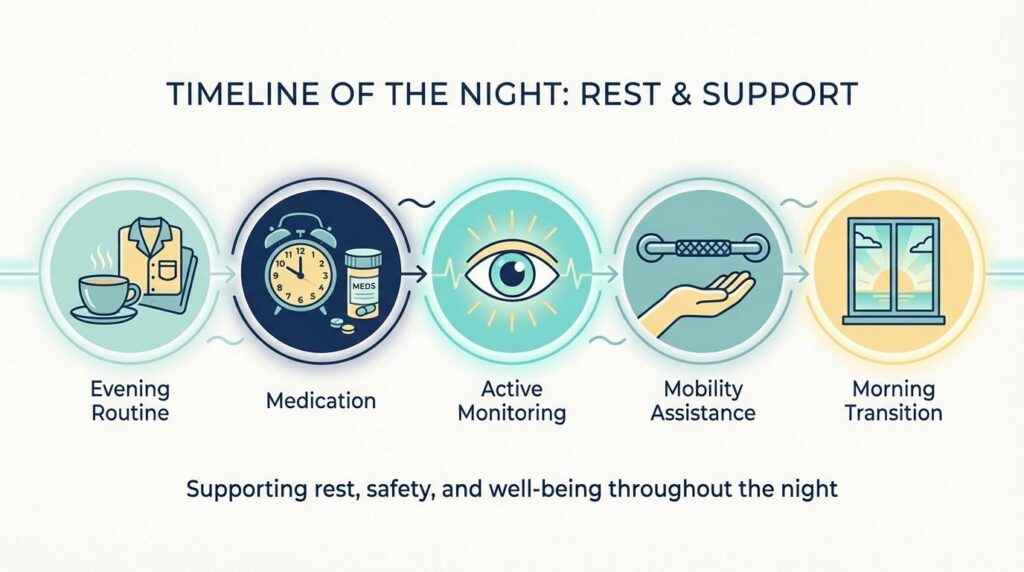
Here’s what a typical overnight care shift looks like. While every care plan is different, most families can expect their caregiver to help with the following:
Step 1: Evening Routine and Settling In
The caregiver arrives in the early evening and helps your loved one wind down for the night. This might include preparing a light snack or warm drink, assisting with changing into pyjamas, helping with dental care, washing up, and any other bedtime rituals your parent is used to. The goal is to preserve your loved one’s normal routine as closely as possible.
Step 2: Medication Management
If your parent takes evening or nighttime medications, the caregiver ensures they’re taken on time and in the correct dosage. For seniors who take medications during the night or first thing in the morning, the caregiver is already there and ready to help – no missed doses, no confusion about which pills to take.
Step 3: Active Nighttime Monitoring
Once your loved one is settled, the caregiver remains awake and alert. They check in periodically, listen for signs that your parent may need assistance, and respond immediately if there’s a call for help. If your parent gets up during the night – to use the restroom, get a glass of water, or simply because they can’t sleep – the caregiver is right there.
Step 4: Restroom and Mobility Assistance
Nighttime bathroom trips are one of the most common reasons seniors fall at home. The caregiver helps your loved one get out of bed safely, walk to the bathroom, and return to bed without risk. For seniors who use mobility aids or have balance concerns, this assistance is especially important.
Step 5: Morning Transition
As the night comes to an end, the caregiver helps your loved one start the day. This can include assisting with getting dressed, preparing breakfast, and administering morning medications. If a daytime caregiver is arriving, the overnight caregiver provides a handoff so that nothing falls through the cracks.
Who Benefits Most from Overnight Home Care?
Not every senior needs overnight care, but for many families, it becomes the missing piece that makes aging at home possible. Here are some of the most common situations where overnight care makes a meaningful difference:
| Situation | What Overnight Care Provides | Best For |
| Dementia or Alzheimer’s diagnosis | Wandering prevention, calm redirection, structured nighttime routine | Families managing sundowning symptoms |
| Recent hospital discharge | Close monitoring during recovery, fall prevention, medication oversight | Seniors recovering from surgery or illness |
| Frequent nighttime falls | Safe transfers, bathroom assistance, mobility support | Seniors with balance or mobility challenges |
| Family caregiver exhaustion | Full nighttime coverage so families can sleep and recharge | Families providing daytime care themselves |
| Chronic health conditions | Overnight symptom monitoring, positioning assistance, comfort care | Seniors with Parkinson’s, heart conditions, or chronic pain |
| Living alone with safety concerns | Companionship, emergency response, peace of mind | Seniors who live on their own in Maple Ridge or Pitt Meadows |
Common Concerns Families Have About Overnight Care
It’s completely natural to feel uncertain about bringing a caregiver into your parent’s home at night. Here are a few of the worries families share most often – and how Comfort Keepers Chilliwack addresses them.
1. “My Parent Won’t Accept a Stranger in the House”
This is the most common concern families raise, and it’s a valid one. Comfort Keepers Chilliwack takes time to match caregivers with clients based on personality, interests, and care needs. Many families find that after just a few visits, their parent looks forward to seeing their caregiver. The Interactive Caregiving approach helps build genuine connection, not just a clinical relationship.
2. “We’re Not Sure If Overnight Care Is Really Necessary”
Sometimes families wait until a serious incident happens before considering overnight support. Comfort Keepers Chilliwack offers free in-home consultations so you can talk through your parent’s specific situation with a care coordinator. There’s no pressure – just an honest conversation about what kind of support might help.
3. “We’re Worried About the Cost”
Home care is an investment, and every family’s budget is different. Comfort Keepers Chilliwack works with families to create care plans that fit their financial situation, whether that means nightly overnight care or a few nights a week to start. Many families also find that overnight home care is more affordable than they expected compared to facility-based alternatives.
How Comfort Keepers Chilliwack Approaches Overnight Care
At the heart of Comfort Keepers Chilliwack is their Interactive Caregiving philosophy. This means caregivers don’t simply sit in a chair and watch – they genuinely participate in your loved one’s evening and nighttime routines.
Framework: Interactive Caregiving at Night
Step 1: Build a Relationship First
Before overnight care begins, the team arranges introductions and short visits so your parent can get comfortable with their caregiver. Familiarity builds trust, and trust is essential for your loved one to feel safe at night.
Step 2: Personalize Every Detail
The care team works with your family to understand your parent’s nightly habits, preferences, and health needs. Does your mom like a cup of chamomile tea before bed? Does your dad always read for 20 minutes before turning off the light? These details matter, and they become part of the care plan.
Step 3: Communicate With the Whole Family
The care team keeps families informed about how overnight shifts are going. You’ll know if there were any concerns during the night, how your parent slept, and whether any adjustments to the care plan might help. Open communication means you’re never left guessing.
Signs Your Loved One Might Need Overnight Care
Sometimes it’s hard to know when it’s time to bring in help. Here are a few signs that overnight care could make a real difference for your family:
1. Your Parent Has Fallen at Night
Even one nighttime fall is a serious warning sign. If your parent has gotten up during the night and fallen – or if you’ve found them on the floor in the morning – overnight care can prevent it from happening again.
2. You’re Losing Sleep Yourself
If you’re lying awake worrying about your parent, checking on them multiple times a night, or sleeping with a baby monitor nearby, your own health is being affected. You deserve rest, and your parent deserves a professional caregiver who can stay alert all night.
3. Dementia Symptoms Are Getting Worse After Dark
Increased confusion, agitation, or wandering in the evenings and at night is a clear sign that professional overnight support would help. The caregivers at Comfort Keepers Chilliwack are trained specifically in dementia care.
4. A Hospital Stay Just Ended
The first few weeks after a hospital discharge are a high-risk period for falls and complications. Overnight care during recovery can make the difference between a safe return home and a readmission.
Overnight Care Statistics in Canada
- Over 90% of Canadian seniors say they want to age at home rather than move to a long-term care facility. (Government of Canada, National Seniors Council, 2023)
- Between 40% and 70% of older adults experience sleep problems, at least half of which are undiagnosed.
- An estimated 30% of Canadian seniors are at risk of social isolation, and nearly 25% report barriers to social participation.
- Canada spends only about 18% of its long-term care budget on home care – well below countries like Denmark and Norway, which spend closer to 50%.
These numbers tell a clear story: Canadian seniors want to stay home, but the support systems aren’t always keeping pace with that desire. Families often need to take the lead in arranging the care their loved ones need.
Frequently Asked Questions
What does an overnight caregiver do all night?
An overnight caregiver stays awake and alert in your loved one’s home from evening through morning. They assist with bathroom trips, medication reminders, repositioning in bed, and respond to any needs that arise. They also monitor for signs of distress, confusion, or wandering, especially for seniors living with dementia.
Is overnight home care the same as 24-hour care?
No. Overnight care covers the evening and nighttime hours, typically an 8- to 12-hour shift. If your loved one also needs daytime support, Comfort Keepers Chilliwack can combine overnight and daytime care into a full 24-hour care plan with smooth caregiver transitions.
How do I know if my parent needs overnight care?
Common signs include nighttime falls, increased confusion after dark, difficulty managing medications independently, or family caregivers who are losing sleep trying to provide overnight supervision. A free in-home consultation with Comfort Keepers Chilliwack can help you assess your family’s situation.
Will my parent feel comfortable with a caregiver at night?
Most families worry about this at first. The team carefully matches caregivers to clients and arranges introductory visits before overnight shifts begin. Their Interactive Caregiving approach focuses on building real relationships, which helps seniors feel safe and comfortable rather than supervised.
What areas does Comfort Keepers Chilliwack serve?
Comfort Keepers Chilliwack provides home care services throughout Maple Ridge, Pitt Meadows, Mission, Chilliwack, Agassiz, Harrison Hot Springs, Harrison Mills, Mount Woodside, and surrounding communities in British Columbia.
Can overnight care be arranged on short notice?
Yes. While planned care allows for the best caregiver matching, the team understands that urgent situations arise – such as a sudden hospital discharge or a family emergency. Contact Comfort Keepers Chilliwack to discuss your timeline and they’ll work to arrange care as quickly as possible.
Does overnight care help with dementia-related sundowning?
Absolutely. Sundowning – the increase in confusion and agitation that many people with dementia experience in the late afternoon and evening – is one of the most common reasons families seek overnight care. Trained caregivers use calm environments, structured routines, and gentle redirection to help manage these symptoms through the night.

Action Steps
- Start with a conversation – Call Comfort Keepers Chilliwack at (604) 269-4743 or visit comfortkeepers.ca/fraservalley/ to schedule a free in-home consultation and talk through your family’s needs.
- Observe your parent’s nighttime patterns – Keep a simple log of how often they get up at night, any falls or near-misses, and whether confusion increases after dark to share with the care team.
- Involve your parent in the decision – Approach the conversation with warmth and focus on how overnight care will help them feel more comfortable and independent at home.
- Consider starting gradually – Begin with one or two nights per week to let your parent adjust, then increase as needed based on how things go.
- Take care of yourself too – Recognize that asking for help isn’t giving up – it’s making sure you have the energy to be there for your loved one during the day.
| Overnight home care for seniors provides trained, awake caregivers who keep your loved one safe and comfortable through the night, and if you’re wondering whether it might be the right fit for your family, Comfort Keepers Chilliwack is always happy to have that conversation with you. |