



What Non-Medical Palliative Care at Home Can Support in Mississauga
When someone you love is living with a serious illness at home, the medical care is usually only part of the day. Non-medical palliative care at home covers much of what is left: help with washing and dressing, meals, a tidy house, company through the long afternoons, and a few hours when the family can rest. It works alongside the doctors, nurses and Ontario Health atHome services who manage medical care, and complements, rather than replaces, clinical palliative and hospice care.
Key Takeaways
- Non-medical palliative care at home is practical, personal and companionship support that works alongside the clinical team managing a loved one’s illness.
- In Ontario, there is no cost for medically necessary palliative care services at home, and with the person’s consent, anyone can make a referral to Ontario Health atHome at 1-833-515-1234. Families can combine publicly funded care with private non-medical support for additional time, flexibility and practical help based on their needs.
- Our Mississauga caregivers help with personal care, meals, the home, companionship and respite, on a schedule your family sets with us.
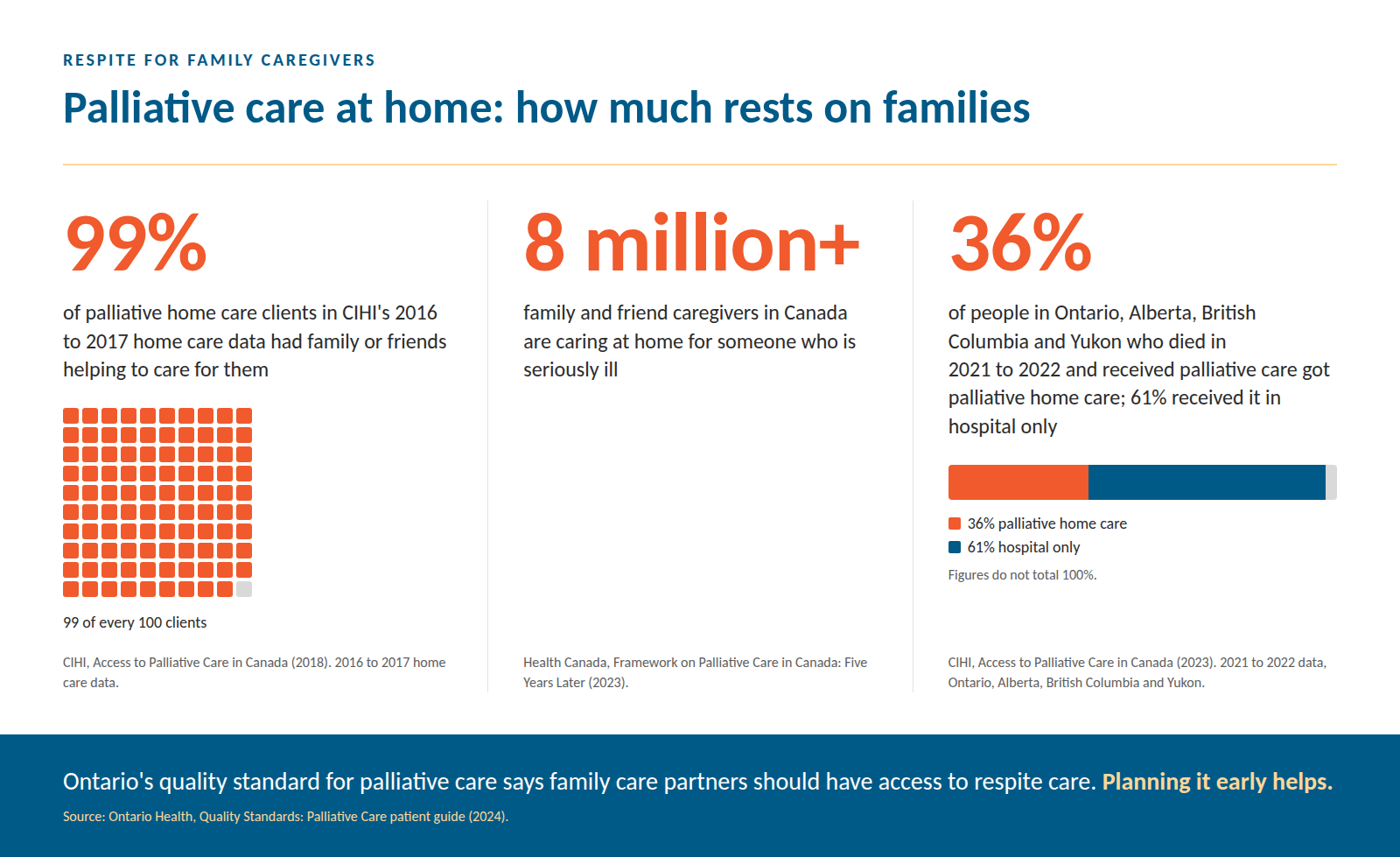
- CIHI reported that 99% of palliative home care clients in its 2016 to 2017 home care data had family or friends helping to care for them.
- Take the questions below to your palliative care team, and call our Mississauga team at (905) 671-4004 to talk through how home support could fit.
The Short Answer: Where Non-Medical Support Fits
Non-medical support adds everyday help around medical care: personal care, meals, the house, company and time off for the family.
The Government of Ontario describes palliative care as patient-centred, coordinated care that aims to relieve suffering and improve quality of life for patients and their families at all stages of the illness. Ontario Health adds that palliative care can help at any stage of a serious illness, and you can receive it while you are still being treated.
At home, that care comes from several places at once. Ontario’s list of public palliative services includes physician and nursing services to assess and manage the progression of the illness, and personal support services such as homemaking, along with psychological, spiritual and bereavement support. Family and friends often take on much of the remaining day-to-day support.
Families in Mississauga can use both: publicly funded palliative services for assessed clinical and personal support needs, and private non-medical care for additional time, continuity, companionship and practical support at home. Medical decisions stay with the clinical team throughout.
Daily Living and Personal Support
Personal care is often the first thing families ask about, and it is where our caregivers spend much of their time. We help with bathing, washing, mouth and hair care, grooming, dressing and toileting, and with moving safely between the bed, a chair and the bathroom. As energy fades, we slow the pace and help your loved one change position in bed or in a chair. We work with privacy and dignity in mind, at a pace that suits your loved one.
Food changes during a serious illness too. Appetite often shrinks, and mealtimes can become tiring. Our caregivers prepare small, favourite meals and snacks, following any eating and drinking guidance from the care team, and sit with your loved one while they eat, without pressure to finish a plate.
Then there is the house itself. Light housekeeping, laundry, fresh bed linen, groceries and a stocked kitchen still need doing, whether or not anyone has time for them. Taking these off the family’s list is one of the most immediate ways we help. You can see how we arrange this for each family on our palliative home support in Mississauga page.
Companionship and Family Presence
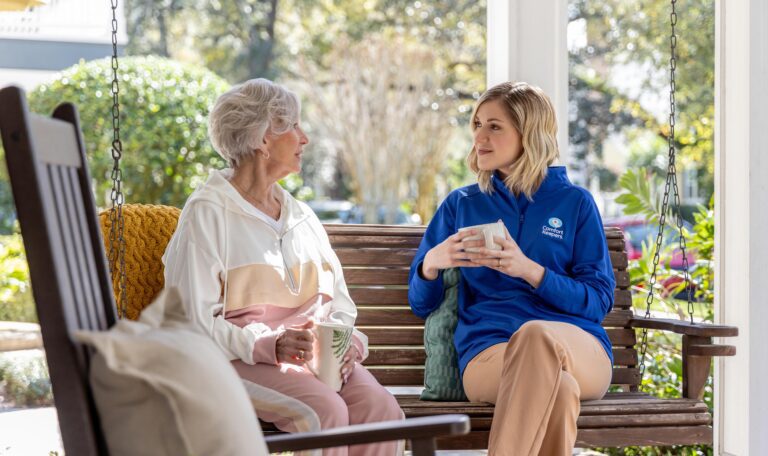
Some of the most valued time a caregiver spends in a home has nothing to do with tasks. It is conversation, reading aloud, an old record, a look through photographs, or sitting quietly in the same room so your loved one is not alone. We follow their lead: on some days they want to talk about their life, on others they want to rest.
We call our approach Interactive Caregiving™, which means doing things with a person rather than for them wherever we can. During palliative care that might be folding laundry together or choosing tomorrow’s meal. Those small choices help the house keep feeling like home.
Practical help also frees the family. When a caregiver is handling the bath and the dishes, a husband can sit with his wife instead of cooking for her, and a son can spend the afternoon talking with his mother rather than running errands. That time together is often what families value most.
Respite for Family Caregivers
Health Canada notes that family and friends provide the majority of care for those who are aging or ill, and reports that more than 8 million family and friend caregivers in Canada are providing care in the home to someone who is seriously ill.
Ontario Health’s quality standard says care partners should be given access to resources, respite care, and grief and bereavement support. In practice, respite is a few protected hours to sleep after a hard night, keep your own appointments or simply step away.
We can arrange flexible respite care schedules, including regular visits, evenings and overnight support, depending on your family’s needs and local availability. It can sit alongside publicly arranged respite, which Ontario offers at home, in adult day programs and through short stays in long-term care homes. Some families start with a few regular visits and add more as needs grow, so the main caregiver gets a break before they are running on empty.
There are also supports aimed at the caregiver directly:
| Support | What it offers | Where to start |
| EI compassionate care benefits | Up to 26 weeks of benefits, which eligible caregivers can share, when a doctor or nurse practitioner certifies a significant risk of death within 26 weeks; 55% of average insurable weekly earnings, up to $729 a week for 2026 | Service Canada, through the EI caregiving benefits pages |
| Family medical leave (Ontario) | Unpaid, job-protected leave of up to 28 weeks in a 52-week period for employees covered by the Employment Standards Act | Your employer, and Ontario’s guide to the Employment Standards Act |
| Ontario Caregiver Helpline | Free information for family caregivers, by phone 24/7; not a crisis line | Call 1-833-416-2273 |
Working Alongside Clinical Services
In Ontario, publicly funded home care is coordinated through Ontario Health atHome. With the person’s consent, a referral can be made by the person themselves, a family member, friend, caregiver, doctor or other health professional. A care coordinator then determines which home care services a person is eligible to receive, based on assessed needs and the services available in the community. For palliative clients, Ontario Health atHome says it works closely with your existing supports and professional services and brings in additional services as needed.
Private non-medical support can be one of those existing supports. It is arranged directly with us, and we suggest letting your care coordinator know about it so everyone’s visits fit together. It can cover the time before the nurse arrives, after a personal support visit ends, the evenings, or the days no one else is scheduled.
Our caregivers follow the care plan we agree with your family and respect any guidance the clinical team has given you. If they notice a change, such as your loved one eating much less or seeming uncomfortable, they let you know promptly so you can pass it on to the nurse or doctor. If you cannot reach your palliative team, Ontario’s Health811 line lets you speak with a registered nurse, day or night, for free by calling 811. In an emergency, call 911. For provincial information on services, hospice and caregiver support, you can also visit official Ontario palliative resources.
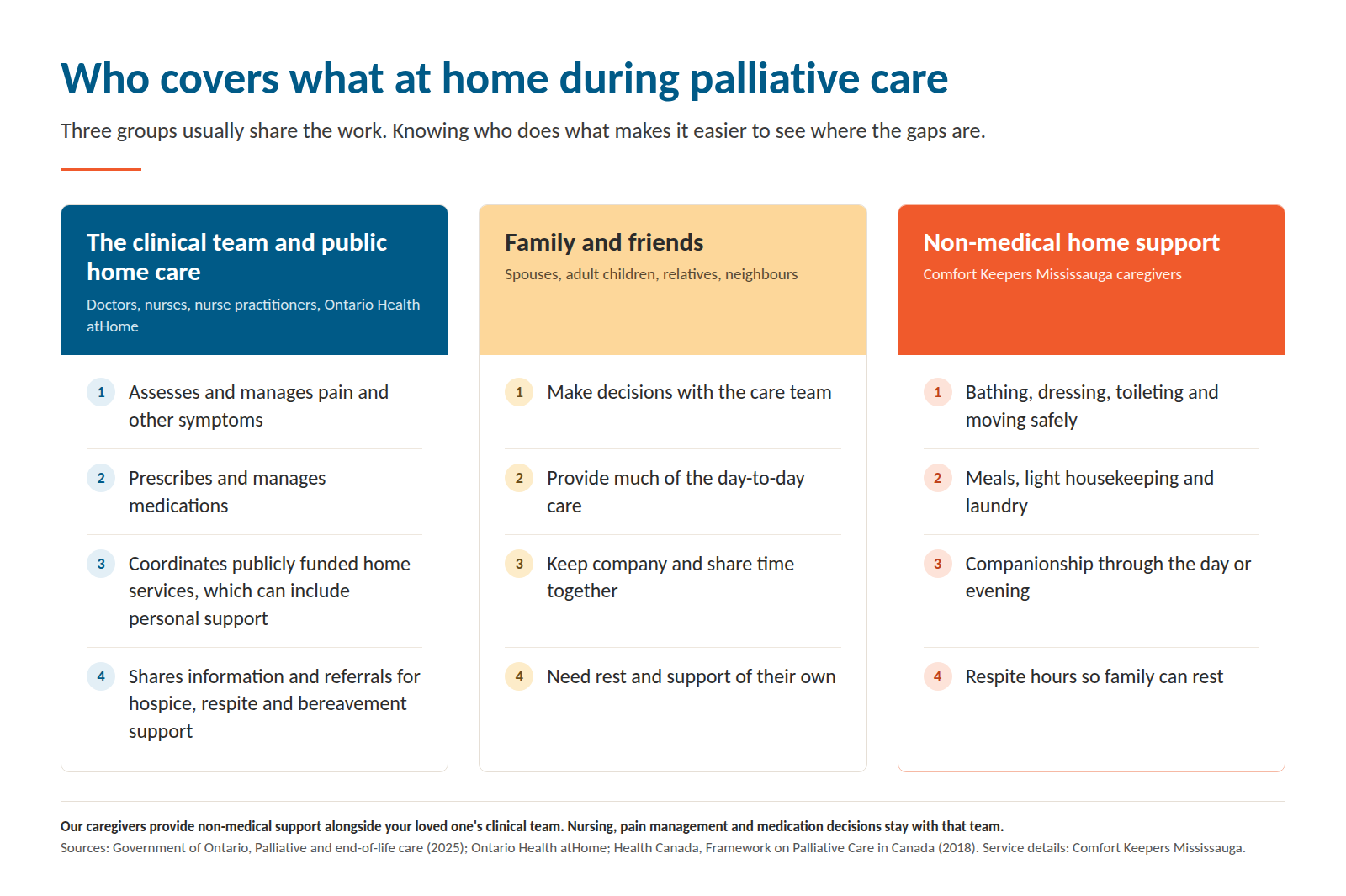
Here is how the work is usually divided.
| Area of care | Clinical team and public home care (through Ontario Health atHome) | Non-medical home support (our caregivers) |
| Pain and symptoms | Assesses and manages pain and other symptoms | Tells the family about changes they notice |
| Medications | Prescribes and adjusts medications, and gives them or arranges for them to be given | Medication reminders, as agreed in the care plan |
| Personal care | Publicly funded personal support visits, where assessed | Hands-on personal care, on the days and times your family arranges with us |
| Meals and the home | Some homemaking may be included with publicly funded personal support | Favourite meals, housework and errands, on your family’s schedule |
| Emotional support | Social work and spiritual care, where part of the plan | Companionship, conversation and a familiar, steady presence |
| Family caregiver rest | Information about, and referrals to, publicly funded respite and hospice services | Respite by the hour or on a regular schedule, arranged directly with us |
How Non-Medical Care Fits With Nursing and Palliative Care
Our caregivers are trained to provide non-medical personal care, companionship and practical support at home. They do not provide nursing care or make medication decisions. Clinical services such as injections, medication administration, pain and symptom management, and clinical assessments remain with the appropriate regulated health professionals involved in your loved one’s care. Hospice services may also be part of the broader palliative care team and can work alongside non-medical home support.
If your loved one’s clinical needs change, their doctor, nurse practitioner or care coordinator is the right contact, and we continue to support the everyday routine alongside them.
Questions to Ask
Ask these early, write the answers down and keep them near the phone.
Questions for the Palliative Care Team
- Who is our care coordinator, and how do we reach them?
- Which services are in the plan right now, on which days and for how many hours?
- Who do we call about symptoms during the day, and who do we call at night or on weekends?
- Has the doctor or nurse talked with us about a Do Not Resuscitate (DNR) Confirmation Form, and where should it be kept?
- If death is expected at home, who do we call first? Ontario’s guidance is to call the doctor who was caring for the person when a death is expected, so ask the team to confirm the right number for your family.
- What respite, volunteer or hospice options are available to us?
Questions for a Home Care Provider
- What exactly will your caregiver do, and what is outside your scope?
- How do you match a caregiver to our family, and will we meet them before care starts?
- Will we see the same caregivers from week to week?
- How will you keep us updated, and who do we call at your office?
- How does your schedule fit around the nurse and personal support visits we already have?
- Can visits increase, or move to evenings and nights, as needs change?
- What does the care cost, and how is it billed?
You can put every one of these to us. Our caregivers provide non-medical support only, we carefully match caregivers to each family and explain what to expect before care begins, we aim for continuity by building care around a small group of familiar caregivers wherever scheduling allows, and our Mississauga office keeps you updated as needs change. Call (905) 671-4004 and we can explain our pricing, what affects the cost, and the next steps on your first call.
Talk With the Mississauga Team

If someone in your family is living with a serious illness, we can help you think through the practical side. Tell us which hours are hardest and what help is already coming in, and we will explain how non-medical support could fit around it and how our pricing works. There is no charge for the conversation and no obligation to go further.
When you call, we can walk you through how we match caregivers, what to expect before care begins, and how we keep your family informed as things change.
Call our Mississauga office at (905) 671-4004, or reach us through our contact page. Our office is at 57 Village Centre Place, Unit 201, Mississauga.
Discuss Palliative Home Support
Local Review by Brenda Rosati
Written by the Comfort Keepers Canada Editorial Team, which prepares care information for Comfort Keepers families across Canada from current government and health-system sources. Reviewed for accuracy about our local service by Brenda Rosati, Director of Operations and Owner, Comfort Keepers Mississauga, who leads our local team. Last reviewed: September 2026
This article is general information, not medical advice, a diagnosis or a treatment plan. Please speak with your loved one’s doctor, nurse or care coordinator about any medical question.
Sources
The general care information in this article draws on the government and health-system sources below. Service details are specific to Comfort Keepers Mississauga.
Frequently Asked Questions
Does Ontario pay for private non-medical home care?
Medically necessary palliative care is publicly funded, and the public plan may include some personal support. Non-medical support arranged with us is private, which means your family decides the days, hours and tasks with us. Public and private care can work together: Ontario Health atHome assesses and arranges public services, and we plan the extra time, continuity and companionship your family wants at home.
What if our loved one does not want a caregiver in the house?
This is common, especially early on. People usually accept help with one specific thing, such as a bath twice a week or someone there in the evening, more easily than the idea of care in general. Start small and let them help choose. Over time, a regular caregiver often becomes a familiar face.
Can the same caregiver keep coming as needs change?
That is the aim. When needs change, we review the schedule with you and adjust the hours, working to keep the caregivers your loved one already knows.
