


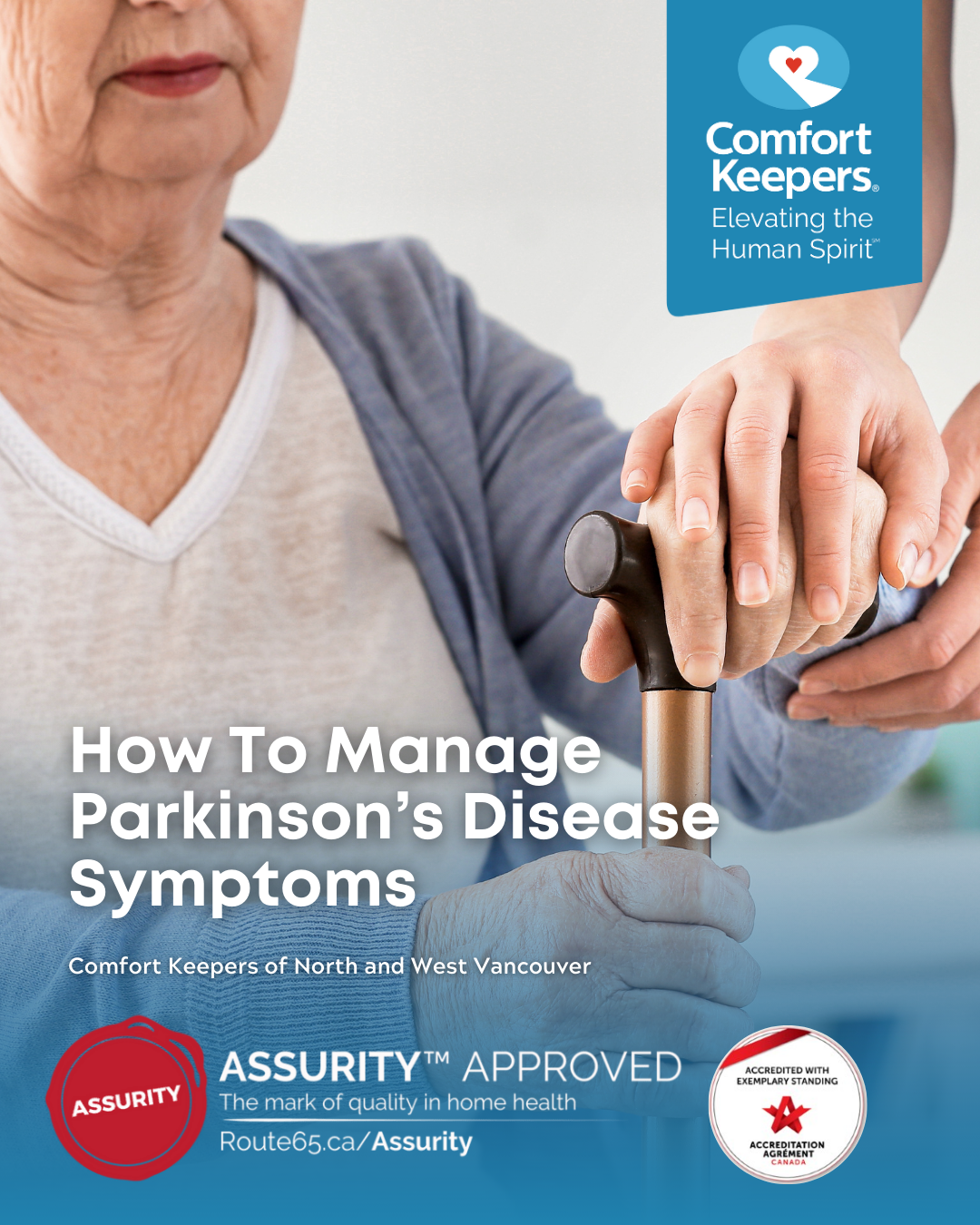
What Every Senior in North and West Vancouver, BC Needs to Know About Parkinson’s Disease
What do you need to know about managing Parkinson’s Disease symptoms? Parkinson’s Disease affects 1 in every 500 people in Canada; most people diagnosed are over the age of 60. Parkinson’s disease affects both men and women. Statistically, however, men have a slightly higher chance of developing the disease. The risk of developing Parkinson’s disease also increases with age, with the average age of onset being 65 years.
#DYK: Over 100,000 Canadians are living with Parkinson’s today and approximately 6,600 new cases of PD are diagnosed each year in Canada
While there is no known cure for Parkinson’s, taking steps to manage the disease can increase a senior’s quality of life and help to reduce the impact of symptoms.
Parkinson’s Disease Can Manifest in the Following Ways:
- Tremors
- Balance problems
- Cognitive impairment
- Mood disorders
- Short steps and slowed movement (bradykinesia)
- Speech and writing changes
Those that have been diagnosed with Parkinson’s should discuss management strategies with a healthcare professional. There are a variety of medications and therapies that a doctor can recommend.
Four Everyday Symptom Management Strategies Can Include:
#1. Finding Ways to Relieve Stress:
There is ample evidence that stress can make symptoms worse. However, they usually return to normal levels once the cause of stress is removed. Activities that can help reduce stress include meditation, yoga, deep breathing, getting outside, spending time with loved ones, participating in hobbies or physical activity approved by a physician.
#2. Maintaining a Good Diet:
For those with Parkinson’s, proper nutrition will not only help manage symptoms, but can help slow the progression of the disease in some seniors. In addition to healthy, nutritious food, it’s important to prevent dehydration too.
#3. Adapting Your Home:
Depending on the Parkinson’s symptoms that someone is experiencing, there are a variety of ways to improve everyday life with a few adjustments to living space. For those with trouble walking, or those that need a wheelchair, wide walkways help manage mobility. Mattresses with adjustable features can be helpful for anyone with difficulty getting in and out of bed, and grab bars may be helpful for those with balance issues.
#4. Preventing Falls:
Having trouble walking is a common Parkinson’s disease symptom. Minimizing fall risk is an important safety management strategy that is easy to execute. Wearing proper footwear, making sure rooms are properly lit and removing trip hazards can all help reduce the risk of falls.
Comfort Keepers® Can Help with Managing Parkinson’s Disease Symptoms
For those who need extra help, in-home caregivers can help facilitate stress management activities, provide support for physician-approved diet and exercise plans and will evaluate a home for safety as part of an in-home assessment.
Caregivers can also help with mobility, improve home safety, provide transportation to appointments and events and can help seniors maintain positive mental health through connection, engagement, and companionship.

The Best Senior Home Care in North and West Vancouver is Comfort Keepers®
Our senior home care agency offers in-home care focusing on aging in place. Our services include dementia care, end-of-life care, post-surgery care, and palliative care. Comfort Keepers can assist seniors with living transition services, personal care, companionship care, and more!
Quality and Accredited Elderly Care: Happier, Healthier, and at Home with 24/7 Senior Care Opportunities!
Do you need a home care solution for yourself or a loved one? Have you been thinking about retirement homes and their alternatives as a solution? Comfort Keepers® enables seniors to maintain happy, healthy lives in the comfort of their own homes. In-home care services are available in North Vancouver, West Vancouver, and the surrounding areas.
Comfort Keepers® is a Senior Care Agency That Can Make a Difference with Interactive Caregiving™
Our in-home caregivers ensure our senior clients have the best quality of life. The Interactive Caregiving™ program ensures that a senior’s safety, nutrition, mental well-being, and everyday needs are met. This program brings joy and good health to each client’s home.
Comfort Keepers® North Vancouver and West Vancouver Can Help with In-Home Elderly Care Services!
If you are concerned about the health and well-being of a loved one we can help! Comfort Keepers offers 24-hour care and delivers top-quality and compassionate care for seniors. We are dedicated to safety technology solutions that foster independence and enhance well-being.
Locally Owned and Operated Home Health Care Agency
Our care centers around companionship for seniors. Empathetic care originates from the soul and allows us to meet our client’s requirements. The seasoned in-home caregivers employed by Comfort Keepers are carefully chosen based on their empathetic qualities.
Contact the Comfort Keepers® North Vancouver and West Vancouver office at (604) 998-8806 to learn more about our unique in-home care solutions for seniors.
Comfort Keepers is an Accredited Senior Care Agency in North and West Vancouver, BC
Accreditation is a rigorous process that involves industry experts evaluating an organization’s processes, policies, and procedures. Comfort Keepers® North and West Vancouver has been awarded Exemplary Standing by Accreditation Canada. This achievement recognizes that Comfort Keepers® meets or exceeds the stringent quality standards for Home Care companies established by Accreditation Canada.
References
Mayo Clinic. “Parkinson’s Disease.” Web. 2018.
UCB Canada. “Parkinson’s Disease.” Web. 2019.
WebMD. “Parkinson’s Disease Guide: Living & Managing.” Web.
Parkinson’s Foundation. “Statistics.” Web. 2016.
5 Tips For Helping A Loved One With Parkinson’s Disease
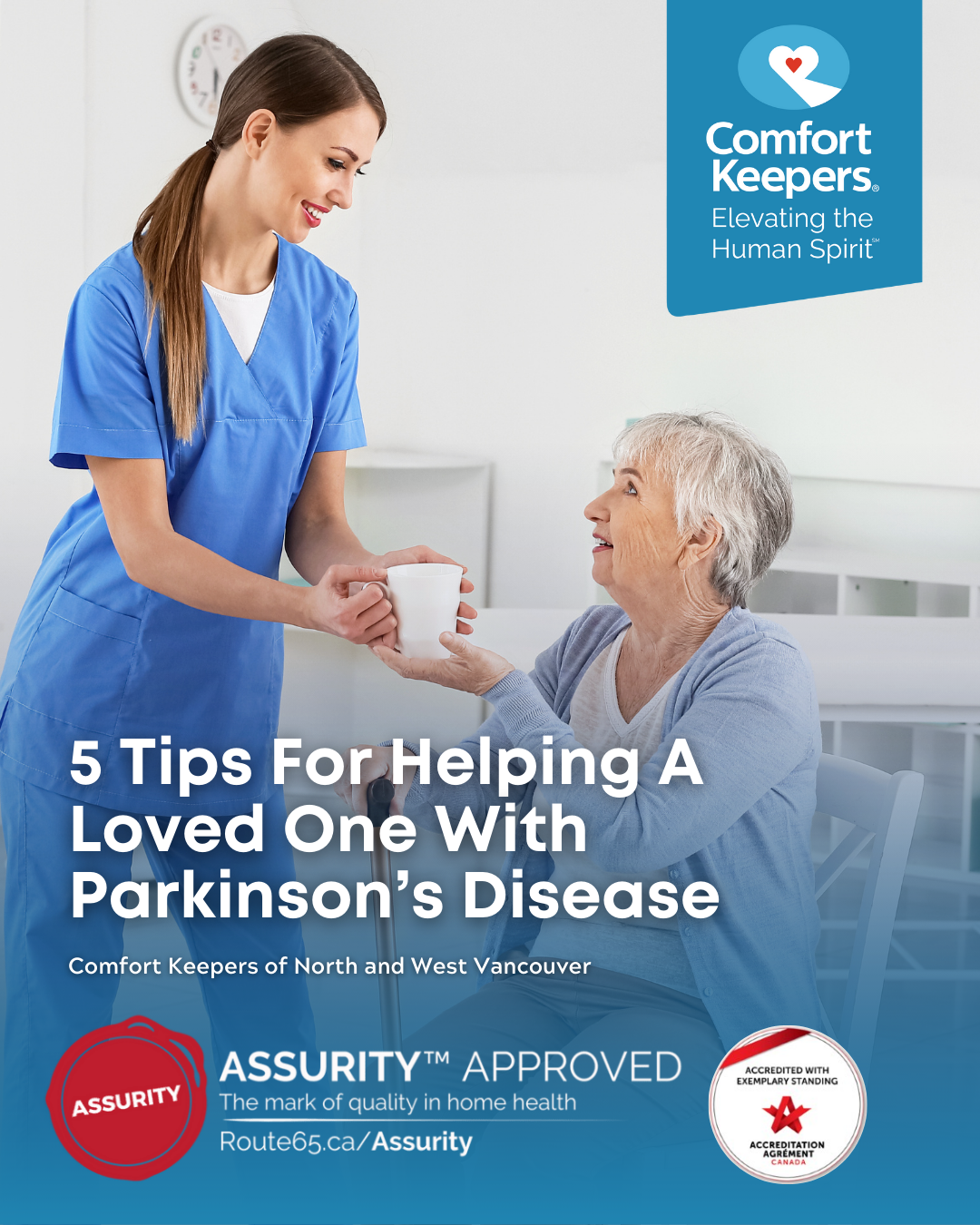
What Every Senior in North Vancouver and West Vancouver Needs to Know About Parkinson’s Disease
5 Tips For Helping A Loved One With Parkinson’s | Parkinson’s disease is a condition that can affect how someone goes about their everyday life. When someone you love has Parkinson’s disease, it’s easy to see how much the condition affects even the simplest tasks.
April is World Parkinson’s Disease Awareness Day, a moment to raise awareness about this nervous system disease. #WorldParkinsonsDiseaseDay.
Symptoms such as poor balance, tremors, and involuntary movements can make even simple tasks difficult.
If you have a loved one with Parkinson’s disease, they must know that you are there for them. There are many ways you can help a loved one manage Parkinson’s disease.
5 Tips That Will Help Seniors Cope with Parkinson’s Disease
Tip #1 – Learn As Much As You Can About Parkinson’s Disease:
One of the best ways to help a loved one manage Parkinson’s Disease is by learning as much information about the condition as possible. While you may be familiar with the many symptoms of Parkinson’s, there is still a lot to learn about what causes those symptoms and how the condition will progress. By learning more about the condition, you can plan more efficiently as the condition progresses and learn about different treatments that may ease symptoms.
There are many resources you can utilize to learn about Parkinson’s Disease. By doing so, you will provide better help to your loved one and make the process easier for yourself. As more information about Parkinson’s Disease comes out, you will be able to help your loved one cope with this condition.
Tip #2 – Identify When Symptoms of Parkinson’s Disease Are Worsening:
Parkinson’s Disease is a condition that progresses over time. However, because of its gradual progression, it may be easy to miss when symptoms have worsened. That’s why it’s so important to pay daily attention to how your loved one is coping with the symptoms of Parkinson’s Disease.
It’s important to note that not all symptoms of Parkinson’s Disease have a physical form – up to 50% of people with Parkinson’s Disease will suffer from depression at some point. Parkinson’s Disease is very much affected by mental health. If you notice a change in your loved one’s mood, you should encourage them to seek help from a mental health professional. If they need support, make it known that you are willing to accompany them. This can make a huge difference in how your loved one copes with the condition.
Tip #3 – Be Understanding with Your Loved ones with Parkinson’s Disease:
Parkinson’s Disease can leave people feeling out of control of their bodies. This can cause side effects, such as slower movement, trouble talking, and more. You must be understanding with your loved one. Never show frustration with something out of their control, because you may inadvertently make your loved one feel like they are a burden.
While your loved one can seek help from professionals such as speech therapists and physical therapists, it’s important to be patient. Parkinson’s Disease can make many activities take longer than they used to, and this is out of your loved one’s control. Assist them when necessary – if they are having trouble walking, let them hold on to you. If they are having trouble speaking, assist them with other forms of communication such as text messaging.
Tip #4 – Keep A Parkinson’s Disease Diary:
Keeping a diary of every day you spend with your loved one with Parkinson’s Disease is a great way to keep track of any changes to their health. It’s also a great way to check in on their progress, and how they are coping. For example, looking back 3 months prior – how were they? What were their symptoms like compared to now? A diary is a great way to keep track of the progress of the disease and can also be used for medical appointments!
Tip #5 – Be A Good Listener:
Being a good listener is incredibly important when helping a loved one cope with Parkinson’s Disease. Your loved one will likely be going through a wide range of emotions, and you must express that you are there to listen without judgment. Encourage seniors to express their emotions and be supportive and positive. By doing so, your loved one can have a better outlook in terms of both mental and physical health.
Parkinson’s Disease mustn’t be treated as a secret that needs to be hidden. Being open about one’s feelings during this time can help your loved one cope with Parkinson’s and can give you a better understanding of how they’re dealing with their symptoms.

The Best Senior Home Care in North and West Vancouver is Comfort Keepers®
Our senior home care agency offers in-home care focusing on aging in place. Our services include dementia care, end-of-life care, post-surgery care, and palliative care. Comfort Keepers can assist seniors with living transition services, personal care, companionship care, and more!
Quality and Accredited Elderly Care: Happier, Healthier, and at Home with 24/7 Senior Care Opportunities!
Do you need a home care solution for yourself or a loved one? Have you been thinking about retirement homes and their alternatives as a solution? Comfort Keepers® enables seniors to maintain happy, healthy lives in the comfort of their own homes. In-home care services are available in North Vancouver, West Vancouver, and the surrounding areas.
Comfort Keepers® is a Senior Care Agency That Can Make a Difference with Interactive Caregiving™
Our in-home caregivers ensure our senior clients have the best quality of life. The Interactive Caregiving™ program ensures that a senior’s safety, nutrition, mental well-being, and everyday needs are met. This program brings joy and good health to each client’s home.
Comfort Keepers® North Vancouver and West Vancouver Can Help with In-Home Elderly Care Services!
If you are concerned about the health and well-being of a loved one we can help! Comfort Keepers offers 24-hour care and delivers top-quality and compassionate care for seniors. We are dedicated to safety technology solutions that foster independence and enhance well-being.
Locally Owned and Operated Home Health Care Agency
Our care centers around companionship for seniors. Empathetic care originates from the soul and allows us to meet our client’s requirements. The seasoned in-home caregivers employed by Comfort Keepers are carefully chosen based on their empathetic qualities.
Contact the Comfort Keepers® North Vancouver and West Vancouver office at (604) 998-8806 to learn more about our unique in-home care solutions for seniors.