


Finding the right palliative care for a loved one is one of the most significant decisions a family can make. It’s a choice made with both the head and the heart. You need clinical competence, but you also need genuine compassion. You’re not just arranging a service; you’re inviting someone into your home during a deeply personal time. This can feel overwhelming, especially when you’re navigating the complex emotions that come with a serious illness.
The challenge is that many resources offer generic checklists or clinical descriptions that don’t capture the most important factor: the human connection. You need a framework to help you find a caregiver who is not only qualified but also a good fit for your family – someone who can provide comfort, preserve dignity, and bring moments of joy.
This guide is designed to empower you. We’ll walk through the key questions to ask any potential provider in North or West Vancouver, helping you move forward with clarity and confidence.
Understanding Palliative Care in North Vancouver
Before diving into the questions, it’s helpful to clarify what palliative care is and how it functions here on the North Shore. Unlike hospice, which is specifically for end-of-life, palliative care can begin at any stage of a serious illness. Its goal is to improve the quality of life for both the patient and the family by providing relief from the symptoms and stress of the illness. It can and often does occur alongside curative treatments.
While organizations like Vancouver Coastal Health (VCH) provide essential medical oversight, private in-home care providers like Comfort Keepers offer a crucial, personalized layer of support. We work alongside your family doctor and VCH team to ensure seamless, holistic care. This is especially vital in British Columbia, where a family might need support before they become eligible for the provincial Palliative Care Benefits Program, which often requires a prognosis of six months or less. Private care fills that gap, ensuring you get the help you need, when you need it.
The “Right Fit” Framework: 10 Questions for Your Palliative Care Provider
Use these questions as a guide during your consultations. The answers will reveal a provider’s clinical expertise, their operational reliability, and – most importantly – their philosophy on compassionate care.
Part 1: The Clinical & Professional Foundation
This is about verifying the essential qualifications and experience. A provider must have a strong clinical foundation to manage complex health needs effectively.
1. What specific training do your caregivers have in palliative care and managing symptoms for complex conditions?
Look for answers that go beyond basic certification. An experienced provider will discuss ongoing education in pain management, symptom control, and condition-specific support. They should be able to explain how they prepare caregivers for the unique physical and emotional demands of palliative situations. It’s important to understand what qualifications a palliative caregiver should have in BC to ensure they can provide the highest standard of support.
2. How do you coordinate care with our existing medical team, like our family doctor or specialists at VCH?
Effective palliative care is a team effort. The provider should describe a clear process for communication and collaboration. This includes sharing updates, participating in care conferences, and ensuring everyone involved in your loved one’s health is aligned. This coordination prevents gaps in care and ensures a holistic approach.
3. How do you help families navigate the healthcare system, including resources like the BC Palliative Care Benefits Program?
An agency with deep local expertise will be a valuable guide. They should be familiar with the North Shore’s healthcare landscape and be able to offer practical advice on accessing public resources. Their ability to explain how they support families before and after they qualify for provincial benefits demonstrates a genuine understanding of local needs.
Part 2: The Human Connection (The Comfort Keepers Difference)
This is where you move beyond the resume to understand the heart of the agency. The right caregiver does more than just complete tasks; they elevate the human spirit.
4. How do you screen and select caregivers for emotional intelligence and empathy?
This is perhaps the most critical question. Clinical skills can be taught, but compassion is a character trait. A top-tier provider will have a rigorous process for identifying individuals who are naturally patient, kind, and intuitive. Ask about their interview process, reference checks, and what specific qualities they look for that indicate a true gift for caregiving. Understanding the importance of emotional intelligence in senior care is key to finding a caregiver who connects on a deeper level.
5. Can you describe your approach to preserving a client’s dignity and independence?
Listen for a philosophy that empowers, rather than just manages. Do they talk about involving your loved one in their own care decisions? Do they find ways to adapt activities to their abilities? At Comfort Keepers, we call this Interactive Caregiving™. It’s about turning everyday activities into opportunities for connection and engagement, fostering a sense of purpose and self-worth.
6. How do you approach building trust and rapport with a new client and their family?
The first few weeks are crucial. A thoughtful provider will have a deliberate process for introductions and easing into the care relationship. They should emphasize consistency in caregivers to foster a familiar, trusting bond. A successful relationship is built on mutual respect and understanding, so learning about their process for building trust and rapport with your in-home caregiver can give you peace of mind.
Part 3: The Practical & Logistical Reality
These questions ensure the service will be reliable, flexible, and transparent, giving your family much-needed peace of mind.
7. What is your system for communication and reporting to keep the family informed?
Consistent and clear communication is non-negotiable. Ask if they use a family portal, regular email updates, or scheduled phone calls. You should feel confident that you will always be aware of your loved one’s condition, any changes in their needs, and the care being provided.
8. How flexible is your scheduling if our needs suddenly change?
The nature of palliative care is that needs can evolve quickly. A provider should be able to adapt, whether that means adding hours, adjusting schedules, or providing overnight support on short notice. Their answer will tell you how responsive and client-centered their operations are.
9. What kind of support do you provide for the family caregivers?
Palliative care affects the entire family. Does the agency offer respite care to give family members a break? Do they provide emotional support and guidance for the family as well? A truly holistic provider recognizes that supporting the family is just as important as caring for the client.
10. What is your protocol in case of a medical emergency?
You need to know there’s a clear, reliable plan. The provider should be able to walk you through their emergency procedures step-by-step, including who is contacted, in what order, and how their caregivers are trained to respond calmly and effectively under pressure.
Beyond the Checklist: What to Look For During Your Consultation
As you listen to the answers, pay attention to the intangibles. Does the representative listen actively to your concerns? Do they ask thoughtful questions about your loved one’s personality, history, and preferences? Do you feel heard and respected?
The best providers see your loved one as a person, not just a patient. The goal is to find a partner in care who shares your values and is committed to making this journey as comfortable and meaningful as possible.
Frequently Asked Questions About Palliative Home Care
Is palliative care only for the very end of life?
No, and this is a common misconception. Palliative care is beneficial at any stage of a serious illness. In fact, research shows that when started early, it can significantly improve the quality of life. The focus is on living as well as possible, for as long as possible.
How do you match a specific caregiver to my parent’s personality?
A personalized matching process is a hallmark of a quality provider. We take the time to understand your loved one’s interests, temperament, and preferences. We then select a caregiver whose personality and experience are the best fit, believing that the right chemistry is essential for a trusting relationship.
Can we meet the caregiver before services begin?
Absolutely. A reputable agency will always encourage an introduction. This meeting allows you, your loved one, and the proposed caregiver to meet and ensure everyone feels comfortable before care officially starts.
Your Partner in Compassionate Care on the North Shore
Choosing a palliative caregiver is a profound decision, but you don’t have to make it alone. By focusing on both professional qualifications and the human elements of care, you can find a provider who will be a true partner to your family. It’s about finding someone who has the skill to care for your loved one and the heart to care about them.
At Comfort Keepers of North and West Vancouver, our mission is to provide that unique blend of expert support and genuine compassion. We are accredited with Exemplary Standing and deeply rooted in our North Shore community, committed to helping families navigate this journey with dignity and peace of mind.
If you’re ready to talk, we’re here to listen. Contact us today for a compassionate, no-obligation consultation to discuss how we can support your family.
The Best Senior Home Care in North and West Vancouver is Comfort Keepers®
Our senior home care agency offers in-home care focusing on aging in place. Our services include dementia care, end-of-life care, post-surgery care, and palliative care. Comfort Keepers can assist seniors with living transition services, personal care, companionship care, and more!
Quality and Accredited Elderly Care: Happier, Healthier, and at Home with 24/7 Senior Care Opportunities!
Do you need a home care solution for yourself or a loved one? Have you been thinking about retirement homes and their alternatives as a solution? Comfort Keepers® enables seniors to maintain happy, healthy lives in the comfort of their own homes. In-home care services are available in North Vancouver, West Vancouver, and the surrounding areas.
Comfort Keepers® is a Senior Care Agency That Can Make a Difference with Interactive Caregiving™
Our in-home caregivers ensure our senior clients have the best quality of life. The Interactive Caregiving™ program ensures that a senior’s safety, nutrition, mental well-being, and everyday needs are met. This program brings joy and good health to each client’s home.
Comfort Keepers® North Vancouver and West Vancouver Can Help with In-Home Elderly Care Services!
If you are concerned about the health and well-being of a loved one we can help! Comfort Keepers offers 24-hour care and delivers top-quality and compassionate care for seniors. We are dedicated to safety technology solutions that foster independence and enhance well-being.
Locally Owned and Operated Home Health Care Agency
Our care centers around companionship for seniors. Empathetic care originates from the soul and allows us to meet our client’s requirements. The seasoned in-home caregivers employed by Comfort Keepers are carefully chosen based on their empathetic qualities.
Contact the Comfort Keepers® North Vancouver and West Vancouver office at (604) 998-8806 to learn more about our unique in-home care solutions for seniors.
Comfort Keepers is an Accredited Senior Care Agency in North and West Vancouver, BC
Accreditation is a rigorous process that involves industry experts evaluating an organization’s processes, policies, and procedures. Comfort Keepers® North and West Vancouver has been awarded Exemplary Standing by Accreditation Canada. This achievement recognizes that Comfort Keepers® meets or exceeds the stringent quality standards for Home Care companies established by Accreditation Canada.
Life-Limiting Illness at Home: Maximizing Comfort & Connection with In-Home Palliative Support

When a loved one is diagnosed with a life-limiting illness, your world shifts. The focus narrows to a single, profound question: How can we ensure they have the best quality of life possible, for as long as possible? You find yourself researching terms like “palliative support” and “comfort care,” but the clinical definitions often miss the human element you’re truly searching for.
You’re not just looking for medical management. You’re looking for a way to preserve dignity, nurture connection, and create meaningful moments in the place that feels most like home. This is the crucial intersection where true in-home palliative support goes beyond medicine to focus on the whole person.

Understanding the Language of Care: Palliative vs. Comfort vs. Hospice
Navigating healthcare terminology can be confusing, especially during an emotional time. Let’s clarify these key terms, as understanding the differences is the first step in making a confident decision.
Palliative Care:
This is specialized support for people living with a serious illness. The primary goal is to improve the quality of life for both the client and their family by providing relief from the symptoms and stress of the illness. A key point competitors often blur is that palliative care can begin at diagnosis and be provided alongside curative treatments. It is not just for the end of life.
Comfort Care:
This term is often used interchangeably with palliative care, but it emphasizes the goal of keeping someone comfortable rather than curing their illness. It’s a philosophy that underpins both palliative and hospice care, focusing on symptom and pain management to ensure peace and dignity.
Hospice Care:
This is a specific type of care that begins after treatment of the disease is stopped and when it’s clear the person is not going to survive the illness. Hospice is typically for individuals with a life expectancy of six months or less and focuses entirely on comfort and quality of life.
Think of palliative support as a broad umbrella of care focused on quality of life at any stage of a serious illness, while hospice is a specific type of palliative care for the final months of life.
The True Meaning of In-Home Palliative Support: A Holistic Approach
Effective palliative support at home isn’t a single service; it’s a coordinated approach built on four essential pillars. While many services focus only on the physical, a truly comprehensive plan addresses the needs of the whole person.
The Four Pillars of In-Home Support:
- Physical Comfort: This is the foundation. It involves expert management of pain, nausea, fatigue, and other symptoms to ensure your loved one is as comfortable as possible.
- Emotional & Psychosocial Well-being: A serious illness impacts more than the body. This pillar addresses feelings of anxiety, depression, and isolation for both the person receiving care and their family. It’s about providing companionship and emotional support.
- Spiritual Support: This is about honoring a person’s beliefs, values, and sense of meaning. It doesn’t have to be religious; it can be about finding peace, resolving relationships, or reflecting on a life well-lived.
- Practical Support: This is the logistical side of care that often becomes a heavy burden for families. It includes coordinating with doctors, managing complex medication schedules, and navigating the healthcare system.
More than half of adults in North America are living with at least one chronic condition, and millions are limited in their ability to leave home. This reality underscores the growing need for a support system that addresses all four of these pillars right where people want to be – at home.
Bringing Palliative Care Home: The Practical Guide Competitors Don’t Provide
Understanding the theory is one thing; implementing it is another. Families often feel overwhelmed trying to manage the day-to-day logistics. Here are practical steps to create a supportive home environment.
Coordinating with the Medical Team
Effective communication is crucial. Keep a dedicated notebook to track symptoms, questions for the doctor, and medication changes. When you have in-home support, your caregiver becomes a vital link, observing changes and providing detailed updates to ensure the entire medical team is on the same page.
Adapting the Home Environment
Small changes can make a huge difference in safety and comfort. Consider these simple adjustments:
- Clear Pathways: Remove clutter, rugs, and unnecessary furniture to create clear paths for walking or a wheelchair.
- Accessible Necessities: Keep frequently used items like the phone, remote control, water, and medications within easy reach of their favorite chair or bed.
- Comfortable Seating: Use pillows and cushions to support the back, neck, and limbs, relieving pressure and improving comfort.
Managing Complex Medication Schedules
Create a clear, written schedule for all medications. Use a pill organizer and set daily alarms as reminders. An in-home caregiver can provide crucial medication reminders, ensuring doses are taken safely and on time, which is a common source of stress for families.

The Comfort Keepers Difference: Interactive Caregiving™ for a Life-Limiting Illness
This is where we move from simply managing an illness to actively enhancing a life. Standard home care often focuses on tasks – what needs to be done for someone. Our philosophy of Interactive Caregiving™ focuses on what we can do with them.
For someone with a life-limiting illness, this approach is transformative. It’s about finding ways to bring moments of joy, purpose, and connection into each day.
Instead of just preparing a meal, our caregivers might involve your loved one in choosing the menu or sharing stories while they cook together. Instead of just ensuring they are safe, we engage them in their favourite hobbies, whether it’s listening to music, looking through old photo albums, or enjoying the view from a window.
This active engagement helps combat the depression and isolation that can accompany serious illness. It shifts the focus from what has been lost to the joy that can still be found, nurturing their mental and emotional well-being. Our caregivers are trained to provide a full range of in-home companionship and care services, from personal hygiene to light housekeeping, all through the lens of Interactive Caregiving™.
Supporting the Supporters: A Guide for Family Caregivers
We understand that a life-limiting illness affects the entire family. Family caregivers often experience immense stress, grief, and burnout. You cannot pour from an empty cup. It’s not selfish to take care of yourself; it’s essential.
- Accept Help: When friends or family offer to help, accept it. Have a list of specific tasks ready, like picking up groceries or sitting with your loved one for an hour, so you can take a walk.
- Seek Respite: Professional respite care provides short-term relief for primary caregivers. Even a few hours a week to run errands, attend an appointment, or simply rest can make a significant difference.
- Acknowledge Your Feelings: It’s okay to feel sad, angry, or overwhelmed. Find someone you can talk to – a friend, a support group, or a professional.
Partnering with an in-home care provider isn’t just about getting help for your loved one; it’s about getting support for you, too. We see ourselves as a partner to the whole family.
Your Questions About In-Home Palliative Support Answered
Is palliative care the same as giving up?
Absolutely not. This is a common misconception. Palliative care can be provided at any stage of a serious illness, even while pursuing aggressive, curative treatments. The goal is to improve the current quality of life by managing symptoms and stress.
Can we really manage complex care needs at home?
Yes. With the right support system, home is often the best place to receive care. A combination of skilled medical care from doctors and nurses, paired with the holistic support of professional in-home caregivers, can create a safe, effective, and comforting environment.
How is in-home palliative support paid for?
Coverage varies. Some aspects may be covered by provincial health services, while others may be covered by private insurance or paid for out-of-pocket. We can help you navigate these options during a consultation to create a plan that fits your family’s needs.
When is the right time to start considering in-home support?
The best time to start the conversation is sooner rather than later. Introducing support before you reach a crisis point allows for a smoother transition and helps prevent caregiver burnout. It’s about adding a layer of support, not waiting until you’re overwhelmed.
How to Get Started with In-Home Palliative Support
Taking the first step is often the hardest part. We make it simple and stress-free.
- Initial Conversation: Call our North & West Vancouver office. You’ll speak with a compassionate care coordinator who will listen to your story and answer your initial questions.
- In-Home Assessment: We schedule a no-obligation meeting in your home to understand your loved one’s unique needs, personality, and home environment. This is a crucial step in creating a truly personalized care plan.
- Caregiver Matching: We carefully match your loved one with a caregiver whose skills, personality, and experience are the right fit for your family.
- Care Begins: We work with you and your medical team to implement the care plan, with ongoing communication and adjustments as needs change.
Your journey is unique, and your care plan should be too. Whether you need assistance with personal care services or more comprehensive support, we are here to help.
Choosing a partner for this journey is one of the most important decisions you’ll make. You need more than just a service; you need a team that understands the local North Shore community and is committed to providing care with the dignity and respect you’d show your own family. Let’s talk about how we can help you find comfort, preserve connection, and bring daily moments of joy back into your home.
The Best Senior Home Care in North and West Vancouver is Comfort Keepers®
Our senior home care agency offers in-home care focusing on aging in place. Our services include dementia care, end-of-life care, post-surgery care, and palliative care. Comfort Keepers can assist seniors with living transition services, personal care, companionship care, and more!
Quality and Accredited Elderly Care: Happier, Healthier, and at Home with 24/7 Senior Care Opportunities!
Do you need a home care solution for yourself or a loved one? Have you been thinking about retirement homes and their alternatives as a solution? Comfort Keepers® enables seniors to maintain happy, healthy lives in the comfort of their own homes. In-home care services are available in North Vancouver, West Vancouver, and the surrounding areas.
Comfort Keepers® is a Senior Care Agency That Can Make a Difference with Interactive Caregiving™
Our in-home caregivers ensure our senior clients have the best quality of life. The Interactive Caregiving™ program ensures that a senior’s safety, nutrition, mental well-being, and everyday needs are met. This program brings joy and good health to each client’s home.
Comfort Keepers® North Vancouver and West Vancouver Can Help with In-Home Elderly Care Services!
If you are concerned about the health and well-being of a loved one we can help! Comfort Keepers offers 24-hour care and delivers top-quality and compassionate care for seniors. We are dedicated to safety technology solutions that foster independence and enhance well-being.
Locally Owned and Operated Home Health Care Agency
Our care centers around companionship for seniors. Empathetic care originates from the soul and allows us to meet our client’s requirements. The seasoned in-home caregivers employed by Comfort Keepers are carefully chosen based on their empathetic qualities.
Contact the Comfort Keepers® North Vancouver and West Vancouver office at (604) 998-8806 to learn more about our unique in-home care solutions for seniors.
Comfort Keepers is an Accredited Senior Care Agency in North and West Vancouver, BC
Accreditation is a rigorous process that involves industry experts evaluating an organization’s processes, policies, and procedures. Comfort Keepers® North and West Vancouver has been awarded Exemplary Standing by Accreditation Canada. This achievement recognizes that Comfort Keepers® meets or exceeds the stringent quality standards for Home Care companies established by Accreditation Canada.
The Silent Burden: Understanding Caregiver Stress in Palliative Care Families

Imagine standing at the edge of a vast ocean, the waves of responsibility crashing around you. Now, imagine doing that while holding the hand of someone you love, knowing that the journey ahead, while sacred, is also leading to an inevitable farewell. This is often the unspoken reality for family caregivers in palliative care – a journey filled with profound love, immense dedication, and a “silent burden” that can take an unimaginable toll.
You might be feeling overwhelmed, exhausted, or even guilty for needing a break. If so, please know this: you are not alone. Caring for a loved one in palliative care is one of the most demanding, yet often least acknowledged, roles someone can undertake. It’s a journey that touches every part of your life, from your emotional well-being to your physical health, and it’s perfectly normal to feel the immense weight of it all.
Research consistently shows the intensity of this role. According to a study published in the journal Health Affairs, approximately 1 in 3 adults in North America is an informal caregiver, and those caring for individuals with progressive illnesses, like those often in palliative care, report significantly higher stress levels than other caregivers. Another comprehensive review found that over 60% of caregivers experience symptoms consistent with burnout, including emotional exhaustion and depersonalization. This isn’t just about feeling tired; it’s a deep, pervasive weariness that demands our attention.
Decoding the Burden: What is Caregiver Stress & Burnout in Palliative Care?
When we talk about caregiver stress, burnout, and even compassion fatigue in palliative care, we’re not just discussing everyday worries. We’re delving into a unique set of challenges that arise when you’re caring for someone nearing the end of their life journey.
Caregiver Stress:
The initial reaction to the demands of caregiving. It’s the feeling of being overwhelmed by tasks, responsibilities, and emotional pressures. In palliative care, this can intensify due to the patient’s declining health and the emotional weight of anticipating loss.
Caregiver Burnout:
A more severe, prolonged state of physical, emotional, and mental exhaustion. It often happens when you don’t get the support you need, and you continually push yourself beyond your limits.
Compassion Fatigue:
Sometimes intertwined with burnout, is the emotional and physical exhaustion experienced by those who care for others in distress, particularly when there is repeated exposure to suffering. For palliative caregivers, this is particularly relevant as they witness their loved one’s decline.
The causes of this heightened stress in palliative care are multifaceted and deeply personal. It’s not just the physical demands of care – helping with personal care, managing medications, or coordinating appointments. But also the emotional landscape you navigate on a daily basis.
- Anticipatory Grief: This is a profound, often overlooked, stressor. You’re grieving the impending loss of your loved one while they are still with you. It’s like living with a heavy heart, mourning what was and what will never be, all while trying to remain strong and present.
- Complex Medical Needs: Palliative care often involves managing increasingly complex symptoms, pain, and medications, which can be daunting for someone without a medical background.
- Emotional Intensity of End-of-Life: Witnessing a loved one’s decline, making difficult decisions, and trying to ensure their comfort and dignity can be emotionally exhausting.
- Social Isolation: Your world can shrink to focus solely on caregiving, leading to a profound sense of loneliness and disconnection from friends and hobbies.
- Financial Strain: Reduced work hours, increased medical costs, and specialized equipment can create significant financial pressure.
- Existential Weight: Facing the profound questions of life, death, and meaning can be emotionally and spiritually taxing.
It’s a lot to carry, and recognizing these unique stressors is the first step toward finding relief.
The Unique Weight of Caring in Palliative Settings
Beyond the general stressors, palliative caregiving introduces layers of complexity that can make the burden feel uniquely heavy. These are the “silent” parts of the burden that often go unacknowledged:
Navigating Moral Dilemmas and Difficult Decisions
“Do we pursue aggressive treatment, or focus solely on comfort? How do I ensure their wishes are honored when they can no longer communicate them?” These are heavy questions, and often, family caregivers are at the heart of making these decisions. The weight of responsibility and the fear of making the “wrong” choice can be immense.
Communication Challenges
Talking about declining health, end-of-life wishes, and personal feelings can be incredibly difficult, both with your loved one and with other family members. How do you share bad news gently? How do you ask for help from a sibling who seems absent? These conversations require immense emotional energy and can lead to frustration and misunderstanding if not approached carefully.
The “Aha!” Moment: It’s Not Just Sadness, It’s Grief.
Many caregivers experience anticipatory grief without realizing that’s what it is. You might find yourself crying over small things, feeling detached, or experiencing mood swings. This isn’t just “being stressed”; it’s a deep, ongoing process of grieving what is being lost, moment by moment. Recognizing this can be a powerful “aha moment,” validating your intense emotional experience.
Recognizing the Signs: Are You Carrying Too Much?
It’s easy to dismiss your own needs when someone you love is unwell. You might think, “I just need to power through,” or “I don’t have time to feel tired.” But ignoring the signs of caregiver stress and burnout is like ignoring the warning lights on your car’s dashboard – eventually, something will break down.
Here are common signs that you might be carrying too much, often mirroring symptoms of depression and anxiety:
- Physical Exhaustion: Persistent fatigue, even after sleep; frequent headaches or muscle aches; weakened immune system (getting sick often).
- Emotional Changes: Feelings of sadness, hopelessness, irritability, or anger; anxiety and constant worry; feeling overwhelmed or helpless.
- Loss of Interest: Losing pleasure in activities you once enjoyed; withdrawing from friends and family.
- Sleep and Appetite Disturbances: Difficulty sleeping (insomnia or oversleeping); significant weight loss or gain.
- Concentration Problems: Difficulty focusing, remembering things, or making decisions.
- Resentment or Guilt: Feeling resentment towards your loved one or other family members, followed by intense guilt.
- Increased Use of Coping Mechanisms: Turning to alcohol, drugs, or food to cope.
Think of it as a personal “oxygen mask check.” Just like on an airplane, you need to put on your own oxygen mask first before you can effectively help others. Ignoring these signs doesn’t make you stronger; it compromises your ability to provide compassionate, sustained care.

Your Oxygen Mask First: Strategies for Sustainable Caregiving
Sustainable caregiving isn’t about being a superhero; it’s about being human and understanding your limits. Prioritizing your well-being isn’t selfish – it’s essential for both you and your loved one.
Small Steps, Big Impact: Self-Care in Practice
Self-care doesn’t have to be grand gestures. Even small, consistent efforts can make a world of difference.
- 5-Minute Mindfulness: Take short breaks for deep breathing, meditation, or simply quiet reflection. There are many free apps and online guides available.
- Movement Matters: Even a short walk around the block can boost your mood and energy.
- Healthy Habits: Try to maintain a balanced diet and a consistent sleep schedule as much as possible.
- Journaling for Grief: Writing down your thoughts and feelings can be a powerful way to process anticipatory grief and emotional intensity without judgment.
The Power of Your Village: Asking for and Accepting Help
This is often the hardest part for caregivers. There can be immense guilt associated with asking for help, or a feeling that “no one can do it like I can.” However, a strong support network is your greatest asset.
Identify Your Needs: Be specific. Instead of “I need help,” try “Could you sit with Mom for an hour on Tuesday while I go for a walk?” or “Would you mind picking up groceries?”
Communicate Effectively: Don’t wait until you’re at your breaking point. Use simple, direct language. “I’m feeling overwhelmed and could really use your support with X.”
Accept Help Graciously: When someone offers, say “yes!” Even if it’s not exactly what you expected, every bit of support lightens the load.
Leveraging Your Palliative Care Team
Many caregivers don’t realize the full scope of support available through palliative care team support. They are there for both the patient and the family.
- Emotional Support: Palliative care social workers, counselors, and spiritual advisors can provide a safe space for you to express your fears, grief, and frustrations.
- Symptom Management Guidance: They can offer practical advice on managing your loved one’s symptoms, reducing your worry and workload.
- Resource Connection: Your team can connect you with local support groups, financial assistance programs, and other community resources.
- Respite Planning: They can help you explore respite care options and integrate breaks into your care plan.
Don’t hesitate to ask your palliative care team how they can support you. Their expertise extends beyond medical care to the holistic well-being of the entire family unit.
The Gift of a Break: Embracing Respite Care
“Taking a break means I’m failing.” This is a common and understandable thought, but it’s a misconception. Respite care is not a luxury; it’s a vital component of sustainable caregiving, especially in palliative settings. It’s permission to step back, recharge, and return to your role renewed.
Respite care offers temporary relief, allowing you to attend to your own health, appointments, work, or simply enjoy personal time. It can take many forms:
- In-Home Respite: A professional caregiver comes to your home to care for your loved one, allowing you to leave the house. This is an excellent option for maintaining familiarity and comfort for your loved one.
- Day Programs: Your loved one attends a supervised program for a few hours or a day, offering social engagement for them and a break for you.
- Short-Term Stays: Your loved one stays in a facility (like a hospice residence or care home) for a few days or weeks, providing a more extended break.
Proactive planning for respite is key. Talk to your palliative care team or a local in-home care provider about what options are available and how they can be integrated into your overall care strategy. Taking these breaks isn’t about abandoning your loved one; it’s about ensuring you have the energy and emotional capacity to continue providing the best care possible.
Beyond Coping: Finding Strength and Meaning Amidst the Journey
While the journey of palliative caregiving is undeniably challenging, it can also be a time of profound connection, growth, and finding unexpected strength.
- Processing Grief (Anticipatory and Post-Loss): Allow yourself to feel the full spectrum of emotions. Consider grief counseling or joining a support group where you can share your experiences with others who truly understand. There’s no “right” way to grieve, and it’s an ongoing process.
- Finding Meaning and Resilience: Even in the hardest moments, look for the small joys, the moments of connection, the expressions of love. Caregiving, particularly in palliative care, is an act of deep love and devotion. Acknowledging this can help you find meaning in your efforts and build resilience for the path ahead. It’s about celebrating small victories – a comfortable day, a shared smile, a peaceful moment.
Remember, your well-being matters. This journey is not just about caring for someone else; it’s about navigating one of life’s most profound experiences with courage, compassion, and self-awareness.
Frequently Asked Questions (FAQ)
Q1: How is caregiver stress in palliative care different from general caregiver stress?
A1: While many symptoms overlap, palliative caregiving adds unique layers of emotional intensity, primarily due to anticipatory grief (grieving before the loss), navigating complex medical decisions at end-of-life, and the profound existential weight of accompanying a loved one on their final journey. The emotional toll can be particularly deep and persistent.
Q2: I feel guilty whenever I try to take time for myself. Is this normal?
A2: Absolutely. Guilt is one of the most common emotions for caregivers. There’s a powerful societal narrative that caregiving must be selfless and constant. However, remember that taking time for yourself is not selfish; it’s essential for your long-term capacity to care effectively and lovingly. It helps prevent burnout, which ultimately benefits your loved one.
Q3: What should I do if my loved one resists outside help or respite care?
A3: This is a common challenge. Try to explain the benefits gently and from your perspective: “I love caring for you, and to continue doing my best, I need a little time to rest. This person will help me be a better caregiver for you.” Sometimes, introducing a new caregiver gradually, perhaps for short periods initially, can ease the transition. Involve your palliative care team for support and advice on how to approach this conversation.
Q4: How can I talk to other family members about sharing the caregiving responsibilities?
A4: Communication is key, but it can be tough. Try to schedule a specific time to talk, rather than bringing it up in a moment of stress. Clearly state your needs and ask for specific types of help. For example, “I’m finding it hard to manage all the appointments. Could you take over coordinating Dad’s doctor visits?” Be open to different forms of support, even if it’s not direct patient care (e.g., meal delivery, emotional check-ins, financial assistance).
Q5: When should I consider professional help for my own stress?
A5: If your symptoms of stress, anxiety, or depression are persistent, interfering with your daily life, affecting your ability to care, or if you feel hopeless or overwhelmed, it’s definitely time to reach out. A therapist or counselor specializing in grief or caregiver support can provide invaluable tools and a safe space for you. Your family doctor or palliative care team can offer referrals.

Your Next Steps: A Personalized Caregiver Support Plan
Understanding the silent burden of palliative caregiving is the first, crucial step. The next step is taking action to support yourself.
- Acknowledge Your Feelings: Give yourself permission to feel what you feel – the love, the sadness, the frustration, the exhaustion. All of it is valid.
- Talk to Your Support System: Share this article with trusted friends or family. Start a conversation about your needs and what kind of help would make a real difference.
Explore Your Options:
- Professional in-home care services: Learn about how professional caregivers can provide compassionate support, companionship, and personal care, offering you invaluable relief.
- Respite care options: Consider scheduling regular breaks. Even a few hours can significantly impact your well-being.
- Local support groups and resources: Connect with others on a similar journey. Organizations like the North Shore Senior Services Circle (of which Comfort Keepers North and West Vancouver is a founding member) often host free Senior Service Fairs and Speaker Series, offering education and connection.
- Palliative Care Team: Reiterate your needs with your loved one’s care team. They are a powerful ally.
Remember, the goal isn’t to eliminate all stress, but to manage it sustainably, allowing you to navigate this sacred journey with strength, compassion, and self-preservation. You deserve support, respect, and dignity, just as you provide it for your loved one.
For more information and personalized support, we encourage you to visit Comfort Keepers North and West Vancouver. We are accredited with “Exemplary Standing” by Accreditation Canada, reflecting our commitment to providing safe, high-quality care that supports both clients and their dedicated family caregivers. Our unique Interactive Caregiving™ approach engages clients and helps ensure that the care journey is as positive and supportive as possible for everyone involved.
The Best Senior Home Care in North and West Vancouver is Comfort Keepers®
Our senior home care agency offers in-home care focusing on aging in place. Our services include dementia care, end-of-life care, post-surgery care, and palliative care. Comfort Keepers can assist seniors with living transition services, personal care, companionship care, and more!
Quality and Accredited Elderly Care: Happier, Healthier, and at Home with 24/7 Senior Care Opportunities!
Do you need a home care solution for yourself or a loved one? Have you been thinking about retirement homes and their alternatives as a solution? Comfort Keepers® enables seniors to maintain happy, healthy lives in the comfort of their own homes. In-home care services are available in North Vancouver, West Vancouver, and the surrounding areas.
Comfort Keepers® is a Senior Care Agency That Can Make a Difference with Interactive Caregiving™
Our in-home caregivers ensure our senior clients have the best quality of life. The Interactive Caregiving™ program ensures that a senior’s safety, nutrition, mental well-being, and everyday needs are met. This program brings joy and good health to each client’s home.
Comfort Keepers® North Vancouver and West Vancouver Can Help with In-Home Elderly Care Services!
If you are concerned about the health and well-being of a loved one we can help! Comfort Keepers offers 24-hour care and delivers top-quality and compassionate care for seniors. We are dedicated to safety technology solutions that foster independence and enhance well-being.
Locally Owned and Operated Home Health Care Agency
Our care centers around companionship for seniors. Empathetic care originates from the soul and allows us to meet our client’s requirements. The seasoned in-home caregivers employed by Comfort Keepers are carefully chosen based on their empathetic qualities.
Contact the Comfort Keepers® North Vancouver and West Vancouver office at (604) 998-8806 to learn more about our unique in-home care solutions for seniors.
Comfort Keepers is an Accredited Senior Care Agency in North and West Vancouver, BC
Accreditation is a rigorous process that involves industry experts evaluating an organization’s processes, policies, and procedures. Comfort Keepers® North and West Vancouver has been awarded Exemplary Standing by Accreditation Canada. This achievement recognizes that Comfort Keepers® meets or exceeds the stringent quality standards for Home Care companies established by Accreditation Canada.
Beyond Comfort: How Interactive Caregiving™ Revolutionizes Palliative Care Outcomes
If you’re reading this, you’ve likely moved past the initial, confusing questions. You understand the fundamental difference between palliative care and hospice. You know that palliative care is about maximizing the quality of life for someone with a serious illness, often alongside curative treatments.
But that knowledge leaves you with a much more profound and personal question: How do you choose care that doesn’t just manage symptoms, but actively elevates the human spirit?
Most care providers will give you a list of services. We believe that’s not enough. True quality of life isn’t found in a checklist; it’s found in moments of connection, purpose, and joy. This is the principle behind our unique approach, Interactive Caregiving™, a philosophy designed to do more than just provide comfort – it’s designed to create it, day after day.
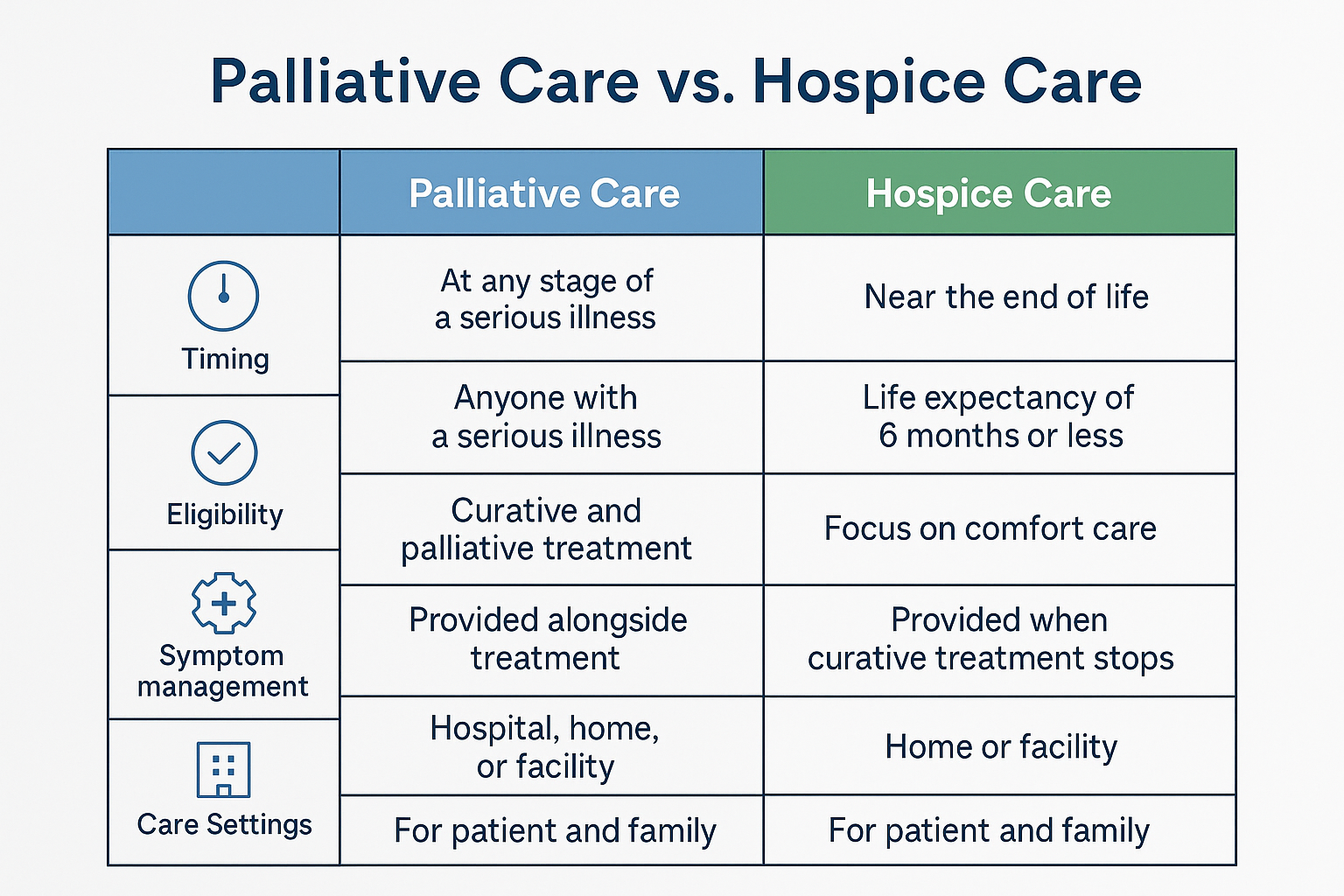
The Foundation: Palliative Care vs. Hospice at a Glance
To ensure we’re all on the same page, let’s quickly clarify the roles of these two essential types of care. While both focus on comfort and quality of life, their timing and goals differ significantly. Palliative care can begin at any stage of a serious illness, while hospice care is reserved for the final phase when curative treatments have stopped.
The Gap in Standard Care: Why Passive Support Isn’t Enough
The conventional model of palliative support is often clinical and passive. It focuses on what needs to be managed: pain, symptoms, decline. While critically important, this approach can inadvertently overlook the person at the center of the care – their passions, their history, their desire for connection.
A passive approach can lead to days filled with waiting, isolation, and a diminishing sense of self. It addresses the body but can neglect the spirit. This is the gap that many families feel but can’t quite articulate. They want more than just management; they want engagement. They want a loved one to feel like a participant in their own life, not just a recipient of care.
This is where a true care philosophy becomes the most important factor in your decision. It’s the difference between merely existing and truly living, right to the very end.
Introducing Interactive Caregiving™ for Palliative Care: A Philosophy of Engagement
At Comfort Keepers North & West Vancouver, we don’t just offer a list of services. We practice a philosophy. Interactive Caregiving™ is our distinctive approach that transforms day-to-day care into opportunities for meaningful interaction. It’s built on the understanding that activity, conversation, and collaboration are essential for maintaining dignity and purpose.
For palliative care clients, this means we go beyond physical comfort to actively engage their minds and hearts. Our caregivers are trained to be more than helpers; they are partners in living. They work with clients, not just for them, turning routine tasks into moments of connection and shared accomplishment. This philosophy shifts the focus from loss and decline to creating positive moments and lifting the human spirit.
The Science of Connection: Evidence-Based Benefits of an Interactive Approach
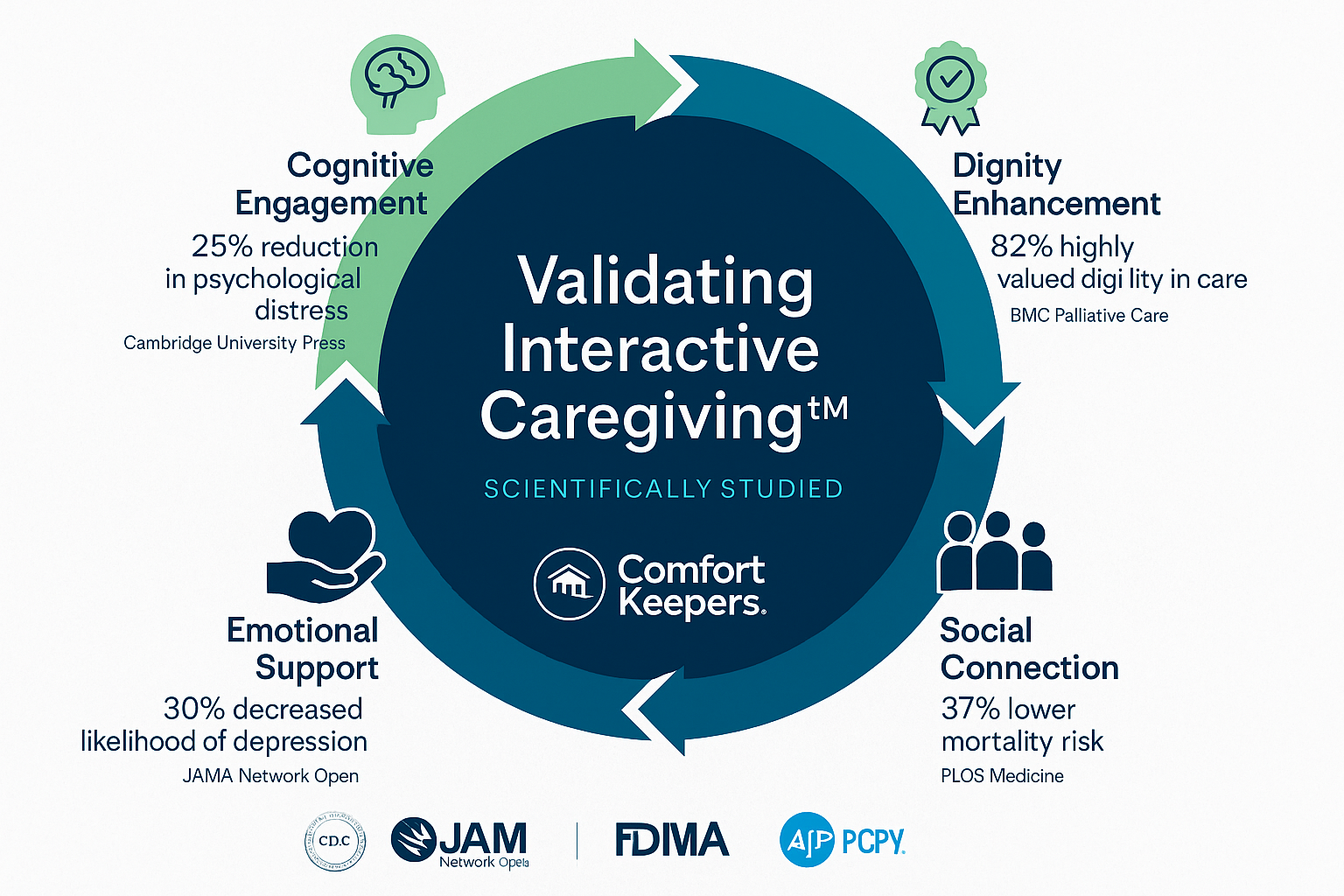
This philosophy isn’t just a feel-good idea; it’s grounded in science. Research consistently shows that an active, person-centered approach to care yields significant benefits that clinical management alone cannot achieve.
The data is clear:
- Improved Quality of Life: Palliative care itself is proven to improve quality of life and reduce symptom burden, according to landmark studies published in the JAMA Network. Our interactive model amplifies this effect by addressing the psychosocial and emotional needs that are central to well-being.
- Reduced Psychological Distress: Non-pharmacological, engaging activities are evidence-based methods for reducing stress and improving mood. Research highlighted by Cambridge University Press shows that activities like music therapy, creative expression, and even simple games enhance communication and provide emotional relief for palliative patients.
- A Greater Sense of Agency: A study in Frontiers in Virtual Reality found that even virtual experiences tailored to a patient’s wishes could significantly decrease emotional distress by giving them a sense of control and escape. This principle of agency is at the core of Interactive Caregiving™, where we empower clients to make choices and participate in activities they enjoy.
Emerging trends in palliative care are moving toward what we have always practiced: early, holistic, and person-centered models that see the whole individual (Hospice News). An active, engaged approach is no longer a “nice-to-have” – it’s becoming the evidence-backed standard for superior care.
Interactive Caregiving™ in Action: What This Looks Like for Your Loved One
So, what does this philosophy actually look like during a typical day? It’s about finding opportunities for engagement in the small moments that make up a life. Instead of doing tasks for a client, our caregivers do them with a client, adapted to their energy and ability.
Fostering Mental & Cognitive Wellbeing
Instead of the television being on all day, a caregiver might engage a client by:
- Reading the local newspaper aloud together and discussing the day’s events.
- Working on a crossword puzzle or jigsaw puzzle at a comfortable pace.
- Organizing a bookshelf or a box of old recipes, sparking conversation and memories.
Lifting the Spirit
To nurture emotional well-being, a caregiver can focus on activities that bring joy and a sense of legacy:
- Looking through old photo albums and sharing stories about family and friends.
- Creating a playlist of favorite songs from different eras of their life.
- Helping write letters or record messages for grandchildren.
Nurturing Social Connection
To combat the isolation that often accompanies serious illness, a caregiver can facilitate connection:
- Helping set up a video call with a family member who lives far away.
- Tending to indoor plants or a small herb garden together.
- Preparing a simple meal or baking a favorite recipe, enjoying the smells and tastes of home.
These aren’t just activities to keep seniors engaged; they are deliberate strategies to affirm a person’s identity and value.
How This Active Approach Improves Palliative Outcomes
The difference is profound. By shifting from a passive to an active model, we directly improve palliative outcomes. Clients who experience Interactive Caregiving™ often show:
- A stronger sense of purpose and dignity.
- Reduced feelings of loneliness and depression.
- Improved communication with family members.
- A greater feeling of control over their daily lives.
This approach doesn’t just make the days more pleasant; it makes them more meaningful. It helps preserve the essence of who your loved one is, ensuring they are seen, heard, and valued as an individual.
Empowering Your Choice: 5 Questions to Ask Any Palliative Care Provider
As you evaluate your options, you have the power to look beyond the standard service list. Use these questions to understand the core philosophy of any provider you consider. Their answers will reveal whether they offer passive support or a truly interactive partnership.
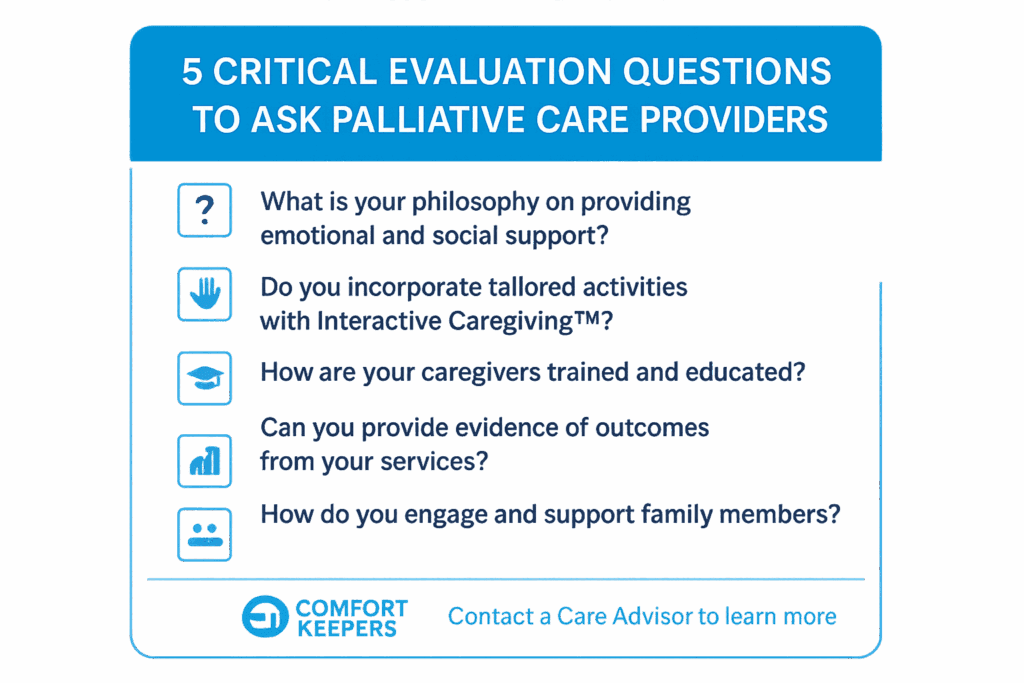
- “What is your specific philosophy for providing emotional and social support, beyond clinical care?”
- “Can you give me examples of how your caregivers actively engage clients during the day?”
- “How do you train your caregivers to adapt activities for someone with changing energy levels and abilities?”
- “How do you personalize a care plan to reflect a client’s unique hobbies, interests, and life story? Can you give me examples of this service?”
- “How do you engage and support family members?”
The answers to these questions will tell you everything you need to know about what a provider truly values.
Your Questions About Palliative Care, Answered
Does this type of care replace my loved one’s medical team?
Absolutely not. Our in-home care services are designed to work in concert with your loved one’s doctors, nurses, and other medical professionals. We complement their clinical care by focusing on the holistic, non-medical support that enhances their quality of life.
How is palliative care paid for?
Coverage varies. Some aspects may be covered by provincial health plans or private insurance. We work with families to navigate their options and can create a customized care plan that fits your budget and needs.
How do you match a caregiver with a client?
We believe personality and connection are just as important as skills. We carefully match clients with caregivers based on shared interests, personality traits, and the specific needs of the care plan to foster a genuine, trusting relationship.
When is the right time to start palliative care?
The evidence suggests that the earlier, the better. Palliative care can be beneficial from the moment of diagnosis of a serious illness. Starting early allows a trusted relationship to form and provides support through every stage of the illness, not just at the end.
Comfort Keepers North and West Vancouver Can Help
Choosing a palliative care partner is one of the most important decisions you can make. It’s a decision that goes beyond logistics and touches the very heart of what it means to live with dignity and grace. By focusing on a philosophy of active, joyful engagement, you can ensure your loved one’s days are not just comfortable, but truly meaningful.If you believe in a care approach that lifts the spirit, let’s talk.
The Best Senior Home Care in North and West Vancouver is Comfort Keepers®
Our senior home care agency offers in-home care focusing on aging in place. Our services include dementia care, end-of-life care, post-surgery care, and palliative care. Comfort Keepers can assist seniors with living transition services, personal care, companionship care, and more!
Quality and Accredited Elderly Care: Happier, Healthier, and at Home with 24/7 Senior Care Opportunities!
Do you need a home care solution for yourself or a loved one? Have you been thinking about retirement homes and their alternatives as a solution? Comfort Keepers® enables seniors to maintain happy, healthy lives in the comfort of their own homes. In-home care services are available in North Vancouver, West Vancouver, and the surrounding areas.
Comfort Keepers® is a Senior Care Agency That Can Make a Difference with Interactive Caregiving™
Our in-home caregivers ensure our senior clients have the best quality of life. The Interactive Caregiving™ program ensures that a senior’s safety, nutrition, mental well-being, and everyday needs are met. This program brings joy and good health to each client’s home.
Comfort Keepers® North Vancouver and West Vancouver Can Help with In-Home Elderly Care Services!
If you are concerned about the health and well-being of a loved one we can help! Comfort Keepers offers 24-hour care and delivers top-quality and compassionate care for seniors. We are dedicated to safety technology solutions that foster independence and enhance well-being.
Locally Owned and Operated Home Health Care Agency
Our care centers around companionship for seniors. Empathetic care originates from the soul and allows us to meet our client’s requirements. The seasoned in-home caregivers employed by Comfort Keepers are carefully chosen based on their empathetic qualities.
Contact the Comfort Keepers® North Vancouver and West Vancouver office at (604) 998-8806 to learn more about our unique in-home care solutions for seniors.