



Watching a loved one navigate dementia is one of life’s most profound challenges. You’ve likely stepped into the role of caregiver out of love and a deep sense of duty. But the journey is demanding, and there often comes a point where you find yourself asking a quiet, persistent question: Is it time for more help?
If you’re asking this question, you’re not alone. It’s a sign that you are deeply attuned to your loved one’s needs and your own capacity. Acknowledging that the care required may be evolving beyond what one person can provide isn’t a sign of failure, it’s an act of profound love and foresight. Research shows the immense weight on family caregivers, with up to 60% experiencing clinical depression or anxiety disorders. Seeking professional support is a courageous step toward ensuring the best possible quality of life for both your loved one and yourself.
This guide provides a compassionate framework to help you recognize the signs that professional in-home dementia care may be the right next step for your family.
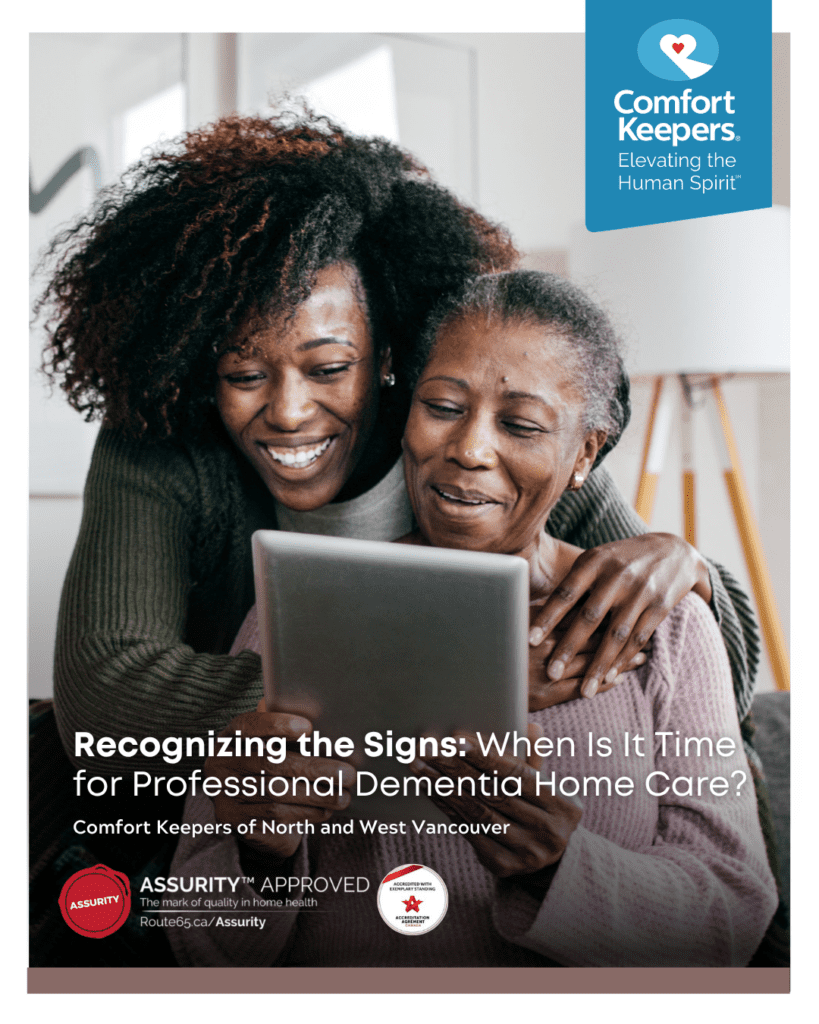
The Dual Signs: When Needs Escalate and Capacity Wanes
The decision to seek professional care is rarely based on a single event. It’s usually a combination of two parallel journeys: the changing needs of the person with dementia and the increasing strain on the family caregiver. Recognising signs on both sides gives you a clearer picture of your situation.
Key Signs Your Loved One Needs More Support
As dementia progresses, new challenges can emerge that require specialised skills and constant vigilance. Look for these key indicators:
- Growing Safety Concerns: Are you worried about wandering, falls, or kitchen accidents like leaving the stove on? Have there been issues with managing medications correctly? These are often the most urgent signs that professional oversight is needed to create a safer environment.
- Difficulty with Daily Activities (ADLs): Is your loved one struggling with personal hygiene, getting dressed, bathing, or eating? A decline in these areas can impact their health and dignity, and professional caregivers are trained to provide this assistance with sensitivity and respect.
- Significant Behavioural Changes: Increased agitation, aggression, anxiety, or severe confusion can be distressing for everyone. A trained dementia care professional understands the root of these behaviours and can use proven techniques to de-escalate situations and restore calm.
- Increasing Social Isolation: Has your loved one withdrawn from hobbies, friends, and family activities? The right companion care can re-engage them in meaningful activities, providing mental stimulation and reducing feelings of loneliness.
- Complex Health Management: When dementia is combined with other chronic conditions, managing care can become medically complex. Professional caregivers can help monitor symptoms, ensure adherence to care plans, and provide a crucial link to healthcare providers.
Key Signs of Caregiver Burnout
Your well-being is not just important, it’s a critical component of your loved one’s care. If your own health is suffering, your ability to provide effective support will inevitably decline. Be honest with yourself about these signs of burnout:
- Physical and Emotional Exhaustion: Are you constantly tired, getting sick more often, or having trouble sleeping? Emotionally, burnout often manifests as persistent irritability, anxiety, sadness, and a sense of hopelessness. These are not character flaws; they are symptoms of prolonged, high-stakes stress.
- Social Withdrawal: Have you given up your own hobbies, friendships, and personal time to focus solely on caregiving? Isolation can quickly lead to resentment and depression, impacting the positive energy you can bring to your loved one.
- Constant Worry and Guilt: Do you feel like you can never do enough, or live with a constant fear that something bad will happen on your watch? This hyper-vigilance is mentally draining and unsustainable long-term.
- Difficulty Concentrating: Many caregivers report feeling “fuzzy” or forgetful in their own lives because their mental energy is entirely consumed by caregiving tasks and worries.
If several of these points resonate with you, it’s a clear signal that your current situation is unsustainable. You’ve given so much, and now it’s time to build a support system that cares for you, too.
A Clearer Path Forward: Why In-Home Dementia Care Makes a Difference
When families recognise the need for more help, they often assume a residential facility is the only option. But for many, professional in-home care offers a more compassionate and effective solution that honours their loved one’s desire to remain in a familiar, comforting environment.
The Unmatched Benefit of Familiarity
For a person with dementia, home is more than just a place; it’s an anchor. The familiar surroundings, routines, and memories tied to their home can significantly minimise agitation and disorientation. Research confirms that staying in a familiar environment helps preserve long-term memories and reduces the risk of falls and distress associated with new, institutional settings. Professional in-home care brings the support to them, allowing them to maintain their sense of place and identity.
A Lifeline for Your Family
Bringing in professional support doesn’t mean you’re stepping away. It means you’re getting the help you need to be the best son, daughter, or spouse you can be. In-home care provides crucial respite, giving you time to recharge, focus on your own health, and manage other responsibilities. It transforms your role from an overwhelmed, hands-on caregiver back to a loving family member who can enjoy quality time with your loved one. This kind of expert support can be a cornerstone of a well-thought-out dementia care plan.
Your Partner in Compassionate Care on the North Shore
Navigating this journey requires a partner you can trust. At Comfort Keepers of North and West Vancouver, we are a locally owned team deeply rooted in the North Shore community. We understand the unique needs of families here because we are your neighbours.
Our commitment to excellence is reflected in our “Accredited with Exemplary Standing” seal from Accreditation Canada, the highest certification for home care in the country. This isn’t just a plaque on our wall; it’s a promise that our standards for client safety, caregiver training, and compassionate service are second to none.
We go beyond simple task-based care. Our unique philosophy of Interactive Caregiving means we focus on “doing with” our clients, not just “doing for” them. We engage your loved one in activities that bring them joy and purpose, whether it’s preparing a favourite meal, listening to music, or looking through old photos. This approach elevates their physical, mental, and emotional well-being.
Whether you need a few hours of respite care to run errands or more comprehensive 24-hour care, our process begins with a conversation. We listen to your story, understand your concerns, and develop a customized care plan that truly fits your family’s needs.

Frequently Asked Questions About Dementia Home Care
1. Do people with dementia do better at home or in a nursing home?
While every situation is unique, many individuals with dementia thrive at home, especially in the early to moderate stages. The familiar environment reduces confusion and anxiety. With professional in-home care, they can receive personalised, one-on-one attention that isn’t always possible in a facility, allowing them to maintain their routines and independence for as long as possible.
2. At what point do dementia patients need 24-hour care?
The need for 24-hour care typically arises when safety becomes a primary concern around the clock. This includes significant wandering risk, severe sleep disturbances (sundowning), an inability to get out of bed independently, or complex medical needs that require constant monitoring.
3. How can I talk to my loved one about needing more care?
Approach the conversation with empathy and focus on the benefits. Frame it as a way to help them stay independent and safe in their own home. Say things like, “I’ve noticed you’re having a harder time with [specific task], and I found someone who can help us out so you can keep living here comfortably.” Introducing a caregiver for a few hours a week for companionship can be a gentle way to start.
4. How do I know I’m not just overreacting?
Trust your instincts. Caregiver burnout is insidious and often minimised by the person experiencing it. If you are consistently feeling exhausted, overwhelmed, and worried, those feelings are valid indicators that the level of care required has become too much for one person to handle. Seeking help is a proactive, responsible step.
Take the First Step with Confidence
Recognising that it’s time for professional care is a pivotal moment. It’s a decision made from a place of love, aimed at providing the highest level of safety, dignity, and quality of life for your loved one. You don’t have to figure out the next steps by yourself.
We invite you to have a no-obligation conversation with one of our Care Coordinators. We can help you assess your situation, understand your options, and see how a customized in-home care plan can bring peace of mind back to your family.
The Best Senior Home Care in North and West Vancouver is Comfort Keepers®
Our senior home care agency offers in-home care focusing on aging in place. Our services include dementia care, end-of-life care, post-surgery care, and palliative care. Comfort Keepers can assist seniors with living transition services, personal care, companionship care, and more!
Quality and Accredited Elderly Care: Happier, Healthier, and at Home with 24/7 Senior Care Opportunities!
Do you need a home care solution for yourself or a loved one? Have you been thinking about retirement homes and their alternatives as a solution? Comfort Keepers® enables seniors to maintain happy, healthy lives in the comfort of their own homes. In-home care services are available in North Vancouver, West Vancouver, and the surrounding areas.
Comfort Keepers® is a Senior Care Agency That Can Make a Difference with Interactive Caregiving™
Our in-home caregivers ensure our senior clients have the best quality of life. The Interactive Caregiving™ program ensures that a senior’s safety, nutrition, mental well-being, and everyday needs are met. This program brings joy and good health to each client’s home.
Comfort Keepers® North Vancouver and West Vancouver Can Help with In-Home Elderly Care Services!
If you are concerned about the health and well-being of a loved one we can help! Comfort Keepers offers 24-hour care and delivers top-quality and compassionate care for seniors. We are dedicated to safety technology solutions that foster independence and enhance well-being.
Locally Owned and Operated Home Health Care Agency
Our care centers around companionship for seniors. Empathetic care originates from the soul and allows us to meet our client’s requirements. The seasoned in-home caregivers employed by Comfort Keepers are carefully chosen based on their empathetic qualities.
Contact the Comfort Keepers® North Vancouver and West Vancouver office at (604) 998-8806 to learn more about our unique in-home care solutions for seniors.
Comfort Keepers is an Accredited Senior Care Agency in North and West Vancouver, BC
Accreditation is a rigorous process that involves industry experts evaluating an organization’s processes, policies, and procedures. Comfort Keepers® North and West Vancouver has been awarded Exemplary Standing by Accreditation Canada. This achievement recognizes that Comfort Keepers® meets or exceeds the stringent quality standards for Home Care companies established by Accreditation Canada.
Healthy Eating Tips for Seniors on a Fixed Income in North and West Vancouver


What Every Senior in North Vancouver and West Vancouver, BC, Needs to Know About Healthy Eating on a Fixed Income
Healthy Eating Tips for Seniors on a Fixed Income | No matter the age, a nutritious diet is essential. Seniors who may face economic and physical struggles, however, can find it difficult to procure and prepare healthy meals. In this blog, we discuss healthy eating tips for seniors on a fixed income.
This month, Comfort Keepers® is focusing on their STOP Senior Hunger initiative to assist seniors, their families, and caregivers in developing a healthy nutritional balance. With the help of Comfort Keepers® home health care services and physicians, seniors can easily incorporate common-sense strategies for good eating habits and living well.
9 Healthy Eating Tips for Seniors on a Fixed Income
Tip #1 – Make meal planning and preparation a fun experience:
Plan one new meal, prepare a new recipe, or try a new food item each week. Look for new ways to prepare an old favorite.
Tip #2 – Meal preparation:
If you buy enough ingredients to cook more than one meal, you can freeze individual portions.
Tip #3 – Good carbs over sugar:
Provide complex carbohydrates instead of simple sugars.
Tip #4 – Smart shopping:
Buy fresh fruits and vegetables when they’re in season (it is cheaper) and opt for frozen produce when fresh is not available.
Tip #5 – Affordable options:
Purchase lower-cost, high-quality protein, such as low-fat ground meat, eggs, beans, tofu, tuna, and dairy products including milk, cottage cheese, cheese, and yogurt.
Tip #6 – Stick to the list:
Avoid impulse purchases and excessive calorie consumption by shopping with a list and making better food choices.
Tip #7 – Clip Coupons:
Caregivers and seniors can clip coupons and watch grocery store ads for sales if they like store brands.
Tip #8 – Processed foods:
Avoid prepared foods, sweets, and snack foods that are low in nutrients or purchased in small amounts.
Tip #9 – Senior discounts:
Take advantage of senior menus or discounts when eating out. Lunch is usually cheaper than dinner, and portions will probably be smaller.
Healthy eating cultivates good overall health; it potentially helps ward off some medical conditions; and it positively affects other conditions. For instance, those with diabetes are able to maintain better health when they follow the correct diet for that disease. People with high cholesterol can help improve that condition when following nutritional guidelines that aid in decreasing cholesterol levels.
Your local Comfort Keepers® may have a resource guide with contact information for local financial assistance programs that apply to seniors in home health care.

Note: Seniors, their family members, and other caregivers should speak with their doctors about managing their nutrition.
The Best Senior Home Care in North and West Vancouver is Comfort Keepers®
Our senior home care agency offers in-home care focusing on aging in place. Our services include dementia care, end-of-life care, post-surgery care, and palliative care. Comfort Keepers can assist seniors with living transition services, personal care, companionship care, and more!
Quality and Accredited Elderly Care: Happier, Healthier, and at Home with 24/7 Senior Care Opportunities!
Do you need a home care solution for yourself or a loved one? Have you been thinking about retirement homes and their alternatives as a solution? Comfort Keepers® enables seniors to maintain happy, healthy lives in the comfort of their own homes. In-home care services are available in North Vancouver, West Vancouver, and the surrounding areas.
Comfort Keepers® is a Senior Care Agency That Can Make a Difference with Interactive Caregiving™
Our in-home caregivers ensure our senior clients have the best quality of life. The Interactive Caregiving™ program ensures that a senior’s safety, nutrition, mental well-being, and everyday needs are met. This program brings joy and good health to each client’s home.
Comfort Keepers® North Vancouver and West Vancouver Can Help with In-Home Elderly Care Services!
If you are concerned about the health and well-being of a loved one we can help! Comfort Keepers offers 24-hour care and delivers top-quality and compassionate care for seniors. We are dedicated to safety technology solutions that foster independence and enhance well-being.
Locally Owned and Operated Home Health Care Agency
Our care centers around companionship for seniors. Empathetic care originates from the soul and allows us to meet our client’s requirements. The seasoned in-home caregivers employed by Comfort Keepers are carefully chosen based on their empathetic qualities.
Contact the Comfort Keepers® North Vancouver and West Vancouver office at (604) 998-8806 to learn more about our unique in-home care solutions for seniors.
Comfort Keepers is an Accredited Senior Care Agency in North and West Vancouver, BC
Accreditation is a rigorous process that involves industry experts evaluating an organization’s processes, policies, and procedures. Comfort Keepers® North and West Vancouver has been awarded Exemplary Standing by Accreditation Canada. This achievement recognizes that Comfort Keepers® meets or exceeds the stringent quality standards for Home Care companies established by Accreditation Canada.
Designing a Dementia-Friendly Home: A Guide to Fostering Independence and Joy
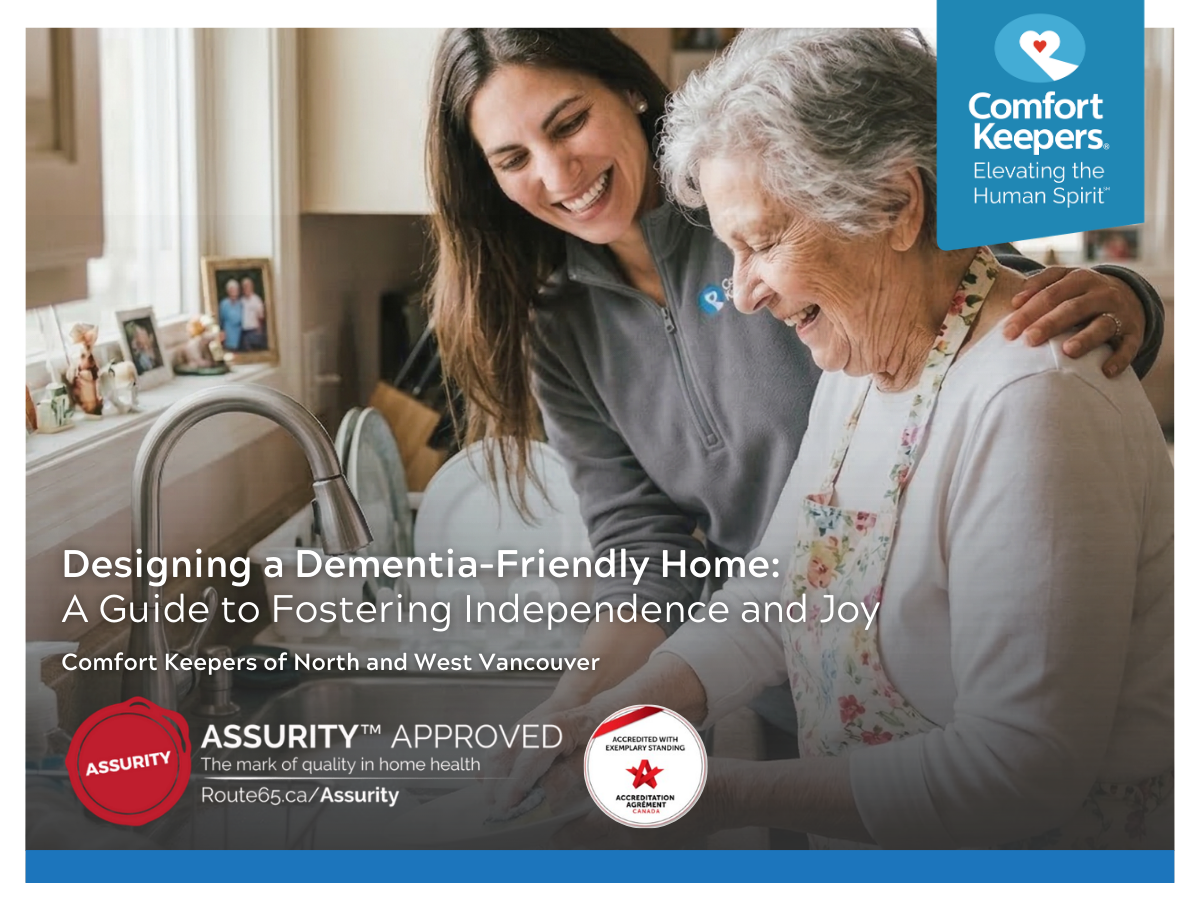
Watching a loved one navigate the challenges of dementia is a journey of adaptation, not just for them, but for the entire family. You may have noticed moments of confusion in familiar surroundings – a hesitation at the top of the stairs, difficulty finding the right drawer, or a sense of being overwhelmed in a cluttered room.
It’s natural to want to step in and help with every task. But what if the home itself could become a partner in their care?
A dementia-friendly home isn’t about creating a sterile, clinical environment. It’s about making thoughtful, often simple, changes that reduce confusion, prevent accidents, and, most importantly, empower your loved one to participate in their own life with confidence and dignity. It’s a shift from simply ensuring safety to actively encouraging independence.
Seeing Through a New Lens: How Dementia Changes Perception
To create a supportive environment, we first need to understand how a person with dementia might experience the world. Dementia can alter the brain’s ability to interpret sensory information, turning a familiar home into a confusing and sometimes frightening landscape.
This is the most important “aha moment” for any caregiver: many of the challenges you observe aren’t just about memory loss; they’re about a change in perception.
- Visual-Perceptual Shifts: The brain might struggle to process what the eyes see. For example, a dark rug on a light floor might be perceived as a dangerous “black hole” or a drop-off, causing hesitation or fear. A glossy, polished floor can look wet and slippery, leading to a shuffling gait. Busy patterns on wallpaper or upholstery can become overwhelming and cause visual confusion.
- Cognitive and Judgment Changes: Beyond memory, dementia affects executive functions like planning and problem-solving. Following the steps to make a cup of tea or choosing an outfit can become a complex, multi-step puzzle. Judgement regarding safety may also be impaired, making everyday objects potential hazards.
Understanding these changes is the key. When you see the environment through their eyes, the “why” behind each modification becomes crystal clear.
The Core Principles of a Dementia-Friendly Home
Creating a dementia-friendly space revolves around a few core principles. It’s less of a checklist and more of a philosophy that you can apply to any room in your house.
- Maximize Safety: This is the foundation. It involves removing hazards like trip risks and securing dangerous items.
- Ensure Clarity and Simplicity: Reduce clutter and visual noise. A simplified environment is easier for the brain to process, which lowers stress and anxiety.
- Maintain Familiarity: Keep treasured photos and objects in their usual places. Familiarity provides comfort and a sense of continuity.
- Manage Sensory Input: Minimize loud, sudden noises and harsh lighting. A calm sensory environment can significantly reduce agitation.
- Encourage Participation: This is the principle that transforms a safe space into an empowering one. The goal is to design the environment in a way that subtly invites your loved one to engage in daily tasks, rather than just be a passive recipient of care.
Room by Room: Practical Changes to Encourage Independence
You don’t need a complete renovation. Small, targeted changes can make a world of difference. Start with the areas where your loved one spends the most time or faces the most challenges.
The Living Room: Comfort and Connection
This is often the heart of the home, but it can also be a source of overstimulation. The goal here is to create a space that is both calming and engaging.
- Clear the Pathways: Ensure there are wide, unobstructed paths between furniture. Remove low coffee tables, footstools, and loose rugs that could be trip hazards.
- Create a “Calm Zone”: Designate a comfortable chair with good lighting, a warm blanket, and a few meaningful items nearby (like a photo album or a favourite book). This creates a safe, relaxing retreat.
- Check the Seating: Ensure sofas and chairs are at a height that makes it easy to sit down and stand up. Avoid deep chairs that are difficult to get out of.
- Manage Noise: Loud, overlapping sounds from a television and radio can be very distressing. Try to have only one source of sound at a time.
The Kitchen: Safety and Participation
The kitchen can be a place of wonderful, familiar routines, but it also contains the most potential hazards. The focus here is on enabling safe participation.
- Improve Visibility: Use open shelving for frequently used items like glasses and plates. Label cupboards and drawers with simple pictures or words (e.g., a picture of a cup on the cup cupboard).
- Increase Safety: Consider installing appliances with automatic shut-off features. Store sharp objects and hazardous cleaning supplies in locked cabinets.
- Create an “Activity Station”: Set up a small, safe area where your loved one can help with simple, familiar tasks. This could be a space at the table for folding napkins, washing vegetables, or stirring batter.
The Bathroom: Dignity and Safety
The bathroom presents unique challenges due to water, hard surfaces, and the need for privacy. Modifications here are critical for preventing falls and preserving dignity.
- High Contrast is Key: A white toilet seat on a white toilet against a white wall can be almost invisible. A coloured toilet seat provides a clear visual cue, making it much easier to locate.
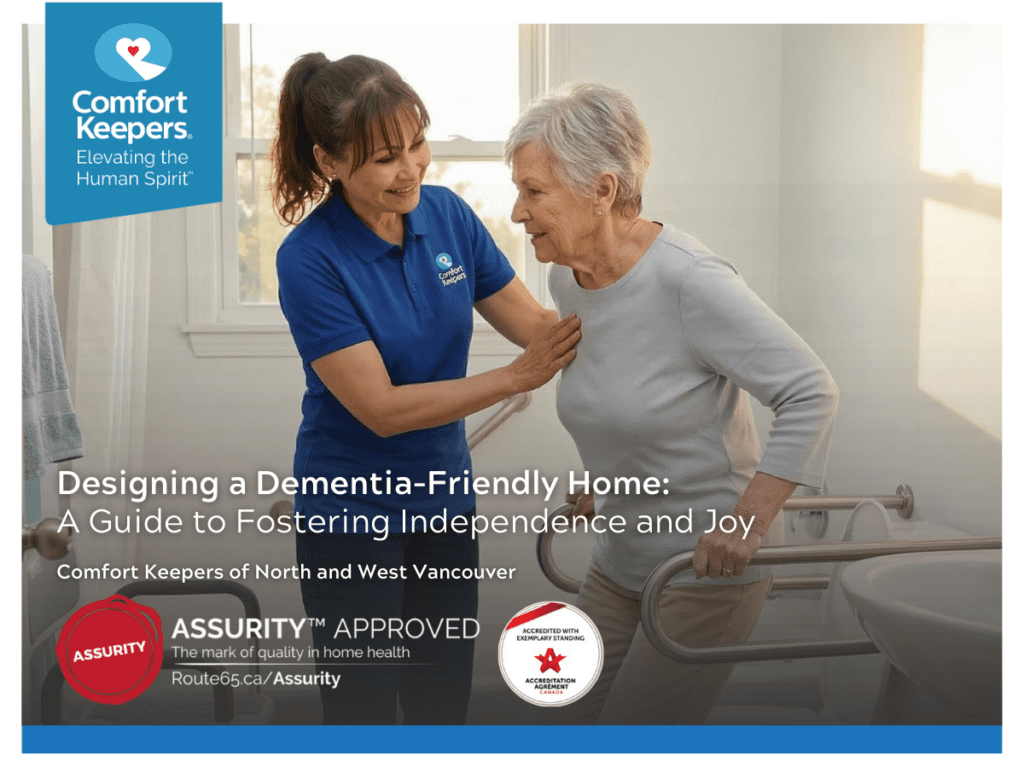
- Install Grab Bars: Place sturdy grab bars next to the toilet and in the shower. A towel rack is not a safe substitute.
- Prevent Slips: Use non-slip mats both inside and outside the shower or tub. Ensure there are no puddles on the floor.
- Simplify the Faucets: Complicated modern faucets can be confusing. Simple, lever-style taps labeled “Hot” and “Cold” (or with red and blue markings) are often easier to use.
The Bedroom: A Restful Sanctuary
A good night’s sleep is vital for both the person with dementia and their caregiver. The goal is to create a peaceful environment that minimizes nighttime confusion and risks.
- Light the Way: Nighttime disorientation is common. Place low-wattage, motion-activated nightlights to illuminate the path from the bed to the bathroom.
- Keep it Simple: A cluttered bedroom can be confusing upon waking. Keep the room tidy and the décor simple and familiar.
- Clear the View: Ensure the bed is positioned so your loved one can easily see the door to the bathroom. Remove mirrors if they cause confusion or fear.
Beyond Furniture: The Power of Cues, Colour, and Light
Some of the most impactful changes are not about what you remove, but what you add or adjust.
Lighting is Everything
Good lighting is one of the most effective tools in your dementia-friendly toolkit. As we age, our eyes need more light to see clearly. For someone with dementia, poor lighting can deepen shadows and increase confusion.
- Increase Ambient Light: Use brighter bulbs throughout the home.
- Eliminate Glare and Shadows: Avoid shiny, reflective surfaces. Use lampshades and curtains to diffuse harsh light that can cause glare. Even consistent lighting is better than pools of bright light and dark shadows.
Using Colour and Contrast
Strategic use of colour can make a home much easier to navigate. The key is contrast. It helps distinguish objects from their background.
- On the Table: Use a brightly coloured plate on a plain, light-coloured placemat to make food easier to see.
- On the Walls: A light switch on a contrasting coloured plate is easier to find than one that blends into the wall.
- On the Stairs: Placing a contrasting strip of tape on the edge of each step can clearly define it, reducing the risk of a fall.
The Missing Piece: Your Role as a Caregiver
An adapted environment is a powerful tool, but it works best when paired with an adapted caregiving approach. This is the final, crucial piece of the puzzle. The goal of the environment is to provide cues and opportunities for independence; your role is to gently encourage their use.
This philosophy of “doing with” rather than “doing for” can be transformative. Instead of simply getting a glass of water for your loved one, you can guide them: “The glasses are in the cupboard with the picture of the cup on it. Let’s get one together.”
This approach respects their abilities and reinforces their sense of self-worth. It turns daily routines into moments of connection and accomplishment. An adapted home provides the stage, but your encouragement helps them play their part. It’s the core of how we learn more about our unique approach to in-home care and how we promote client independence.
Frequently Asked Questions (FAQ)
Q1. What is a dementia-friendly home?
A1. A dementia-friendly home is a living space that has been thoughtfully modified to support the safety, independence, and quality of life of a person with dementia. It focuses on reducing confusion, minimizing hazards, and creating a clear, calm, and familiar environment that encourages participation in daily activities.
Q2. Which room should I modify first?
A2. There’s no single right answer, but a good strategy is to start with the area that poses the highest risk or where your loved one spends the most time. For many, this is the bathroom (due to fall risk) or the living room (the main living space). Don’t feel you
have to do everything at once; small, incremental changes are often best.
Q3. How do I make changes without upsetting my loved one?
A3. Introduce changes gradually. Whenever possible, involve your loved one in the decision-making process. For example, say, “This new lamp is much brighter, isn’t it? It makes it so much easier to read here.” Framing changes as improvements for everyone in the house, rather than just for them, can help preserve their dignity and reduce resistance.
Q4. Is this all just about safety?
A4. Safety is the starting point, but it’s far from the whole story. A truly dementia-friendly home is about enabling a higher quality of life. It’s about creating moments of success, reducing frustration, and preserving a sense of purpose and identity for as long as possible.
Your Next Step on This Journey
Creating a more supportive home environment is a profound act of love. It can feel like a big undertaking, but remember that every small change can make a positive impact. Start with one room, or even one corner of a room, and see the difference it can make.
This journey requires patience, creativity, and support. As you continue to learn and adapt, know that there are resources available to help you along the way.
The Best Senior Home Care in North and West Vancouver is Comfort Keepers®
Our senior home care agency offers in-home care focusing on aging in place. Our services include dementia care, end-of-life care, post-surgery care, and palliative care. Comfort Keepers can assist seniors with living transition services, personal care, companionship care, and more!
Quality and Accredited Elderly Care: Happier, Healthier, and at Home with 24/7 Senior Care Opportunities!
Do you need a home care solution for yourself or a loved one? Have you been thinking about retirement homes and their alternatives as a solution? Comfort Keepers® enables seniors to maintain happy, healthy lives in the comfort of their own homes. In-home care services are available in North Vancouver, West Vancouver, and the surrounding areas.
Comfort Keepers® is a Senior Care Agency That Can Make a Difference with Interactive Caregiving™
Our in-home caregivers ensure our senior clients have the best quality of life. The Interactive Caregiving™ program ensures that a senior’s safety, nutrition, mental well-being, and everyday needs are met. This program brings joy and good health to each client’s home.
Comfort Keepers® North Vancouver and West Vancouver Can Help with In-Home Elderly Care Services!
If you are concerned about the health and well-being of a loved one we can help! Comfort Keepers offers 24-hour care and delivers top-quality and compassionate care for seniors. We are dedicated to safety technology solutions that foster independence and enhance well-being.
Locally Owned and Operated Home Health Care Agency
Our care centers around companionship for seniors. Empathetic care originates from the soul and allows us to meet our client’s requirements. The seasoned in-home caregivers employed by Comfort Keepers are carefully chosen based on their empathetic qualities.
Contact the Comfort Keepers® North Vancouver and West Vancouver office at (604) 998-8806 to learn more about our unique in-home care solutions for seniors.
Comfort Keepers is an Accredited Senior Care Agency in North and West Vancouver, BC
Accreditation is a rigorous process that involves industry experts evaluating an organization’s processes, policies, and procedures. Comfort Keepers® North and West Vancouver has been awarded Exemplary Standing by Accreditation Canada. This achievement recognizes that Comfort Keepers® meets or exceeds the stringent quality standards for Home Care companies established by Accreditation Canada.
Your Guide to a Safer Hospital Discharge: The Essential Questions Every Family Should Ask
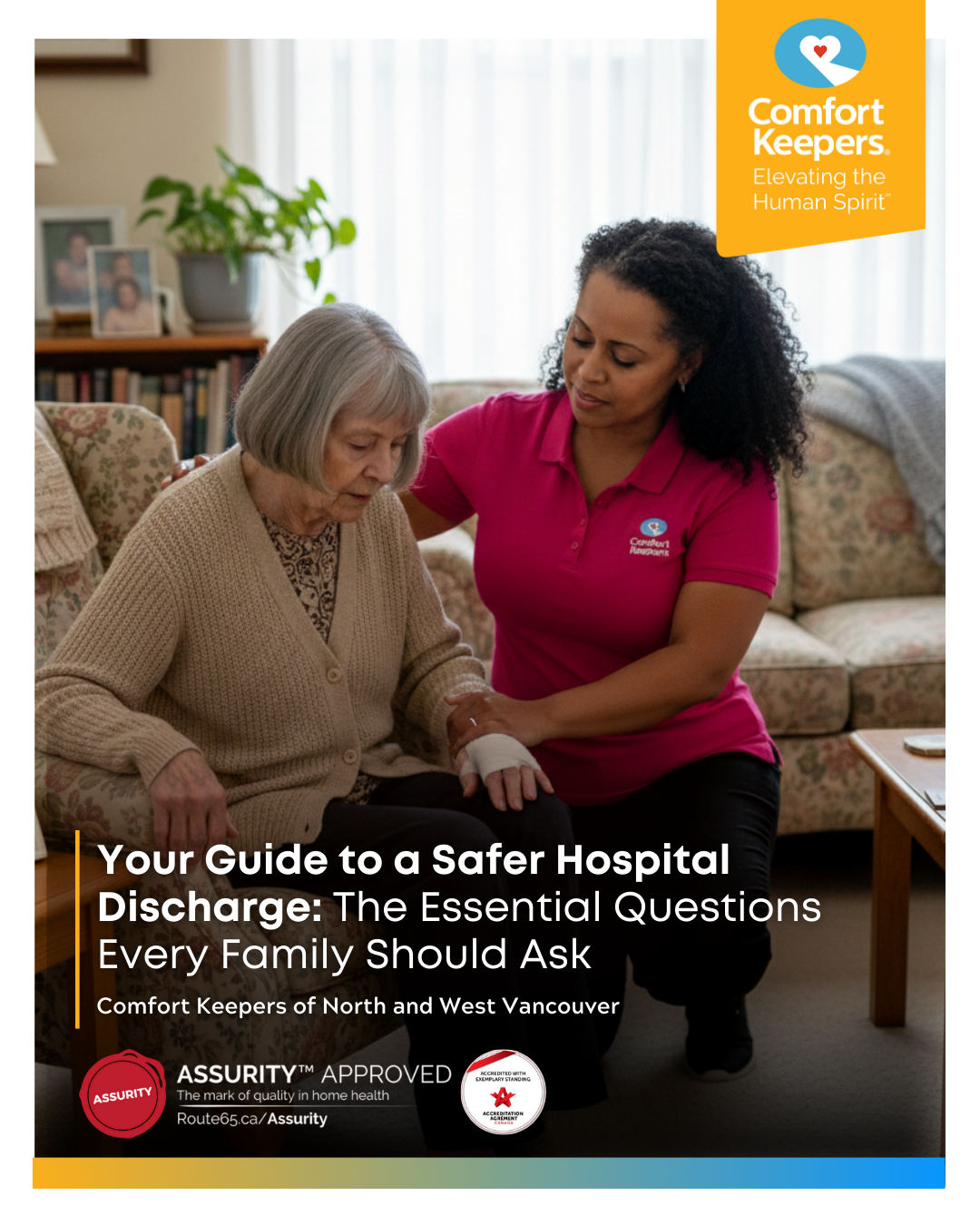
The phone call you’ve been waiting for finally comes: “Your loved one is being discharged from the hospital.” A wave of relief washes over you. But almost immediately, a second wave of questions and anxieties follows. Are they truly ready? What do I need to do to prepare the house? Who do I call if something goes wrong at 2 a.m.?
This mix of relief and worry is completely normal. Leaving the hospital is a critical transition, and unfortunately, it’s not always smooth. Research shows that nearly 20% of patients experience an adverse event within three weeks of discharge, often due to gaps in communication and preparation.
The key to a safe and successful recovery at home isn’t just about following instructions – it’s about asking the right questions before you ever walk out the hospital doors. This guide is designed to empower you, transforming you from a worried bystander into a confident advocate for your loved one’s care.

The Critical Misunderstanding: “Medically Stable” vs. “Ready for Home”
Before we dive into the questions, let’s clear up the most common point of confusion. When a hospital says a patient is ready for discharge, they typically mean they are “medically stable.” This means their acute condition has been treated, and their vital signs are stable.
However, “medically stable” does not mean “fully recovered” or “ready to resume normal life.”
Many patients are discharged in a weakened, vulnerable state. This common but often undiscussed condition is known as Post-Hospital Syndrome. It’s a period of generalized risk where patients may experience fatigue, cognitive slowness, and difficulty with daily tasks. Understanding this helps set realistic expectations for recovery and highlights why your role as an informed advocate is so crucial.
Your Essential Discharge Checklist: Questions to Ask the Medical Team
Think of the discharge meeting as your most important appointment. Don’t be rushed. Bring a notebook, ask for clarification, and make sure you feel confident with the answers. Here are the essential questions, broken down by category.
1. The Big Picture: Understanding the Recovery Journey
The goal here is to get a clear, realistic roadmap of what to expect in the coming days and weeks.
- “What should a typical day or week look like for them during recovery?” This helps you understand expected energy levels, activity restrictions (like lifting or driving), and key milestones.
- “What are the most common setbacks for someone with this condition, and how can we prevent them?” This proactive question moves beyond the ideal scenario and prepares you for potential challenges.
- “Besides the main condition, what should we know about Post-Hospital Syndrome? How can we best support their mental and physical well-being during this vulnerable time?” Asking about this directly shows the medical team you’re thinking holistically about recovery.
2. Red Flags: Creating a Clear Emergency Plan
Vague instructions like “call if you have problems” are not enough. You need specifics to avoid unnecessary panic or dangerous delays.
- “Which specific symptoms require an immediate 911 call or trip to the ER?” Ask for a list. Is it a fever over a certain temperature? Shortness of breath? A specific type of pain?
- “Which symptoms are concerning but can wait for a call to the doctor’s office in the morning?” This helps you differentiate between a true emergency and a manageable issue.
- “Who is the specific person or nurse line we should call with questions 24/7? What is that number?” Get a direct contact number. Don’t leave with a general hospital switchboard number.
3. Medication Management: Ensuring Safety and Clarity
Medication errors are one of the most common and dangerous post-discharge problems.
- “Can we review the final medication list together, one by one?” This is called medication reconciliation. Ask them to clarify which medications are new, which are stopped, and which dosages have changed.
- “For each new medication, what is it for, what are the common side effects, and should it be taken with or without food?”
- “Who is responsible for sending the new prescription list to our family doctor and pharmacy? Can we get a printed copy to take with us?” Don’t assume this happens automatically. Proactively closing this communication loop is vital.
4. Home Environment: Equipment, Supplies, and Safety
The transition home requires a prepared environment.
- “What specific medical equipment or supplies will be needed?” (e.g., a walker, oxygen, wound care supplies).
- “Who orders this equipment, who pays for it, and when will it arrive?” The hospital social worker or case manager is usually the best person to answer this.
- “Will they need help with daily activities like bathing, dressing, or making meals?” An honest assessment of their needs -and your ability to provide support – is essential. This is often where families begin to explore options like professional in-home care services.
5. Care Coordination: Closing the Communication Gaps
After discharge, care can feel fragmented. Your job is to act as the “quarterback,” ensuring everyone is on the same page.
- “Who is the main point of contact for our family doctor to coordinate care with?”
- “What follow-up appointments are needed, and have they already been scheduled?” Get the details: doctor’s name, date, time, and location. Ask who is responsible for booking them if they haven’t been.
- “How will you ensure all relevant medical records and the final discharge summary are sent to their family doctor and any other specialists?”
Empowering Yourself: The “Teach-Back” Method
One of the most powerful tools you have is the “teach-back” method. After a nurse or doctor explains something, repeat it back to them in your own words.
Try saying: “Okay, just so I’m sure I understand, you want us to watch for a fever over 101 degrees, and if that happens, we should call your on-call nurse at this number. Is that correct?”
This simple technique confirms understanding, clears up confusion, and ensures you leave with accurate information.
What If You Feel the Discharge is Unsafe?
Trust your gut. If you feel your loved one is being discharged too soon or without a safe plan, you have the right to voice your concerns.
- Speak Up: Clearly state your concerns to the doctor, nurse, and hospital case manager. Explain why you feel the discharge is unsafe (e.g., “They still can’t walk to the bathroom on their own,” or “We haven’t received training on how to manage their wound care.”).
- Request a Formal Appeal: If your concerns are not addressed, you can request a formal review from your province’s patient care quality office. The hospital is required to provide you with the contact information and cannot discharge the patient until the review is complete.
Your voice matters. Advocating for a safe discharge is one of the most important things you can do to prevent readmission and support a full recovery.
The transition from hospital to home can be challenging, but with the right questions and a proactive mindset, you can navigate it with confidence. By ensuring every detail is covered, you are laying the foundation for a safe, comfortable, and successful healing journey at home.
Frequently Asked Questions
Q: What is a hospital discharge plan?
A: A hospital discharge plan is a comprehensive set of instructions developed by the medical team to ensure a patient’s transition from the hospital to another setting (like home or a rehab facility) is safe and smooth. It should cover medications, follow-up appointments, dietary restrictions, activity levels, and any necessary personal care services.
Q: When does discharge planning begin?
A: This is a common misconception! Effective discharge planning should begin on the day of admission, not the day of discharge. The medical team starts assessing the patient’s needs and post-hospital care requirements from day one to ensure a well-coordinated plan is in place.
Q: What are my rights as a family caregiver during the discharge process?
A: As a designated family caregiver, you have the right to be informed and involved in discharge planning. Under legislation like the CARE Act in many places, hospitals are encouraged to identify and include a family caregiver in the process, provide education on post-discharge tasks, and notify you before the patient is discharged.
Q: Can you explain Post-Hospital Syndrome again?
A: Post-Hospital Syndrome is a term for the temporary period of increased vulnerability a patient experiences after being hospitalized. Even if the original illness is treated, the stress of hospitalization can leave a person with weakness, fatigue, sleep disruption, and cognitive fog, increasing their risk for falls, infections, and other setbacks. This is why supportive transition services can be incredibly beneficial during this period.
The Best Senior Home Care in North and West Vancouver is Comfort Keepers®
Our senior home care agency offers in-home care focusing on aging in place. Our services include dementia care, end-of-life care, post-surgery care, and palliative care. Comfort Keepers can assist seniors with living transition services, personal care, companionship care, and more!
Quality and Accredited Elderly Care: Happier, Healthier, and at Home with 24/7 Senior Care Opportunities!
Do you need a home care solution for yourself or a loved one? Have you been thinking about retirement homes and their alternatives as a solution? Comfort Keepers® enables seniors to maintain happy, healthy lives in the comfort of their own homes. In-home care services are available in North Vancouver, West Vancouver, and the surrounding areas.
Comfort Keepers® is a Senior Care Agency That Can Make a Difference with Interactive Caregiving™
Our in-home caregivers ensure our senior clients have the best quality of life. The Interactive Caregiving™ program ensures that a senior’s safety, nutrition, mental well-being, and everyday needs are met. This program brings joy and good health to each client’s home.
Comfort Keepers® North Vancouver and West Vancouver Can Help with In-Home Elderly Care Services!
If you are concerned about the health and well-being of a loved one we can help! Comfort Keepers offers 24-hour care and delivers top-quality and compassionate care for seniors. We are dedicated to safety technology solutions that foster independence and enhance well-being.
Locally Owned and Operated Home Health Care Agency
Our care centers around companionship for seniors. Empathetic care originates from the soul and allows us to meet our client’s requirements. The seasoned in-home caregivers employed by Comfort Keepers are carefully chosen based on their empathetic qualities.
Contact the Comfort Keepers® North Vancouver and West Vancouver office at (604) 998-8806 to learn more about our unique in-home care solutions for seniors.
Comfort Keepers is an Accredited Senior Care Agency in North and West Vancouver, BC
Accreditation is a rigorous process that involves industry experts evaluating an organization’s processes, policies, and procedures. Comfort Keepers® North and West Vancouver has been awarded Exemplary Standing by Accreditation Canada. This achievement recognizes that Comfort Keepers® meets or exceeds the stringent quality standards for Home Care companies established by Accreditation Canada.
The Real Value of Companion Care for North Vancouver Seniors

When you think of companion care, what comes to mind? For many, it’s a friendly face stopping by for a chat, maybe sharing a cup of tea. While that’s certainly part of it, viewing companionship as just a social visit overlooks its profound, scientifically backed impact on a senior’s entire well-being. It’s the difference between simply passing the time and actively investing in mental acuity, emotional resilience, and physical health.
For families in North and West Vancouver exploring care options, the critical question isn’t just “Will my loved one have someone to talk to?” but “How will this care actively improve their quality of life and help them maintain their independence?”
The reality is that meaningful companionship is one of the most powerful tools available for promoting holistic senior health. It’s a proactive strategy that goes far beyond alleviating loneliness – it actively builds a more vibrant, engaged, and healthier life.

The Silent Epidemic Hitting the North Shore
While the North Shore is known for its active community, social isolation among seniors is a growing concern, mirroring a national crisis. The numbers are staggering: according to Statistics Canada, an estimated 1.1 million older Canadians experience loneliness, with as many as 41% being at risk of social isolation.
This isn’t just about feeling sad. Chronic isolation is a serious health risk with consequences as dangerous as smoking or obesity. Research has linked it to:
- A 50% increased risk of developing dementia.
- A 32% increased risk of stroke.
- A 25% increased risk of cancer mortality.
- A 45% increased risk of death from any cause.
These statistics confirm what many families feel instinctively: that a loved one’s withdrawal and isolation isn’t just a phase – it’s a critical health issue that needs a dedicated solution.
Redefining Companionship: From Passive Presence to Active Engagement
True companion care isn’t a passive “sitting service.” It’s an active, goal-oriented partnership designed to enrich a senior’s life physically, mentally, and emotionally. This is the foundation of our philosophy at Comfort Keepers North & West Vancouver, which we call Interactive Caregiving.
Instead of simply doing for a client, our caregivers focus on doing with them. This subtle but crucial shift transforms daily routines into opportunities for connection and stimulation. Preparing a meal together becomes a chance to reminisce and work as a team. A walk through Ambleside Park becomes a gentle exercise and a sensory experience. The goal is to build a genuine relationship that fosters purpose and maintains independence.
The Science of Connection: How Companionship Transforms Health
The benefits of this interactive approach aren’t just anecdotal; they are rooted in neurobiology and psychology. Meaningful companionship provides tangible health benefits that simple socializing can’t replicate.
Brain Health & Cognitive Vitality
A common fear among seniors and their families is cognitive decline. Interactive companionship is a direct and effective way to combat it.
- Cognitive Scaffolding: Think of a caregiver as a supportive framework for the brain. By helping with planning, organizing daily tasks, or simply engaging in complex conversation, a companion reduces the brain’s “cognitive load.” This support helps maintain executive functions and makes daily life less overwhelming, which is crucial for preserving independence.
- Promoting Neuroplasticity: The brain’s ability to form new connections doesn’t stop in old age. Engaging in new activities, learning a simple skill, or even discussing current events stimulates the brain, encouraging neuroplasticity. This is the “use-it-or-lose-it” principle in action, and a companion is the perfect catalyst for this consistent stimulation.
Mental & Emotional Well-being
An engaged companion provides a powerful buffer against anxiety and depression.
- Stress System Modulation: Meaningful social interaction helps regulate the body’s stress response system (the HPA axis). Consistent, positive engagement can lower chronic stress and reduce inflammation, which are linked to a host of age-related illnesses.
- Affective Regulation: Simply having a trusted person to talk to helps process emotions and reduces feelings of being a burden – a significant risk factor for depression in seniors. This consistent emotional support helps regulate mood and builds resilience.
Physical Health & Quality of Life
The mind-body connection is undeniable, and companionship directly influences physical outcomes.
- Behavioural Pathways: A senior with a companion is more likely to eat regular, nutritious meals, adhere to medication schedules, and stay gently active. A caregiver also provides a second set of eyes, often being the first to notice subtle changes in health that can be addressed before they become serious problems. This is a core part of our approach to Companionship Services, ensuring both social and physical well-being are prioritized.
Putting It Into Practice: What Interactive Companionship Looks Like
This all sounds great in theory, but what does it actually look like day-to-day for a senior in North Vancouver? It’s about personalizing activities that foster connection and purpose.
- Mind Stimulation: Working on a puzzle together, reading the North Shore News and discussing local events, or organizing old family photos to share stories.
- Physical Activity: A gentle walk along the West Vancouver Seawall, light gardening, or stretching exercises at home.
- Creative Expression: Listening to favourite music from their youth, trying a simple recipe together, or working on a craft project.
- Community Connection: Accompanying them to appointments, helping them run errands at Park Royal, or setting up a video call with grandchildren.
The activity itself is secondary to the interaction. The value comes from the shared experience, the conversation, and the collaborative effort.
This philosophy of engagement is the heart of what we do. Our unique approach, known as Interactive Caregiving, is built on decades of research showing that seniors who are actively involved in their own care lead healthier and happier lives. Our caregivers are trained not just to perform tasks, but to build relationships that transform daily activities into moments of connection and joy.
Frequently Asked Questions
Q1. My parent is very independent and might resist a ‘carer’. How do you handle that?
A1. This is a very common and understandable concern. We introduce our caregivers as assistants or companions, not “carers.” The focus is on partnership. We often suggest starting slowly, perhaps with assistance for specific tasks like grocery shopping or attending appointments, allowing a natural, trust-based relationship to build over time.
Q2. What’s the difference between Comfort Keepers’ companionship and just hiring someone to check in?
A2. The key difference is our Interactive Caregiving philosophy. A person hired to “check in” might perform tasks, but our caregivers are trained to actively engage clients to improve their quality of life. They focus on turning everyday activities into opportunities for mental, physical, and emotional enrichment, which is a much deeper level of support.
Q3. How are caregivers matched with clients?
A3. We place great importance on matching. During our initial in-home assessment, we learn about your loved one’s personality, interests, and hobbies. We then match them with a caregiver who shares similar traits and has the right skill set, creating the best possible foundation for a genuine connection.
Q4. Is companion care only for seniors who are already lonely?
A4. Not at all. Companion care is a powerful preventative measure. For seniors who are still active, a companion can help them continue to engage in the hobbies and community activities they love safely. It’s a way to proactively support their independence and well-being, preventing isolation before it starts.
Your Next Step
Choosing the right support for a loved one is a significant decision. Understanding that true companion care is a vital component of holistic health – not just a luxury – is the first step. It’s an investment in their happiness, safety, and independence.
If you’re ready to explore how a personalized, interactive approach to care can make a meaningful difference for your family on the North Shore, we’re here to help.
Let’s start a conversation. You can learn more about our unique approach by getting in touch with our North and West Vancouver office. Please contact us to schedule a complimentary and confidential in-home consultation.
The Best Senior Home Care in North and West Vancouver is Comfort Keepers®
Our senior home care agency offers in-home care focusing on aging in place. Our services include dementia care, end-of-life care, post-surgery care, and palliative care. Comfort Keepers can assist seniors with living transition services, personal care, companionship care, and more!
Quality and Accredited Elderly Care: Happier, Healthier, and at Home with 24/7 Senior Care Opportunities!
Do you need a home care solution for yourself or a loved one? Have you been thinking about retirement homes and their alternatives as a solution? Comfort Keepers® enables seniors to maintain happy, healthy lives in the comfort of their own homes. In-home care services are available in North Vancouver, West Vancouver, and the surrounding areas.
Comfort Keepers® is a Senior Care Agency That Can Make a Difference with Interactive Caregiving™
Our in-home caregivers ensure our senior clients have the best quality of life. The Interactive Caregiving™ program ensures that a senior’s safety, nutrition, mental well-being, and everyday needs are met. This program brings joy and good health to each client’s home.
Comfort Keepers® North Vancouver and West Vancouver Can Help with In-Home Elderly Care Services!
If you are concerned about the health and well-being of a loved one we can help! Comfort Keepers offers 24-hour care and delivers top-quality and compassionate care for seniors. We are dedicated to safety technology solutions that foster independence and enhance well-being.
Locally Owned and Operated Home Health Care Agency
Our care centers around companionship for seniors. Empathetic care originates from the soul and allows us to meet our client’s requirements. The seasoned in-home caregivers employed by Comfort Keepers are carefully chosen based on their empathetic qualities.
Contact the Comfort Keepers® North Vancouver and West Vancouver office at (604) 998-8806 to learn more about our unique in-home care solutions for seniors.
Comfort Keepers is an Accredited Senior Care Agency in North and West Vancouver, BC
Accreditation is a rigorous process that involves industry experts evaluating an organization’s processes, policies, and procedures. Comfort Keepers® North and West Vancouver has been awarded Exemplary Standing by Accreditation Canada. This achievement recognizes that Comfort Keepers® meets or exceeds the stringent quality standards for Home Care companies established by Accreditation Canada.
Beyond the Sidelines: Why Active Engagement is the Best Defence in Early Dementia

It started subtly. Your loved one, always so vibrant and involved, begins to retreat. They might watch more television, participate less in conversations, or seem content to just sit and observe. As a family member, your first instinct is to protect them – to make life easier by taking over tasks they find challenging.
But what if the most protective thing you could do isn’t to help them do less, but to find new ways to help them do more?
Many families believe that a diagnosis of early dementia marks the beginning of an inevitable decline into passivity. The truth, however, is far more hopeful and scientifically profound. Passive supervision, while well-intentioned, can inadvertently speed up cognitive decline. The real key to preserving function and quality of life lies in a simple, powerful concept: active engagement.
This isn’t just about keeping someone busy. It’s about intentionally stimulating the brain to build resilience against the changes dementia causes.

The Surprising Truth About the Brain and Dementia
To understand why engagement is so critical, it helps to think of the brain not as a fragile object, but as a living, adaptable network.
Think of a bustling city. A healthy brain has countless roads and highways connecting different neighbourhoods (brain regions). When a few roads are closed due to dementia, traffic can still get through by taking alternative routes. This network of alternate routes is what scientists call “cognitive reserve.”
Research published in prestigious journals like The New England Journal of Medicine and The Lancet consistently shows that a lifetime of intellectual, social, and physical activity helps build a richer, more complex network of these neural roadways.
Even after a diagnosis, the brain retains a remarkable ability called neuroplasticity – the capacity to form new connections. Every time your loved one engages in a conversation, works on a simple craft, or takes a walk, they aren’t just passing the time. They are actively maintaining existing neural pathways and even creating new ones, effectively strengthening their cognitive reserve and finding detours around the damage caused by dementia.
The Hidden Cost of “Doing For” Them: Why Passive Supervision Isn’t Enough
When we see a loved one struggle, our instinct is to step in. We might answer questions for them, finish their sentences, or take over a chore they’re fumbling with. This is passive care – it keeps them safe, but it sidelines their brain.
Imagine that city again. If you stop using certain roads, they fall into disrepair. The same is true for the brain. When a person is left to sit passively, the neural pathways associated with communication, problem-solving, and motor skills get weaker from disuse. Studies on passive behaviours in dementia show that this lack of stimulation can accelerate the decline in cognitive function.
Active Interaction vs. Passive Supervision: What’s the Difference?
- Passive: Sitting together watching TV in silence.
- Active: Watching the same show and asking, “That reminds me of our trip to the coast. Do you remember that little restaurant we found?”
- Passive: Bringing your loved one a folded pile of laundry.
- Active: Sitting together and folding towels, even if the folds aren’t perfect, while sharing a simple chat.
The active approach transforms mundane moments into opportunities for cognitive exercise, emotional connection, and a renewed sense of purpose.
Building a More Resilient Brain: The Three Pillars of Engagement
A strong engagement plan doesn’t require expensive gadgets or complicated therapies. It’s built on three fundamental pillars that work together to stimulate the entire brain.
Mental Stimulation: More Than Just Puzzles
While puzzles and games are great, mental stimulation is really about encouraging the brain to think, remember, and solve problems. The goal is gentle exercise, not a stressful test.
- Reminisce: Look through old photo albums and ask open-ended questions. “Tell me about this day.”
- Engage the Senses: Play their favorite music from their youth or bake a familiar recipe together, focusing on the smells and textures.
- Discuss Current Events: Read a short, positive article from the newspaper aloud and ask for their opinion.
Social Connection: The Power of Presence
Socializing is one of the most complex workouts for the brain. It requires listening, processing language, reading non-verbal cues, and accessing memories. Research from NIH has confirmed that consistent social activity can significantly reduce the risk of dementia progression. Meaningful companionship services are about more than just having someone in the room; they are about creating these vital moments of connection.
- One-on-One Time: Set aside time for focused, distraction-free conversation.
- Small Group Activities: A family dinner or a visit with a close friend can be wonderfully stimulating.
- Community Links: Explore local seniors’ groups or clubs centered around a beloved hobby.
Physical Activity: Moving the Body to Mend the Mind
The link between physical health and brain health is undeniable. As confirmed by an extensive NIH study, regular physical activity increases blood flow to the brain, reduces inflammation, and can even promote the growth of new neurons.
- Gentle Walks: A slow walk around the block or in a garden engages the senses and works the body.
- Chair Exercises: Simple stretches and movements can be done while seated.
- Purposeful Movement: Activities like gardening, sweeping the patio, or dancing to music combine movement with a sense of accomplishment. Professional Personal Care Services often include helping individuals move safely to keep them active.
From Theory to Practice: How to Start Engaging Today
Knowing why engagement works is the first step. Here’s how to put it into practice.
Start with Their Story
The most successful engagement is deeply personal. What did they love to do before their diagnosis?
- A former accountant? Ask them to help sort coupons or organize a junk drawer.
- A lifelong baker? Mix a simple batch of cookies together.
- A passionate gardener? Work together to pot a single indoor plant.
Adapt, Don’t Abandon
The key is to modify activities to match their current abilities, not to eliminate them. If they can no longer follow a complex knitting pattern, they might still enjoy winding a ball of yarn. If a full game of cards is too much, maybe they can simply sort the cards by suit or colour.
Focus on the Process, Not Perfection
Let go of the need for a perfect outcome. The goal is the interaction itself. If the paint gets messy, the song is off-key, or the story wanders, that’s okay. What matters is the shared moment of connection and the effort of a brain hard at work.
What If You Need More Support?
For family caregivers, providing consistent, creative, and patient engagement can feel like a full-time job on top of an already full plate. It’s easy to feel overwhelmed or guilty when you can’t do it all.
This is where understanding interactive caregiving models becomes so important. Professional caregivers trained in this philosophy don’t just supervise; they actively participate with your loved one. They are dedicated to finding those moments of connection, adapting activities to the good days and the bad, and ensuring the brain stays as active and engaged as possible. For those who need support around the clock, specialized 24-Hour Care ensures that these principles of engagement and safety are applied continuously.
Frequently Asked Questions About Dementia and Engagement
Q: What’s the difference between normal age-related memory loss and early dementia?
A: Normal aging might involve occasionally forgetting a name or misplacing keys. Early dementia involves memory loss that disrupts daily life, such as forgetting common words, getting lost in familiar places, or having difficulty with planning and problem-solving.
Q: My loved one resists activities. What should I do?
A: Resistance can stem from fear of failure, fatigue, or depression. Try approaching the activity at a different time of day. Break it down into very small steps. Start by simply doing the activity alongside them without pressure, which can often spark curiosity and a desire to join in.
Q: How can we measure if our efforts are working?
A: Look for small improvements rather than big ones. Success can be a brighter mood, a longer period of engagement, a spontaneous smile, or a moment of shared laughter. These are all signs that you are enhancing their quality of life.
Q: Is there a “best” activity for slowing cognitive decline?
A: The “best” activity is one your loved one genuinely enjoys and can participate in successfully. Variety is key. A mix of mental, social, and physical stimulation will always be more effective than focusing on just one type of activity.
Q: What is Cognitive Stimulation Therapy (CST)?
A: CST is an evidence-based approach involving themed group activities and conversations designed to stimulate thinking, memory, and social skills. While formal CST is done with trained professionals, its principles – like using reminiscence, discussing current affairs, and playing games – can easily be adapted for use at home.
Your Journey Starts with a Single Interaction
Moving from a passive to an active approach to care can feel daunting, but it doesn’t have to be. It begins with a single question, a shared song, or a simple walk together.
Every moment of engagement is an act of defiance against dementia. It’s a powerful declaration that you are focused not just on what has been lost, but on preserving and celebrating the vibrant person who remains. You now have the knowledge to help your loved one build a more resilient mind, one interaction at a time.
The Best Senior Home Care in North and West Vancouver is Comfort Keepers®
Our senior home care agency offers in-home care focusing on aging in place. Our services include dementia care, end-of-life care, post-surgery care, and palliative care. Comfort Keepers can assist seniors with living transition services, personal care, companionship care, and more!
Quality and Accredited Elderly Care: Happier, Healthier, and at Home with 24/7 Senior Care Opportunities!
Do you need a home care solution for yourself or a loved one? Have you been thinking about retirement homes and their alternatives as a solution? Comfort Keepers® enables seniors to maintain happy, healthy lives in the comfort of their own homes. In-home care services are available in North Vancouver, West Vancouver, and the surrounding areas.
Comfort Keepers® is a Senior Care Agency That Can Make a Difference with Interactive Caregiving™
Our in-home caregivers ensure our senior clients have the best quality of life. The Interactive Caregiving™ program ensures that a senior’s safety, nutrition, mental well-being, and everyday needs are met. This program brings joy and good health to each client’s home.
Comfort Keepers® North Vancouver and West Vancouver Can Help with In-Home Elderly Care Services!
If you are concerned about the health and well-being of a loved one we can help! Comfort Keepers offers 24-hour care and delivers top-quality and compassionate care for seniors. We are dedicated to safety technology solutions that foster independence and enhance well-being.
Locally Owned and Operated Home Health Care Agency
Our care centers around companionship for seniors. Empathetic care originates from the soul and allows us to meet our client’s requirements. The seasoned in-home caregivers employed by Comfort Keepers are carefully chosen based on their empathetic qualities.
Contact the Comfort Keepers® North Vancouver and West Vancouver office at (604) 998-8806 to learn more about our unique in-home care solutions for seniors.
Comfort Keepers is an Accredited Senior Care Agency in North and West Vancouver, BC
Accreditation is a rigorous process that involves industry experts evaluating an organization’s processes, policies, and procedures. Comfort Keepers® North and West Vancouver has been awarded Exemplary Standing by Accreditation Canada. This achievement recognizes that Comfort Keepers® meets or exceeds the stringent quality standards for Home Care companies established by Accreditation Canada.
A Caregiver’s Guide to Senior Sleep: When Nighttime Risks Call for a Watchful Eye
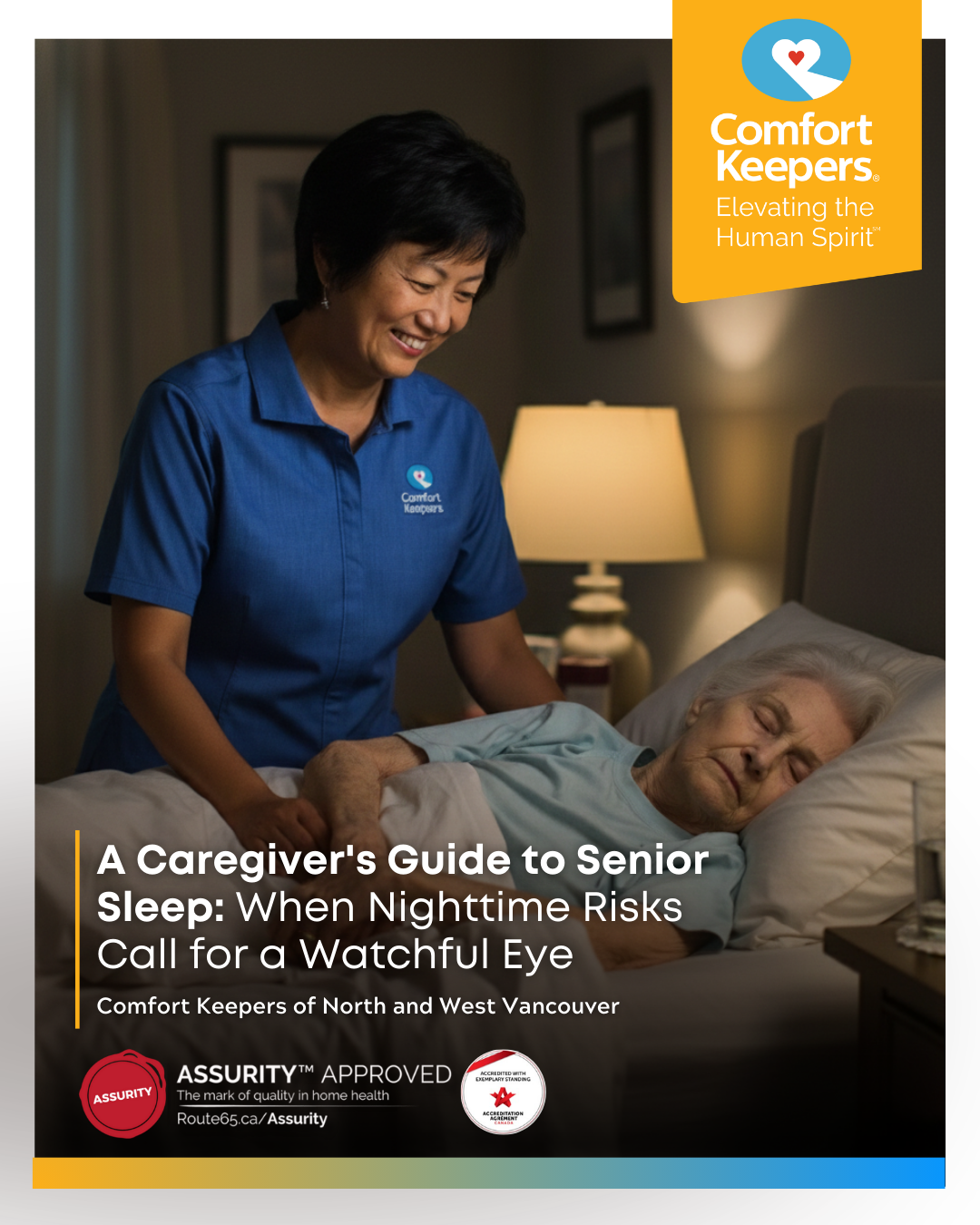
The sound of a thump in the middle of the night. It’s a noise that can jolt any family caregiver from the deepest sleep, heart pounding with a single, urgent question: Are they okay?
For many older adults, the night is no longer a time of uninterrupted rest. It can become a landscape of challenges – frequent trips to the bathroom, disorienting wake-ups, and an increased risk of falls in the dark. As a caregiver, you may find yourself wondering if these nighttime disruptions are just a normal part of aging or a sign that something more is needed.
Understanding the difference is crucial. It’s the key to preserving your loved one’s independence and ensuring their safety, transforming nighttime anxiety into peace of mind. This guide is here to help you navigate that fine line, turning confusion into clarity.

The Shifting Landscape of Sleep: What’s Normal and What’s a Red Flag?
One of the most common myths about aging is that older adults simply need less sleep. Research tells us this isn’t true. While sleep patterns certainly change, the need for restorative rest remains constant.
As we age, our internal body clock, or circadian rhythm, shifts. This can cause us to feel tired earlier in the evening and wake up earlier in the morning. We also spend less time in deep sleep and more time in lighter sleep stages, making us more susceptible to waking up during the night.
So, what’s a normal shift versus a red flag?
- Normal: Waking up once or twice during the night, but being able to fall back asleep easily. Feeling sleepy a bit earlier in the evening.
- Red Flag: Waking up three, four, or more times a night. Experiencing significant disorientation or confusion upon waking. A new pattern of daytime sleepiness that interferes with daily life.
These red flags often point to underlying issues that go beyond typical age-related changes – issues that can dramatically increase nighttime risks.
The Four Common Nighttime Disruptors and Their Hidden Dangers
When sleep becomes consistently fragmented, it’s rarely without cause. Several common conditions can turn the night into a hazardous time, directly increasing the risk of falls and injuries. Understanding them is the first step toward proactive care.
1. Nocturia: More Than Just a Nuisance
Nocturia is the medical term for waking up frequently during the night to urinate. While getting up once might be common, having to navigate a dark hallway multiple times a night is a significant risk factor for falls.
- The Hidden Danger: Each trip from bed to bathroom is a moment of vulnerability. Poor lighting, residual grogginess, and potential mobility challenges create a perfect storm for a fall. A 2025 study highlighted that nocturia is independently associated with an increased risk of falls and fractures in older adults.
- What to Watch For: Is your loved one getting up more than twice a night? Do they seem unsteady or confused when they do? Have you noticed any near-misses or unexplained bruises?
2. Obstructive Sleep Apnea (OSA): The Silent Threat
Sleep apnea is a serious condition where breathing repeatedly stops and starts during sleep. These pauses, or “apneas,” can happen hundreds of times a night, causing the brain to jolt awake to restart breathing. The person often doesn’t remember these awakenings, but their body feels the effects.
- The Hidden Danger: OSA leads to severe sleep fragmentation and oxygen deprivation, resulting in profound daytime fatigue, cognitive impairment, and morning headaches. The sudden awakenings can also cause confusion and an urgent need to get up, increasing the risk of a fall, especially if they are disoriented.
- What to Watch For: Loud, chronic snoring is a classic sign, but also listen for choking or gasping sounds during sleep. Observe if they seem excessively tired during the day despite spending a full night in bed.
3. REM Sleep Behaviour Disorder (RBD): Acting Out Dreams
In a typical sleep cycle, our bodies are essentially paralyzed during the dream phase (REM sleep). In RBD, this paralysis doesn’t happen, causing individuals to physically act out their dreams. This can involve yelling, punching, kicking, or even jumping out of bed.
- The Hidden Danger: The physical actions during an RBD episode can be violent and unpredictable, posing a serious injury risk to both the individual and their sleeping partner. Falling out of bed is a primary and immediate concern.
- What to Watch For: Any uncharacteristic or violent movements during sleep. Your loved one reports vivid, intense dreams that they feel they were a part of.
4. Restless Legs Syndrome (RLS) and General Discomfort
RLS causes an uncontrollable urge to move the legs, usually accompanied by uncomfortable sensations. This feeling is often worse at night, making it difficult to fall and stay asleep. General pain from conditions like arthritis can also lead to frequent repositioning and wakefulness.
- The Hidden Danger: The constant need to move or find a comfortable position prevents restorative sleep and can lead to frustration and fatigue. Getting out of bed to walk around and relieve symptoms introduces the same fall risks associated with nocturia.
The Tipping Point: A Framework for Deciding on Nighttime Supervision
Recognizing the risks is one thing; knowing when to act is another. How can you tell when your loved one’s sleep patterns have crossed the line from a manageable issue to a situation requiring supervision?
Use this checklist to assess the situation. The more questions you answer “yes” to, the stronger the case for considering nighttime monitoring.
The Nighttime Safety Checklist:
- Frequency: Is my loved one waking up more than twice a night on a regular basis?
- Mobility: Do they have difficulty getting in and out of bed, or are they unsteady on their feet?
- Confusion: Do they seem disoriented, confused, or agitated when they wake up at night?
- Recent Incidents: Have there been any recent falls, near-falls, or unexplained injuries?
- Wandering: Have you found them wandering the house at night, or have they ever tried to leave the home?
- Cognitive Decline: Are they living with dementia or another condition that impairs judgment and memory?
- Caregiver Burnout: Is my own sleep being consistently disrupted by listening for them, causing me stress and fatigue?
Answering “yes” to even one or two of these, particularly concerning falls or confusion, indicates that the risk level is elevated. This is the point where a conversation about adding a layer of safety becomes essential. That support can range from family help to professional, which is designed specifically to manage these risks.
Proactive Steps to a Safer Night
When supervision becomes necessary, it doesn’t mean a loss of independence. In fact, it’s a way to preserve it by preventing a life-altering injury. The goal of nighttime care is to provide support with your loved one, not just for them – a philosophy at the heart of our Interactive Caregiving approach.
This can involve:
- Assistance with Bathroom Trips: A caregiver can provide a steady arm and gentle guidance, drastically reducing fall risk.
- Comfort and Reassurance: For those with dementia who experience sundowning or nighttime confusion, a calm presence can soothe anxiety and help them get back to sleep.
- Medication Reminders: Ensuring medications are taken correctly, even in the middle of the night.
- Immediate Emergency Response: Having someone awake and alert in the home provides invaluable peace of mind.
Whether you are exploring family support or professional in-home care services, creating a safe environment is a powerful first step. This includes ensuring pathways are clear, nightlights are installed, and a bedside commode is available if the bathroom is far away.
Frequently Asked Questions About Senior Sleep & Safety
Q1. What are the most common sleep problems for older adults?
A1. The most prevalent issues include insomnia (trouble falling or staying asleep), nocturia (frequent nighttime urination), sleep apnea, Restless Legs Syndrome (RLS), and REM Sleep Behaviour Disorder (RBD). Many of these are linked to other health conditions, so it’s important to discuss them with a doctor.
Q2. How can I tell if my parent is just a ‘light sleeper’ or if there’s a real problem?
A2. The key difference is the impact. A “light sleeper” may wake easily but feels rested. A problem exists when nighttime awakenings are frequent, lead to confusion or mobility risks, and result in significant daytime fatigue that interferes with their quality of life.
Q3. What is the difference between “sleeping night care” and “waking night care”?
A3. “Sleeping night care” is when a caregiver sleeps at the home and is available to be woken a couple of times to assist if needed. “Waking night care,” often part of comprehensive 24-hour care, involves a caregiver who remains awake and alert all night. This is for individuals who wake frequently, are at high risk of falling, or have conditions that require constant monitoring.
Q4. When should I talk to a doctor?
A4. If you notice any of the red flags mentioned – especially signs of sleep apnea, RBD, or a sudden increase in nighttime confusion – it is crucial to schedule a visit with their doctor. These can be symptoms of treatable medical conditions.
Your Path to a Peaceful Night
Worrying about a loved one’s safety at night can take a heavy toll. But by understanding the real risks hidden within changing sleep patterns, you can move from a place of fear to one of empowered action.
The first step is observation. The next is a conversation with your loved one and with their doctor. When you’re ready to explore how dedicated, compassionate support can bring safety and peace of mind back to your family’s nights, we’re here to help you understand your options.
The Best Senior Home Care in North and West Vancouver is Comfort Keepers®
Our senior home care agency offers in-home care focusing on aging in place. Our services include dementia care, end-of-life care, post-surgery care, and palliative care. Comfort Keepers can assist seniors with living transition services, personal care, companionship care, and more!
Quality and Accredited Elderly Care: Happier, Healthier, and at Home with 24/7 Senior Care Opportunities!
Do you need a home care solution for yourself or a loved one? Have you been thinking about retirement homes and their alternatives as a solution? Comfort Keepers® enables seniors to maintain happy, healthy lives in the comfort of their own homes. In-home care services are available in North Vancouver, West Vancouver, and the surrounding areas.
Comfort Keepers® is a Senior Care Agency That Can Make a Difference with Interactive Caregiving™
Our in-home caregivers ensure our senior clients have the best quality of life. The Interactive Caregiving™ program ensures that a senior’s safety, nutrition, mental well-being, and everyday needs are met. This program brings joy and good health to each client’s home.
Comfort Keepers® North Vancouver and West Vancouver Can Help with In-Home Elderly Care Services!
If you are concerned about the health and well-being of a loved one we can help! Comfort Keepers offers 24-hour care and delivers top-quality and compassionate care for seniors. We are dedicated to safety technology solutions that foster independence and enhance well-being.
Locally Owned and Operated Home Health Care Agency
Our care centers around companionship for seniors. Empathetic care originates from the soul and allows us to meet our client’s requirements. The seasoned in-home caregivers employed by Comfort Keepers are carefully chosen based on their empathetic qualities.
Contact the Comfort Keepers® North Vancouver and West Vancouver office at (604) 998-8806 to learn more about our unique in-home care solutions for seniors.
Comfort Keepers is an Accredited Senior Care Agency in North and West Vancouver, BC
Accreditation is a rigorous process that involves industry experts evaluating an organization’s processes, policies, and procedures. Comfort Keepers® North and West Vancouver has been awarded Exemplary Standing by Accreditation Canada. This achievement recognizes that Comfort Keepers® meets or exceeds the stringent quality standards for Home Care companies established by Accreditation Canada.
Senior Health and Well-Being: The Truth About Depression in Seniors

Mental Health Matters: Recognizing Depression in Seniors in North & West Vancouver, BC.
Depression in seniors is a common problem, but it is NOT a normal part of aging. Studies show that most seniors feel satisfied with their lives, despite having more illnesses or physical problems.
#DYK – 10 to 15% of seniors suffer from depression in Canada. The percentage of women suffering from depression is almost double that of men.
Depression in seniors is more than just feeling sad or blue. It is a common but serious mood disorder that needs real treatment. Never view it as a sign of a person’s weakness or a character flaw – or think you can just “turn it off”. It is an illness with serious consequences.
Depression in Seniors and Senior Grief
Grief after the loss of a loved one is a normal reaction and generally does not require professional mental health treatment. Major life changes that occur as we get older may cause uneasiness, stress, and sadness.
Moving from work into retirement, or dealing with a serious illness can leave people feeling down or anxious. After a period of adjustment, seniors can regain their emotional balance, but others do not and may develop depression.
Depression in Seniors Impacts Differently Than in Younger People
While depression is more common in women, it more often increases the risk of suicide in older men. The suicide rate in people age 80 to 84 is more than twice that of the general population. That’s why the National Institute of Mental Health considers depression in people aged 65 and older to be a major public health problem.
There is an increased risk of cardiac diseases and an increased risk of death from illness and following a heart attack associated with depression.
Studies of nursing home patients with physical illnesses have shown that the presence of depression substantially increases the likelihood of death from those illnesses. This can significantly reduce a senior’s ability to rehabilitate.
For these reasons, it is important to make sure that seniors are evaluated and treated, even if the depression is mild.
Seven Warning Signs of Depression in Seniors
If you suspect that your loved one is suffering from depression, pay attention to these health indicators:
#1. Irritability:
Sudden mood changes can suggest depression. If a normally cheerful senior now gets easily irritated, take note.
#2. Loss of self-regard:
Experts say that one of the most obvious signs of depression in seniors is seen when they show a lack of pride in their appearance. Perhaps your mother has stopped wearing makeup, or your father has stopped bathing.
#3. Social withdrawal:
Depressed seniors tend to shut out others and avoid social situations.
#4. Increased pain:
Depression often amplifies physical pain.
#5. Recent illness or surgery:
Seniors recovering from major illness or surgery are much more likely to develop a depressive episode, and some go on to have a depression disorder. Research shows that 15 percent of people who are discharged from a hospital leave with depressive symptoms.
#6. Recent loss:
Older persons have a much higher risk than younger people of falling into depression after the loss of a loved one. It’s quite common.
#7. Insomnia:
Studies have linked depression with the inability to sleep, and insomnia is a risk factor for depression onset and recurrence – particularly in seniors.

Treatment for Depression in Seniors is Available
Doctors are encouraged to screen for depression with their senior patients routinely. Using a series of standard questions, a primary care doctor can provide an effective screening for depression, allowing for better diagnosis and treatment.
Sometimes, a combination of the following treatments may be used. Ask your loved one’s doctor more about these protocols.
There are several treatment options available for depression:
- Medicine
- Psychotherapy or counselling
- Electroconvulsive therapy or other newer forms of brain stimulation (such as repetitive transcranial magnetic stimulation (RTMS).
Depression in Seniors: Don’t Let Your Senior Loved One Suffer
While it’s natural to experience some grief in the face of major life changes, clinical depression doesn’t go away by itself, can last for several months, and needs to be treated by a professional. It’s best to be a part of the solution – and because of the social stigma attached to this disorder, you’ll be doing your loved one a favour.
The Best Senior Home Care in North and West Vancouver is Comfort Keepers®
Our senior home care agency offers in-home care focusing on aging in place. Our services include; dementia care, end-of-life care, post-surgery care, and palliative care. Comfort Keepers can assist seniors with living transition services, personal care, companionship care, and more!
Quality and Accredited Elderly Care: Happier, Healthier, and at Home with 24/7 Senior Care Opportunities!
Do you need a home care solution for yourself or a loved one? Have you been thinking about retirement homes and their alternatives as a solution? Comfort Keepers® enables seniors to maintain happy, healthy lives in the comfort of their own homes. In-home care services are available in North Vancouver, West Vancouver, and the surrounding areas.
Comfort Keepers® is a Senior Care Agency That Can Make a Difference with Interactive Caregiving™
Our in-home caregivers ensure our senior clients have the best quality of life. The Interactive Caregiving™ program ensures that a senior’s safety, nutrition, mental well-being, and everyday needs are met. This program brings joy and good health to each client’s home.
Comfort Keepers® North Vancouver and West Vancouver Can Help with In-Home Elderly Care Services!
If you are concerned about the health and well-being of a loved one we can help! Comfort Keepers offers 24-hour care and delivers top-quality and compassionate care for seniors. We are dedicated to safety technology solutions that foster independence and enhance well-being.
Locally Owned and Operated Home Health Care Agency
Our care centers around companionship for seniors. Empathetic care originates from the soul and allows us to meet our client’s requirements. The seasoned in-home caregivers employed by Comfort Keepers are carefully chosen based on their empathetic qualities.
Contact the Comfort Keepers® North Vancouver and West Vancouver office at (604) 998-8806 to learn more about our unique in-home care solutions for seniors.
Comfort Keepers is an Accredited Senior Care Agency in North and West Vancouver, BC
Comfort Keepers® North and West Vancouver accredited with Exemplary Standing with Accreditation Canada. Accreditation is an intensive process in which industry experts examine an organization’s processes, policies, and procedures against quality standards. To achieve accredited status, Comfort Keepers® met or exceeded the rigorous standards for Home Care companies, outlined by Accreditation Canada.
References:
- National Institutes of Health (NIH) Senior Health. “Depression”. Web. 2016.
- American Psychological Association. “Aging and Depression”. Web. 2016.
- A Place for Mom. “Elderly Depression: Symptoms & Care”. Web. 2015.
- WebMD. “Depression in the Elderly”. Web. 2016.
- Mood Disorders Association of Ontario. “Frequently Asked Questions – Seniors and Depression”. Web 2016.