


2025 Winter Safety Checklist for Seniors Living at Home in Ridge Meadows
Home Care Ridge Meadows | November 27, 2025
Winter safety for seniors living independently in British Columbia requires specific preparation for temperatures that can drop to -15°C and snowfall averaging 166cm annually in the Lower Mainland. This comprehensive checklist addresses the unique challenges seniors face during BC’s winter months, from November through March, helping you maintain independence while staying safe at home.
British Columbia’s winter weather patterns create particular risks for older adults, especially in communities like Ridge Meadows where temperature fluctuations and occasional ice storms can create hazardous conditions. With proper preparation and awareness, seniors can confidently navigate the winter season while minimizing health and safety risks.
Understanding Winter Risks for Seniors in BC
Physical Challenges During Winter
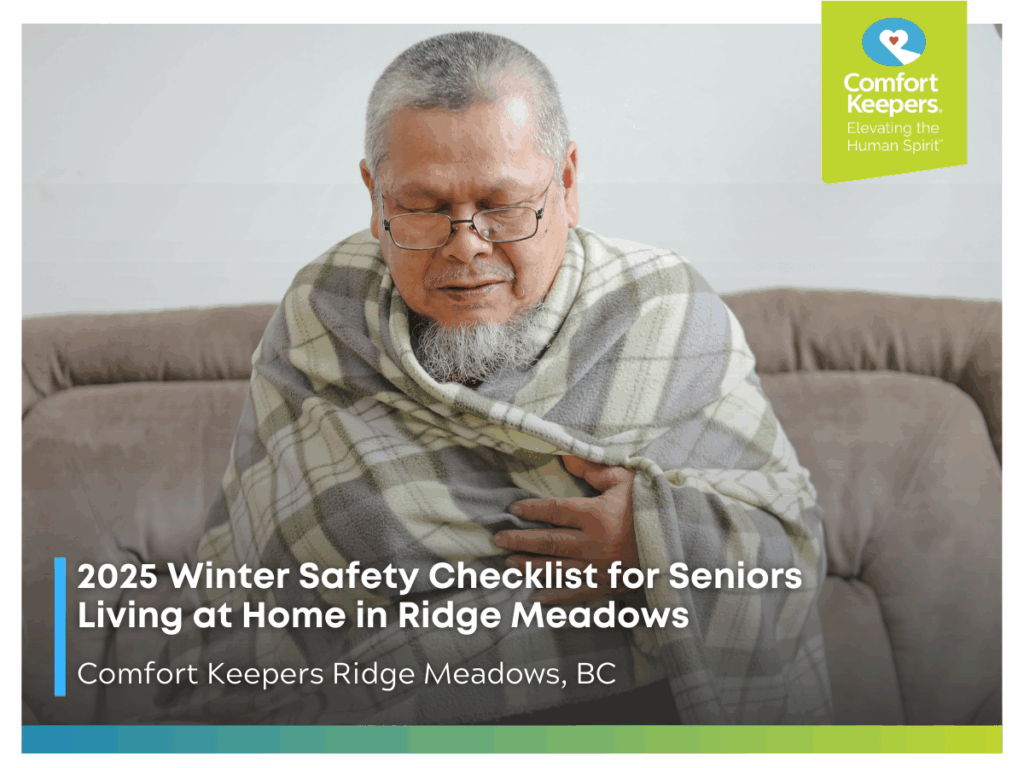
Cold weather affects seniors differently than younger adults due to age-related changes in circulation, medication effects, and reduced ability to regulate body temperature. Seniors over 65 have a 50% higher risk of cold-related injuries compared to younger adults, according to Health Canada data.
The most common winter-related health concerns for BC seniors include:
- Hypothermia risk when indoor temperatures drop below 18°C
- Increased fall risk due to icy conditions
- Respiratory complications from cold air exposure
- Joint stiffness and arthritis flare-ups
- Seasonal Affective Disorder affecting 2-3% of Canadian seniors
BC-Specific Weather Considerations
British Columbia’s coastal climate creates unique winter challenges with frequent freeze-thaw cycles, creating black ice conditions that are particularly dangerous for seniors. The province experiences an average of 15-20 freezing rain events annually, making outdoor mobility especially treacherous.
Indoor Safety and Heating Preparation
Heating System Maintenance
Your home’s heating system requires annual professional inspection before winter arrives. This inspection should include furnace filter replacement, ductwork examination, and carbon monoxide detector testing.
Essential heating safety steps:
- Schedule professional HVAC inspection annually
- Replace furnace filters every 3 months during winter
- Test all smoke and carbon monoxide detectors monthly
- Keep space heaters at least 1 meter from flammable materials
- Ensure main heating system can maintain 20-22°C consistently
Preventing Frozen Pipes
BC’s coastal regions experience pipe freezing when temperatures drop below -2°C for more than 6 hours consecutively. Frozen pipes affect approximately 15% of BC homes annually, with seniors being disproportionately affected due to reduced mobility for preventive measures.
Pipe protection strategies:
- Insulate exposed pipes in crawl spaces and basements
- Allow faucets to drip slowly when temperatures drop below -5°C
- Open cabinet doors under sinks to allow warm air circulation
- Know the location of your main water shutoff valve
- Keep garage doors closed if water lines run through them
Emergency Heating Backup
Power outages during winter storms affect BC residents for an average of 4-6 hours, with some lasting 24-48 hours. Seniors should have backup heating plans that don’t rely on electricity.
Safe backup heating options:
- Battery-powered or hand-crank radio for weather updates
- Extra blankets and warm clothing layers
- Non-electric space heaters with proper ventilation
- Wood-burning fireplace with seasoned hardwood supply
- Emergency contact list including Comfort Keepers Ridge Meadows for assistance
Outdoor Safety and Mobility
Footwear and Traction
Proper winter footwear reduces fall risk by 68% according to the Canadian Centre for Occupational Health and Safety. Seniors should invest in footwear specifically designed for icy conditions common in BC winters.
Recommended footwear features:
- Deep-tread rubber soles with winter-specific tread patterns
- Ice cleats or removable traction devices
- Insulated boots rated for temperatures down to -20°C
- Low-heeled design with ankle support
- Waterproof materials for wet BC snow conditions
Ice and Snow Removal
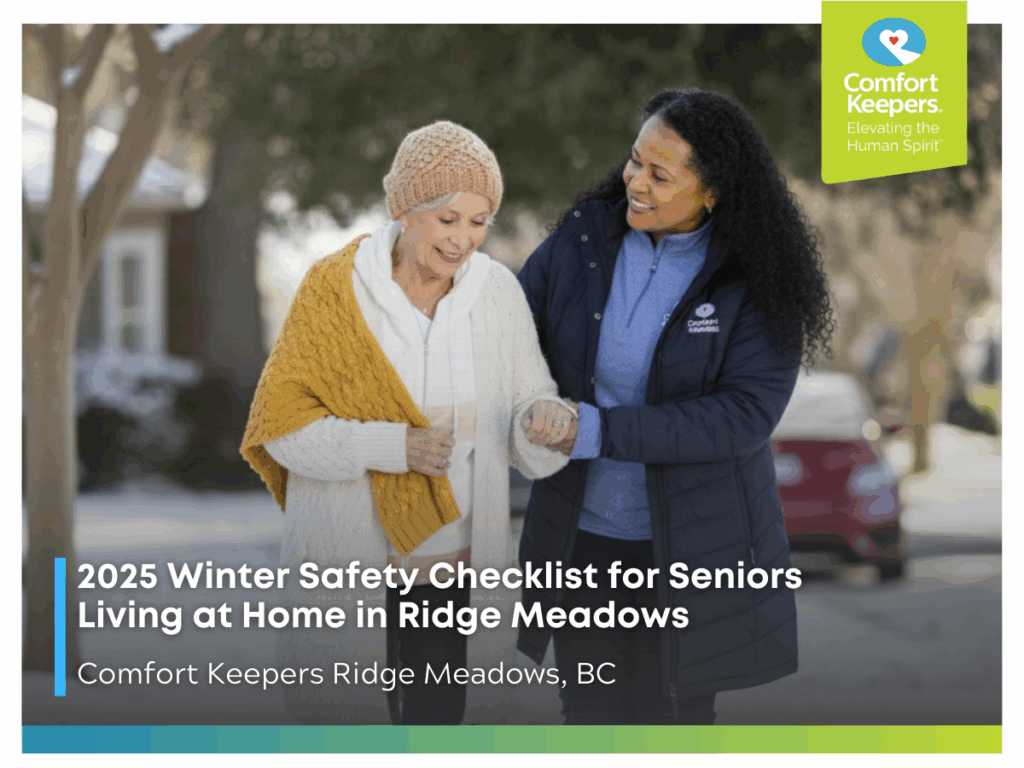
Snow removal presents significant cardiac risk for seniors, with snow shoveling contributing to 11,500 emergency room visits annually across Canada. Seniors over 65 should avoid traditional snow shoveling entirely.
Safe snow management alternatives:
- Hire professional snow removal services
- Use rock salt or ice melter on walkways (apply at 2-4 grams per square meter)
- Install heated walkway mats for main pathways
- Arrange neighborhood assistance through community programs
- Contact Comfort Keepers Ridge Meadows for home maintenance support
Outdoor Movement Techniques
Safe outdoor mobility during BC winters requires specific techniques adapted for coastal conditions where wet snow and ice create slippery surfaces.
Winter walking safety:
- Take shorter, slower steps to maintain balance
- Use handrails whenever available
- Avoid rushing or sudden direction changes
- Wear layers that allow arm movement for balance
- Plan outdoor activities between 10 AM and 3 PM when temperatures are highest
Emergency Preparedness
Winter Emergency Kit Essentials
BC Emergency Management recommends 72-hour emergency kits, but seniors should prepare for 7-10 days of potential isolation during severe winter weather events.
Essential emergency supplies:
- 4 liters of water per person per day (minimum 7-day supply)
- Non-perishable food requiring no cooking (canned goods, crackers, dried fruits)
- Battery-powered or hand-crank radio and flashlight
- First aid kit with extra prescription medications
- Warm blankets and extra clothing layers
- Waterproof matches and candles
- Manual can opener and plastic utensils
- Cash in small bills for emergency purchases
Medication Management
Winter weather can disrupt pharmacy deliveries and medical appointments, making medication planning crucial for seniors with chronic conditions.
Medication winter preparedness:
- Maintain 30-day extra supply of all prescriptions
- Store medications at proper temperatures (avoid freezing)
- Keep medication list with emergency contacts
- Arrange pharmacy delivery services before winter storms
- Have backup pharmacy contact information
Communication Planning
Isolation during winter storms poses significant risks for seniors living alone. Effective communication planning can prevent emergency situations from becoming life-threatening.
Communication strategies:
- Daily check-in schedule with family or friends
- Medical alert system with 24/7 monitoring
- Cell phone with car charger backup
- Landline telephone that works during power outages
- Emergency contact list including local services
- Connection with Comfort Keepers Ridge Meadows for regular wellness checks
Health and Wellness During Winter
Maintaining Physical Activity
Reduced daylight and cold weather lead to 40% decreased physical activity among seniors during winter months, contributing to muscle weakness and balance problems.
Indoor exercise options:
- Chair exercises focusing on strength and flexibility
- Walking in heated indoor spaces like malls (Meadowtown Centre open daily)
- Online senior fitness programs through Ridge Meadows Seniors Society
- Balance training exercises to prevent falls
- Resistance band workouts requiring minimal space
Mental Health Considerations
Seasonal Affective Disorder affects 2-3% of Canadian seniors, with symptoms including depression, fatigue, and social withdrawal. Early intervention can prevent serious mental health complications.
Mental wellness strategies:
- Light therapy using 10,000 lux light boxes for 30 minutes daily
- Maintaining social connections through community programs
- Regular indoor activities and hobbies
- Vitamin D supplementation (consult healthcare provider)
- Professional support through local mental health services
Nutrition and Hydration
Winter months can affect senior nutrition due to reduced mobility, decreased appetite, and limited fresh food access during storms.
Winter nutrition guidelines:
- Maintain regular meal schedule with warm, nutritious foods
- Keep non-perishable nutritious snacks available
- Stay hydrated with warm beverages (8 glasses fluid daily)
- Take vitamin D supplements as recommended by physician
- Plan grocery shopping for storm-free periods
Home Maintenance and Safety Checks
Seasonal Safety Inspections
Regular home safety inspections become critical during winter months when small problems can become dangerous situations.
Monthly winter safety checks:
- Test smoke and carbon monoxide detectors
- Inspect heating system operation
- Check door and window seals for drafts
- Verify emergency supply levels
- Clear snow from exterior vents and air intakes
- Inspect walkways for ice formation
Professional Service Arrangements
Many maintenance tasks become unsafe for seniors during winter conditions, making professional service arrangements essential.
Recommended professional services:
- Gutter cleaning and inspection before freeze season
- Roof inspection for ice dam potential
- Electrical system check for winter load capacity
- Plumbing inspection for freeze protection
- HVAC system tune-up and emergency service contract
Community Resources and Support
Local Winter Support Services
Ridge Meadows offers several winter support programs specifically designed for senior residents facing mobility or independence challenges.
Available community services:
- Meals on Wheels winter delivery programs
- Transportation services for medical appointments by Comfort Keepers Ridge Meadows
- Snow removal assistance through volunteer programs
- Emergency wellness check services
- Community center warming centers during power outages
Healthcare Access Planning
Winter weather can complicate medical care access, making advance planning essential for seniors with regular healthcare needs.
Healthcare winter planning:
- Schedule routine appointments before severe weather season
- Arrange prescription delivery services
- Identify nearest walk-in clinic with winter hours
- Plan transportation for emergency medical needs
- Maintain updated medical information with emergency contacts
Technology and Safety Devices
Medical Alert Systems
Medical alert systems provide crucial safety support for seniors living independently during winter months when help may be delayed due to weather conditions.
Recommended alert system features:
- 24/7 monitoring with two-way communication
- GPS tracking for outdoor emergencies
- Fall detection technology
- Waterproof design for bathroom safety
- Battery backup lasting minimum 24 hours
Home Monitoring Technology
Smart home technology can provide additional safety layers during winter months, monitoring for temperature drops, power outages, and unusual activity patterns.
Helpful monitoring devices:
- Smart thermostats with remote monitoring capability
- Water leak sensors near pipes prone to freezing
- Motion sensors for family monitoring of daily routines
- Smart lighting with automatic activation
- Video doorbells for safe visitor identification
Frequently Asked Questions
What temperature should seniors maintain indoors during BC winters?
Seniors should maintain indoor temperatures between 20-22°C during winter months. Health Canada recommends never allowing indoor temperatures to drop below 18°C, as this increases hypothermia risk for older adults. Using programmable thermostats can help maintain consistent temperatures while managing heating costs.
How can seniors safely remove ice from walkways?
Seniors should avoid physical ice removal and instead use ice-melting products containing sodium chloride or calcium chloride, applied at manufacturer-recommended rates. For immediate safety, spread sand or cat litter for traction until professional help arrives. Contact local services or Comfort Keepers Ridge Meadows for assistance with ice and snow removal.
What medications need special winter storage considerations?
Most medications should be stored at room temperature (15-25°C) and protected from freezing. Insulin, liquid medications, and some eye drops can be damaged by freezing temperatures. During power outages, move temperature-sensitive medications to the warmest part of your home, and consult your pharmacist about temporary storage solutions.
How much emergency food should seniors store for winter?
BC Emergency Management recommends 7-day emergency food supplies for seniors, focusing on non-perishable items requiring no cooking. Store 2,000-2,500 calories worth of food per day, including protein sources like canned fish, nuts, and legumes. Include comfort foods and items that don’t require refrigeration after opening.
When should seniors avoid going outdoors during winter?
Seniors should stay indoors when temperatures drop below -15°C, during freezing rain warnings, or when wind chill factors reach -20°C or lower. Environment Canada weather warnings should be taken seriously, particularly ice storm warnings that create extremely hazardous walking conditions for older adults.
What are signs of hypothermia in seniors?
Early hypothermia signs include shivering, confusion, slurred speech, loss of coordination, and unusual fatigue. Seniors are at higher risk due to decreased ability to regulate body temperature. If hypothermia is suspected, call 911 immediately, move to a warm environment, and remove wet clothing while waiting for medical help.
How can seniors maintain social connections during winter isolation?
Maintain social connections through scheduled phone calls, video chats with family, participation in community center programs, and involvement in senior-focused activities. Many Ridge Meadows community centers offer winter programming specifically for seniors. Consider arranged visits from Comfort Keepers companion services for regular social interaction.
What winter exercise options are safe for seniors with mobility limitations?
Chair-based exercises, gentle stretching routines, and supervised walking in heated indoor spaces provide safe winter activity options. Many BC Recreation centers offer senior-specific programs during winter months. Consult healthcare providers before starting new exercise routines, and focus on balance and strength activities to prevent falls.
Key Takeaways
- Maintain indoor temperatures at 20-22°C and have backup heating plans ready
- Invest in proper winter footwear with ice-gripping soles and consider professional ice removal services
- Keep 7-10 days of emergency supplies including water, non-perishable food, medications, and warm clothing
- Arrange regular check-ins with family, friends, or professional services like Comfort Keepers Ridge Meadows
- Schedule heating system inspections, pipe insulation, and home safety checks before winter arrives
- Use community resources and professional services for snow removal, transportation, and emergency assistance
- Maintain physical activity through indoor exercises and mental wellness through social connections
- Install medical alert systems and ensure communication devices work during power outages
Winter safety for seniors requires proactive planning, but with proper preparation, older adults can maintain independence and safety throughout British Columbia’s winter season. For additional support with daily activities, home safety, or companionship during winter months, contact Comfort Keepers Ridge Meadows to learn about services designed specifically for senior winter safety and independence.
Individualized Home Care Options
Long-Term Home Care, 24 Hour Home Care & Short Term Care Options Customized for You