

Preserving the Spark: How In-Home Care Protects the Hobbies That Define Us
Companionship Care | January 23, 2026
Think about your father for a moment. Not just as a father, but as the man who spent every Saturday morning in his workshop, the scent of sawdust hanging in the air. Or your mother, whose hands, dusted with flour, could conjure magic from the oven. These aren’t just pastimes; they are the brushstrokes of their identity.
But what happens when the workshop falls silent? When the flour sits unused? For many seniors, changes in health or mobility can create an invisible barrier between them and the passions that bring them joy and a sense of self. It’s a quiet loss that often goes unspoken, but its impact on well-being is profound.
The common belief is that this is an inevitable part of aging. But what if it isn’t? What if support wasn’t about taking over, but about empowering them to continue being who they’ve always been?

More Than Just a Pastime: Why Hobbies are the Lifeline of Identity
We often talk about “active aging,” which is about more than just physical health. It’s about staying engaged with life – mentally, socially, and emotionally. Hobbies are not just ways to pass the time; they are powerful engines for active aging.
- They Preserve Identity: A person who has identified as a “gardener” or a “musician” their entire life feels a deep sense of continuity and purpose when they can maintain that role. It’s a connection to their younger self.
- They Boost Mental Well-being: Engaging in a focused, enjoyable activity can reduce stress, alleviate symptoms of anxiety and depression, and provide a much-needed sense of accomplishment.
- They Sharpen the Mind: Whether it’s learning a new recipe, tackling a complex puzzle, or reading a challenging book, hobbies keep cognitive skills sharp and the brain active.
When these activities fade, it’s not just the hobby that’s lost. It’s a piece of the person.
The Unseen Barrier: When Lifelong Passions Become a Challenge
For many families, watching a loved one struggle with a cherished hobby is heartbreaking. The challenges are often practical, but they feel deeply personal.
- Physical Limitations: Arthritis can make it difficult to hold a paintbrush. Reduced strength can turn lifting a bag of potting soil into an impossible task.
- Safety Concerns: Poor balance might make standing in the kitchen to cook a full meal a fall risk. Vision changes can make reading fine print or sheet music frustrating.
- Cognitive Changes: Difficulty with memory or sequencing can make following complex instructions for a craft or a recipe feel overwhelming.
- Loss of Energy & Motivation: Sometimes, the sheer effort required to set up, execute, and clean up after a hobby is simply too exhausting, leading to a cycle of withdrawal.
It’s easy to see these barriers as endpoints. But with the right approach, they are simply problems waiting for a creative solution.
Redefining Support: How a Caregiver Becomes a Hobby Partner
This is where we need to shift our thinking about in-home care. It’s not about a caregiver coming in to simply manage tasks. It’s about a partnership that enables a senior to continue living a full, vibrant life. A caregiver isn’t just an assistant; they are a facilitator, an adapter, and an encourager.
Here’s how this partnership works in practice:
The Physical Assistant: Handling the Heavy Lifting
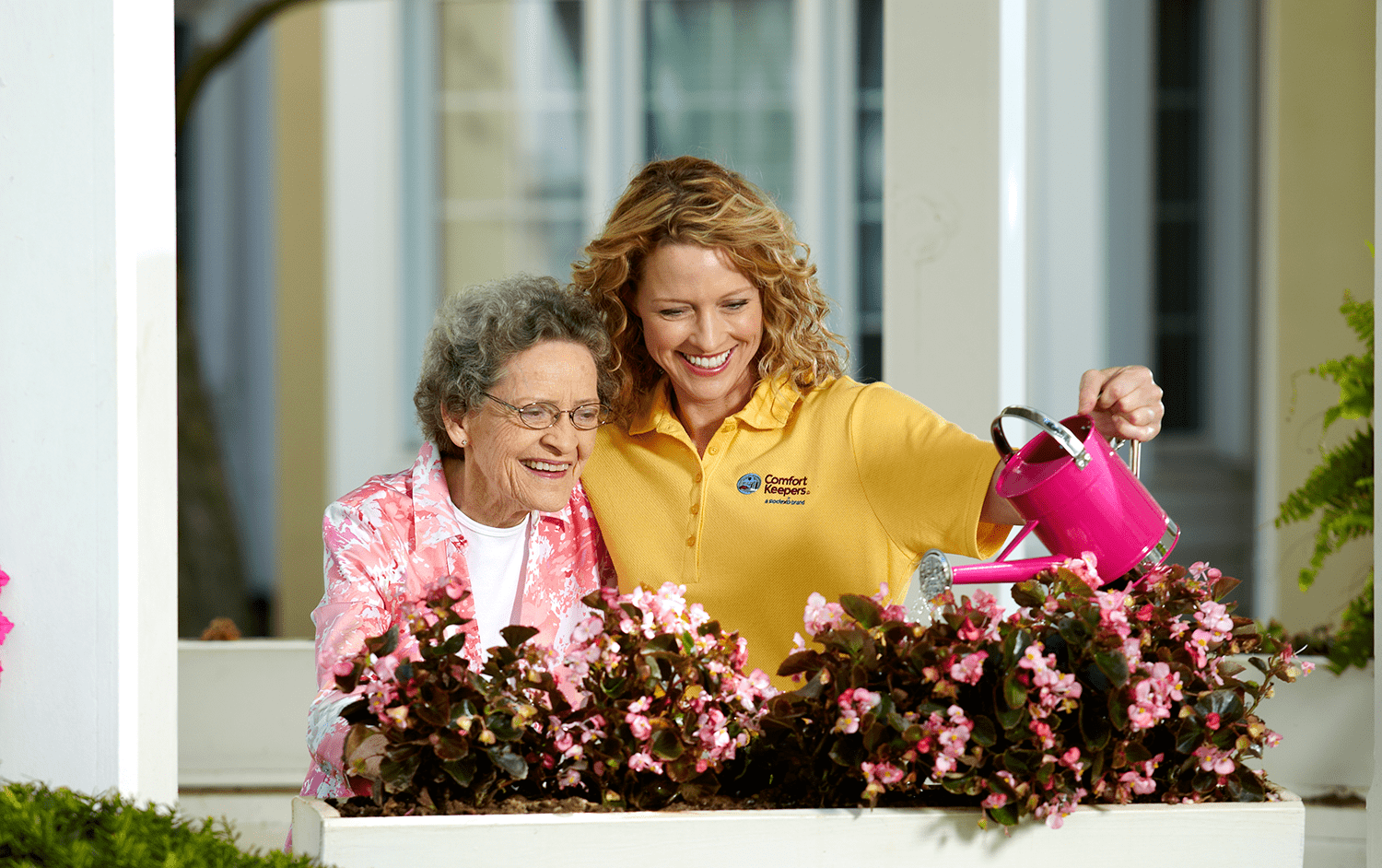
For the avid gardener, a caregiver can manage the tilling, carry heavy watering cans, and transport bags of mulch, leaving the senior free to focus on the parts they love – the planting, pruning, and harvesting. This isn’t taking over the hobby; it’s removing the obstacles.
The Creative Adapter: Reimagining the Hobby
A great caregiver is a creative problem-solver. They can help transition a lifelong passion to fit new circumstances.
- For the Cook: They can do the chopping and heavy lifting, set up an ergonomic stool, and find adaptive tools that make stirring and mixing easier.
- For the Artist: They can set up the easel and paints, ensure proper lighting, and find brushes with larger, easier-to-grip handles.
- For the Gardener: They can help build raised garden beds to eliminate bending or set up an indoor hydroponic system for year-round enjoyment.
The Dedicated Facilitator: Managing the Logistics
Sometimes the biggest hurdle is just getting started. A caregiver can manage the logistics that have become overwhelming, such as driving to the library or craft store, ordering supplies online, setting up a laptop for a virtual book club, or printing out a new recipe in a large, easy-to-read font.
The Encouraging Companion: Sharing the Joy
Hobbies are often more fun when shared. A caregiver provides companionship that combats the isolation that can creep in. They can be an appreciative audience for a musician, a partner in a game of cards, or a sounding board for the family historian piecing together their ancestry. This shared experience “elevates the human spirit” and transforms a solitary activity into a moment of connection.
Bringing Passions to Life: Real-World Scenarios
It’s one thing to talk about these ideas in the abstract. It’s another to see them in action. Let’s look at how personalized in-home care helps real people stay connected to their passions.
Senior Spotlight: Clara and Her Award-Winning Roses
Clara, 82, has been known for her magnificent rose garden for over 40 years. After a hip replacement, the bending and lifting became too painful. She was devastated, feeling she was losing a core part of who she was. Her caregiver, Maria, worked with her to create a plan. Maria now handles the heavy digging and weeding, while Clara sits comfortably on a garden stool, directing the work and handling the delicate pruning herself. Together, they not only saved the garden but also entered a rose in the local fair last summer – and won second place.
Senior Spotlight: David, the Family Archivist
David, 78, always dreamed of creating a comprehensive family tree and history book for his grandchildren. His failing eyesight and unsteady hands made using a computer for hours difficult. His caregiver, Sam, helped him set up voice-to-text software, scanned old family photos, and organized digital files. David now spends his afternoons dictating stories and memories, while Sam handles the technical side. He’s not just passing the time; he’s creating a legacy.
Adapting to Change: Supporting Hobbies Through Health Transitions
A person’s needs and abilities can change over time, and a truly effective care plan adapts right along with them. This is especially critical for individuals facing cognitive decline. Hobbies can be a powerful anchor for those experiencing memory loss, providing familiarity, comfort, and a sense of accomplishment.
For someone with memory challenges, a caregiver can help simplify a beloved hobby. Instead of a complex multi-course meal, they might bake simple cookies together, focusing on the sensory experience of smelling the cinnamon and vanilla. For those who need more specialized care for conditions like Alzheimer’s and dementia, activities like listening to familiar music, looking through photo albums, or doing simple, tactile crafts can provide profound comfort and connection. The goal shifts from output to engagement.
Frequently Asked Questions About In-Home Care and Hobbies
It’s natural to have questions when exploring this for the first time. Here are some of the most common ones we hear.
Q1. Will my loved one lose their independence if a caregiver helps with their hobby?
A1. This is the biggest myth. The goal of high-quality in-home care is the opposite – it’s to sustain independence. By providing support for challenging tasks, a caregiver empowers a senior to remain in control of the parts of the hobby they can and want to do. It’s about enabling, not replacing.
Q2. What if my parents’ hobbies seem too complex or physical?
A2. Almost any hobby can be adapted. Woodworking can become wood carving with softer woods. Marathon running can transition to guided walks. The key is a creative and collaborative approach between the senior, the family, and the caregiver to find a new way to engage with an old passion.
Q3. How do we even begin to figure out what support is needed?
A3. It starts with a conversation. Talk to your loved one about what they miss doing and what barriers they’re facing. A professional in-home assessment can then help you and your family create a customized plan that focuses specifically on their unique interests and goals, ensuring the support they receive is perfectly matched to their needs.
Q4. Can a caregiver help with hobbies that involve technology, like online classes?
A4. Absolutely. Caregivers can be instrumental in bridging the digital divide. They can help set up tablets for video calls with family, find and log into virtual museum tours, or assist with online learning platforms, opening up a whole new world of engagement.

The First Step to Rekindling a Passion
Your loved one’s passions are the threads that make up the rich tapestry of their life. Protecting those threads is one of the most powerful ways to support their overall well-being and honor their identity.
The journey doesn’t have to end when physical or cognitive challenges arise. With the right partnership, a new chapter can begin – one where cherished hobbies continue to provide joy, purpose, and a vital connection to who they are. The first step is simply to look beyond the challenges and start a conversation about the possibilities.
The Best, Expert Senior Home Care in Chilliwack , British Columbia is Comfort Keepers®
At Comfort Keepers®, we provide personalized, compassionate in-home care services for seniors in Chilliwack, and surrounding areas.
The team at Comfort Keepers Chilliwack is proud to provide home care that keeps seniors safe. We support thousands of families each year with home care services for seniors—helping loved ones remain happy, and independent in the homes they love.
Home is The Best Place to Be for Senior Care
Providing home care can be very draining and taxing on family caretakers. That’s where we come in. With in-home assisted living as a lifestyle choice seniors can start a new, fresh take on daily living while remaining in the comfort and familiarity of home.
Comfort Keepers® Chilliwack offers professional, flexible care solutions that lighten the load for families and give everyone peace of mind—knowing their loved one is in good hands.
We offer a range of services that include elderly homecare for seniors, senior independent support, personal care services, respite care, and more.
Comfort Keepers® Chilliwack Can Help with Companion Care and Interactive Caregiving™
Our trained caregivers, or Comfort Keepers, help provide our elderly clients with personal home care to help maintain the highest possible quality of life. Caregivers deliver Interactive Caregiving™, a system of care that addresses safety, nutrition, mind, body, and activities of daily living (ADLs).
Interactive Caregiving™ is an opportunity to interact one-to-one with a senior, engage them, learn about them, and give them the gift of personalized, thoughtful attention that allows them to maintain their independence.
At Comfort Keepers® Chilliwack, we believe keeping our clients physically, mentally, emotionally and socially involved can make a difference in their well-being. .
Comfort Keepers® Chilliwack Provides Home Care and a Wide Range of In-Home Care Services for Seniors.
Are you looking for reliable home care in Chilliwack? Learn more about our unique service, which offers personal care, companionship care, palliative, and end-of-life care in Chilliwack, and surrounding areas. Contact the Comfort Keepers® Chilliwack office today, our professional staff will be happy to explain our customizable in-home care options and to schedule a free in-home consultation.
Individualized Home Care Options
Long-Term Home Care, 24 Hour Home Care & Short Term Care Options Customized for You