


What is the Importance of Medication Management in Caregiving?
Medication Management | February 23, 2026
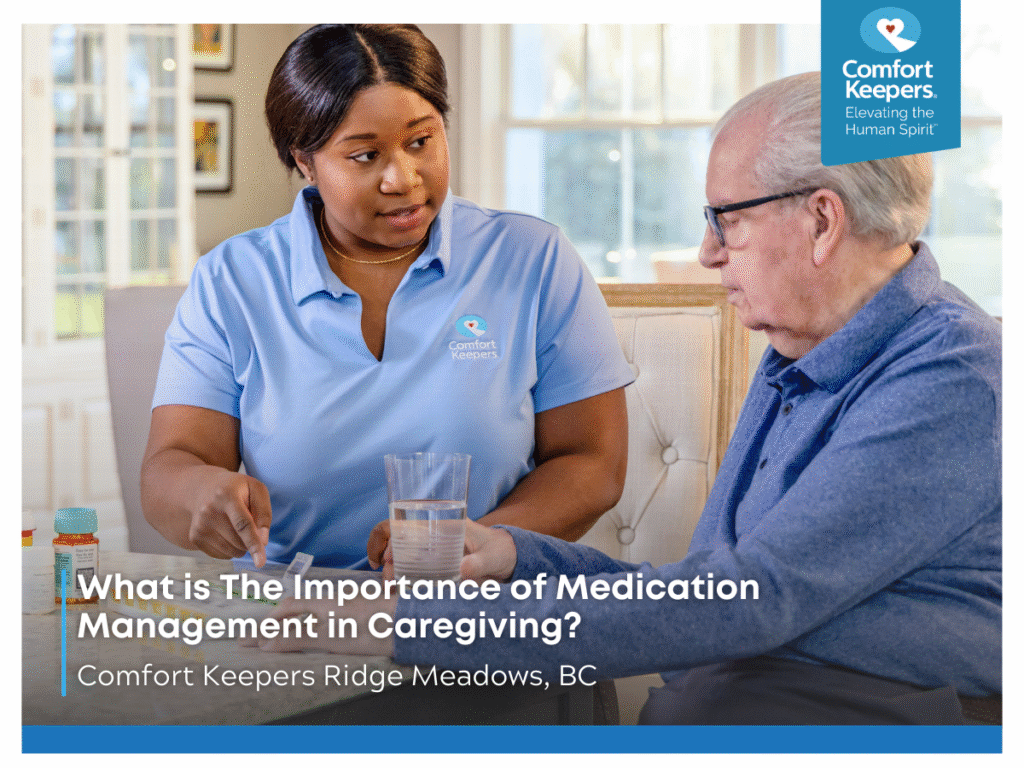
For many seniors in Canada, maintaining independence at home hinges on one critical daily task: taking the right medication at the right time. As health conditions become more complex with age, the number of prescriptions often increases, creating a polypharmacy situation that can be dangerous if not managed correctly.
Medication management is more than just a routine chore; it is a vital safety net. Effective management prevents hospitalizations, delays nursing home admissions, and ensures that chronic conditions remain under control.
For family caregivers in Ridge Meadows and across Canada, understanding the gravity of this role is the first step toward ensuring a loved one’s safety.
The Critical Risks of Medication Non-Adherence for Seniors
Medication non-adherence, failing to take medication as prescribed, is a silent epidemic among the elderly. It is not merely about forgetting a pill; it involves incorrect dosages, taking medication at the wrong time, or mixing incompatible drugs.
Common Dangers of Missed or Incorrect Doses
The consequences of mismanagement can be immediate and severe. For a senior with hypertension, a missed dose can lead to a stroke. For those with diabetes, it can result in dangerous blood sugar fluctuations.
- Adverse Drug Reactions (ADRs): Seniors metabolize drugs differently. An accidental double dose can lead to toxicity, falls, or confusion often mistaken for dementia.
- Functional Decline: Inconsistent medication use can cause a gradual decline in physical and cognitive abilities, making it harder for seniors to age in place.
- Hospital Readmissions: A significant percentage of seniors returning to the hospital shortly after discharge do so because they did not follow their new medication regimen at home.
Canadian Statistics on Senior Medication Errors
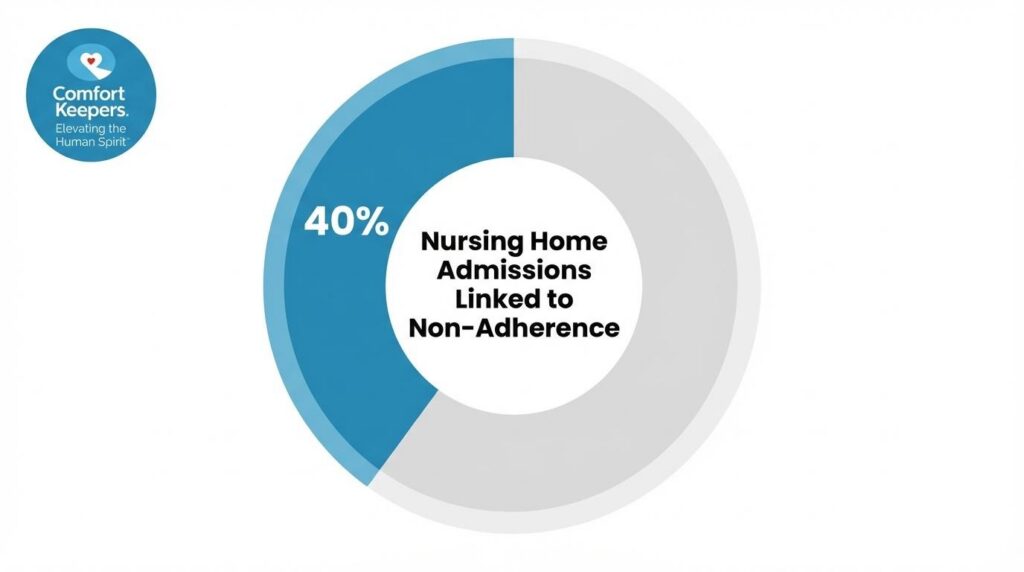
The scale of this issue in Canada is alarming. According to the Canadian Institute for Health Information (CIHI), nearly two-thirds of seniors on public drug programs claim five or more drug classes, increasing the risk of interactions. Furthermore, studies suggest that medication non-adherence is a factor in approximately 40% of nursing home admissions.
Financial barriers also play a role. Research indicates that 1 in 12 Canadians aged 55 and older skip prescriptions due to cost, a rate higher than in many comparable countries. This statistic highlights the need for caregivers to not only manage the pills but also navigate the financial and logistical aspects of pharmacy visits.

The Role of a Caregiver in Medication Adherence
A caregiver’s role in medication management acts as the frontline defense against these risks. While non-medical caregivers (such as family members or home support workers) generally do not administer invasive medications (like injections), they play an essential role in assisting with adherence.
Overcoming Challenges with Complex Schedules
Family caregivers often face the medication puzzle: managing pills that must be taken with food, on an empty stomach, or at very specific intervals.
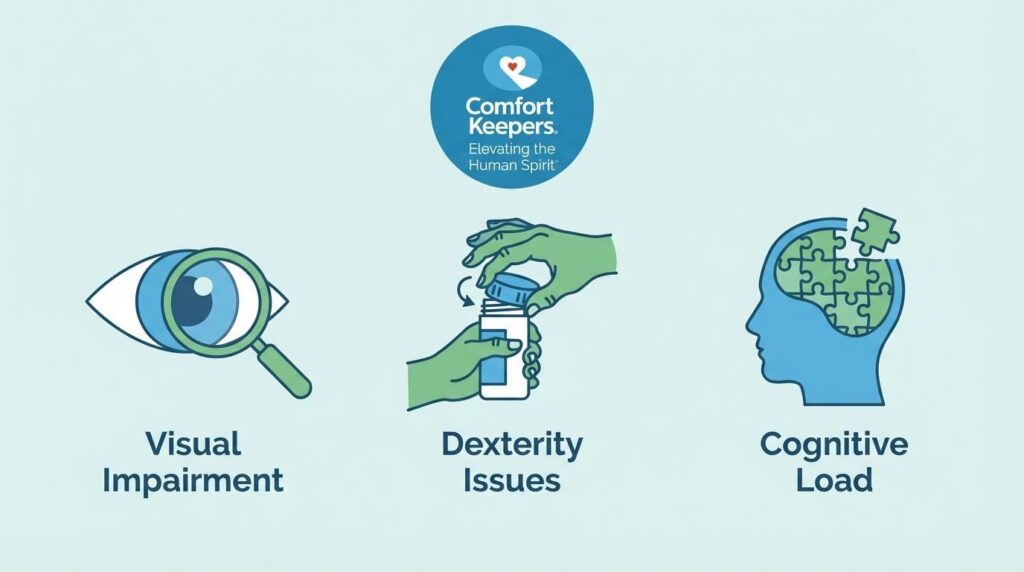
- Visual Impairment: Seniors may struggle to read small print on labels.
- Dexterity Issues: Arthritis can make opening child-proof safety caps nearly impossible.
- Cognitive Load: Remembering a schedule for 5+ different medications is mentally taxing for anyone, let alone a senior experiencing memory change.
To eliminate these manual errors entirely, our team can deploy automated medication protocols and support systems for your loved one.
Supporting Seniors with Dementia or Cognitive Decline
For seniors with Alzheimer’s or dementia, the challenge is twofold: they may forget to take their meds, or worse, forget they already took them and overdose. In these cases, the caregiver’s role shifts from reminding to active supervision.
This involves locking away medications to prevent accidental double-dosing and using technology like automated dispensers that only unlock the correct dose at the correct time.
Best Practices for Safe Medication Administration
Ensuring safety requires a systematic approach. Caregivers should move away from relying on memory and adopt strict protocols.
Organization Techniques for Caregivers
- Blister Packs (Compliance Packaging): Ask your local Canadian pharmacist to package medications in blister packs. This pre-sorts meds by day and time (e.g., Monday Morning), reducing the cognitive burden on the senior.
- Keep an Updated Medication List: Maintain a comprehensive list of all prescriptions, over-the-counter drugs, and supplements. This list should be accessible for emergency responders and taken to every doctor’s appointment to prevent harmful drug interactions.
- One Pharmacy Rule: Stick to a single pharmacy for all prescriptions. This allows the pharmacist’s computer system to automatically flag potential interactions between drugs prescribed by different specialists.
Monitoring Side Effects and Documentation
Caregivers must be vigilant observers. If a senior starts a new medication, document any physical or behavioural changes immediately.
- Watch for: Dizziness, drowsiness, nausea, or sudden confusion.
- Log It: Keep a daily log of when medications were taken. If a dose is missed, record the reason (e.g., refused, sleeping).
- Report It: Share these logs with the family doctor or pharmacist. Early detection of side effects can prevent serious falls or health crises.
Professional Medication Management Services in Canada
When the complexity of a medication schedule exceeds what a family member can manage, professional services offer a vital solution.
How In-Home Care Can Bridge the Gap
Professional home care providers, like Comfort Keepers Ridge Meadows, offer specialized medication support. While our caregivers focus on non-medical assistance, this support is often the missing link in adherence.
- Reminders: Scheduled prompts to ensure medications are taken on time.
- Assistance: Help with opening difficult containers or reading labels.
- Technology Integration: We can set up and monitor systems like the SafetyChoice® TabSafe or MedMinder, which provide auditory and visual alerts and can notify family members if a dose is missed.
For families in Ridge Meadows struggling to keep up with complex schedules, our caregivers can provide the consistent oversight needed to ensure safety and peace of mind.
Frequently Asked Questions
Q: Can a home caregiver administer injections or IV medications?
A: Generally, no. In Canada, non-medical home caregivers (like Personal Support Workers) are not licensed to perform invasive medical acts like injections. However, they can assist with oral medications, patches, and reminders, while a visiting nurse would handle invasive procedures.
Q: What should I do if my elderly parent refuses to take their medication?
A: First, try to understand the reason. The medication might taste bad, be hard to swallow, or cause unpleasant side effects. Consult the senior’s doctor or pharmacist. Seniors may be able to switch to a liquid form, change the dosage, or adjust to reduce side effects.
Q: How often should a senior’s medication list be reviewed?
A: You should review the full medication list with a doctor or pharmacist at least once every six months. Review immediately following any hospital discharge or significant change in health. This process, known as medication reconciliation, helps remove unnecessary drugs.
Q: Are blister packs free in Canada?
A: Many pharmacies in Canada offer blister packing (compliance packaging) for free or for a nominal fee if you have multiple prescriptions. It is best to ask your specific pharmacist in Ridge Meadows or your local area about their policy.
Q: How can technology help with medication adherence?
A: Automated dispensers can lock medications away and only dispense the correct dose at the scheduled time, sounding an alarm until it is taken. Some advanced models can even send a text message to a family member if a dose is missed, ensuring immediate follow-up.
Executive Summary
- High Stakes: Medication errors are a leading cause of hospitalization and nursing home admission for Canadian seniors.
- Caregiver Role: Caregivers are essential for organizing pills, providing reminders, and monitoring for side effects, especially for seniors with cognitive decline.
- Systematic Approach: Utilizing blister packs, maintaining a central medication list, and using a single pharmacy are best practices that significantly reduce error risk.
- Professional Help: In-home care services bridge the gap between doctor’s orders and daily adherence. Comfort Keepers Ridge Meadows offers professional medication reminders and safety technology to keep your loved ones safe at home.
Individualized Home Care Options
Long-Term Home Care, 24 Hour Home Care & Short Term Care Options Customized for You