



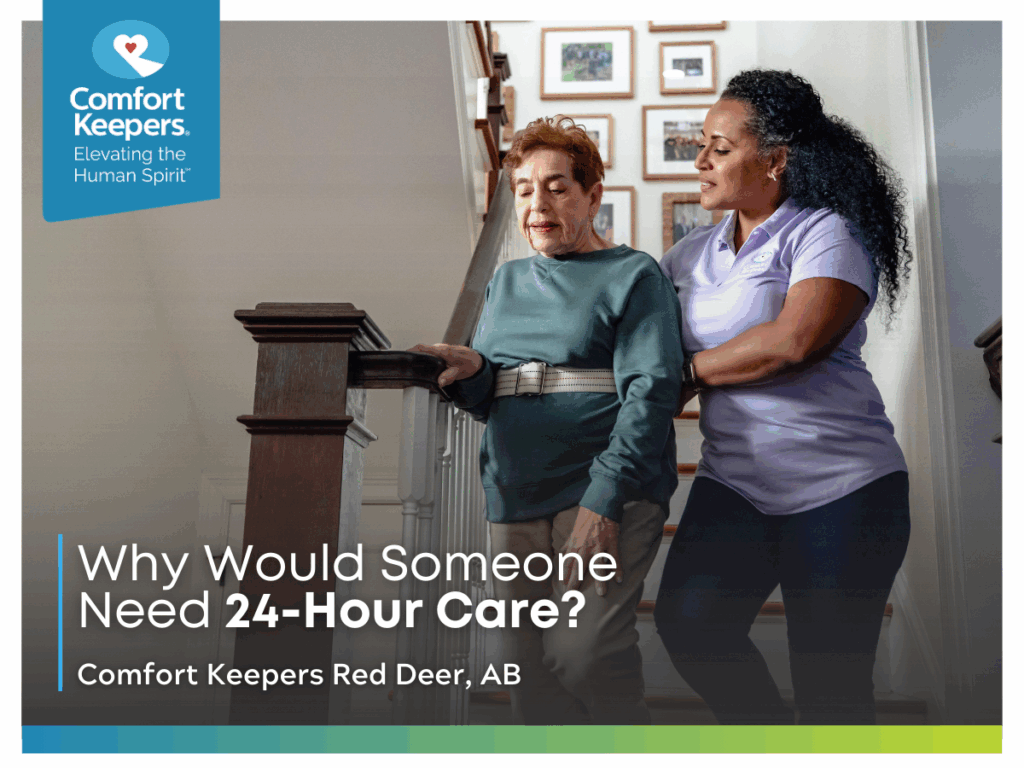
Why Would Someone Need 24-Hour Care?
Red Deer Senior Home Care | November 27, 2025
Someone needs 24-hour care when they require constant supervision or assistance due to advanced dementia, severe mobility limitations, chronic medical conditions requiring ongoing monitoring, or safety risks that make living alone dangerous.
According to the National Institute on Aging (US Source), approximately 70% of individuals over 65 will need some form of long-term care services, with 24-hour care becoming necessary when conditions progress to the point where intermittent care is insufficient for safety and wellbeing.
24-hour care represents the highest level of in-home or facility-based support, providing round-the-clock assistance with daily activities, medication management, medical monitoring, and emergency response. This comprehensive care model ensures continuous supervision while allowing many seniors to remain in familiar surroundings rather than transitioning to institutional settings.

What is 24-Hour Care?
24-hour care, also called round-the-clock care or continuous care, is a care arrangement where professional caregivers provide uninterrupted supervision and assistance to individuals who cannot safely be left alone. This care model typically involves multiple caregivers working in 8-hour or 12-hour shifts to ensure someone is always present.
The care can be delivered in two primary settings: in-home care where caregivers come to the person’s residence, or in assisted living facilities and nursing homes that provide 24-hour staffing.
24-hour care differs from respite care or hourly home care services, which provide temporary or scheduled assistance. It also differs from live-in care, where a single caregiver resides in the home but maintains regular sleep schedules and breaks. True 24-hour care ensures active supervision during all hours, including overnight.
7 Primary Reasons Someone Needs 24-Hour Care
1. Advanced Alzheimer’s Disease or Dementia
Individuals in moderate to severe stages of dementia require constant supervision to prevent wandering, ensure safety during confusion episodes, and maintain proper nutrition and hygiene. The Alzheimer Society of Canada reports that 60% of people with dementia will wander at least once, creating immediate safety risks.
Dementia patients in stages 5-7 on the Global Deterioration Scale lose the ability to remember familiar faces, complete basic tasks, or recognize dangers like hot stoves or unlocked doors. They need 24-hour care when they can no longer be safely left alone even for short periods.
2. Severe Mobility Limitations and Fall Risk
When someone experiences frequent falls (2 or more in 6 months), uses a wheelchair or is bedridden, or requires physical assistance for all transfers, 24-hour care becomes essential. Falls are the leading cause of injury-related death in adults over 65, with thousands of falls reported annually.
Individuals with conditions like advanced Parkinson’s disease, stroke recovery with severe deficits, or spinal cord injuries often need continuous care to assist with repositioning every 2 hours to prevent pressure sores, transfer safely to bathroom or bed, and respond immediately to fall emergencies.
3. Complex Medical Conditions Requiring Monitoring
Chronic conditions requiring constant monitoring include heart failure with frequent decompensation episodes, chronic obstructive pulmonary disease (COPD) requiring oxygen therapy, diabetes with unstable blood glucose levels, or post-surgical recovery requiring wound care and vital sign monitoring.
These individuals need caregivers trained to recognize warning signs of medical deterioration, administer medications on precise schedules (often including multiple medications at 4-6 hour intervals), operate medical equipment like oxygen concentrators or feeding tubes, and coordinate with healthcare providers for timely interventions.
4. End-of-Life or Hospice Care Needs
Terminal illness requiring palliative care or hospice support necessitates 24-hour care to manage pain and symptoms, provide comfort measures, assist with all personal care activities, and ensure dignity during the dying process. The Canadian Hospice Palliative Care Association (https://www.chpca.ca) reports that 57% of hospice patients receive care at home with continuous caregiver support.
End-of-life care focuses on comfort rather than cure, requiring experienced caregivers who can administer pain medications, reposition for comfort, manage medical equipment, and provide emotional support to both the patient and family members.
5. Behavioural and Psychological Symptoms
Individuals experiencing severe agitation, aggression, hallucinations, or sundowning (increased confusion and agitation in evening hours) require constant supervision for their safety and the safety of others. These symptoms commonly occur in dementia but also appear in mental health conditions, traumatic brain injuries, and medication reactions.
24-hour care provides de-escalation support during behavioural episodes, maintains consistent routines that reduce agitation (research shows routine reduces behavioural symptoms by 40%), ensures proper medication administration for behaviour management, and prevents injury during confusion or aggressive episodes.
6. Recent Hospital Discharge with High Care Needs
Post-hospitalization recovery from major surgery, stroke, heart attack, or serious illness often requires 24-hour care during the critical transition period. Studies show that 20% of Medicare patients are readmitted within 30 days of discharge, often due to inadequate post-discharge support.
During this recovery period, individuals need assistance following complex discharge instructions involving multiple new medications, attending follow-up appointments and therapy sessions, monitoring for complications like infection or medication side effects, and managing medical equipment like IV antibiotics or wound vacs.
7. Safety Concerns from Living Alone
When an individual exhibits poor judgment about safety (leaving stove on, opening door to strangers), experiences frequent medical emergencies requiring 911 calls, or shows inability to respond to emergencies appropriately, 24-hour care becomes necessary even without a specific diagnosis.
Family caregivers often reach exhaustion after months or years of providing care, leading to caregiver burnout that affects their own health. The Family Caregiver Alliance reports that 40-70% of family caregivers show symptoms of depression, indicating the need for professional 24-hour care support.
Types of 24-Hour Care Arrangements
In-Home 24-Hour Care
In-home 24-hour care involves professional caregivers working shifts in the person’s residence. Advantages include maintaining independence and dignity in one’s own home, keeping beloved pets and possessions nearby, and receiving individualized care schedules. Disadvantages include high cost without shared resources, need to manage multiple caregiver schedules, and limited access to on-site medical staff for emergencies.
Assisted Living with 24-Hour Staffing
Assisted living facilities provide 24-hour staff presence with caregivers available to all residents.
These facilities offer scheduled activities and social interaction, on-site staff for immediate assistance, and medication management by licensed nurses. However, they provide shared staff attention rather than one-on-one care and may require facility schedule compliance rather than individualized routines.
Skilled Nursing Facilities
Skilled nursing facilities (nursing homes) provide the highest level of medical care with registered nurses on-site 24/7.
These facilities handle complex medical needs, wound care, physical therapy, and provide 24-hour access to licensed medical professionals. They are most appropriate for individuals with multiple chronic conditions requiring skilled nursing interventions rather than primarily custodial care.
How to Determine If 24-Hour Care is Necessary
Assessment Factors
Medical professionals use several assessment tools to determine 24-hour care necessity. The Activities of Daily Living (ADL) assessment evaluates 6 core functions: bathing, dressing, toileting, transferring, continence, and feeding. Requiring assistance with 3 or more ADLs typically indicates need for extensive care.
The Instrumental Activities of Daily Living (IADL) assessment measures 8 complex tasks: managing finances, medication management, meal preparation, housekeeping, laundry, transportation, phone use, and shopping. Inability to perform 4 or more IADLs suggests need for supervision.
Warning Signs
Family members should watch for these indicators that 24-hour care has become necessary:
- Multiple falls within a 3-month period
- Significant unexplained weight loss (10 pounds or more in 6 months indicating nutrition issues)
- Medication errors causing hospitalization or dangerous health events
- Wandering incidents requiring police involvement or causing injury
- Caregiver expressing feeling overwhelmed or unsafe managing care needs alone
- Emergency room visits increasing in frequency (3 or more visits in 6 months for preventable issues)
- Bruises or injuries from unsupervised accidents
- Spoiled food in the refrigerator indicating confusion about safety
- Utilities shut off due to forgotten bills
Getting Professional Assessment
An organization like Comfort Keepers Red Deer has the training and knowledge to assess the 24 hour needs of a loved one. These professionals evaluate the home environment, review medical history and current conditions, assess cognitive and physical capabilities, and provide detailed recommendations for appropriate care levels.
Frequently Asked Questions
Can one caregiver provide 24-hour care?
No, one caregiver cannot legally or safely provide continuous 24-hour care. Labour laws require rest breaks and time off, and caregiver fatigue creates safety risks for both caregiver and care recipient. True 24-hour care requires minimum 2-3 caregivers working shifts, typically 8-hour or 12-hour rotations, to ensure someone is always alert and actively supervising.
What’s the difference between 24-hour care and live-in care?
24-hour care provides continuous active supervision with caregivers working in shifts, ensuring someone is always awake and attentive even overnight. Live-in care involves a single caregiver residing in the home who maintains regular sleep schedules (typically 8 hours overnight) and is available for assistance but not actively supervising during rest periods.
How quickly can 24-hour care start?
Home care agencies can typically arrange 24-hour care within 3-7 days for urgent needs, though 2-3 weeks allows better caregiver matching. Emergency situations may qualify for immediate placement (within 24-48 hours) at higher rates. Facility-based care requires bed availability, application processing, and medical assessments, typically taking 2-4 weeks unless transferring directly from hospital with discharge planning support.
What happens if the person refuses 24-hour care?
If the individual has capacity to make decisions, they can refuse care even when family and doctors recommend it. In these situations, families can gradually introduce care (starting with hourly help and increasing), involve trusted friends or clergy in discussions, or arrange for geriatric care manager consultation. If the person lacks capacity due to dementia and poses safety risks, families may need to pursue guardianship or conservatorship through courts to make care decisions. Emergency protective services can intervene if the person is at immediate risk.
Trusting specialized care for your family members starts with professional services like Comfort Keepers Red Deer.
The Most Well-Known Brand in Home Care in Greater Red Deer and Central Alberta is Comfort Keepers®
For more than two decades, Comfort Keepers® Red Deer has been elevating the human spirit and supporting families with home care services for seniors—helping loved ones remain happy, and independent in the homes they love.
The Red Deer team is proud to provide home care that keeps seniors safe at home in the City of Red Deer and the surrounding regions of Alberta.
Home is The Best Place to Be for Senior Care
Providing home care for seniors can be very draining and taxing on family caretakers. Comfort Keepers® Red Deer offers professional, flexible care solutions that lighten the load for families and give everyone peace of mind—knowing their loved one is in good hands.
The breadth of home care services offered by Comfort Keepers of Red Deer, Alberta, includes senior companionship and personal care services, as well as more specialized services for those who need end of life care or dementia care. We also provide transportation and 24-hour care services if more around-the-clock care is required.
Superior Care for Seniors from Comfort Keepers® Red Deer with Interactive Caregiving™
The Interactive Caregiving™ system is Comfort Keepers’ holistic approach that considers the senior’s mind, body, spirit, and well-being. Instead of just doing things for your loved ones, we use every moment to do things with them. This elevates their sense of purpose and control and turns routine tasks into memorable moments.
Our caregivers, or Comfort Keepers, provide skilled and compassionate home care to seniors in Red Deer and Central Alberta to help maintain the highest possible quality of life. We believe keeping our clients physically, mentally, emotionally and socially involved can make a difference in their well-being.
Comfort Keepers® Red Deer Provides Home Care and a Wide Range of In-Home Care Services for Seniors.
Are you looking for reliable senior home care in Red Deer? Learn more about our unique service, which offers respite care, post-hospital care, and end-of-life care in the Greater Red Deer area and Central Alberta. Contact the Comfort Keepers® Red Deer office today, our professional staff will be happy to explain our customizable in-home care options and to schedule a free in-home consultation.
Individualized Home Care Options
Long-Term Home Care, 24 Hour Home Care & Short Term Care Options Customized for You