
Canada Caregiver Credit Explained
Written by the Comfort Keepers Canada Editorial Team | Editorial review by Brenda Rosati, Director of Operations and Owner, Comfort Keepers Brampton | Last reviewed: October 01 2026
If you help a parent, spouse or other relative who relies on you because of a long-term physical or mental condition, which the Canada Revenue Agency (CRA) calls an “infirmity,” the Canada Caregiver Credit may lower the federal tax you pay. Below, we explain how the credit works for the 2025 and 2026 tax years, what to gather before you claim, and where to confirm the current rules on the CRA website.
This guide is general information for families. It is not tax advice. For decisions about your own return, please confirm with the CRA or a qualified tax professional.
Key Takeaways
- The Canada Caregiver Credit is a non-refundable federal tax credit for people who support a spouse or relative with a mental or physical infirmity.
- For 2026, the maximum line 30450 amount for another infirm dependant aged 18 or older is $8,773, subject to the dependant’s net income (CRA, indexation adjustment table). Different calculations apply to a spouse, common-law partner or eligible dependant.
- At the 14% federal rate for 2026 (CRA, 2026 tax rates), a full $8,773 line 30450 claim can reduce federal tax by up to about $1,228, if you owe at least that much.
- Your parent or other adult relative does not have to live with you to claim the adult caregiver amount (line 30450) (CRA, Income Tax Folio S1-F4-C2, para. 2.61); the eligible dependant amount (line 30400) does require that you live together (CRA, amount for an eligible dependant).
- Missed the credit in past years? You can ask the CRA to adjust an earlier return, and refunds reach back up to 10 calendar years (Government of Canada, Changing a tax return).
- Before you file, confirm current amounts on the CRA’s Canada caregiver credit page or call the CRA at 1-800-959-8281 (CRA, contact information).
Quick Answer
The Canada Caregiver Credit (CCC) applies when a spouse, common-law partner or eligible relative depends on you for basic needs because of a mental or physical infirmity, and it is calculated differently depending on whom you support. For 2026, the indexed caregiver amounts include $2,740 for certain claims involving an infirm spouse, eligible dependant or child under 18. Adult caregiver calculations can also provide an amount of up to $8,773, depending on whom you support, their net income and which return line applies (CRA, indexation adjustment table). The exact amount and tax-return line depend on your relationship to the person, their age, their net income and whether you can claim them as a spouse or eligible dependant. The section Which Line on Your Return Applies, below, walks through each case.
Table 1: Canada Caregiver Credit amounts at a glance
| What it covers | 2025 tax year | 2026 tax year |
| Caregiver amount for certain claims involving an infirm spouse, partner or eligible dependant (built into lines 30300 and 30400), and for each infirm child under 18 (line 30500) | $2,687 | $2,740 |
| Maximum line 30450 amount for another infirm dependant aged 18 or older | $8,601 | $8,773 |
| Dependant’s net income at which the line 30450 amount starts to shrink | $20,197 | $20,601 |
| Dependant’s net income at which the line 30450 amount ends | $28,798 | Not yet published by the CRA |
| Federal rate used to calculate the credit | 14.5% | 14% |
| Estimated maximum federal tax reduction for the line 30450 amount (our calculation, if you owe at least that much tax) | About $1,247 | About $1,228 |
Amounts: CRA, indexation adjustment table and CRA, line 30450 caregiver amount. Rates: CRA, 2025 tax rates and CRA, 2026 tax rates. For an infirm spouse, common-law partner or eligible dependant aged 18 or older, line 30425 can add a further caregiver amount depending on their net income, and Schedule 5 calculates the total (CRA, line 30425 caregiver amount). The tax reduction is our own arithmetic (maximum amount multiplied by the federal rate), not a CRA figure. The CRA’s individual line pages show 2025 figures until the 2026 tax package is released.
What the Credit Is
The CCC took effect for the 2017 tax year and combined three older credits into one. If you come across the “caregiver credit,” the “infirm dependant credit” or the “family caregiver tax credit,” those have all been replaced by the CCC (Department of Finance Canada, Budget 2017). It lowers the federal tax you owe, and Ontario offers a separate provincial amount, covered further down.
What “Non-Refundable” Means for Your Tax Bill
A non-refundable credit can bring the federal tax you owe down, but not below zero. If you owe little or no federal tax, the credit cannot pay you the difference, so it helps most when the person claiming pays enough federal tax to use it.
The credit’s value is the amount you claim multiplied by the lowest federal tax rate, which is the rate used for most non-refundable credits (CRA, What’s new for 2025). That rate dropped from 15% to 14% on July 1, 2025. Because the change came partway through the year, 2025 uses a blended rate of 14.5% (CRA, 2025 tax rates), and 2026 uses 14% (CRA, 2026 tax rates). If you see 15% quoted elsewhere, it most likely reflects the rate before the July 2025 change.
How It Differs From the Disability Tax Credit
The disability tax credit (DTC) is a separate credit that “helps people with disabilities, or their supporting family member, reduce the amount of income tax they may have to pay” (CRA, Disability tax credit). To get it, a medical practitioner completes Part B of Form T2201, Disability Tax Credit Certificate, and the CRA has to approve the application (CRA, How to apply for the DTC).
The caregiver credit does not need DTC approval. But if the CRA has already approved a T2201 for the person you support, you do not need a separate signed medical statement for the caregiver credit (CRA, Canada caregiver credit). And if your relative qualifies for the DTC but has too little income to benefit from all of it, you may be able to claim the unused part on your own return (CRA, disability amount transferred from a dependant).
Who May Be Eligible
The CRA looks at how you are related to the person, whether their condition makes them rely on you, and how much net income they have.
You may qualify if you regularly support a spouse, common-law partner or qualifying relative who depends on you for basic necessities because of a mental or physical infirmity (CRA, Canada caregiver credit).
You generally won’t qualify only because a parent is older, someone needs temporary help after an illness or injury, or you occasionally help a relative who does not depend on you because of an infirmity (CRA, line 30450 caregiver amount).
The sections below walk through each test.
Which Family Members Qualify
According to the CRA’s Canada caregiver credit page, you may be able to claim for:
- your spouse or common-law partner;
- your or your spouse’s child or grandchild;
- your or your spouse’s parent, grandparent, brother, sister, aunt, uncle, niece or nephew, if they lived in Canada at any time in the year.
That last condition matters for families whose parents divide their time between Canada and another country. If a parent lives abroad and only comes to stay with you, the CRA says “you cannot claim this amount for a person who was only visiting you” (CRA, RC4064 Disability-Related Information).
What “Infirmity” and “Dependent on You” Mean
In plain terms, an infirmity is a physical or mental impairment that leaves the person relying on others for everyday needs. Someone is dependent on you if they “regularly and consistently rely on you for basic necessities of life, such as food, shelter and clothing” (CRA, Canada caregiver credit), and the reason they rely on you has to be the infirmity itself (CRA, Income Tax Folio S1-F4-C2, para. 2.21).
You may be asked for a signed statement from a medical practitioner showing when the infirmity began and how long it is expected to last (CRA, Canada caregiver credit). For a child under 18, the child must need much more help with personal needs and care than other children of the same age (CRA, caregiver amount for infirm children).
Does the Person Need to Live With You?
If you are claiming for a parent or other adult relative on line 30450, they can live in their own home. The CRA’s guidance on this credit confirms you do not need to share a residence (CRA, Income Tax Folio S1-F4-C2, para. 2.61). A daughter who buys her father’s groceries and pays his bills while he stays in his own home may still qualify.
The eligible dependant amount on line 30400 has a different rule: you must have lived with that person in a home you maintained (CRA, amount for an eligible dependant). You can claim line 30425 for an eligible dependant only if you are eligible to claim them on line 30400, so the same living-together rule applies (CRA, line 30425 caregiver amount).
Which Line on Your Return Applies
The CCC is not claimed on a single line. Where it goes depends on who you support, and Figure 1 matches each situation to its line. If you claim the spouse amount (line 30300) or the eligible dependant amount (line 30400), the caregiver amount is added to that claim when the person has an infirmity (CRA, spouse or common-law partner amount). For a spouse or eligible dependant aged 18 or older, line 30425 can add a further caregiver amount when the person’s net income falls within the range the CRA sets for the year (CRA, line 30425 caregiver amount).
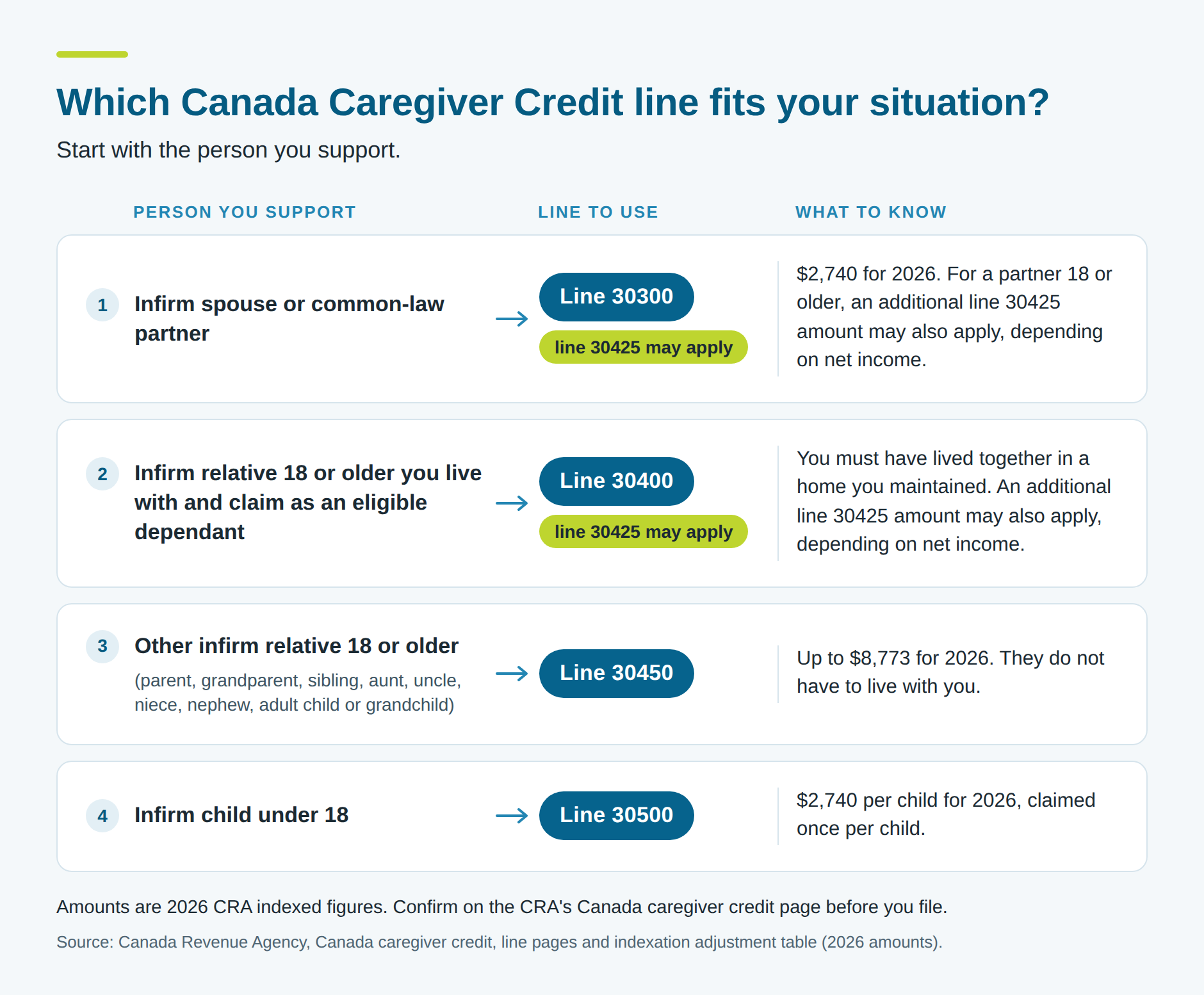
Figure 1: Match the person you support to the line on your federal return.
How the Person’s Income Changes the Amount
For the line 30450 amount, the claim shrinks as the dependant’s net income rises. The full amount ($8,601 for 2025, $8,773 for 2026) applies until the dependant’s net income reaches $20,197 for 2025 or $20,601 for 2026 (CRA, indexation adjustment table). Above that, the amount drops dollar for dollar (Department of Finance Canada, Budget 2017), and for 2025 it ended when net income reached $28,798 (CRA, line 30450 caregiver amount).
Here is how that plays out. If your mother’s 2025 net income was $24,000, she was $3,803 over the threshold, so the claim would be $4,798 ($8,601 minus $3,803). At the 2025 rate of 14.5%, that is roughly $696 off your federal tax, if you owe at least that much. These figures are our own arithmetic, shown to illustrate the CRA’s rule.
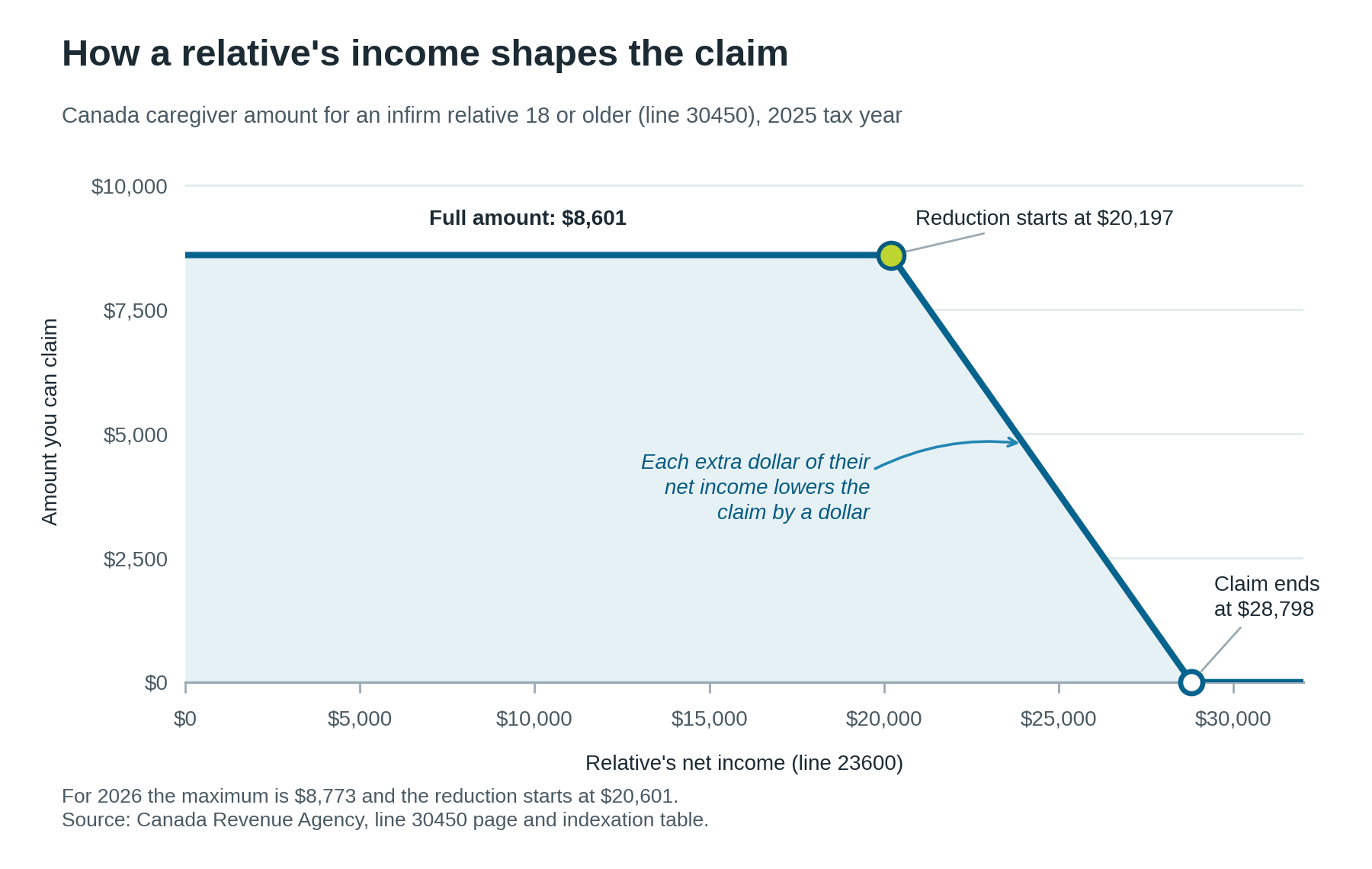
Figure 2: How a relative’s net income reduces the line 30450 amount (2025 tax year).
Sharing the Claim With Siblings
When two or more people support the same relative, the line 30450 amount can be split, as long as the combined claims stay within the maximum for that person (CRA, line 30450 caregiver amount). Only one person can claim the line 30425 amount (CRA, line 30425 caregiver amount), and the same goes for the eligible dependant amount on line 30400 (CRA, amount for an eligible dependant). For a child under 18, the line 30500 amount can be claimed once per child, even if both parents are eligible (CRA, caregiver amount for infirm children).
What to Gather
Most of what you need is paperwork your family may already keep. Before you or your tax preparer start, pull together:
- the person’s net income from line 23600 of their return (CRA, line 30450 caregiver amount);
- details of how they are related to you, and confirmation they lived in Canada at some point in the year (CRA, Canada caregiver credit);
- a signed statement from their medical practitioner, or confirmation that the CRA has approved a Form T2201 for them (CRA, Canada caregiver credit);
- records that show the support you provide, such as grocery receipts or bills you pay on their behalf;
- receipts for medical or care expenses, if you plan to claim those as well.
How to Claim on Your Return
You work out the amount on Schedule 5, the CRA form for spouse and dependant amounts, then enter the total on the matching line of your federal return (CRA, line 30450 caregiver amount). In Ontario, the provincial caregiver amount goes on Form ON428 (CRA, Ontario tax information for 2025).
Missed the Credit in an Earlier Year?
You can still ask the CRA to change a return you already filed. Once you have your notice of assessment (the statement the CRA sends after it processes your return), you can use the “Change my return” option in your CRA account, ask your tax preparer to send a ReFILE (a correction sent through certified tax software), or mail Form T1-ADJ. Refunds from these adjustments are limited to the last 10 calendar years, and the CRA aims to process online requests within 2 weeks and mailed requests within 16 weeks (Government of Canada, Changing a tax return). Amounts differ from year to year, so use the figures for the year you are correcting.
Where to Verify Current Rules
Caregiver credit amounts rise a little each year with inflation, and the CRA updates its line pages when each new tax package is released. The safest habit is to check the official page for the tax year you are filing, even if you claimed the credit last year. Our expertise is care at home, so for your own return, the official pages and free help below are the best place to start.
Official Pages to Bookmark
Free Help From the CRA and Community Tax Clinics
You can reach the CRA’s personal tax line at 1-800-959-8281, Monday to Friday, 8 am to 8 pm Eastern Time. Hours can change, so check the CRA’s contact page before you call (CRA, contact information). If your household has a modest income and a simple tax situation, a free tax clinic through the Community Volunteer Income Tax Program may prepare your return. The CRA lists these guideline family income limits for its free tax clinics:
- 1 person: $40,000
- 2 people: $55,000
- 3 people: $60,000
- 4 people: $65,000
- 5 people: $70,000, plus $5,000 for each additional person
Local clinics can adjust these limits, so ask when you contact one.
When a Tax Professional Is Worth It
A tax professional can help if several relatives share the care of one parent, if a separation involves support payments, if your relative also qualifies for the disability tax credit, or if you would like to include the cost of care at home in a medical expense claim. They can help determine which credits or expenses may apply to your family’s circumstances and how they interact.
How Home Care Planning Fits Into the Bigger Picture
The caregiver credit is one of several federal and Ontario programs that can lower the cost of caring for someone at home. Knowing which ones apply can help your family plan how much support to arrange and how to pay for it. Here are the ones family caregivers most often come across.
Related Credits and Benefits at a Glance
Table 2: Related credits and benefits for family caregivers
| Credit or benefit | Who it may help | Key figure | Where to confirm |
| Ontario caregiver amount | Ontario residents supporting an infirm relative aged 18 or older | Claim of up to $6,008 for 2025, reduced above $20,554 of the relative’s net income | Ontario Ministry of Finance, 2025 Fall Statement tax provisions |
| Ontario Seniors Care at Home Tax Credit (refundable) | Ontario residents aged 70 or older, or with a spouse or partner aged 70 or older | 25% of up to $6,000 in claimable medical expenses, to a maximum credit of $1,500 | Government of Ontario, Seniors Care at Home Tax Credit |
| Medical expense tax credit | People paying eligible medical expenses for themselves or dependants | Expenses above the lesser of 3% of net income or $2,834 for 2025 ($2,890 for 2026) | CRA, eligible medical expenses (lines 33099 and 33199) |
| Disability amount transfer | People supporting a relative, other than a spouse, who qualifies for the DTC | Unused part of the disability amount ($10,138 for 2025; $10,341 for 2026) | CRA, disability amount transferred from a dependant |
| Home Accessibility Tax Credit | People aged 65 or older or eligible for the DTC, and relatives who can share the claim | Up to $20,000 of eligible expenses per year | CRA, home accessibility expenses |
| EI caregiving benefits | Workers taking time off to care for a critically ill or injured family member, or one at the end of life | 55% of earnings, up to $729 a week for 2026 | ESDC, EI caregiving benefit amounts |
Ontario figures are for 2025. The Seniors Care at Home Tax Credit is reduced by 5% of family net income over $35,000 and fully phased out by at most $65,000 (Government of Ontario, Seniors Care at Home Tax Credit). The 2026 medical expense threshold and disability amounts are from the CRA, indexation adjustment table.
Ontario’s Caregiver Amount
Ontario adds its own caregiver amount, worth 5.05% of the amount claimed (Ontario Ministry of Finance, 2025 Fall Statement tax provisions). On the full 2025 claim of $6,008, that works out to about $303 off Ontario tax (our arithmetic). It covers adult relatives, including adult children and grandchildren, whether you claim them federally on line 30400 or line 30450. It does not cover a spouse, and the relative does not have to live with you. For 2025, the relative’s net income had to be under $26,562 (CRA, Ontario tax information for 2025). Ontario updates these amounts each year, so check the current ON428 figures when you file for 2026.
Medical Expenses and Paid Care at Home
Some costs for qualifying attendant care at home may be eligible medical expenses, but not every home care service or invoice automatically qualifies. CRA rules depend on the type of care, the person’s medical certification or DTC status, and how the expense is claimed. The CRA describes attendant care as “care given by an attendant who does personal tasks which a person cannot do for themselves” (CRA, RC4065 Medical Expenses 2025). The CRA sets a few conditions for these claims:
- the attendant must be 18 or older and cannot be the person’s spouse or common-law partner;
- depending on how you claim, the CRA requires an approved Form T2201 or a medical practitioner’s written certification;
- if you also claim the disability amount, attendant care wages are limited to $10,000 federally, or $20,000 in the year the person passes away (CRA, RC4065 Medical Expenses 2025);
- in that same situation, Ontario’s limit is $17,627, or $35,253 in the year the person passes away (CRA, Ontario tax information for 2025);
- receipts must show the name of the company or individual you paid (CRA, RC4065 Medical Expenses 2025).
Keeping detailed invoices that show dates, services and amounts makes these claims easier to prepare, and the CRA or a tax professional can confirm which costs apply in your case. Between spouses, the CRA notes it may be better for the one with the lower net income to claim medical expenses (CRA, eligible medical expenses (lines 33099 and 33199)).
For seniors aged 70 or older, eligible medical expenses, which can include attendant care that a medical practitioner has certified, may also count toward Ontario’s Seniors Care at Home Tax Credit, claimed on Form ON479. That credit is refundable and is reduced as family net income rises (Government of Ontario, Seniors Care at Home Tax Credit).
Time Away From Work: EI Caregiving Benefits and Job-Protected Leave
If care needs mean stepping away from work, Employment Insurance caregiving benefits can replace part of your income for up to 35 weeks for a critically ill or injured child, up to 15 weeks for a critically ill or injured adult, or up to 26 weeks of compassionate care for someone at the end of life (ESDC, EI caregiving benefits). Separately, Ontario’s Employment Standards Act protects your job through unpaid leaves such as family caregiver leave, up to eight weeks per calendar year for each specified family member (Government of Ontario, ESA guide: family caregiver leave).
Where Our Brampton Team Can Help

Tax credits ease some of the cost of caregiving, but they do not add hours to your week. That is where our Brampton team can help. Care plans can start with a few hours a week and change as your family’s needs change. Our caregivers can help with companionship, meal preparation, personal care, medication reminders and escorted transportation to appointments, and our respite care for family caregivers gives you a few hours back for work, rest or the tax forms.
Talk With Our Brampton Team
If the paperwork is under control but the hours are not, we would be glad to help. Together we can work out what a few visits a week, or a regular break for you, might involve. Explore our home care support in Brampton and, for the tax rules, keep the CRA’s Canada caregiver credit page handy. When you are ready to talk, contact our team or call us at (905) 671-4004.
Comfort Keepers Home Care Brampton | 5 Brisdale Drive, Suite 202, Brampton, ON L7A 0S9 | (905) 671-4004
About the Author
This article was written by the Comfort Keepers Canada Editorial Team, which prepares plain-language guides for families arranging care at home and builds each one on official government sources. Brenda Rosati, Director of Operations and Owner of Comfort Keepers Brampton, reviewed the article for clarity and relevance to families arranging care at home. Tax information is based on the government sources cited below and should be confirmed with the CRA or a qualified tax professional for individual circumstances. Meet our Brampton team.
References
Frequently Asked Questions
H3: Can I Claim the Credit for More Than One Person?
Yes, if each person meets the conditions. The CRA’s line 30450 page says you can claim the amount “for each dependant who meets all the conditions” (CRA, line 30450 caregiver amount). A caregiver supporting both an infirm mother and an infirm aunt, for example, would work out a separate amount for each.
What If the Person I Care For Does Not File a Tax Return?
You can still claim. If they did not file, the CRA lets you use an estimate of their net income (CRA, line 30450 caregiver amount). Helping them file their own return, even if their income is low, gives you an exact figure to work from and makes the claim easier to support if the CRA asks questions later.
Does a Temporary Condition, Such as Recovery After Surgery, Count?
Usually not. The CRA states that “a temporary illness or injury is not considered to be an infirmity for the purpose of the Canada caregiver amount” (CRA, line 30450 caregiver amount). If the effects last and become a long-term condition, the person may then qualify. In the meantime, support at home can make the weeks after a hospital stay or surgery easier, and our transition care in Brampton is designed for that period.
When Can I Claim the Credit for 2026?
On your 2026 tax return, which you file in spring 2027. For the 2025 return, the deadline was April 30, 2026, or June 15, 2026 if you or your spouse were self-employed, with any balance owing still due April 30 (CRA, filing due dates for the 2025 tax return). Check the CRA’s due dates for the 2026 return before you file.