Overnight Care vs 24-Hour Home Care in Brampton: What Is the Difference?
Overnight care and 24-hour home care sound alike, and families often use the terms interchangeably, but they describe different amounts of help. Overnight care handles the night hours, when a loved one needs help or a watchful presence after dark. 24-hour home care is continuous, around-the-clock support, provided by caregivers who work in rotating shifts so a caregiver is always awake and ready to respond. Live-in care, which some providers offer, is a third arrangement, where one caregiver stays in the home with set periods of rest.
If you have started wondering which of these your parent or spouse needs, you are likely noticing small changes that do not yet add up to an obvious answer. As needs grow, the daytime help that once felt like plenty can begin to fall short, and the nights are often where it shows first. Below we explain what each type of care means in plain language, how our Brampton team actually delivers it, and how to think about which one fits your family. For Comfort Keepers Brampton specifically, we offer overnight care and shift-based 24-hour home care, and we do not provide live-in care.
Key Takeaways
- Overnight care covers the night hours only. 24-hour home care is continuous, around-the-clock support delivered by rotating shifts, so there is always someone awake and ready to help.
- Comfort Keepers Brampton offers overnight care and shift-based 24-hour home care, and does not offer live-in care, a separate arrangement some other providers offer with scheduled rest periods.
- Families often move toward continuous care after a fall, a hospital discharge, or as dementia progresses and daily needs grow toward around-the-clock support.
- Our 24-hour coverage relies on rotating caregivers, commonly two 12-hour shifts or another schedule set by the care plan, so someone is awake and available around the clock.
- Ontario Health atHome provides publicly funded home care based on assessed need and a care plan; some publicly funded assisted-living programs can provide scheduled overnight personal support, depending on eligibility and area.
- To talk it through, call our Brampton team at (905) 671-4004 and we will help you weigh whether overnight, 24-hour, or a mix of support fits.
Overnight Care, 24-Hour Care, and Live-In Care at a Glance
The quickest way to tell these apart is with two questions: how much of the day is covered, and whether a caregiver is awake the whole time. In-home care can run anywhere from a few hours a day to around-the-clock support, and where a family lands on that range is what separates overnight care, 24-hour home care, and live-in care. This is the same language we use when we sit down to plan care with a family, and the table below lays out the differences.
| Care type | What it covers | Is a caregiver awake? | How it is staffed | Often a fit when |
| Overnight care | The night hours only | Yes, awake through the night | A caregiver present for the overnight period | Days are manageable, but nights have become the worry |
| 24-hour home care | The whole day and night, continuously | Yes, someone is always awake | Rotating caregivers, commonly two 12-hour shifts | Help is needed at any hour and safety cannot lapse |
| Live-in care | Around the clock, with the caregiver living in | Not the whole time; rests and sleeps in the home | One caregiver with set rest periods | A family prefers a single resident caregiver and accepts set rest hours |
Table 1. Overnight, 24-hour, and live-in care compared. Comfort Keepers Brampton provides overnight and shift-based 24-hour care; live-in care is an arrangement some other providers offer.
Why Families in Brampton Begin Looking for More Continuous Care

Most families do not decide on continuous care out of nowhere. It usually follows a change: a fall, a hospital stay, a difficult stretch of nights, or the slow realization that a few hours of daytime help no longer covers what is happening the rest of the time. These are the situations we hear about most often from Brampton families.
When the Nights Become the Hard Part
A parent who manages fine during the day can struggle after dark: getting up to the bathroom, unsteady on their feet, waking confused, or calling out and finding no one there. When no one is present overnight, a small stumble can turn into a fall with hours before anyone knows.
When Safety and Falls Are the Worry
Falls are common, and the risk climbs with age. The Public Health Agency of Canada notes the World Health Organization estimate that about a third of older adults fall each year, and reports that falls are the leading cause of injury-related hospitalizations among people aged 65 or older (Public Health Agency of Canada, Surveillance report on falls among older adults in Canada). People who live with dementia are especially at risk of falling (Alzheimer Society of Canada, Living safely and independently). A caregiver cannot guarantee that a fall will not happen, but they can help with safer movement, bathroom trips, and transfers, and can respond immediately if a fall does occur.
When Dementia Needs Are Rising
Care needs tend to grow over time. In the middle stage, people living with dementia “need help with many daily tasks,” and in the later stages the Alzheimer Society of Canada notes that “care may be required 24 hours a day” (What to expect as the person’s dementia progresses). Evenings can be harder, with more confusion later in the day, sometimes called sundowning (Restlessness or confusion, especially later in the day). Some people become disoriented and want to leave the home; the Alzheimer Society notes that six in ten people who live with dementia are at risk of getting lost (Tracking devices), a risk that is not limited to daylight hours.
After a Hospital Stay
Coming home after a hospital stay is a vulnerable time. The Government of Canada describes care transitions as “critical to the person’s recovery and quality of life” (Government of Canada, Care options), and the Canadian Institute for Health Information tracks hospital stays that are extended until home care services or supports are ready (Canadian Institute for Health Information). Because discharge can be delayed while home supports are arranged, it helps to plan early for the support you may need. Continuous or overnight care can then carry the first weeks back at home and scale down as recovery progresses.
When the Family Caregiver Is Running Low on Sleep
Often the person who needs help is not the only one struggling. A spouse or adult child covering the nights loses their own sleep, and that cannot hold for long. The Alzheimer Society is direct about it: “You cannot care for a person with dementia alone” (Reducing caregiver stress), and “you shouldn’t have to do it all alone” (Long-term care). Bringing in overnight or 24-hour care lets the family sleep and step back into being family rather than full-time caregivers.
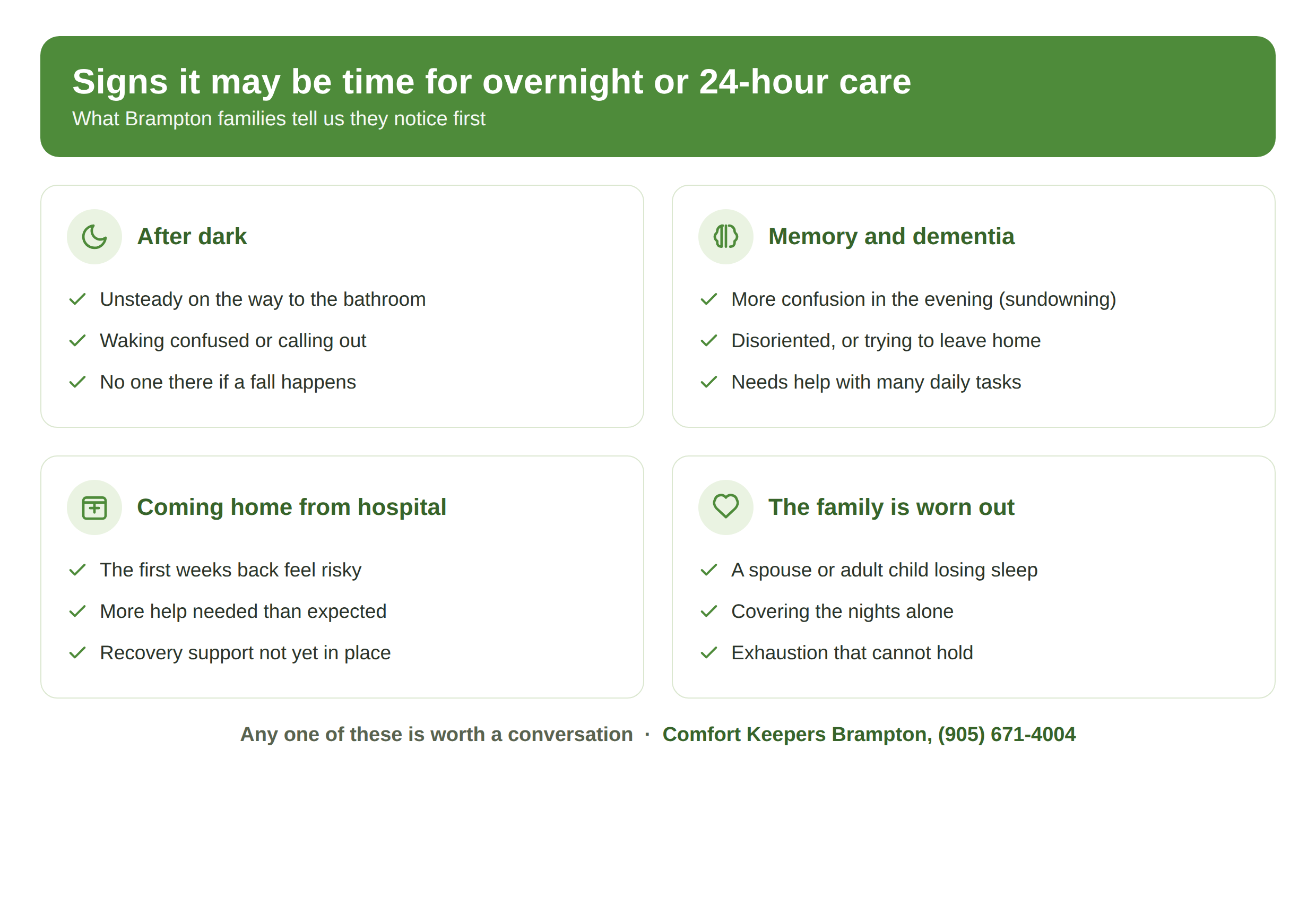
Figure 1. Common signs that lead Brampton families to consider overnight or 24-hour care.
What Overnight Care Usually Means
Overnight care covers the night hours, when a loved one needs help or supervision while they sleep. A caregiver stays awake and present through the night, ready to respond the moment your loved one needs them. It suits families whose days are manageable but whose nights have become the concern, when a parent is unsteady after dark, wakes often, or should not be alone if something goes wrong in the middle of the night.
Overnight support is mostly practical, hands-on personal care and supervision rather than medical treatment. The caregiver helps with getting to the bathroom safely, repositioning, a glass of water, and settling back to sleep, and offers calm reassurance if your loved one wakes disoriented. When the days start to need covering too, that is where 24-hour care comes in.
What 24-Hour Home Care Usually Means
24-hour home care provides continuous, around-the-clock support for a senior who needs help at any hour of the day or night. Our caregivers work in scheduled, rotating shifts, commonly two 12-hour shifts or another combination set by the care plan, so a rested caregiver is always on hand for personal care, mobility, safety, or a bit of reassurance during the night.
The difference with our 24-hour care is how it is staffed. It is shift-based rather than live-in, so no one is expected to work a full 24 hours or to sleep on the job. That means the person helping your loved one at three in the morning is working a scheduled shift, rather than one caregiver being expected to remain on duty for a full 24 hours. Around-the-clock supervised care is often associated with moving into a facility; the Government of Canada notes that “long-term care is for people who require supervised care around the clock” (Government of Canada, Home, community and long-term care). 24-hour home care offers that continuous coverage while your loved one stays in their own home, with familiar surroundings and routines.
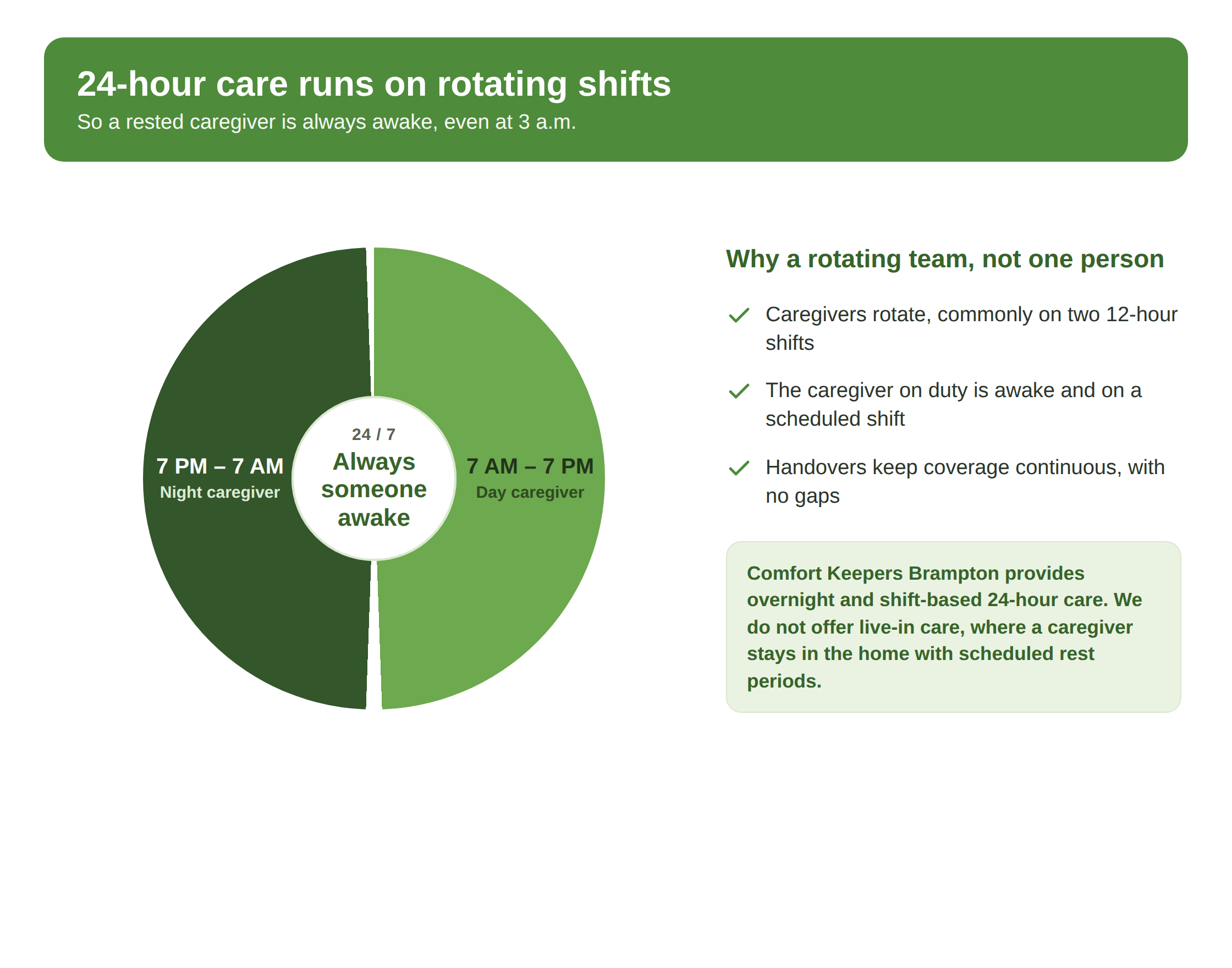
Figure 2. In 24-hour home care, rotating shifts mean a rested caregiver is always awake.
How Live-In Care Differs From Our 24-Hour Care
Live-in care is an arrangement some other home-care providers offer, where one caregiver stays in the home and has scheduled periods to rest or sleep. Comfort Keepers Brampton does not offer live-in care. We explain it here because families often ask how it compares with continuous 24-hour support.
The practical difference is straightforward. In a live-in arrangement, the caregiver rests or sleeps during part of the night, so they are not awake and on duty the entire time. In our shift-based 24-hour care, caregivers rotate so someone is awake and available throughout the day and night, without any one person being expected to stay on duty around the clock. The exact schedule, commonly two 12-hour shifts or another combination, is built around the client’s needs, caregiver availability, and the care plan. If you are weighing a live-in option from another provider, we are glad to talk through how continuous, always-awake coverage differs.
Questions About Scheduling, Rest and Caregiver Rotation
Once you are weighing continuous care, the practical questions come down to scheduling and rest. Rotating caregivers allow continuous coverage without requiring any one person to remain on duty around the clock, and the exact schedule is built around the client’s needs, caregiver availability, and the care plan.
Rotation also means each caregiver hands over to the next, so the coverage never lapses and no one is running on empty. We keep the same small team of caregivers with your loved one over time, so they see familiar faces rather than a stranger every shift. That continuity matters: the Alzheimer Society of Canada names “continuity of care” and trusting relationships between families and staff as key factors in good, person-centred care (Alzheimer Society of Canada, Providing person-centred care).
If you are interviewing any provider about continuous care, ask them:
- Is your 24-hour care shift-based with someone always awake, or a single live-in caregiver who sleeps overnight?
- How long are the shifts, and how many caregivers rotate through a full day?
- Will the same small team return, so my loved one sees familiar faces?
- What happens overnight specifically, if my parent gets up, needs the bathroom, or becomes disoriented?
- Is there backup coverage if an assigned caregiver is unavailable?
Matching the Care Model to the Person’s Needs
The right model follows the pattern of need: when help is needed, how predictable it is, and whether it is safe for your loved one to be on their own at any point in the day or night. There is no diagnosis involved here, just a look at what the days and nights actually require. The table below can help you place your situation.
| What you are seeing | A model that may fit | Why |
| Predictable help needed during the day | Scheduled daytime visits | Support is needed at known times, and nights are fine on their own |
| The nights are the problem: bathroom trips, unsteadiness, waking anxious or confused | Overnight care | Coverage is needed for the night window, when the risk is highest |
| Help is needed at unpredictable times, and safety cannot lapse at any hour | 24-hour home care | Continuous, always-awake coverage keeps someone ready day and night |
| A temporary spike after a fall or a hospital stay | Temporary overnight or 24-hour care | Intensive support can carry recovery, then scale down |
| The family caregiver is running low on sleep and cannot cover the nights | Overnight or 24-hour relief | Rested, rotating caregivers let the family recover and stay well |
Table 2. A plain-language starting point, not a medical assessment. Every family is different, and care can blend these models.
None of this is a rule. Care does not have to start big; many families begin with a few hours or a few nights a week and add more as needs change. And because our care is primarily non-medical, part of our job is to notice when a loved one’s needs are growing beyond what we can safely support at home, and to help you plan the next step and coordinate with your family, physician, and Ontario’s public home care.
How to Discuss Options With Comfort Keepers Brampton
The simplest next step is a conversation about what is actually happening at home. From there, we can help you sort out whether overnight care, full 24-hour care, or a mix of support fits, and we can start where you need it and adjust as things change. Our approach, which we call Interactive Caregiving, means doing things with your loved one rather than simply for them, so they stay engaged in everyday life.
It also helps to know how private care fits with Ontario’s public system. Ontario Health atHome provides publicly funded home care based on assessed need and an individualized care plan (Government of Ontario, Home and community care). Anyone can make a referral (Ontario Health atHome, Getting started), and you can reach the service at 1-833-515-1234 (Ontario Health atHome, Contact). Care is scheduled to that plan and may not provide the continuous 24-hour coverage a family wants. Some publicly funded assisted-living programs can provide scheduled overnight personal support, depending on eligibility and availability in the person’s area (Ontario Health atHome, Assisted Living Services for High-Risk Seniors), so it is worth asking your care coordinator what can be provided. Families sometimes combine publicly funded services with privately arranged care to cover additional hours.
You are welcome to reach out whenever it helps. Call our Brampton team at (905) 671-4004, or visit our Home Care Services page to talk through more continuous care. We are based at 5 Brisdale Drive, Suite 202, and we care for families across Brampton and nearby communities.
About the Author and Reviewer
This guide was written by the Comfort Keepers Brampton Editorial Team. Brenda Rosati, Director of Operations and Owner of Comfort Keepers Brampton, leads the local team that supports seniors and their families across Brampton and reviews the office’s care information for local accuracy. You can learn more about our local team on our About Us page. This article provides general information and does not replace medical advice, diagnosis, or treatment.
Published: September 2026.
References
Public Health Agency of Canada. Surveillance Report on Falls Among Older Adults in Canada (2024).
Alzheimer Society of Canada. Living Safely and Independently.
Alzheimer Society of Canada. What to Expect as the Person’s Dementia Progresses.
Alzheimer Society of Canada. Restlessness or Confusion, Especially Later in the Day.
Alzheimer Society of Canada. Tracking Devices.
Alzheimer Society of Canada. Reducing Caregiver Stress.
Alzheimer Society of Canada. Long-Term Care.
Alzheimer Society of Canada. Providing Person-Centred Care.
Government of Canada. Core Community Supports to Age in Community (2024).
Government of Canada / Health Canada. Home, Community and Long-Term Care (2026).
Government of Ontario. Home and Community Care.
Ontario Health atHome. Getting Started.
Ontario Health atHome. Assisted Living Services for High-Risk Seniors Fact Sheet.
Ontario Health atHome. Contact.
Frequently Asked Questions
What is the difference between overnight care and respite care?
Overnight care is defined by when it happens: it covers the night hours. Respite care is defined by its purpose: giving a family caregiver a break. The Government of Canada describes respite as “day, evening or night care to give unpaid caregivers (generally family) a break from caregiving” (Government of Canada, Core community supports to age in community). Overnight care can serve as respite when it is the nights the family needs covered, but respite can also be daytime or a longer stretch.
Is overnight care medical care, or the same as hiring a night nurse?
Overnight care is not the same as hiring a night nurse. It is primarily non-medical support: help through the night, supervision, and reassurance. We do offer in-home nursing as a separate service for specific clinical needs, so if skilled nursing is what your loved one requires, that is a different service we can talk about.
Does someone need a formal assessment before overnight or 24-hour care can start?
You do not need to wait for an Ontario Health atHome assessment to contact us. Our own care-planning process is arranged directly with our Brampton team, usually starting with a conversation and an in-home visit. Ontario’s public home care is arranged differently, through an assessment by a care coordinator, and anyone can make a referral to Ontario Health atHome at 1-833-515-1234 (Ontario Health atHome, Contact). Many families use both.
Does Ontario’s public home care pay for overnight or 24-hour care at home?
Ontario Health atHome provides publicly funded home care based on assessed need and an individualized care plan, and if you qualify, the province pays for the care in that plan (Government of Ontario, Home and community care). Services are scheduled to the plan and may not provide the continuous 24-hour coverage a family wants. Some publicly funded assisted-living programs can provide scheduled overnight personal support, depending on eligibility and availability in the person’s area (Ontario Health atHome, Assisted Living Services for High-Risk Seniors), so it is worth asking your care coordinator what can be provided. Families sometimes combine publicly funded services with privately arranged care to cover additional hours, including overnight.
Is 24-hour home care only for people with dementia?
No. Dementia is one common reason, but families also arrange continuous care after a fall or a hospital stay, during a period of frailty, or when someone is at risk of falling and should not be left alone. What matters is how much help is needed and when, not a particular diagnosis.
Does Comfort Keepers Brampton offer live-in care?
No. Comfort Keepers Brampton does not offer live-in care. We provide overnight care and shift-based 24-hour home care, where caregivers rotate so someone is awake and available around the clock. Some other providers use the term live-in care for an arrangement where one caregiver stays in the home with scheduled rest or sleep periods. If you are weighing that option, we are glad to explain how our rotating 24-hour care differs.
Which costs more: overnight care or 24-hour home care?
24-hour home care generally costs more than overnight care, because it covers the whole day and night rather than the overnight hours alone. The exact cost depends on the number of hours, the schedule, and the level of care needed. We can provide a quote after we talk through the care plan.