



The Best Fruits & Vegetables Seniors Should Eat Every Day During Canadian Winters
Comfort Keepers Kelowna | January 23, 2026
Canadian winters are iconic for their snowscapes and hockey, but they also present a significant nutritional challenge for seniors. As the days shorten and local fresh produce becomes scarce, maintaining a diet rich in essential vitamins and minerals becomes more difficult yet more critical than ever.
For seniors, the risks of Vitamin D and C deficiencies skyrocket between November and March. The cold season also brings an increased susceptibility to flu and viral infections, making immune system support a top priority.
However, eating well in winter does not have to mean expensive imported produce or flavourless meals. By focusing on nutrient-dense root vegetables, seasonal citrus imports, and high-quality frozen options, Canadian seniors can maintain optimal health affordably and deliciously.
This guide explores the specific fruits and vegetables that will keep you healthy, energized, and resilient throughout the long Canadian winter.

Which fruit is the king of winter?
The title of “King of Winter” belongs to Citrus Fruits, specifically oranges and grapefruits.
While not native to Canada, these fruits are at their peak season in the Northern Hemisphere (growing abundantly in regions like Florida and California) during our coldest months. They are crowned “King” because of their potent Vitamin C content which is the first line of defense for your immune system during cold and flu season.
Just one medium orange can provide over 100% of your daily recommended Vitamin C. Beyond immunity, the hydration provided by citrus is vital during winter when indoor heating can cause dehydration.
Note: While Citrus is the King of fruits, the Root Vegetable is undoubtedly the local hero of Canadian winter nutrition, offering sustained energy and warmth.
What are 5 foods that seniors should eat every day?
According to general recommendations from Canadian health resources and the Canada Food Guide, seniors should aim to include these five powerhouse food categories in their daily diet, especially during winter:
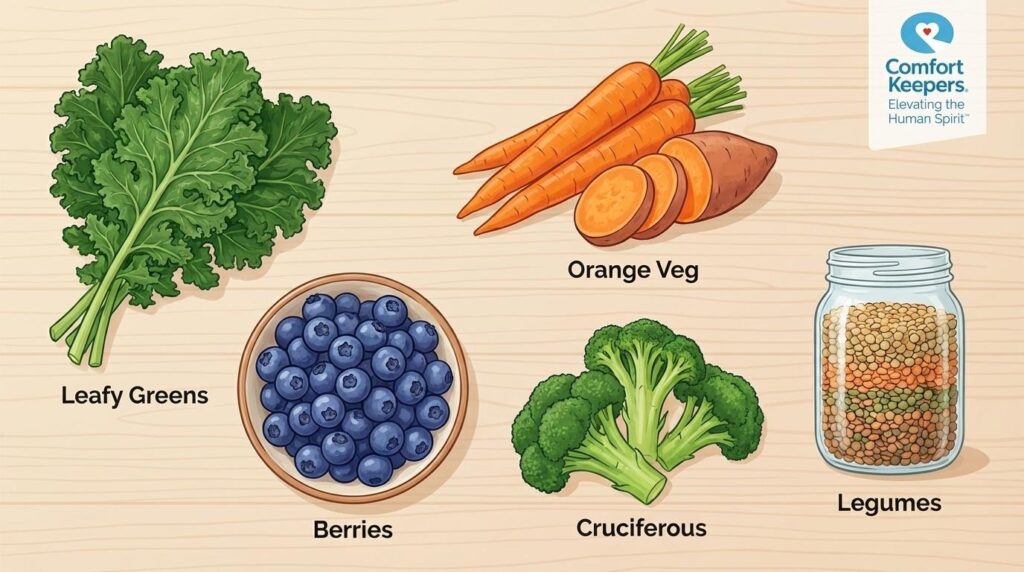
- Dark Green Leafy Vegetables (Kale, Spinach, Swiss Chard): These are packed with Vitamin K and Calcium which are essential for maintaining bone density and preventing falls or fractures on icy surfaces.
- Berries (Blueberries, Strawberries, Raspberries): High in antioxidants and flavonoids, berries support brain health and memory. In winter, frozen berries are an excellent and often more affordable choice.
- Orange Vegetables (Carrots, Sweet Potatoes, Squash): The vibrant orange colour comes from beta-carotene which the body converts to Vitamin A. This is crucial for maintaining good vision and immune function.
- Cruciferous Vegetables (Broccoli, Cauliflower, Brussels Sprouts): These vegetables are high in fiber and contain compounds shown to lower cancer risk. They are hearty and store well during winter months.
- Legumes and Beans (Lentils, Chickpeas, Kidney Beans): These provide high-fiber plant-based protein which helps maintain stable blood sugar levels and heart health without the saturated fat found in some meats.
What is the 80/20 rule when it comes to eating?
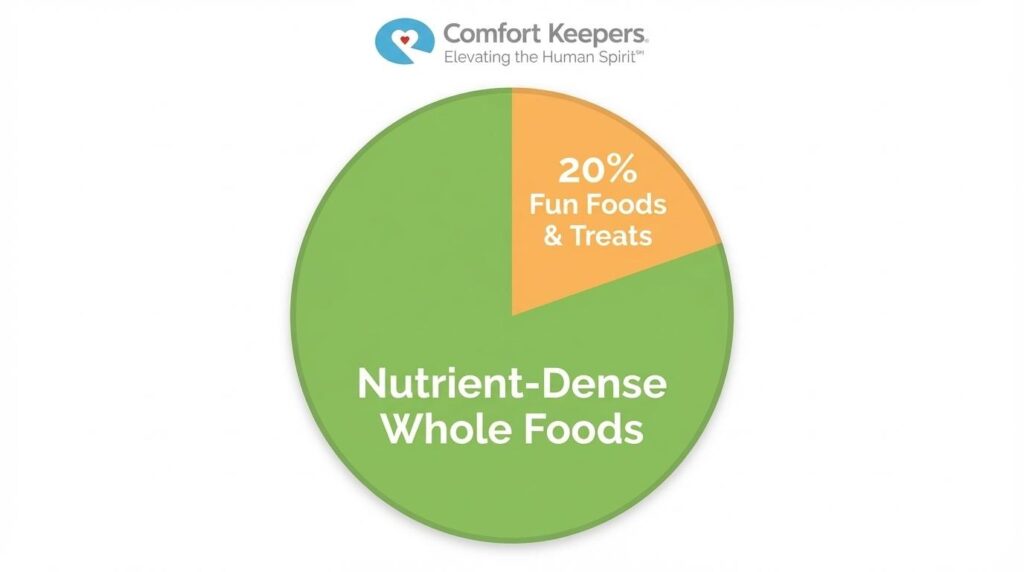
The 80/20 rule is a flexible approach to nutrition that suggests you eat nutrient-dense, whole foods 80% of the time and allow yourself “fun foods” or indulgences for the remaining 20% of the time.
For seniors, this rule is particularly beneficial because strict diets can be isolating and difficult to maintain long-term. Winter can already be a gloomy time for many, and the feeling of deprivation caused by a strict diet can negatively impact mental health.
By following the 80/20 rule, you prioritize consistency over perfection. If you have a slice of pie or a butter tart at a family gathering, you do not need to feel guilty. You simply return to your healthy eating habits at the next meal. This balance helps maintain a healthy relationship with food while ensuring you still get the nutrients you need.
Which food is not recommended for senior citizens?
While most whole foods are healthy, there are specific items seniors should approach with caution or avoid:
- Grapefruit (Conditional): This is the most critical warning. Grapefruit contains compounds that can interfere with how your body metabolizes common medications, including statins (cholesterol), blood pressure drugs, and anxiety medications. Always consult your pharmacist before adding grapefruit to your diet.
- Unpasteurized Cheeses and Milk: As we age, our immune system becomes less efficient at fighting off bacteria like Listeria and E. coli. Seniors should strictly stick to pasteurized dairy products.
- High-Sodium Canned Soups: While canned soup is a convenient winter meal, many brands are loaded with sodium which can cause spikes in blood pressure. Look for “low sodium” or “no salt added” labels.
- Raw Sprouts (Alfalfa, Bean Sprouts): These grow in warm, humid conditions that are ideal for bacteria like Salmonella. Seniors should only eat sprouts if they are thoroughly cooked.
What is best: Root vegetables vs citrus fruits for senior nutrition?
This is not a competition of “better” but rather a partnership of different benefits.
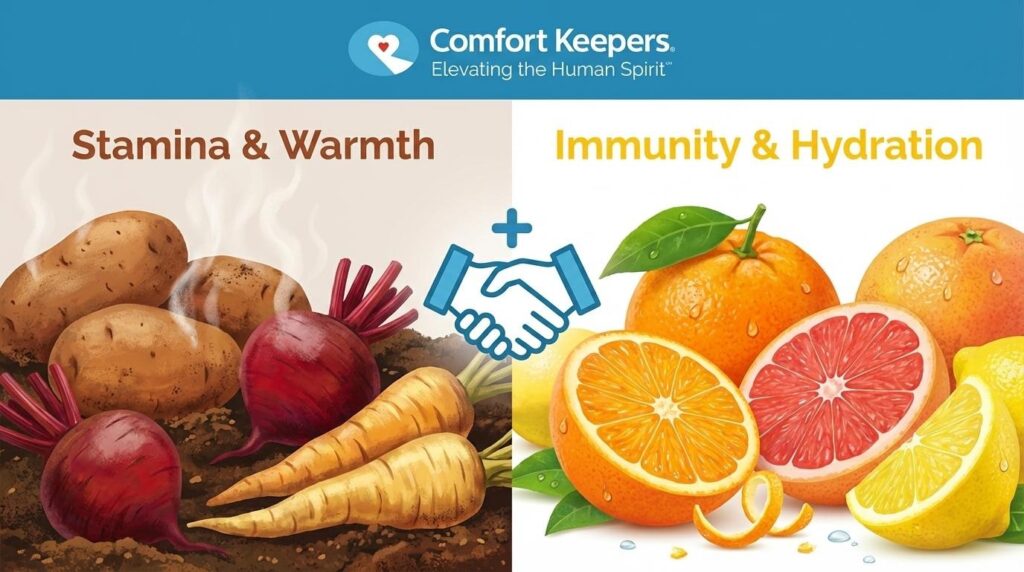
Root Vegetables are the Stamina Builders. Vegetables like parsnips, turnips, and potatoes provide complex carbohydrates. These digest slowly, providing sustained energy and a feeling of fullness (satiety) which helps keep you warm. They are also high in fiber which aids digestion.
Citrus Fruits are the Defenders. Citrus provides the immediate antioxidants and vitamins needed to fight off viruses and repair cell damage. They are also lighter and hydrating.
Verdict: You need both. A balanced winter diet might include a hearty root vegetable stew for dinner (for energy and warmth) and a fresh orange for breakfast (for immunity and hydration).
Which root vegetables are beneficial for senior health in Canada?
Canada produces excellent root vegetables that store well throughout the winter. These are some of the best choices for seniors:
- Sweet Potatoes: Rich in Vitamin A and potassium. Their soft texture when cooked makes them easy to chew and digest.
- Beets: Beets contain nitrates which can help improve blood flow and lower blood pressure. They are delicious roasted or boiled.
- Rutabaga: A classic Canadian staple. It is incredibly high in Vitamin C and can be mashed just like potatoes for a nutrient-dense side dish.
- Parsnips: These look like white carrots and have a sweet, nutty flavour. They are high in folate and fiber.
- Turnips: An affordable option that is low in calories but high in minerals.
Are frozen vegetables a good option for seniors in winter?
Yes, frozen vegetables are often a better option than fresh produce during the Canadian winter.
There are three main reasons for this:
- Nutrient Density: Frozen vegetables are picked at peak ripeness and flash-frozen within hours. This locks in vitamins. “Fresh” winter produce often travels thousands of kilometers on trucks, losing nutrients every day it sits in transit.
- Convenience and Safety: Frozen veggies come pre-washed, peeled, and chopped. For seniors with arthritis or dexterity issues, this eliminates the risk of cutting themselves with a knife and reduces prep time significantly.
- Cost: Fresh produce prices spike in January and February. Frozen vegetables remain affordable and stable in price year-round.
What are some affordable winter fruits and vegetables for seniors in Canada?
Eating healthy does not have to break the bank. Here are the most budget-friendly winter options:
- Cabbage: One head of cabbage is very cheap, lasts for weeks in the fridge, and can be used in soups, stews, or stir-frys.
- Carrots and Onions: Buying these in 3lb or 5lb bags is significantly cheaper than buying them loose. They form the base of almost every healthy soup.
- Bananas: These remain one of the cheapest fruits available year-round and are great for potassium.
- Frozen Peas and Corn: These are inexpensive staples that can be easily added to casseroles or pasta dishes to boost nutrition.
- Apples: Look for Canadian varieties like Gala, McIntosh, or Ambrosia which are often stored locally and sold at lower prices than imported tropical fruit.
How can seniors with chewing difficulties eat more vegetables?
Dental issues or ill-fitting dentures should not prevent seniors from getting their daily vitamins. Here are effective strategies:
- Soups and Stews: Boiling vegetables in broth softens them completely. The liquid also ensures no nutrients are lost, as you consume the broth they were cooked in.
- Smoothies: A high-powered blender can liquify spinach, kale, or frozen berries. You get all the fiber and nutrients without any chewing required.
- The “Mash” Method: Do not stop at mashed potatoes. You can mash sweet potatoes, squash, turnips, and even cauliflower. Adding a little low-sodium broth or milk makes them smooth and creamy.
- Grating: Grate carrots or zucchini directly into pasta sauces, meatloaf, or even oatmeal. The vegetables cook down until they are practically invisible, adding nutrition without texture.
What fruits and vegetables should seniors with diabetes consume in winter?
Seniors managing diabetes should focus on foods with a low Glycemic Index (GI) to prevent blood sugar spikes.
- Leafy Greens: Spinach, kale, and cabbage have very little impact on blood sugar and can be eaten freely.
- Berries: Strawberries, blueberries, and raspberries contain less sugar than tropical fruits like mango or pineapple.
- Citrus (Whole Fruit Only): Eating a whole orange is good because the fiber slows down sugar absorption. Avoid fruit juice, which removes the fiber and causes rapid sugar spikes.
- Cruciferous Vegetables: Broccoli and cauliflower are excellent choices.
- Limit: Starchy root vegetables like white potatoes should be eaten in moderation. Pair them with a protein (like chicken or beans) to help stabilize blood sugar response.
What are healthy winter snack ideas for elderly Canadians?
Snacking can be a great way to maintain energy levels if appetite is low during main meals.
- Baked Apples: Core an apple, sprinkle with cinnamon, and bake until soft. It tastes like dessert but is full of fiber and vitamins. Cinnamon is also known to help regulate blood sugar.
- Hummus with Soft Veggies: Hummus provides protein. Pair it with cucumber slices or steamed carrot sticks rather than hard raw carrots.
- Warm Oatmeal with Berries: A small bowl of oatmeal topped with thawed frozen berries is warming and heart healthy.
- Greek Yogurt with Stewed Pears: Stewing pears makes them soft and digestible. Greek yogurt adds necessary protein for muscle maintenance.
Need Help with Meal Preparation?
Maintaining a healthy diet involves shopping, chopping, cooking, and cleaning up. For many seniors, this process can become physically exhausting or unsafe.
If you or a loved one in the Okanagan area needs assistance with grocery shopping or preparing nutritious winter meals, Comfort Keepers Kelowna can help. Our unique Interactive Caregiving™ approach ensures that seniors are not just watched over but actively engaged in their own care. Caregivers can assist with meal planning, ensure dietary restrictions are met, and turn mealtime into a joyful social activity rather than a chore.
Learn more about Comfort Keepers Kelowna Meal Services here
FAQ: Senior Winter Nutrition
Q: Do I need to take Vitamin D supplements in winter if I eat vegetables?
A: Yes, likely. While some foods (like mushrooms and fortified milk) contain Vitamin D, it is very difficult to get enough from food alone during Canadian winters when there is little sunlight. Health Canada recommends that men and women over the age of 50 take a daily Vitamin D supplement of 400 IU.
Q: Is canned fruit a healthy option?
A: It can be, but you must read the label. Choose fruit canned in “water” or “its own juice.” Avoid fruit canned in “heavy syrup,” which is loaded with unnecessary added sugar.
Q: How much water should seniors drink in winter?
A: Seniors are prone to dehydration in winter because they may not feel thirsty when it is cold. Aim for about 6 to 8 cups of fluid a day. This includes water, herbal tea, milk, and soup.
Q: Can I eat raw vegetables in winter?
A: Yes, but according to Traditional Chinese Medicine and some holistic nutrition views, cooked foods are “warming” and easier to digest in winter. If you eat raw salad, try to eat it at lunch when your digestion is strongest, rather than at dinner.
Q: Why do I crave sugar more in the winter?
A: Reduced sunlight can lower serotonin levels, and your body may crave carbohydrates (sugar) to boost this “feel-good” hormone. Instead of candy, try eating complex carbs like sweet potatoes or oatmeal to satisfy the craving and boost serotonin without the crash.
References:
- Canada’s Food Guide for Seniors – Health Canada
- Vitamin D and Calcium: Updated Dietary Reference Intakes – Health Canada
- Healthy Eating for Seniors – British Columbia Ministry of Health
Individualized Home Care Options
Long-Term Home Care, 24 Hour Home Care & Short Term Care Options Customized for You