
Fall Prevention for Seniors in Prince George: How to Reduce Fall Risks at Home
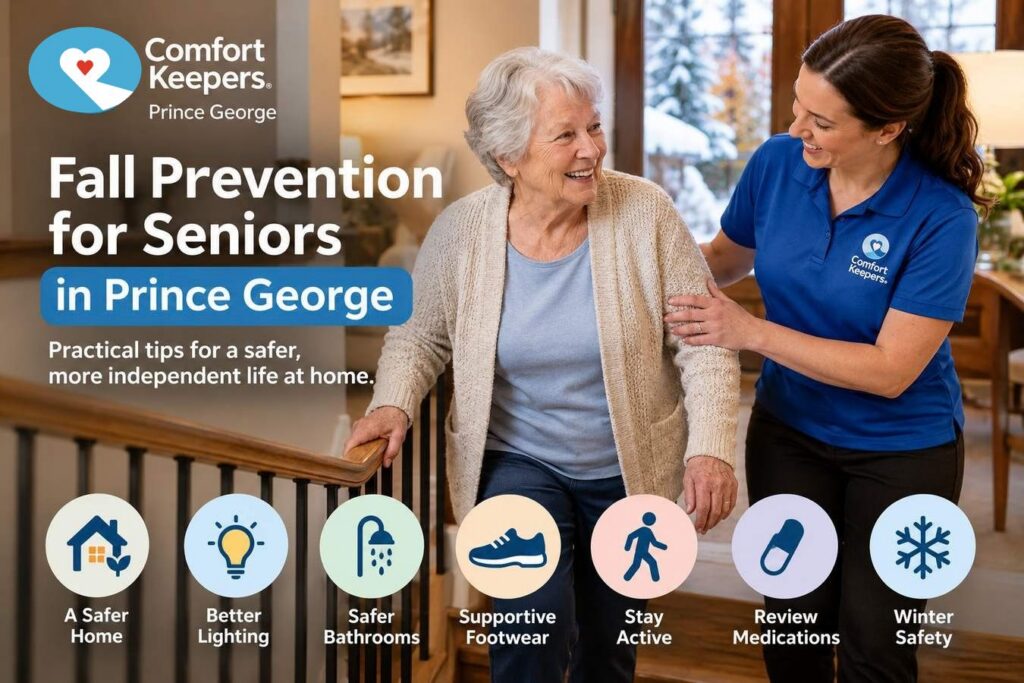
Falls are a major safety concern for older adults, but many falls can be prevented. Simple changes to the home, regular physical activity, appropriate footwear, medication reviews, and the right level of support can help seniors reduce their risk of falling and continue living independently.
For seniors in Prince George, BC, and the surrounding area, fall prevention is especially important during the winter months, when snow, ice, and slippery outdoor surfaces create added hazards. However, fall prevention should also be part of everyday home safety throughout the year.
At Comfort Keepers Prince George, we understand that maintaining independence is important to seniors and their families. Creating a safer environment and providing appropriate assistance can help older adults remain comfortable and confident in their own homes.
What Is Fall Prevention for Seniors?
Fall prevention involves identifying and reducing factors that can cause an older adult to lose their balance, trip, slip, or become injured.
Fall risks can come from the environment, mobility changes, vision problems, medications, muscle weakness, or difficulties with everyday activities. In many cases, several small risk factors can combine to make a fall more likely.
The goal of fall prevention is not to stop seniors from being active. It is to help them remain active as safely and independently as possible.
Why Are Seniors at Greater Risk of Falling?
As people age, changes in strength, balance, flexibility, vision, and reaction time can affect mobility. Some medications and health conditions can also contribute to dizziness, weakness, or changes in alertness.
A previous fall can create another concern: fear of falling again. A senior may begin avoiding walking, exercise, social activities, or other everyday tasks. Becoming less active can lead to further loss of strength and mobility.
That is why identifying fall risks early is so important.
10 Fall Prevention Tips for Seniors at Home
1. Remove Tripping Hazards
One of the simplest ways to improve home safety is to keep walking areas clear.
Look for:
- Loose rugs and mats
- Electrical cords crossing walkways
- Clutter on the floor
- Shoes or clothing left in hallways
- Small pieces of furniture that obstruct pathways
- Loose carpeting
- Uneven flooring
Walk through the home from a senior’s perspective. Pay particular attention to the routes they use most often, such as the bedroom-to-bathroom path, kitchen, living room, and entrances.
2. Improve Lighting Throughout the Home
Poor lighting can make it difficult to see obstacles, stairs, changes in flooring, or wet surfaces.
Make sure hallways, staircases, entrances, bedrooms, and bathrooms are adequately illuminated.
Night lights can be particularly useful between the bedroom and bathroom. Light switches should also be easy to access.
3. Make the Bathroom Safer
Bathrooms are an important area to consider when assessing fall risks because water can make surfaces slippery.
Depending on the person’s needs, safety improvements may include:
- Grab bars near the toilet and shower
- Non-slip surfaces
- A stable shower chair
- A handheld showerhead
- A raised toilet seat
- Adequate bathroom lighting
Do not use towel racks or other fixtures as support. They are generally not designed to support someone’s body weight.
4. Keep Stairs Clear and Secure
Stairs can become increasingly challenging as mobility or balance changes.
Make sure stairways have secure handrails and good lighting. Keep steps free of objects and avoid carrying items that block your view while using the stairs.
If stairs have become difficult for a senior to manage safely, talk with a healthcare professional or occupational therapist about possible solutions.
5. Encourage Safe, Supportive Footwear
Footwear can affect stability.
Seniors should wear properly fitting shoes with good support and soles that provide appropriate traction. Loose slippers, worn-out shoes, and walking in socks on smooth floors can increase the risk of slipping.
Outdoor footwear is especially important in Prince George during winter conditions.
When snow and ice are present, seniors should avoid walking on untreated surfaces whenever possible and consider whether assistance is needed for outdoor activities.
6. Stay Active and Work on Strength and Balance
Regular physical activity can help maintain strength, flexibility, mobility, and balance.
Walking and appropriate strength and balance exercises can be part of a senior’s fall prevention plan. Activities should be suitable for the individual’s abilities and health.
If a senior has mobility concerns or has experienced a fall, they should speak with their healthcare professional before starting a new exercise program.
7. Review Medications With a Healthcare Professional
Some medications may cause side effects such as dizziness, drowsiness, or changes in blood pressure.
If a senior experiences dizziness, weakness, unusual sleepiness, or balance problems, speak with a doctor or pharmacist about whether medications could be contributing.
Do not stop or change prescribed medications without professional medical advice.
8. Have Vision Checked Regularly
Good vision is important for safe mobility.
Changes in eyesight can make it harder to see obstacles, stairs, uneven surfaces, or changes in flooring.
Regular vision appointments can help identify problems that may affect safety. Seniors should also make sure their glasses are clean and that they are using them as recommended.
9. Slow Down During Everyday Activities
Rushing can increase the risk of losing balance.
Encourage seniors to take their time when:
- Getting out of bed
- Standing up from a chair
- Getting in or out of the shower
- Walking on stairs
- Turning or changing direction
- Carrying objects
If someone feels dizzy after standing, they should pause and regain their balance before walking.
Frequently used items should also be stored somewhere easy to reach so that seniors do not need to climb on chairs or stools.
10. Consider Additional Support at Home
Sometimes the best fall prevention strategy is having someone available to provide assistance.
A caregiver can help with daily routines, mobility, personal care, meal preparation, light housekeeping, errands, and companionship.
Having appropriate support can also help family members feel more comfortable knowing that their loved one has assistance when they need it.
Fall Prevention During Winter in Prince George
Winter creates additional fall risks for seniors in Prince George.
Snow, ice, freezing temperatures, and reduced daylight can make outdoor walking more difficult. Seniors should take extra precautions during winter and avoid unnecessary exposure to slippery conditions.
Some practical winter safety measures include:
- Checking outdoor walkways for ice and snow
- Using properly maintained entrances and pathways
- Wearing appropriate winter footwear
- Avoiding icy surfaces whenever possible
- Allowing extra time to walk safely
- Asking for assistance with outdoor errands when conditions are poor
- Using appropriate mobility equipment when recommended
Family members and caregivers can also help by checking outdoor areas and making sure seniors have safe access to the home.
What Should You Do After a Senior Has a Fall?
A fall should not simply be dismissed as an accident, especially if it happens more than once.
After a fall, consider whether the senior may have been affected by:
- A change in balance or mobility
- Medication side effects
- Vision problems
- Muscle weakness
- Dizziness
- An environmental hazard
- A change in their ability to safely perform an everyday activity
If someone is injured, experiences significant pain, hits their head, loses consciousness, or has other concerning symptoms after a fall, seek appropriate medical attention.
Even when there is no obvious injury, discussing repeated falls or new balance problems with a healthcare professional can help identify possible contributing factors.
How Caregivers Can Help With Fall Prevention
Professional caregivers can play an important role in helping seniors remain safe at home.
Depending on the individual’s care plan, a caregiver may help with:
- Safe movement around the home
- Personal care routines
- Meal preparation
- Light housekeeping
- Keeping commonly used areas organized
- Companionship
- Errands and appointments
- Daily routines
- Assistance with activities that have become difficult
Caregivers can also provide families with an additional set of eyes when changes in a senior’s mobility or daily routine become noticeable.
The purpose of in-home care is not to take independence away from seniors. Instead, the right support can help make it possible for them to continue living at home while receiving assistance where it is needed.
Frequently Asked Questions About Fall Prevention for Seniors
What is the best way to prevent falls in seniors?
There is no single solution that prevents every fall. Effective fall prevention usually involves several strategies, including removing hazards from the home, improving lighting, addressing bathroom and stair safety, wearing supportive footwear, maintaining appropriate physical activity, reviewing medications with a healthcare professional, and providing assistance when needed.
What are the most common fall hazards for seniors at home?
Common hazards include loose rugs, clutter, electrical cords, poor lighting, slippery bathroom surfaces, unsecured stairs, inappropriate footwear, and objects that require a senior to bend, stretch, climb, or reach beyond their safe ability.
How can I make my elderly parent’s home safer?
Start with a room-by-room safety assessment. Remove clutter and loose rugs, improve lighting, secure electrical cords, make bathrooms safer, keep stairs clear, and make frequently used items easy to reach. If mobility has changed, discuss additional safety recommendations with a healthcare professional.
Why are seniors more likely to fall?
Age-related changes in balance, muscle strength, flexibility, vision, and reaction time can increase fall risk. Certain medications and health conditions can also contribute. Environmental hazards may further increase the likelihood of a fall.
Can caregivers help prevent falls?
Yes. Depending on the senior’s needs, caregivers can assist with mobility, personal care, daily activities, meal preparation, housekeeping, errands, and other routines. Having appropriate support can help reduce situations where a senior may otherwise attempt a difficult activity alone.
What should seniors do differently in winter?
Seniors should take extra precautions when snow and ice are present. Wearing appropriate footwear, avoiding slippery surfaces, allowing extra time to move safely, maintaining clear walkways, and arranging assistance with outdoor activities can help reduce exposure to winter fall hazards.
Should an older adult see a doctor after a fall?
A healthcare professional should be consulted when a fall results in an injury, significant pain, loss of consciousness, a head injury, or other concerning symptoms. Repeated falls or new balance and mobility problems should also be discussed with a healthcare professional.
Helping Seniors Stay Safe and Independent at Home
Fall prevention is an important part of helping older adults maintain their independence.
A few changes around the home can eliminate common hazards, while regular activity, appropriate healthcare, and personalized support can address other factors that may contribute to falls.
For families in Prince George, Quesnel and Vanderhoof, Comfort Keepers provides personalized in-home care designed around the individual needs, preferences, and routines of each client.
Whether a senior needs companionship, assistance with daily activities, personal care, or additional support at home, having a trusted caregiver can provide practical help while allowing them to remain in familiar surroundings.
Contact Comfort Keepers Prince George to learn more about personalized in-home senior care and how a caregiver can support your loved one’s independence and safety at home.