


What to Expect When Recovering at Home After Hip Surgery or a Hospital Stay?
For many seniors, hip surgery recovery can take 6 to 12 months. Comfort Keepers Tri-Cities can support a safer, more comfortable recovery at home after surgery with non-medical assistance and daily-living support. While patients often regain basic mobility within 2 to 6 weeks, full independence requires a combination of home safety modifications and professional in-home support.
Understanding what lies ahead can transform a potentially stressful experience into a manageable and positive journey toward independence.

Understanding the Hip Replacement Recovery Timeline at Home
While every individual heals at their own pace, having a general roadmap helps manage expectations. For most seniors, the journey to full mobility is a marathon, not a sprint, often spanning up to a year.
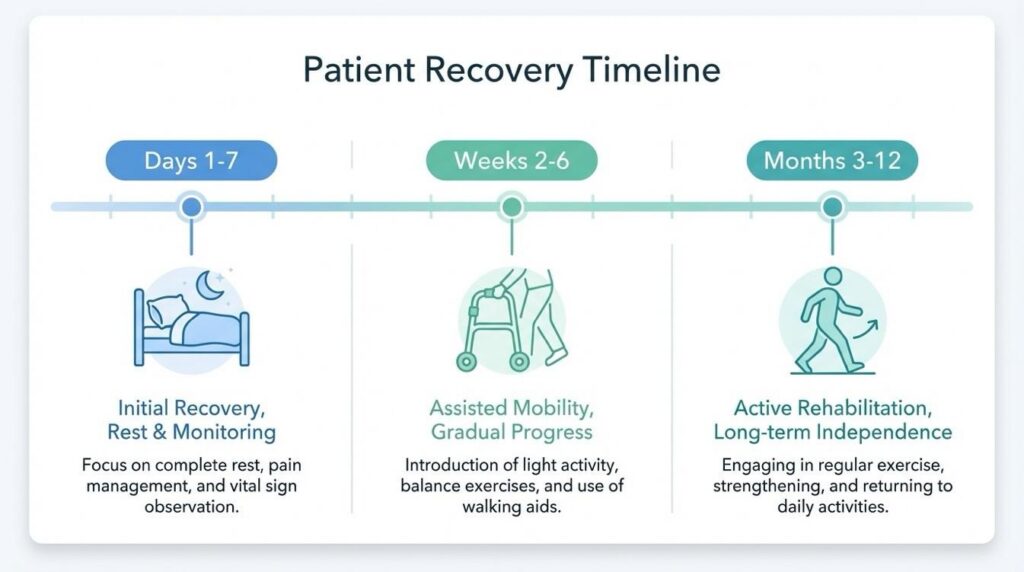
The First 48 Hours to One Week
The initial days after discharge are the most intensive. You will likely experience fatigue and some discomfort as the anesthesia fully leaves your system. During this period, mobility is limited, and the risk of falls is highest. Most patients are encouraged to stand and take short, assisted walks almost immediately, but 24-hour support is often necessary to assist with transfers between the bed, chair, and bathroom
Weeks 2–6: Regaining Mobility
This phase is often defined by rapid improvement. By weeks 2 through 4, many seniors can move with less reliance on walkers, though a cane may still be needed. Physical therapy exercises become part of the daily routine to strengthen the muscles around the new joint. However, energy levels may still fluctuate, making household chores like cooking or laundry difficult to manage alone.
Long-Term Recovery (Months 3–12)
By the three-month mark, most seniors resume their standard daily activities. However, full recovery – defined as the return of complete muscle strength and the absence of pain – can take six to twelve months. Consistency with prescribed exercises during this window is vital for long-term success.
Preparing Your Home for a Safe Recovery
A safe environment is your best defence against readmission. Before your surgery date or immediately upon discharge, it is crucial to “accident-proof” your living space to accommodate reduced mobility.
Essential Safety Modifications
Falls are the leading cause of re-injury after hip surgery. To mitigate this risk, remove all throw rugs and loose electrical cords that could catch on a walker or cane. In the bathroom, installing grab bars near the toilet and inside the shower is non-negotiable for safety. Ensure that all hallways and staircases are well-lit, perhaps by adding motion-sensor night lights to guide late-night trips to the washroom
Creating a Main-Floor “Recovery Station”
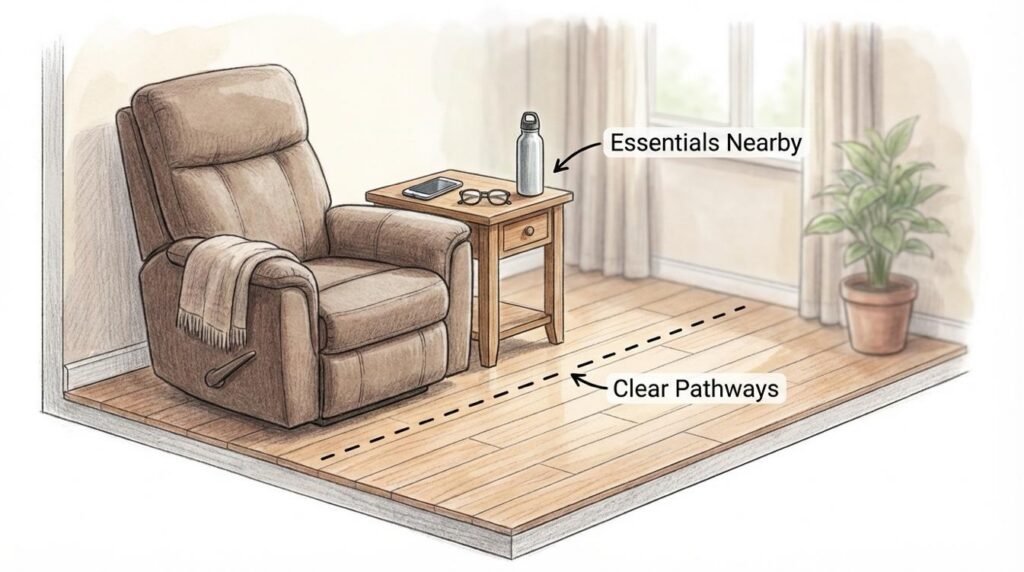
Stairs can be a significant barrier during early recovery. If possible, set up a temporary bedroom on the main floor of your home to avoid navigating steps multiple times a day. Keep essential items – phone, medications, water, and reading glasses – on a sturdy table within arm’s reach of your favourite chair. This setup minimizes the need to twist or bend, which are movements often restricted by surgeons during the initial healing period.
The Critical Role of In-Home Care
Professional support bridges the gap between medical discharge and independent living. For families in Coquitlam, Port Coquitlam, and Port Moody, in-home care acts as a safety net that allows seniors to focus entirely on healing.
Why Seniors Benefit from Professional Support
The benefits of in-home care extend beyond simple companionship. Professional caregivers significantly reduce the risk of hospital readmission by ensuring medication adherence and assisting with safe mobility. They handle physically demanding tasks such as grocery shopping, meal preparation, and light housekeeping, which safeguards the recovering senior from overexertion. Furthermore, having a companion alleviates the isolation that often accompanies a long recovery period.
What to Expect from a Caregiver vs. Home Care Nurse
It is important to distinguish between non-medical caregivers and home care nurses. A home care nurse typically visits periodically to administer injections, change wound dressings, and monitor vital signs. In contrast, a caregiver (or home support worker) provides sustained daily assistance with Activities of Daily Living (ADLs) such as bathing, dressing, and toileting. They act as the eyes and ears for the medical team, alerting family members to any changes in the senior’s condition.
Hiring In-Home Care in the Tri-Cities, BC
Finding reliable care in British Columbia’s Lower Mainland does not have to be overwhelming. Whether you are in Anmore, Belcarra, or the heart of Coquitlam, local options are available to suit various levels of need.
Local Options in Coquitlam, Port Coquitlam, and Port Moody
In the Tri-Cities, families can choose between private hires and agency-managed care. Agencies often provide greater peace of mind as they handle background checks, insurance, and scheduling backup in case a caregiver falls ill. When looking for “How do I hire in-home care after hip surgery in Tri-Cities BC?”, prioritize agencies that offer flexible, hourly care plans that can scale down as your loved one recovers.
Steps to Finding the Right Care Provider
1. Assess Your Needs: Determine if you need 24/7 monitoring or just a few hours of help each morning.
2. Verify Credentials: Ensure the provider is insured and bonded, and that their staff receives specific training in post-operative care.
3. Schedule a Consultation: Reputable providers will offer a free in-home assessment to meet the senior and discuss specific recovery goals.
4. Ask About Continuity: Inquire if the same caregiver will be visiting regularly, as consistent faces build trust and comfort.
If you or a loved one is facing an upcoming surgery, do not wait until discharge day to plan your support. Contact Comfort Keepers Tri-Cities today to schedule a free in-home consultation and ensure a safe, comfortable recovery. Our team is ready to create a personalized care plan that meets your unique needs. Call us now to secure the peace of mind you deserve during your recovery journey.

Frequently Asked Questions
Q: What is the typical hip replacement recovery timeline for seniors at home?
A: Most seniors can resume light daily activities within 3 to 6 weeks, but full recovery typically takes 6 to 12 months. The first two weeks are the most intensive, requiring significant assistance with mobility and personal care.
Q: How do I prepare my home for hip surgery recovery?
A: You should remove tripping hazards like loose rugs, install grab bars in the bathroom, improve lighting in hallways, and arrange a “recovery station” on the main floor so you don’t have to climb stairs frequently.
Q: What are the benefits of in-home care for seniors recovering from hip surgery?
A: In-home care reduces the risk of falls, ensures medications are taken on time, assists with daily hygiene and meals, and provides transportation to follow-up appointments, all of which lower the chance of hospital readmission.
Q: What should I expect from a home care nurse after surgery?
A: A home care nurse typically handles medical tasks such as checking vital signs, changing surgical dressings, and administering medication, whereas a personal caregiver assists with daily living tasks like bathing, cooking, and mobility.
Q: How do I hire in-home care after hip surgery in Tri-Cities BC?
A: You can hire care by contacting a licensed local agency like Comfort Keepers Tri-Cities. The process involves an initial consultation to assess your specific recovery needs, followed by the matching of a compatible, vetted caregiver to your home.


