
Post-Hospital Care at Home: A Week-by-Week Guide for Canadian Families
Why This Guide Exists
A hospital discharge can feel like good news and a sudden cliff edge at the same time.
Your parent had a fall, a cardiac event, or a joint replacement. The medical team says they’re ready to go home. But “medically stable” and “safe at home” are not the same thing, and in Canada’s stretched healthcare system, the distance between the two is where many families find themselves scrambling.
If someone you care about is leaving hospital, understanding what post-hospital care involves, what your province will and will not cover, and how to plan those first critical weeks at home can mean the difference between a steady recovery and a preventable setback.
What Is Post-Hospital Care?

Post-hospital care is the support a person needs in the days and weeks after leaving hospital to recover safely, avoid complications, and regain independence. It typically includes help with medication management, wound care, mobility, personal care such as bathing and dressing, meal preparation, and light housekeeping.
For older adults especially, post-hospital care also means monitoring for warning signs, supporting rehabilitation exercises, and providing companionship during a period that can feel isolating and disorienting.
In Canada, some post-hospital care is available through the public system. But as many families quickly discover, publicly funded services are limited in hours, scope, and flexibility.
Private in-home care often becomes necessary to cover what the public system cannot.
Why Are the First Weeks After Discharge So Risky?

Roughly 1 in 11 patients in Canada is readmitted to hospital within 30 days of discharge, according to the Canadian Institute for Health Information (CIHI). The period immediately after a hospital stay is one of the highest-risk windows for older adults.
Research published in the Canadian Medical Association Journal, based on more than 700,000 older adults in Ontario, found that patients discharged with home care had a higher risk of readmission than those who returned home without additional support.
This finding is consistent with the greater medical complexity of those patients’ conditions, rather than any failing of home care itself. The study underscores how medically fragile many people are during this window.
Several factors drive this vulnerability. Even a short hospital stay causes physical deconditioning: muscle strength drops quickly during bed rest, balance suffers, and fall risk climbs.
According to the Public Health Agency of Canada, reporting World Health Organization estimates, about one in three adults aged 65 and older falls each year, and more than a third of seniors hospitalized for a fall end up in long-term care rather than returning home.
Beyond the physical risks, there is often confusion about new medications, changed routines, and follow-up appointments. A person may come home to an environment that felt manageable before admission but now presents real obstacles: stairs they can no longer navigate safely, a bathroom without grab bars, or a kitchen that requires more standing than they can manage.
What Does Canada’s Public System Cover After Discharge?

Each province and territory manages its own publicly funded home care through regional health authorities. In Ontario, services are coordinated through Ontario Health atHome (formerly Home and Community Care Support Services).
Publicly funded post-discharge home care generally includes:
- Nursing visits for wound care, injections, and chronic condition monitoring
- Personal support for bathing, dressing, and hygiene
- Physiotherapy and occupational therapy
- Speech-language therapy where needed
- Social work services
These services are provided at no direct cost through provincial health insurance (OHIP in Ontario). However, the amount of support is based on a care coordinator’s assessment of medical need, not on what the family feels is required.
Where Does Public Home Care Fall Short?
The most common challenge is that publicly funded personal support hours are limited. In many regions, a person may receive only a few hours of support per week, even after a significant hospitalization.
Scheduling is often inflexible, and different workers may attend on different days, which can be unsettling for someone in recovery.
Public home care also does not typically cover meal preparation beyond the basics, companionship, transportation to follow-up appointments, overnight monitoring, or the kind of consistent daily presence that helps someone feel safe and oriented during recovery.
This is not a criticism of the professionals who deliver public home care. The system is stretched. Ontario’s own 2026 High-Intensity Bundled Home Care program was created specifically to move patients out of hospital beds and into community care.
An acknowledgment, at the policy level, of the gap that families experience at home.
How Hospital Bed Pressure Affects Discharge Timing
Part of what drives the gap between hospital discharge and adequate home support is a systemic problem called Alternate Level of Care (ALC). An ALC designation applies when a patient no longer needs acute hospital care but cannot be discharged because there is nowhere appropriate for them to go.
A 2025 national evidence assessment by CADTH found that approximately 17% of all hospital days in Canada were occupied by ALC patients (based on 2022–2023 data). A separate 2025 economic analysis estimated the total cost of ALC in Canada at $2.48 billion (based on 2019–2020 data).
Some rural Ontario hospitals report that up to 40% of beds are filled by ALC patients at peak times.
This matters practically for families: hospitals are under real pressure to free up beds. A discharge may come sooner than expected, and the public home care arranged through the hospital may not be sufficient.
Understanding your options early, including private home care, is essential.
What Does Post-Hospital Recovery Look Like Week by Week?
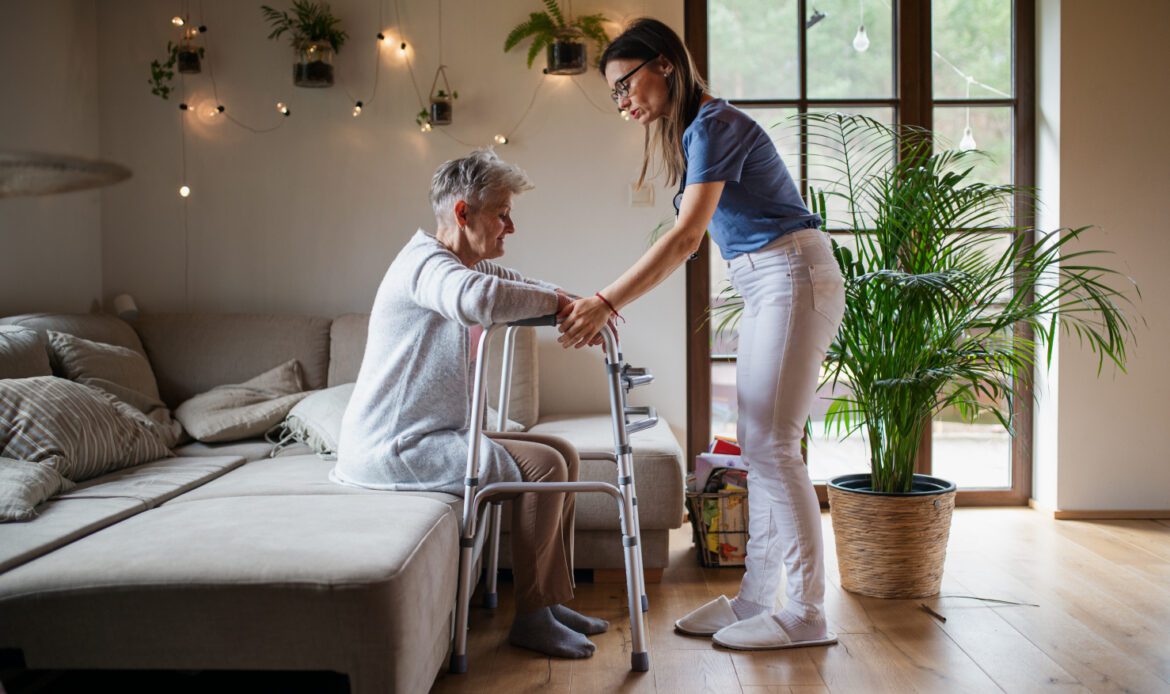
Every recovery is different, and this timeline is a general guide rather than a fixed schedule. The specifics depend on the reason for hospitalization, the person’s overall health, their home environment, and the support available.
Week 1: The Critical Transition
The first week home is the most vulnerable period. The goals are safety, stabilization, and getting basic systems in place.
A person typically needs help with personal care (bathing, dressing, toileting), medication management (which may involve a new or changed regimen), meal preparation, and mobility support.
Someone who walked independently before admission may now need a walker or help getting in and out of chairs. The home often needs quick adjustments: removing trip hazards, installing grab bars, rearranging furniture for walker access, and moving essentials within safe reach.
This is also when a publicly funded care coordinator will usually complete their assessment, if a referral was made at discharge. There may be a gap of several days between arriving home and receiving the first publicly funded visit.
For many families, this gap is where private in-home care provides the most immediate help: a consistent, reliable presence to keep things safe while the public system catches up.
Warning signs to watch for in Week 1: confusion or disorientation that worsens rather than improves, new or increasing pain, signs of infection at a surgical site, difficulty breathing, refusal to eat or drink, and any falls or near-falls.
Week 2: Building a Routine
By the second week, the focus shifts to establishing a daily routine and supporting rehabilitation. Physiotherapy or occupational therapy will usually begin during this period if arranged.
A caregiver or family member can reinforce exercises between therapy visits, which is one of the most effective ways to support recovery.
Nutrition becomes increasingly important. Recovery demands adequate protein and hydration, and many older adults return from hospital with a reduced appetite. Having someone prepare appealing meals and eat with the person is both practical and meaningful.
Eating alone, when energy is low and routines are disrupted, often leads to skipped meals and slower healing.
Emotional recovery also needs attention. A hospital stay can shake a person’s confidence. Companionship, patient encouragement, and involvement in small familiar activities contribute to recovery in ways that medical care alone does not.
Week 3 and Beyond: Gaining Independence or Adjusting the Plan
By the third week after discharge, recovery trajectories diverge. Some people are regaining strength and may need less support. Others, particularly after a stroke, hip fracture, or cardiac event, may need ongoing assistance for weeks or months.
This is an important decision point. If progress is good, you might reduce support hours gradually. If recovery has been slower than expected, this is the time to reassess: extending private home care, requesting a public re-assessment, or discussing additional rehabilitation with the person’s physician.
Some people discover that a modest amount of ongoing support makes daily life noticeably better, even beyond the acute recovery period. That is not a failure. It is a recognition that the right help can sustain independence at home far longer than managing alone.
What Does Private Home Care Add That Public Services Do Not?

Private in-home care fills the specific gaps that publicly funded services cannot cover: consistent caregivers who learn the person’s routine, flexible scheduling that matches actual needs, overnight or 24-hour support during the highest-risk early days, and help with meals, companionship, and transportation to follow-up appointments.
For many Canadian families, private post-discharge care is not a luxury. It is the practical answer when the public system’s hours, scheduling, and scope are not enough.
The best caregivers do things with the person, not just for them, preserving skills and self-respect throughout recovery.
How to Start Planning Before the Discharge Date

If a hospital stay is anticipated, planning for post-hospital care before admission makes the transition far easier. Even after an unexpected hospitalization, starting these steps as soon as possible helps.
- Ask the hospital’s discharge planner what public home care will be arranged, when it will begin, and how many hours of personal support will be provided weekly.
- Contact a home care provider to discuss private options and availability, so support can begin the day of discharge if needed.
- Assess the home for safety: lighting, floor surfaces, bathroom accessibility, stair navigation, trip hazards, and grab bar installation.
- Arrange prescriptions and supplies: have medications filled and the kitchen stocked with nutritious food before the person arrives home.
- Designate one family member as the care coordinator to manage communication with healthcare providers, track appointments, and avoid conflicting information.
What to Do If a Hospital Stay Reveals a Parent Needs More Help

For some families, a hospital discharge reveals what daily life has actually been like for a parent or spouse. Adult children living at a distance may realize their parent has been managing less well than they thought: the fridge is empty, mail is piling up, the house is less maintained than it used to be.
This conversation is worth having honestly, and with respect for the person at the centre of it. Often, it begins with a practical question: What would make your days easier and more enjoyable?
The answer might be help with meals a few times a week, someone to accompany them on walks, or simply regular company from someone they enjoy being around.
How to Get Started with Post-Hospital Home Care

If someone you care about is preparing to leave hospital, or has recently come home and the transition feels harder than expected, you don’t have to figure everything out alone. Talking with an experienced home care team can help you understand what level of support would make recovery safer and more comfortable, whether that means a few weeks of focused post-hospital care or something longer-term.
Comfort Keepers London provides personalized in-home care, including short-term recovery support and ongoing assistance tailored to each person’s needs, abilities, and preferences.
A conversation about your situation is always a good place to start.
References
- Canadian Institute for Health Information (CIHI). All Patients Readmitted to Hospital. Data updated October 2025.
- Gruneir A, Fung K, Fischer HD, Bronskill SE, Panjwani D, Bell CM, Dhalla I, Rochon PA, Anderson G. Care setting and 30-day hospital readmissions among older adults: a population-based cohort study. CMAJ. 2018;190(38):E1124-E1133.
- Public Health Agency of Canada. Surveillance Report on Falls Among Older Adults in Canada. 2022.
- Public Health Agency of Canada. Seniors’ Falls in Canada: Second Report. 2014.
- Public Health Agency of Canada. Seniors’ Falls in Canada — Infographic.
- Canadian Agency for Drugs and Technologies in Health (CADTH). Alternate Level of Care in Canada: Evidence Assessment Report. Canadian Journal of Health Technologies. 2025;5(6). Report No.: OP0557.
- Canadian Agency for Drugs and Technologies in Health (CADTH). Strategies to Reduce Alternate Level of Care. 2024.
- Estimating the Cost of Alternate Level of Care When It Is Inextricably Linked to the Cost of Acute Care: A Canadian Example. The American Economist. 2025.
- Ontario Health atHome.
- VHA Home HealthCare. Home and Community Care Support Services is now called Ontario Health atHome. July 2024.
- CTV News / CP24. Ontario home care program pushed to January as hospitals strain under flu surge. December 9, 2025.
- van Walraven C. Hospital readmission rates under the microscope. CMAJ. 2012;184(15):E796.
- Yao X, Champagne AS, McFaull SR, Thompson W. Temporal trends and characteristics of fall-related deaths, hospitalizations and emergency department visits among older adults in Canada. Health Promotion and Chronic Disease Prevention in Canada. 2024;44(11/12):482-87.
- Canadian Institute for Health Information (CIHI). Hospital stays in Canada, 2024–2025. February 2026.
Frequently Asked Questions
What is post-hospital care, and who provides it in Canada?
Post-hospital care is the support someone needs after discharge to recover safely at home. In Canada, some post-hospital care is provided through publicly funded programs coordinated by provincial health authorities such as Ontario Health atHome.
Private providers, including Comfort Keepers, supplement or replace public services when families need more hours, more flexibility, or more consistent support.
Does OHIP or provincial health insurance cover home care after a hospital stay?
Provincial health insurance covers certain post-discharge services, including nursing visits, personal support, and therapy. However, hours and services are limited and based on assessed medical need.
Many families find that publicly funded hours are not enough to keep someone safe and comfortable during recovery, especially in the first two weeks.
How long does post-hospital care typically last?
Duration depends on the reason for hospitalization, the person’s overall health, and how recovery progresses. Some people need intensive support for one to two weeks before transitioning to lighter assistance.
Others, particularly after a stroke, hip fracture, or cardiac event, may benefit from weeks or months of in-home support. A good care plan is reassessed regularly and adjusted as needs change.
What is an ALC patient, and how does ALC affect discharge planning?
ALC (Alternate Level of Care) refers to patients who no longer need acute hospital treatment but remain in hospital because appropriate community care or long-term care placement is not available.
Nationally, about 17% of hospital days are occupied by ALC patients (based on 2022–2023 data from a 2025 CADTH evidence assessment). The resulting pressure to free hospital beds can mean families have less time to arrange adequate support at home.
What are the biggest risks for seniors in the first weeks after leaving hospital?
The most significant risks include falls (from reduced strength and balance after bed rest), medication errors (from new or changed prescriptions), missed follow-up appointments, poor nutrition, infection, and social isolation.
Falls are the leading cause of injury-related hospitalizations among Canadian seniors, and the risk peaks during the post-discharge period. Consistent support at home during this window helps catch problems before they lead to readmission.
Post-hospital care is the support someone needs after discharge to recover safely at home. In Canada, some post-hospital care is provided through publicly funded programs coordinated by provincial health authorities such as Ontario Health atHome.
Private providers, including Comfort Keepers, supplement or replace public services when families need more hours, more flexibility, or more consistent support.
Provincial health insurance covers certain post-discharge services, including nursing visits, personal support, and therapy. However, hours and services are limited and based on assessed medical need.
Many families find that publicly funded hours are not enough to keep someone safe and comfortable during recovery, especially in the first two weeks.
Duration depends on the reason for hospitalization, the person’s overall health, and how recovery progresses. Some people need intensive support for one to two weeks before transitioning to lighter assistance.
Others, particularly after a stroke, hip fracture, or cardiac event, may benefit from weeks or months of in-home support. A good care plan is reassessed regularly and adjusted as needs change.
ALC (Alternate Level of Care) refers to patients who no longer need acute hospital treatment but remain in hospital because appropriate community care or long-term care placement is not available.
Nationally, about 17% of hospital days are occupied by ALC patients (based on 2022–2023 data from a 2025 CADTH evidence assessment). The resulting pressure to free hospital beds can mean families have less time to arrange adequate support at home.
The most significant risks include falls (from reduced strength and balance after bed rest), medication errors (from new or changed prescriptions), missed follow-up appointments, poor nutrition, infection, and social isolation.
Falls are the leading cause of injury-related hospitalizations among Canadian seniors, and the risk peaks during the post-discharge period. Consistent support at home during this window helps catch problems before they lead to readmission.