


Supporting Senior Mobility in Winnipeg, MB
Senior Mobility | March 25, 2026
As we age, changes in strength, balance, and coordination can impact a senior’s ability to move safely. Mobility challenges may include unsteady walking, trouble rising from a chair, or an increased risk of falls. Ensuring safe movement is essential for independence and overall well-being.
#DYK: Within a year, 20% of people with hip fractures die from complications.
Mobility issues can stem from muscle weakness, joint pain, chronic conditions, or neurological challenges. Often, multiple mild issues occur together, impacting movement and sometimes determining whether a person can live independently at home or requires care in a facility.
Senior Mobility and Falls
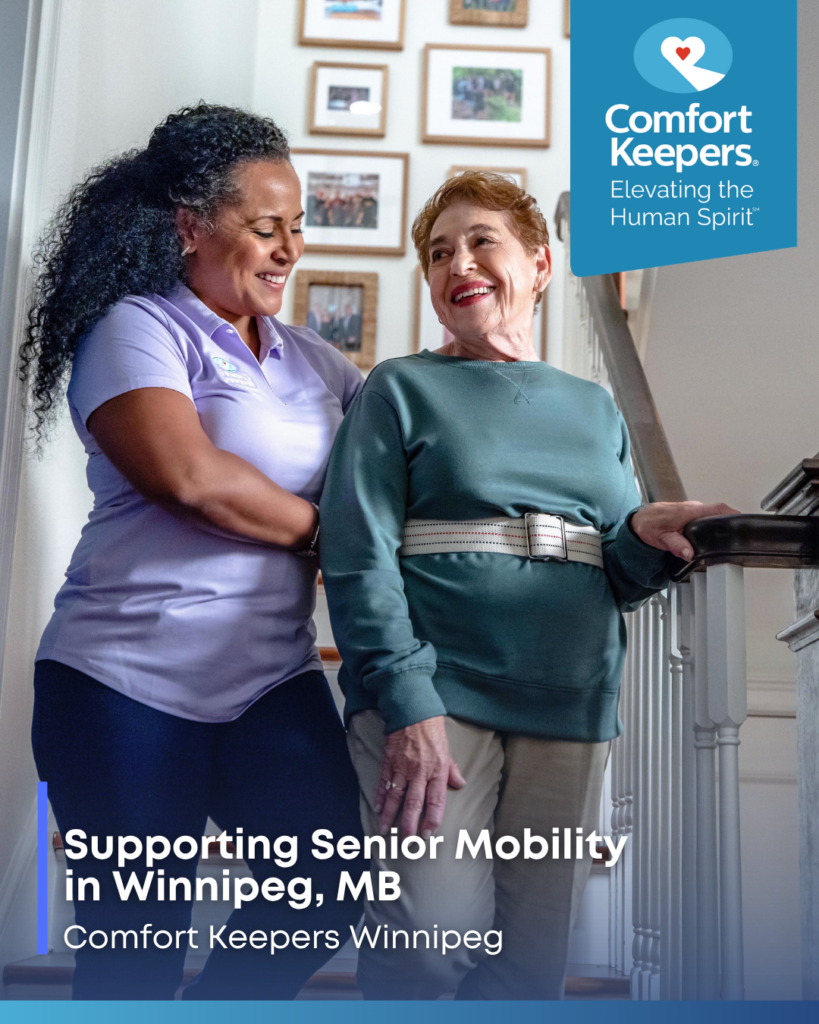
The primary mobility problem that older people experience is falls. Falls are a major cause of injury and death, so prevention is important. Older bones break more easily, heal less quickly, and may not heal completely. If a hip is fractured, canes, walkers, or wheelchairs might be permanently needed. If the senior is afraid of falling, address it, or he or she may become afraid to move around.
“Get Up and Go” Senior Mobility Test
Doctors often check for heart and lung problems, and screening for mobility can be put off, or even overlooked. This can be surprising, since tests for mobility can be relatively simple. With the “Get Up and Go Test”, a person is asked to stand up from sitting in a chair, walk 10 feet, turn around, walk back to the chair, and sit down. How long it takes and how steady the person is can then be noted.
Another way is just to watch how quickly people walk. They should walk faster than a yard per second. If you walk that or faster, you’re in the normal range; if you’re slower, you may have a gait problem, which increases the chances of falling. An approach University of Alabama researchers use is to ask two simple questions:
- Do you have difficulty climbing up 10 steps or walking one-quarter of a mile?
- Have you modified the way you climb 10 steps or walk a quarter of a mile?
These questions can be asked prior to testing. A senior probably knows if he or she is having trouble climbing stairs ─ and walking one-quarter of a mile is equal to one lap around a medium-sized mall’s upper level.
11 Tips to Help Prevent and Reduce the Risk of Senior Mobility Issues
#1. Stay active:
A regular program of exercise can strengthen muscles and improve flexibility. With increased strength and balance, a senior is better able to maneuver and avoid a potential fall.
#2. Maintain a healthy weight and a healthy diet:
It’s simply easier to get around without carrying extra weight, and there is less stress on bones and joints.
#3. Check the possible influence of medications:
Prescription and over-the-counter medicines, herbal or other remedies can result in drowsiness or distraction, which can lead to falls. If medications affect your balance or alertness, discuss a lower dose or different medicine with a physician.
#4. Identify fall hazards in the home and eliminate them:
Pay special attention to safety equipping the bathroom and kitchen. Use rubber appliqués or mats, raised toilet seats, and handrails where necessary. Clear the home of clutter and loose rugs or wires. Good lighting is essential; use night-lights in bathrooms, hallways, and, if needed, the bedroom.
#5. Ask the doctor about walking aids:
If a senior is just a little bit unsteady on his or her feet, a cane or walker can be used. Skip the drugstore, and first check with a doctor or physical therapist to find out what type is needed. A physical therapist will make sure the cane or walker is adjusted to the right height, and can teach the senior how to use it.
#6. Test vision and hearing regularly:
Seeing poorly or not hearing well can cause mobility problems and lead to falls. A senior should be extra careful with new bifocal or tri-focal eyeglasses.
#7. Make sure proper footwear is worn:
Sturdy, well-fitted, low- or flat-heeled shoes with good grip and support are recommended. In bad weather, exercise indoors.
#8. Create opportunities for socializing:
Look for community activities that keep seniors mobile. Check with local hospitals, senior centers, and community centers to see if they offer exercise or walking programs. An exercise or walking partner can help seniors stick to a program.
#9. Medical alert services can provide peace of mind:
If you worry about a senior having an emergency while alone, consider a medical alert service to connect him or her to help 24/7, at the push of a button.
#10. Don’t help too much:
Don’t do everything for someone because you are afraid that something might happen. He or she needs to stay active and most likely prefers to remain independent.
#11. Tell the doctor about mobility problems, and mention any falls:
Certain diseases like arthritis can affect mobility. Risks can often be reduced if the medical condition is diagnosed and treated.

Comfort Keepers® Winnipeg Can Help
About one-quarter of Canadians over age 65 need help with everyday activities such as eating, bathing, and getting in and out of bed or a chair. Our trained caregivers can help with these and other tasks, while providing companionship. Comfort Keepers can also have someone perform home safety assessments to identify fall hazards, and make recommendations to improve safety.
Comfort Keepers® Winnipeg Offers a Wide Range of Private Home Senior Care Services
For families concerned about the health and well-being of aging loved ones, we can help with home care services, including Alzheimer’s and dementia care, in-home personal care, respite care, specialized care, in-home nursing, end-of-life care, senior living transition services, and much more!
Comfort Keepers® professional caregivers provide services to ensure safety, health, and happiness without the stress of moving to an assisted living or rehabilitation facility. Individually tailored care plans account for living arrangements, medical issues, physical restrictions, personalities, expectations, and more.
Our Interactive Caregiving™ Approach Enables Top-Notch Homecare
Interactive Caregiving™ provides a system of care that addresses safety, nutrition, mind, body, and activities of daily living (ADLs). Our compassionate caregivers can provide a personalized home care plan for your loved one, allowing them to enjoy a healthier, safer, and more meaningful retirement at home.
Comfort Keepers® is the Most Trusted Name in Senior Care in Winnipeg
Our in-home caregivers ensure our seniors are physically, socially, and mentally engaged. In addition, we provide options, activities, events, and resources for seniors that might otherwise not be available.
Locally Owned and Operated In-Home Personal Care for Seniors
Our caregivers live and work in the Winnipeg area. We know the area and how to assist our clients using local resources. Comfort Keepers® Winnipeg is here to help you and your loved ones get the best care possible. If you live in Winnipeg and require homecare services for senior personal care and wellbeing, contact Comfort Keepers® at (204)-488-4600.
Accredited Home Care for Seniors in Winnipeg
Comfort Keepers® Winnipeg is accredited with Exemplary Standing with Accreditation Canada. Accreditation is an intensive process in which industry experts examine an organization’s processes, policies, and procedures against quality standards. To achieve accredited status, Comfort Keepers® offices met or exceeded the rigorous standards for Home Care companies, as defined by Accreditation Canada.
References:
- HealthinAging.org. “Eldercare at Home: Mobility Problems”. Web. 2016.
- AgingCare.com. “Elderly & Senior Mobility Problems”. Web. 2016
- Care.com. “Caring for Seniors with Mobility Problems”. Web. 2016.
- Harvard Health Publications, Harvard Medical School. Web. 2013.
Individualized Home Care Options
Long-Term Home Care, 24 Hour Home Care & Short Term Care Options Customized for You