


It’s a thought that keeps many family caregivers awake at night: is my loved one safe after the sun goes down? The quiet hours can feel the most vulnerable. A disorienting trip to the bathroom, a misplaced slipper, or poor lighting can turn a simple moment into a serious emergency.
You worry, and it’s a valid concern. But what if you could significantly reduce that risk, not with a costly renovation, but with a few simple, affordable changes?
This isn’t about just adding a nightlight. It’s about creating a strategic overnight safety net that builds confidence, preserves independence, and gives everyone peace of mind. More importantly, making these initial modifications is one of the best ways to gauge what level of support is truly needed. Sometimes, a safer environment is the most powerful care you can provide.

The Foundation: Four Pillars of Overnight Safety on a Budget
Before you start buying gadgets, it’s important to understand the core principles of nighttime safety. Most emergencies stem from a few common, fixable issues. By focusing on these four pillars, you can make the biggest impact with the least amount of spending.
Pillar 1: Light the Way
As we age, our eyes need much more light to see clearly, and our ability to adjust to darkness diminishes. A home that seems perfectly lit during the day can become a maze of shadows at night.
- The Power of Motion: Motion-activated, battery-powered LED lights are a game-changer. Place them along the baseboards of the critical pathway, from the bed to the bathroom door. They provide light exactly when and where it’s needed without having to fumble for a switch.
- Low-Level & Constant: For key areas like the bathroom and hallway, a soft-glow plug-in nightlight provides a constant beacon, helping a person stay oriented if they wake up suddenly.
Pillar 2: Clear the Path
The single most effective and completely free modification you can make is to declutter. At night, even familiar objects can become dangerous obstacles.
- Walk the Nightly Route: Trace the path from the bedroom to the bathroom and kitchen. Remove anything that could be a trip hazard: decorative rugs, stacks of magazines, loose electrical cords, or stray shoes.
- Widen the Lanes: Ensure there is a clear, wide path to walk through. This may mean slightly rearranging furniture to create more space, especially for those who use a walker or cane.
Pillar 3: Offer Stable Support
A common mistake is assuming any fixed object can provide support. A towel rack or toilet paper holder is not designed to bear a person’s weight and can easily pull out of the wall, causing the very fall it was meant to prevent.
- The Grab Bar Rule: Properly installed, screw-mounted grab bars are non-negotiable, especially in the bathroom. They provide a reliable handhold for getting on and off the toilet or safely stepping out of the shower.
- Bedside Assistance: If getting out of bed is a challenge, a simple bed rail or support handle that slides between the mattress and box spring can offer a sturdy point of leverage.
Pillar 4: Ensure a Quick Connection
In an emergency, every second counts. Having a way to call for help that is always within reach is a crucial part of the safety net.
- Bedside Phone: Ensure a phone, whether a landline or a charged cell phone, is on the nightstand and easy to use. Consider a phone with large, backlit numbers.
- Medical Alert Systems: A wearable pendant or wristband alert button provides a direct line to help from anywhere in the home, offering an invaluable layer of security.
A Room-by-Room Guide to Nighttime Safety
With the four pillars in mind, let’s walk through the most critical areas of the home and apply these low-cost principles.
The Bedroom: Your Safe Starting Point
The bedroom should be a sanctuary, not an obstacle course. The journey begins the moment your loved one’s feet touch the floor.
- Clear the Landing Zone: Keep the area immediately around the bed completely free of clutter. Slippers should be right beside the bed, easy to slip on without bending over.
- Check the Bed Height: Is the bed too high or too low? Your loved one’s feet should be flat on the floor when seated on the edge of the mattress, with their knees at a 90-degree angle. Bed risers or a lower-profile frame are inexpensive fixes.
- Keep Essentials Close: A nightstand organizer can ensure glasses, water, medication, and a phone are always within easy reach, preventing a risky stretch or a trip in the dark.
The Hallway: The Critical Connection
The path between the bedroom and bathroom is the most frequently travelled route at night. It needs to be simple and safe.
- Automate the Lighting: This is the perfect place for those motion-activated LED light strips along the baseboards. They create an illuminated “runway” to the bathroom.
- Remove All Rugs: Even rugs with non-slip backing can bunch up or catch a toe. For nighttime safety, a bare floor is a safer floor.
- Mark the Way: A small piece of glow-in-the-dark tape on the doorknobs to the bedroom and bathroom can be a simple, effective landmark in low light.
The Bathroom: The Highest-Risk Zone
With its hard surfaces and wet floors, the bathroom is where a fall is most likely to occur and cause a serious injury.
- Install Grab Bars Correctly: Place one vertically by the shower entrance and one or two horizontally by the toilet to assist with sitting and standing. Remember, suction-cup bars are not a safe long-term solution.
- Improve Toilet Safety: A raised toilet seat can dramatically reduce the effort needed to sit and stand. Some models even come with built-in armrests for extra support.
- Create Non-Slip Surfaces: Use non-slip mats or adhesive strips inside the tub or shower and a bathmat with a rubber backing on the floor. While these modifications greatly improve safety, having support during activities like bathing is a key part of comprehensive personal care services.
The Big Question: Are These Changes Enough?
After implementing these low-cost modifications, you’ve created a much safer environment. This is a huge accomplishment. Now comes the critical next step: assessment. These changes not only reduce immediate risk but also act as a powerful diagnostic tool, helping you understand if more support is needed.
Use this simple “Overnight Safety Check-In” framework to evaluate the situation:
Observe: Pay attention over the next week or two. Are there still signs of instability, like new bruises? Do you notice your loved one seeming more tired than usual, perhaps from interrupted sleep or nighttime struggles?
Listen: Ask open-ended questions. “How did you sleep?” is good, but “Did you get up at all last night? How did it feel getting to the bathroom with the new lights?” is better. They may reveal small hesitations or “close calls” that indicate a need for more than just environmental fixes.
Evaluate: Look for key indicators. Is your loved one experiencing increased confusion at night (sundowning)? Are they having more difficulty getting up, even with the new aids? If you find that environmental fixes alone aren’t providing complete peace of mind, it may be time to explore dedicated overnight care options. This isn’t a step back; it’s a proactive step toward ensuring total safety and well-being.

Frequently Asked Questions About Low-Cost Home Safety
What’s the single most impactful, cheapest modification I can make tonight?
Declutter the path from the bed to the bathroom and add two plug-in nightlights, one in the hallway and one in the bathroom. This simple action, which costs less than $20, addresses the two biggest nighttime risks: trip hazards and poor visibility.
My parent insists they don’t need help. How can I introduce these changes?
Frame it as a benefit for you or as a general home improvement. You could say, “I found these great motion-sensor lights, and I thought they’d be perfect for the hallway so no one has to stumble in the dark,” or “I’m worried about you, and just having a grab bar here would give me so much peace of mind.”
How much does this all really cost?
You can make a significant impact for under $150. A set of motion-activated lights, plug-in nightlights, a quality non-slip bathmat, and a raised toilet seat can all be purchased affordably online or at a local hardware store. Professionally installed grab bars may cost more, but they are a worthwhile investment in safety.
Are suction-cup grab bars a safe alternative?
No. Experts universally advise against them for long-term safety. They can lose suction without warning, especially in a moist bathroom environment, and fail when weight is applied. Always opt for professionally installed, screw-mounted grab bars.
Your Action Plan for a Safer Home Tonight
Feeling overwhelmed? Don’t be. Start small. The goal is progress, not perfection.
Tonight’s Task: Walk the path from the bedroom to the bathroom and remove at least three trip hazards. Plug in a nightlight in the bathroom.
This Weekend’s Project: Purchase and install motion-activated lights for the hallway. Add a non-slip mat to the bathroom.
Next Step: Assess the need for grab bars and a raised toilet seat. These are critical installations that provide immense value.
Creating a safe home environment is a powerful act of love and a foundational step in any care plan. By making these thoughtful, low-cost modifications, you’re not just preventing emergencies, you’re fostering independence, building confidence, and ensuring a better night’s sleep for everyone.
For a professional perspective tailored to your unique home and needs, a complimentary in-home assessment can help identify risks you might have missed and create a comprehensive plan for safety and comfort.
Beyond Four Walls: How Reduced Mobility Impacts a Senior’s Social Life and What Your Family Can Do
Have you noticed your aging parent turning down invitations more often? Perhaps their world seems to be shrinking, with weekly coffee dates replaced by long hours in front of the television. It’s easy to chalk it up to just “getting older,” but often, there’s a more specific challenge at play: reduced mobility.
When moving becomes more difficult, it’s not just the body that’s affected, it’s a senior’s entire social universe. This withdrawal isn’t usually a choice but a consequence of new barriers. The good news is that with a little understanding and a few practical steps, your family can become the bridge that reconnects your loved one to the world they miss.

More Than Just Staying Home: The Unseen Impact of Reduced Mobility
To truly help, we first need to understand the landscape. Experts often distinguish between two key concepts:
- Social Isolation: This is the objective state of having few social connections or infrequent contact with others. It’s about the quantity of interaction.
- Loneliness: This is the subjective feeling of being alone or disconnected, regardless of how many people are around. It’s about the quality of interaction.
Reduced mobility is a powerful catalyst for both. When we talk about “reduced mobility,” it’s not just about the ability to walk. It’s a broader set of challenges that can include difficulty getting in and out of a car, the energy drain of a simple shopping trip, or a loss of confidence in navigating uneven sidewalks. These seemingly small hurdles can build into insurmountable walls, leading directly to social isolation.
The Vicious Cycle: How Limited Movement Can Spiral into Isolation
It often starts subtly. A senior might stop attending a weekly book club because the transportation is a hassle. Then, they decline a family dinner because they feel tired before they even leave. This creates a dangerous feedback loop that can be hard to break.
Here’s how the cycle works:
- Reduced Mobility: An underlying health condition, a fear of falling, or chronic pain makes getting around more difficult.
- Decreased Social Activity: The senior begins to withdraw from activities and social gatherings they once enjoyed because of the physical and logistical challenges.
- Physical & Mental Decline: This isolation has profound health consequences. Research shows that prolonged social isolation is as harmful to a person’s health as smoking 15 cigarettes a day. It can lead to depression, anxiety, and even faster cognitive decline. Physically, less movement leads to muscle weakness and reduced stamina.
- Further Reduced Mobility: The resulting physical and mental decline makes mobility even more challenging, reinforcing the cycle and pulling the senior deeper into isolation.
Breaking this cycle is crucial for maintaining a high quality of life.
The Hidden Barriers We Often Miss
While we can see the physical challenges of using a walker or climbing stairs, the biggest hurdles for seniors with reduced mobility are often invisible. Understanding these emotional and psychological barriers is the key to offering meaningful support.
- Loss of Confidence: A single stumble or fall can shatter a senior’s confidence in their ability to navigate the outside world. Suddenly, every curb, crack in the pavement, or crowded room feels like a potential hazard.
- Fear of Being a Burden: Many seniors feel immense guilt asking for help. They don’t want to “inconvenience” their family or friends, so they simply say “no” to outings rather than explain that they need a steady arm, a slower pace, or help getting in and out of the car.
- Energy Management: For someone with limited mobility, a simple trip to the grocery store can be as exhausting as running a marathon. They have a finite amount of energy each day and must choose their activities carefully. Socializing can feel like a luxury they can’t afford.
- Embarrassment and Dignity: Relying on a mobility aid or needing assistance with basic tasks in public can feel embarrassing for someone who has been independent their whole life. This can lead them to avoid situations where they might feel vulnerable.
Recognizing these hidden struggles allows us to approach the situation with greater empathy and effectiveness.
From Presence to Purpose: The Power of Active Companionship
A common misconception is that simply having someone in the house, or arranging a few phone calls, is enough to combat loneliness. While any connection is good, for a senior with mobility issues, the real game-changer is active companionship.
What’s the difference?
- Passive Presence: This is having someone nearby for safety or conversation. It’s valuable, but it doesn’t solve the problem of being stuck within the same four walls.
- Active Companionship: This is a more hands-on approach focused on enabling and facilitating. An active companion doesn’t just talk about the beautiful day outside; they help the senior safely get out to enjoy it. They do things with them, not just for them.
This active, shoulder-to-shoulder support is what rebuilds confidence and breaks the cycle of isolation. It’s the difference between watching a travel show and actually visiting a local garden, or hearing about a community event and actually attending it. Through this supportive partnership, a senior rediscovers their ability to participate in life. This is where Comfort Keepers® companionship services can bridge the gap, turning isolation into engagement.
How Your Family Can Help: 3 Practical First Steps
Overcoming these challenges can feel daunting, but you don’t have to solve everything at once. Small, consistent actions can make a world of difference. Here are three simple steps to get started.
Step 1: Start with a Compassionate Conversation
Instead of saying, “You should get out more,” try opening a gentle, curious conversation. The goal is to understand their perspective, not to impose a solution.
Try questions like:
- “I miss seeing you at our Sunday lunches. I was wondering what’s making it difficult to come lately?”
- “Is there anywhere you’ve been wishing you could go, even just for a little while?”
- “I know getting around has been tougher lately. What’s the most frustrating part about it for you?”
Listen more than you talk. You may uncover a specific fear (like navigating a restroom in public) or a logistical barrier (like the time of day) that has a simple solution.
Step 2: Adapt the Environment for Confidence
A senior’s home should be their sanctuary, not an obstacle course. Small modifications can significantly improve safety and make them feel more capable, which can boost their confidence to venture out.
- Clear the Paths: Remove clutter, secure loose rugs, and ensure clear pathways through all rooms.
- Improve Lighting: Add nightlights in hallways and bathrooms and ensure lamps are bright and accessible.
- Install Grab Bars: Place grab bars in the bathroom, by the toilet and in the shower, to provide crucial stability.
These changes can help prevent falls and provide the physical stability needed to preserve energy for more engaging activities. This proactive approach to safety is a core part of comprehensive personal care services.
Step 3: Co-Create “Small Win” Outings
Don’t try to jump back into a full day of activities. The goal is to create a string of small, successful outings to rebuild confidence and momentum. Crucially, plan these with your loved one, not for them.
- Start Micro: A walk to the end of the driveway to get the mail.
- Graduate to a Scenic Drive: No walking required, just a change of scenery.
- Try a Bench Outing: Drive to a local North Vancouver park like Waterfront Park or Ambleside Park on a sunny day and simply sit on a bench together for 20 minutes.
- Plan for Accessibility: Choose a coffee shop you know doesn’t have stairs and has an accessible washroom.
Each positive experience becomes a building block for the next, proving to your loved one that a fulfilling social life is still within their reach.

Frequently Asked Questions about Mobility and Social Health
What’s the first sign that mobility issues are causing social isolation?
It often starts with making excuses to avoid previously enjoyed activities. Listen for phrases like, “It’s too much trouble,” “I’ll just be in the way,” or “I’m too tired.” This is often a sign that the logistical and emotional effort has become too great.
How can technology help, and what are its limits?
Video calls and social media are fantastic tools for staying connected with faraway family and friends. However, they are a supplement, not a replacement, for in-person interaction and community engagement. Technology can’t replicate the feeling of sunshine on your face during a walk or the shared experience of being at a local concert.
My parent refuses all my suggestions. What should I do?
Resistance often comes from a place of fear or a desire to maintain control. Try to reframe your role. Instead of being the “fixer,” be a “partner.” Ask them what a perfect, easy outing would look like for them. If they still refuse, it might be time to introduce the idea of a neutral third party, as sometimes support is easier to accept from a professional caregiver than from a child. Considering professional in-home care services from a trusted source can be a gentle way to introduce this support.
Your Loved One’s World Can Open Up Again
Seeing a parent become isolated due to reduced mobility is heartbreaking, but it is not an irreversible situation. By understanding the true physical and emotional barriers they face, you can shift from simply worrying to actively enabling.
It begins with empathy, continues with small, practical steps, and blossoms with a focus on active, purposeful companionship. You can help your loved one break free from the vicious cycle of isolation and rediscover the joy of engagement, one small, successful outing at a time.
Beyond Tired: A Family Caregiver’s Guide to Recognizing Burnout and Finding Relief
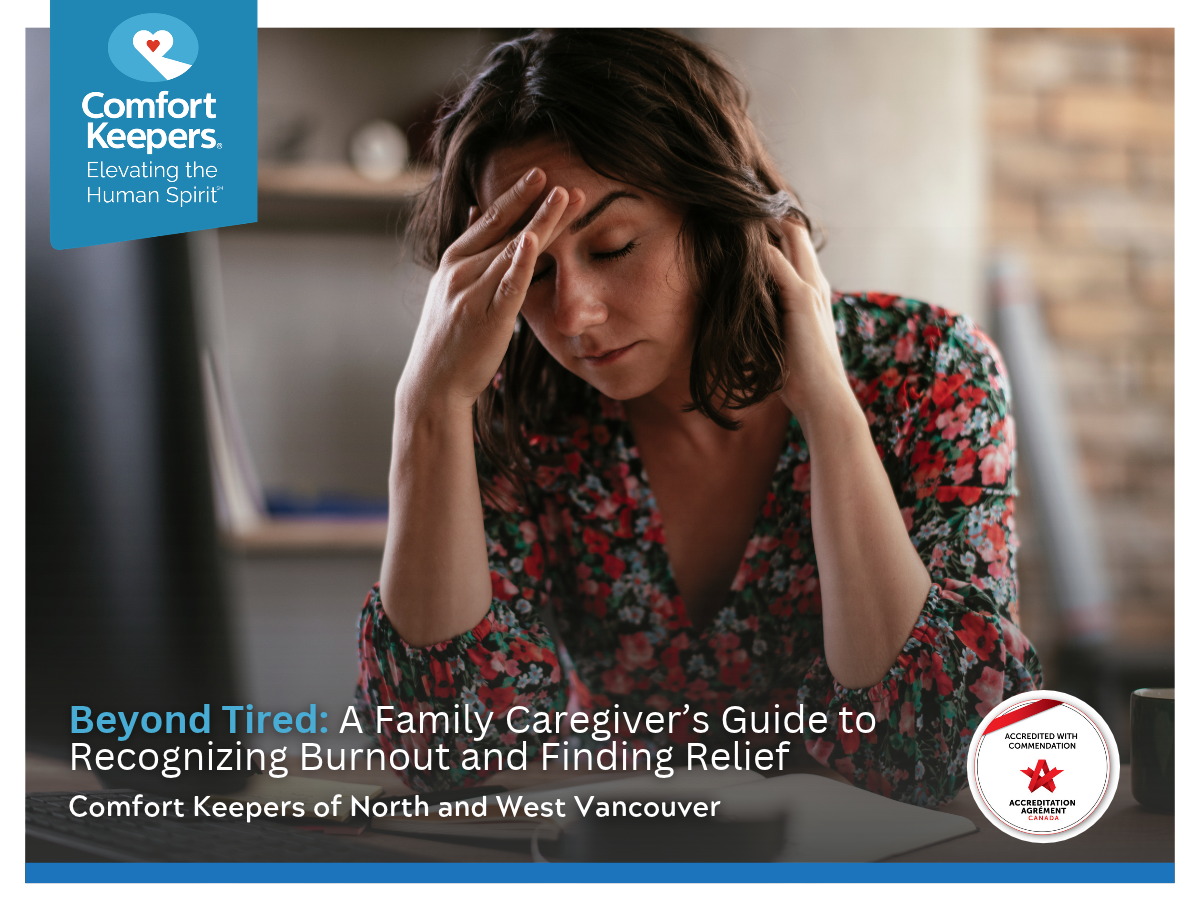
Let’s be honest: some days, being a family caregiver feels like trying to conduct a symphony in the middle of a storm. You’re juggling medication schedules, doctor’s appointments, meal prep, and emotional support, all while trying to keep your own life, your job, your family, your sanity, from being swept away. You do it out of love, of course. But you might be starting to notice a feeling that goes deeper than just being tired.
It’s a persistent exhaustion that a good night’s sleep can’t fix. It’s a subtle shift from patience to irritability. You might feel disconnected, like you’re just going through the motions. If this sounds familiar, you’re not alone, and it’s not a personal failure. You may be experiencing caregiver burnout, a state of physical, emotional, and mental exhaustion that can happen when you give so much of yourself without adequate support.
Understanding burnout isn’t about placing blame; it’s about recognizing the signs so you can take loving, strategic action for both yourself and the person you care for.
What is Caregiver Burnout, Really?
We often use “stress” and “burnout” interchangeably, but they are not the same. Recognizing the difference is the first step toward finding the right solution. Think of it as a progression:
- Caregiver Stress: This is the feeling of having too much to do and not enough time. It’s characterized by a sense of urgency and hyperactivity. You feel overwhelmed, but you still believe you can get everything under control if you just work harder.
- Caregiver Burden: This is the emotional weight of your responsibilities. You may feel worried about your loved one’s health or finances, and the sheer gravity of the situation feels heavy.
- Caregiver Burnout: This is the final stage, a state of depletion. The feeling is one of emptiness, not urgency. You may feel beyond caring, emotionally blunted, and detached from your role. It’s a sign that you’ve been in a state of intense stress for too long, and your internal resources are drained.
- According to the Cleveland Clinic, burnout is often accompanied by a change in attitude from positive and caring to negative and unconcerned. It’s a defence mechanism your body and mind use when they simply have nothing left to give.
Are You on the Path to Burnout? Spotting the Warning Signs
Burnout doesn’t happen overnight. It’s a slow fade, which is why the signs can be so easy to dismiss as just “a bad week.” By learning to spot the signals, you can intervene before you reach a crisis point. Ask yourself if you’ve noticed any of these changes in your life.
Emotional Signs
- Increased Irritability or Anger: Do you find yourself snapping at your loved one or other family members more often?
- Feelings of Hopelessness: A sense that nothing you do will make a difference.
- Anxiety or Depression: Constant worry that isn’t tied to a specific problem, or a persistent feeling of sadness.
- Loss of Interest: You no longer enjoy activities or hobbies you once loved.
Physical Signs
- Constant Exhaustion: A bone-deep tiredness that sleep doesn’t seem to touch.
- Changes in Sleep Patterns: You’re either sleeping far more than usual or suffering from insomnia.
- Getting Sick More Often: A weakened immune system makes you more susceptible to colds and the flu.
- Unexplained Aches and Pains: Frequent headaches, back pain, or stomach issues.
Behavioural Signs
- Withdrawing Socially: You turn down invitations from friends and isolate yourself.
- Neglecting Your Own Needs: Skipping your own doctor’s appointments, eating poorly, or giving up on exercise.
- Resentment: You start to feel resentful toward the person you’re caring for, even though you know it’s not their fault.
- Emotional Outbursts: Crying unexpectedly or having moments of overwhelming frustration.
If several of these points resonate with you, it’s a clear signal that your current situation is unsustainable.
The First Steps Toward Relief: Self-Care and Delegation
When you first notice the signs of burnout, your instinct might be to just push through. But the solution isn’t to try harder, it’s to care smarter. This starts with two key strategies: protecting yourself and asking for help.
1. Reclaim Small Pockets of Time for Yourself
Grand self-care gestures like a week-long vacation are often unrealistic. Instead, focus on small, consistent acts of self-preservation.
- Protect One Appointment: Make one personal appointment per week non-negotiable, whether it’s a coffee with a friend, a walk in the park, or just an hour to read a book in silence.
- Embrace “Good Enough”: Let go of the need for perfection. A simple meal is just as nourishing as an elaborate one. The house doesn’t need to be spotless.
2. Learn to Delegate
You cannot do this alone, nor should you have to. However, asking for help can feel daunting. Family and friends often want to help but don’t know how. Be specific.
Instead of saying, “I’m so overwhelmed,” try a more direct approach:
- “Could you sit with Mom for two hours on Saturday afternoon so I can run errands?”
- “Would you be able to drop off a prepared meal one night next week? It would be a huge help.”
- “I’m making a list of tasks like picking up prescriptions and groceries. Could you choose one to take off my plate this week?”
When Self-Care Isn’t Enough: The Critical Turning Point
Sometimes, small breaks and help from family aren’t enough to turn the tide, especially if your loved one’s needs are complex or increasing. This is not a sign of failure. It is a sign that the level of care required has surpassed what one person can realistically provide.
Recognizing this turning point is crucial. Red flags include:
- Your own physical or mental health is in decline.
- You feel consistently resentful or angry about your caregiving role.
- You worry that your loved one’s safety is at risk because you are too exhausted to be fully attentive.
- You have no time or energy left for your spouse, children, or career.
If you are at this stage, it is time to consider professional support. This is the most loving, strategic decision you can make for the long-term well-being of everyone involved.
The Dual Benefit: How Professional Support Rejuvenates Everyone
Bringing in outside help is often viewed as being solely for the caregiver’s benefit, but that’s only half the story. The right kind of support creates a positive ripple effect, enhancing the quality of life for your loved one as well.
Benefits for You, the Caregiver:
- Scheduled, Reliable Relief: Professional respite care gives you a planned break you can count on, allowing you to truly rest and recharge, knowing your loved one is in capable hands.
- Reduced Guilt and Worry: A trained professional provides peace of mind, alleviating the constant worry about your loved one’s safety and well-being when you’re not there.
- Rediscover Your Relationship: When you’re not the sole provider of hands-on care, you can step back into your primary role as a son, daughter, or spouse. Your time together can focus more on connection and less on tasks.
Benefits for Your Loved One:
- Enriched Social Engagement: A professional companion is more than a supervisor; they are a source of new conversation, shared activities, and mental stimulation, which is vital for cognitive health and staving off loneliness.
- Personalized Attention: Professional companionship services focus on your loved one’s interests, whether that’s playing cards, gardening, or discussing current events. This “Interactive Caregiving” approach keeps them active and engaged in their own lives.
- Dignified Assistance: Sometimes it’s easier for a parent to accept help with bathing, dressing, or mobility from a trained professional than from their own child. This preserves dignity and can reduce family tension. Professional Personal Care Services ensure these needs are met with expertise and compassion.
Your Questions About Caregiver Burnout, Answered (FAQ)
How is caregiver burnout different from compassion fatigue?
While similar, they have a key difference. Burnout stems from being worn down by the demands of the environment (the endless tasks, the lack of support). Compassion fatigue, often seen in professional healthcare settings, is a form of secondary traumatic stress from absorbing the trauma and suffering of others. For family caregivers, the two can often overlap.
How long does it take to recover from burnout?
Recovery depends on the severity of the burnout and the changes you implement. It’s not an overnight fix. The key is to make sustainable changes, like incorporating regular respite care, that address the root causes of the exhaustion.
I feel incredibly guilty asking for help. Is that normal?
Yes, it is completely normal. Many caregivers feel they are failing or being selfish if they seek support. It’s important to reframe this thinking. Seeking help is not giving up; it’s a proactive strategy to ensure you can continue to provide loving care for the long haul. It is an act of strength, not weakness.
What’s the first step to finding professional support?
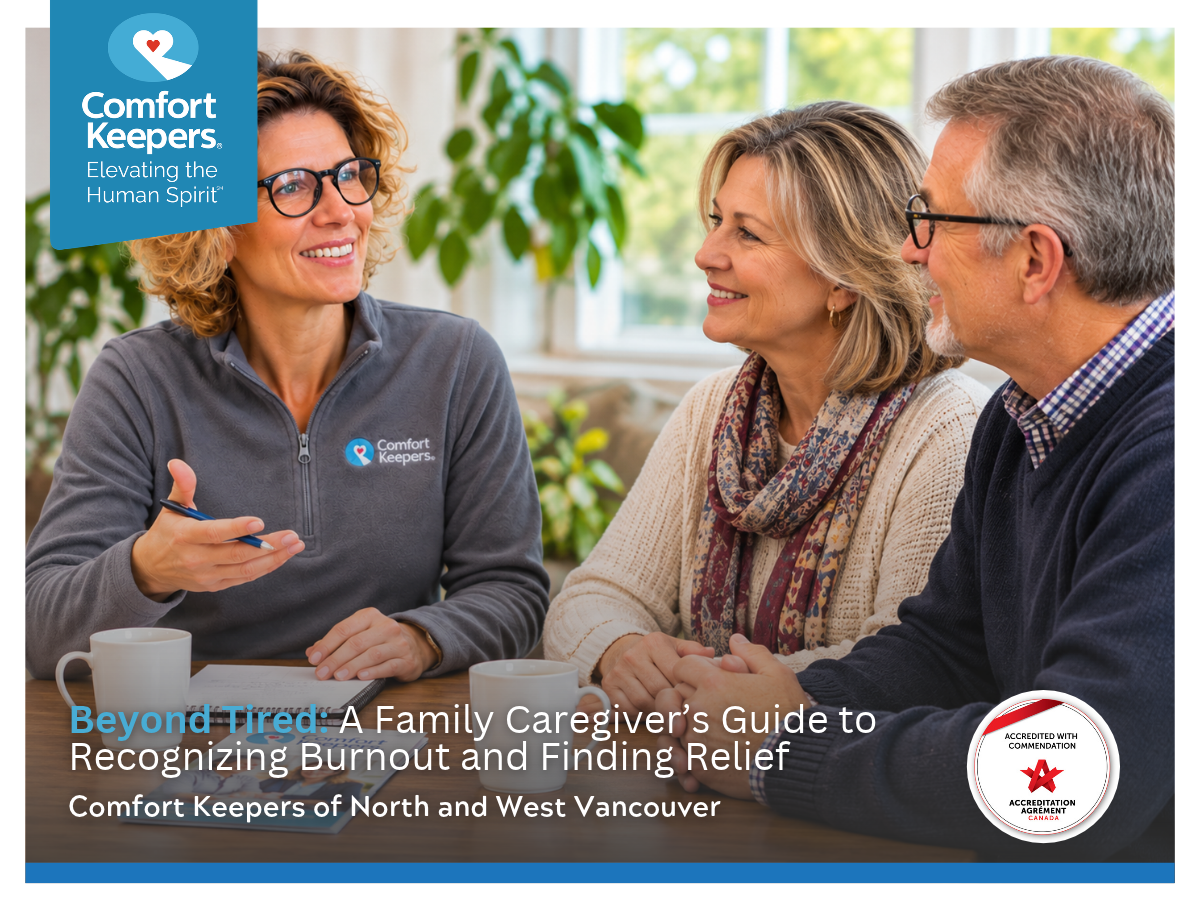
Start with a simple conversation. Reputable in-home care agencies offer no-obligation consultations to discuss your family’s unique situation. This is a chance to ask questions, understand the services available, and see what feels right for you and your loved one.
Creating Your Sustainable Care Plan
You became a caregiver out of love, and that same love requires you to take care of yourself. Recognizing the signs of burnout isn’t the end of your journey, it’s the beginning of a new, more sustainable one.
By understanding your limits, learning to accept help, and knowing when to bring in professional support, you can create a care plan that honours the needs of your loved one without sacrificing your own well-being. This balance is not only possible, it’s essential.
When you’re ready to explore how compassionate, professional in-home care can bring balance back to your family, we’re here to help you understand your options.
Nighttime Wandering or Daytime Confusion? A Caregiver’s Guide to Telling the Difference
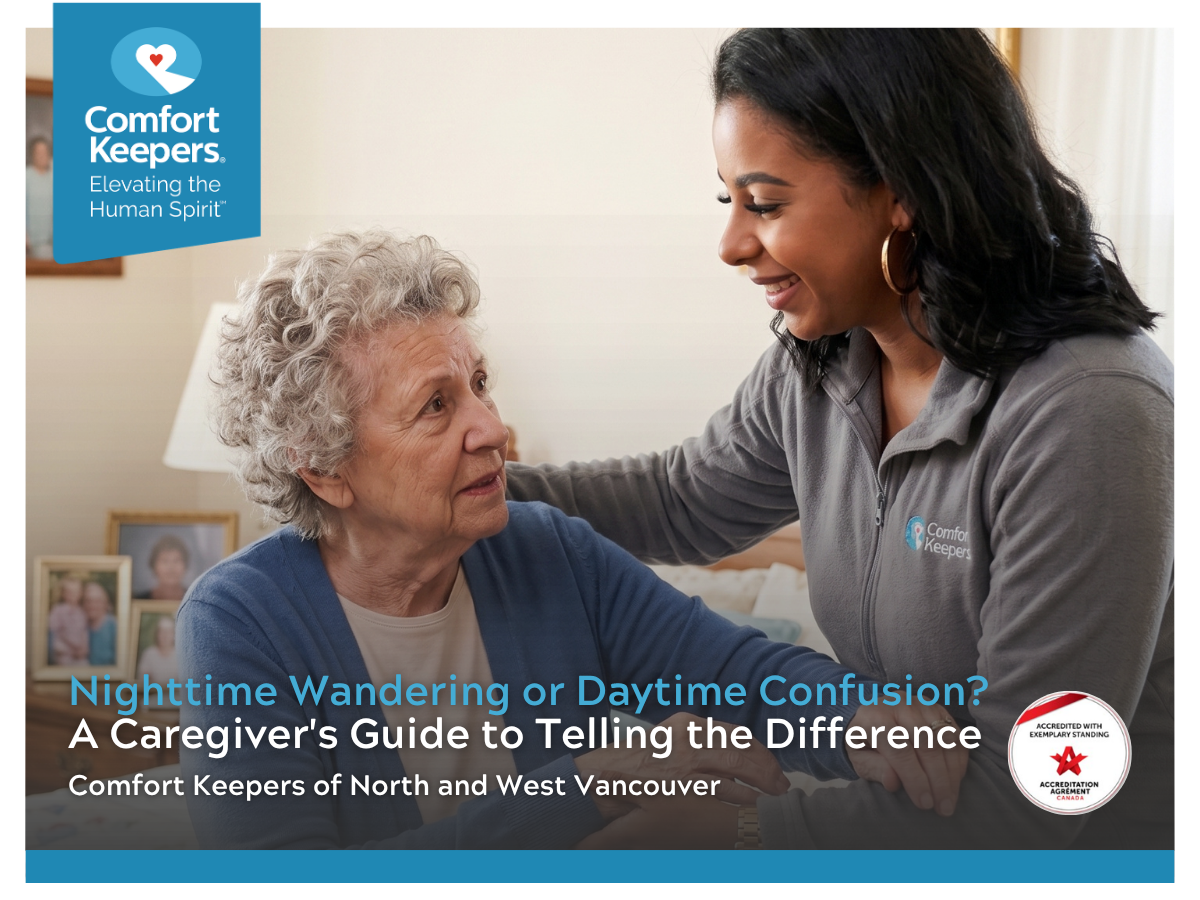
You hear a floorboard creak downstairs at 2 a.m. Your heart does a little jump. Is it your loved one getting a glass of water, or are they trying to leave the house, convinced it’s time to go to work? That moment of uncertainty is something many family caregivers know all too well.
When a loved one is living with dementia, moments of confusion are expected. But understanding the pattern of that confusion is the key to providing the right support and ensuring their safety. You might hear the term “sundowning” used to describe late-day agitation, but that’s often just one piece of a more complex puzzle.
The real question for many families is this: is the confusion a specific nighttime event, or is it a persistent state that lasts all day? Learning to tell the difference is more than just an academic exercise, it directly informs whether you need to focus on nighttime safety or consider more comprehensive, around-the-clock support.
The “Aha” Moment: A Glitch vs. a System-Wide Issue
Let’s think about it like this:
- Nighttime Wandering is often like a temporary glitch. It happens when the brain “reboots” upon waking in the dark, disoriented and trying to make sense of its surroundings. The confusion is tied specifically to the act of waking or the nocturnal environment.
- Daytime Confusion is more like a persistent system-wide issue. The disorientation isn’t tied to a specific time or event, it’s an ongoing challenge in processing the world, whether it’s 10 a.m. or 10 p.m.
While both can be distressing, they point to different underlying challenges and require different approaches to care.
Key Differences: An At-a-Glance Comparison
To truly understand what your loved one is experiencing, you have to become a bit of a detective. Observing the “when,” “why,” and “how” of their confusion provides the clues you need. Major medical sources like the Mayo Clinic and the Alzheimer’s Association highlight factors like fatigue and environmental changes, but here is a side-by-side look at the common behavioural patterns:
| Factor | Nighttime Wandering | Daytime Confusion |
| Timing & Onset | Typically begins after waking from sleep during the night or in the very early morning. It’s an event-based confusion. | Occurs consistently throughout the day. The person may be disoriented from the moment they wake up until they go to sleep. |
| Common Triggers | Environmental: poor lighting, shadows, unfamiliar noises. Physiological: a full bladder, hunger, pain, or a disrupted internal body clock (circadian rhythm). | Cognitive overload: too much noise, activity, or social stimulation. Routine changes: unfamiliar places, new people, or a break in their daily schedule. Memory lapses: forgetting where they are, who people are, or what year it is. |
| Behavioural Cues | Often appears goal-oriented, even if the goal is based on a false belief. Examples include trying to find the bathroom, “going home,” getting ready for work, or checking on children. They may be actively exit-seeking. | The behaviour is often less directed. It may involve repetitive questioning (“When are we leaving?”), pacing aimlessly, misidentifying familiar people, or struggling to follow a simple conversation. |
| Level of Orientation | May be disoriented about time (thinking it’s day) but can sometimes recognize their surroundings once the lights are on and they are gently reoriented. | Often involves a more profound disorientation to person, place, and time. They may not recognize their own home or close family members, even in broad daylight. |
| Emotional State | Often characterized by anxiety, restlessness, or a sense of urgency tied to their perceived “goal.” | Can range from passive confusion and apathy to frustration, agitation, or distress stemming from their inability to make sense of the world. |
Recognizing these distinctions helps shift your perspective from simply managing a “behaviour” to responding to a specific, unmet need.
Your Pattern-Spotting Journal: A Tool for Clarity
Feeling overwhelmed? That’s completely normal. To make sense of it all, start keeping a simple journal. Recording your observations for a week can reveal a clear pattern that you can share with their doctor or a professional care provider.
For each instance of confusion, jot down:
- Date & Time: When did it happen?
- What Happened? Describe the behaviour (e.g., pacing, tried to open the front door, asked for his late wife).
- Where Did It Happen? (e.g., hallway, kitchen, bedroom).
- Potential Triggers: What was going on right before? (e.g., woke up from a nap, TV was loud, a visitor just left).
- How Was It Resolved? (e.g., a reassuring voice helped, needed a snack, was guided back to bed).
This simple act transforms you from a worried observer into an informed advocate, ready to find the right solutions.
What the Patterns Mean for Your Care Plan
Once you’ve identified a pattern, you can start to think about the right level of support. This is where distinguishing between these two types of confusion becomes critically important for planning.
If the Risk is Primarily Nocturnal
If your journal shows that the most concerning behaviours, like exit-seeking or disorientation-led falls, happen almost exclusively at night, your focus should be on creating a safe and calming nighttime environment. This could mean:
- Ensuring the path to the bathroom is well-lit with motion-sensor nightlights.
- Installing simple door and window alarms.
- Establishing a calming pre-bedtime routine to promote better sleep.
- Exploring professional overnight care, which provides a trained caregiver to ensure safety while the family gets much-needed rest.
If the Confusion is Pervasive and Daytime-Dominant
If the disorientation is a constant from morning to night, the safety risks are not confined to a specific time. In this case, the support strategy needs to be more comprehensive. This might involve:
- Simplifying the daily routine to reduce cognitive strain.
- Engaging in structured, calming activities during the day.
- Adapting the home environment to be safe and familiar at all times.
- Considering the need for continuous, specialized dementia and 24-hour care to ensure a professional is always on hand to manage confusion, prevent accidents, and provide reassuring companionship.

Frequently Asked Questions (FAQ)
Isn’t this all just “sundowning”?
Sundowning is a term for confusion and agitation that worsens in the late afternoon and evening. It can include elements of both nighttime wandering and general confusion. However, if your loved one is wandering after waking at 3 a.m. or is consistently disoriented at 10 a.m., “sundowning” doesn’t fully capture the picture. Distinguishing the specific pattern is more helpful for planning care.
Is wandering a normal part of dementia?
Wandering is a common behaviour, affecting about 6 in 10 people with dementia. While common, it’s not “normal” in the sense that it should be ignored. It’s a sign of a brain-based need, whether that’s confusion, fear, or an attempt to fulfill a past routine. It always signals a need for increased safety measures.
Can daytime confusion happen at night, too?
Absolutely. Someone with pervasive daytime confusion will also be confused at night. The key difference is the onset. For them, the confusion isn’t a glitch triggered by waking, it’s an ongoing state that simply continues after the sun goes down.
The First Step is Understanding
Seeing a loved one in a state of confusion can be one of the most painful parts of the caregiving journey. But by learning to read the signs and understand the patterns, you can move from a place of fear to a position of strength. You can anticipate needs, create a safer environment, and make confident decisions about the level of care they truly need.
Every step you take to better understand their world is an act of profound love and compassion. If you’re seeing these patterns and wondering what the next steps are, a great place to start is with a professional in-home assessment from Comfort Keepers North and West Vancouver to discuss your family’s unique situation and create a plan for safety and well-being.
Bridging the Distance: A Guide to Keeping Homebound Seniors Socially Active with Technology
The quiet in a home can feel comforting, but for many seniors living alone, that quiet can slowly turn into a profound sense of isolation. We’ve all felt lonely, but chronic loneliness can have a significant impact on health and well-being. Research from the National Institute on Aging (NIH) shows that social isolation is linked to higher risks for high blood pressure, heart disease, obesity, and a weakened immune system.
The good news? We live in an age where connection is just a tap or a voice command away. But for many seniors, the world of technology can feel like a foreign country with a language they don’t speak. They hear about video calls and virtual clubs, but the path from hearing about it to actually doing it seems impossibly steep.
This guide is designed to flatten that path. It’s a starting point for seniors and their families, written not for tech experts, but for beginners. We’ll explore simple, accessible tools to foster connection, one confident step at a time. Because technology isn’t about learning complex software, it’s about what it enables: seeing a grandchild’s smile, sharing a laugh with a friend, or learning a new skill from the comfort of home.

Understanding the Real Challenge: It’s About Confidence, Not Complexity
Before diving into gadgets and apps, it’s crucial to address the biggest hurdle: the confidence gap. Many seniors feel that technology has “passed them by.” This is a common myth we need to set aside. Learning to use a new device isn’t an intelligence test, it’s about finding the right tool for the right purpose and having patient support along the way.
The goal is not to become a tech wizard. The goal is to make a call, join a group, or see a photo. By focusing on the activity rather than the technology, we can transform a source of anxiety into a source of joy. This approach, sometimes called the Human-Activity-Technology (HAT) framework, simply means matching a person’s interests with the easiest possible tech to help them do it.
The Technology Ladder: Simple Steps to Digital Connection
Instead of trying to learn everything at once, we recommend a “ladder” approach. Start with the simplest tool, build confidence, and then move to the next rung when ready.
Rung 1: The Simplest Start, Voice-Activated Smart Speakers
For seniors who are hesitant about screens or have dexterity challenges, smart speakers (like Amazon Alexa or Google Home) are a game-changer. There are no buttons, no menus, and no confusing interfaces.
- What they are: Small speakers that respond to voice commands.
- How they connect: You can make hands-free phone calls simply by saying, “Alexa, call my daughter.” Family members can also “drop in” for an instant audio chat, which feels like a spontaneous visit.
- Setup Tip: A family member or friend will need to set up the device initially using a smartphone app, linking it to a Wi-Fi network and adding contacts. Once set up, it’s entirely voice-controlled.
Rung 2: A Window to the World, Tablets and Video Calls
Seeing a loved one’s face is where technology truly shines. Video calls bridge miles in an instant, making conversations feel more personal and engaging. Tablets are often the best device for this, offering a larger screen than a phone without the complexity of a full computer.
Choosing the Right Tablet:
- Look for large screens: A 10-inch screen is easier to see and use.
- Prioritize a simple interface: Some tablets have an “easy mode” with larger icons.
- Consider a sturdy case and stand: This makes it easier to hold and position for hands-free calls.
Your First Video Call: A Simple Guide
Most tablets come with built-in video calling apps (like FaceTime on iPads) or you can easily download others like Zoom, Skype, or WhatsApp.
- Connect to Wi-Fi: Ensure the tablet is connected to the home’s internet network.
- Open the App: Tap the icon for FaceTime, Zoom, or your chosen app.
- Find Your Contact: Tap on the person you want to call from your contact list.
- Tap the Video Icon: Look for a small camera icon and tap it to start the video call.
Caregiver Corner: When setting up a tablet, take a few extra minutes to simplify it. Remove unnecessary apps from the home screen, increase the font size, and place the video chat app in a prominent spot. A little preparation can prevent a lot of frustration.
Rung 3: Rediscovering Passions, Virtual Groups and Classes
Once a senior is comfortable with video calls, a whole world of social activity opens up. Organizations like Senior Planet offer a huge range of free online classes, from morning stretches and virtual museum tours to classes on online safety.
- Virtual Book Clubs: Join a group to discuss a new book each month.
- Online Fitness: Participate in gentle yoga or tai chi classes from the living room.
- Hobby Groups: Find others who share a passion for gardening, painting, or history.
These groups provide routine and structure, offering something to look forward to and creating new friendships based on shared interests.
When Technology Isn’t Enough: The Irreplaceable Value of Human Touch
Technology is a phenomenal tool, but it is just that, a tool. It can open doors to communication, but it cannot open a jar of pickles, provide the comfort of a reassuring hand, or share a cup of tea at the kitchen table.
Tech fatigue is real, and troubleshooting can be frustrating. Sometimes, a device won’t connect, the audio is garbled, or the interface updates and suddenly looks unfamiliar. In these moments, technology can become a source of stress rather than connection.
This is where the human element remains essential. The goal of aging in place with dignity and joy isn’t just about staying connected virtually, it’s about thriving in a safe, supportive, and engaging environment. Technology can supplement this, but it can’t replace the profound benefits of in-person interaction.
Genuine companionship provides a level of support that technology can’t replicate. It’s about having someone to share a story with, help prepare a favourite meal, or simply sit with in comfortable silence. These are the moments that truly combat the deepest forms of loneliness. For families seeking to create a comprehensive support system, blending easy-to-use technology with dedicated companionship and home care services can provide the best of both worlds, digital connection when you’re apart and compassionate human support when it’s needed most.

Frequently Asked Questions (FAQ)
My mother can barely use a TV remote. How can she possibly use a tablet?
This is a very common concern. The key is to start simple and manage the environment. A smart speaker that only requires voice commands is a great first step. If you introduce a tablet, pre-configure it so only one or two large app icons (like Zoom or FaceTime) are on the screen. Patience and step-by-step, repetitive practice are crucial. Focus on mastering just one task, like answering a call, before moving on.
What are the best, simplest devices for seniors?
Look for devices designed with simplicity in mind. The GrandPad and Claris Companion are tablets specifically made for seniors with simplified interfaces and pre-loaded essential apps. For standard options, an Apple iPad is often praised for its intuitive design. For voice, Amazon Echo (Alexa) devices are very popular and easy to use for calls and entertainment.
How can I find safe online groups for my loved one?
Start with reputable national or local organizations. AARP, Senior Planet, and local community or seniors’ centres are excellent resources. They offer moderated classes and groups, ensuring a safe and welcoming environment. Your local library is another great place to ask about virtual programs.
What if I’m not there to help set things up?
This highlights the importance of a support network. If family isn’t local, consider asking a trusted neighbour or friend for help. There are also organizations and services that provide tech support for seniors. In some cases, the hands-on assistance provided by professional in-home care services can extend to helping clients navigate these simple technologies as part of their day.
Your Next Step on the Path to Connection
Embracing technology to reduce isolation is a journey, not a destination. It begins with a single, simple step. Choose one idea from this guide, perhaps a smart speaker, and explore it. The goal isn’t to perfectly implement a complex system overnight. It’s to open one new door to connection.
By blending the incredible reach of today’s technology with the irreplaceable warmth of human companionship, we can help the seniors in our lives feel seen, heard, and cherished every single day. Reach out to Comfort Keepers North and West Vancouver to talk through what a blended support plan could look like for your family.
Beyond the Checklist: How to Uncover a Senior’s Life Story for Truly Personalized Care
Imagine this: an older adult sits quietly in their favourite chair, their daily care managed with perfect efficiency. Meals arrive on time, medications are administered, and the house is tidy. Yet, something is missing. There’s a distance, a lack of connection. The care is correct, but it isn’t meaningful.
Now, picture a different scene. The same person is animatedly tapping their foot to the sound of big band music playing softly in the background. They’re sharing a story about seeing Glenn Miller live, sparked by a caregiver who learned they were an avid dancer in their youth. The care isn’t just about tasks, it’s about connection, joy, and acknowledging a life fully lived.
This transformation is the power of person-centred care. It’s an approach that moves beyond the medical chart and daily checklist to see the unique individual, their history, their passions, and their preferences. And the key to unlocking it isn’t a complex medical device, it’s the simple, profound act of learning their story.

What is Person-Centred Care, Really?
At its heart, person-centred care is a philosophy that places the senior and their values at the core of all planning and decision-making. It’s a shift from “doing for” someone to “doing with” them. Instead of imposing a rigid schedule, it seeks to understand what a “good day” looks like from their perspective and then builds the support needed to make that happen.
A common misconception is that this approach is only for individuals living with dementia. While it is incredibly effective in dementia care, the principles apply to every single person. Everyone, regardless of cognitive ability, has a right to be seen, heard, and respected as the individual they are. This philosophy is the foundation of compassionate approaches like Interactive Caregiving™, which focus on engaging seniors in their own care to elevate their well-being.
The “Aha Moment”: Why a Life Story is the Key to Better Care
Collecting a senior’s life history isn’t just about gathering interesting anecdotes. It’s a diagnostic tool that provides the “why” behind their behaviours and preferences. When you understand someone’s past, you gain incredible insight into their present.
Here’s how a generic care plan can be transformed:
Before: “Assist client with morning routine at 8 AM.”
After (Learning They Were a Farmer): “Open the curtains at 7 AM to let in the morning light, just as they would have on the farm. Play gentle folk music and discuss the weather while preparing breakfast.”
Before: “Encourage fluid intake.”
After (Learning Their Favourite Drink was Iced Tea on the Porch): “Prepare a fresh pitcher of iced tea in the afternoon and suggest enjoying a glass together on the patio.”
This detailed understanding does more than just make the day pleasant. It builds trust, reduces anxiety, and dramatically increases a senior’s willingness to accept care. When they feel their identity is respected, they become an active partner in their own well-being.
Your Toolkit for Discovery: Practical Ways to Gather a Life History
So, how do you begin this journey of discovery? It’s not a formal interrogation but a series of gentle, open-ended conversations. Here are a few practical tools to guide you.
The Art of the Conversation: It Starts with Listening
The most powerful tool you have is genuine curiosity. Instead of asking yes/no questions, try open-ended prompts that invite storytelling.
Conversation Starters:
- “Tell me about the house you grew up in.”
- “What was your very first job? What did you learn there?”
- “I’d love to hear about your wedding day.”
- “What kind of music did you love to listen to when you were a teenager?”
- “What is one of the most memorable trips you’ve ever taken?”
The key is to listen actively. Pay attention not just to the words but to the emotions behind them. What makes them smile? What topics do they return to? These are the threads that weave the tapestry of their life.
Tool #1: The Life Map or Timeline
A life map is a wonderful visual tool for organizing a person’s history. It can be as simple as a line drawn on a large piece of paper.
How to Create One:
- Start Simple: Begin with a timeline marking decades.
- Plot the Big Moments: Add key life events like birth, marriage, children’s births, significant career changes, or major moves.
- Flesh it Out: Fill in the spaces with smaller but meaningful details. Where did they go to school? What were their favourite hobbies during different life stages? Who were their closest friends?
- Make it a Shared Activity: Creating this map with the senior can be a joyful and collaborative reminiscence activity in itself.
Tool #2: Memory Prompts and Cue Cards
Sometimes, memories need a little nudge. Sensory prompts can be incredibly effective at unlocking stories that have been dormant for years.
Examples of Effective Prompts:
- Photographs: Go through old photo albums together. Ask, “Who is this?” and “What was happening on this day?”
- Music: Create a playlist of popular songs from their teens and twenties. Music has a powerful, direct link to memory and emotion.
- Objects: A vintage kitchen utensil, a familiar brand of soap, or a piece of fabric can all trigger memories and stories.
- Scents: The smell of baking bread, freshly cut grass, or a specific perfume can transport someone back in time.
Tool #3: The Family Interview Guide
Family members are an invaluable resource, holding pieces of the story the senior may have forgotten or may not think to share. When you talk to them, you’re not just fact-checking, you’re gathering perspectives.
Questions for Family Members:
- “What always makes your mom/dad laugh?”
- “What are some of their proudest accomplishments?”
- “Are there any family traditions that are especially important to them?”
- “How did they typically spend their Sundays?”
- “Is there anything that easily frustrates or upsets them?”
It’s important to remember that memories can differ between family members. The goal isn’t to find the one “correct” story but to gather a rich, multi-faceted portrait of the person. This process can be a source of comfort and support for the entire family, reinforcing the idea that they are not alone on this journey.
Translating Stories into Action: From Information to a Living Care Plan
The information you gather is only valuable if it’s put into practice. The final, most important step is to connect each insight to a concrete action in the care plan.
- Life Story Insight: A gentleman was a meticulous carpenter for 40 years. Care Action: Involve him in simple, tactile activities like sorting nuts and bolts, sanding a small piece of wood, or organizing a toolbox. This honours his skills and provides a sense of purpose.
- Cultural Insight: A woman comes from a culture where the eldest child is deeply respected. Care Action: Ensure the caregiver understands this dynamic and facilitates regular, private calls with her eldest son, acknowledging his important role in her life.
- Personal Preference: A senior has always been a “night owl,” never going to bed before 11 PM. Care Action: Adjust the evening routine to align with their lifelong sleep pattern rather than forcing an arbitrary 9 PM bedtime, reducing potential conflict and respecting their autonomy.
Navigating Common Challenges with Empathy
This process isn’t always straightforward. You may encounter hurdles, but they can be navigated with patience and understanding.
When a Senior is Reluctant to Share
Trust is built over time. If a senior is private or hesitant, don’t push. Start by sharing a little about yourself. Use gentle, indirect methods like looking at photos or listening to music together. Sometimes the best stories emerge when there’s no pressure to tell them.
When Memory is a Hurdle
For seniors with cognitive decline, memories may be fragmented or factually inaccurate. That’s okay. Focus on the emotional truth of the story. The feeling of pride, love, or accomplishment that a memory evokes is more important than getting every detail right.
Respecting Cultural and Personal Boundaries
Always ask for permission. Treat the life story as the precious, personal history that it is. Ensure the information is documented respectfully and shared only with those directly involved in the person’s care, always with their consent.

Frequently Asked Questions (FAQ)
What is person-centred care in simple terms?
It’s an approach to care that focuses on the whole person, their life history, values, and preferences, not just their medical needs. It treats them as an active partner in their own care.
How long does it take to gather a life history?
It’s not a one-time interview but an ongoing conversation. The story will unfold over weeks and months as trust and rapport grow.
What if the family isn’t available or helpful?
While family is a great resource, you can still learn a tremendous amount from the senior themselves through conversation, observation, and using memory prompts. Friends, neighbours, and community members can also offer valuable insights.
Is this only for people with dementia?
Absolutely not. Every person deserves to have their identity and preferences known and respected. Person-centred care improves the quality of life for all seniors.
How do I document this information respectfully?
Use a “One-Page Profile” or a dedicated section in the care plan that summarizes key information in a positive, respectful tone. Focus on strengths and what is important to the person. Always prioritize privacy and consent.
Learning someone’s life story is more than a technique, it’s an act of profound respect. It’s the difference between caring for a patient and caring for a person. By taking the time to uncover the history, passions, and preferences that make someone unique, you build a foundation of trust and connection that transforms care from a series of tasks into a meaningful human relationship.
Embarking on this journey of discovery is the first and most important step. If you’re exploring how to put these principles into practice for a loved one, understanding the full range of in-home care services available can provide a clear path forward. Comfort Keepers North and West Vancouver is here to help you get started with a care plan built around your loved one’s story.
When Conversation Isn’t Enough: Distinguishing Social Withdrawal from Cognitive Decline in Seniors
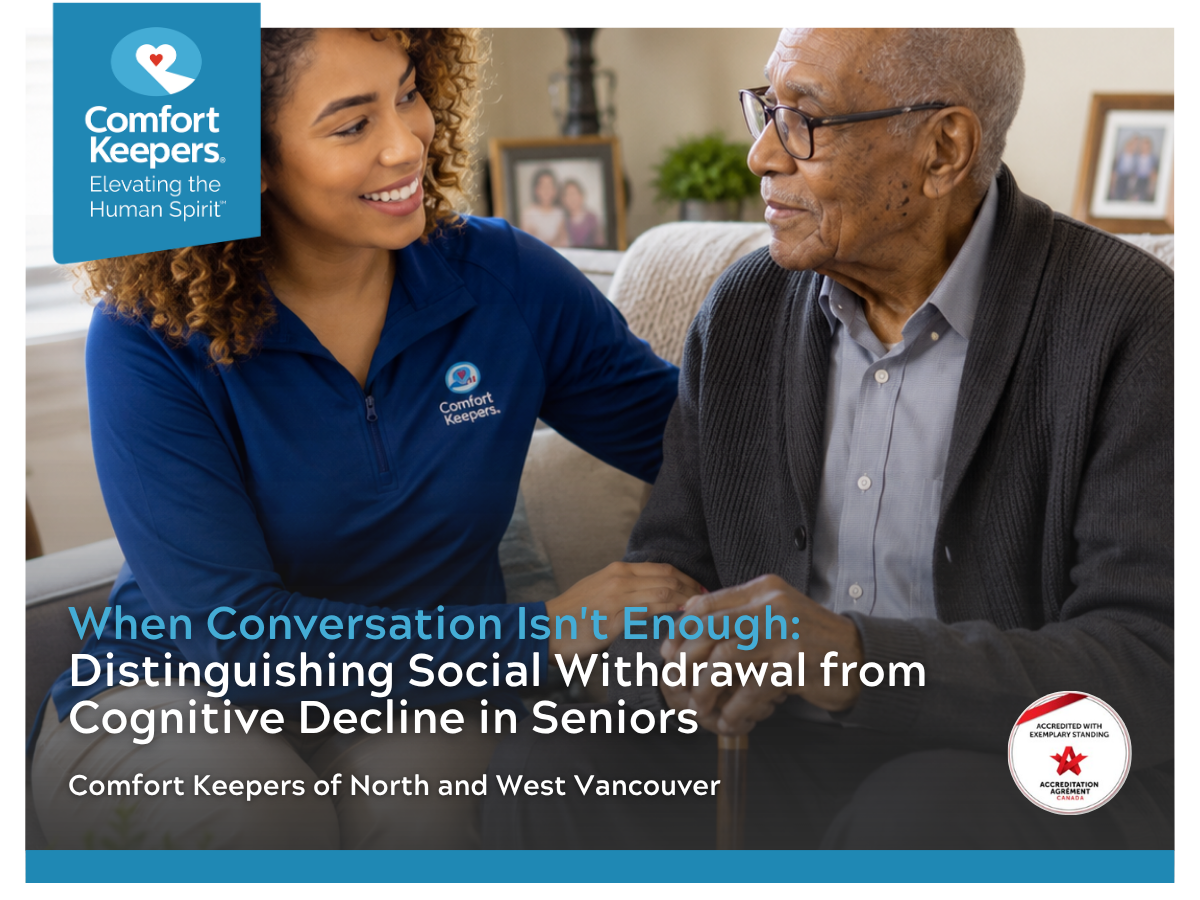
You’ve noticed a change. Your once-social mother now declines invitations to coffee with friends. Your father, who used to read the paper cover-to-cover, now seems distant during conversations, often just nodding along. It’s easy to chalk it up to loneliness, a natural consequence of a quieter life. But a nagging question lingers: is it just loneliness, or is it something more?
This is a crossroads many families face. The line between social withdrawal caused by loneliness and the early signs of cognitive decline can be incredibly blurry. Understanding the subtle but crucial differences is the first step toward providing the right kind of support and transforming your loved one’s quality of life.
The Tangled Web: Why Loneliness and Cognitive Decline Are So Easily Confused
Loneliness and cognitive decline are not just neighbours, they are deeply intertwined in what experts call a “bidirectional relationship.” This means each one can influence and worsen the other.
Research has shown this connection is powerful. One significant study found that persistent loneliness was associated with a 40% increased risk of developing dementia. This doesn’t mean loneliness causes dementia, but it is a major risk factor.
Here’s how the cycle often works:
- Loneliness to Cognitive Decline: A lonely senior may have fewer social interactions, which means less mental stimulation. This lack of engagement can accelerate cognitive aging.
- Cognitive Decline to Loneliness: An individual experiencing early memory loss or confusion may find social situations overwhelming. They might struggle to follow conversations or fear saying the wrong thing, causing them to withdraw and, in turn, feel profoundly lonely.
To untangle this, it helps to understand the core concepts:
- Loneliness: This is a subjective feeling. It’s the emotional pain of feeling disconnected, regardless of how many people are around.
- Social Isolation: This is an objective state. It’s the physical reality of having few social contacts or infrequent interactions.
- Cognitive Decline: This is a noticeable decrease in mental abilities, such as memory, problem-solving, and language skills, that is more severe than normal age-related changes.
A Caregiver’s Toolkit: Key Differences to Look For
While a professional diagnosis is essential, you can become a better observer by knowing what to look for. Think of it as a toolkit for understanding the subtle signals your loved one might be sending.
Differences in Communication
A conversation is one of the clearest windows into what’s happening.
- A lonely person might: Repeatedly express sadness about missing family or friends. Their conversation is coherent, but the theme often returns to feeling alone or forgotten. They are communicating a feeling.
- A person with cognitive decline might: Struggle to find common words, repeat the exact same question just minutes after you’ve answered it, or lose their train of thought mid-sentence. They are struggling with the mechanics of communication itself.
Shifts in Mood and Behaviour
Observing how their personality and daily conduct have changed offers powerful clues.
- A lonely person might: Seem sad, passive, or have low energy. They may be irritable out of frustration with their situation but can often explain why they feel that way.
- A person with cognitive decline might: Display a profound lack of interest (apathy) in hobbies they once loved. You might also see uncharacteristic agitation, anxiety, or even paranoia, like insisting a neighbour is stealing from them without any evidence. As the Alzheimer’s Society notes, for them, this belief can feel very real.
Changes in Daily Functioning
The ability to manage everyday tasks is another key indicator.
- A lonely person might: Lack the motivation for tasks like cooking or cleaning, thinking, “What’s the point if it’s just for me?” The desire is gone, but the ability remains.
- A person with cognitive decline might: Genuinely forget how to do a familiar task, like operate the TV remote or follow a recipe. They might misplace essential items like keys or glasses constantly and be unable to retrace their steps to find them.
The Tipping Point: When Is It More Than Just a Bad Day?
Everyone has off days. The key is to look for patterns of behaviour that are consistent and represent a clear change from their former self. If you notice any of the following “red flags,” it’s a strong signal that simple conversation isn’t enough and a professional evaluation is needed.
- Consistent Short-Term Memory Loss: Forgetting entire conversations, recent events, or important appointments regularly.
- Confusion About Time or Place: Not knowing the day of the week is one thing, not knowing the season or getting lost in a familiar neighbourhood is another.
- Significant Changes in Judgment: Making uncharacteristically poor financial decisions or neglecting personal safety.
- Neglecting Personal Hygiene: A decline in bathing or grooming that is out of character.
Understanding these changes is a crucial first step in exploring the right level of support, which can range from simple companionship to more structured 24-hour care.
Beyond Companionship: The Power of Interactive Caregiving
When cognitive challenges are part of the picture, the role of a companion evolves from simply being present to being actively engaged. This is the difference between passive company and therapeutic interaction.
At Comfort Keepers, we call this Interactive Caregiving™. It’s a philosophy built on “doing with” our clients, not just “doing for” them.
- Passive companionship might involve sitting together while the TV is on.
- Interactive Caregiving turns that time into a shared, stimulating activity. A professional caregiver might suggest a card game to engage strategic thinking, work on a puzzle together, or use old photos to spark positive memories and conversations.
This approach doesn’t just pass the time, it actively works to support cognitive health, provides emotional reassurance, and brings moments of joy and connection back into a senior’s day. A skilled caregiver also becomes a trained observer, noticing subtle changes that can be shared with the family and medical team.
Ruling Out the Mimics: Other Causes of Concerning Symptoms
It’s important to remember that other health issues can sometimes mimic the symptoms of both loneliness and cognitive decline. Before jumping to conclusions, it’s vital that a doctor rules out other potential causes, such as:
- Hearing or Vision Loss: Difficulty hearing can make someone withdraw from conversation, appearing confused or apathetic.
- Medication Side Effects: A new medication or an interaction between drugs can cause confusion and lethargy.
- Depression: Clinical depression can cause severe memory issues and a lack of motivation, a condition sometimes called “pseudodementia.”
- Urinary Tract Infections (UTIs): Especially in older adults, a UTI can cause sudden and severe confusion, agitation, and withdrawal.

Frequently Asked Questions
Is my loved one’s loneliness causing dementia?
Loneliness is a significant risk factor that can increase the likelihood of developing dementia, but it is not a direct cause. Many factors contribute to cognitive health, and addressing loneliness is a powerful, proactive step you can take to support your loved one’s brain health.
How do I talk to my parent about my concerns without upsetting them?
Lead with love and empathy. Use “I” statements, such as “I’ve been worried about you lately because you seem more tired,” instead of accusatory “you” statements. Suggest a visit to the doctor for a general wellness check-up rather than focusing solely on memory. This can feel less threatening and more collaborative.
What’s the difference between normal age-related forgetfulness and cognitive decline?
It’s normal to occasionally forget where you put your keys or the name of an acquaintance. It becomes a concern when the forgetfulness disrupts daily life, like not remembering the names of close family members, being unable to manage a budget, or getting lost in a familiar place.
How can a companion help if my loved one is already resistant to social interaction?
A trained, professional caregiver understands the importance of building trust slowly. They won’t force interaction. Instead, they find common ground and introduce activities gently. Sometimes, framing the caregiver’s role as a “personal assistant” who helps with errands and light housekeeping can make the idea more acceptable, allowing a natural, supportive relationship to blossom over time. High-quality companionship services are built around this patient, person-centred approach.
Your Next Step: From Observation to Action
Noticing a change in your loved one is the first, most important step. Now, you can move from worry to constructive action.
Start by keeping a simple journal. Note specific examples of concerning behaviours, including the date and context. This will be invaluable when you speak with a doctor.
Next, schedule an appointment with their primary care physician for a thorough evaluation. A professional diagnosis is the only way to get a clear picture and create a care plan that truly meets their needs.
You are not alone on this journey. Learning about the options for compassionate, professional care can provide immense peace of mind. Contact Comfort Keepers North and West Vancouver to explore the full range of support available for your family.
Senior Cancer Prevention Tips from a Senior Care Agency


What Every Senior in North Vancouver and West Vancouver, BC Needs to Know About Cancer Prevention
Cancer Prevention in Seniors | The most significant risk factor for the development of cancer is aging; however, the risk of many types of cancer can be drastically reduced by focusing on prevention steps. Several factors play a role in cancer development, such as heredity, but many can be voluntarily avoided.
Fast Facts
Cancer prevention in seniors: Did you know that about half of all cancers can be prevented? It’s My Life! is an interactive, evidence-based tool on the Canadian Cancer website that teaches you how 10 lifestyle factors can affect your risk of getting cancer and what you can do to prevent it: http://itsmylife.cancer.ca/
Nine Steps That Can Help with Cancer Prevention:
#1 – Don’t smoke and avoid exposure to smoke:
Smoking is the most significant cancer risk factor. It is to blame for lung and many other types of cancer. The best way to help prevent cancer is to quit smoking or never start. As soon as you quit, the body positively responds ─ so it’s never too late.
#DYK – Avoiding secondhand smoke also helps to prevent cancer, because this smoke contains more than 60 known carcinogens. These carcinogens interrupt normal cell development, a catalyst for cancer development.
#2 – Stay safe in the sun and watch for skin changes:
Each year, over one million Americans are diagnosed with skin cancer. It is the most common cancer and accounts for about half of all cancer diagnoses, yet it’s one of the most preventable types of cancer. Reduce UV ray exposure by wearing sunscreen and protective clothing, and avoiding the mid-day sun and tanning beds.
#3 – Eat plenty of fruits and vegetables:
A diet rich in fruits and vegetables greatly reduces the risk of developing cancer and many other conditions. Fruits and vegetables contain antioxidants, which help repair damaged cells. Green, orange, and yellow fruits and vegetables are your best bet to help prevent cancer. Studies also show that dark fruits, like blueberries and grapes, may also have anti-cancer properties. Cruciferous vegetables such as broccoli, cauliflower, bok choy, brussels sprouts, and cabbage are particularly helpful, according to numerous studies.
#4 – Limit red meat and animal fat:
A diet high in animal fat increases the risk for several types of cancer, particularly colon cancer. Red meat contains much more fat than poultry and fish, so reducing the amount of red meat in your diet may help to prevent cancer. A diet high in fat also is a major cause of obesity, which is another risk factor for many types of cancer.
#5 – Limit alcohol intake:
Drinking excessive amounts of alcohol regularly increases the risk of many kinds of cancer. Studies suggest that men who consume two alcoholic drinks per day and women who have one alcoholic drink per day can significantly increase their risk factors for certain types of cancer.
#6 – Exercise:
When you exercise, you are reducing your risk for many types of cancer. The American Cancer Society recommends exercising 30 or more minutes, at least 5 days a week, for cancer prevention. Always check with your physician before embarking on any exercise program.
#7 – Know your environment:
Exposure to chemicals may increase the risk of developing many types of cancer, including kidney cancer and bladder cancer. If you are exposed to fumes, dust, chemicals, and the like, you may want to look into ways to reduce or eliminate your exposure. Gasoline, diesel exhaust, arsenic, beryllium, vinyl chloride, nickel chromates, coal products, mustard gas, and chloromethyl ethers are all dangerous carcinogens.
#8 – Be familiar with your personal and family medical history:
Cancers such as breast, colon, ovarian, and other types can be hereditary. If certain cancers run in your family, tell your doctor so that he or she can recommend the right screenings and assess your true risk. Genetic testing and counseling may be encouraged based on a family’s medical history.
#9 – Get regular cancer screens:
Cancer screening tests can be useful in detecting cancer ─ and preventing it. The colonoscopy and Pap smear can detect abnormal cellular changes before they turn cancerous. The key to their effectiveness is that they are done regularly. Other tests may be useful for early detection, but not necessarily cancer prevention. It is common to have prostate cancer screening through digital rectal exams, and prostate-specific antigen (PSA) tests can help detect prostate cancer early. Mammograms and other imaging tools are also recommended to detect breast cancer, and the survival rate continues to grow.

The Best Senior Home Care in North and West Vancouver is Comfort Keepers®
Our senior home care agency offers in-home care focusing on aging in place. Our services include dementia care, end-of-life care, post-surgery care, and palliative care. Comfort Keepers can assist seniors with living transition services, personal care, companionship care, and more!
Quality and Accredited Elderly Care: Happier, Healthier, and at Home with 24/7 Senior Care Opportunities!
Do you need a home care solution for yourself or a loved one? Have you been thinking about retirement homes and their alternatives as a solution? Comfort Keepers® enables seniors to maintain happy, healthy lives in the comfort of their own homes. In-home care services are available in North Vancouver, West Vancouver, and the surrounding areas.
Comfort Keepers® is a Senior Care Agency That Can Make a Difference with Interactive Caregiving™
Our in-home caregivers ensure our senior clients have the best quality of life. The Interactive Caregiving™ program ensures that a senior’s safety, nutrition, mental well-being, and everyday needs are met. This program brings joy and good health to each client’s home.
Comfort Keepers® North Vancouver and West Vancouver Can Help with In-Home Elderly Care Services!
If you are concerned about the health and well-being of a loved one we can help! Comfort Keepers offers 24-hour care and delivers top-quality and compassionate care for seniors. We are dedicated to safety technology solutions that foster independence and enhance well-being.
Locally Owned and Operated Home Health Care Agency
Our care centers around companionship for seniors. Empathetic care originates from the soul and allows us to meet our clients’ requirements. The seasoned in-home caregivers employed by Comfort Keepers are carefully chosen based on their empathetic qualities.
Contact the Comfort Keepers® North Vancouver and West Vancouver office at (604) 998-8806 to learn more about our unique in-home care solutions for seniors.
Comfort Keepers is an Accredited Senior Care Agency in North and West Vancouver, BC
Accreditation is a rigorous process that involves industry experts evaluating an organization’s processes, policies, and procedures. Comfort Keepers® North and West Vancouver has been awarded Exemplary Standing by Accreditation Canada. This achievement recognizes that Comfort Keepers® meets or exceeds the stringent quality standards for Home Care companies established by Accreditation Canada.
References:
National Institutes of Health (NIH). “Preventive Cancer Care for the Elderly”. Web. 2015.
LifestyleOptions.com. “Cancer Care in the Elderly”. Web. 2015.
American Cancer Society. “Prevention Studies for a Cancer-Free Tomorrow”. Web 2015.
Centers for Disease Control (CDC). “Current Cigarette Smoking Among Adults in the United States”. Web. 2014.