


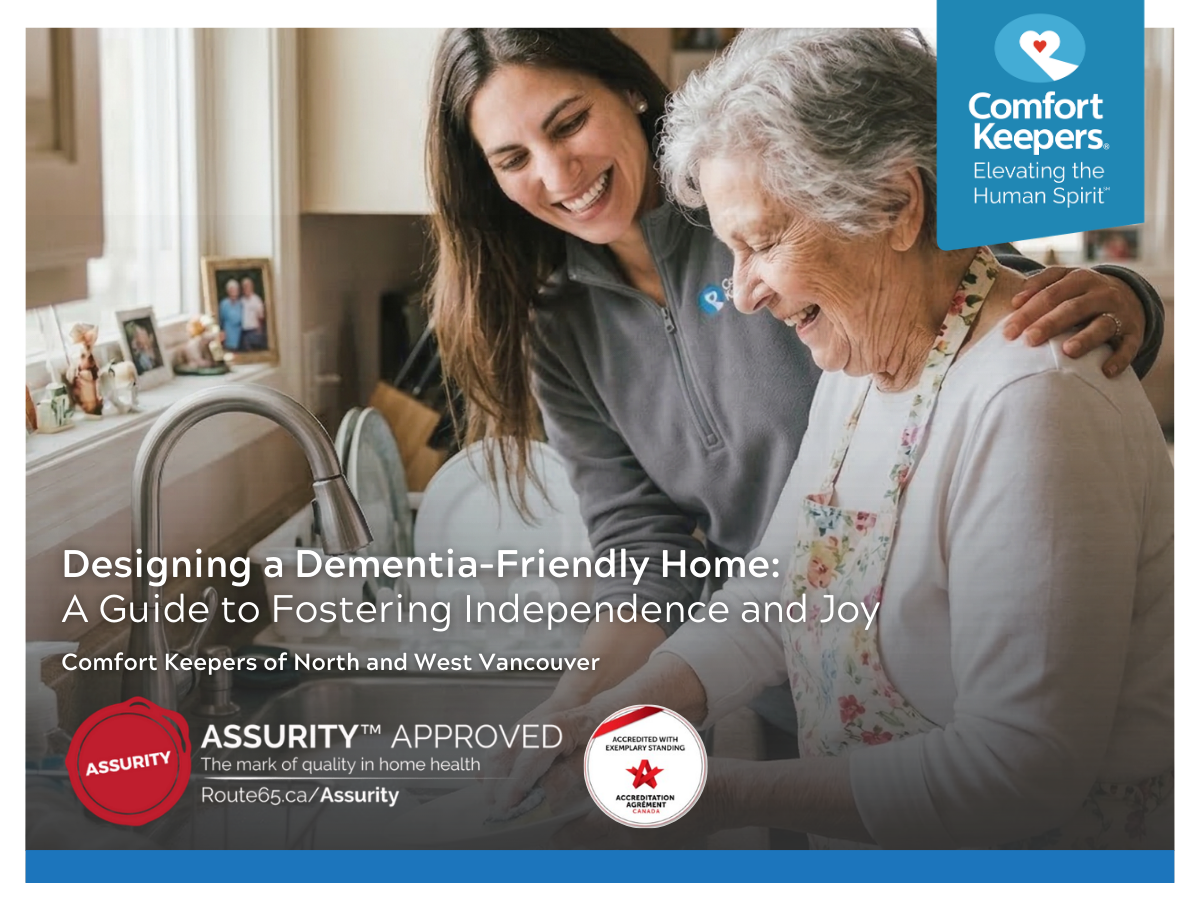
Watching a loved one navigate the challenges of dementia is a journey of adaptation, not just for them, but for the entire family. You may have noticed moments of confusion in familiar surroundings – a hesitation at the top of the stairs, difficulty finding the right drawer, or a sense of being overwhelmed in a cluttered room.
It’s natural to want to step in and help with every task. But what if the home itself could become a partner in their care?
A dementia-friendly home isn’t about creating a sterile, clinical environment. It’s about making thoughtful, often simple, changes that reduce confusion, prevent accidents, and, most importantly, empower your loved one to participate in their own life with confidence and dignity. It’s a shift from simply ensuring safety to actively encouraging independence.
Seeing Through a New Lens: How Dementia Changes Perception
To create a supportive environment, we first need to understand how a person with dementia might experience the world. Dementia can alter the brain’s ability to interpret sensory information, turning a familiar home into a confusing and sometimes frightening landscape.
This is the most important “aha moment” for any caregiver: many of the challenges you observe aren’t just about memory loss; they’re about a change in perception.
- Visual-Perceptual Shifts: The brain might struggle to process what the eyes see. For example, a dark rug on a light floor might be perceived as a dangerous “black hole” or a drop-off, causing hesitation or fear. A glossy, polished floor can look wet and slippery, leading to a shuffling gait. Busy patterns on wallpaper or upholstery can become overwhelming and cause visual confusion.
- Cognitive and Judgment Changes: Beyond memory, dementia affects executive functions like planning and problem-solving. Following the steps to make a cup of tea or choosing an outfit can become a complex, multi-step puzzle. Judgement regarding safety may also be impaired, making everyday objects potential hazards.
Understanding these changes is the key. When you see the environment through their eyes, the “why” behind each modification becomes crystal clear.
The Core Principles of a Dementia-Friendly Home
Creating a dementia-friendly space revolves around a few core principles. It’s less of a checklist and more of a philosophy that you can apply to any room in your house.
- Maximize Safety: This is the foundation. It involves removing hazards like trip risks and securing dangerous items.
- Ensure Clarity and Simplicity: Reduce clutter and visual noise. A simplified environment is easier for the brain to process, which lowers stress and anxiety.
- Maintain Familiarity: Keep treasured photos and objects in their usual places. Familiarity provides comfort and a sense of continuity.
- Manage Sensory Input: Minimize loud, sudden noises and harsh lighting. A calm sensory environment can significantly reduce agitation.
- Encourage Participation: This is the principle that transforms a safe space into an empowering one. The goal is to design the environment in a way that subtly invites your loved one to engage in daily tasks, rather than just be a passive recipient of care.
Room by Room: Practical Changes to Encourage Independence
You don’t need a complete renovation. Small, targeted changes can make a world of difference. Start with the areas where your loved one spends the most time or faces the most challenges.
The Living Room: Comfort and Connection
This is often the heart of the home, but it can also be a source of overstimulation. The goal here is to create a space that is both calming and engaging.
- Clear the Pathways: Ensure there are wide, unobstructed paths between furniture. Remove low coffee tables, footstools, and loose rugs that could be trip hazards.
- Create a “Calm Zone”: Designate a comfortable chair with good lighting, a warm blanket, and a few meaningful items nearby (like a photo album or a favourite book). This creates a safe, relaxing retreat.
- Check the Seating: Ensure sofas and chairs are at a height that makes it easy to sit down and stand up. Avoid deep chairs that are difficult to get out of.
- Manage Noise: Loud, overlapping sounds from a television and radio can be very distressing. Try to have only one source of sound at a time.
The Kitchen: Safety and Participation
The kitchen can be a place of wonderful, familiar routines, but it also contains the most potential hazards. The focus here is on enabling safe participation.
- Improve Visibility: Use open shelving for frequently used items like glasses and plates. Label cupboards and drawers with simple pictures or words (e.g., a picture of a cup on the cup cupboard).
- Increase Safety: Consider installing appliances with automatic shut-off features. Store sharp objects and hazardous cleaning supplies in locked cabinets.
- Create an “Activity Station”: Set up a small, safe area where your loved one can help with simple, familiar tasks. This could be a space at the table for folding napkins, washing vegetables, or stirring batter.
The Bathroom: Dignity and Safety
The bathroom presents unique challenges due to water, hard surfaces, and the need for privacy. Modifications here are critical for preventing falls and preserving dignity.
- High Contrast is Key: A white toilet seat on a white toilet against a white wall can be almost invisible. A coloured toilet seat provides a clear visual cue, making it much easier to locate.
- Install Grab Bars: Place sturdy grab bars next to the toilet and in the shower. A towel rack is not a safe substitute.
- Prevent Slips: Use non-slip mats both inside and outside the shower or tub. Ensure there are no puddles on the floor.
- Simplify the Faucets: Complicated modern faucets can be confusing. Simple, lever-style taps labeled “Hot” and “Cold” (or with red and blue markings) are often easier to use.
The Bedroom: A Restful Sanctuary
A good night’s sleep is vital for both the person with dementia and their caregiver. The goal is to create a peaceful environment that minimizes nighttime confusion and risks.
- Light the Way: Nighttime disorientation is common. Place low-wattage, motion-activated nightlights to illuminate the path from the bed to the bathroom.
- Keep it Simple: A cluttered bedroom can be confusing upon waking. Keep the room tidy and the décor simple and familiar.
- Clear the View: Ensure the bed is positioned so your loved one can easily see the door to the bathroom. Remove mirrors if they cause confusion or fear.
Beyond Furniture: The Power of Cues, Colour, and Light
Some of the most impactful changes are not about what you remove, but what you add or adjust.
Lighting is Everything
Good lighting is one of the most effective tools in your dementia-friendly toolkit. As we age, our eyes need more light to see clearly. For someone with dementia, poor lighting can deepen shadows and increase confusion.
- Increase Ambient Light: Use brighter bulbs throughout the home.
- Eliminate Glare and Shadows: Avoid shiny, reflective surfaces. Use lampshades and curtains to diffuse harsh light that can cause glare. Even consistent lighting is better than pools of bright light and dark shadows.
Using Colour and Contrast
Strategic use of colour can make a home much easier to navigate. The key is contrast. It helps distinguish objects from their background.
- On the Table: Use a brightly coloured plate on a plain, light-coloured placemat to make food easier to see.
- On the Walls: A light switch on a contrasting coloured plate is easier to find than one that blends into the wall.
- On the Stairs: Placing a contrasting strip of tape on the edge of each step can clearly define it, reducing the risk of a fall.
The Missing Piece: Your Role as a Caregiver
An adapted environment is a powerful tool, but it works best when paired with an adapted caregiving approach. This is the final, crucial piece of the puzzle. The goal of the environment is to provide cues and opportunities for independence; your role is to gently encourage their use.
This philosophy of “doing with” rather than “doing for” can be transformative. Instead of simply getting a glass of water for your loved one, you can guide them: “The glasses are in the cupboard with the picture of the cup on it. Let’s get one together.”
This approach respects their abilities and reinforces their sense of self-worth. It turns daily routines into moments of connection and accomplishment. An adapted home provides the stage, but your encouragement helps them play their part. It’s the core of how we learn more about our unique approach to in-home care and how we promote client independence.

Frequently Asked Questions (FAQ)
Q1. What is a dementia-friendly home?
A1. A dementia-friendly home is a living space that has been thoughtfully modified to support the safety, independence, and quality of life of a person with dementia. It focuses on reducing confusion, minimizing hazards, and creating a clear, calm, and familiar environment that encourages participation in daily activities.
Q2. Which room should I modify first?
A2. There’s no single right answer, but a good strategy is to start with the area that poses the highest risk or where your loved one spends the most time. For many, this is the bathroom (due to fall risk) or the living room (the main living space). Don’t feel you
have to do everything at once; small, incremental changes are often best.
Q3. How do I make changes without upsetting my loved one?
A3. Introduce changes gradually. Whenever possible, involve your loved one in the decision-making process. For example, say, “This new lamp is much brighter, isn’t it? It makes it so much easier to read here.” Framing changes as improvements for everyone in the house, rather than just for them, can help preserve their dignity and reduce resistance.
Q4. Is this all just about safety?
A4. Safety is the starting point, but it’s far from the whole story. A truly dementia-friendly home is about enabling a higher quality of life. It’s about creating moments of success, reducing frustration, and preserving a sense of purpose and identity for as long as possible.
Your Next Step on This Journey
Creating a more supportive home environment is a profound act of love. It can feel like a big undertaking, but remember that every small change can make a positive impact. Start with one room, or even one corner of a room, and see the difference it can make.
This journey requires patience, creativity, and support. As you continue to learn and adapt, know that there are resources available to help you along the way.
The Best Senior Home Care in North and West Vancouver is Comfort Keepers®
Our senior home care agency offers in-home care focusing on aging in place. Our services include dementia care, end-of-life care, post-surgery care, and palliative care. Comfort Keepers can assist seniors with living transition services, personal care, companionship care, and more!
Quality and Accredited Elderly Care: Happier, Healthier, and at Home with 24/7 Senior Care Opportunities!
Do you need a home care solution for yourself or a loved one? Have you been thinking about retirement homes and their alternatives as a solution? Comfort Keepers® enables seniors to maintain happy, healthy lives in the comfort of their own homes. In-home care services are available in North Vancouver, West Vancouver, and the surrounding areas.
Comfort Keepers® is a Senior Care Agency That Can Make a Difference with Interactive Caregiving™
Our in-home caregivers ensure our senior clients have the best quality of life. The Interactive Caregiving™ program ensures that a senior’s safety, nutrition, mental well-being, and everyday needs are met. This program brings joy and good health to each client’s home.
Comfort Keepers® North Vancouver and West Vancouver Can Help with In-Home Elderly Care Services!
If you are concerned about the health and well-being of a loved one we can help! Comfort Keepers offers 24-hour care and delivers top-quality and compassionate care for seniors. We are dedicated to safety technology solutions that foster independence and enhance well-being.
Locally Owned and Operated Home Health Care Agency
Our care centers around companionship for seniors. Empathetic care originates from the soul and allows us to meet our client’s requirements. The seasoned in-home caregivers employed by Comfort Keepers are carefully chosen based on their empathetic qualities.
Contact the Comfort Keepers® North Vancouver and West Vancouver office at (604) 998-8806 to learn more about our unique in-home care solutions for seniors.
Comfort Keepers is an Accredited Senior Care Agency in North and West Vancouver, BC
Accreditation is a rigorous process that involves industry experts evaluating an organization’s processes, policies, and procedures. Comfort Keepers® North and West Vancouver has been awarded Exemplary Standing by Accreditation Canada. This achievement recognizes that Comfort Keepers® meets or exceeds the stringent quality standards for Home Care companies established by Accreditation Canada.
Alzheimer’s Disease: Dealing with Difficult Behaviours in Seniors
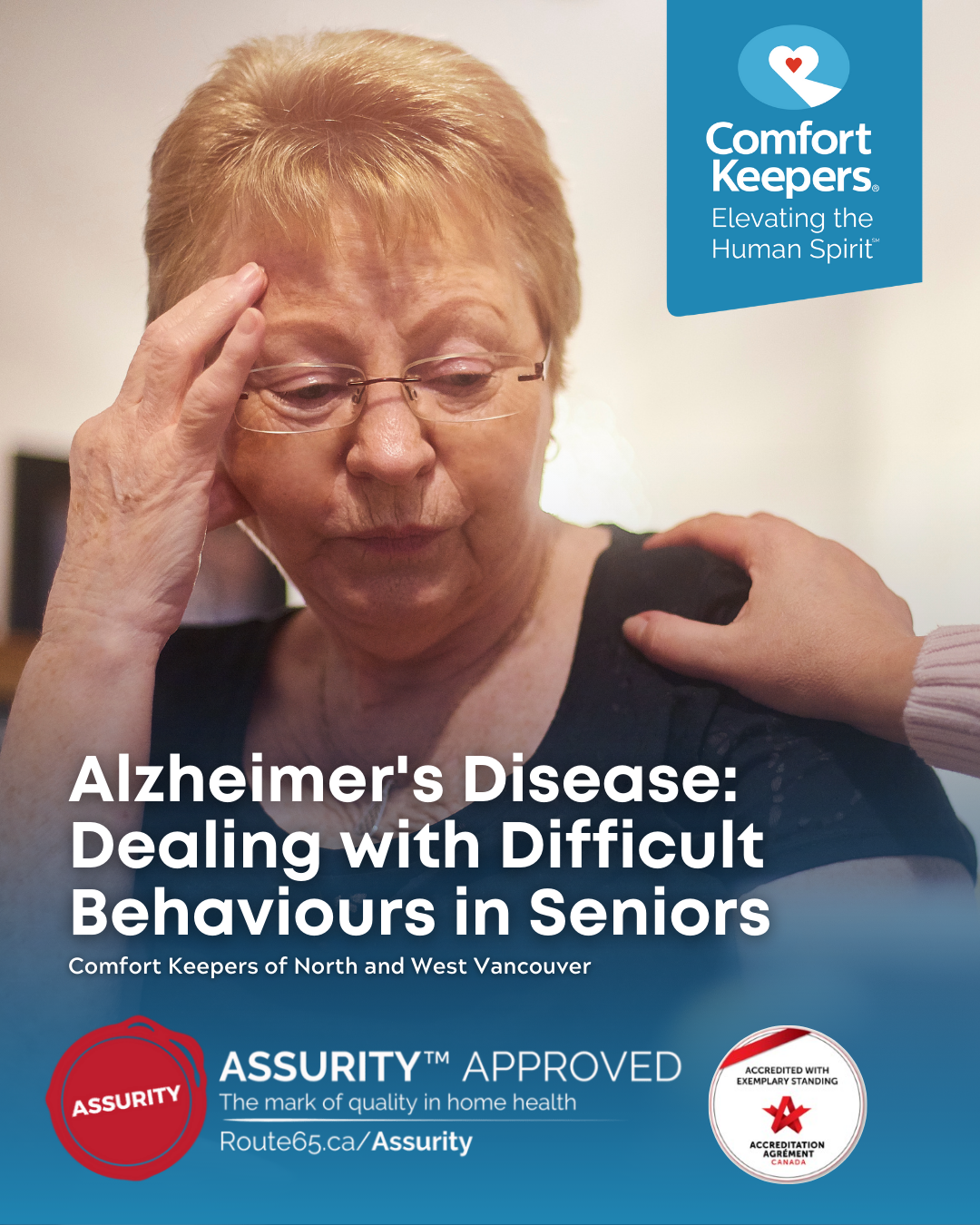
What Every Senior and Caregiver Needs to Know About Dealing with Difficult Alzheimer’s Behaviour
Alzheimer’s Disease | Caring for a loved one can be a rewarding experience, but it’s not without challenges. These challenges can be significantly more impactful for those caring for a senior with Alzheimer’s disease or other form of dementia. Changes in behaviours can occur for a variety of reasons, including over-stimulation, physical discomfort, confusion, exhaustion caused by sleep problems, medication, or changes in routine.
Understanding the cause of behavioural changes is critical for caregivers, families and friends. And, it’s helpful for caregivers to know how to manage behaviours that will allow them to provide safe and effective support and diffuse tense situations.
Seniors with Alzheimer’s and Difficult Behavior Examples:
- Depression
- Anxiety
- Confusion
- Aggression or anger
- Suspicion
- Hallucinations
- Pacing or wandering
The most important thing that caregivers need to remember is that challenging behaviours may not be entirely avoidable. It’s also not the fault of the person with Alzheimer’s or dementia. These behaviours are sometimes a common product of the disease. And, there is specialized support a caregiver can use to help keep a challenging behaviour from escalating.
Alzheimer’s Disease: Tips for Dealing with Difficult Behavior
While there is no guaranteed approach that will work with every person or situation, there are some methods that can help caregivers manage trying times:
Tip #1 – Staying calm:
It’s not uncommon for caregivers to feel attacked or helpless when they are caring for someone exhibiting difficult behaviours. Remembering that it isn’t personal and that it’s a symptom of the disease, can help caregivers manage their emotions and avoid contributing to tense or difficult situations. Arguing or reasoning can often escalate an outburst, so caregivers must stay calm and supportive
Tip #2 – Keeping a schedule:
Seniors who suffer from Alzheimer’s disease and other dementias often find it reassuring to have a set schedule for meals, activities and daily tasks. Creating a schedule, and sticking to it as much as possible, can help prevent anxiety, confusion and anger.
Tip #3 – Exercise:
Exercise, with approval from a physician, is a great stress reliever for both seniors and caregivers. And, participating in activities together helps foster important emotional connections.
Tip #4 – Participating in activities:
Whether it’s an enjoyable hobby, household chore or physician-approved exercise, participating in joyful activities has been shown to help manage challenging behaviours. These can be pre-scheduled or introduced when difficult behaviours are recognized. For example, caregivers can ask for help folding laundry to ease anxiety or can play music or sing to calm someone feeling confused, angry or depressed.
Tip #5 – Mindful communication:
Caregivers shouldn’t underestimate the power of communication. Caregivers can use soothing tones, speak in a friendly way and make eye contact to convey normalcy, understanding and compassion. This can help seniors experiencing anxiety or frustration calm themselves.

The Best Senior Home Care in North and West Vancouver is Comfort Keepers®
Our senior home care agency offers in-home care focusing on aging in place. Our services include dementia care, end-of-life care, post-surgery care, and palliative care. Comfort Keepers can assist seniors with living transition services, personal care, companionship care, and more!
Quality and Accredited Elderly Care: Happier, Healthier, and at Home with 24/7 Senior Care Opportunities!
Do you need a home care solution for yourself or a loved one? Have you been thinking about retirement homes and their alternatives as a solution? Comfort Keepers® enables seniors to maintain happy, healthy lives in the comfort of their own homes. In-home care services are available in North Vancouver, West Vancouver, and the surrounding areas.
Comfort Keepers® is a Senior Care Agency That Can Make a Difference with Interactive Caregiving™
Our in-home caregivers ensure our senior clients have the best quality of life. The Interactive Caregiving™ program ensures that a senior’s safety, nutrition, mental well-being, and everyday needs are met. This program brings joy and good health to each client’s home.
Comfort Keepers® North Vancouver and West Vancouver Can Help with In-Home Elderly Care Services!
If you are concerned about the health and well-being of a loved one we can help! Comfort Keepers offers 24-hour care and delivers top-quality and compassionate care for seniors. We are dedicated to safety technology solutions that foster independence and enhance well-being.
Locally Owned and Operated Home Health Care Agency
Our care centers around companionship for seniors. Empathetic care originates from the soul and allows us to meet our client’s requirements. The seasoned in-home caregivers employed by Comfort Keepers are carefully chosen based on their empathetic qualities.
Contact the Comfort Keepers® North Vancouver and West Vancouver office at (604) 998-8806 to learn more about our unique in-home care solutions for seniors.
Comfort Keepers is an Accredited Senior Care Agency in North and West Vancouver, BC
Accreditation is a rigorous process that involves industry experts evaluating an organization’s processes, policies, and procedures. Comfort Keepers® North and West Vancouver has been awarded Exemplary Standing by Accreditation Canada. This achievement recognizes that Comfort Keepers® meets or exceeds the stringent quality standards for Home Care companies established by Accreditation Canada.
References
alz.org Canada. “Alzheimer’s and Dementia in Canada”. Web. 2019.
National Institute on Aging. “Managing Personality and Behavior Changes in Alzheimer’s.” Web. 2017.
Verywell Health. “Complete Guide to Challenging Behaviors in Dementia.” Web. 2019.
Alzheimer’s Association. “Stages and Behaviors.” Web.
Important Information on Sundowning for Seniors Living in British Columbia

What Every Senior in North Vancouver and West Vancouver, BC Needs to Know About Alzheimer’s and Sundowning
Sundowning | As we grow older, our bodies and minds may not operate at the same speed & efficiency as they once did. The decline of mobility and health as we age is inevitable, but the effects can be minimized if we prioritize our physical and mental well-being.
The risk of contracting memory loss diseases such as Alzheimer’s and dementia is also increased as we age. Still, in some cases, the symptoms are only aggravated when the sun begins to set and nighttime approaches.
Sundowning is a symptom of Alzheimer’s disease & dementia and results in aggressiveness, confusion, or irascibility.
Potential Causes of Sundowning
Scientifically, the reasons behind sundowning are not clear. However, research has determined that it is common in those with early-onset dementia. One hypothesis concludes that the effects of dementia and Alzheimer’s can skew an individual’s circadian rhythm, which may result in convoluted sleep cycles. Other potential reasons that someone experiences sundowning symptoms may include:
- Excessive fatigue
- Excessive thirst and hunger
- Chronic depression
- Extreme pain
- Constant boredom and lethargy
How to Detect Sundowning
If you believe a loved one may be experiencing sundowning symptoms, be mindful in the evening when the sun is beginning to set – certain signs such as increased anxiety or bewilderment could be indicative of sundowning. Around this time of day, a loved one with sundowning symptoms may abruptly become angry or flustered – remain patient, and understanding and reassure them that everything will be okay.
Coping with Sundowning:
- Limit the amount of noise, light, and activity in the room. If there are a lot of people in the room, kindly ask them to leave; a heavily populated room can perpetuate symptoms of sundowning.
- Attempt to occupy your loved ones with their favourite foods or treats, and you may also want to try to occupy their mind by breaking out their favourite board game or movie.
- Implement a quiet rule in the evening time- instead of turning on the TV and playing loud music, utilize dim lights, help them pick out a book to read, or go for a walk with them.
- Shut the curtains before the sun sets to prevent shadows from confusing your loved one.
How to Prevent Sundowning
You can assist your loved one by enacting preventative measures to ensure their symptoms are lessened.
- Help your loved one go outside, especially in the daylight- daily exposure to sunlight can help fix their circadian rhythm.
- Ensure your loved one gets a decent dose of physical exercise (i.e. walking, jogging, swimming, etc.)
- If your loved one must nap throughout the day, ensure the naps are short (1-1.5 hours maximum)
- Ensure they’re not drinking any alcohol or caffeinated beverages 4-5 hours before bed
- Keep activities light throughout the daytime – a day that is full of events may tire your loved one and add to the confusion.

The Best Senior Home Care in North and West Vancouver is Comfort Keepers®
Our senior home care agency offers in-home care focusing on aging in place. Our services include: dementia care, end-of-life care, post-surgery care, and palliative care. Comfort Keepers can assist seniors with living transition services, personal care, companionship care, and more!
Quality and Accredited Elderly Care: Happier, Healthier, and at Home with 24/7 Senior Care Opportunities!
Do you need a home care solution for yourself or a loved one? Have you been thinking about retirement homes and their alternatives as a solution? Comfort Keepers® enables seniors to maintain happy, healthy lives in the comfort of their own homes. In-home care services are available in North Vancouver, West Vancouver, and the surrounding areas.
Comfort Keepers® is a Senior Care Agency That Can Make a Difference with Interactive Caregiving™
Our in-home caregivers ensure our senior clients have the best quality of life. The Interactive Caregiving™ program ensures that a senior’s safety, nutrition, mental well-being, and everyday needs are met. This program brings joy and good health to each client’s home.
Comfort Keepers® North Vancouver and West Vancouver Can Help with In-Home Elderly Care Services!
If you are concerned about the health and well-being of a loved one we can help! Comfort Keepers offers 24-hour care and delivers top-quality and compassionate care for seniors. We are dedicated to safety technology solutions that foster independence and enhance well-being.
Locally Owned and Operated Home Health Care Agency
Our care centers around companionship for seniors. Empathetic care originates from the soul and allows us to meet our client’s requirements. The seasoned in-home caregivers employed by Comfort Keepers are carefully chosen based on their empathetic qualities.
Contact the Comfort Keepers® North Vancouver and West Vancouver office at (604) 998-8806 to learn more about our unique in-home care solutions for seniors.