



Watching a loved one navigate dementia is one of life’s most profound challenges. You’ve likely stepped into the role of caregiver out of love and a deep sense of duty. But the journey is demanding, and there often comes a point where you find yourself asking a quiet, persistent question: Is it time for more help?
If you’re asking this question, you’re not alone. It’s a sign that you are deeply attuned to your loved one’s needs and your own capacity. Acknowledging that the care required may be evolving beyond what one person can provide isn’t a sign of failure, it’s an act of profound love and foresight. Research shows the immense weight on family caregivers, with up to 60% experiencing clinical depression or anxiety disorders. Seeking professional support is a courageous step toward ensuring the best possible quality of life for both your loved one and yourself.
This guide provides a compassionate framework to help you recognize the signs that professional in-home dementia care may be the right next step for your family.
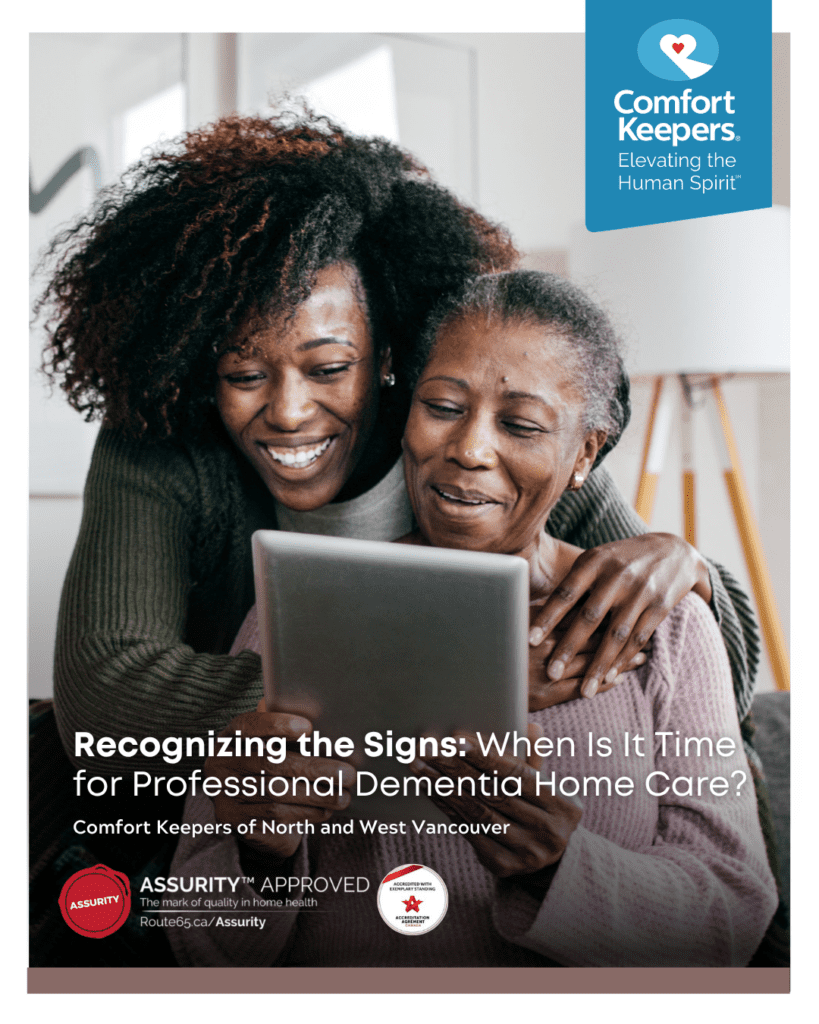
The Dual Signs: When Needs Escalate and Capacity Wanes
The decision to seek professional care is rarely based on a single event. It’s usually a combination of two parallel journeys: the changing needs of the person with dementia and the increasing strain on the family caregiver. Recognising signs on both sides gives you a clearer picture of your situation.
Key Signs Your Loved One Needs More Support
As dementia progresses, new challenges can emerge that require specialised skills and constant vigilance. Look for these key indicators:
- Growing Safety Concerns: Are you worried about wandering, falls, or kitchen accidents like leaving the stove on? Have there been issues with managing medications correctly? These are often the most urgent signs that professional oversight is needed to create a safer environment.
- Difficulty with Daily Activities (ADLs): Is your loved one struggling with personal hygiene, getting dressed, bathing, or eating? A decline in these areas can impact their health and dignity, and professional caregivers are trained to provide this assistance with sensitivity and respect.
- Significant Behavioural Changes: Increased agitation, aggression, anxiety, or severe confusion can be distressing for everyone. A trained dementia care professional understands the root of these behaviours and can use proven techniques to de-escalate situations and restore calm.
- Increasing Social Isolation: Has your loved one withdrawn from hobbies, friends, and family activities? The right companion care can re-engage them in meaningful activities, providing mental stimulation and reducing feelings of loneliness.
- Complex Health Management: When dementia is combined with other chronic conditions, managing care can become medically complex. Professional caregivers can help monitor symptoms, ensure adherence to care plans, and provide a crucial link to healthcare providers.
Key Signs of Caregiver Burnout
Your well-being is not just important, it’s a critical component of your loved one’s care. If your own health is suffering, your ability to provide effective support will inevitably decline. Be honest with yourself about these signs of burnout:
- Physical and Emotional Exhaustion: Are you constantly tired, getting sick more often, or having trouble sleeping? Emotionally, burnout often manifests as persistent irritability, anxiety, sadness, and a sense of hopelessness. These are not character flaws; they are symptoms of prolonged, high-stakes stress.
- Social Withdrawal: Have you given up your own hobbies, friendships, and personal time to focus solely on caregiving? Isolation can quickly lead to resentment and depression, impacting the positive energy you can bring to your loved one.
- Constant Worry and Guilt: Do you feel like you can never do enough, or live with a constant fear that something bad will happen on your watch? This hyper-vigilance is mentally draining and unsustainable long-term.
- Difficulty Concentrating: Many caregivers report feeling “fuzzy” or forgetful in their own lives because their mental energy is entirely consumed by caregiving tasks and worries.
If several of these points resonate with you, it’s a clear signal that your current situation is unsustainable. You’ve given so much, and now it’s time to build a support system that cares for you, too.
A Clearer Path Forward: Why In-Home Dementia Care Makes a Difference
When families recognise the need for more help, they often assume a residential facility is the only option. But for many, professional in-home care offers a more compassionate and effective solution that honours their loved one’s desire to remain in a familiar, comforting environment.
The Unmatched Benefit of Familiarity
For a person with dementia, home is more than just a place; it’s an anchor. The familiar surroundings, routines, and memories tied to their home can significantly minimise agitation and disorientation. Research confirms that staying in a familiar environment helps preserve long-term memories and reduces the risk of falls and distress associated with new, institutional settings. Professional in-home care brings the support to them, allowing them to maintain their sense of place and identity.
A Lifeline for Your Family
Bringing in professional support doesn’t mean you’re stepping away. It means you’re getting the help you need to be the best son, daughter, or spouse you can be. In-home care provides crucial respite, giving you time to recharge, focus on your own health, and manage other responsibilities. It transforms your role from an overwhelmed, hands-on caregiver back to a loving family member who can enjoy quality time with your loved one. This kind of expert support can be a cornerstone of a well-thought-out dementia care plan.
Your Partner in Compassionate Care on the North Shore
Navigating this journey requires a partner you can trust. At Comfort Keepers of North and West Vancouver, we are a locally owned team deeply rooted in the North Shore community. We understand the unique needs of families here because we are your neighbours.
Our commitment to excellence is reflected in our “Accredited with Exemplary Standing” seal from Accreditation Canada, the highest certification for home care in the country. This isn’t just a plaque on our wall; it’s a promise that our standards for client safety, caregiver training, and compassionate service are second to none.
We go beyond simple task-based care. Our unique philosophy of Interactive Caregiving means we focus on “doing with” our clients, not just “doing for” them. We engage your loved one in activities that bring them joy and purpose, whether it’s preparing a favourite meal, listening to music, or looking through old photos. This approach elevates their physical, mental, and emotional well-being.
Whether you need a few hours of respite care to run errands or more comprehensive 24-hour care, our process begins with a conversation. We listen to your story, understand your concerns, and develop a customized care plan that truly fits your family’s needs.

Frequently Asked Questions About Dementia Home Care
1. Do people with dementia do better at home or in a nursing home?
While every situation is unique, many individuals with dementia thrive at home, especially in the early to moderate stages. The familiar environment reduces confusion and anxiety. With professional in-home care, they can receive personalised, one-on-one attention that isn’t always possible in a facility, allowing them to maintain their routines and independence for as long as possible.
2. At what point do dementia patients need 24-hour care?
The need for 24-hour care typically arises when safety becomes a primary concern around the clock. This includes significant wandering risk, severe sleep disturbances (sundowning), an inability to get out of bed independently, or complex medical needs that require constant monitoring.
3. How can I talk to my loved one about needing more care?
Approach the conversation with empathy and focus on the benefits. Frame it as a way to help them stay independent and safe in their own home. Say things like, “I’ve noticed you’re having a harder time with [specific task], and I found someone who can help us out so you can keep living here comfortably.” Introducing a caregiver for a few hours a week for companionship can be a gentle way to start.
4. How do I know I’m not just overreacting?
Trust your instincts. Caregiver burnout is insidious and often minimised by the person experiencing it. If you are consistently feeling exhausted, overwhelmed, and worried, those feelings are valid indicators that the level of care required has become too much for one person to handle. Seeking help is a proactive, responsible step.
Take the First Step with Confidence
Recognising that it’s time for professional care is a pivotal moment. It’s a decision made from a place of love, aimed at providing the highest level of safety, dignity, and quality of life for your loved one. You don’t have to figure out the next steps by yourself.
We invite you to have a no-obligation conversation with one of our Care Coordinators. We can help you assess your situation, understand your options, and see how a customized in-home care plan can bring peace of mind back to your family.
The Best Senior Home Care in North and West Vancouver is Comfort Keepers®
Our senior home care agency offers in-home care focusing on aging in place. Our services include dementia care, end-of-life care, post-surgery care, and palliative care. Comfort Keepers can assist seniors with living transition services, personal care, companionship care, and more!
Quality and Accredited Elderly Care: Happier, Healthier, and at Home with 24/7 Senior Care Opportunities!
Do you need a home care solution for yourself or a loved one? Have you been thinking about retirement homes and their alternatives as a solution? Comfort Keepers® enables seniors to maintain happy, healthy lives in the comfort of their own homes. In-home care services are available in North Vancouver, West Vancouver, and the surrounding areas.
Comfort Keepers® is a Senior Care Agency That Can Make a Difference with Interactive Caregiving™
Our in-home caregivers ensure our senior clients have the best quality of life. The Interactive Caregiving™ program ensures that a senior’s safety, nutrition, mental well-being, and everyday needs are met. This program brings joy and good health to each client’s home.
Comfort Keepers® North Vancouver and West Vancouver Can Help with In-Home Elderly Care Services!
If you are concerned about the health and well-being of a loved one we can help! Comfort Keepers offers 24-hour care and delivers top-quality and compassionate care for seniors. We are dedicated to safety technology solutions that foster independence and enhance well-being.
Locally Owned and Operated Home Health Care Agency
Our care centers around companionship for seniors. Empathetic care originates from the soul and allows us to meet our client’s requirements. The seasoned in-home caregivers employed by Comfort Keepers are carefully chosen based on their empathetic qualities.
Contact the Comfort Keepers® North Vancouver and West Vancouver office at (604) 998-8806 to learn more about our unique in-home care solutions for seniors.
Comfort Keepers is an Accredited Senior Care Agency in North and West Vancouver, BC
Accreditation is a rigorous process that involves industry experts evaluating an organization’s processes, policies, and procedures. Comfort Keepers® North and West Vancouver has been awarded Exemplary Standing by Accreditation Canada. This achievement recognizes that Comfort Keepers® meets or exceeds the stringent quality standards for Home Care companies established by Accreditation Canada.
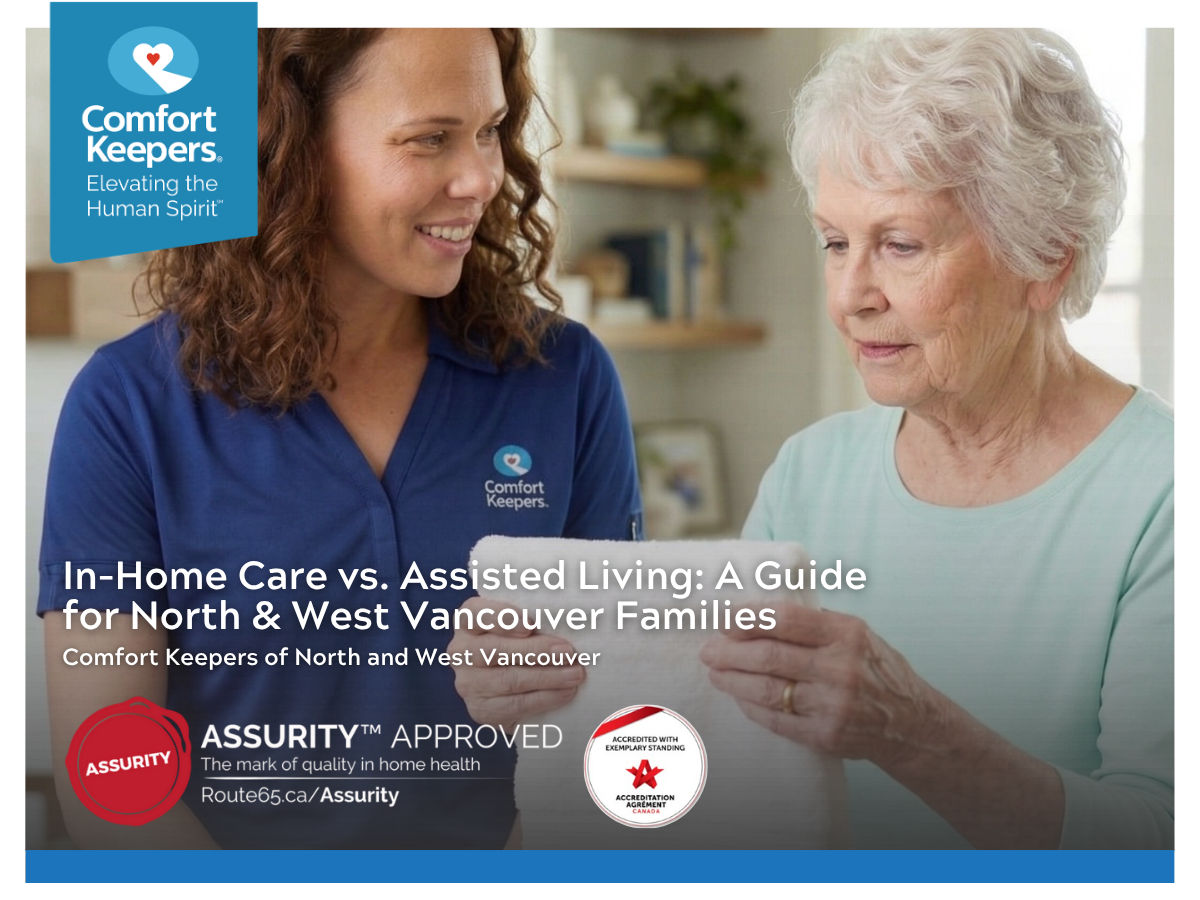
In-Home Care vs. Assisted Living: A Guide for North & West Vancouver Families
Making the right care decision for an aging loved one is one of the most significant choices a family can make. It’s a conversation filled with emotion, financial considerations, and a deep desire to ensure their safety, happiness, and dignity. Here on the North Shore, families often find themselves weighing two primary options: the personalised support of in-home care versus the structured environment of an assisted living facility.
This isn’t just about logistics; it’s about quality of life. While both paths offer support, they represent fundamentally different approaches to senior living. This guide will provide a clear, balanced comparison to help you navigate this complex decision with confidence, using insights specific to our British Columbia context.

The Overwhelming Choice: Why Most BC Seniors Prefer to Age at Home
Before we dive into the details, it’s important to understand the prevailing sentiment. A 2023 report from the Canadian Institute for Health Information found that a staggering 85% of seniors want to stay in their own homes for as long as possible. It’s a powerful statistic that speaks to the deep emotional connection we have to our homes, the places filled with memories, familiar comforts, and a sense of independence.
However, this preference is meeting a stark reality here in British Columbia. According to the BC Seniors Advocate, our province has seen a 19% increase in its senior population since 2020, a rate that has far outpaced the 5% growth in long-term care beds. With over 7,000 people on waitlists, facing an average wait of 10 months, access to facility-based care is more challenging than ever.
This supply-demand gap makes the conversation about in-home care not just a matter of preference, but one of practical necessity for many North and West Vancouver families.
A Head-to-Head Comparison: Key Factors for Your Decision
To make an informed choice, you need to compare these options across the factors that matter most: cost, personalisation, quality of care, and social environment.
Financial Realities: Decoding the Costs in British Columbia
Cost is often the first question families ask, and the answer in BC is nuanced.
- Assisted Living Facilities: Costs can vary dramatically. For publicly subsidised assisted living, residents pay 70% of their after-tax income. However, securing one of these spots is difficult due to the long waitlists. Private facilities offer more availability but at a significantly higher cost, often ranging from $3,500 to $6,000 per month ($42,000 to $72,000 annually). This fee is typically all-inclusive, covering accommodation, meals, and a set level of care.
- In-Home Care: The cost of in-home care is flexible and directly tied to your needs. You pay for the specific services you require, from a few hours of companionship a week to 24/7 personal care. For example, 40 hours of weekly care could range from approximately $62,000 to over $120,000 annually. While the top end seems high, many families find that their actual needs require far fewer hours, making it a more adaptable and often more affordable solution than a fixed facility fee. Exploring The True Cost of Aging in Place vs. Assisted Living: A Financial Breakdown for BC Families can provide even more clarity.
Personalization & Independence: The Comfort of Familiar Surroundings
This is where the philosophical differences between the two models become most apparent.
Assisted living facilities operate on a community model. Schedules for meals, activities, and even assistance are often standardised to serve the needs of many residents. While this provides structure, it can feel limiting for seniors who value their personal routines and independence.
In-home care is, by definition, entirely personalised. The focus is on a one-to-one relationship.
- Maintaining Routine: Your loved one can wake up when they want, eat their favourite foods prepared in their own kitchen, and watch their favourite shows in their own living room.
- Preserving Dignity: Care is delivered discreetly and respectfully in the privacy of their home.
- Emotional Comfort: The ability to stay with a beloved pet, tend to a garden, or simply be surrounded by a lifetime of memories is immeasurably valuable for mental and emotional well-being.
This personalized approach is the cornerstone of our Interactive Caregiving philosophy, which focuses on doing with our clients, not just doing for them. By engaging them in their own care, we help them maintain a sense of purpose and control over their lives.
Quality of Care & Oversight: A Critical Distinction in BC
In British Columbia, assisted living facilities are strictly regulated and licensed, with regular inspections to ensure they meet provincial standards. This provides a clear baseline for safety and quality.
The private in-home care industry, however, is not subject to the same level of provincial licensing. This makes the provider you choose incredibly important. Without a government mandate, the onus is on the agency to set and maintain its own high standards.
This is why Comfort Keepers North and West Vancouver pursued and earned the “Accredited with Exemplary Standing” seal from Accreditation Canada. This is the highest level of certification available for home care in the country. It signals our unwavering commitment to client safety, rigorous caregiver training, and operational excellence, providing you with the peace of mind that a government licence offers, and then some.
Social Engagement: Community vs. Companionship
A common concern about ageing in place is the risk of social isolation. Assisted living facilities address this with planned group activities, communal dining, and resident mixers. This works well for outgoing seniors who thrive in group settings.
However, for many, true social fulfilment comes from meaningful connection, not just proximity to others. In-home care provides dedicated companionship. Our caregivers are not just there to assist with tasks; they are there to share conversations, play cards, go for walks in the neighbourhood, or provide transportation to a local seniors’ centre or a friend’s house. This approach fosters genuine relationships and helps seniors stay connected to the community they already know and love.
Making the Right Choice for Your Family
There is no single “best” answer, only the best answer for your unique situation. As you weigh your options, consider these questions:
- Health Needs: Does your loved one require light assistance and companionship, or do they need 24/7 medical supervision?
- Personal Preference: Are they a social butterfly who would love a group setting, or do they cherish their privacy and routine?
- Family Support: How involved can family members be in providing care and companionship?
- Financial Situation: Have you compared the flexible costs of in-home care against the fixed costs of a facility for the level of care actually needed?
- Home Environment: Is the home safe and accessible, or would it require modifications?
Why Personalized In-Home Care is Often the Answer
For the vast majority of seniors whose primary needs are support with daily living, companionship, and safety monitoring, in-home care offers a solution that facilities simply cannot match. It honours their desire for independence, provides superior personalisation, and can be tailored to fit a specific budget and evolving needs. It’s a model built around the individual, not the institution.
As you begin Recognizing the Signs: When is Professional In-Home Care the Best Option for Your Loved One?, remember that the goal is to add support without taking away a life.

Frequently Asked Questions
Can in-home care handle serious medical needs?
While in-home care focuses on non-medical support, our caregivers are trained to assist with medication reminders, mobility, and personal care. We work closely with families and healthcare providers like Vancouver Coastal Health to ensure a seamless circle of care, often integrating our services with visiting nurses or therapists.
My parent is lonely at home. Isn’t a facility better for that?
Loneliness isn’t solved by being in a crowd; it’s solved by connection. The one-on-one relationship with a dedicated caregiver provides consistent, meaningful companionship that can be more powerful than the unstructured social environment of a facility.
Is my home safe enough for aging in place?
Making a home safe is a key part of the in-home care process. Our initial assessment includes identifying and mitigating potential risks.
Take the Next Step with Confidence
Choosing the right path for your loved one is a journey, not a transaction. As a locally owned and operated agency led by long-time North Shore resident Cherian Itty, we are deeply invested in the well-being of our community. We believe in providing care that we would want for our own families, care that is compassionate, respectful, and empowering.
If you believe that aging in the comfort and dignity of home is the right choice for your family, we invite you to contact us for a free, no-obligation in-home consultation. Let’s explore how a personalised care plan can bring you peace of mind and your loved one the quality of life they deserve.
The Best Senior Home Care in North and West Vancouver is Comfort Keepers®
Our senior home care agency offers in-home care focusing on aging in place. Our services include dementia care, end-of-life care, post-surgery care, and palliative care. Comfort Keepers can assist seniors with living transition services, personal care, companionship care, and more!
Quality and Accredited Elderly Care: Happier, Healthier, and at Home with 24/7 Senior Care Opportunities!
Do you need a home care solution for yourself or a loved one? Have you been thinking about retirement homes and their alternatives as a solution? Comfort Keepers® enables seniors to maintain happy, healthy lives in the comfort of their own homes. In-home care services are available in North Vancouver, West Vancouver, and the surrounding areas.
Comfort Keepers® is a Senior Care Agency That Can Make a Difference with Interactive Caregiving™
Our in-home caregivers ensure our senior clients have the best quality of life. The Interactive Caregiving™ program ensures that a senior’s safety, nutrition, mental well-being, and everyday needs are met. This program brings joy and good health to each client’s home.
Comfort Keepers® North Vancouver and West Vancouver Can Help with In-Home Elderly Care Services!
If you are concerned about the health and well-being of a loved one we can help! Comfort Keepers offers 24-hour care and delivers top-quality and compassionate care for seniors. We are dedicated to safety technology solutions that foster independence and enhance well-being.
Locally Owned and Operated Home Health Care Agency
Our care centers around companionship for seniors. Empathetic care originates from the soul and allows us to meet our client’s requirements. The seasoned in-home caregivers employed by Comfort Keepers are carefully chosen based on their empathetic qualities.
Contact the Comfort Keepers® North Vancouver and West Vancouver office at (604) 998-8806 to learn more about our unique in-home care solutions for seniors.
Comfort Keepers is an Accredited Senior Care Agency in North and West Vancouver, BC
Accreditation is a rigorous process that involves industry experts evaluating an organization’s processes, policies, and procedures. Comfort Keepers® North and West Vancouver has been awarded Exemplary Standing by Accreditation Canada. This achievement recognizes that Comfort Keepers® meets or exceeds the stringent quality standards for Home Care companies established by Accreditation Canada.
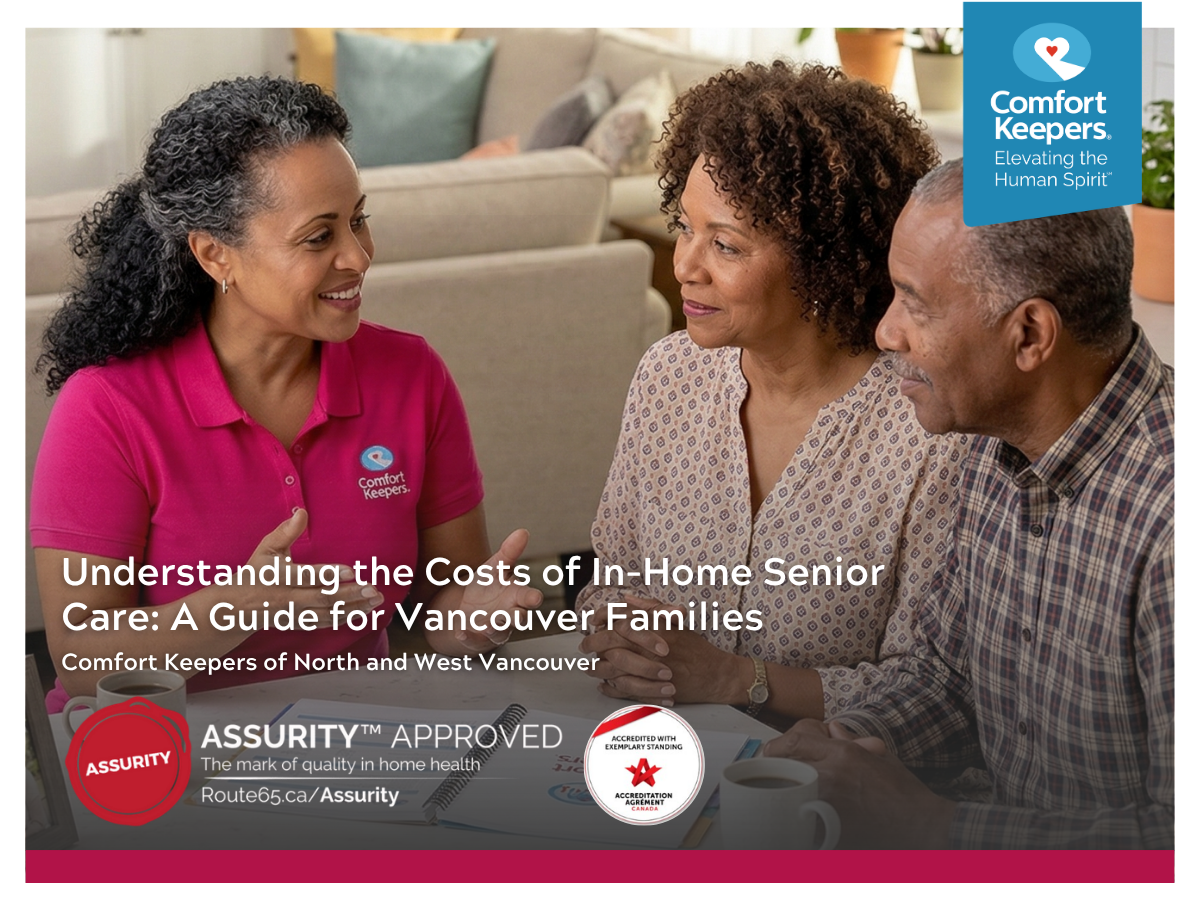
Understanding the Costs of In-Home Senior Care: A Guide for Vancouver Families
Making the decision to bring professional care into a loved one’s home is one of the most significant choices a family can make. It’s a conversation filled with emotion, logistics, and, inevitably, questions about cost. You want the absolute best for your family member, but you also need a clear, realistic understanding of the financial investment involved.
Navigating the landscape of in-home care costs in Vancouver can feel overwhelming. You’re met with a wide range of hourly rates, different service tiers, and the complex world of public subsidies. The goal of this guide is to cut through that complexity. We’ll provide a transparent framework to help you understand what drives the cost of quality in-home care, how it compares to other options, and how to build a plan that honours both your loved one’s needs and your family’s budget.
In Vancouver, private in-home care rates typically range from $35 to $50 per hour for companionship and personal support, and can go up to $85 per hour or more for specialized or nursing care provided by a registered professional. But the hourly rate is only one piece of the puzzle. Let’s break down the complete picture.

The Core Factors That Shape In-Home Care Costs
Not all care is the same, and the final cost is a direct reflection of the specific support your family member requires. Here are the three main drivers.
The Level of Care Required
The single biggest factor influencing cost is the type of service needed. Care is generally structured in tiers based on the skill and responsibility required of the caregiver.
- Companionship and Homemaking: This foundational level of support focuses on quality of life and maintaining a safe home environment. It includes activities like conversation, meal preparation, light housekeeping, errands, and accompanying your loved one to appointments.
- Personal Care: This involves hands-on assistance with activities of daily living, such as bathing, dressing, grooming, and mobility support. Caregivers providing this level of support have specific training to ensure safety and dignity.
- Specialised and Nursing Care: For individuals with complex medical needs, such as dementia, post-surgery recovery, or chronic conditions, care becomes more specialised. This can involve medication management, wound care, or other skilled tasks, often requiring a registered nurse or a caregiver with advanced training.
The Number of Hours Needed
The total monthly cost is directly tied to the frequency and duration of care. A family needing a few hours of respite care twice a week will have a very different budget from a family requiring around-the-clock support. For 24/7 care, the monthly investment can range from $10,000 to over $30,000, which, while significant, often provides a more personalised and cost-effective alternative to intensive residential facilities.
When Care Is Provided
Care provided during evenings, overnight, weekends, or on statutory holidays may come at a different rate than standard daytime hours. This is an important detail to clarify when creating a care schedule that fits your family’s routine.
Comparing Care Options: A Financial and Value Guide for Vancouver Families
One of the most common questions families ask is how the cost of in-home care stacks up against assisted living or a nursing home. While residential facilities have their place, a direct comparison reveals the unique value of aging at home, a preference shared by over 85% of Canadian seniors, according to the Canadian Institute for Health Information.
A Clear Cost Comparison
This table offers a snapshot of typical monthly costs and key benefits for different senior care options in British Columbia.
| Care Type | Typical Monthly Cost (BC) | Level of Personalisation | Key Benefit |
| In-Home Care | $1,500 – $30,000+ (Highly Variable) | One-on-one, fully customised schedule and care plan | Independence, comfort of home, dedicated attention |
| Assisted Living | $4,500 – $8,000+ | Moderate; set meal times and activity schedules | Social community, bundled services, on-site staff |
| Nursing Home | $6,000 – $12,000+ | Low; staff-to-resident ratio, institutional schedule | 24/7 medical supervision for high-acuity needs |
The Overlooked Cost of Family Caregiving
In many families, the default alternative to professional care is for a family member, often an adult child or spouse, to step in. While this comes from a place of love, it carries a significant, often uncalculated, cost. Nationally, it’s estimated that family caregivers lose out on $67 billion in earnings annually due to missed work and reduced career opportunities. Beyond the financial strain, the emotional and physical toll of caregiver burnout can impact the entire family’s well-being. Investing in professional care is often an investment in preserving your own health and your relationship with your loved one.
Beyond the Hourly Rate: Uncovering the Full Financial Picture
A truly transparent cost discussion goes beyond the advertised hourly rate. Understanding the structural differences between hiring models and planning for associated expenses is key to confident budgeting.
Agency vs. Independent: A Critical Distinction
Hiring a caregiver independently may seem cheaper on the surface, but it effectively turns you into an employer, with all the associated responsibilities. These “hidden” costs include:
- Recruitment and Vetting: Time spent finding, interviewing, and background-checking candidates.
- Payroll and Taxes: Managing source deductions, CPP, and EI.
- Insurance and Liability: Securing liability insurance and WCB coverage.
- Finding Backup Care: The stressful scramble to find a replacement when your caregiver is ill or on vacation.
A professional agency like Comfort Keepers manages all of this for you. The fee you pay covers rigorous caregiver screening, training, insurance, and the guarantee of a reliable, qualified professional. It’s a fee for safety, consistency, and peace of mind.
Planning for Additional Expenses
A comprehensive care plan also accounts for potential one-time or ongoing expenses. These can include home safety modifications like grab bars or ramps, the cost of medical supplies, or specialised equipment. Proactive planning can also mitigate the staggering financial shock of an emergency. A single fall-related hospital stay can cost over $2,600 per day, making the preventative value of professional in-home support incredibly high.
How to Make Quality Care More Affordable
Creating a sustainable care plan is about strategically combining all available resources. For many families, this means creating a blend of private and public support.
Leveraging Public Subsidies
In British Columbia, publicly funded home support services are administered through regional health authorities like Vancouver Coastal Health (VCH). If you’re exploring government subsidies and funding options for senior home care in British Columbia, the first step is a needs assessment by a VCH case manager. If approved, the amount you contribute is based on your income. However, public services often have waitlists and may not cover the full number of hours your family needs. Many families use private care to supplement public hours, ensuring complete and consistent coverage.
Exploring Tax Credits and Financial Tools
Your family may be eligible for federal tax relief designed to offset caregiving expenses. Be sure to investigate the Canada Caregiver Credit, the Disability Tax Credit, and the ability to claim care as a medical expense. Consulting with a financial adviser is one of the most essential considerations when budgeting for long-term senior care. They can help you explore all available avenues, including long-term care insurance or other financial products.
The Comfort Keepers Difference: Value Beyond Price
Choosing a care provider is about more than comparing hourly rates; it’s about choosing a partner in your loved one’s well-being. At Comfort Keepers of North and West Vancouver, we are committed to a higher standard of care, validated by our “Accredited with Exemplary Standing” seal from Accreditation Canada, the highest certification available.
This commitment is embodied in our philosophy of Interactive Caregiving. We believe that care is not something you do for a person, but something you do with them. By engaging our clients in their own care, we help them maintain their independence, find daily moments of joy, and live more vibrant lives at home. That is a value you can’t put a price on.
Frequently Asked Questions About In-Home Care Costs
Is in-home care always more expensive than a nursing home?
Not necessarily. When you analyse if in-home care is more cost-effective than a nursing home in the long run, you’ll find that for individuals who do not require 24/7 high-intensity medical supervision, a customised in-home care plan is often comparable or even more affordable than a residential facility, especially when you factor in the value of one-on-one attention.
Are there hidden fees I should ask about?
Absolutely. A transparent provider will be upfront about all potential costs. Key questions to ask include their policies on minimum visit lengths, caregiver travel time, statutory holiday rates, and cancellation notice periods. A clear service agreement is the hallmark of a professional agency.
How does the payment process work?
Reputable agencies provide detailed, transparent invoices on a regular schedule. They should be able to clearly outline the services provided and the hours billed. We work with families to establish a clear payment process and can often coordinate with long-term care insurance providers.
Your Next Step: A Clear and Transparent Conversation
We understand that this is a major decision for your family. That’s why we invite you to have a conversation with us, free of charge and with no obligation.
Our approach begins with listening. We want to understand your loved one’s unique needs, your family’s goals, and your budgetary considerations. From there, we can co-create a personalized care plan and provide you with a clear, detailed quote. Let us help you navigate this journey with confidence and clarity.
The Best Senior Home Care in North and West Vancouver is Comfort Keepers®
Our senior home care agency offers in-home care focusing on aging in place. Our services include dementia care, end-of-life care, post-surgery care, and palliative care. Comfort Keepers can assist seniors with living transition services, personal care, companionship care, and more!
Quality and Accredited Elderly Care: Happier, Healthier, and at Home with 24/7 Senior Care Opportunities!
Do you need a home care solution for yourself or a loved one? Have you been thinking about retirement homes and their alternatives as a solution? Comfort Keepers® enables seniors to maintain happy, healthy lives in the comfort of their own homes. In-home care services are available in North Vancouver, West Vancouver, and the surrounding areas.
Comfort Keepers® is a Senior Care Agency That Can Make a Difference with Interactive Caregiving™
Our in-home caregivers ensure our senior clients have the best quality of life. The Interactive Caregiving™ program ensures that a senior’s safety, nutrition, mental well-being, and everyday needs are met. This program brings joy and good health to each client’s home.
Comfort Keepers® North Vancouver and West Vancouver Can Help with In-Home Elderly Care Services!
If you are concerned about the health and well-being of a loved one we can help! Comfort Keepers offers 24-hour care and delivers top-quality and compassionate care for seniors. We are dedicated to safety technology solutions that foster independence and enhance well-being.
Locally Owned and Operated Home Health Care Agency
Our care centers around companionship for seniors. Empathetic care originates from the soul and allows us to meet our client’s requirements. The seasoned in-home caregivers employed by Comfort Keepers are carefully chosen based on their empathetic qualities.
Contact the Comfort Keepers® North Vancouver and West Vancouver office at (604) 998-8806 to learn more about our unique in-home care solutions for seniors.
Comfort Keepers is an Accredited Senior Care Agency in North and West Vancouver, BC
Accreditation is a rigorous process that involves industry experts evaluating an organization’s processes, policies, and procedures. Comfort Keepers® North and West Vancouver has been awarded Exemplary Standing by Accreditation Canada. This achievement recognizes that Comfort Keepers® meets or exceeds the stringent quality standards for Home Care companies established by Accreditation Canada.
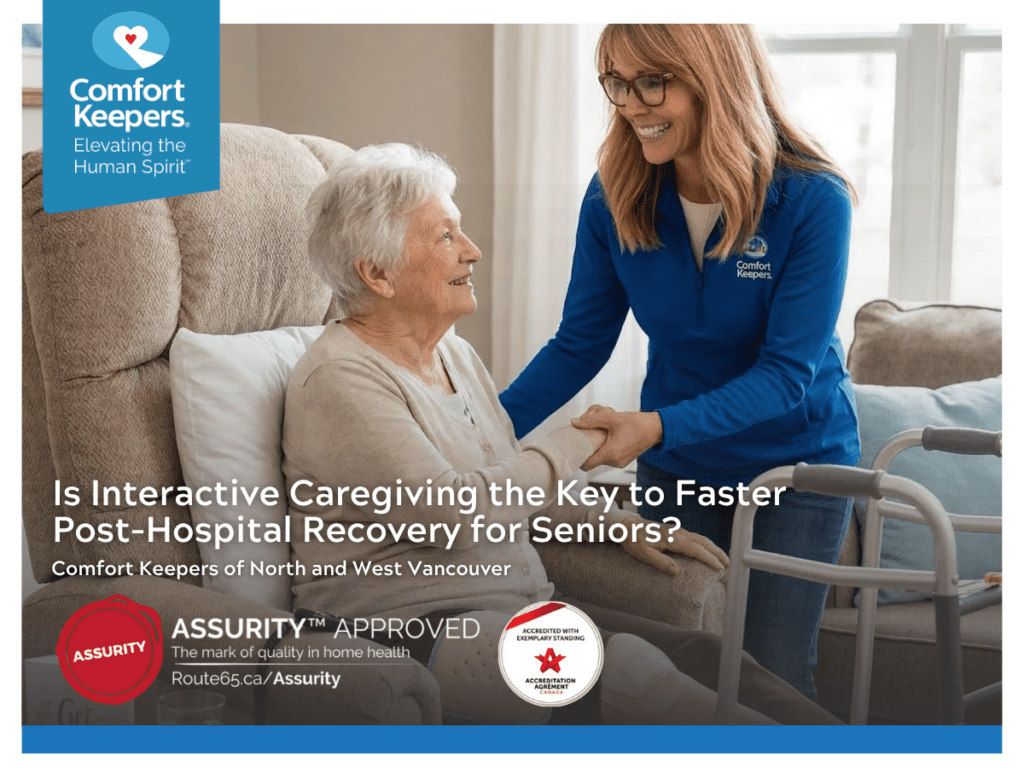
Is Interactive Caregiving the Key to Faster Post-Hospital Recovery for Seniors?

Coming home from the hospital is a moment everyone looks forward to. But for a senior, that sense of relief is often mixed with new anxieties. The home that was once familiar can suddenly feel full of challenges, and the path to recovery can seem long and isolating. As a family member, you’re focused on ensuring their physical needs are met, medication is on time, meals are prepared, and they’re safe from falls.
But what if the most powerful tool for a faster, more complete recovery isn’t just about managing tasks? What if it’s about reigniting a sense of purpose?
The transition from hospital to home is a critical period where a senior’s mental and emotional state is just as important as their physical healing. Standard home care often focuses on “doing for” a client, which can inadvertently foster dependence and feelings of helplessness. We believe there’s a more empowering way. This guide explores a different philosophy, Interactive Caregiving, and examines how actively engaging seniors in their own recovery isn’t just a nice idea, but an evidence-based strategy for better outcomes.

The Science Behind the Smile: Why Active Engagement Accelerates Healing
When a senior is a partner in their own care rather than a passive recipient, something remarkable happens. The focus shifts from a list of tasks to a series of shared accomplishments, which has a profound impact on recovery.
The data paints a clear picture. Studies on post-acute care for seniors show that proactive, engaging support can be transformative:
- Improved Physical Outcomes: Interdisciplinary post-acute care has been shown to improve physical function, balance, and nutrition while significantly lowering the risk of rehospitalisation within 90 days. Furthermore, the intensity of physical therapy shows a positive correlation with reduced 1-year mortality rates.
- The Power of Involvement: Research confirms that family and community involvement in rehabilitation significantly enhances functional outcomes. It boosts motivation, encourages more practice time, and creates a smoother, more successful transition back home.
- Guarding Against Decline: Even seniors who seem to be recovering well can experience subtle declines in their participation in meaningful activities one to three months after discharge. This highlights a critical need for ongoing, targeted interventions that keep them actively engaged in life.
This aligns perfectly with emerging trends in senior care, which are moving away from passive assistance toward hyper-personalized plans and holistic emotional engagement. The goal is no longer just to prevent setbacks, but to proactively foster independence and joy. While direct research is emerging, transferable studies on caregivers show that interactive interventions reduce stress and anxiety while enhancing coping skills and emotional regulation. For a senior in recovery, this sense of control and purpose is the psychological fuel that powers physical healing.
Interactive Caregiving in Action: From Philosophy to Practical Recovery
So, what does it actually look like to “do with” instead of “do for”? It’s about thoughtfully weaving opportunities for engagement into the fabric of each day. It’s a partnership built on respect, encouragement, and shared goals.
Nourishing More Than the Body
Instead of simply delivering a meal tray, an Interactive Caregiver turns mealtime into a collaborative experience. Under our Nourish Senior Life® approach, a senior might help plan the week’s menu, wash vegetables, stir a sauce, or set the table. These simple acts stimulate cognitive function, exercise fine motor skills, and restore a sense of contribution and normalcy. The shared conversation over a meal they helped create does as much to nourish the spirit as the food does to nourish the body.
Purposeful Movement in Daily Life
Physical therapy exercises can feel like a chore. Interactive Caregiving integrates movement into meaningful daily tasks. Rather than just walking back and forth in a hallway, recovery can look like taking a short, supported walk to the mailbox, watering the garden plants together, or folding a load of laundry while seated. Each activity has a purpose beyond the movement itself, making rehabilitation feel less clinical and more like reclaiming one’s life.
Empowered Medication Management
Managing a new, complex medication schedule can be overwhelming. A passive approach is to simply hand over pills at the prescribed times. An interactive approach involves the senior in the process. The caregiver might help them organise their pill box for the week, read the purpose of each medication aloud together, and create a shared log. This fosters understanding and autonomy, giving the senior a sense of control over their own health regimen.
Fostering Connection and Cognitive Vitality
The risk of isolation is incredibly high during post-hospital recovery. An Interactive Caregiver is a constant source of social and mental stimulation. This could mean working on a puzzle together, listening to favourite music, discussing the day’s news, or reminiscing over old family photos. These activities fight off the depression and loneliness that can stall recovery and keep the mind sharp and engaged.
The Hidden Costs of Passive Recovery
When caregiving becomes a simple checklist of tasks, the person at the centre of that care can start to feel more like an object than a human being. This passive, task-based approach, while well-intentioned, carries significant risks:
- Increased Helplessness: When every need is anticipated and met without input, seniors can quickly lose their sense of agency, leading to depression and a faster decline in functional abilities.
- Slower Physical Recovery: A lack of engagement can lead to lower motivation for physical therapy and other recovery activities, prolonging the healing process.
- Mental and Emotional Decline: Without meaningful social and cognitive stimulation, seniors are at a much higher risk for loneliness, anxiety, and cognitive decline.
- Higher Readmission Risk: A senior who feels disempowered and unengaged is less likely to be an active participant in the behaviours, like proper nutrition, medication adherence, and safe movement, that prevent rehospitalisation.
The “subtle participation declines” noted by researchers are a quiet but serious threat. A senior may be physically safe, but if they’ve stopped engaging in the hobbies and routines that once brought them joy, their overall quality of life suffers, and their recovery can plateau.
Choosing Your Recovery Partner: What to Ask Beyond the Basics
As you evaluate home care options, it’s crucial to look beyond the list of services offered. The real difference lies in the philosophy of care. To find a true partner in recovery, consider asking these questions:
- “How do you plan to involve my parent in their own daily care and decisions?”
- “Can you give me specific examples of how your caregivers turn routine tasks into engaging activities?”
- “How do you train your staff in techniques for motivating and encouraging clients, especially when they are feeling weak or discouraged?”
- “What is your process for matching a caregiver’s personality and skills to my parent’s needs and interests?”
The answers to these questions will reveal whether a provider sees care as a series of tasks to be completed or as a human-centered partnership designed to elevate the spirit.
Frequently Asked Questions About Post-Hospital Interactive Caregiving
My parent is very weak after their hospital stay. How can they be ‘interactive’?
Interaction is scalable. For someone with very limited energy, it might start with making simple choices, like what to have for lunch or which blanket to use. As strength returns, it could evolve to stirring a pot for a minute or folding a few pieces of laundry while seated. The goal is participation, not perfection.
Does an interactive approach take longer or cost more?
The focus of Interactive Caregiving is on the quality of time spent, not necessarily the quantity. It’s about transforming existing care hours into more effective, therapeutic, and emotionally fulfilling time. It’s a core part of our care philosophy, integrated into every customised care plan without being a separate, premium service.
How do you customize the level of interaction?
Our process begins with a detailed in-home assessment where we talk with you and your loved one to understand their physical abilities, cognitive status, personal interests, and recovery goals. The resulting care plan is a living document, tailored precisely to their needs and adaptable as their condition improves.
What kind of training do your caregivers receive for this?
Our caregivers are trained not just in the physical tasks of care but in our philosophy of Interactive Caregiving. They learn communication techniques, how to find moments for engagement, and how to motivate clients with empathy and respect. It’s a foundational element of what makes a Comfort Keeper a Comfort Keeper.
A Brighter Recovery Starts Today
Choosing the right support after a hospital stay is one of the most important decisions you can make. True recovery is about more than healing the body, it’s about restoring confidence, independence, and a joyful engagement with life.
By shifting the focus from “doing for” to “doing with,” Interactive Caregiving transforms the recovery journey from a passive waiting period into an active, empowering, and life-affirming experience. It’s a testament to our mission: to elevate the human spirit.
The Best Senior Home Care in North and West Vancouver is Comfort Keepers®
Our senior home care agency offers in-home care focusing on aging in place. Our services include dementia care, end-of-life care, post-surgery care, and palliative care. Comfort Keepers can assist seniors with living transition services, personal care, companionship care, and more!
Quality and Accredited Elderly Care: Happier, Healthier, and at Home with 24/7 Senior Care Opportunities!
Do you need a home care solution for yourself or a loved one? Have you been thinking about retirement homes and their alternatives as a solution? Comfort Keepers® enables seniors to maintain happy, healthy lives in the comfort of their own homes. In-home care services are available in North Vancouver, West Vancouver, and the surrounding areas.
Comfort Keepers® is a Senior Care Agency That Can Make a Difference with Interactive Caregiving™
Our in-home caregivers ensure our senior clients have the best quality of life. The Interactive Caregiving™ program ensures that a senior’s safety, nutrition, mental well-being, and everyday needs are met. This program brings joy and good health to each client’s home.
Comfort Keepers® North Vancouver and West Vancouver Can Help with In-Home Elderly Care Services!
If you are concerned about the health and well-being of a loved one we can help! Comfort Keepers offers 24-hour care and delivers top-quality and compassionate care for seniors. We are dedicated to safety technology solutions that foster independence and enhance well-being.
Locally Owned and Operated Home Health Care Agency
Our care centers around companionship for seniors. Empathetic care originates from the soul and allows us to meet our client’s requirements. The seasoned in-home caregivers employed by Comfort Keepers are carefully chosen based on their empathetic qualities.
Contact the Comfort Keepers® North Vancouver and West Vancouver office at (604) 998-8806 to learn more about our unique in-home care solutions for seniors.
Comfort Keepers is an Accredited Senior Care Agency in North and West Vancouver, BC
Accreditation is a rigorous process that involves industry experts evaluating an organization’s processes, policies, and procedures. Comfort Keepers® North and West Vancouver has been awarded Exemplary Standing by Accreditation Canada. This achievement recognizes that Comfort Keepers® meets or exceeds the stringent quality standards for Home Care companies established by Accreditation Canada.
Senior Cancer Prevention Tips from a Senior Care Agency


What Every Senior in North Vancouver and West Vancouver, BC Needs to Know About Cancer Prevention
Cancer Prevention in Seniors | The most significant risk factor for the development of cancer is aging; however, the risk of many types of cancer can be drastically reduced by focusing on prevention steps. Several factors play a role in cancer development, such as heredity, but many can be voluntarily avoided.
Fast Facts
Cancer prevention in seniors: Did you know that about half of all cancers can be prevented? It’s My Life! is an interactive, evidence-based tool on the Canadian Cancer website that teaches you how 10 lifestyle factors can affect your risk of getting cancer and what you can do to prevent it: http://itsmylife.cancer.ca/
Nine Steps That Can Help with Cancer Prevention:
#1 – Don’t smoke and avoid exposure to smoke:
Smoking is the most significant cancer risk factor. It is to blame for lung and many other types of cancer. The best way to help prevent cancer is to quit smoking or never start. As soon as you quit, the body positively responds ─ so it’s never too late.
#DYK – Avoiding secondhand smoke also helps to prevent cancer, because this smoke contains more than 60 known carcinogens. These carcinogens interrupt normal cell development, a catalyst for cancer development.
#2 – Stay safe in the sun and watch for skin changes:
Each year, over one million Americans are diagnosed with skin cancer. It is the most common cancer and accounts for about half of all cancer diagnoses, yet it’s one of the most preventable types of cancer. Reduce UV ray exposure by wearing sunscreen and protective clothing, and avoiding the mid-day sun and tanning beds.
#3 – Eat plenty of fruits and vegetables:
A diet rich in fruits and vegetables greatly reduces the risk of developing cancer and many other conditions. Fruits and vegetables contain antioxidants, which help repair damaged cells. Green, orange, and yellow fruits and vegetables are your best bet to help prevent cancer. Studies also show that dark fruits, like blueberries and grapes, may also have anti-cancer properties. Cruciferous vegetables such as broccoli, cauliflower, bok choy, brussels sprouts, and cabbage are particularly helpful, according to numerous studies.
#4 – Limit red meat and animal fat:
A diet high in animal fat increases the risk for several types of cancer, particularly colon cancer. Red meat contains much more fat than poultry and fish, so reducing the amount of red meat in your diet may help to prevent cancer. A diet high in fat also is a major cause of obesity, which is another risk factor for many types of cancer.
#5 – Limit alcohol intake:
Drinking excessive amounts of alcohol regularly increases the risk of many kinds of cancer. Studies suggest that men who consume two alcoholic drinks per day and women who have one alcoholic drink per day can significantly increase their risk factors for certain types of cancer.
#6 – Exercise:
When you exercise, you are reducing your risk for many types of cancer. The American Cancer Society recommends exercising 30 or more minutes, at least 5 days a week, for cancer prevention. Always check with your physician before embarking on any exercise program.
#7 – Know your environment:
Exposure to chemicals may increase the risk of developing many types of cancer, including kidney cancer and bladder cancer. If you are exposed to fumes, dust, chemicals, and the like, you may want to look into ways to reduce or eliminate your exposure. Gasoline, diesel exhaust, arsenic, beryllium, vinyl chloride, nickel chromates, coal products, mustard gas, and chloromethyl ethers are all dangerous carcinogens.
#8 – Be familiar with your personal and family medical history:
Cancers such as breast, colon, ovarian, and other types can be hereditary. If certain cancers run in your family, tell your doctor so that he or she can recommend the right screenings and assess your true risk. Genetic testing and counseling may be encouraged based on a family’s medical history.
#9 – Get regular cancer screens:
Cancer screening tests can be useful in detecting cancer ─ and preventing it. The colonoscopy and Pap smear can detect abnormal cellular changes before they turn cancerous. The key to their effectiveness is that they are done regularly. Other tests may be useful for early detection, but not necessarily cancer prevention. It is common to have prostate cancer screening through digital rectal exams, and prostate-specific antigen (PSA) tests can help detect prostate cancer early. Mammograms and other imaging tools are also recommended to detect breast cancer, and the survival rate continues to grow.

The Best Senior Home Care in North and West Vancouver is Comfort Keepers®
Our senior home care agency offers in-home care focusing on aging in place. Our services include dementia care, end-of-life care, post-surgery care, and palliative care. Comfort Keepers can assist seniors with living transition services, personal care, companionship care, and more!
Quality and Accredited Elderly Care: Happier, Healthier, and at Home with 24/7 Senior Care Opportunities!
Do you need a home care solution for yourself or a loved one? Have you been thinking about retirement homes and their alternatives as a solution? Comfort Keepers® enables seniors to maintain happy, healthy lives in the comfort of their own homes. In-home care services are available in North Vancouver, West Vancouver, and the surrounding areas.
Comfort Keepers® is a Senior Care Agency That Can Make a Difference with Interactive Caregiving™
Our in-home caregivers ensure our senior clients have the best quality of life. The Interactive Caregiving™ program ensures that a senior’s safety, nutrition, mental well-being, and everyday needs are met. This program brings joy and good health to each client’s home.
Comfort Keepers® North Vancouver and West Vancouver Can Help with In-Home Elderly Care Services!
If you are concerned about the health and well-being of a loved one we can help! Comfort Keepers offers 24-hour care and delivers top-quality and compassionate care for seniors. We are dedicated to safety technology solutions that foster independence and enhance well-being.
Locally Owned and Operated Home Health Care Agency
Our care centers around companionship for seniors. Empathetic care originates from the soul and allows us to meet our clients’ requirements. The seasoned in-home caregivers employed by Comfort Keepers are carefully chosen based on their empathetic qualities.
Contact the Comfort Keepers® North Vancouver and West Vancouver office at (604) 998-8806 to learn more about our unique in-home care solutions for seniors.
Comfort Keepers is an Accredited Senior Care Agency in North and West Vancouver, BC
Accreditation is a rigorous process that involves industry experts evaluating an organization’s processes, policies, and procedures. Comfort Keepers® North and West Vancouver has been awarded Exemplary Standing by Accreditation Canada. This achievement recognizes that Comfort Keepers® meets or exceeds the stringent quality standards for Home Care companies established by Accreditation Canada.
References:
National Institutes of Health (NIH). “Preventive Cancer Care for the Elderly”. Web. 2015.
LifestyleOptions.com. “Cancer Care in the Elderly”. Web. 2015.
American Cancer Society. “Prevention Studies for a Cancer-Free Tomorrow”. Web 2015.
Centers for Disease Control (CDC). “Current Cigarette Smoking Among Adults in the United States”. Web. 2014.
From Sundown to Sunrise: When Do Behaviour Changes Mean a Loved One Needs 24/7 Care?

It often starts subtly. Your mother, who always loved her garden, now seems anxious and confused in the late afternoon. Your father, once the calmest person you knew, has started pacing the halls at night, testing the locks on the doors. You find yourself holding your breath, wondering if this is a bad day or the beginning of a new, more challenging chapter.
If this sounds familiar, you’re not alone. For many families on the North Shore and beyond, navigating the behavioural changes that can accompany aging and dementia is one of the most difficult parts of the caregiving journey. You’re asking a crucial question: when do these changes move from being manageable with check-ins to requiring constant, around-the-clock supervision?
The answer isn’t a single event, but a pattern. It’s about understanding not just what is happening, but why, and learning to recognize the tipping point where safety and well-being require a new level of care.

Decoding the Message: Why Behaviour is a Form of Communication
Before we can assess the need for more care, we have to make a fundamental shift in perspective. As leading organizations like the Lewy Body Dementia Association emphasize, challenging behaviours in seniors with cognitive decline are not acts of defiance; they are expressions of an unmet need.
When the part of the brain responsible for language and reasoning is impaired, behaviour becomes the primary way to communicate pain, fear, confusion, or even simple needs like hunger or thirst. Understanding this helps us respond with compassion instead of frustration.
Four key behavioural red flags often signal that a higher level of care may be on the horizon:
- Sundowning: A state of increased confusion, anxiety, and agitation that begins or worsens in the late afternoon and evening. It’s not a disease itself, but a symptom commonly associated with dementia.
- Agitation: Restlessness that can manifest as pacing, fidgeting, or emotional distress. It’s often a response to an environment that feels overwhelming, confusing, or threatening.
- Elopement Risk (Wandering): Not just aimless walking, but a purposeful attempt to leave a safe space. This can be driven by a desire to “go home” (even when they are home) or follow a routine from their past, like going to work.
- Aggression: Verbal outbursts or physical actions like hitting or pushing. This is almost always rooted in fear, pain, or a profound sense of losing control.
Recognizing these behaviours is the first step. The next step is learning how to measure their impact to make informed decisions about your loved one’s safety.
The Tipping Point: From Intermittent Checks to Continuous Care
For many, care starts with intermittent support – perhaps you pop in daily, or a caregiver helps with mornings and evenings. But as needs evolve, you may find yourself wondering if it’s enough. This is where we need to clearly define the two levels of care.
- Intermittent Care: Involves scheduled check-ins or assistance for specific tasks, like meal prep or bathing. The senior is alone for periods between visits.
- Continuous Supervision: Means a qualified person is present 24/7 to provide proactive support and immediate response. This is not about restricting freedom but about ensuring safety and quality of life when a person can no longer reliably keep themselves safe.
So, how do you know when to make the leap? It’s not about one bad day or a single incident. It’s about tracking two key metrics: Frequency and Severity.
A Framework for Assessing Care Needs
Think of it like a simple scale. A behaviour that is infrequent and low in severity might be manageable with your current plan. But as it becomes more frequent or more severe, the needle tips toward needing 24-Hour Care.
Let’s break down what this looks like for each of the key behaviours.
1. Sundowning: When Evening Agitation Becomes a Safety Risk
Sundowning can start as mild evening anxiety, but it can escalate into a serious safety issue.
- Intermittent Checks May Suffice When: Your loved one gets a bit restless or confused in the evening but is easily redirected with a familiar activity or calming music. It happens maybe one or two nights a week.
- Continuous Supervision is Likely Needed When:
- Frequency: The behaviour happens nearly every evening.
- Severity: It now involves trying to leave the house, frantic pacing that could lead to exhaustion, or profound distress that lasts for hours and doesn’t respond to redirection. The risk of a fall or accidental self-harm is high.
2. Agitation: When Restlessness Puts Well-being at Risk
Agitation is often a sign of discomfort, either physical or emotional. Addressing this can sometimes involve enhancing Personal Care Services to ensure they are comfortable.
- Intermittent Checks May Suffice When: Episodes of pacing or fidgeting are brief, and your loved one can still engage in activities. They might be trying to communicate boredom or a minor discomfort you can easily solve.
- Continuous Supervision is Likely Needed When:
- Frequency: Agitation is present for several hours each day, leaving them (and you) exhausted.
- Severity: The pacing is obsessive, they are unable to settle or eat, or they begin to damage furniture or harm themselves through repetitive motions.
3. Elopement: When the Urge to Wander Becomes Dangerous
The Alzheimer’s Association notes that 6 in 10 people with dementia will wander. This is one of the most serious red flags.
- Intermittent Checks Are Risky When: Any attempt to leave the home unsupervised has occurred.
- Continuous Supervision is Likely Needed When:
- Frequency: Even one serious attempt to leave the house is a major indicator. Repeatedly checking locks, standing by the door, or asking to “go home” are clear warning signs.
- Severity: Your loved one has successfully left the home unsupervised, doesn’t recognize their surroundings, or is trying to leave in unsafe conditions (e.g., at night, in poor weather, without proper clothing). The risk is simply too high for intermittent checks.
4. Aggression: When Fear Turns into a Physical Risk
Aggressive behaviour is incredibly distressing for everyone. It’s a desperate communication of fear, pain, or frustration.
- Intermittent Checks May Suffice When: The aggression is purely verbal, infrequent, and easily de-escalated. It may be a frustrated outburst that passes quickly.
- Continuous Supervision is Likely Needed When:
- Frequency: Outbursts become a daily or weekly occurrence.
- Severity: The aggression becomes physical – pushing, hitting, or throwing objects – posing a risk to themselves, you, or another caregiver. When you begin to feel unsafe, it is a clear sign that professional, continuous support is necessary.
The Unseen Impact: Protecting the Family Caregiver
Making the decision to move toward continuous supervision isn’t just about your loved one’s safety; it’s also about your own well-being. Trying to provide 24/7 oversight alone is a direct path to caregiver burnout – a state of physical, emotional, and mental exhaustion.
When you’re sleep-deprived from listening for a wandering parent or constantly on edge, anticipating the next outburst, you can’t provide the calm, compassionate care your loved one deserves. Recognizing the need for professional help is a sign of strength, not failure. It ensures that your loved one gets the skilled oversight they need while allowing you to preserve your own health and focus on providing love and connection. Quality Companionship Services can be a great first step, but sometimes more is needed.

Frequently Asked Questions
Q1. What’s the difference between normal age-related forgetfulness and dementia-related behaviour?
A1. Normal aging might involve forgetting a name or misplacing keys. Dementia-related changes are different; they affect judgment, reasoning, and the ability to perform familiar tasks. The behavioural changes we’ve discussed – sundowning, severe agitation, elopement – are not part of normal aging.
Q2. Does needing 24-hour care mean my loved one has to move to a facility?
A2. Not at all. In-home care is a powerful way to provide continuous supervision while allowing your loved one to remain in the comfort and familiarity of their own home, which is often the best environment for someone with dementia.
Q3. Can technology like sensors or cameras replace a human caregiver?
A3. Technology can be an excellent supplement to a care plan. Door alarms, motion sensors, and GPS trackers can add an extra layer of security. However, they cannot replace the judgment, compassion, and immediate physical assistance of a trained caregiver who can de-escalate a situation or provide comfort.
Q4. At what stage of dementia do these behaviours typically appear?
A4. While these behaviours are more common in the middle to late stages of dementia, they can appear at any point. Every person’s journey is unique, which is why focusing on the specific frequency and severity of behaviours is more helpful than relying on a general “stage.”
Taking the Next Step with Clarity and Confidence
Observing these changes in someone you love is painful and confusing. But by methodically tracking the frequency and severity of these behavioural red flags, you can move from a place of fear to a position of empowered decision-making.
Start by keeping a simple journal. Note the time of day, the specific behaviour, how long it lasted, and what might have triggered it. This log will be an invaluable tool for conversations with your family, your loved one’s doctor, and professional care providers.
You don’t have to navigate this alone. Understanding when and why to seek help is the most loving thing you can do for your family member – and for yourself.
When you’re ready to explore how professional, compassionate support can enhance safety and quality of life at home, learn more about the options available at Comfort Keepers North & West Vancouver.
The Best Senior Home Care in North and West Vancouver is Comfort Keepers®
Our senior home care agency offers in-home care focusing on aging in place. Our services include dementia care, end-of-life care, post-surgery care, and palliative care. Comfort Keepers can assist seniors with living transition services, personal care, companionship care, and more!
Quality and Accredited Elderly Care: Happier, Healthier, and at Home with 24/7 Senior Care Opportunities!
Do you need a home care solution for yourself or a loved one? Have you been thinking about retirement homes and their alternatives as a solution? Comfort Keepers® enables seniors to maintain happy, healthy lives in the comfort of their own homes. In-home care services are available in North Vancouver, West Vancouver, and the surrounding areas.
Comfort Keepers® is a Senior Care Agency That Can Make a Difference with Interactive Caregiving™
Our in-home caregivers ensure our senior clients have the best quality of life. The Interactive Caregiving™ program ensures that a senior’s safety, nutrition, mental well-being, and everyday needs are met. This program brings joy and good health to each client’s home.
Comfort Keepers® North Vancouver and West Vancouver Can Help with In-Home Elderly Care Services!
If you are concerned about the health and well-being of a loved one we can help! Comfort Keepers offers 24-hour care and delivers top-quality and compassionate care for seniors. We are dedicated to safety technology solutions that foster independence and enhance well-being.
Locally Owned and Operated Home Health Care Agency
Our care centers around companionship for seniors. Empathetic care originates from the soul and allows us to meet our client’s requirements. The seasoned in-home caregivers employed by Comfort Keepers are carefully chosen based on their empathetic qualities.
Contact the Comfort Keepers® North Vancouver and West Vancouver office at (604) 998-8806 to learn more about our unique in-home care solutions for seniors.
Comfort Keepers is an Accredited Senior Care Agency in North and West Vancouver, BC
Accreditation is a rigorous process that involves industry experts evaluating an organization’s processes, policies, and procedures. Comfort Keepers® North and West Vancouver has been awarded Exemplary Standing by Accreditation Canada. This achievement recognizes that Comfort Keepers® meets or exceeds the stringent quality standards for Home Care companies established by Accreditation Canada.
In-Home Dementia Care vs. Memory Care in North Vancouver: A Compassionate Guide to Making the Right Choice

You’re standing at a crossroads, facing one of the most significant decisions a family can make. A loved one is navigating the challenges of dementia or Alzheimer’s, and the responsibility of ensuring their safety, happiness, and dignity rests on your shoulders. Here in North Vancouver, you have options, but they often feel overwhelming: should you choose a specialized memory care facility or embrace the familiarity of in-home care?
This isn’t just a logistical choice; it’s an emotional one. You’re weighing the structured environment of a facility against the deep comfort of home. You’re balancing the need for professional support with the desire to keep your family together.
The goal of this guide is to cut through the noise. We’ll provide a clear, data-driven framework to help you compare these two paths, empowering you to make a decision that feels right not just for your loved one, but for your entire family.

Understanding the Two Paths: Facilities vs. Home
Before we compare, it’s important to understand what each option truly entails.
Memory Care Facilities are specialized, secured wings within larger assisted living communities or standalone residences designed specifically for individuals with cognitive decline. They offer a structured, group-oriented environment.
Pros of Memory Care Facilities:
- 24/7 Supervision: Staff are on-site around the clock.
- Structured Activities: Scheduled social events and therapies designed for cognitive engagement.
- Peer Socialization: Opportunities for residents to interact with others facing similar challenges.
- Provincially Regulated: Residential care facilities in British Columbia are licensed, providing a baseline of operational standards.
The Hidden Concerns: While facilities offer a structured solution, many families worry about the loss of individuality. Common concerns often revolve around high staff-to-resident ratios, which can lead to impersonal care and slow response times. The transition to an unfamiliar environment can also be disorienting and stressful for someone with dementia, potentially accelerating cognitive decline.
The Power of Familiarity: Specialized In-Home Dementia Care
The alternative is bringing specialized care into the one place your loved one knows best: their own home. Research confirms a strong preference for aging in place, with over half of Canadian seniors with dementia residing in their community. This approach focuses on a one-to-one relationship between a caregiver and your loved one.
Pros of In-Home Dementia Care:
- Comfort of Home: Remaining in familiar surroundings reduces confusion, anxiety, and agitation.
- One-on-One Attention: A dedicated caregiver ensures personalized care that adapts to your loved one’s changing moods and needs throughout the day.
- Maintained Routines: Daily rhythms – from mealtimes to favourite TV shows – can continue uninterrupted, providing a powerful sense of stability.
- Greater Family Involvement: Care is a collaborative process, making it easier for you to stay connected and involved.
Navigating an Unregulated Landscape with Confidence
It’s a critical fact that families in British Columbia need to know: private in-home care agencies are not provincially licensed in the same way facilities are. This can feel daunting, but it also creates a clear distinction between basic providers and truly elite ones.
Without government oversight, the responsibility falls on the agency to create its own gold standard of excellence. This is where credentials become non-negotiable. Comfort Keepers North and West Vancouver, for example, voluntarily underwent a rigorous evaluation by Accreditation Canada and was awarded the “Accredited with Exemplary Standing” seal – the highest certification available for home care in the country. This independent validation of our commitment to safety, quality, and clinical excellence provides the peace of mind that provincial licensing alone cannot.
The Factor No One Talks About Enough: Your Well-Being
The decision about care is not just about your loved one; it’s about the health of your entire family system. Research shows that unpaid family caregivers for someone with dementia spend an average of 26 hours per week on care tasks – far more than for other conditions.
This immense effort leads to higher rates of distress, depression, and burnout. Critically, this caregiver stress can inadvertently worsen the cognitive decline of the person they are trying to help.
Professional in-home care is not a replacement for your love and support. It’s a partnership that lifts the immense logistical and emotional weight from your shoulders. It provides you with essential respite care services, allowing you to be a daughter, son, or spouse again, rather than just a caregiver. This shift allows for more positive, meaningful interactions that benefit everyone.
A Clear Framework for Your Decision
To help you weigh your options, here is a direct comparison of the key factors you’re likely considering.
The Financial Reality: Comparing Costs
At first glance, the costs can be confusing. Memory care facilities typically charge a high, all-inclusive monthly fee, whether your loved one uses all the services or not.
In-home care offers a more flexible and often more cost-effective model. You pay for the specific hours and types of in-home care services you need. In the earlier and middle stages of dementia, this can result in significant savings while providing a higher degree of personalized attention. As needs evolve, you can scale the services up or down, ensuring you are always paying for exactly the support your family requires.

Frequently Asked Questions from North Vancouver Families
We speak with families like yours every day. Here are honest answers to the most common questions we hear.
Q1. How do I know I can trust a caregiver in our home?
A1. This is the most important question you can ask. Trust is built on a foundation of rigorous standards. It starts with comprehensive screening, including police record checks and reference verification. At Comfort Keepers North & West Vancouver, it extends to ensuring every caregiver is bonded and insured. But most importantly, it’s about the quality of the individual and their training. Our caregivers are chosen for their empathy and are extensively trained in our unique philosophy of Interactive Caregiving™, which transforms routine care activities into opportunities for meaningful connection and engagement.
Q2. My loved one is starting to wander. Isn’t a facility safer?
A2. Wandering is a serious concern, but a secure facility isn’t the only solution. The one-on-one supervision inherent in professional in-home care is a powerful safety measure. When combined with a thorough home safety assessment and simple modifications, you can create a secure and comfortable environment. We can help you with a safety checklist to prepare your home, ensuring peace of mind without sacrificing the comfort of home.
Q3. How does Interactive Caregiving™ specifically help with dementia?
A3. Instead of simply “doing for” a client, our caregivers “do with” them. For a person with dementia, this is transformative. Folding laundry, preparing a simple meal, or looking through a photo album are not just tasks; they are activities that stimulate the mind, engage the body, and provide a sense of purpose and accomplishment. This approach, practiced in the familiar setting of their own home, has been shown to reduce agitation and improve overall quality of life. It’s the core of our specialized dementia and Alzheimer’s care program.
Your Next Step Is a Conversation, Not a Commitment
Choosing the right path for dementia care is a journey, not a single decision. The best choice is one that honours your loved one’s desire for dignity and comfort while providing your family with support and peace of mind. While a facility offers a structured solution, the personalized, one-on-one support of in-home care provides a level of compassion and familiarity that can make all the difference.
You don’t have to have all the answers right now. Let’s talk about your unique situation. We can help you understand the options and build a plan that truly fits your family’s needs.
Schedule a complimentary, no-obligation in-home assessment with one of our North & West Vancouver care experts today.
The Best Senior Home Care in North and West Vancouver is Comfort Keepers®
Our senior home care agency offers in-home care focusing on aging in place. Our services include dementia care, end-of-life care, post-surgery care, and palliative care. Comfort Keepers can assist seniors with living transition services, personal care, companionship care, and more!
Quality and Accredited Elderly Care: Happier, Healthier, and at Home with 24/7 Senior Care Opportunities!
Do you need a home care solution for yourself or a loved one? Have you been thinking about retirement homes and their alternatives as a solution? Comfort Keepers® enables seniors to maintain happy, healthy lives in the comfort of their own homes. In-home care services are available in North Vancouver, West Vancouver, and the surrounding areas.
Comfort Keepers® is a Senior Care Agency That Can Make a Difference with Interactive Caregiving™
Our in-home caregivers ensure our senior clients have the best quality of life. The Interactive Caregiving™ program ensures that a senior’s safety, nutrition, mental well-being, and everyday needs are met. This program brings joy and good health to each client’s home.
Comfort Keepers® North Vancouver and West Vancouver Can Help with In-Home Elderly Care Services!
If you are concerned about the health and well-being of a loved one we can help! Comfort Keepers offers 24-hour care and delivers top-quality and compassionate care for seniors. We are dedicated to safety technology solutions that foster independence and enhance well-being.
Locally Owned and Operated Home Health Care Agency
Our care centers around companionship for seniors. Empathetic care originates from the soul and allows us to meet our client’s requirements. The seasoned in-home caregivers employed by Comfort Keepers are carefully chosen based on their empathetic qualities.
Contact the Comfort Keepers® North Vancouver and West Vancouver office at (604) 998-8806 to learn more about our unique in-home care solutions for seniors.
Comfort Keepers is an Accredited Senior Care Agency in North and West Vancouver, BC
Accreditation is a rigorous process that involves industry experts evaluating an organization’s processes, policies, and procedures. Comfort Keepers® North and West Vancouver has been awarded Exemplary Standing by Accreditation Canada. This achievement recognizes that Comfort Keepers® meets or exceeds the stringent quality standards for Home Care companies established by Accreditation Canada.
Prioritizing In-Home Care on a Limited Budget

You see the need. Maybe Mom is having a harder time getting around after a fall, or Dad is forgetting his medications more often. You know some extra help at home would bring peace of mind, but then you look at the budget, and a wave of uncertainty washes over you. It’s a feeling countless families across North & West Vancouver know well: the desire to provide the best care for a loved one clashing with the reality of finite financial resources.
This is the moment where many people feel stuck, believing that high-quality care is an all-or-nothing proposition. But what if that wasn’t true? What if, instead of asking “Can we afford care?”, the better question is, “What is the most critical care we can afford right now?”
The secret isn’t finding more money; it’s about strategic prioritization. It’s about understanding that not all care tasks carry the same weight and that a few well-chosen hours of professional help can have an outsized impact on safety and well-being. This guide will help you build that strategy, transforming a stressful financial puzzle into a clear, actionable plan.

The First Step: Moving Beyond the “All-or-Nothing” Mindset
When families first explore in-home care, they often see a long list of services – from personal hygiene and meal prep to companionship and 24-hour support. It’s easy to assume you need a comprehensive package, which can feel financially overwhelming.
The key insight is to reframe your thinking. Effective care isn’t about covering every single task; it’s about strategically addressing the highest-risk areas first. By focusing your budget on the services that have the biggest impact on safety and health, you create a stable foundation. From there, you can creatively blend professional help with family support and community resources to cover the rest.
To do this, we need a simple but powerful tool for sorting through the noise.
The Care Prioritization Pyramid: A Framework for Smart Decisions
Think of your loved one’s needs like a pyramid. The tasks at the bottom are the non-negotiable foundation for their health and safety. As you move up, the tasks become more about enhancing the quality of life. When your budget is limited, you must ensure the foundation is rock-solid before building higher.
Level 1: Safety & Health (The Non-Negotiables)
This is the absolute foundation of any care plan. These tasks directly prevent accidents, manage chronic conditions, and avoid costly emergencies or hospital stays. If you can only afford a few hours of professional care per week, this is where every minute should go.
- Medication Management: Ensuring the correct doses are taken at the correct times is one of the most critical functions of in-home care. A single mistake can have serious consequences.
- Mobility & Transfer Assistance: Help moving from a bed to a chair, using the washroom, or navigating stairs is a leading factor in fall prevention. A fall can lead to a cascade of health issues, making this a crucial area of focus.
- Urgent Personal Care: This includes assistance that, if neglected, could lead to immediate health risks like skin infections or urinary tract infections.
The “Aha” Moment: Spending on fall prevention isn’t just a care cost; it’s an investment in avoiding a far more expensive hospital visit and rehabilitation stay down the line.
Level 2: Essential Personal Care (Dignity & Well-being)
Once immediate safety is secured, the next level focuses on activities of daily living (ADLs) that are fundamental to a person’s dignity, comfort, and physical health.
- Bathing & Grooming: Regular bathing prevents skin breakdown and infections while promoting a sense of self-worth.
- Dressing: Assistance with dressing can prevent strain and ensure appropriate clothing for the weather, preventing chills or overheating.
- Toileting: Consistent and dignified help with toileting is essential for both hygiene and emotional well-being.
Level 3: Instrumental Support (Maintaining Independence)
These are the tasks that allow a senior to continue living safely and comfortably in their own home. While critically important, this is often the first area where a blended approach can be effective.
- Nutritious Meal Preparation: Ensuring access to healthy, easy-to-eat meals.
- Essential Housekeeping: Keeping living areas clear of clutter to prevent falls and maintaining a hygienic environment (e.g., clean kitchen and bathroom).
- Grocery Shopping & Errands: Making sure the fridge is stocked and prescriptions are picked up.
Level 4: Social & Emotional Connection (Thriving, Not Just Surviving)
Loneliness and social isolation are significant health risks for seniors. While this level is at the top of the pyramid, it should never be ignored. It is, however, the area with the most potential for creative, low-cost solutions.
- Companionship & Conversation: Engaging in hobbies, sharing stories, and simply having someone to talk to.
- Accompanying Appointments or Social Outings: Staying connected to friends, faith communities, and local events.
- Encouraging Hobbies & Activities: Fostering mental and physical engagement.
Putting It All Together: Blended Care in the Real World
Now that you have the framework, how do you apply it? The goal is to use your budget for the tasks that require professional skill and consistency (Levels 1 & 2) while supplementing with other resources for Levels 3 & 4. This is called a “blended” or “phased” approach.
Here are a few examples of what this looks like for families in West and North Vancouver:
Scenario 1: The “Safety First” Starter Plan
- The Need: Margaret’s 85-year-old father, John, lives alone. He’s a bit unsteady on his feet and sometimes forgets his blood pressure medication.
- The Budget: Can afford about 10 hours of professional care per week.
The Blended Plan:
- Professional Care (10 hours/week): A caregiver comes in for two hours each weekday morning. Their focus is strictly on Level 1 & 2 tasks: ensuring John takes his morning medication, helping him shower and dress safely, and preparing a nutritious breakfast and lunch for the day.
- Family Support: Margaret drops by after work two evenings a week to share dinner and prep simple meals for the next few days. Her brother handles the grocery shopping on weekends.
- Community Resources: John uses a community shuttle service for his weekly card game at the local seniors’ centre.
Scenario 2: The “Phased-In” Approach
- The Need: David and Susan are noticing their mom needs more help with housekeeping and cooking, but her personal care needs are still minimal.
- The Budget: Modest, but they want to establish a relationship with a care provider before a crisis hits.
The Blended Plan:
- Phase 1 (Current): They start with a professional caregiver for one 4-hour block twice a week. The focus is on Level 3 tasks: meal prep for several days, laundry, and light housekeeping to keep pathways clear. This introduces their mom to a trusted caregiver in a low-pressure way.
- Phase 2 (Future): As their mom’s needs increase, they already have a trusted care partner in place. They can then seamlessly add hours and shift the focus to more hands-on personal care tasks without having to start their search from scratch. A great first step is learning about creating a senior care plan.
This approach allows you to scale care up or down as needs and budgets change, ensuring you’re never paying for more than you need but always covering what’s most important.
The Most Important Step You Can Take
Feeling overwhelmed by care needs and budget constraints is normal. But you don’t have to figure it out alone. The most valuable first step is to get a professional assessment. A qualified care manager can visit your loved one’s home, help you accurately identify risks and needs, and work with you to build a starter plan that respects both your loved one’s dignity and your budget.
Remember, starting small is infinitely better than not starting at all. A few hours of targeted, professional support can be the difference that keeps your loved one safe, healthy, and happy in the home they love.

Frequently Asked Questions
Q1. What are the first steps to getting in-home care on a budget?
A1. The first step is a thorough and honest assessment of needs using a framework like the Care Prioritization Pyramid. Identify the absolute non-negotiables for safety and health. The second step is to have a candid conversation with a reputable home care agency about your budget and priorities to see what a “starter” plan could look like.
Q2. How is a personalized care plan created?
A2. At Comfort Keepers North & West Vancouver, it begins with an in-home visit from one of our care experts. We talk with you and your loved one to understand your specific needs, routines, and goals. We then create a customized plan that focuses on those priorities, whether it’s for two hours a day or 24/7 care. This is a collaborative process designed to find the right fit.
Q3. Can care hours be adjusted if our needs or budget change?
A3. Absolutely. Flexibility is key. A good care plan is a living document. As your loved one’s condition improves or new challenges arise, the plan should adapt. You should be able to easily increase, decrease, or change the focus of your care hours.
Q4. What is the difference between personal care and companionship?
A4. Personal care involves hands-on assistance with activities of daily living like bathing, dressing, and mobility (Levels 1 & 2). Companionship services focus on social and emotional well-being, like conversation, hobbies, and outings (Level 4). While both are vital, a budget-focused approach often uses professional caregivers for personal care tasks that require specific training and skill.
Ready to learn more about how a flexible plan can meet your family’s unique needs? Explore the different types of in-home care services we offer and see how they can be combined to create the perfect balance of support and independence.
The Best Senior Home Care in North and West Vancouver is Comfort Keepers®
Our senior home care agency offers in-home care focusing on aging in place. Our services include dementia care, end-of-life care, post-surgery care, and palliative care. Comfort Keepers can assist seniors with living transition services, personal care, companionship care, and more!
Quality and Accredited Elderly Care: Happier, Healthier, and at Home with 24/7 Senior Care Opportunities!
Do you need a home care solution for yourself or a loved one? Have you been thinking about retirement homes and their alternatives as a solution? Comfort Keepers® enables seniors to maintain happy, healthy lives in the comfort of their own homes. In-home care services are available in North Vancouver, West Vancouver, and the surrounding areas.
Comfort Keepers® is a Senior Care Agency That Can Make a Difference with Interactive Caregiving™
Our in-home caregivers ensure our senior clients have the best quality of life. The Interactive Caregiving™ program ensures that a senior’s safety, nutrition, mental well-being, and everyday needs are met. This program brings joy and good health to each client’s home.
Comfort Keepers® North Vancouver and West Vancouver Can Help with In-Home Elderly Care Services!
If you are concerned about the health and well-being of a loved one we can help! Comfort Keepers offers 24-hour care and delivers top-quality and compassionate care for seniors. We are dedicated to safety technology solutions that foster independence and enhance well-being.
Locally Owned and Operated Home Health Care Agency
Our care centers around companionship for seniors. Empathetic care originates from the soul and allows us to meet our client’s requirements. The seasoned in-home caregivers employed by Comfort Keepers are carefully chosen based on their empathetic qualities.
Contact the Comfort Keepers® North Vancouver and West Vancouver office at (604) 998-8806 to learn more about our unique in-home care solutions for seniors.