



You call your mom every other day. You make sure your dad has groceries for the week, and you visit on weekends. They seem fine – maybe just a little quieter than they used to be. But sometimes, a nagging feeling surfaces. Something feels… off.
If this sounds familiar, you’re not alone. Many families mistake the early warning signs of social isolation for normal parts of aging. But social isolation isn’t just about being alone; it’s a measurable lack of social connection that the World Health Organization has identified as a pressing global health threat, with impacts as detrimental as smoking or obesity.
Understanding the subtle signs is the first step toward protecting the well-being of the people you love. This isn’t about spotting a crisis; it’s about learning to read the quiet language of a growing problem before it becomes one.
The Crucial Difference: Social Isolation vs. Loneliness
Before we explore the signs, it’s essential to understand a key distinction that often gets blurred.
- Social Isolation is an objective state. It’s the measurable reality of having few social relationships or infrequent social contact. Someone might be socially isolated because they live alone, have lost friends or a spouse, or can no longer drive.
- Loneliness is a subjective feeling. It’s the personal, often painful feeling of being alone or disconnected, regardless of how many people are around you.
Think of it like this: isolation is the physical distance between people, while loneliness is the emotional distance. While they are different, chronic social isolation almost always leads to profound loneliness and a host of related health issues. Recognizing the objective signs of isolation allows you to act before the deeper pain of loneliness takes root.
Decoding the Quiet Alarms: Early Warning Signs You Might Be Missing
Social isolation rarely announces itself. It creeps in through small, seemingly insignificant changes in daily routines and behaviours. Here’s what to watch for, and more importantly, why these changes happen.
1. Subtle Shifts in Daily Behaviour and Engagement
One of the first casualties of isolation is enthusiasm. The activities that once brought joy can start to feel like a chore.
- The Sign: Your loved one starts declining invitations for family dinners or community events they used to enjoy. They let your calls go to voicemail more often or seem disengaged and distracted when you do talk. Hobbies that once filled their afternoons, like gardening or knitting, now sit untouched.
- What’s Happening Underneath: Without the regular, reinforcing structure of social interaction, the motivation to engage can wane. It’s not necessarily that they don’t want to see you; it’s that the effort required to prepare for an outing or even a phone call can feel monumental. A sense of “what’s the point?” can begin to set in, creating a cycle where withdrawal leads to more withdrawal.
2. Noticeable Changes in Sleep Patterns
Sleep is deeply connected to our daily rhythms, which are heavily influenced by social cues. When those cues disappear, sleep is often one of the first things to become dysregulated.
- The Sign: You hear them mention struggling with insomnia, waking up frequently during the night. Or, you might notice the opposite: they seem to be sleeping far more than usual, napping for hours during the day and still feeling tired.
- What’s Happening Underneath: A day without meaningful interaction lacks structure. There are no appointments to get ready for or friends dropping by to punctuate the time. This can disrupt the body’s natural sleep-wake cycle. Furthermore, the anxiety and depressive thoughts that often accompany isolation can cause a person’s mind to race at night, preventing restful sleep.
3. A Dwindling Interest in Food and Meals
Eating is one of our most fundamental social rituals. When meals are consistently eaten alone, food can lose its significance beyond basic fuel.
- The Sign: You notice unexplained weight loss or gain. When you visit, the fridge is either empty or full of expired food. They tell you they “forgot to eat” or that they just “weren’t hungry.” They’ve stopped cooking the elaborate meals they once loved.
- What’s Happening Underneath: For many, the joy of a meal comes from sharing it. Cooking for one can feel lonely and uninspired. This loss of interest can lead to poor nutrition, which in turn affects energy levels, mood, and cognitive function, deepening the cycle of isolation.
4. A Decline in Personal Care and Home Upkeep
Our environment and personal appearance are often reflections of our internal state. When a person feels disconnected and invisible, the motivation to keep up appearances can fade.
- The Sign: Your loved one, who was always so put-together, is now often in the same clothes they wore yesterday. Personal hygiene, like bathing or hair care, may be neglected. Their once-tidy home has become cluttered, with mail piling up and dishes in the sink.
- What’s Happening Underneath: This is rarely about laziness. It’s often a profound symptom of lost purpose. The internal monologue becomes, “Who am I getting ready for?” or “Who is going to see my home anyway?” When a person feels unseen, the external signposts of their self-worth can begin to crumble. This can be particularly concerning, as neglecting personal hygiene can sometimes require more direct support, like that provided by professional personal care services.
Beyond the Occasional Visit: The Power of Sustained Companionship
Seeing this list might make you want to schedule more visits, and that’s a wonderful instinct. But it’s important to understand the difference between an occasional “social snack” and the “social meals” that truly nourish a person’s well-being.
A weekly family dinner is fantastic, but it can’t always fill the silence and lack of purpose in the 167 other hours of the week. The health impacts of isolation – like increased risk of dementia, heart disease, and depression – are tied to the chronic, day-in-day-out lack of connection.
This is where the concept of sustained companionship becomes so vital.
Sustained companionship is about creating a reliable and consistent rhythm of meaningful interaction. It’s not just about having someone in the room; it’s about “doing with,” not just “doing for.” It’s a shared walk, preparing a meal together, working on a puzzle, or simply having an ongoing conversation with a trusted friend. This consistent engagement rebuilds the daily structure, purpose, and joy that isolation erodes.
For many families, providing this level of consistent support isn’t feasible due to work, distance, and other commitments. This is why exploring structured companionship services can be a transformative step. Professional companion care is designed specifically to provide that consistent, life-affirming social connection, tailored to an individual’s personality and interests.
Frequently Asked Questions
Q: How can I tell the difference between healthy solitude and harmful social isolation?
A: Healthy solitude is a choice. An individual who enjoys solitude recharges from their alone time and still maintains meaningful social connections. Harmful isolation is often a condition, not a choice. The key difference is distress and function. If your loved one seems distressed, is neglecting their health, or can no longer manage daily life, it’s likely moved beyond healthy solitude.
Q: Could these signs be caused by a medical condition instead of isolation?
A: Absolutely. Changes in appetite, sleep, and mood can be symptoms of many medical conditions. That’s why the first step should always be a conversation with their family doctor to rule out any underlying health issues. Often, social isolation and physical health are interconnected, and addressing both is crucial.
Q: How do I start a conversation about this with my parent without making them feel judged?
A: Approach the conversation with curiosity and love, not accusation. Instead of saying, “Your house is a mess,” try, “I’ve noticed you haven’t had as much energy lately. How have you been feeling?” Focus on your feelings and observations. You could say, “I worry about you being alone so much, and I want to make sure you’re feeling happy and connected.”
For individuals whose isolation is causing significant safety or health concerns around the clock, more comprehensive solutions like 24-hour care may be necessary to ensure their well-being.
The First Step is Seeing
Recognizing these quiet signs is not about finding fault. It’s a proactive, powerful act of love. By understanding the subtle ways social isolation can manifest, you can move from a place of worry to one of informed action. You can begin the conversations and explore the solutions that don’t just fill time, but rebuild a world rich with connection, purpose, and joy for the person you cherish.
The Best Senior Home Care in North and West Vancouver is Comfort Keepers®
Our senior home care agency offers in-home care focusing on aging in place. Our services include dementia care, end-of-life care, post-surgery care, and palliative care. Comfort Keepers can assist seniors with living transition services, personal care, companionship care, and more!
Quality and Accredited Elderly Care: Happier, Healthier, and at Home with 24/7 Senior Care Opportunities!
Do you need a home care solution for yourself or a loved one? Have you been thinking about retirement homes and their alternatives as a solution? Comfort Keepers® enables seniors to maintain happy, healthy lives in the comfort of their own homes. In-home care services are available in North Vancouver, West Vancouver, and the surrounding areas.
Comfort Keepers® is a Senior Care Agency That Can Make a Difference with Interactive Caregiving™
Our in-home caregivers ensure our senior clients have the best quality of life. The Interactive Caregiving™ program ensures that a senior’s safety, nutrition, mental well-being, and everyday needs are met. This program brings joy and good health to each client’s home.
Comfort Keepers® North Vancouver and West Vancouver Can Help with In-Home Elderly Care Services!
If you are concerned about the health and well-being of a loved one we can help! Comfort Keepers offers 24-hour care and delivers top-quality and compassionate care for seniors. We are dedicated to safety technology solutions that foster independence and enhance well-being.
Locally Owned and Operated Home Health Care Agency
Our care centers around companionship for seniors. Empathetic care originates from the soul and allows us to meet our client’s requirements. The seasoned in-home caregivers employed by Comfort Keepers are carefully chosen based on their empathetic qualities.
Contact the Comfort Keepers® North Vancouver and West Vancouver office at (604) 998-8806 to learn more about our unique in-home care solutions for seniors.
Comfort Keepers is an Accredited Senior Care Agency in North and West Vancouver, BC
Accreditation is a rigorous process that involves industry experts evaluating an organization’s processes, policies, and procedures. Comfort Keepers® North and West Vancouver has been awarded Exemplary Standing by Accreditation Canada. This achievement recognizes that Comfort Keepers® meets or exceeds the stringent quality standards for Home Care companies established by Accreditation Canada.
The ‘Use It or Lose It’ Effect: Why Seniors Lose Abilities When They Stop Daily Tasks
Have you ever noticed a loved one has stopped doing something they used to handle with ease? Maybe Mom isn’t cooking her famous Sunday roast anymore, or Dad has set aside the crossword puzzles he once loved. It’s easy to dismiss these as simple signs of aging, but they often point to a powerful underlying principle: “use it or lose it.”
This isn’t just a catchy phrase; it’s a fundamental truth about how our brains and bodies maintain their abilities. When we stop performing daily tasks – from buttoning a shirt to walking to the mailbox – the skills required for those actions begin to fade. Understanding this process is the first step toward preserving independence and quality of life for the seniors we care about.
What’s Really Happening? The Science Behind ‘Use It or Lose It’
When a senior gradually stops engaging in daily activities, a cascade of physiological and neurological changes begins. This isn’t about a lack of willpower; it’s about the body and brain responding to a lack of demand.
For the Body: Muscles, Balance, and Bones
Our physical abilities are in a constant state of maintenance. When we stop using them, the body wisely decides not to waste energy maintaining something that isn’t needed.
- Muscle Atrophy (Sarcopenia): Muscles that aren’t regularly challenged by lifting, pushing, or pulling begin to weaken and shrink. This age-related muscle loss, known as sarcopenia, accelerates with inactivity. A senior who stops getting up to make their own tea loses a small but crucial opportunity to strengthen their leg muscles, making it harder to get out of a chair over time.
- Balance Decline: Balance isn’t a single skill; it’s a complex system that integrates muscle strength, sensory input from our feet and eyes, and our inner ear. When we walk less or avoid uneven surfaces, this system gets less practice. The neural pathways that control balance become less efficient, increasing the risk of falls.
- Loss of Bone Density: Weight-bearing activities, even simple ones like walking or carrying groceries, signal the body to keep bones strong. Inactivity can lead to weaker bones, making fractures more likely if a fall does occur.
For the Brain: Pruning the Pathways You Don’t Use
The brain is remarkably efficient. It maintains and strengthens the neural connections we use frequently while letting unused connections weaken – a process called synaptic pruning. Think of it like a garden path: the more you walk on it, the clearer it becomes. If you stop using it, it gradually gets overgrown and disappears.
This applies to every task we do. Following a recipe, for instance, isn’t just about cooking. It involves:
- Executive Function: Planning the steps and gathering ingredients.
- Memory: Recalling where utensils are kept.
- Fine Motor Skills: Measuring spices and chopping vegetables.
When a senior stops cooking, the brain gets less practice integrating these cognitive and motor skills. The pathways that support this complex task begin to weaken, making it that much harder to try again in the future.
The Subtle Spiral of Inactivity
The decline caused by the ‘use it or lose it’ effect rarely happens overnight. It’s a gradual, often invisible, spiral that can be triggered by something as simple as a well-meaning offer of help.
Consider this common scenario:
- An adult child, wanting to help, starts doing the grocery shopping for their parent.
- The parent no longer walks through the store, pushes a cart, or lifts grocery bags. This reduces their physical activity.
- They also stop planning meals, making a list, and managing a budget – all complex cognitive tasks.
- Over time, their leg muscles weaken, their cognitive engagement lessens, and their confidence in leaving the home may shrink.
What started as a helpful gesture inadvertently removed dozens of small opportunities for physical and mental exercise. This is why understanding these risks is the first step in creating a supportive environment, whether through family help or professional in-home care services.
Beyond General Exercise: Why Daily Tasks Matter Most
While encouraging a senior to take a walk or do chair exercises is wonderful, it doesn’t fully replace the unique benefits of performing everyday tasks. Daily activities require a seamless integration of different abilities that general exercise can’t always replicate.
- Fine Motor Skills: Activities like buttoning a coat, writing a card, or using a fork and knife require incredible dexterity. When someone else starts cutting up food or laying out clothes, these intricate skills fade quickly.
- Balance & Mobility in Real-World Settings: Getting out of a low chair, navigating around furniture, or reaching for an item on a shelf are all task-specific movements that maintain functional mobility.
- Cognitive-Motor Integration: Managing medications, paying bills, or even sorting laundry are not just physical tasks; they are complex mental workouts that keep the brain sharp and engaged.
The Power of ‘Doing With’ vs. ‘Doing For’
One of the most profound “aha moments” for families and caregivers is realizing the difference between “doing for” someone and “doing with” them.
- “Doing For”: Taking over a task completely (e.g., “Sit down, Mom, I’ll make dinner.”) While born from love, this approach can unintentionally accelerate the loss of ability by removing the opportunity for engagement.
- “Doing With”: Creating a supportive environment where the senior can participate in the task to the best of their ability (e.g., “Mom, could you please wash the vegetables while I chop the onions?”). This is the core of an interactive approach to care.
The “doing with” philosophy directly counters the ‘use it or lose it’ effect. It transforms daily routines into therapeutic activities that preserve physical strength, cognitive function, and, most importantly, a sense of purpose and dignity. This approach turns daily life into an opportunity for engagement, blending essential support with the profound benefits of companionship services.
Frequently Asked Questions
Q: What exactly is the ‘use it or lose it’ effect in seniors?
A: It’s the principle that physical and cognitive abilities diminish over time from lack of use. When the brain and body are not regularly challenged by specific tasks, the neural pathways and muscle fibers associated with those tasks weaken and decline.
Q: How quickly can seniors lose their abilities?
A: The rate of decline varies greatly depending on a person’s overall health, their specific ability, and their level of inactivity. However, studies on muscle strength show that significant losses can occur in just a few weeks of disuse. The key is that the decline is often gradual and easy to miss until it becomes a significant problem.
Q: Can lost abilities be regained?
A: To some extent, yes. The brain’s ability to form new connections (neuroplasticity) exists throughout life. With consistent and targeted practice, it’s often possible to regain some lost function or slow further decline. However, prevention is far more effective than rehabilitation, which is why early and consistent engagement is crucial.
Q: Is functional decline just an inevitable part of aging?
A: While some changes to the body and brain are a normal part of aging, a rapid loss of functional ability is not. The “use it or lose it” principle shows that the rate and severity of decline are heavily influenced by lifestyle and daily habits. Proactive engagement can make a world of difference in maintaining independence for longer.
Your Next Step: Observe and Support
The most powerful thing you can do is start paying attention. Notice the small tasks your loved one may be avoiding. Instead of immediately stepping in to take over, ask yourself: “How can I support them in doing this, rather than doing it for them?”
Creating a plan that respects independence while ensuring safety is essential. For many families, this involves finding a balance of support that can adapt as needs change, often by integrating aspects of personal care services in a way that empowers rather than enables. By embracing a “doing with” mindset, you can help your loved one continue to use their precious abilities for years to come.
The Best Senior Home Care in North and West Vancouver is Comfort Keepers®
Our senior home care agency offers in-home care focusing on aging in place. Our services include dementia care, end-of-life care, post-surgery care, and palliative care. Comfort Keepers can assist seniors with living transition services, personal care, companionship care, and more!
Quality and Accredited Elderly Care: Happier, Healthier, and at Home with 24/7 Senior Care Opportunities!
Do you need a home care solution for yourself or a loved one? Have you been thinking about retirement homes and their alternatives as a solution? Comfort Keepers® enables seniors to maintain happy, healthy lives in the comfort of their own homes. In-home care services are available in North Vancouver, West Vancouver, and the surrounding areas.
Comfort Keepers® is a Senior Care Agency That Can Make a Difference with Interactive Caregiving™
Our in-home caregivers ensure our senior clients have the best quality of life. The Interactive Caregiving™ program ensures that a senior’s safety, nutrition, mental well-being, and everyday needs are met. This program brings joy and good health to each client’s home.
Comfort Keepers® North Vancouver and West Vancouver Can Help with In-Home Elderly Care Services!
If you are concerned about the health and well-being of a loved one we can help! Comfort Keepers offers 24-hour care and delivers top-quality and compassionate care for seniors. We are dedicated to safety technology solutions that foster independence and enhance well-being.
Locally Owned and Operated Home Health Care Agency
Our care centers around companionship for seniors. Empathetic care originates from the soul and allows us to meet our client’s requirements. The seasoned in-home caregivers employed by Comfort Keepers are carefully chosen based on their empathetic qualities.
Contact the Comfort Keepers® North Vancouver and West Vancouver office at (604) 998-8806 to learn more about our unique in-home care solutions for seniors.
Comfort Keepers is an Accredited Senior Care Agency in North and West Vancouver, BC
Accreditation is a rigorous process that involves industry experts evaluating an organization’s processes, policies, and procedures. Comfort Keepers® North and West Vancouver has been awarded Exemplary Standing by Accreditation Canada. This achievement recognizes that Comfort Keepers® meets or exceeds the stringent quality standards for Home Care companies established by Accreditation Canada.
When Home Strategies Aren’t Enough: Early Signs You Need a Trained, Engaging Care Partner
You’ve mastered the art of the colour-coded pill organizer. You’ve stocked the fridge with easy-to-prepare meals and installed non-slip mats in the bathroom. As a family caregiver, you’ve poured your love and energy into creating a safe, comfortable environment for your aging parent. You’re doing everything you can.
But lately, you’ve noticed a shift. The routines that once worked are starting to fray. Your parent, who always loved their garden, hasn’t picked up a trowel in weeks. Conversations feel more strained, and you leave each visit with a growing knot of worry in your stomach.
If this sounds familiar, you’re not alone. The desire to age in place is nearly universal – a staggering 92% of Canadian seniors report that they would prefer to stay in their own homes as long as possible. Family members like you are the backbone of this reality, but there comes a point in many care journeys where love and good intentions need to be paired with specialized skills. Recognizing this tipping point isn’t a sign of failure; it’s a sign of profound love and a commitment to your parents’ true well-being.

The Unspoken Shift: From Loving Support to Complex Needs
The transition is rarely a single, dramatic event. Instead, it’s a series of small, almost unnoticeable changes that accumulate over time. You might dismiss them at first, but together they paint a clear picture: your loved one’s needs are evolving beyond the scope of informal home strategies.
This isn’t about your capacity to love or your dedication. It’s about a fundamental shift in the type of support required. Let’s explore the subtle but significant signs that indicate it’s time to consider a trained, engaging care partner who can provide a new level of support.
5 Signs Your Loved One Needs More Engaging Support
Observing these signs objectively can help you understand the changing landscape of your loved one’s needs and empower you to take proactive steps.
1. The Forgotten Routine: A Decline in Personal Care and Home Management
One of the first and most telling signs is a subtle but consistent decline in Activities of Daily Living (ADLs) and Instrumental Activities of Daily Living (IADLs).
- ADLs are the basic tasks of self-care, like bathing, dressing, and grooming.
- IADLs are the more complex tasks needed for independent living, such as cooking, managing finances, cleaning, and taking medication.
Have you noticed that your mom, once impeccably dressed, is wearing the same clothes for days? Is your dad’s usually tidy workshop now cluttered and disorganized? Perhaps fresh food in the fridge is going untouched while pantry items are depleted. These aren’t signs of laziness; they are often indicators of physical limitations, cognitive challenges, or depression that make these once-simple routines overwhelming.
2. The Quiet Retreat: When Social Circles Shrink
Humans are social creatures, and connection is vital to our health. For seniors, social isolation can be as detrimental as smoking or obesity. Research consistently shows that loneliness is a significant issue, with nearly 28% of seniors living alone reporting feelings of isolation. This isolation is linked to a higher risk of dementia, heart disease, and stroke.
The signs can be quiet:
- Phone calls to friends go unmade.
- Invitations to book club or coffee mornings are declined.
- A general apathy or lack of interest in activities they once loved.
While you provide wonderful companionship, a trained care partner can offer consistent, dedicated social engagement – rekindling hobbies, facilitating safe outings, or simply being a new and friendly face for conversation. This isn’t just “keeping someone company”; it’s a therapeutic intervention that actively combats the health risks of loneliness.
3. Navigating the Fog: An Increase in Confusion or Agitation
Moments of confusion, uncharacteristic irritability, or anxiety can be deeply unsettling for both you and your parent. You might notice them struggling to follow a conversation, forgetting important appointments, or becoming easily frustrated over small things.
This is particularly common for individuals with cognitive decline, but it can also stem from medication side effects, infections, or dehydration. A trained caregiver has the skills to navigate these challenging moments with patience and specific techniques. They know how to de-escalate agitation, redirect conversations gently, and provide the calm, reassuring presence that can be difficult for a family member to maintain in a stressful situation.
4. Close Calls and Worries: Recognizing Growing Safety Risks
Your home may be familiar, but new challenges can turn it into a landscape of potential hazards. According to Health Canada, falls are the leading cause of injury-related hospitalizations among Canadian seniors, and over one-third of seniors are likely to fall at least once a year.
Safety concerns extend beyond falls. Are you worried about:
- Unexplained bruises that could signal a stumble?
- The stove being left on or the doors left unlocked?
- Medication being missed or taken incorrectly?
These “close calls” are red flags. A professional caregiver is trained to perform safety assessments and provide supervision that mitigates these risks, offering peace of mind that is simply invaluable.
5. Your Own Wellbeing Matters: Recognizing Caregiver Burnout
This last sign is about you. The emotional, physical, and financial toll of caregiving is immense. Studies have shown that between 40% and 70% of family caregivers experience clinically significant symptoms of depression.
Ask yourself honestly:
- Are you feeling constantly exhausted, stressed, or resentful?
- Is your own health, career, or personal relationships suffering?
- Do you feel like you’ve transitioned from being a son or daughter to being solely a caregiver?
Recognizing that you need help is an act of strength. Bringing in a professional doesn’t diminish your role; it enhances it. It allows you to step back from the taxing duties of minute-to-minute care and reclaim your cherished role as a loving family member, focusing on quality time and connection.
Beyond Observation: The Shift from Doing For to Doing With
Once you’ve identified these signs, the next step is to reframe what “help” looks like. The most effective professional care isn’t about someone coming in to passively “do for” your parents. It’s about finding a care partner who practices an engaged, collaborative approach.
This philosophy, sometimes called Interactive Caregiving, focuses on doing tasks with your loved one, not just for them.
- Instead of just cooking a meal, they might prepare it together, sharing stories over the kitchen counter.
- Instead of just tidying the house, they might sort through old photographs together, sparking memories.
- Instead of just ensuring they take a walk, they walk alongside them, providing both physical support and stimulating conversation.
This approach is transformative. It fosters a sense of purpose, maintains dignity, and supports both physical and cognitive health. When you explore professional support, look for a holistic approach to in-home care services that prioritizes your loved one’s engagement and independence.
Common Questions About Exploring Professional Care
Q: Doesn’t hiring a caregiver mean I’ve failed?
A: Absolutely not. It means you’re succeeding in adapting to your parents’ evolving needs. Recognizing when an expert is needed is one of the most loving and responsible decisions a family caregiver can make. It’s about adding a skilled professional to your care team.
Q: My parents are resistant to the idea of a ‘stranger’ in the house. What can I do?
A: This is a very common and valid concern. Start the conversation early and gently. Frame it as getting a “helper” or “assistant” rather than a “caregiver.” Involve your parents in the selection process. Often, starting with just a few hours a week for companionship or help with errands can ease them into the idea.
Q: What’s the difference between companionship and personal care?
A: Companionship focuses on social and emotional well-being – conversation, hobbies, and outings. Personal care services involve hands-on assistance with activities like bathing, dressing, and mobility. Many seniors benefit from a blend of both.
Q: How do I even start this conversation with my loved one?
A: Lead with empathy and focus on the benefits to them. Try phrases like, “Mom, I’ve noticed you haven’t been gardening as much, and I was thinking it might be nice to have someone help out so you can enjoy it again,” or “Dad, I worry about you being alone all day. I’d feel so much better knowing someone was dropping by to check in and have a coffee with you.”

Your Next Step on the Care Journey
Recognizing that your home strategies are no longer enough is a pivotal moment. It’s the point where you can make a choice that enhances not only your loved one’s quality of life but your own as well. By understanding these early signs, you can move forward not from a place of crisis, but from a place of informed, proactive love.
The goal isn’t just to keep your parents safe at home; it’s to help them live there with joy, purpose, and dignity. The right support system makes that possible. When you’re ready to learn more about how a professional care partner can fit into your family’s unique situation, the first step is often a simple conversation. Consider scheduling a complimentary in-home assessment to explore the options in a no-pressure environment.
The Best Senior Home Care in North and West Vancouver is Comfort Keepers®
Our senior home care agency offers in-home care focusing on aging in place. Our services include dementia care, end-of-life care, post-surgery care, and palliative care. Comfort Keepers can assist seniors with living transition services, personal care, companionship care, and more!
Quality and Accredited Elderly Care: Happier, Healthier, and at Home with 24/7 Senior Care Opportunities!
Do you need a home care solution for yourself or a loved one? Have you been thinking about retirement homes and their alternatives as a solution? Comfort Keepers® enables seniors to maintain happy, healthy lives in the comfort of their own homes. In-home care services are available in North Vancouver, West Vancouver, and the surrounding areas.
Comfort Keepers® is a Senior Care Agency That Can Make a Difference with Interactive Caregiving™
Our in-home caregivers ensure our senior clients have the best quality of life. The Interactive Caregiving™ program ensures that a senior’s safety, nutrition, mental well-being, and everyday needs are met. This program brings joy and good health to each client’s home.
Comfort Keepers® North Vancouver and West Vancouver Can Help with In-Home Elderly Care Services!
If you are concerned about the health and well-being of a loved one we can help! Comfort Keepers offers 24-hour care and delivers top-quality and compassionate care for seniors. We are dedicated to safety technology solutions that foster independence and enhance well-being.
Locally Owned and Operated Home Health Care Agency
Our care centers around companionship for seniors. Empathetic care originates from the soul and allows us to meet our client’s requirements. The seasoned in-home caregivers employed by Comfort Keepers are carefully chosen based on their empathetic qualities.
Contact the Comfort Keepers® North Vancouver and West Vancouver office at (604) 998-8806 to learn more about our unique in-home care solutions for seniors.
Comfort Keepers is an Accredited Senior Care Agency in North and West Vancouver, BC
Accreditation is a rigorous process that involves industry experts evaluating an organization’s processes, policies, and procedures. Comfort Keepers® North and West Vancouver has been awarded Exemplary Standing by Accreditation Canada. This achievement recognizes that Comfort Keepers® meets or exceeds the stringent quality standards for Home Care companies established by Accreditation Canada.
Alzheimer’s Disease: Dealing with Difficult Behaviours in Seniors
What Every Senior and Caregiver Needs to Know About Dealing with Difficult Alzheimer’s Behaviour
Alzheimer’s Disease | Caring for a loved one can be a rewarding experience, but it’s not without challenges. These challenges can be significantly more impactful for those caring for a senior with Alzheimer’s disease or other form of dementia. Changes in behaviours can occur for a variety of reasons, including over-stimulation, physical discomfort, confusion, exhaustion caused by sleep problems, medication, or changes in routine.
Understanding the cause of behavioural changes is critical for caregivers, families and friends. And, it’s helpful for caregivers to know how to manage behaviours that will allow them to provide safe and effective support and diffuse tense situations.
Seniors with Alzheimer’s and Difficult Behavior Examples:
- Depression
- Anxiety
- Confusion
- Aggression or anger
- Suspicion
- Hallucinations
- Pacing or wandering
The most important thing that caregivers need to remember is that challenging behaviours may not be entirely avoidable. It’s also not the fault of the person with Alzheimer’s or dementia. These behaviours are sometimes a common product of the disease. And, there is specialized support a caregiver can use to help keep a challenging behaviour from escalating.
Alzheimer’s Disease: Tips for Dealing with Difficult Behavior
While there is no guaranteed approach that will work with every person or situation, there are some methods that can help caregivers manage trying times:
Tip #1 – Staying calm:
It’s not uncommon for caregivers to feel attacked or helpless when they are caring for someone exhibiting difficult behaviours. Remembering that it isn’t personal and that it’s a symptom of the disease, can help caregivers manage their emotions and avoid contributing to tense or difficult situations. Arguing or reasoning can often escalate an outburst, so caregivers must stay calm and supportive
Tip #2 – Keeping a schedule:
Seniors who suffer from Alzheimer’s disease and other dementias often find it reassuring to have a set schedule for meals, activities and daily tasks. Creating a schedule, and sticking to it as much as possible, can help prevent anxiety, confusion and anger.
Tip #3 – Exercise:
Exercise, with approval from a physician, is a great stress reliever for both seniors and caregivers. And, participating in activities together helps foster important emotional connections.
Tip #4 – Participating in activities:
Whether it’s an enjoyable hobby, household chore or physician-approved exercise, participating in joyful activities has been shown to help manage challenging behaviours. These can be pre-scheduled or introduced when difficult behaviours are recognized. For example, caregivers can ask for help folding laundry to ease anxiety or can play music or sing to calm someone feeling confused, angry or depressed.
Tip #5 – Mindful communication:
Caregivers shouldn’t underestimate the power of communication. Caregivers can use soothing tones, speak in a friendly way and make eye contact to convey normalcy, understanding and compassion. This can help seniors experiencing anxiety or frustration calm themselves.

The Best Senior Home Care in North and West Vancouver is Comfort Keepers®
Our senior home care agency offers in-home care focusing on aging in place. Our services include dementia care, end-of-life care, post-surgery care, and palliative care. Comfort Keepers can assist seniors with living transition services, personal care, companionship care, and more!
Quality and Accredited Elderly Care: Happier, Healthier, and at Home with 24/7 Senior Care Opportunities!
Do you need a home care solution for yourself or a loved one? Have you been thinking about retirement homes and their alternatives as a solution? Comfort Keepers® enables seniors to maintain happy, healthy lives in the comfort of their own homes. In-home care services are available in North Vancouver, West Vancouver, and the surrounding areas.
Comfort Keepers® is a Senior Care Agency That Can Make a Difference with Interactive Caregiving™
Our in-home caregivers ensure our senior clients have the best quality of life. The Interactive Caregiving™ program ensures that a senior’s safety, nutrition, mental well-being, and everyday needs are met. This program brings joy and good health to each client’s home.
Comfort Keepers® North Vancouver and West Vancouver Can Help with In-Home Elderly Care Services!
If you are concerned about the health and well-being of a loved one we can help! Comfort Keepers offers 24-hour care and delivers top-quality and compassionate care for seniors. We are dedicated to safety technology solutions that foster independence and enhance well-being.
Locally Owned and Operated Home Health Care Agency
Our care centers around companionship for seniors. Empathetic care originates from the soul and allows us to meet our client’s requirements. The seasoned in-home caregivers employed by Comfort Keepers are carefully chosen based on their empathetic qualities.
Contact the Comfort Keepers® North Vancouver and West Vancouver office at (604) 998-8806 to learn more about our unique in-home care solutions for seniors.
Comfort Keepers is an Accredited Senior Care Agency in North and West Vancouver, BC
Accreditation is a rigorous process that involves industry experts evaluating an organization’s processes, policies, and procedures. Comfort Keepers® North and West Vancouver has been awarded Exemplary Standing by Accreditation Canada. This achievement recognizes that Comfort Keepers® meets or exceeds the stringent quality standards for Home Care companies established by Accreditation Canada.
References
alz.org Canada. “Alzheimer’s and Dementia in Canada”. Web. 2019.
National Institute on Aging. “Managing Personality and Behavior Changes in Alzheimer’s.” Web. 2017.
Verywell Health. “Complete Guide to Challenging Behaviors in Dementia.” Web. 2019.
Alzheimer’s Association. “Stages and Behaviors.” Web.
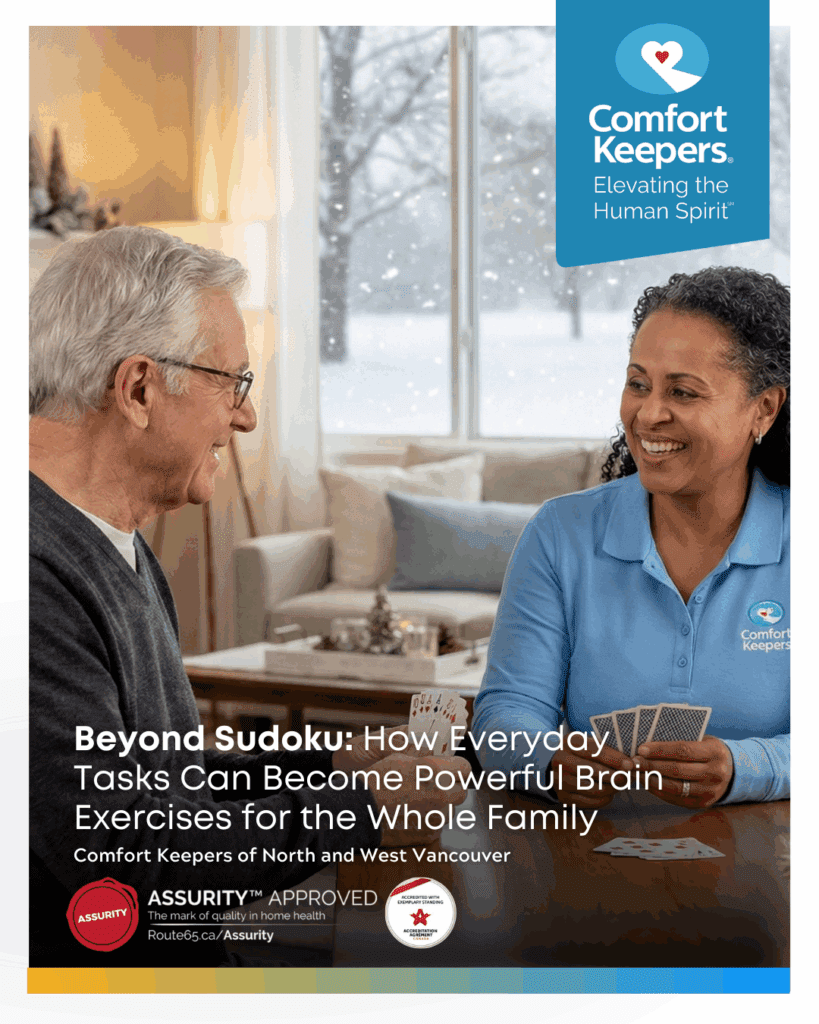
Beyond Sudoku: How Everyday Tasks Can Become Powerful Brain Exercises for the Whole Family

Have you ever walked into a room and completely forgotten why you went in there? Or found yourself struggling to recall a familiar name that’s right on the tip of your tongue? These moments are universal, but they often leave us wondering, “Is there something I can do to keep my mind sharp?”
The answer is a resounding yes, and the solution might be closer – and simpler – than you think. It isn’t hidden in a complex app or a book of puzzles. It’s waiting in your kitchen, your laundry basket, and even your music collection.
Welcome to the world of turning everyday tasks into powerful cognitive exercises. This is about transforming the mundane into the meaningful, using simple, no-cost activities to build a more resilient and agile brain for every member of your family.
What Are Cognitive Exercises, Really? (Hint: It’s Not Just About Puzzles)
When we hear “brain training,” our minds often jump to crosswords or Sudoku. While those are great, true cognitive exercise is much broader. It’s any activity that challenges your brain to work in a new or complex way.
Think of it like this: your brain has an incredible ability called brain plasticity. As Harvard Health explains, this means your brain can form new connections and pathways throughout your life. The key is to give it novel and challenging things to do. When you do something on autopilot, your brain isn’t getting a workout. But when you introduce a small twist or focus intentionally on the steps, you’re lighting up new neural pathways.
This process helps build what experts call a “cognitive reserve” – a kind of mental backup generator that helps your brain stay resilient in the face of aging or health challenges.
At its core, brain health relies on several key functions:
- Memory: Recalling information, from grocery lists to cherished life events.
- Attention: Focusing on a task without getting distracted.
- Executive Function: The “CEO” of your brain, responsible for planning, problem-solving, and organizing.
- Cognitive Flexibility: The ability to switch between different tasks or ways of thinking.
The beautiful thing is, you don’t need special equipment to exercise these functions. You just need a new way of looking at your daily routine.
Your Home is a Cognitive Gym: The Everyday Toolkit
Your home is filled with opportunities for a mental workout. By applying a little intention, you can transform simple chores into engaging exercises that benefit everyone, from young children learning to categorize to seniors looking to maintain their independence.
The Kitchen: A Feast for the Brain
Cooking is one of the most powerful multi-sensory cognitive activities available. It involves sequencing, measurement, problem-solving, and engaging all your senses.
- Cognitive Skills Activated: Executive Function (planning the meal), Memory (recalling recipe steps), Attention (watching the stove), Math Skills (measuring ingredients).
- Activity 1: The Recipe Challenge. Choose a familiar recipe. Instead of reading it, try to cook it from memory. Ask a family member to be your “sous chef” who can prompt you if you get stuck. This actively engages memory recall and sequencing.
- Activity 2: Sensory Spice Rack. Gather 4-5 common spices (like cinnamon, oregano, or cumin). With eyes closed, have a family member try to identify each one by smell alone. This strengthens the connection between scent and memory.
- Level Up: Try doubling a recipe or cutting it in half, forcing your brain to do some quick mental math.
- Adapt It: For seniors with cognitive impairment, focus on simple tasks like sorting silverware into the drawer (categorization) or washing vegetables (sensory engagement).
The Laundry Room: Sorting for Success
The repetitive nature of laundry makes it a perfect candidate for a mindful cognitive twist. It’s all about creating order from chaos.
- Cognitive Skills Activated: Categorization (sorting by colour, fabric, or owner), Pattern Recognition (matching socks), Sequencing (following the steps of folding a shirt).
- Activity: The Sock Matching Race. Don’t just find the pairs – turn it into a game. Time each other to see who can match the most pairs of socks in 60 seconds. This adds an element of processing speed to a simple pattern recognition task.
- Level Up: While folding, try to recall who each item of clothing belongs to without looking at the size. Or, create a new, more efficient folding system and teach it to the family. This engages problem-solving and spatial reasoning.
- Adapt It: A great task for all ages. Younger members can focus on sorting colors, while older adults can engage in the familiar, calming rhythm of folding.
Music & Memories: The Soundtrack to a Sharper Mind
Music is a direct line to our memories and emotions. The Alzheimer Society of Canada highlights music as a powerful tool for brain health because it engages multiple brain regions simultaneously.
- Cognitive Skills Activated: Long-Term Memory (recalling old songs), Attention (listening for specific lyrics or instruments), Emotional Processing.
- Activity 1: Name That Tune. Create a playlist of songs from different decades of your family’s life. Play the first 5-10 seconds of a song and see who can name the title and artist first. Share a memory associated with the song to strengthen the emotional connection.
- Activity 2: Finish the Lyric. Play the first line of a well-known song and pause it. Go around the room and have everyone try to sing the next line. This is a fun and low-pressure way to exercise memory recall.
From Chore to Challenge: Making It Meaningful
The secret to turning these tasks into effective exercises isn’t just what you do, but how you do it. Simply going through the motions won’t cut it.
It’s Not What You Do, It’s How You Do It
This is the difference between mindless routine and mindful engagement. When you’re washing dishes, are you thinking about your to-do list, or are you focusing on the temperature of the water and the sequence of scrub, rinse, and dry?
Aha Moment: Don’t just do the chore, think through the chore. By consciously focusing on the steps, the sensations, and the goal, you transform a physical task into a mental one.
How Often is Enough? Creating a Routine
Meaningful engagement is about consistency, not intensity. Aim for about 15-20 minutes of intentional cognitive activity each day. It doesn’t have to be one single block of time. It could be 10 minutes of mindful cooking and 5 minutes of a music game before bed. The goal is to make it a natural part of your family’s rhythm.
Noticing the small wins from this routine is a key part of maintaining a positive outlook, which is a crucial component of overall senior mental health.
Common Questions About At-Home Cognitive Exercises
As you start integrating these ideas, some questions are bound to come up. Here are answers to a few common ones.
How do I turn any chore into a cognitive exercise?
The easiest way is to change one variable. Try doing a simple task, like brushing your teeth, with your non-dominant hand. This disrupts the autopilot mode and forces your brain to create a new pathway. Or, simply talk through the steps of a task out loud as you do them.
What if a family member is reluctant to participate?
Never frame it as a test or a “brain game.” Instead, invite them to help with a task or share an experience. Say, “I’d love to hear your favorite song from when you were a teenager,” not “Let’s do a memory exercise.” The goal is connection and engagement, not performance.
Are these activities as good as brain training apps?
They can be even better. While apps often focus on a single cognitive skill, real-world tasks like planning a garden or organizing a bookshelf engage multiple skills at once – planning, memory, spatial reasoning, and problem-solving. This holistic approach is more directly applicable to maintaining the skills needed for daily independence. For those navigating more specific challenges, understanding the nuances of conditions is key. Our specialized dementia care can provide more targeted insights.
When to Seek Additional Support
These at-home activities are a powerful, proactive way for families to support cognitive health together. They build connection, purpose, and mental resilience.
However, there may be times when you notice that a loved one is consistently struggling with tasks that were once easy, or when memory lapses begin to affect their safety or well-being. This isn’t a sign of failure; it’s a signal that a more structured and supportive approach may be beneficial.
If you notice:
- Persistent difficulty with planning or completing familiar tasks.
- Increased confusion or disorientation.
- Significant withdrawal from social activities.
It may be time to explore how professional support can provide consistent, expert-led engagement. Learning about the benefits of in-home care services can help you understand what level of support is right for your family, ensuring your loved one continues to live with dignity and the highest possible quality of life.
Your journey to better brain health doesn’t require a subscription or a download. It starts with a simple, powerful shift in perspective – seeing the potential in the everyday and embracing the opportunity to engage, connect, and thrive, right at home.
The Best Senior Home Care in North and West Vancouver is Comfort Keepers®
Our senior home care agency offers in-home care focusing on aging in place. Our services include dementia care, end-of-life care, post-surgery care, and palliative care. Comfort Keepers can assist seniors with living transition services, personal care, companionship care, and more!
Quality and Accredited Elderly Care: Happier, Healthier, and at Home with 24/7 Senior Care Opportunities!
Do you need a home care solution for yourself or a loved one? Have you been thinking about retirement homes and their alternatives as a solution? Comfort Keepers® enables seniors to maintain happy, healthy lives in the comfort of their own homes. In-home care services are available in North Vancouver, West Vancouver, and the surrounding areas.
Comfort Keepers® is a Senior Care Agency That Can Make a Difference with Interactive Caregiving™
Our in-home caregivers ensure our senior clients have the best quality of life. The Interactive Caregiving™ program ensures that a senior’s safety, nutrition, mental well-being, and everyday needs are met. This program brings joy and good health to each client’s home.
Comfort Keepers® North Vancouver and West Vancouver Can Help with In-Home Elderly Care Services!
If you are concerned about the health and well-being of a loved one we can help! Comfort Keepers offers 24-hour care and delivers top-quality and compassionate care for seniors. We are dedicated to safety technology solutions that foster independence and enhance well-being.
Locally Owned and Operated Home Health Care Agency
Our care centers around companionship for seniors. Empathetic care originates from the soul and allows us to meet our client’s requirements. The seasoned in-home caregivers employed by Comfort Keepers are carefully chosen based on their empathetic qualities.
Contact the Comfort Keepers® North Vancouver and West Vancouver office at (604) 998-8806 to learn more about our unique in-home care solutions for seniors.
Comfort Keepers is an Accredited Senior Care Agency in North and West Vancouver, BC
Accreditation is a rigorous process that involves industry experts evaluating an organization’s processes, policies, and procedures. Comfort Keepers® North and West Vancouver has been awarded Exemplary Standing by Accreditation Canada. This achievement recognizes that Comfort Keepers® meets or exceeds the stringent quality standards for Home Care companies established by Accreditation Canada.
Recognizing the Signs: When is it Time for Professional Dementia Home Care?
Watching a loved one navigate the challenges of dementia is one of life’s most difficult journeys. You step in, driven by love and commitment, determined to provide the best care possible. But as the days turn into months, you might be feeling the immense weight of this responsibility. If you’re wondering whether you’re reaching a limit, or if there’s a better way to support both your loved one and yourself, you’re asking the right questions. This isn’t about giving up; it’s about finding the right support at the right time.
The reality is, you are far from alone in this experience. Research shows that a staggering 70% of caregivers for individuals with dementia find the task of coordinating care to be highly stressful. What starts as a manageable set of tasks can slowly evolve into a role that consumes all your time, energy, and emotional reserves. Recognizing the tipping point is a crucial step in ensuring the well-being of everyone involved.
An Honest Assessment: Are You Approaching the Tipping Point?
It can be difficult to see the full picture when you’re in the thick of it. Taking a moment for an honest self-assessment can provide the clarity you need. Consider these questions across three key areas to gauge where you currently stand.
Your Personal Well-being
- Are you consistently feeling overwhelmed, anxious, or irritable? Chronic stress is a hallmark of burnout.
- Have you withdrawn from hobbies, friendships, or activities you once enjoyed? Social isolation is a common side effect of intensive caregiving.
- Is your sleep frequently disrupted? Worrying about your loved one’s safety or attending to their nighttime needs can lead to severe exhaustion.
- Are you neglecting your own health? Have you missed doctor’s appointments, stopped exercising, or developed poor eating habits?
- Do you feel a sense of hopelessness or resentment? These are difficult but normal feelings when care demands become unsustainable. If you’re struggling, it’s important to understand the common signs of caregiver burnout.
Your Loved One’s Safety and Needs
- Have there been any recent accidents, falls, or close calls at home? As dementia progresses, mobility and judgment can decline, increasing safety risks.
- Is medication management becoming complicated or prone to error? Administering multiple medications on a strict schedule can be a significant challenge.
- Are they showing signs of increased agitation, aggression, or confusion that you struggle to manage? Specialized training is often needed to de-escalate these situations effectively.
- Is their personal hygiene declining? Resistance to bathing or grooming can be a sensitive issue that a professional can navigate with dignity.
- Are they wandering or at risk of leaving the home unattended? This is a critical safety concern that may require constant supervision.
The Complexity of Care
- Does your loved one require physical assistance with tasks like transferring from a bed to a chair? Providing physical support without proper training can lead to injury for both of you.
- Are you spending the majority of your day on care-related tasks, leaving little time for anything else? The increasing time commitment is a clear sign that needs are escalating.
- Do you feel unequipped to handle the advancing symptoms of their condition? Dementia care requires adapting to new challenges as the illness progresses through different stages.
- Is the stress of caregiving impacting your relationships with your partner, children, or colleagues? When caregiving consumes your life, other vital connections can suffer.
If you answered “yes” to several of these questions, it doesn’t mean you’ve failed. It means you’ve done an incredible job for as long as you could, and now it’s time to add an expert to your care team.
The Shift to Professional Care: What Real Support Looks Like
Deciding to bring in professional help can feel like a monumental step, often accompanied by feelings of guilt. But reframing this decision is key: you are not stepping back, you are stepping up to provide a higher, more sustainable level of care. Modern dementia care is centered on a personalized, home-based approach – allowing your loved one to remain in their familiar, comfortable surroundings while receiving expert support.
This is where a partner like Comfort Keepers makes a tangible difference. Our philosophy isn’t simply to “do for” your loved one; it’s built on a principle we call Interactive Caregiving. We focus on “doing with” our clients, engaging them in daily tasks and activities to the best of their ability. This approach helps preserve their independence, elevates their sense of purpose, and brings moments of joy back into their day.
A professional in-home caregiver provides much more than just a helping hand. They offer:
- Specialized Dementia Training: To manage complex behaviors with compassion and expertise.
- Respite for You: Giving you the essential time to rest, recharge, and focus on your own health.
- Safety and Supervision: Reducing the risk of falls, medication errors, and wandering.
- Companionship: Alleviating the loneliness and isolation that can affect both you and your loved one.
Choosing a provider with proven excellence, like our “Accredited with Exemplary Standing” seal from Accreditation Canada, ensures you’re partnering with a team that meets the highest standards of safety and quality care in the country.
Frequently Asked Questions About In-Home Dementia Care
It’s natural to have questions as you consider this transition. Here are answers to some of the most common concerns we hear from families on the North Shore.
Will bringing in a professional mean my loved one loses their independence?
Quite the opposite. The goal of high-quality in-home care is to enhance independence. Our Interactive Caregiving approach encourages participation in daily life, from preparing a simple meal together to folding laundry or going for a walk. This helps maintain cognitive function and physical skills for as long as possible, fostering a sense of dignity and self-worth.
I feel incredibly guilty about asking for help. Is that normal?
Yes, it is completely normal. This feeling often stems from a deep sense of love and personal responsibility. But it’s vital to remember that caregiver burnout is a real and serious condition. Bringing in professional support is a proactive choice for a sustainable care solution. It allows you to shift your role from an exhausted, full-time caregiver back to being a loving son, daughter, or spouse.
What makes Comfort Keepers North & West Vancouver different from other agencies?
As a locally owned and operated franchise on the North Shore, we are deeply invested in our community. Our care is distinguished by three key factors: our Interactive Caregiving philosophy, our status as a founding member of the North Shore Senior Services Circle, and our “Accredited with Exemplary Standing” certification. This combination of a personalized approach, community trust, and the highest national quality standards sets us apart.
How do we get started? What is the process?
It begins with a conversation. We offer a free, no-obligation in-home assessment where we meet with you and your loved one to understand your unique situation. We listen to your challenges, learn about your loved one’s personality and preferences, and assess the home environment. From there, we develop a customized care plan tailored specifically to your needs, which can be adapted as your loved one’s journey evolves.
Your Next Step: Gaining Clarity and Confidence
Recognizing that you need more support is a sign of strength and profound love. You’ve navigated this challenging path with dedication, and now you have the opportunity to build a support system that benefits both you and the person you cherish. You don’t have to make this decision alone.
Let us help you explore the options and create a plan that brings peace of mind back to your family. Contact Comfort Keepers of North and West Vancouver today for a complimentary care consultation. Let’s find a solution together.
The Best Senior Home Care in North and West Vancouver is Comfort Keepers®
Our senior home care agency offers in-home care focusing on aging in place. Our services include dementia care, end-of-life care, post-surgery care, and palliative care. Comfort Keepers can assist seniors with living transition services, personal care, companionship care, and more!
Quality and Accredited Elderly Care: Happier, Healthier, and at Home with 24/7 Senior Care Opportunities!
Do you need a home care solution for yourself or a loved one? Have you been thinking about retirement homes and their alternatives as a solution? Comfort Keepers® enables seniors to maintain happy, healthy lives in the comfort of their own homes. In-home care services are available in North Vancouver, West Vancouver, and the surrounding areas.
Comfort Keepers® is a Senior Care Agency That Can Make a Difference with Interactive Caregiving™
Our in-home caregivers ensure our senior clients have the best quality of life. The Interactive Caregiving™ program ensures that a senior’s safety, nutrition, mental well-being, and everyday needs are met. This program brings joy and good health to each client’s home.
Comfort Keepers® North Vancouver and West Vancouver Can Help with In-Home Elderly Care Services!
If you are concerned about the health and well-being of a loved one we can help! Comfort Keepers offers 24-hour care and delivers top-quality and compassionate care for seniors. We are dedicated to safety technology solutions that foster independence and enhance well-being.
Locally Owned and Operated Home Health Care Agency
Our care centers around companionship for seniors. Empathetic care originates from the soul and allows us to meet our client’s requirements. The seasoned in-home caregivers employed by Comfort Keepers are carefully chosen based on their empathetic qualities.
Contact the Comfort Keepers® North Vancouver and West Vancouver office at (604) 998-8806 to learn more about our unique in-home care solutions for seniors.
Comfort Keepers is an Accredited Senior Care Agency in North and West Vancouver, BC
Accreditation is a rigorous process that involves industry experts evaluating an organization’s processes, policies, and procedures. Comfort Keepers® North and West Vancouver has been awarded Exemplary Standing by Accreditation Canada. This achievement recognizes that Comfort Keepers® meets or exceeds the stringent quality standards for Home Care companies established by Accreditation Canada.
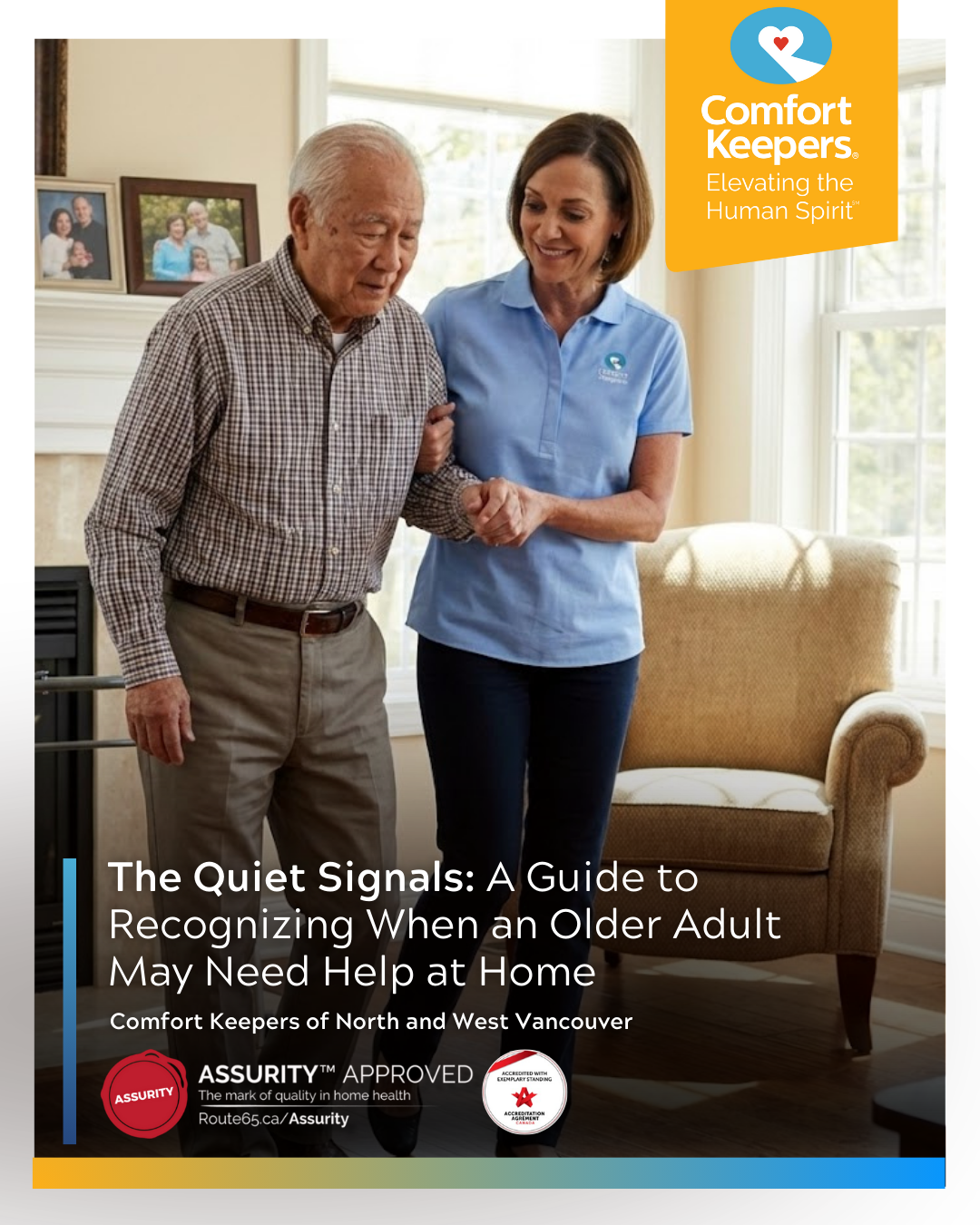
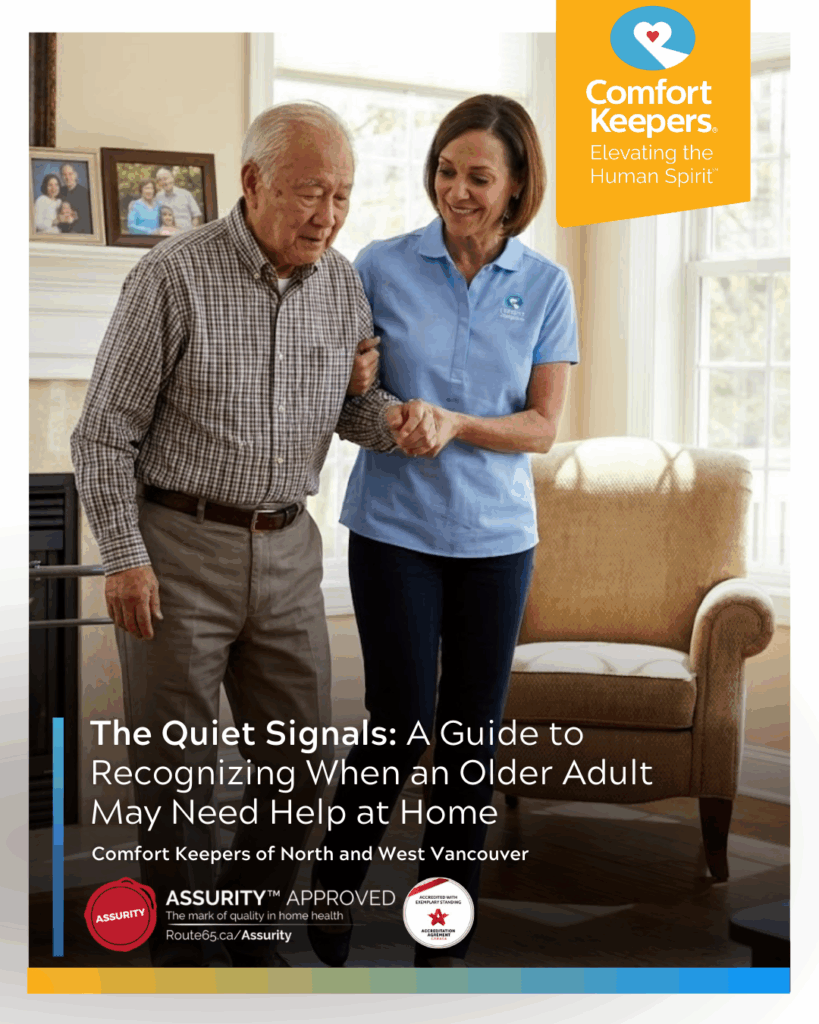
The Quiet Signals: A Guide to Recognizing When an Older Adult May Need Help at Home
It often starts with a feeling. A sense of unease after a phone call with your mom, or a moment of worry when you notice your dad seems a bit unsteady on his feet during a visit. These moments are subtle, easy to dismiss as just a “bad day.” But sometimes, they’re the quiet, early signals that a loved one’s needs are changing.
Recognizing this shift isn’t about looking for a crisis. It’s about noticing the small patterns that suggest a little extra support could make a world of difference, preserving their independence and quality of life for years to come. This guide is designed to help you understand those signals, distinguish them from normal aging, and feel more confident in knowing when and how to help.
The Crucial Difference: Normal Aging vs. Warning Signs
One of the biggest challenges for families is telling the difference between the natural, expected changes of aging and the red flags that indicate a need for support. It can feel like a grey area, but there are clear distinctions. Understanding this difference is the first step toward providing the right kind of help.
| A Normal Part of Aging | A Potential Warning Sign |
| Forgetting a name or an appointment occasionally. | Frequent memory loss that disrupts daily life, like forgetting how to use the stove or getting lost. |
| Making a miscalculation in the chequebook once in a while. | Difficulty managing finances, unpaid bills piling up, or unusual purchases. |
| Needing glasses to read or having trouble hearing in a crowd. | Neglecting personal grooming, wearing dirty clothes, or a noticeable decline in hygiene. |
| Feeling tired and wanting to rest more often. | Significant withdrawal from hobbies, friends, and social activities they once enjoyed. |
| Taking longer to do certain physical tasks. | Noticeable trouble with walking, balance, or mobility; frequent falls or unexplained bruises. |
Seeing a change on the right side of this chart doesn’t mean the sky is falling. It simply means it’s time to pay closer attention.
A Closer Look: The Three Key Areas to Observe
When you’re trying to understand if a loved one needs more support, it helps to look at their life holistically. Changes rarely happen in isolation. A decline in one area often creates a ripple effect, impacting others. We can group these signs into three main categories.
1. Changes in Daily Living and Personal Care
These are often the most tangible signs and relate to Activities of Daily Living (ADLs) and Instrumental Activities of Daily Living (IADLs).
- Changes in Nutrition: Is there spoiled food in the fridge that never gets thrown out? Is the pantry or fridge consistently empty? You might notice significant weight loss or gain, or a reliance on easy-to-make, low-nutrition foods. This can be caused by anything from decreased mobility, making grocery shopping difficult, to depression, reducing their appetite.
- Lapses in Personal Hygiene: One of the most common signs is a decline in personal grooming. This might look like infrequent bathing, unkempt hair, body odour, or wearing the same clothes for several days. This isn’t about laziness; it can signal memory issues, depression, or physical challenges that make bathing feel like a monumental and unsafe task.
- A Messy or Unkempt Home: Look for changes in their environment. Are piles of mail and newspapers accumulating? Is the home unusually cluttered or dirty? This can indicate that the physical work of housekeeping has become too overwhelming. Piles of unopened bills can also be a red flag for cognitive difficulties or trouble managing finances.
- Medication Mishaps: Check the medicine cabinet. Are prescriptions expired? Are pill bottles still full near the end of the month? Finding missed doses -or worse, discovering they’ve taken too much – is a serious safety concern that signals a clear need for oversight.
2. Shifts in Mood, Mind, and Social Habits
Cognitive and emotional changes can be subtle, but they are powerful indicators of a person’s overall well-being.
- Increased Forgetfulness and Confusion: This goes beyond misplacing keys. We’re talking about forgetting important appointments, getting lost in familiar places, asking the same questions repeatedly, or struggling to follow a conversation. Leaving the stove on or the front door unlocked are significant safety risks tied to memory lapses.
- Changes in Mood and Personality: Have you noticed your normally cheerful parent becoming withdrawn, irritable, or unusually anxious? Sudden mood swings, a loss of interest in life (apathy), or paranoia can be signs of underlying issues like depression, isolation, or the early stages of dementia.
- Social Withdrawal: A key component of healthy aging is staying connected. Pay attention if your loved one suddenly stops participating in hobbies they once loved, declines invitations from friends, or stops attending religious services or community events. Social isolation is a major health risk for seniors and can accelerate both physical and mental decline.
3. Unseen Risks in the Home Environment
Sometimes the biggest clues are found not in what a person does, but in what their environment says about their safety.
- Unexplained Bumps and Bruises: If you notice bruises on their arms or legs and they can’t explain how they got them, it could be a sign of unreported falls or struggles with mobility. They may be “furniture walking” – holding onto walls and furniture to get around – which is a major indicator of instability and fall risk.
- Driving Difficulties: Look for new dents or scratches on their car. Have they mentioned getting a traffic ticket, having a near-miss, or feeling less confident behind the wheel? Driving requires complex cognitive and physical skills, and a decline in ability is a serious safety concern for them and others.
- Home Hazards: A safe home environment can quickly become hazardous. Look for clutter that creates tripping hazards, poor lighting in hallways or on stairs, and burnt-out lightbulbs that haven’t been changed. These small things can dramatically increase the risk of a fall.
It’s Not Just About Them – It’s About You, Too
If you’re reading this, chances are you’re the person who worries, who calls to check in, who helps with groceries or appointments. Being a family caregiver is a role born of love, but it can also be incredibly stressful.
Feeling frustrated, overwhelmed, or even guilty is normal. You may find yourself struggling to balance your parents’ needs with your own job, family, and well-being. Recognizing these early signs isn’t just about getting help for your loved one; it’s also about getting support for yourself. Proactively addressing small needs now can prevent them from becoming a crisis that leads to caregiver burnout later.
How to Start the Conversation (Without Starting a Fight)
Broaching the subject of needing help can feel like walking on eggshells. The key is to approach it with empathy, respect, and a focus on their goals, not their limitations.
- Start with “I” Statements: Instead of saying, “You’re not eating right,” try, “I was worried when I saw the fridge was empty because I want to make sure you’re feeling your best.”
- Focus on a Shared Goal: Frame the conversation around what they want. For example, “Dad, I know how much you love living in this house. I was thinking about ways we can make sure you can stay here safely and comfortably for as long as possible.”
- Offer Choices, Not Demands: Giving your loved one a sense of control is crucial. Rather than saying, “You need a caregiver,” ask, “Would it be helpful if someone came by a couple of times a week to help with laundry and meals so you have more energy for your gardening?”
- Introduce Help Incrementally: Often, the idea of “care” sounds overwhelming. Start small. Suggesting help with housekeeping or transportation is often less threatening than personal care. Exploring the different types of in-home care services can show that support is flexible and tailored to specific needs, not a complete takeover of their life.
Frequently Asked Questions
What are the very first subtle indicators I might miss?
Look for the small things that break a long-standing pattern. Is your meticulously organized dad’s desk now covered in unopened mail? Is your mom, who always loved to cook, now relying on frozen dinners? Other subtle signs include scorch marks on pots and pans (from forgetting food on the stove) or a decline in personal correspondence (no longer sending birthday cards or emails).
My parent is very stubborn and refuses to accept help. What can I do?
This is incredibly common. The key is patience and framing. Often, resistance comes from a fear of losing independence. Involve them in the decision-making process as much as possible. Sometimes, bringing in a neutral third party, like a trusted doctor or a professional care manager, can help depersonalize the conversation and present options from an expert perspective.
Does needing a little help mean they have to move out of their home?
Absolutely not. In fact, the entire goal of recognizing these signs early is to do the opposite. By introducing support proactively, you can address safety and wellness concerns before they become so severe that living at home is no longer an option. The aim is to help seniors age in place with dignity and independence.
Your Next Step: From Observation to Understanding
Noticing these quiet signals is the first, most important step. It’s an act of love and a commitment to your loved one’s well-being. You’ve moved from a place of vague worry to one of informed observation.
The next step isn’t to jump to conclusions, but to continue the journey of understanding. Start a private journal to track the signs you see. Talk to other family members to see if they’ve noticed similar changes. Most importantly, continue to approach the situation with the compassion and respect your loved one deserves. You’re now equipped to be their best advocate, ensuring they get the support they need to live safely, happily, and independently at home.
The Best Senior Home Care in North and West Vancouver is Comfort Keepers®
Our senior home care agency offers in-home care focusing on aging in place. Our services include dementia care, end-of-life care, post-surgery care, and palliative care. Comfort Keepers can assist seniors with living transition services, personal care, companionship care, and more!
Quality and Accredited Elderly Care: Happier, Healthier, and at Home with 24/7 Senior Care Opportunities!
Do you need a home care solution for yourself or a loved one? Have you been thinking about retirement homes and their alternatives as a solution? Comfort Keepers® enables seniors to maintain happy, healthy lives in the comfort of their own homes. In-home care services are available in North Vancouver, West Vancouver, and the surrounding areas.
Comfort Keepers® is a Senior Care Agency That Can Make a Difference with Interactive Caregiving™
Our in-home caregivers ensure our senior clients have the best quality of life. The Interactive Caregiving™ program ensures that a senior’s safety, nutrition, mental well-being, and everyday needs are met. This program brings joy and good health to each client’s home.
Comfort Keepers® North Vancouver and West Vancouver Can Help with In-Home Elderly Care Services!
If you are concerned about the health and well-being of a loved one we can help! Comfort Keepers offers 24-hour care and delivers top-quality and compassionate care for seniors. We are dedicated to safety technology solutions that foster independence and enhance well-being.
Locally Owned and Operated Home Health Care Agency
Our care centers around companionship for seniors. Empathetic care originates from the soul and allows us to meet our client’s requirements. The seasoned in-home caregivers employed by Comfort Keepers are carefully chosen based on their empathetic qualities.
Contact the Comfort Keepers® North Vancouver and West Vancouver office at (604) 998-8806 to learn more about our unique in-home care solutions for seniors.
Comfort Keepers is an Accredited Senior Care Agency in North and West Vancouver, BC
Accreditation is a rigorous process that involves industry experts evaluating an organization’s processes, policies, and procedures. Comfort Keepers® North and West Vancouver has been awarded Exemplary Standing by Accreditation Canada. This achievement recognizes that Comfort Keepers® meets or exceeds the stringent quality standards for Home Care companies established by Accreditation Canada.
Senior Transition Services: Safe Hospital-to-Home Recovery in North & West Vancouver

Senior transition services are specialized care programs that provide comprehensive support when older adults move from hospitals or rehabilitation facilities back to their homes, including medication management, care coordination with Vancouver Coastal Health providers, and daily living assistance to prevent complications and readmissions. These services bridge the critical gap between hospital discharge and independent home living, a period when seniors in North and West Vancouver are most vulnerable to health setbacks.
According to the Canadian Institute for Health Information (CIHI), unplanned hospital readmissions affect nearly 200,000 Canadians annually, costing the healthcare system approximately $1.8 billion per year. British Columbia’s 30-day readmission rate of 9.7% in 2016 exceeded the national average of 9.1%, as reported by the British Columbia Medical Journal, highlighting the importance of effective transitional care for BC seniors. This comprehensive guide explains what transition services include for North and West Vancouver residents, why they matter for senior health outcomes, and how professional support transforms recovery success.
What Are Senior Transition Services in North & West Vancouver?
Senior transition services encompass a coordinated set of healthcare and personal support activities designed to facilitate safe movement from acute care settings to home environments in the North Shore communities. These services typically begin before hospital discharge and continue for 30 to 90 days afterward, providing both medical monitoring and practical assistance during the vulnerable recovery period.
Professional transition care in North and West Vancouver includes medication reconciliation to prevent dangerous drug interactions, wound care management, coordination with Vancouver Coastal Health home care services, nutritional planning, and communication between hospital providers and community healthcare teams. Care coordinators serve as the single point of contact, ensuring nothing falls through the cracks during this complex transition.
Comfort Keepers North & West Vancouver provides accredited transition services that adapt to each client’s specific medical needs, recovery timeline, and home environment. Our caregivers work directly with discharge planners at Lions Gate Hospital and other local facilities, coordinating with Vancouver Coastal Health (VCH) services to create individualized care plans that address both medical requirements and quality of life concerns.
Understanding Vancouver Coastal Health’s Role in Hospital Discharge
Vancouver Coastal Health provides publicly funded home and community care services for eligible BC residents following hospital discharge. To qualify for VCH services, individuals must be Canadian citizens or permanent residents with three months of BC residency, though exceptions exist for short-term care needs following hospitalization.
VCH offers the first two weeks of short-term home support services free of charge following hospital discharge, acknowledging the critical nature of this transition period. These services may include home health nursing, occupational therapy, physiotherapy, and basic home support assistance with activities of daily living.
However, VCH services alone may not provide the comprehensive, around-the-clock support that many seniors require during recovery. Vancouver Coastal Health operates within capacity constraints and eligibility requirements that can limit service hours and duration. This is where private transition services like those provided by Comfort Keepers become essential supplements to the public system.
Why Hospital-to-Home Transitions Are Critical for BC Seniors
The period immediately following hospital discharge represents the highest-risk timeframe in a senior’s recovery journey. According to the British Columbia Medical Journal, BC’s unplanned readmission rates remain higher than the national average, and readmissions cost approximately $3,000 more than original hospitalizations.
A Canadian Medical Association Journal (CMAJ) study examining Ontario data found that among 701,527 older adults discharged from hospitals, those with more complicated care setting transitions faced significantly higher readmission rates. The study emphasized that improving transitional care coordination is essential for reducing preventable readmissions among Canadian seniors.
Several factors contribute to post-discharge vulnerability. Hospital stays themselves can cause functional decline in older adults through enforced immobilization and reduced activity levels. Seniors often leave hospitals weaker than when they arrived, even after successful treatment of their primary condition. The combination of weakened muscles, new medications that may cause dizziness or confusion, and navigating home environments creates dangerous conditions without proper support.
The complexity of post-discharge instructions compounds these challenges. Many seniors receive multiple new prescriptions, dietary restrictions, activity limitations, and follow-up appointment requirements simultaneously. A Canadian study on medication adherence found that only 74% of patients filled all their discharge prescriptions after acute myocardial infarction, highlighting the gap between discharge instructions and actual medication adherence without transitional support.
Common Challenges North & West Vancouver Seniors Face After Hospital Discharge
Medication Management Complexity
Older adults in North and West Vancouver typically take multiple medications, and hospital stays often result in significant changes to medication regimens. Without proper reconciliation and management, medication errors during care transitions are extremely common, creating risks for adverse drug interactions, missed doses, or taking discontinued medications.
Seniors may struggle to understand new medication schedules, experience confusion about which previous medications to continue or stop, and fail to recognize adverse drug reactions. Some medications require specific timing relative to meals or other drugs, adding complexity that overwhelms patients already fatigued from illness and hospitalization.
Physical Weakness and Fall Risk
Hospital-acquired weakness is well-documented among older adults. Even short hospital stays result in significant muscle loss and reduced mobility. The combination of weakened muscles, medications that may cause dizziness, and navigating home environments not designed for reduced mobility creates dangerous fall risks.
Falls represent one of the leading causes of hospital readmission among Canadian seniors. The Canadian Medical Association reports that inadequate support during the transition period significantly increases fall risk, making professional assistance during this vulnerable time essential for preventing injuries that lead to readmission.
Navigating Vancouver Coastal Health Services
While Vancouver Coastal Health provides valuable home care services, navigating the system can be challenging for seniors and families already dealing with post-hospitalization stress. Understanding eligibility requirements, accessing the Home and Community Care Access Line, coordinating assessments, and waiting for services to begin creates additional burden during a time when immediate support is needed.
VCH home care services may also have limited hours or specific eligibility constraints that don’t fully address all recovery needs. Seniors requiring more comprehensive support than VCH can provide, or those needing immediate assistance while waiting for public services to begin, benefit significantly from private transition care services.
Geographic Challenges in North & West Vancouver
The mountainous terrain and spread-out nature of North and West Vancouver communities can create unique challenges for seniors returning home from hospital. Homes with multiple levels, steep driveways, and locations requiring vehicle access can be particularly challenging for seniors with reduced mobility following hospitalization.
Winter weather conditions on the North Shore add additional concerns for seniors with compromised balance or strength. Professional caregivers familiar with local conditions can help ensure safe navigation of home environments and coordinate transportation to follow-up medical appointments at Lions Gate Hospital or other healthcare facilities.
Components of Comprehensive Senior Transition Services
Pre-Discharge Planning and Coordination
Effective transition care begins before the senior leaves the hospital. Professional care coordinators meet with discharge planners at local hospitals, review medical records, and participate in care planning meetings to understand the full scope of recovery needs. This advance preparation ensures North and West Vancouver homes are ready with necessary equipment, medications are ordered from local pharmacies, and care schedules are established.
Home safety assessments identify potential hazards before the senior returns. Coordinators evaluate homes for fall risks like loose rugs, poor lighting, steep stairs common in North Shore homes, and inadequate bathroom safety features. Recommended modifications – such as installing grab bars, improving lighting, or rearranging furniture – are completed before discharge.
Care teams develop detailed transition care plans documenting all medical requirements, medication schedules, activity restrictions, dietary needs, and follow-up appointment dates at local medical facilities. These plans serve as roadmaps for family caregivers and professional care providers, ensuring consistent care delivery.
Medication Reconciliation and Management
Medication reconciliation is the systematic process of comparing a senior’s medication list from different care settings to ensure accuracy and appropriateness. Canadian research emphasizes the importance of this process, as medication discrepancies are a leading cause of post-discharge complications.
Transition care teams verify that all discharge medications are obtained from North or West Vancouver pharmacies, properly labeled, and organized for easy administration. Professional caregivers provide medication reminders at scheduled times, observe for side effects or adverse reactions, and maintain detailed logs of medication administration.
Education about each medication’s purpose, proper administration technique, and potential side effects empowers seniors and family caregivers. This knowledge increases medication adherence – a significant concern given Canadian research showing that one-quarter of patients don’t fill all discharge prescriptions – and enables early recognition of problems requiring medical attention.
Care Coordination with Vancouver Coastal Health and Local Providers
Seniors in North and West Vancouver often receive care from multiple providers – Vancouver Coastal Health home care services, family physicians at local clinics, specialists, and community support services. Without coordination, this fragmented care leads to conflicting instructions, duplicated services, or critical gaps in care delivery.
Professional care coordinators serve as the central communication hub, ensuring all providers have current information about the senior’s status, recent hospitalizations, medication changes, and ongoing care needs. They schedule and coordinate follow-up appointments at Lions Gate Hospital or local medical clinics, arrange appropriate transportation, and ensure test results are shared appropriately across providers.
Coordination with Vancouver Coastal Health’s Home and Community Care Access Line ensures seamless integration of public and private services. When seniors qualify for VCH home health nursing or therapy services, transition care coordinators work alongside these providers to deliver comprehensive, non-duplicative support.
Personal Care and Activities of Daily Living Support
Many seniors require assistance with basic activities of daily living (ADLs) during recovery periods. Professional caregivers provide support with bathing, dressing, grooming, toileting, and mobility assistance, ensuring these tasks are completed safely without risking falls or injuries in North Shore homes.
Meal preparation tailored to dietary restrictions and nutritional needs supports healing and strength recovery. Caregivers ensure adequate hydration, assist with eating when necessary, and monitor for signs of poor nutrition that could compromise recovery. Local meal delivery services can be coordinated when appropriate.
Light housekeeping, laundry, and pharmacy pickup services from local North and West Vancouver businesses reduce the burden on recovering seniors, allowing them to focus energy on healing rather than household management tasks they’re not yet capable of handling safely.
Monitoring and Early Intervention
Daily or regular monitoring enables early detection of potential complications before they become serious enough to require emergency department visits or readmission to Lions Gate Hospital. Professional caregivers assess vital signs when appropriate, monitor wound healing, observe for infection signs, and evaluate changes in mental status or mobility.
Communication protocols ensure physicians receive timely updates about concerning changes. This proactive approach enables interventions like antibiotic prescriptions for early infections or physical therapy adjustments for mobility concerns before they escalate into emergency situations requiring hospital transport.
Canadian research on care transitions emphasizes that early follow-up contact and ongoing monitoring significantly reduce readmission rates, making professional transition services a cost-effective investment compared to the expenses associated with preventable rehospitalization.
Benefits of Professional Senior Transition Services for BC Families
Reduced Hospital Readmission Rates
CIHI reports that interventions during and after hospitalization can be effective in reducing readmission rates across Canada. The British Columbia Medical Journal notes that multiple-component interventions combining discharge planning, care coordination, medication management, and follow-up support show the most promise for reducing unplanned readmissions.
The economic impact for BC families is substantial. With readmissions costing approximately $3,000 more than original hospitalizations and representing $1.8 billion in annual healthcare costs across Canada, effective transition services provide significant value. For seniors without supplemental private health insurance, avoiding readmission prevents both the health impacts of additional hospitalization and potential out-of-pocket expenses.
Bridging the Gap Between VCH Services and Full Recovery Needs
Vancouver Coastal Health’s two-week free home support period following discharge provides valuable assistance, but many seniors require longer-term support to fully recover. Private transition services complement VCH’s publicly funded programs, ensuring comprehensive coverage throughout the entire recovery period.
Comfort Keepers North & West Vancouver works seamlessly alongside Vancouver Coastal Health services when seniors qualify for public support. Our caregivers coordinate schedules with VCH home health nurses and therapists, ensuring seniors receive the full spectrum of care they need without service gaps or conflicts.
Enhanced Recovery and Functional Independence
Structured support during the recovery period enables North and West Vancouver seniors to regain strength and functional abilities more effectively than attempting recovery without assistance. Physical therapy exercises are completed consistently, nutritional needs are met, and adequate rest is maintained – all factors contributing to optimal healing.
Canadian research demonstrates that seniors receiving coordinated home-based transitional care maintain higher levels of functional independence compared to those without such support. This independence directly correlates with better quality of life, lower depression rates, and sustained ability to age in place in their own North or West Vancouver homes.
Peace of Mind for North Shore Families
Family caregivers in North and West Vancouver often feel unprepared and overwhelmed by the sudden responsibility of managing complex medical care for their loved ones. Many lack training in wound care, medication management, mobility assistance, and recognizing signs of complications.
Professional transition services provide crucial respite and support for family caregivers. Studies show that involving professional caregivers reduces caregiver stress and burnout while ensuring seniors receive appropriate care. Family members can focus on emotional support and quality time rather than technical medical tasks beyond their training.
Local Expertise and Community Knowledge
Comfort Keepers’ North and West Vancouver team brings specific knowledge of local healthcare resources, community services, and geographic considerations unique to the North Shore. Our caregivers understand the challenges of steep terrain, weather conditions, and access to local medical facilities, clinics, and pharmacies.
This local expertise enables more effective care coordination and problem-solving tailored to the specific needs of seniors living in these communities. Our established relationships with Lions Gate Hospital discharge planners, Vancouver Coastal Health coordinators, and local family physicians facilitate seamless transitions.
How Comfort Keepers Provides Expert Transition Services
Comfort Keepers North & West Vancouver has earned “Accredited with Exemplary Standing” certification from Accreditation Canada, the highest available certification for home care services in Canada. This recognition demonstrates our commitment to safe, high-quality transitional care that meets rigorous national standards.
Our transition services team includes experienced caregivers trained specifically in post-hospital recovery support. We work closely with discharge planners at Lions Gate Hospital and other local facilities, as well as Vancouver Coastal Health home care coordinators, to ensure seamless care continuity from the moment your loved one is ready to come home.
Every client receives a personalized care plan developed in collaboration with their healthcare team, family members, and the senior themselves. These plans address specific medical needs – including wound care, physical therapy support, and chronic disease management – while respecting individual preferences and maintaining dignity throughout the recovery process.
We provide 24-hour availability, seven days per week, ensuring support is accessible whenever needs arise throughout North and West Vancouver. This around-the-clock availability proves especially valuable during the first weeks after discharge when unexpected questions or concerns often surface outside regular business hours.
Our care coordinators maintain regular communication with physicians, Vancouver Coastal Health providers, family members, and other care providers involved in your loved one’s recovery. This proactive coordination catches potential problems early and ensures everyone remains informed about recovery progress and any emerging concerns.
When to Arrange Senior Transition Services in North & West Vancouver
Ideally, transition services should be arranged before hospital discharge. As soon as you learn that your loved one will be returning home from Lions Gate Hospital or another facility, contact Comfort Keepers to begin planning. Early planning enables home safety assessments specific to North Shore properties, equipment acquisition, and caregiver scheduling before the senior arrives home.
However, it’s never too late to implement transition services. If your loved one has already been discharged and is struggling with recovery at home, professional support can still make a significant difference in preventing complications and readmission.
Transition services particularly benefit North and West Vancouver seniors who live alone, have limited family support nearby, face complex medication regimens, require wound care or other medical monitoring, have experienced falls or significant functional decline, are managing multiple chronic conditions alongside acute illness recovery, or live in homes with challenging access or multiple levels.
Families should also consider transition services when waiting for Vancouver Coastal Health assessments and service implementation. Private care can begin immediately while families navigate the public system, ensuring no gaps in essential support during the critical early recovery period.
Frequently Asked Questions
How do transition services work with Vancouver Coastal Health programs?
Transition services provided by Comfort Keepers complement and coordinate with Vancouver Coastal Health’s publicly funded home care programs. When seniors qualify for VCH services – including the first two weeks of free short-term home support following discharge – our caregivers work alongside VCH nurses, therapists, and home support workers to ensure comprehensive, non-duplicative care. We communicate regularly with VCH care coordinators, share care plan information with permission, and adjust our services to fill any gaps not covered by public programs. This collaboration ensures seniors receive the full spectrum of support they need throughout recovery.
What is the cost of transition services, and is any covered by provincial health insurance?
Vancouver Coastal Health provides the first two weeks of short-term home support services free of charge following hospital discharge for eligible residents. Beyond this initial period, VCH home support services are income-tested with daily fees determined by household income, though many exemptions exist. Private transition services from Comfort Keepers North & West Vancouver are not covered by BC’s Medical Services Plan, but many extended health insurance plans provide coverage for private home care services. We work with families to understand their coverage and create care plans that balance available public services with private support to meet recovery needs within budget constraints.
How long do senior transition services typically last?
Senior transition services typically continue for 30 to 90 days after hospital discharge, depending on individual recovery needs and complexity of medical conditions. Some North and West Vancouver seniors require support for only a few weeks as they regain strength and independence, while others benefit from longer-term assistance, especially when managing multiple chronic conditions. Care plans are regularly reassessed and adjusted based on recovery progress, with services gradually reduced as seniors regain independence. The goal is always safe, sustainable independence rather than prolonged dependence on care services.
Can family members provide adequate care without professional transition services?
While many family members in North and West Vancouver provide loving, attentive care, Canadian research highlights significant challenges. The CMAJ study on care transitions noted that flaws in transitional care provided at home increase seniors’ risk of readmission. Family caregivers often lack training in complex medical tasks like wound care, medication reconciliation, and recognizing subtle signs of complications requiring intervention. Additionally, family caregivers may experience burnout, especially when trying to balance caregiving with work and other responsibilities. Professional services ensure seniors receive expert medical monitoring while preventing family caregiver exhaustion that can compromise care quality.
What happens during the first 48 hours after hospital discharge?
The first 48 hours represent the highest-risk period for complications and readmissions across Canada. Professional transition care coordinators make initial contact within this timeframe to assess the senior’s adjustment to home, verify medication understanding and pickup from local pharmacies, identify any immediate concerns, and ensure discharge instructions are being followed. Caregivers may visit daily during this critical period, providing hands-on assistance while carefully monitoring for warning signs of deterioration. Early contact enables rapid intervention if problems are detected, potentially preventing emergency department visits or readmission to Lions Gate Hospital.
How do you coordinate transportation to follow-up appointments?
Transportation coordination is an essential component of transition services in North and West Vancouver, where geographic spread and terrain can make travel challenging. Our care coordinators schedule follow-up appointments at convenient times and arrange appropriate transportation – whether family members, taxi services, or our own caregiver-accompanied transportation. We ensure seniors arrive prepared with relevant medical information, medication lists, and questions for healthcare providers. For appointments at Lions Gate Hospital or specialist clinics in Vancouver, we plan sufficient travel time accounting for North Shore traffic patterns and senior mobility needs.
What if my loved one needs services beyond the transition period?
While transition services focus on the critical 30-90 day recovery period, many North and West Vancouver seniors benefit from ongoing home care support to maintain independence and prevent future hospitalizations. Comfort Keepers provides comprehensive home care services beyond the transition period, including companion care, personal care assistance, dementia care, respite care for family caregivers, and 24-hour care when needed. We work with families to assess ongoing needs and create sustainable care plans that enable seniors to age safely in their own homes while maintaining the highest possible quality of life.
How do I arrange transition services if my loved one is currently in hospital?
Contact Comfort Keepers North & West Vancouver at (604) 998-8806 as soon as you know your loved one will be discharged. Our care coordinators can connect with hospital discharge planners at Lions Gate Hospital or other facilities to coordinate care planning before discharge. We’ll arrange a home safety assessment of your North or West Vancouver property, develop a personalized care plan, ensure necessary equipment is in place, and have caregivers ready to begin support the day your loved one arrives home. Early contact enables the smoothest transition, but we can also mobilize services quickly for families who contact us closer to discharge date.
Key Takeaways
- Senior transition services provide critical support during the vulnerable 30-90 day period after hospital discharge, when inadequate care increases readmission risk for BC seniors
- CIHI reports that unplanned hospital readmissions affect nearly 200,000 Canadians annually, costing approximately $1.8 billion per year, with BC’s rates exceeding the national average
- Vancouver Coastal Health provides the first two weeks of short-term home support services free following discharge, but many seniors require more comprehensive or longer-term support
- Professional transition care includes medication management, care coordination with VCH providers, personal care assistance, and early monitoring to detect complications before emergency intervention is needed
- North and West Vancouver’s geographic terrain, spread-out communities, and weather conditions create unique challenges requiring caregivers with local expertise
- Family caregivers often lack training in complex medical care tasks, and Canadian research shows flaws in home-based transitional care increase readmission risk
- Comfort Keepers North & West Vancouver holds “Accredited with Exemplary Standing” certification, the highest home care accreditation in Canada
- Transition services complement Vancouver Coastal Health’s publicly funded programs, filling gaps and providing comprehensive support throughout recovery
- The first 48 hours after discharge represent the highest-risk period, requiring immediate contact and professional monitoring
- Early intervention through professional monitoring prevents minor concerns from escalating into serious complications requiring readmission to Lions Gate Hospital
Secure Expert Transition Support for Your North Shore Loved One
Comfort Keepers North & West Vancouver provides accredited senior transition services that ensure safe, comfortable recovery from hospital to home throughout the North Shore communities. Our experienced caregivers and care coordinators work closely with Lions Gate Hospital discharge planners, Vancouver Coastal Health home care services, and your family physician to prevent complications and support optimal healing.
Don’t wait until problems arise – proactive transition planning makes all the difference in recovery outcomes. Contact us today at (604) 998-8806 to discuss your loved one’s upcoming hospital discharge and how we can support a successful transition home.
Serving North Vancouver, West Vancouver, and surrounding North Shore communities with 24-hour availability, seven days per week. Comfort Keepers is ready to help your family navigate this critical recovery period with confidence and peace of mind.
The Best Senior Home Care in North and West Vancouver is Comfort Keepers®
Our senior home care agency offers in-home care focusing on aging in place. Our services include dementia care, end-of-life care, post-surgery care, and palliative care. Comfort Keepers can assist seniors with living transition services, personal care, companionship care, and more!
Quality and Accredited Elderly Care: Happier, Healthier, and at Home with 24/7 Senior Care Opportunities!
Do you need a home care solution for yourself or a loved one? Have you been thinking about retirement homes and their alternatives as a solution? Comfort Keepers® enables seniors to maintain happy, healthy lives in the comfort of their own homes. In-home care services are available in North Vancouver, West Vancouver, and the surrounding areas.
Comfort Keepers® is a Senior Care Agency That Can Make a Difference with Interactive Caregiving™
Our in-home caregivers ensure our senior clients have the best quality of life. The Interactive Caregiving™ program ensures that a senior’s safety, nutrition, mental well-being, and everyday needs are met. This program brings joy and good health to each client’s home.
Comfort Keepers® North Vancouver and West Vancouver Can Help with In-Home Elderly Care Services!
If you are concerned about the health and well-being of a loved one we can help! Comfort Keepers offers 24-hour care and delivers top-quality and compassionate care for seniors. We are dedicated to safety technology solutions that foster independence and enhance well-being.
Locally Owned and Operated Home Health Care Agency
Our care centers around companionship for seniors. Empathetic care originates from the soul and allows us to meet our client’s requirements. The seasoned in-home caregivers employed by Comfort Keepers are carefully chosen based on their empathetic qualities.
Contact the Comfort Keepers® North Vancouver and West Vancouver office at (604) 998-8806 to learn more about our unique in-home care solutions for seniors.