


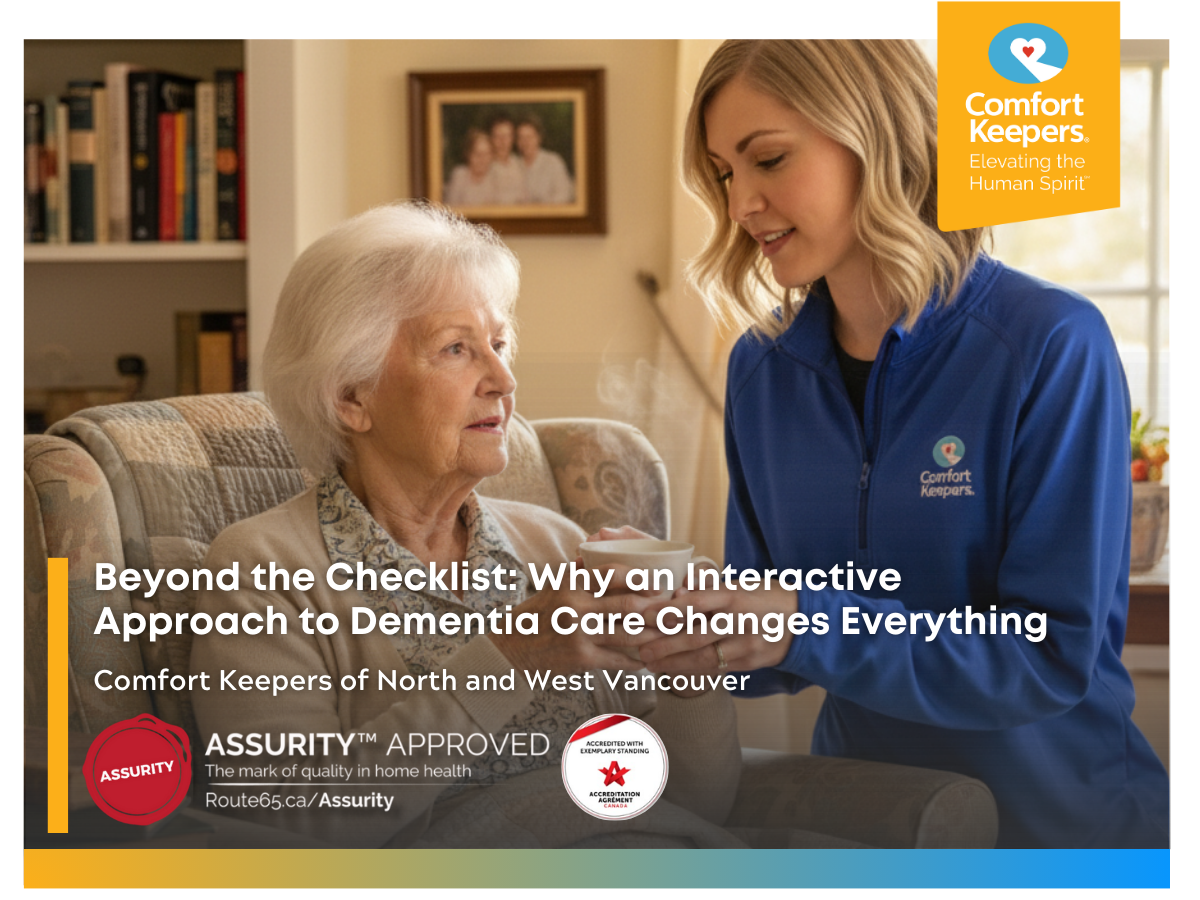
You’ve likely read a dozen articles listing activities for seniors with dementia. You’ve bookmarked ideas for puzzles, music, and memory games. Yet, a nagging feeling remains: is simply keeping a loved one busy the same as helping them live well?
This is the critical question that many families face when evaluating care options. The search for quality dementia care often gets bogged down in checklists of services, but the most significant factor in your loved one’s well-being isn’t the list of things a caregiver does – it’s the philosophy that guides how they do them.
The truth is, not all care models are created equal. While one approach can lead to passivity and withdrawal, another can unlock moments of joy, connection, and purpose. The difference lies in engagement, and the science is clear: meaningful interaction doesn’t just improve mood; it can fundamentally alter the course of cognitive decline. Research shows that frequent social engagement can delay the onset of dementia by an average of five years and is linked to a 38% reduction in dementia risk.
Understanding this distinction is the first step to making a truly confident decision for your family.
The Two Paths of Dementia Care: A Framework for Evaluation
When you look closely, most dementia care falls into one of two distinct models. Recognizing them is key to choosing a path that promotes dignity and quality of life.
The Passive Model: Activity-Based Care
This is the traditional, task-oriented approach. It’s driven by a schedule and focuses on completing a list of duties: mealtime, bath time, and activity time. The caregiver “does for” the client, often with the best intentions of efficiency and safety.
- Focus: Task completion and supervision.
- Dynamic: The senior is a passive recipient of care.
- Typical Scene: A caregiver prepares lunch and serves it while the senior watches television. The task is done, but an opportunity for connection is lost.
- Outcome: While physical needs are met, this model can inadvertently lead to feelings of loneliness, helplessness, and a faster decline in cognitive and physical abilities.
The Engaged Model: Person-Centered Care
This modern approach puts the individual first. It’s built on understanding the person’s history, preferences, and remaining abilities. The goal isn’t just to complete tasks, but to use them as opportunities for collaboration and connection. The caregiver “does with” the client.
- Focus: Emotional well-being and relationship building.
- Dynamic: The senior is an active participant in their own life.
- Typical Scene: The caregiver and senior prepare lunch together, perhaps washing vegetables or setting the table, sharing stories along the way.
- Outcome: This model is proven to reduce agitation and depression while improving overall quality of life. It fosters a sense of purpose and preserves independence for as long as possible.
The Gold Standard: Introducing Interactive Caregiving™
At Comfort Keepers North & West Vancouver, we’ve built our entire dementia care program on the engaged model, refining it into a proprietary philosophy we call Interactive Caregiving™. It’s a holistic approach that transforms everyday routines into opportunities to stimulate the mind, body, and spirit.
The core principle is simple but powerful: shared activity is a tool for connection. Whether it’s preparing a meal, folding laundry, or looking through a photo album, our caregivers are trained to turn these moments into meaningful interactions that enrich our clients’ lives. We focus on what they can do, not what they can no longer do.
The Four Pillars of Interactive Caregiving™ in Action
Our philosophy is grounded in four pillars that work together to support a person’s whole health.
1. Mental Stimulation and Cognitive Engagement
An active mind maintains sharper cognitive function. High engagement in cognitive activities is shown to have a strong protective effect, reducing dementia risk with a hazard ratio of 0.58. We go beyond generic puzzles and integrate mental stimulation directly into daily life.
- Instead of just listening to music: We encourage clients to share memories associated with favorite songs or sing along, sparking emotional and cognitive recall.
- Instead of just looking at photos: We use them as conversation starters to discuss family history, past careers, and cherished life events, reinforcing their sense of identity.
- Instead of just reading a book: We might read aloud together from a newspaper and discuss current events or stories, promoting engagement with the world.
2. Physical Activity and Mobility
Physical activity helps maintain strength, balance, and mood. Our approach integrates movement safely and naturally throughout the day.
- Doing with: We invite clients to join in light housekeeping tasks like folding towels or sweeping, which provides a sense of contribution and gentle exercise.
- Getting outdoors: A short walk in the garden or to the mailbox isn’t just exercise; it’s a chance to discuss the changing seasons, see neighbours, and enjoy fresh air.
- Following their lead: If a client enjoys gardening, we’ll help them tend to indoor plants. If they loved to dance, we’ll put on their favourite music.
3. Emotional Support and Dignity
Dementia can be a confusing and frustrating experience. Our caregivers are trained to provide consistent emotional support, build trust, and preserve our clients’ dignity at every turn.
- Effective Communication: We use proven techniques for someone living with dementia, such as maintaining eye contact, speaking clearly, and using non-verbal cues to offer reassurance.
- Validating Feelings: We acknowledge and validate emotions, rather than dismissing or correcting them, which helps reduce anxiety and agitation.
- Promoting Independence: We empower clients by offering choices whenever possible, from what to wear to what to eat, reinforcing their sense of control.
4. Shared Routines and Home Safety
Consistent routines create a predictable and secure environment, which is especially comforting for someone with dementia. We make clients active partners in these daily rhythms.
- Meal Preparation: Helping to plan a menu or wash vegetables provides purpose and stimulates the senses.
- Home Safety: We collaborate on tasks like tidying up pathways, turning it into a shared goal rather than a caregiver’s chore. This fosters a sense of ownership over their environment.
Your Evaluation Checklist: 7 Questions to Ask Any Care Provider
Choosing a care partner is a major decision. Use these questions to look beyond the sales pitch and understand the core philosophy of any provider you consider.
- Can you describe your specific care philosophy for clients with dementia? Is it documented?
- How do you train your caregivers to engage with clients, not just supervise them?
- How do you learn about my loved one’s personal history, hobbies, and preferences to build a care plan?
- Can you provide examples of how you turn daily tasks into interactive moments?
- How do you measure success and quality of life for your clients?
- How do you support a client’s emotional well-being and help manage challenging behaviors like agitation or confusion?
- Is the goal of your care to “do for” my loved one or “do with” them?
Frequently Asked Questions
My loved one is in the later stages of dementia. Can they still benefit from Interactive Caregiving™?
Absolutely. While the activities may be adapted, the philosophy remains the same. Engagement in later stages might focus more on sensory stimulation – the feel of a soft blanket, the sound of a familiar song, the scent of a favorite food, or the comfort of a hand to hold. The goal is always to connect and provide comfort and dignity, regardless of cognitive ability.
How are Comfort Keepers caregivers trained in this specific philosophy?
Every caregiver completes extensive training in our Interactive Caregiving™ methodology, which includes specialized modules on Alzheimer’s and dementia care. This training is ongoing and covers communication techniques, activity planning, and strategies for managing dementia-related behaviors with empathy and respect. It’s a core competency, not an add-on.
What does Interactive Caregiving™ look like on a typical day?
It looks like life, just with gentle support. It might start with the caregiver and client choosing an outfit for the day together. They might then collaborate on preparing breakfast, chatting while they work. Later, they could spend time looking through a photo album, going for a short walk, or listening to classic radio shows. The day is a fluid blend of meeting essential needs – like personal care and nutrition – and creating moments of connection and joy.
Choosing the right care is about finding a partner who sees the person, not just the diagnosis. It’s about ensuring your loved one feels safe, respected, and connected to the life they’ve lived. The philosophy of care is the foundation for everything else.
To learn more about how our accredited, award-winning approach can make a difference for your family, explore our website and see how we bring Interactive Caregiving™ to life for seniors in North & West Vancouver.
The Best Senior Home Care in North and West Vancouver is Comfort Keepers®
Our senior home care agency offers in-home care focusing on aging in place. Our services include dementia care, end-of-life care, post-surgery care, and palliative care. Comfort Keepers can assist seniors with living transition services, personal care, companionship care, and more!
Quality and Accredited Elderly Care: Happier, Healthier, and at Home with 24/7 Senior Care Opportunities!
Do you need a home care solution for yourself or a loved one? Have you been thinking about retirement homes and their alternatives as a solution? Comfort Keepers® enables seniors to maintain happy, healthy lives in the comfort of their own homes. In-home care services are available in North Vancouver, West Vancouver, and the surrounding areas.
Comfort Keepers® is a Senior Care Agency That Can Make a Difference with Interactive Caregiving™
Our in-home caregivers ensure our senior clients have the best quality of life. The Interactive Caregiving™ program ensures that a senior’s safety, nutrition, mental well-being, and everyday needs are met. This program brings joy and good health to each client’s home.
Comfort Keepers® North Vancouver and West Vancouver Can Help with In-Home Elderly Care Services!
If you are concerned about the health and well-being of a loved one we can help! Comfort Keepers offers 24-hour care and delivers top-quality and compassionate care for seniors. We are dedicated to safety technology solutions that foster independence and enhance well-being.
Locally Owned and Operated Home Health Care Agency
Our care centers around companionship for seniors. Empathetic care originates from the soul and allows us to meet our client’s requirements. The seasoned in-home caregivers employed by Comfort Keepers are carefully chosen based on their empathetic qualities.
Contact the Comfort Keepers® North Vancouver and West Vancouver office at (604) 998-8806 to learn more about our unique in-home care solutions for seniors.
Comfort Keepers is an Accredited Senior Care Agency in North and West Vancouver, BC
Accreditation is a rigorous process that involves industry experts evaluating an organization’s processes, policies, and procedures. Comfort Keepers® North and West Vancouver has been awarded Exemplary Standing by Accreditation Canada. This achievement recognizes that Comfort Keepers® meets or exceeds the stringent quality standards for Home Care companies established by Accreditation Canada.
Reducing the Risk of Falls for Seniors Living in North and West Vancouver
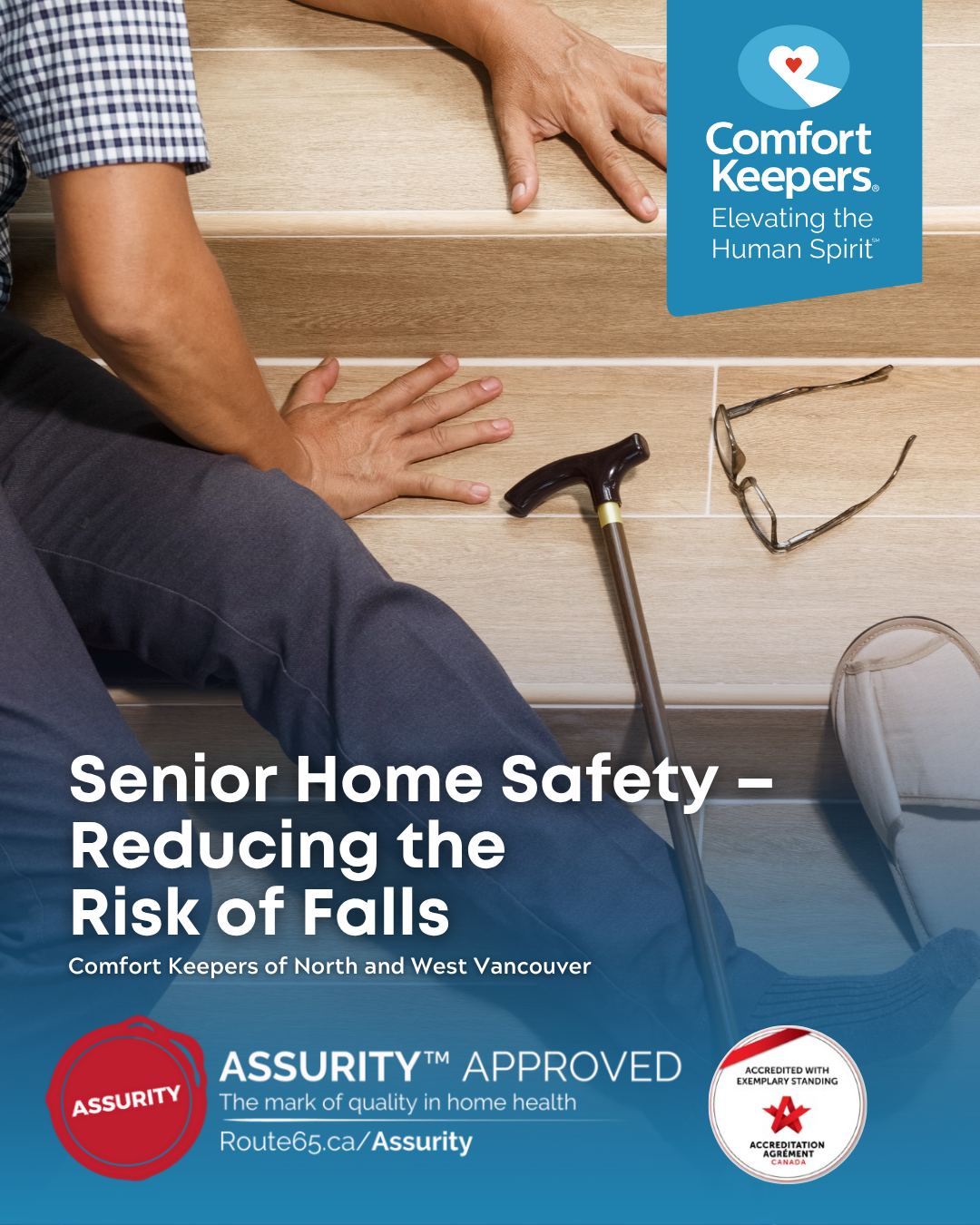
What Every Senior in North Vancouver and West Vancouver Needs to Know About Fall Risk Reduction
Senior Home Safety | One of the greatest threats to senior well-being and quality of life is falling. In fact, falls represent the leading cause of both fatal and non-fatal injuries of Canadian seniors. Here are a few key facts to highlight not only how pervasive falls are among this age group, but the toll they take:
- Falls account for more than half of all injuries among seniors.
- Every 13 seconds, an older adult is treated in the emergency room for a fall; every 20 minutes, an older adult dies from a fall.
- 87 percent of all fractures in the elderly are due to falls. Two-thirds of those who fall will do so again within six months
In addition to the physical and financial impact, the dread associated with falling can be enough to immobilize some older adults, making them afraid to do much of anything. And for those who already experience feelings of loneliness and isolation, fear of falling can often make matters worse. But fear should never get in the way of quality of life, even when it comes to falls in the home.
Although there are several factors involved in senior falls, one of the most significant is the hazardous nature of their living environment. Obstacles such as loose rugs, poor lighting, and the absence of handrails all pose a serious threat. Fortunately, these factors can be controlled. With a few alterations and additions, seniors can manage their living environment, thus reducing their risk of falling.
Senior Home Safety Tips for Caregivers and Families
- In the Bedroom
- Ensure that night lights are installed so that there is adequate illumination.
- Keep an easy-to-use light source, such as a touch lamp, within reach of the bed.
- In the Bathroom
- Install grab bars on the inside/outside of the shower, as well as next to the toilet.
- Place a non-slip mat in the shower and on all surfaces that may become wet.
- Install a shower chair or bath bench to reduce standing.
- In the Kitchen
- Keep frequently used cooking utensils or appliances visible and on the counter or on nearby shelves, to reduce having to get them out of the cupboards.
- Install non-slip rubber mats to allow for secure footing.
- In the Hallways
- Eliminate any form of clutter (boxes, newspapers, shoes, etc.) so that pathways are clear.
- Remove small throw rugs that may cause tripping.
- Ensure carpeting is firmly secured to the floor.
- Install nightlights to provide ample illumination.
- Other Considerations
- Move any electrical cords away from walking paths.
- Install a second handrail on staircases to allow for additional balance support.
Senior Home Safety and Other Ways to Reduce the Risk of Falling
In addition to safety precautions in the home, there are lifestyle changes that seniors can make to reduce their risk of falling. First and foremost, it’s important to stay physically active. While this may seem counterintuitive and likely to result in a fall, frequently engaging in a safe, structured regimen will increase strength, flexibility, coordination, and balance. Always check with your physician before embarking on an exercise program.
Seniors should also receive regular eye examinations. Since even the smallest change in eyesight can change visibility, they must have the correct prescription for eyeglasses or contact lenses. Finally, medications should be reviewed with a physician to evaluate side effects and their chances of contributing to falls.
Even the idea of falling is frightening to older adults and family caregivers alike. But as mentioned, this fear should not stop seniors from leading fulfilling, independent lives. Observing safety precautions in the home and making the necessary changes are important first steps in getting back on track, but there may come a time when seniors need additional support.
The Best Senior Home Care in North and West Vancouver is Comfort Keepers®
Our senior home care agency offers in-home care focusing on aging in place. Our services include dementia care, end-of-life care, post-surgery care, and palliative care. Comfort Keepers can assist seniors with living transition services, personal care, companionship care, and more!
Quality and Accredited Elderly Care: Happier, Healthier, and at Home with 24/7 Senior Care Opportunities!
Do you need a home care solution for yourself or a loved one? Have you been thinking about retirement homes and their alternatives as a solution? Comfort Keepers® enables seniors to maintain happy, healthy lives in the comfort of their own homes. In-home care services are available in North Vancouver, West Vancouver, and the surrounding areas.
Comfort Keepers® is a Senior Care Agency That Can Make a Difference with Interactive Caregiving™
Our in-home caregivers ensure our senior clients have the best quality of life. The Interactive Caregiving™ program ensures that a senior’s safety, nutrition, mental well-being, and everyday needs are met. This program brings joy and good health to each client’s home.
Comfort Keepers® North Vancouver and West Vancouver Can Help with In-Home Elderly Care Services!
If you are concerned about the health and well-being of a loved one we can help! Comfort Keepers offers 24-hour care and delivers top-quality and compassionate care for seniors. We are dedicated to safety technology solutions that foster independence and enhance well-being.
Locally Owned and Operated Home Health Care Agency
Our care centers around companionship for seniors. Empathetic care originates from the soul and allows us to meet our client’s requirements. The seasoned in-home caregivers employed by Comfort Keepers are carefully chosen based on their empathetic qualities.
Contact the Comfort Keepers® North Vancouver and West Vancouver office at (604) 998-8806 to learn more about our unique in-home care solutions for seniors.
Comfort Keepers is an Accredited Senior Care Agency in North and West Vancouver, BC
Accreditation is a rigorous process that involves industry experts evaluating an organization’s processes, policies, and procedures. Comfort Keepers® North and West Vancouver has been awarded Exemplary Standing by Accreditation Canada. This achievement recognizes that Comfort Keepers® meets or exceeds the stringent quality standards for Home Care companies established by Accreditation Canada.
References:
Veteran Affairs Canada. ”Fall Fact Sheet”. Web 2018.
National Institute on Aging. “Fall-Proofing Your Home.” Web. 2018.
National Council on Aging. “18 Steps to Fall Proofing Your Home” by Scott A. Trudeau. Web. 2016.
National Council on Aging. “Fall Prevention Statistics.” Web. 2018.
WebMD. “Aging Well: Making Your Home Fall-Proof” by Healthwise Staff (Reviewed by Anne C. Poinier, MD and Elizabeth A. Phelan, MD, MS. Web. 2015.
AgingCare. “How to Prevent a Senior from Falling” Web. 2018.
Choosing a Palliative Caregiver in North Vancouver: Key Questions to Ask
Finding the right palliative care for a loved one is one of the most significant decisions a family can make. It’s a choice made with both the head and the heart. You need clinical competence, but you also need genuine compassion. You’re not just arranging a service; you’re inviting someone into your home during a deeply personal time. This can feel overwhelming, especially when you’re navigating the complex emotions that come with a serious illness.
The challenge is that many resources offer generic checklists or clinical descriptions that don’t capture the most important factor: the human connection. You need a framework to help you find a caregiver who is not only qualified but also a good fit for your family – someone who can provide comfort, preserve dignity, and bring moments of joy.
This guide is designed to empower you. We’ll walk through the key questions to ask any potential provider in North or West Vancouver, helping you move forward with clarity and confidence.
Understanding Palliative Care in North Vancouver
Before diving into the questions, it’s helpful to clarify what palliative care is and how it functions here on the North Shore. Unlike hospice, which is specifically for end-of-life, palliative care can begin at any stage of a serious illness. Its goal is to improve the quality of life for both the patient and the family by providing relief from the symptoms and stress of the illness. It can and often does occur alongside curative treatments.
While organizations like Vancouver Coastal Health (VCH) provide essential medical oversight, private in-home care providers like Comfort Keepers offer a crucial, personalized layer of support. We work alongside your family doctor and VCH team to ensure seamless, holistic care. This is especially vital in British Columbia, where a family might need support before they become eligible for the provincial Palliative Care Benefits Program, which often requires a prognosis of six months or less. Private care fills that gap, ensuring you get the help you need, when you need it.
The “Right Fit” Framework: 10 Questions for Your Palliative Care Provider
Use these questions as a guide during your consultations. The answers will reveal a provider’s clinical expertise, their operational reliability, and – most importantly – their philosophy on compassionate care.
Part 1: The Clinical & Professional Foundation
This is about verifying the essential qualifications and experience. A provider must have a strong clinical foundation to manage complex health needs effectively.
1. What specific training do your caregivers have in palliative care and managing symptoms for complex conditions?
Look for answers that go beyond basic certification. An experienced provider will discuss ongoing education in pain management, symptom control, and condition-specific support. They should be able to explain how they prepare caregivers for the unique physical and emotional demands of palliative situations. It’s important to understand what qualifications a palliative caregiver should have in BC to ensure they can provide the highest standard of support.
2. How do you coordinate care with our existing medical team, like our family doctor or specialists at VCH?
Effective palliative care is a team effort. The provider should describe a clear process for communication and collaboration. This includes sharing updates, participating in care conferences, and ensuring everyone involved in your loved one’s health is aligned. This coordination prevents gaps in care and ensures a holistic approach.
3. How do you help families navigate the healthcare system, including resources like the BC Palliative Care Benefits Program?
An agency with deep local expertise will be a valuable guide. They should be familiar with the North Shore’s healthcare landscape and be able to offer practical advice on accessing public resources. Their ability to explain how they support families before and after they qualify for provincial benefits demonstrates a genuine understanding of local needs.
Part 2: The Human Connection (The Comfort Keepers Difference)
This is where you move beyond the resume to understand the heart of the agency. The right caregiver does more than just complete tasks; they elevate the human spirit.
4. How do you screen and select caregivers for emotional intelligence and empathy?
This is perhaps the most critical question. Clinical skills can be taught, but compassion is a character trait. A top-tier provider will have a rigorous process for identifying individuals who are naturally patient, kind, and intuitive. Ask about their interview process, reference checks, and what specific qualities they look for that indicate a true gift for caregiving. Understanding the importance of emotional intelligence in senior care is key to finding a caregiver who connects on a deeper level.
5. Can you describe your approach to preserving a client’s dignity and independence?
Listen for a philosophy that empowers, rather than just manages. Do they talk about involving your loved one in their own care decisions? Do they find ways to adapt activities to their abilities? At Comfort Keepers, we call this Interactive Caregiving™. It’s about turning everyday activities into opportunities for connection and engagement, fostering a sense of purpose and self-worth.
6. How do you approach building trust and rapport with a new client and their family?
The first few weeks are crucial. A thoughtful provider will have a deliberate process for introductions and easing into the care relationship. They should emphasize consistency in caregivers to foster a familiar, trusting bond. A successful relationship is built on mutual respect and understanding, so learning about their process for building trust and rapport with your in-home caregiver can give you peace of mind.
Part 3: The Practical & Logistical Reality
These questions ensure the service will be reliable, flexible, and transparent, giving your family much-needed peace of mind.
7. What is your system for communication and reporting to keep the family informed?
Consistent and clear communication is non-negotiable. Ask if they use a family portal, regular email updates, or scheduled phone calls. You should feel confident that you will always be aware of your loved one’s condition, any changes in their needs, and the care being provided.
8. How flexible is your scheduling if our needs suddenly change?
The nature of palliative care is that needs can evolve quickly. A provider should be able to adapt, whether that means adding hours, adjusting schedules, or providing overnight support on short notice. Their answer will tell you how responsive and client-centered their operations are.
9. What kind of support do you provide for the family caregivers?
Palliative care affects the entire family. Does the agency offer respite care to give family members a break? Do they provide emotional support and guidance for the family as well? A truly holistic provider recognizes that supporting the family is just as important as caring for the client.
10. What is your protocol in case of a medical emergency?
You need to know there’s a clear, reliable plan. The provider should be able to walk you through their emergency procedures step-by-step, including who is contacted, in what order, and how their caregivers are trained to respond calmly and effectively under pressure.
Beyond the Checklist: What to Look For During Your Consultation
As you listen to the answers, pay attention to the intangibles. Does the representative listen actively to your concerns? Do they ask thoughtful questions about your loved one’s personality, history, and preferences? Do you feel heard and respected?
The best providers see your loved one as a person, not just a patient. The goal is to find a partner in care who shares your values and is committed to making this journey as comfortable and meaningful as possible.
Frequently Asked Questions About Palliative Home Care
Is palliative care only for the very end of life?
No, and this is a common misconception. Palliative care is beneficial at any stage of a serious illness. In fact, research shows that when started early, it can significantly improve the quality of life. The focus is on living as well as possible, for as long as possible.
How do you match a specific caregiver to my parent’s personality?
A personalized matching process is a hallmark of a quality provider. We take the time to understand your loved one’s interests, temperament, and preferences. We then select a caregiver whose personality and experience are the best fit, believing that the right chemistry is essential for a trusting relationship.
Can we meet the caregiver before services begin?
Absolutely. A reputable agency will always encourage an introduction. This meeting allows you, your loved one, and the proposed caregiver to meet and ensure everyone feels comfortable before care officially starts.
Your Partner in Compassionate Care on the North Shore
Choosing a palliative caregiver is a profound decision, but you don’t have to make it alone. By focusing on both professional qualifications and the human elements of care, you can find a provider who will be a true partner to your family. It’s about finding someone who has the skill to care for your loved one and the heart to care about them.
At Comfort Keepers of North and West Vancouver, our mission is to provide that unique blend of expert support and genuine compassion. We are accredited with Exemplary Standing and deeply rooted in our North Shore community, committed to helping families navigate this journey with dignity and peace of mind.
If you’re ready to talk, we’re here to listen. Contact us today for a compassionate, no-obligation consultation to discuss how we can support your family.
The Best Senior Home Care in North and West Vancouver is Comfort Keepers®
Our senior home care agency offers in-home care focusing on aging in place. Our services include dementia care, end-of-life care, post-surgery care, and palliative care. Comfort Keepers can assist seniors with living transition services, personal care, companionship care, and more!
Quality and Accredited Elderly Care: Happier, Healthier, and at Home with 24/7 Senior Care Opportunities!
Do you need a home care solution for yourself or a loved one? Have you been thinking about retirement homes and their alternatives as a solution? Comfort Keepers® enables seniors to maintain happy, healthy lives in the comfort of their own homes. In-home care services are available in North Vancouver, West Vancouver, and the surrounding areas.
Comfort Keepers® is a Senior Care Agency That Can Make a Difference with Interactive Caregiving™
Our in-home caregivers ensure our senior clients have the best quality of life. The Interactive Caregiving™ program ensures that a senior’s safety, nutrition, mental well-being, and everyday needs are met. This program brings joy and good health to each client’s home.
Comfort Keepers® North Vancouver and West Vancouver Can Help with In-Home Elderly Care Services!
If you are concerned about the health and well-being of a loved one we can help! Comfort Keepers offers 24-hour care and delivers top-quality and compassionate care for seniors. We are dedicated to safety technology solutions that foster independence and enhance well-being.
Locally Owned and Operated Home Health Care Agency
Our care centers around companionship for seniors. Empathetic care originates from the soul and allows us to meet our client’s requirements. The seasoned in-home caregivers employed by Comfort Keepers are carefully chosen based on their empathetic qualities.
Contact the Comfort Keepers® North Vancouver and West Vancouver office at (604) 998-8806 to learn more about our unique in-home care solutions for seniors.
Comfort Keepers is an Accredited Senior Care Agency in North and West Vancouver, BC
Accreditation is a rigorous process that involves industry experts evaluating an organization’s processes, policies, and procedures. Comfort Keepers® North and West Vancouver has been awarded Exemplary Standing by Accreditation Canada. This achievement recognizes that Comfort Keepers® meets or exceeds the stringent quality standards for Home Care companies established by Accreditation Canada.
Life-Limiting Illness at Home: Maximizing Comfort & Connection with In-Home Palliative Support

When a loved one is diagnosed with a life-limiting illness, your world shifts. The focus narrows to a single, profound question: How can we ensure they have the best quality of life possible, for as long as possible? You find yourself researching terms like “palliative support” and “comfort care,” but the clinical definitions often miss the human element you’re truly searching for.
You’re not just looking for medical management. You’re looking for a way to preserve dignity, nurture connection, and create meaningful moments in the place that feels most like home. This is the crucial intersection where true in-home palliative support goes beyond medicine to focus on the whole person.

Understanding the Language of Care: Palliative vs. Comfort vs. Hospice
Navigating healthcare terminology can be confusing, especially during an emotional time. Let’s clarify these key terms, as understanding the differences is the first step in making a confident decision.
Palliative Care:
This is specialized support for people living with a serious illness. The primary goal is to improve the quality of life for both the client and their family by providing relief from the symptoms and stress of the illness. A key point competitors often blur is that palliative care can begin at diagnosis and be provided alongside curative treatments. It is not just for the end of life.
Comfort Care:
This term is often used interchangeably with palliative care, but it emphasizes the goal of keeping someone comfortable rather than curing their illness. It’s a philosophy that underpins both palliative and hospice care, focusing on symptom and pain management to ensure peace and dignity.
Hospice Care:
This is a specific type of care that begins after treatment of the disease is stopped and when it’s clear the person is not going to survive the illness. Hospice is typically for individuals with a life expectancy of six months or less and focuses entirely on comfort and quality of life.
Think of palliative support as a broad umbrella of care focused on quality of life at any stage of a serious illness, while hospice is a specific type of palliative care for the final months of life.
The True Meaning of In-Home Palliative Support: A Holistic Approach
Effective palliative support at home isn’t a single service; it’s a coordinated approach built on four essential pillars. While many services focus only on the physical, a truly comprehensive plan addresses the needs of the whole person.
The Four Pillars of In-Home Support:
- Physical Comfort: This is the foundation. It involves expert management of pain, nausea, fatigue, and other symptoms to ensure your loved one is as comfortable as possible.
- Emotional & Psychosocial Well-being: A serious illness impacts more than the body. This pillar addresses feelings of anxiety, depression, and isolation for both the person receiving care and their family. It’s about providing companionship and emotional support.
- Spiritual Support: This is about honoring a person’s beliefs, values, and sense of meaning. It doesn’t have to be religious; it can be about finding peace, resolving relationships, or reflecting on a life well-lived.
- Practical Support: This is the logistical side of care that often becomes a heavy burden for families. It includes coordinating with doctors, managing complex medication schedules, and navigating the healthcare system.
More than half of adults in North America are living with at least one chronic condition, and millions are limited in their ability to leave home. This reality underscores the growing need for a support system that addresses all four of these pillars right where people want to be – at home.
Bringing Palliative Care Home: The Practical Guide Competitors Don’t Provide
Understanding the theory is one thing; implementing it is another. Families often feel overwhelmed trying to manage the day-to-day logistics. Here are practical steps to create a supportive home environment.
Coordinating with the Medical Team
Effective communication is crucial. Keep a dedicated notebook to track symptoms, questions for the doctor, and medication changes. When you have in-home support, your caregiver becomes a vital link, observing changes and providing detailed updates to ensure the entire medical team is on the same page.
Adapting the Home Environment
Small changes can make a huge difference in safety and comfort. Consider these simple adjustments:
- Clear Pathways: Remove clutter, rugs, and unnecessary furniture to create clear paths for walking or a wheelchair.
- Accessible Necessities: Keep frequently used items like the phone, remote control, water, and medications within easy reach of their favorite chair or bed.
- Comfortable Seating: Use pillows and cushions to support the back, neck, and limbs, relieving pressure and improving comfort.
Managing Complex Medication Schedules
Create a clear, written schedule for all medications. Use a pill organizer and set daily alarms as reminders. An in-home caregiver can provide crucial medication reminders, ensuring doses are taken safely and on time, which is a common source of stress for families.

The Comfort Keepers Difference: Interactive Caregiving™ for a Life-Limiting Illness
This is where we move from simply managing an illness to actively enhancing a life. Standard home care often focuses on tasks – what needs to be done for someone. Our philosophy of Interactive Caregiving™ focuses on what we can do with them.
For someone with a life-limiting illness, this approach is transformative. It’s about finding ways to bring moments of joy, purpose, and connection into each day.
Instead of just preparing a meal, our caregivers might involve your loved one in choosing the menu or sharing stories while they cook together. Instead of just ensuring they are safe, we engage them in their favourite hobbies, whether it’s listening to music, looking through old photo albums, or enjoying the view from a window.
This active engagement helps combat the depression and isolation that can accompany serious illness. It shifts the focus from what has been lost to the joy that can still be found, nurturing their mental and emotional well-being. Our caregivers are trained to provide a full range of in-home companionship and care services, from personal hygiene to light housekeeping, all through the lens of Interactive Caregiving™.
Supporting the Supporters: A Guide for Family Caregivers
We understand that a life-limiting illness affects the entire family. Family caregivers often experience immense stress, grief, and burnout. You cannot pour from an empty cup. It’s not selfish to take care of yourself; it’s essential.
- Accept Help: When friends or family offer to help, accept it. Have a list of specific tasks ready, like picking up groceries or sitting with your loved one for an hour, so you can take a walk.
- Seek Respite: Professional respite care provides short-term relief for primary caregivers. Even a few hours a week to run errands, attend an appointment, or simply rest can make a significant difference.
- Acknowledge Your Feelings: It’s okay to feel sad, angry, or overwhelmed. Find someone you can talk to – a friend, a support group, or a professional.
Partnering with an in-home care provider isn’t just about getting help for your loved one; it’s about getting support for you, too. We see ourselves as a partner to the whole family.
Your Questions About In-Home Palliative Support Answered
Is palliative care the same as giving up?
Absolutely not. This is a common misconception. Palliative care can be provided at any stage of a serious illness, even while pursuing aggressive, curative treatments. The goal is to improve the current quality of life by managing symptoms and stress.
Can we really manage complex care needs at home?
Yes. With the right support system, home is often the best place to receive care. A combination of skilled medical care from doctors and nurses, paired with the holistic support of professional in-home caregivers, can create a safe, effective, and comforting environment.
How is in-home palliative support paid for?
Coverage varies. Some aspects may be covered by provincial health services, while others may be covered by private insurance or paid for out-of-pocket. We can help you navigate these options during a consultation to create a plan that fits your family’s needs.
When is the right time to start considering in-home support?
The best time to start the conversation is sooner rather than later. Introducing support before you reach a crisis point allows for a smoother transition and helps prevent caregiver burnout. It’s about adding a layer of support, not waiting until you’re overwhelmed.
How to Get Started with In-Home Palliative Support
Taking the first step is often the hardest part. We make it simple and stress-free.
- Initial Conversation: Call our North & West Vancouver office. You’ll speak with a compassionate care coordinator who will listen to your story and answer your initial questions.
- In-Home Assessment: We schedule a no-obligation meeting in your home to understand your loved one’s unique needs, personality, and home environment. This is a crucial step in creating a truly personalized care plan.
- Caregiver Matching: We carefully match your loved one with a caregiver whose skills, personality, and experience are the right fit for your family.
- Care Begins: We work with you and your medical team to implement the care plan, with ongoing communication and adjustments as needs change.
Your journey is unique, and your care plan should be too. Whether you need assistance with personal care services or more comprehensive support, we are here to help.
Choosing a partner for this journey is one of the most important decisions you’ll make. You need more than just a service; you need a team that understands the local North Shore community and is committed to providing care with the dignity and respect you’d show your own family. Let’s talk about how we can help you find comfort, preserve connection, and bring daily moments of joy back into your home.
The Best Senior Home Care in North and West Vancouver is Comfort Keepers®
Our senior home care agency offers in-home care focusing on aging in place. Our services include dementia care, end-of-life care, post-surgery care, and palliative care. Comfort Keepers can assist seniors with living transition services, personal care, companionship care, and more!
Quality and Accredited Elderly Care: Happier, Healthier, and at Home with 24/7 Senior Care Opportunities!
Do you need a home care solution for yourself or a loved one? Have you been thinking about retirement homes and their alternatives as a solution? Comfort Keepers® enables seniors to maintain happy, healthy lives in the comfort of their own homes. In-home care services are available in North Vancouver, West Vancouver, and the surrounding areas.
Comfort Keepers® is a Senior Care Agency That Can Make a Difference with Interactive Caregiving™
Our in-home caregivers ensure our senior clients have the best quality of life. The Interactive Caregiving™ program ensures that a senior’s safety, nutrition, mental well-being, and everyday needs are met. This program brings joy and good health to each client’s home.
Comfort Keepers® North Vancouver and West Vancouver Can Help with In-Home Elderly Care Services!
If you are concerned about the health and well-being of a loved one we can help! Comfort Keepers offers 24-hour care and delivers top-quality and compassionate care for seniors. We are dedicated to safety technology solutions that foster independence and enhance well-being.
Locally Owned and Operated Home Health Care Agency
Our care centers around companionship for seniors. Empathetic care originates from the soul and allows us to meet our client’s requirements. The seasoned in-home caregivers employed by Comfort Keepers are carefully chosen based on their empathetic qualities.
Contact the Comfort Keepers® North Vancouver and West Vancouver office at (604) 998-8806 to learn more about our unique in-home care solutions for seniors.
Comfort Keepers is an Accredited Senior Care Agency in North and West Vancouver, BC
Accreditation is a rigorous process that involves industry experts evaluating an organization’s processes, policies, and procedures. Comfort Keepers® North and West Vancouver has been awarded Exemplary Standing by Accreditation Canada. This achievement recognizes that Comfort Keepers® meets or exceeds the stringent quality standards for Home Care companies established by Accreditation Canada.
The Complete Guide: How to Know When a Loved One Needs Senior Care

It often starts with a small, unsettling feeling. Maybe it’s a pile of unopened mail on the counter during a visit, a concerning comment about forgetting to take medication, or a fridge that’s a little too empty. You brush it off. Then it happens again. The feeling grows from a quiet whisper to a persistent worry: Is Mom okay on her own? Is Dad safe?

If you’re reading this, you’re likely navigating that confusing and emotional space. You’re caught between respecting your loved one’s independence and the growing concern that they might need more support than you can provide.
Know this: you are not alone, and your concerns are valid. This is a journey millions of families navigate. The challenge isn’t just seeing the signs; it’s knowing what they mean and what to do next. This guide is designed to give you a clear framework – moving you from anxious guesswork to confident understanding.
The First Clues: Moving Beyond a Gut Feeling
Before you can assess the need for care, you first have to learn what to look for. While every person’s situation is unique, certain patterns can indicate that daily life is becoming a challenge. Experts often group these signs into four key areas.
1. Changes in Physical Health and Appearance
These are often the most noticeable signs because they are visible.
- Unexplained Weight Loss: Could signal issues with cooking, appetite, or an underlying health problem.
- Decline in Personal Hygiene: Neglecting grooming habits like bathing, brushing teeth, or wearing clean clothes can be a sign of physical or cognitive difficulty.
- Mobility Issues: Increased trouble walking, getting up from a chair, unsteadiness, or recent falls are significant red flags.
- Sleep Pattern Changes: Either sleeping much more or much less than usual can point to health issues or depression.
2. Shifts in Cognitive Function
These changes can be more subtle but are crucial to observe.
- Memory Lapses: Especially forgetting to take medication, pay bills, or attend appointments.
- Confusion and Disorientation: Getting lost in familiar places or struggling to follow a conversation.
- Poor Judgment: Making questionable financial decisions or falling for scams.
- Loss of Interest: Abandoning hobbies and activities they once loved can be a sign of depression or cognitive decline. For those showing significant memory challenges, exploring specialized dementia and Alzheimer’s care options early is key.
3. A Changing Home Environment
The state of a person’s home is a powerful reflection of their well-being.
- A Messy or Unkempt House: Especially if they were once very tidy. Look for clutter, grime, or signs of spills not being cleaned up.
- Lack of Food: An empty fridge or pantry filled with expired food can mean they struggle with grocery shopping or cooking.
- Unpaid Bills or Late Notices: Piles of mail can hide financial disorganization, a common early sign.
- Signs of Minor Accidents: Scorch marks on pots and pans, small dents on the car, or unexplained bruises.
4. Social and Emotional Well-being
Isolation can dramatically accelerate health decline.
- Increased Isolation: Withdrawing from friends, family, or community groups.
- Changes in Mood: Noticeable shifts in personality, such as becoming more irritable, anxious, or apathetic.
If you find yourself nodding along to several points on this list, your gut feeling is pointing you toward a real need. The next step is to organize these observations into a clearer picture.
The Assessment Framework: How to Objectively Measure Care Needs
Observing signs is the first step, but how do you measure the level of need? In the world of professional care, this isn’t left to guesswork. Caregivers and healthcare providers use a structured framework built on two key concepts: Activities of Daily Living (ADLs) and Instrumental Activities of Daily Living (IADLs).
Understanding this framework is the single most powerful tool you have. It turns your vague worries into actionable data, helping you see exactly where support is needed most.
- Activities of Daily Living (ADLs): These are the fundamental skills required for self-care. Think of them as the core tasks a person must do every day to live.
- Instrumental Activities of Daily Living (IADLs): These are more complex tasks required to live independently within a community. They involve more planning and organizational skills.
Your ADL & IADL Checklist
Use this checklist to create a clear, objective snapshot of your loved one’s abilities. Go through it honestly. Does your loved one need help with any of these tasks?
Activities of Daily Living (ADLs)
- Bathing & Showering: Can safely get in and out of the tub or shower. Can wash themselves independently.
- Dressing: Can select appropriate clothes for the weather/occasion. Can put clothes on independently.
- Eating: Can physically feed themselves (including bringing food to mouth, chewing, and swallowing)
- Toileting: Can get to and from the toilet independently. Can manage personal hygiene (wiping, adjusting clothing)
- Transferring: Can move from bed to chair independently. Can move from bed to wheelchair independently (if applicable)
Struggles with ADLs often indicate a need for hands-on support. Services that focus on personal care are specifically designed to assist with these essential tasks, preserving dignity and safety.
Instrumental Activities of Daily Living (IADLs)
- Managing Finances: Can they pay bills on time and manage a budget?
- Meal Preparation: Can they plan and cook healthy meals? A program like our home care services can be crucial for those struggling to make consistent and healthy meals.
- Shopping: Are they able to get to the store and purchase groceries or other necessities?
- Housekeeping: Can they keep their living space reasonably clean and safe?
- Transportation: Can they drive safely or arrange for other transport?
- Managing Medications: Can they take the correct doses at the right times?
- Communication: Can they use a phone or other devices to contact others?
Difficulties with IADLs are often the first signs that full independence is becoming a strain. This is where many families find that introducing professional in-home care services can make a world of difference, allowing a senior to remain at home while getting support for these specific tasks.
From Observation to Action: A Step-by-Step Guide
You’ve observed the signs and used the ADL/IADL framework to get a clearer picture. Now what? The path forward can feel daunting, but it can be broken down into manageable steps.
This process transforms an emotional burden into a structured plan. You are no longer just worrying; you are gathering information and preparing to find a supportive solution.

A Compassionate Guide to “The Talk”
This is often the hardest step. Many seniors fear that accepting help means losing their independence. The key is to frame the conversation around preserving their independence, not taking it away.
Tips for a Successful Conversation:
- Choose the Right Time and Place: Find a calm, comfortable setting where you won’t be rushed. Don’t start the conversation when you’re feeling stressed or tired.
- Use “I” Statements: Instead of “You’re not eating right,” try “I’m worried that you might not be getting the nutrition you need. How can we make it easier?”
- Listen More Than You Talk: Ask open-ended questions like, “What are the hardest parts of your day?” or “What are some things you wish you had a little help with?” Their answers will reveal where they feel the most strain.
- Focus on Benefits, Not Deficits: Emphasize what they will gain. “Having someone help with laundry and errands would give you more energy for your gardening.” Or “A little help around the house could help prevent a fall, so you can keep living here safely for years to come.”
- Offer Options, Not Ultimatums: Present it as a collaboration. Instead of saying, “You need a caregiver,” ask, “What if we looked into someone who could come by a few times a week to help with meals and driving? We could try it out and see how it feels.”
Common Questions Families Ask About Senior Care
It’s normal to have a lot of questions. Here are answers to some of the most common concerns.
How do I cope with the guilt of admitting I can’t do it all?
This is perhaps the most common feeling among family caregivers. It’s crucial to reframe this thought. Recognizing you need help is not a sign of failure; it’s a sign of love. Bringing in professional support prevents caregiver burnout and allows you to focus on your relationship with your parent, rather than just being their caregiver.
What if my parent refuses care?
Resistance is normal. It stems from fear of change and loss of control. If they refuse, don’t push. Let the idea sit for a while and bring it up again later. Sometimes, involving a trusted third party, like their doctor or a family friend, can help. Framing it as a trial run – “Let’s just try it for two weeks” – can also make it less intimidating.
What’s the difference between companionship and personal care?
Companionship care focuses on IADLs and social well-being—things like meal prep, light housekeeping, running errands, and simply providing social interaction. Personal care addresses the ADLs—the hands-on tasks like bathing, dressing, and mobility assistance. Many people start with companionship care and add personal care as needs increase.
Does professional care mean my parent loses their independence?
Absolutely not. In fact, the opposite is true. The goal of quality in-home care is to sustain and enhance independence. By providing support for challenging tasks, professional caregivers help seniors live safely and comfortably in their own homes for as long as possible. It’s about adding support, not taking away freedom.
Your Path to Clarity and Peace of Mind
Recognizing that a loved one needs help is a pivotal moment. It’s filled with emotion, but it’s also an opportunity to ensure their safety, happiness, and dignity. By moving from simple observation to a structured assessment, you can replace fear with a clear, actionable plan. You are taking the first and most important step toward providing the best possible support for the person you love.
The journey of caregiving is a marathon, not a sprint. Arming yourself with knowledge is the best way to navigate the road ahead. When you’re ready to understand how these concepts apply to your unique situation, the next step is often a simple conversation.
A free in-home consultation can provide a professional, no-obligation assessment, giving your family a personalized roadmap for what support could look like. It’s a simple, confidential way to get expert answers and find peace of mind.
The Best Senior Home Care in North and West Vancouver is Comfort Keepers®
Our senior home care agency offers in-home care focusing on aging in place. Our services include dementia care, end-of-life care, post-surgery care, and palliative care. Comfort Keepers can assist seniors with living transition services, personal care, companionship care, and more!
Quality and Accredited Elderly Care: Happier, Healthier, and at Home with 24/7 Senior Care Opportunities!
Do you need a home care solution for yourself or a loved one? Have you been thinking about retirement homes and their alternatives as a solution? Comfort Keepers® enables seniors to maintain happy, healthy lives in the comfort of their own homes. In-home care services are available in North Vancouver, West Vancouver, and the surrounding areas.
Comfort Keepers® is a Senior Care Agency That Can Make a Difference with Interactive Caregiving™
Our in-home caregivers ensure our senior clients have the best quality of life. The Interactive Caregiving™ program ensures that a senior’s safety, nutrition, mental well-being, and everyday needs are met. This program brings joy and good health to each client’s home.
Comfort Keepers® North Vancouver and West Vancouver Can Help with In-Home Elderly Care Services!
If you are concerned about the health and well-being of a loved one we can help! Comfort Keepers offers 24-hour care and delivers top-quality and compassionate care for seniors. We are dedicated to safety technology solutions that foster independence and enhance well-being.
Locally Owned and Operated Home Health Care Agency
Our care centers around companionship for seniors. Empathetic care originates from the soul and allows us to meet our client’s requirements. The seasoned in-home caregivers employed by Comfort Keepers are carefully chosen based on their empathetic qualities.
Contact the Comfort Keepers® North Vancouver and West Vancouver office at (604) 998-8806 to learn more about our unique in-home care solutions for seniors.
Comfort Keepers is an Accredited Senior Care Agency in North and West Vancouver, BC
Accreditation is a rigorous process that involves industry experts evaluating an organization’s processes, policies, and procedures. Comfort Keepers® North and West Vancouver has been awarded Exemplary Standing by Accreditation Canada. This achievement recognizes that Comfort Keepers® meets or exceeds the stringent quality standards for Home Care companies established by Accreditation Canada.
The Silent Burden: Understanding Caregiver Stress in Palliative Care Families

Imagine standing at the edge of a vast ocean, the waves of responsibility crashing around you. Now, imagine doing that while holding the hand of someone you love, knowing that the journey ahead, while sacred, is also leading to an inevitable farewell. This is often the unspoken reality for family caregivers in palliative care – a journey filled with profound love, immense dedication, and a “silent burden” that can take an unimaginable toll.
You might be feeling overwhelmed, exhausted, or even guilty for needing a break. If so, please know this: you are not alone. Caring for a loved one in palliative care is one of the most demanding, yet often least acknowledged, roles someone can undertake. It’s a journey that touches every part of your life, from your emotional well-being to your physical health, and it’s perfectly normal to feel the immense weight of it all.
Research consistently shows the intensity of this role. According to a study published in the journal Health Affairs, approximately 1 in 3 adults in North America is an informal caregiver, and those caring for individuals with progressive illnesses, like those often in palliative care, report significantly higher stress levels than other caregivers. Another comprehensive review found that over 60% of caregivers experience symptoms consistent with burnout, including emotional exhaustion and depersonalization. This isn’t just about feeling tired; it’s a deep, pervasive weariness that demands our attention.
Decoding the Burden: What is Caregiver Stress & Burnout in Palliative Care?
When we talk about caregiver stress, burnout, and even compassion fatigue in palliative care, we’re not just discussing everyday worries. We’re delving into a unique set of challenges that arise when you’re caring for someone nearing the end of their life journey.
Caregiver Stress:
The initial reaction to the demands of caregiving. It’s the feeling of being overwhelmed by tasks, responsibilities, and emotional pressures. In palliative care, this can intensify due to the patient’s declining health and the emotional weight of anticipating loss.
Caregiver Burnout:
A more severe, prolonged state of physical, emotional, and mental exhaustion. It often happens when you don’t get the support you need, and you continually push yourself beyond your limits.
Compassion Fatigue:
Sometimes intertwined with burnout, is the emotional and physical exhaustion experienced by those who care for others in distress, particularly when there is repeated exposure to suffering. For palliative caregivers, this is particularly relevant as they witness their loved one’s decline.
The causes of this heightened stress in palliative care are multifaceted and deeply personal. It’s not just the physical demands of care – helping with personal care, managing medications, or coordinating appointments. But also the emotional landscape you navigate on a daily basis.
- Anticipatory Grief: This is a profound, often overlooked, stressor. You’re grieving the impending loss of your loved one while they are still with you. It’s like living with a heavy heart, mourning what was and what will never be, all while trying to remain strong and present.
- Complex Medical Needs: Palliative care often involves managing increasingly complex symptoms, pain, and medications, which can be daunting for someone without a medical background.
- Emotional Intensity of End-of-Life: Witnessing a loved one’s decline, making difficult decisions, and trying to ensure their comfort and dignity can be emotionally exhausting.
- Social Isolation: Your world can shrink to focus solely on caregiving, leading to a profound sense of loneliness and disconnection from friends and hobbies.
- Financial Strain: Reduced work hours, increased medical costs, and specialized equipment can create significant financial pressure.
- Existential Weight: Facing the profound questions of life, death, and meaning can be emotionally and spiritually taxing.
It’s a lot to carry, and recognizing these unique stressors is the first step toward finding relief.
The Unique Weight of Caring in Palliative Settings
Beyond the general stressors, palliative caregiving introduces layers of complexity that can make the burden feel uniquely heavy. These are the “silent” parts of the burden that often go unacknowledged:
Navigating Moral Dilemmas and Difficult Decisions
“Do we pursue aggressive treatment, or focus solely on comfort? How do I ensure their wishes are honored when they can no longer communicate them?” These are heavy questions, and often, family caregivers are at the heart of making these decisions. The weight of responsibility and the fear of making the “wrong” choice can be immense.
Communication Challenges
Talking about declining health, end-of-life wishes, and personal feelings can be incredibly difficult, both with your loved one and with other family members. How do you share bad news gently? How do you ask for help from a sibling who seems absent? These conversations require immense emotional energy and can lead to frustration and misunderstanding if not approached carefully.
The “Aha!” Moment: It’s Not Just Sadness, It’s Grief.
Many caregivers experience anticipatory grief without realizing that’s what it is. You might find yourself crying over small things, feeling detached, or experiencing mood swings. This isn’t just “being stressed”; it’s a deep, ongoing process of grieving what is being lost, moment by moment. Recognizing this can be a powerful “aha moment,” validating your intense emotional experience.
Recognizing the Signs: Are You Carrying Too Much?
It’s easy to dismiss your own needs when someone you love is unwell. You might think, “I just need to power through,” or “I don’t have time to feel tired.” But ignoring the signs of caregiver stress and burnout is like ignoring the warning lights on your car’s dashboard – eventually, something will break down.
Here are common signs that you might be carrying too much, often mirroring symptoms of depression and anxiety:
- Physical Exhaustion: Persistent fatigue, even after sleep; frequent headaches or muscle aches; weakened immune system (getting sick often).
- Emotional Changes: Feelings of sadness, hopelessness, irritability, or anger; anxiety and constant worry; feeling overwhelmed or helpless.
- Loss of Interest: Losing pleasure in activities you once enjoyed; withdrawing from friends and family.
- Sleep and Appetite Disturbances: Difficulty sleeping (insomnia or oversleeping); significant weight loss or gain.
- Concentration Problems: Difficulty focusing, remembering things, or making decisions.
- Resentment or Guilt: Feeling resentment towards your loved one or other family members, followed by intense guilt.
- Increased Use of Coping Mechanisms: Turning to alcohol, drugs, or food to cope.
Think of it as a personal “oxygen mask check.” Just like on an airplane, you need to put on your own oxygen mask first before you can effectively help others. Ignoring these signs doesn’t make you stronger; it compromises your ability to provide compassionate, sustained care.
Your Oxygen Mask First: Strategies for Sustainable Caregiving
Sustainable caregiving isn’t about being a superhero; it’s about being human and understanding your limits. Prioritizing your well-being isn’t selfish – it’s essential for both you and your loved one.
Small Steps, Big Impact: Self-Care in Practice
Self-care doesn’t have to be grand gestures. Even small, consistent efforts can make a world of difference.
- 5-Minute Mindfulness: Take short breaks for deep breathing, meditation, or simply quiet reflection. There are many free apps and online guides available.
- Movement Matters: Even a short walk around the block can boost your mood and energy.
- Healthy Habits: Try to maintain a balanced diet and a consistent sleep schedule as much as possible.
- Journaling for Grief: Writing down your thoughts and feelings can be a powerful way to process anticipatory grief and emotional intensity without judgment.
The Power of Your Village: Asking for and Accepting Help
This is often the hardest part for caregivers. There can be immense guilt associated with asking for help, or a feeling that “no one can do it like I can.” However, a strong support network is your greatest asset.
Identify Your Needs: Be specific. Instead of “I need help,” try “Could you sit with Mom for an hour on Tuesday while I go for a walk?” or “Would you mind picking up groceries?”
Communicate Effectively: Don’t wait until you’re at your breaking point. Use simple, direct language. “I’m feeling overwhelmed and could really use your support with X.”
Accept Help Graciously: When someone offers, say “yes!” Even if it’s not exactly what you expected, every bit of support lightens the load.
Leveraging Your Palliative Care Team
Many caregivers don’t realize the full scope of support available through palliative care team support. They are there for both the patient and the family.
- Emotional Support: Palliative care social workers, counselors, and spiritual advisors can provide a safe space for you to express your fears, grief, and frustrations.
- Symptom Management Guidance: They can offer practical advice on managing your loved one’s symptoms, reducing your worry and workload.
- Resource Connection: Your team can connect you with local support groups, financial assistance programs, and other community resources.
- Respite Planning: They can help you explore respite care options and integrate breaks into your care plan.
Don’t hesitate to ask your palliative care team how they can support you. Their expertise extends beyond medical care to the holistic well-being of the entire family unit.
The Gift of a Break: Embracing Respite Care
“Taking a break means I’m failing.” This is a common and understandable thought, but it’s a misconception. Respite care is not a luxury; it’s a vital component of sustainable caregiving, especially in palliative settings. It’s permission to step back, recharge, and return to your role renewed.
Respite care offers temporary relief, allowing you to attend to your own health, appointments, work, or simply enjoy personal time. It can take many forms:
- In-Home Respite: A professional caregiver comes to your home to care for your loved one, allowing you to leave the house. This is an excellent option for maintaining familiarity and comfort for your loved one.
- Day Programs: Your loved one attends a supervised program for a few hours or a day, offering social engagement for them and a break for you.
- Short-Term Stays: Your loved one stays in a facility (like a hospice residence or care home) for a few days or weeks, providing a more extended break.
Proactive planning for respite is key. Talk to your palliative care team or a local in-home care provider about what options are available and how they can be integrated into your overall care strategy. Taking these breaks isn’t about abandoning your loved one; it’s about ensuring you have the energy and emotional capacity to continue providing the best care possible.
Beyond Coping: Finding Strength and Meaning Amidst the Journey
While the journey of palliative caregiving is undeniably challenging, it can also be a time of profound connection, growth, and finding unexpected strength.
- Processing Grief (Anticipatory and Post-Loss): Allow yourself to feel the full spectrum of emotions. Consider grief counseling or joining a support group where you can share your experiences with others who truly understand. There’s no “right” way to grieve, and it’s an ongoing process.
- Finding Meaning and Resilience: Even in the hardest moments, look for the small joys, the moments of connection, the expressions of love. Caregiving, particularly in palliative care, is an act of deep love and devotion. Acknowledging this can help you find meaning in your efforts and build resilience for the path ahead. It’s about celebrating small victories – a comfortable day, a shared smile, a peaceful moment.
Remember, your well-being matters. This journey is not just about caring for someone else; it’s about navigating one of life’s most profound experiences with courage, compassion, and self-awareness.
Frequently Asked Questions (FAQ)
Q1: How is caregiver stress in palliative care different from general caregiver stress?
A1: While many symptoms overlap, palliative caregiving adds unique layers of emotional intensity, primarily due to anticipatory grief (grieving before the loss), navigating complex medical decisions at end-of-life, and the profound existential weight of accompanying a loved one on their final journey. The emotional toll can be particularly deep and persistent.
Q2: I feel guilty whenever I try to take time for myself. Is this normal?
A2: Absolutely. Guilt is one of the most common emotions for caregivers. There’s a powerful societal narrative that caregiving must be selfless and constant. However, remember that taking time for yourself is not selfish; it’s essential for your long-term capacity to care effectively and lovingly. It helps prevent burnout, which ultimately benefits your loved one.
Q3: What should I do if my loved one resists outside help or respite care?
A3: This is a common challenge. Try to explain the benefits gently and from your perspective: “I love caring for you, and to continue doing my best, I need a little time to rest. This person will help me be a better caregiver for you.” Sometimes, introducing a new caregiver gradually, perhaps for short periods initially, can ease the transition. Involve your palliative care team for support and advice on how to approach this conversation.
Q4: How can I talk to other family members about sharing the caregiving responsibilities?
A4: Communication is key, but it can be tough. Try to schedule a specific time to talk, rather than bringing it up in a moment of stress. Clearly state your needs and ask for specific types of help. For example, “I’m finding it hard to manage all the appointments. Could you take over coordinating Dad’s doctor visits?” Be open to different forms of support, even if it’s not direct patient care (e.g., meal delivery, emotional check-ins, financial assistance).
Q5: When should I consider professional help for my own stress?
A5: If your symptoms of stress, anxiety, or depression are persistent, interfering with your daily life, affecting your ability to care, or if you feel hopeless or overwhelmed, it’s definitely time to reach out. A therapist or counselor specializing in grief or caregiver support can provide invaluable tools and a safe space for you. Your family doctor or palliative care team can offer referrals.

Your Next Steps: A Personalized Caregiver Support Plan
Understanding the silent burden of palliative caregiving is the first, crucial step. The next step is taking action to support yourself.
- Acknowledge Your Feelings: Give yourself permission to feel what you feel – the love, the sadness, the frustration, the exhaustion. All of it is valid.
- Talk to Your Support System: Share this article with trusted friends or family. Start a conversation about your needs and what kind of help would make a real difference.
Explore Your Options:
- Professional in-home care services: Learn about how professional caregivers can provide compassionate support, companionship, and personal care, offering you invaluable relief.
- Respite care options: Consider scheduling regular breaks. Even a few hours can significantly impact your well-being.
- Local support groups and resources: Connect with others on a similar journey. Organizations like the North Shore Senior Services Circle (of which Comfort Keepers North and West Vancouver is a founding member) often host free Senior Service Fairs and Speaker Series, offering education and connection.
- Palliative Care Team: Reiterate your needs with your loved one’s care team. They are a powerful ally.
Remember, the goal isn’t to eliminate all stress, but to manage it sustainably, allowing you to navigate this sacred journey with strength, compassion, and self-preservation. You deserve support, respect, and dignity, just as you provide it for your loved one.
For more information and personalized support, we encourage you to visit Comfort Keepers North and West Vancouver. We are accredited with “Exemplary Standing” by Accreditation Canada, reflecting our commitment to providing safe, high-quality care that supports both clients and their dedicated family caregivers. Our unique Interactive Caregiving™ approach engages clients and helps ensure that the care journey is as positive and supportive as possible for everyone involved.
The Best Senior Home Care in North and West Vancouver is Comfort Keepers®
Our senior home care agency offers in-home care focusing on aging in place. Our services include dementia care, end-of-life care, post-surgery care, and palliative care. Comfort Keepers can assist seniors with living transition services, personal care, companionship care, and more!
Quality and Accredited Elderly Care: Happier, Healthier, and at Home with 24/7 Senior Care Opportunities!
Do you need a home care solution for yourself or a loved one? Have you been thinking about retirement homes and their alternatives as a solution? Comfort Keepers® enables seniors to maintain happy, healthy lives in the comfort of their own homes. In-home care services are available in North Vancouver, West Vancouver, and the surrounding areas.
Comfort Keepers® is a Senior Care Agency That Can Make a Difference with Interactive Caregiving™
Our in-home caregivers ensure our senior clients have the best quality of life. The Interactive Caregiving™ program ensures that a senior’s safety, nutrition, mental well-being, and everyday needs are met. This program brings joy and good health to each client’s home.
Comfort Keepers® North Vancouver and West Vancouver Can Help with In-Home Elderly Care Services!
If you are concerned about the health and well-being of a loved one we can help! Comfort Keepers offers 24-hour care and delivers top-quality and compassionate care for seniors. We are dedicated to safety technology solutions that foster independence and enhance well-being.
Locally Owned and Operated Home Health Care Agency
Our care centers around companionship for seniors. Empathetic care originates from the soul and allows us to meet our client’s requirements. The seasoned in-home caregivers employed by Comfort Keepers are carefully chosen based on their empathetic qualities.
Contact the Comfort Keepers® North Vancouver and West Vancouver office at (604) 998-8806 to learn more about our unique in-home care solutions for seniors.
Comfort Keepers is an Accredited Senior Care Agency in North and West Vancouver, BC
Accreditation is a rigorous process that involves industry experts evaluating an organization’s processes, policies, and procedures. Comfort Keepers® North and West Vancouver has been awarded Exemplary Standing by Accreditation Canada. This achievement recognizes that Comfort Keepers® meets or exceeds the stringent quality standards for Home Care companies established by Accreditation Canada.
The Power of Low-Impact Exercises for Seniors in North and West Vancouver
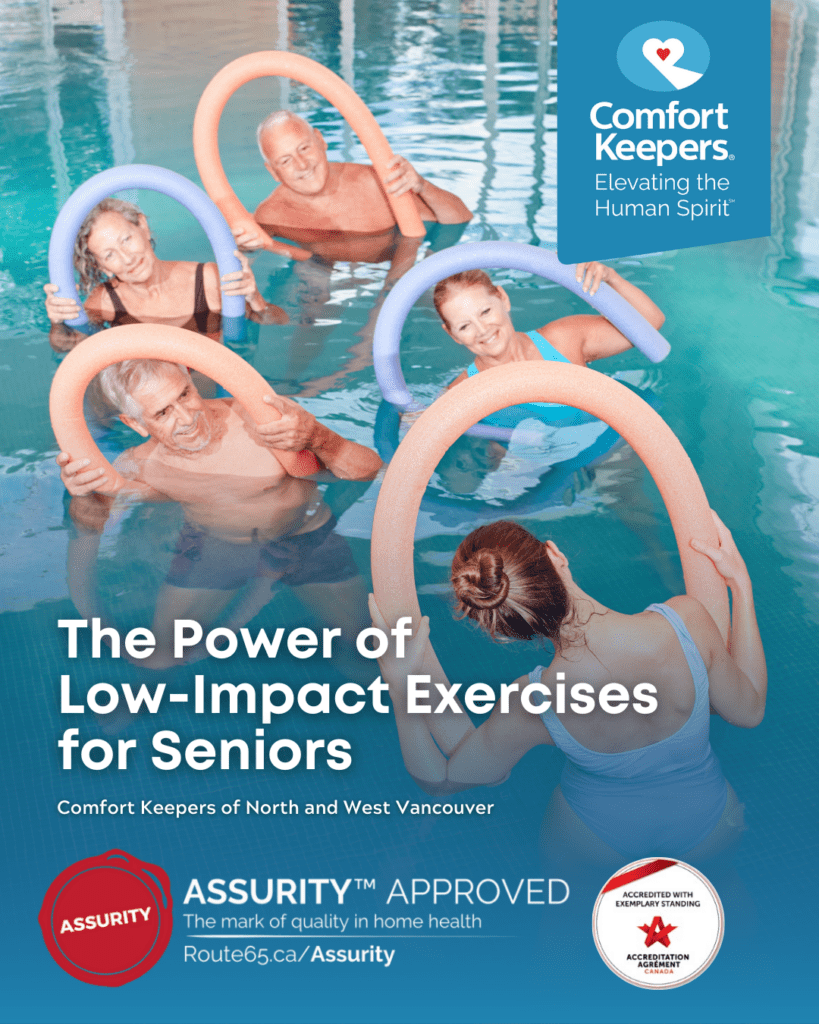
What Seniors in North Vancouver and West Vancouver Need to Know About Low-impact Exercise
Engaging in low-impact exercises for seniors offers an excellent means to achieve their daily physical activity requirements while ensuring they maintain an elevated heart rate.
As we grow older, the significance of maintaining our physical health becomes increasingly integral to our overall well-being. Incorporating regular exercise into our daily schedule becomes crucial in later years, although it can pose certain challenges.
The Importance of Low-impact Exercises for Seniors
For seniors, there is a range of low-impact exercises and activities that offer significant advantages. Engaging in such exercise allows for an increase in heart rate, leading to various positive effects on physical health.
Before embarking on a new exercise program, older adults should consult with their doctor to ensure that even though these less demanding forms of physical activity are usually more accessible, it is still necessary to seek professional advice.
Eight Types of Low-impact Exercises for Seniors
#1. Walking:
Walking has the advantage of being gentler on the joints compared to running, and it does not depend on any specific gear or a gym subscription. By simply having a pair of comfortable sneakers and access to a well-paved walkway, anyone can commence this activity immediately. To maximize benefits, maintaining a swift tempo for at least 15-20 minutes becomes crucial.
#2. Swimming:
Nothing beats eliminating stress on the joints. Swimming offers various advantages, such as boosting shoulder strength and enhancing lung capacity. Additionally, seniors have the option of engaging in water aerobics or using underwater treadmills for walking exercises.
#3. Yoga:
Yoga is a versatile practice that benefits various aspects of your physical health, such as enhancing flexibility and coordination while also strengthening your core. Moreover, it has been proven to enhance mood, focus, and overall mental well-being.
#4. Pilates:
This exercise enables individuals to engage in deliberate and unhurried movements, aimed at enhancing posture and flexibility. Similar to yoga, Pilates is renowned for its ability to enhance mental wellness.
#5. Cycling:
By implementing necessary safety precautions, such as wearing a helmet, and shin pads, and using suitable gear arrangements, cycling can have numerous benefits for both the cardiovascular system and various muscle groups while also considering joint health.
#6. Weight-lifting:
You have the option to engage in weight training either at home using small free weights or moderately heavy household objects, or at a fitness center. The essential factor for success lies in maintaining a consistent repetition routine while gradually progressing towards heavier weights as time passes.
#7. Leg Raises:
There is no need for equipment to perform these exercises, and they can be easily done at home. All you have to do is stand behind a chair and secure yourself by holding on to its back. Next, move one leg outwards and then bring it back in. By repeating this movement with various variations, you can effectively strengthen your lower back and thigh muscles.
#8. Dancing:
The popularity of dance class enrollment has significantly increased in recent years due to its many benefits. The continuous movement involved in these classes promotes better circulation and flexibility, while also offering excellent opportunities for socializing and building connections with fellow participants.

The Best Senior Home Care in North and West Vancouver is Comfort Keepers®
Our senior home care agency offers in-home care focusing on aging in place. Our services include dementia care, end-of-life care, post-surgery care, and palliative care. Comfort Keepers can assist seniors with living transition services, personal care, companionship care, and more!
Quality and Accredited Elderly Care: Happier, Healthier, and at Home with 24/7 Senior Care Opportunities!
Do you need a home care solution for yourself or a loved one? Have you been thinking about retirement homes and their alternatives as a solution? Comfort Keepers® enables seniors to maintain happy, healthy lives in the comfort of their own homes. In-home care services are available in North Vancouver, West Vancouver, and the surrounding areas.
Comfort Keepers® is a Senior Care Agency That Can Make a Difference with Interactive Caregiving™
Our in-home caregivers ensure our senior clients have the best quality of life. The Interactive Caregiving™ program ensures that a senior’s safety, nutrition, mental well-being, and everyday needs are met. This program brings joy and good health to each client’s home.
Comfort Keepers® North Vancouver and West Vancouver Can Help with In-Home Elderly Care Services!
If you are concerned about the health and well-being of a loved one we can help! Comfort Keepers offers 24-hour care and delivers top-quality and compassionate care for seniors. We are dedicated to safety technology solutions that foster independence and enhance well-being.
Locally Owned and Operated Home Health Care Agency
Our care centers around companionship for seniors. Empathetic care originates from the soul and allows us to meet our client’s requirements. The seasoned in-home caregivers employed by Comfort Keepers are carefully chosen based on their empathetic qualities.
Contact the Comfort Keepers® North Vancouver and West Vancouver office at (604) 998-8806 to learn more about our unique in-home care solutions for seniors.
Comfort Keepers is an Accredited Senior Care Agency in North and West Vancouver, BC
Accreditation is a rigorous process that involves industry experts evaluating an organization’s processes, policies, and procedures. Comfort Keepers® North and West Vancouver has been awarded Exemplary Standing by Accreditation Canada. This achievement recognizes that Comfort Keepers® meets or exceeds the stringent quality standards for Home Care companies established by Accreditation Canada.
References:
Department of Health & Human Services. “Facts and Statistics: Physical Activity.” Web. 2017. NIH Senior Health. “Exercise: Benefits of Exercise.” Web. 2017.
Everyday Health. “10 Surprises About Heart-Healthy Exercise” by Beth W. Orenstein. Web. 2014.
American Senior Communities. “The Best Low Impact Exercises for Seniors.” Web. 2017.
AZ Central. “Low Impact Exercises for Seniors” by Kathryn Rateliff Barr. Web. 2017.
At Home Workouts for Seniors in North and West Vancouver: Safe, Gentle Exercises That Work
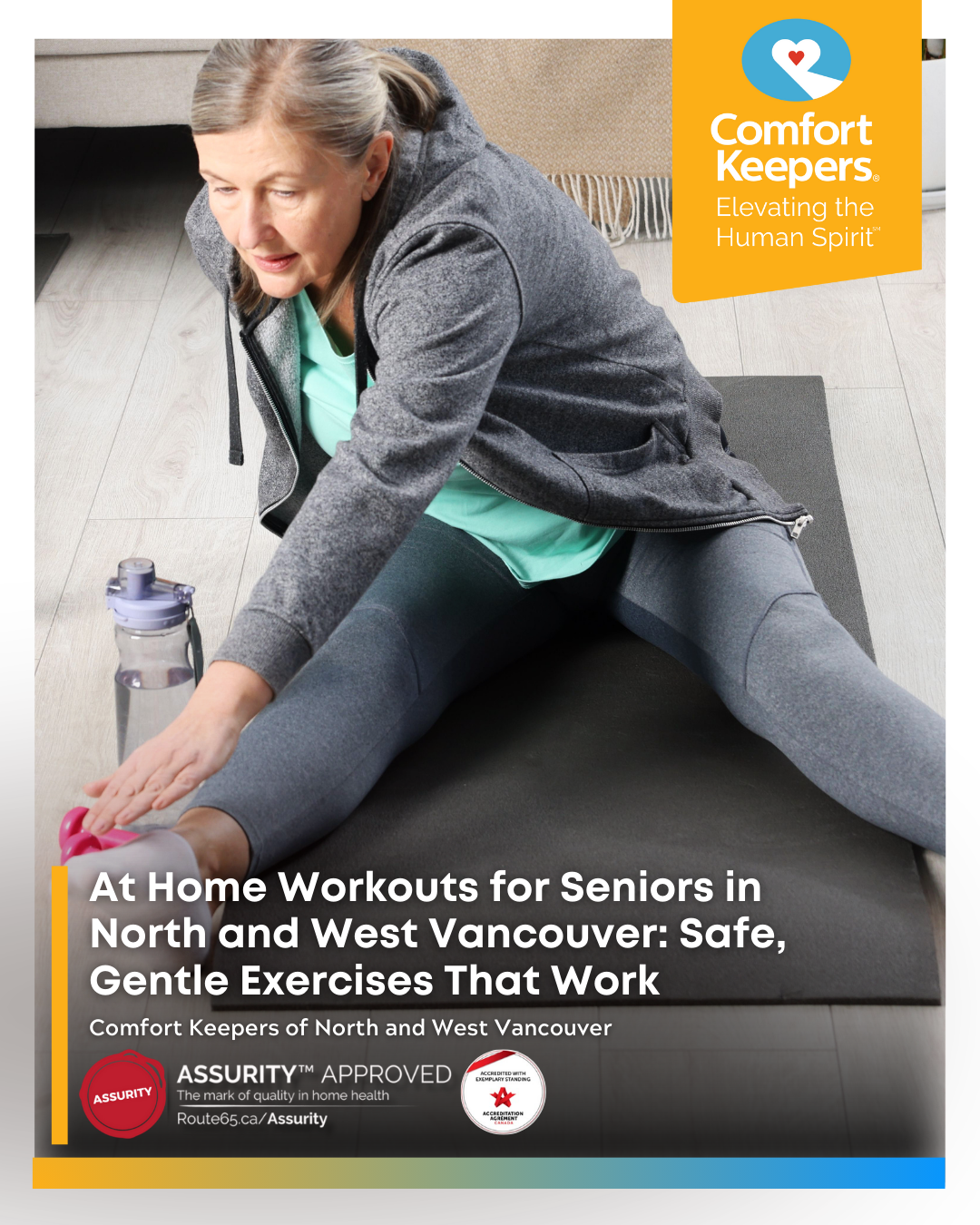
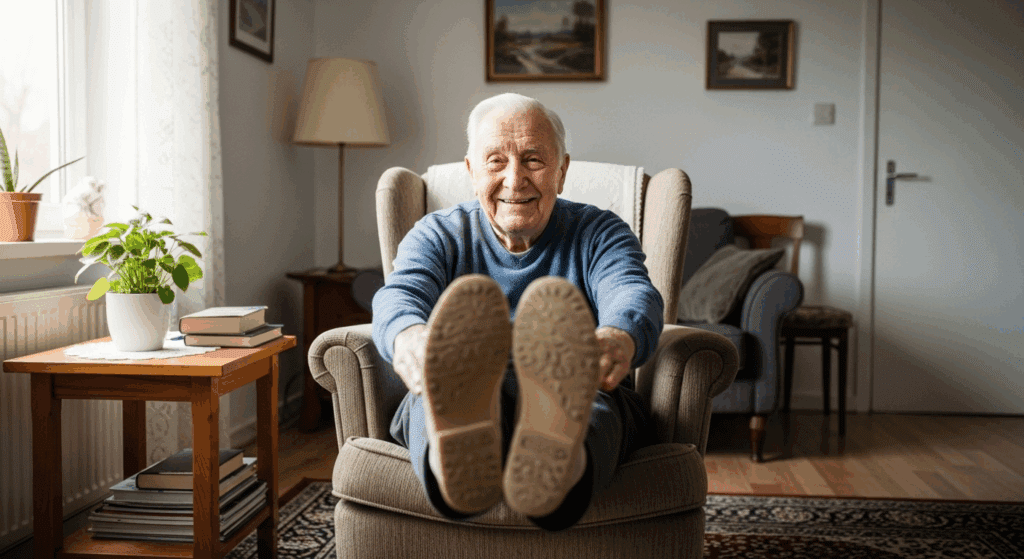
Table of Contents
- Quick Answer: Best At-Home Workouts
- Why At-Home Workouts Work for North Shore Seniors
- Easy At-Home Workouts for North Vancouver Seniors
- At-Home Workouts for Seniors with Poor Mobility in West Vancouver
- North and West Vancouver Senior Fitness Resources
- Safety First: Exercise Guidelines
- Senior Fitness Statistics: North Shore Communities
- How Comfort Keepers Supports Senior Fitness
- Frequently Asked Questions
- Getting Started with Professional Support
Seniors in North and West Vancouver can maintain independence and improve health through simple at-home workouts designed for all mobility levels, from gentle stretches to chair-based exercises. With the North Shore’s unique geography and weather patterns, having effective indoor exercise options becomes essential for year-round wellness.
Living independently while aging gracefully requires consistent physical activity, but traditional gym memberships or outdoor activities may not always be accessible to every senior. Whether you’re dealing with mobility challenges, transportation concerns, or prefer the comfort and privacy of your own home, at-home workouts offer a practical solution that fits seamlessly into daily routines.
The beauty of home-based exercise lies in its adaptability. From the high-rise condos of downtown North Vancouver to the family homes throughout West Vancouver, seniors can create effective workout spaces using minimal equipment while accommodating their specific physical abilities and health considerations.
Need personalized support with your fitness routine? Contact our North and West Vancouver team to learn how our caregivers can assist with safe, supervised exercise programs tailored to your needs.
Quick Answer: Best At-Home Workouts for Seniors
The most effective at-home workouts for North and West Vancouver seniors include:
- Chair-based exercises: Perfect for limited mobility and small spaces
- Wall push-ups: Build upper body strength safely
- Seated leg lifts: Strengthens core and leg muscles
- Arm circles and shoulder rolls: Improves flexibility and circulation
- Heel-to-toe walking: Enhances balance using hallways or open spaces
- Modified stretches: Reduce stiffness and improve range of motion
- Deep breathing exercises: Support cardiovascular health
- Standing marches: Low-impact cardio using kitchen counters for support
These exercises require minimal to no equipment, can be modified for various ability levels, and are specifically chosen to work well in typical North Shore living spaces, from compact condos to larger family homes.
Why At-Home Workouts Work for North and West Vancouver Seniors
At-home workouts help seniors by providing consistent, weather-independent exercise opportunities that address the unique challenges of North Shore living. With steep terrain, unpredictable coastal weather, and varying transportation accessibility, home-based fitness routines offer practical solutions for maintaining health and independence.
Key Benefits for North Shore Seniors:
- Weather Independence: No more cancelled exercise plans due to rain, snow, or icy conditions that frequently affect North and West Vancouver.
- Accessibility: Eliminates transportation barriers and parking challenges common in busy North Shore areas.
- Privacy and Comfort: Exercise at your own pace without self-consciousness or time pressures.
- Cost-Effective: No ongoing membership fees or equipment costs.
- Customizable: Adapt routines to your specific health conditions and mobility level.
- Flexible Scheduling: Exercise when it fits your routine, whether early morning or evening.
- Fall Prevention: Practice balance and strength exercises in a familiar, controlled environment.
Research from UBC Faculty of Medicine shows that seniors who exercise regularly at home report 36% fewer falls than those who remain sedentary. For North Shore communities, where many seniors live independently in their own homes, these statistics highlight the critical importance of accessible fitness options.
Ready to discuss how our caregivers can support your fitness goals? Get in touch with our North and West Vancouver team to explore personalized exercise assistance and companionship services.
Easy At-Home Workouts for North Vancouver Seniors
5-Minute Morning Routine for North Vancouver Seniors
Perfect for starting your day with energy, this routine works well in small spaces typical of North Vancouver condos and townhomes.
Morning Energizer Sequence:
- Seated shoulder rolls (30 seconds): Sit tall in your favourite chair, roll your shoulders backward in slow circles
- Arm reaches (1 minute): Alternate reaching arms overhead, stretching gently toward the ceiling
- Seated marching (1 minute): Lift knees alternately while seated, engaging core muscles
- Ankle circles (1 minute): Rotate each ankle clockwise and counterclockwise to improve circulation
- Deep breathing with arm movements (1.5 minutes): Inhale while lifting arms, exhale while lowering
No-Equipment Exercises Perfect for Condo Living
These exercises work exceptionally well in smaller North Vancouver living spaces and require zero equipment.
Wall Push-Up Progression:
- Stand at arm’s length from a wall
- Place palms flat against the wall at shoulder height
- Lean forward and push back slowly
- Start with 5 repetitions, build to 15
- Modification: Step closer to the wall for an easier version
Hallway Balance Walk:
- Use your hallway for heel-to-toe walking
- Keep one hand near the wall for safety
- Focus on placing the heel directly in front of the opposite toe
- Walk 10-15 steps, turn around, repeat
Kitchen Counter Calf Raises:
- Hold the kitchen counter for stability
- Rise up onto your toes, hold for 2 seconds
- Lower slowly and repeat 10-15 times
- Progression: Try single-leg calf raises
Weather-Independent Workouts for North Shore Residents
Living on the North Shore means dealing with frequent rain and variable weather conditions. These indoor routines ensure consistent exercise regardless of outdoor conditions.
Rainy Day Circuit (15 minutes):
- Chair sits and stands (2 minutes): Use a sturdy chair, sit and stand without using arms
- Wall slides (2 minutes): Back against the wall, slide up and down like sitting in an imaginary chair
- Stationary side steps (3 minutes): Step side to side in place, using the counter for balance
- Arm and leg coordination (3 minutes): March in place while moving arms in opposite directions
- Stretching sequence (5 minutes): Gentle stretches for major muscle groups
Winter Warm-Up Routine:
Especially important during North Vancouver’s cooler months, this routine increases circulation and reduces stiffness that often accompanies colder weather.
- Joint mobility exercises (5 minutes)
- Gentle cardio movements (5 minutes)
- Flexibility and balance work (5 minutes)
At-Home Workouts for Seniors with Poor Mobility in West Vancouver
Seniors with poor mobility can exercise safely and effectively using chair-based routines, kitchen counter support, and bed-based stretches that accommodate physical limitations while providing meaningful health benefits.
Chair Exercise Routine (10 Minutes)
This complete routine can be performed entirely from a chair, making it ideal for seniors with limited mobility, balance concerns, or those recovering from injuries.
Seated Strength Circuit:
Upper Body (3 minutes):
- Seated boxing: Punch forward alternately, 30 seconds
- Overhead reaches: Lift arms overhead alternately, 30 seconds
- Seated rows: Pull elbows back, squeezing shoulder blades, 30 seconds
- Arm circles: Small circles forward and backward, 30 seconds each direction
- Shoulder shrugs: Lift shoulders to ears and release, 30 seconds
Lower Body (4 minutes):
- Seated leg extensions: Straighten one leg, hold 2 seconds, lower, 1 minute each leg
- Ankle pumps: Point and flex feet, 1 minute
- Seated marching: Lift knees alternately, 1 minute
Core and Flexibility (3 minutes):
- Seated twists: Rotate torso gently left and right, 1 minute
- Neck rolls: Gentle head rotations, 30 seconds each direction
- Deep breathing with posture focus: Sit tall, breathe deeply, 1 minute
Balance Exercises Using the Kitchen Counter
The kitchen counter provides perfect support for safe balance training that can significantly reduce fall risk.
Counter-Assisted Balance Series:
Basic Balance Holds:
- Stand beside the counter, lightly touching with fingertips
- Lift one foot slightly off the ground, hold for 10 seconds
- Switch feet, repeat 5 times each side
- Progression: Close eyes while balancing
Weight Shifting:
- Hold the counter with both hands
- Shift weight from the right foot to the left foot
- Hold each position for 5 seconds
- Repeat 10 times in each direction
Modified Heel-to-Toe:
- Use a counter for support
- Take small steps, placing the heel near the toe
- Focus on straight line walking
- Practice for 1-2 minutes daily
Bed-Based Stretches for Limited Mobility
For seniors with severe mobility limitations, bed-based exercises provide safe options for maintaining flexibility and circulation.
Morning Bed Stretches:
Lying Down Sequence (10 minutes):
- Ankle pumps and circles (2 minutes): Improve lower leg circulation
- Knee-to-chest stretches (2 minutes): Gently pull each knee toward the chest
- Gentle spinal twists (2 minutes): Knees together, rotate to each side
- Arm reaches across body (2 minutes): Stretch shoulders and upper back
- Deep breathing with arm movements (2 minutes): Coordinate breath with gentle arm motions
Evening Relaxation Routine:
- Gentle leg stretches (3 minutes)
- Shoulder and neck releases (2 minutes)
- Progressive muscle relaxation (5 minutes)
Our compassionate caregivers can assist with exercise routines and encourage seniors with mobility challenges. Learn more about our personalized services in North and West Vancouver.
North and West Vancouver Senior Fitness Resources
Community Programs and Facilities
North Vancouver Recreation Commission:
- Senior-specific fitness classes at multiple community centers
- Aquatic programs at Karen Magnussen Recreation Centre
- Walking groups and outdoor fitness programs
- Address: 123 East 14th Street, North Vancouver, BC V7L 2N4
- Phone: (604) 987-7529
West Vancouver Community Centre:
- Chair yoga and gentle fitness classes
- Senior swimming programs at West Vancouver Aquatic Centre
- Balance and fall prevention workshops
- Address: 2121 Marine Drive, West Vancouver, BC V7V 4Y2
- Phone: (604) 925-7200
North Shore Neighbourhood House:
- Community-based senior programs
- Social exercise groups and walking clubs
- Health and wellness workshops
- Multiple locations throughout North and West Vancouver
How Comfort Keepers Complements Community Programs
While community programs offer valuable group fitness opportunities, Comfort Keepers provides the personalized support that helps seniors fully participate in and benefit from these activities.
Transportation Assistance: Our caregivers provide safe, reliable transportation to community centers and fitness programs, eliminating barriers that might prevent participation.
Program Preparation: We help seniors prepare for community activities, ensuring they have appropriate clothing, water, and any necessary equipment.
Follow-up Support: After community programs, our caregivers can help reinforce exercises learned in class through supervised home practice sessions.
Continuity of Care: On days when community programs aren’t available, our caregivers provide consistent exercise support through personalized home routines.
Ready to combine community resources with personalized home care? Contact us to create your perfect support plan that includes both community involvement and individualized assistance.
Safety First: Exercise Guidelines for North and West Vancouver Seniors
When Should Seniors Consult Their Doctor Before Exercising?
Seniors should consult their healthcare provider before beginning any new exercise program, especially if they experience:
- Chest pain or shortness of breath during light activity
- Dizziness or balance problems
- Joint pain or swelling
- Recent surgeries or injuries
- Chronic conditions like heart disease, diabetes, or osteoporosis
- Blood pressure or medication changes
North Shore Healthcare Resources:
- Lions Gate Hospital: 231 15th Street E, North Vancouver
- Multiple walk-in clinics throughout both communities
- Family physicians familiar with senior-specific exercise considerations
What Safety Equipment Do Seniors Need at Home?
Essential Safety Items:
- Sturdy chair: Non-rolling, with armrests for support during seated exercises
- Non-slip mats: Place under exercise areas to prevent slipping
- Water bottle: Stay hydrated during and after exercise
- Emergency contact list: Easily accessible during exercise sessions
- Good lighting: Ensure exercise areas are well-lit
- Comfortable, supportive footwear: Non-slip soles for safety
Optional Equipment:
- Light dumbbells or resistance bands
- Stability ball for advanced users
- Balance pad for proprioceptive training
How Can Seniors Modify Exercises for Arthritis?
Arthritis-Friendly Modifications:
- Warm up thoroughly: 5-10 minutes of gentle movement before exercise
- Avoid high-impact activities: Choose low-impact alternatives like chair exercises
- Use heat therapy: A Warm shower or a heating pad before exercise can reduce stiffness
- Exercise during the best times: When arthritis symptoms are typically milder
- Focus on range of motion: Gentle stretching and flexibility work
- Listen to your body: Stop if pain increases beyond normal muscle fatigue
Red Flags to Stop Exercising:
- Sharp or sudden pain
- Severe shortness of breath
- Dizziness or lightheadedness
- Chest pain or pressure
- Excessive fatigue that doesn’t resolve with rest
Senior Fitness Statistics: North Shore Communities
Regional Health Data
British Columbia Senior Health Statistics:
- 73% of BC seniors experience improved mobility with regular exercise
- Regular exercise reduces fall risk by 42% among seniors aged 65+
- North Shore seniors report 35% higher satisfaction with aging-in-place when maintaining active lifestyles
- 68% of seniors who exercise regularly maintain independence 3+ years longer
North Vancouver and West Vancouver Specific Data:
- 89% of North Shore seniors prefer aging in their own homes
- Transportation challenges affect 34% of North Shore seniors’ access to fitness facilities
- Weather-related activity cancellations impact 56% of outdoor exercise routines annually
- Home-based exercise programs show 78% adherence rates compared to 45% for facility-based programs
Exercise Impact on Common Senior Health Concerns
Cardiovascular Health:
- 30 minutes of daily activity reduces heart disease risk by 40%
- Chair-based exercises can improve circulation by 25% in seniors with limited mobility
Bone Health:
- Weight-bearing exercises reduce osteoporosis progression by 30%
- Balance training decreases fracture risk by 35%
Mental Health:
- Regular exercise reduces depression symptoms by 47% in seniors
- Social exercise programs improve cognitive function test scores by 23%
Functional Independence:
- Strength training maintains the ability to perform daily activities 60% longer
- Balance exercises reduce emergency room visits by 28%
These statistics highlight why at-home workout programs are particularly valuable for North Shore seniors, where geographic and weather challenges can limit access to traditional fitness facilities.
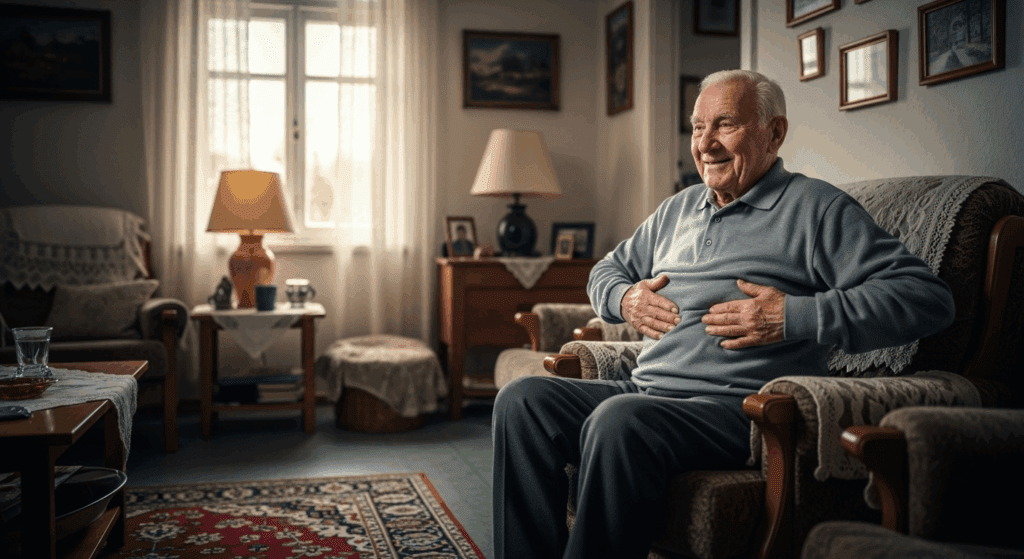
How Comfort Keepers North and West Vancouver Supports Senior Fitness
Companionship During Exercise
Exercise becomes more enjoyable and sustainable when shared with a caring companion. Our trained caregivers provide:
Motivation and Encouragement: Having a supportive person present increases exercise adherence rates by 65% and makes routines more enjoyable.
Safety Supervision: Our caregivers monitor for signs of fatigue, proper form, and any concerning symptoms during exercise sessions.
Social Interaction: Exercise time becomes an opportunity for meaningful conversation and connection, addressing both physical and emotional well-being.
Consistency Support: Regular caregiver visits ensure exercise routines happen consistently, even when motivation wanes.
Mobility Assistance
For seniors with physical limitations, our caregivers provide essential support that makes exercise possible:
Transfer Assistance: Safe help moving from bed to chair, wheelchair positioning, and support during standing exercises.
Equipment Setup: Organizing exercise space, positioning chairs or mats, and ensuring safety equipment is readily available.
Exercise Modifications: Working with healthcare providers to adapt exercises for specific mobility challenges or health conditions.
Progress Monitoring: Tracking improvements in strength, balance, and endurance to celebrate achievements and adjust routines.
Transportation to Community Programs
When seniors want to participate in community fitness programs, our caregivers eliminate transportation barriers:
Reliable Transportation: Safe, comfortable rides to community centers, pools, and group fitness activities throughout North and West Vancouver.
Program Support: Assistance with registration, understanding schedules, and preparing for activities.
Flexible Scheduling: Transportation that adapts to changing program schedules and senior preferences.
Continuity Bridge: Connecting community programs with home-based exercise for comprehensive fitness support.
Personalized Care Plans
Every senior’s fitness needs are unique. Our personalized approach includes:
Individual Assessments: Understanding specific health conditions, mobility levels, and personal preferences.
Goal Setting: Establishing realistic, meaningful fitness objectives with input from seniors, families, and healthcare providers.
Routine Customization: Creating exercise plans that fit seamlessly into existing daily routines and lifestyle preferences.
Regular Reviews: Adjusting programs as abilities change or improve, ensuring continued effectiveness and safety.
Healthcare Coordination: Working with physicians, physical therapists, and other providers to ensure exercise programs complement overall care plans.
Schedule a free consultation to discuss how personalized care can enhance your fitness journey: Contact Comfort Keepers North and West Vancouver today. Learn more about our comprehensive services that support active, independent living: Visit our website to explore all the ways we help seniors thrive at home.
Frequently Asked Questions
What are the best at-home workouts for seniors in North Vancouver?
The best at-home workouts for North Vancouver seniors include chair-based exercises, wall push-ups, seated leg lifts, and balance exercises using kitchen counters for support. These exercises accommodate small condo spaces, work regardless of weather conditions, and can be modified for various mobility levels. Chair exercises are particularly effective because they provide safety while targeting all major muscle groups. Wall push-ups offer upper body strengthening without floor work, and counter-assisted balance training significantly reduces fall risk while building confidence in daily activities.
How can seniors with poor mobility in West Vancouver exercise safely?
Seniors with poor mobility in West Vancouver can exercise safely through chair-based routines, bed exercises, and counter-assisted movements. Chair exercises eliminate fall risk while providing effective strength training for arms, legs, and core muscles. Bed-based stretches improve circulation and flexibility for those with severe mobility limitations. Kitchen counters provide stable support for standing balance exercises and gentle leg movements. All exercises should start slowly, focus on proper form over intensity, and be modified based on individual capabilities and comfort levels.
How often should North and West Vancouver seniors exercise at home?
North and West Vancouver seniors should aim for at least 150 minutes of moderate exercise weekly, broken into manageable sessions. This typically means 20-30 minutes daily or 45-50 minutes every other day. Beginners should start with 5-10 minute sessions and gradually increase duration as strength and endurance improve. Balance and flexibility exercises should be performed daily, while strength training can be done 2-3 times per week. Consistency matters more than duration – short, regular sessions are more beneficial than occasional long workouts.
Can Comfort Keepers caregivers help with exercise routines?
Yes, Comfort Keepers caregivers in North and West Vancouver are trained to assist with safe exercise routines as part of our personalized care plans. Our caregivers provide exercise companionship, ensure safety during workouts, help with proper form, and offer motivation and encouragement. They can assist with mobility during exercises, set up equipment, and adapt routines based on daily energy levels and health conditions. Caregivers work with healthcare providers to ensure exercises complement overall care plans and help track progress over time. Contact us to discuss how exercise support can be integrated into your care plan.
What equipment do seniors need for at-home workouts?
Seniors need minimal equipment for effective at-home workouts. Essential items include a sturdy, non-rolling chair with armrests, a non-slip exercise mat, a water bottle, and supportive athletic shoes with non-slip soles. Optional equipment that can enhance routines includes light dumbbells (1-3 pounds), resistance bands, and a stability ball for advanced users. Most effective senior exercises use body weight and household items like kitchen counters, walls, and stairs. The key is having safe, stable surfaces for support rather than expensive equipment. Many exercises can be performed using only a chair and wall space.
Are chair exercises effective for seniors in West Vancouver?
Chair exercises are highly effective for West Vancouver seniors, particularly those with balance concerns or limited mobility. Research shows chair-based routines can improve cardiovascular health, strengthen major muscle groups, and enhance flexibility while eliminating fall risk. These exercises are ideal for West Vancouver’s many seniors living independently in condos or homes, where floor exercises may be challenging. Chair exercises can be performed in small spaces, don’t require getting up and down from the floor, and can be easily modified for arthritis or other joint conditions. They’re particularly valuable during West Vancouver’s rainy weather when outdoor activity is limited.
What local resources support senior fitness in North and West Vancouver?
North and West Vancouver offer excellent senior fitness resources, including the North Vancouver Recreation Commission with multiple community centers offering senior-specific classes, and the West Vancouver Community Centre with aquatic programs and gentle fitness options. The North Shore Neighbourhood House provides community-based programs and walking groups. These facilities offer professionally supervised group classes, swimming pools, and social exercise opportunities. However, transportation and weather can sometimes limit access, which is where home-based programs and services like Comfort Keepers provide valuable support to ensure consistent fitness routines regardless of external barriers.
Getting Started with Your At-Home Fitness Journey
Creating a sustainable at-home exercise routine is one of the most valuable investments North and West Vancouver seniors can make in their long-term health and independence. The key to success lies in starting slowly, choosing exercises that match your current ability level, and building consistency rather than intensity.
Remember that every senior’s fitness journey is unique. What works well for your neighbour might need modification for your specific needs, health conditions, or living situation. The beauty of at-home workouts lies in their adaptability – you can adjust timing, intensity, and exercise selection to create a routine that truly works for your lifestyle.
For many seniors, the difference between maintaining independence and needing additional support often comes down to consistent physical activity. The exercises outlined in this guide provide a foundation for building strength, balance, and flexibility that supports all daily activities, from climbing stairs in North Vancouver’s hilly neighbourhoods to maintaining balance on West Vancouver’s coastal walking paths.
Safety should always be your top priority. Start with the gentlest versions of exercises, listen to your body, and don’t hesitate to modify or stop any movement that causes pain or discomfort. Building a sustainable routine takes time, and it’s better to exercise consistently at a lower intensity than to risk injury with overly ambitious goals.
Professional Support Makes the Difference
While at-home exercises provide incredible benefits, having professional support can significantly enhance your success and safety. Comfort Keepers North and West Vancouver understands that every senior deserves the opportunity to maintain an active, independent lifestyle, regardless of current mobility level or health challenges.
Our trained caregivers provide more than just companionship during exercise – they offer the expertise, motivation, and safety supervision that help seniors achieve their fitness goals while aging comfortably in their own homes. Whether you need assistance with basic mobility, transportation to community programs, or simply want the security of having someone present during your exercise routine, our personalized care plans adapt to your specific needs.
Discover how personalized care can enhance your active lifestyle. Learn more about our comprehensive services that support seniors throughout North and West Vancouver in achieving their health and independence goals.
The Best Senior Home Care in North and West Vancouver is Comfort Keepers®
Our senior home care agency offers in-home care focusing on aging in place. Our services include dementia care, end-of-life care, post-surgery care, and palliative care. Comfort Keepers can assist seniors with living transition services, personal care, companionship care, and more!
Quality and Accredited Elderly Care: Happier, Healthier, and at Home with 24/7 Senior Care Opportunities!
Do you need a home care solution for yourself or a loved one? Have you been thinking about retirement homes and their alternatives as a solution? Comfort Keepers® enables seniors to maintain happy, healthy lives in the comfort of their own homes. In-home care services are available in North Vancouver, West Vancouver, and the surrounding areas.
Comfort Keepers® is a Senior Care Agency That Can Make a Difference with Interactive Caregiving™
Our in-home caregivers ensure our senior clients have the best quality of life. The Interactive Caregiving™ program ensures that a senior’s safety, nutrition, mental well-being, and everyday needs are met. This program brings joy and good health to each client’s home.
Comfort Keepers® North Vancouver and West Vancouver Can Help with In-Home Elderly Care Services!
If you are concerned about the health and well-being of a loved one we can help! Comfort Keepers offers 24-hour care and delivers top-quality and compassionate care for seniors. We are dedicated to safety technology solutions that foster independence and enhance well-being.
Locally Owned and Operated Home Health Care Agency
Our care centers around companionship for seniors. Empathetic care originates from the soul and allows us to meet our clients’ requirements. The seasoned in-home caregivers employed by Comfort Keepers are carefully chosen based on their empathetic qualities.
Contact the Comfort Keepers® North Vancouver and West Vancouver office at (604) 998-8806 to learn more about our unique in-home care solutions for seniors.