



You call your mom every other day. You make sure your dad has groceries for the week, and you visit on weekends. They seem fine – maybe just a little quieter than they used to be. But sometimes, a nagging feeling surfaces. Something feels… off.
If this sounds familiar, you’re not alone. Many families mistake the early warning signs of social isolation for normal parts of aging. But social isolation isn’t just about being alone; it’s a measurable lack of social connection that the World Health Organization has identified as a pressing global health threat, with impacts as detrimental as smoking or obesity.
Understanding the subtle signs is the first step toward protecting the well-being of the people you love. This isn’t about spotting a crisis; it’s about learning to read the quiet language of a growing problem before it becomes one.
The Crucial Difference: Social Isolation vs. Loneliness
Before we explore the signs, it’s essential to understand a key distinction that often gets blurred.
- Social Isolation is an objective state. It’s the measurable reality of having few social relationships or infrequent social contact. Someone might be socially isolated because they live alone, have lost friends or a spouse, or can no longer drive.
- Loneliness is a subjective feeling. It’s the personal, often painful feeling of being alone or disconnected, regardless of how many people are around you.
Think of it like this: isolation is the physical distance between people, while loneliness is the emotional distance. While they are different, chronic social isolation almost always leads to profound loneliness and a host of related health issues. Recognizing the objective signs of isolation allows you to act before the deeper pain of loneliness takes root.
Decoding the Quiet Alarms: Early Warning Signs You Might Be Missing
Social isolation rarely announces itself. It creeps in through small, seemingly insignificant changes in daily routines and behaviours. Here’s what to watch for, and more importantly, why these changes happen.
1. Subtle Shifts in Daily Behaviour and Engagement
One of the first casualties of isolation is enthusiasm. The activities that once brought joy can start to feel like a chore.
- The Sign: Your loved one starts declining invitations for family dinners or community events they used to enjoy. They let your calls go to voicemail more often or seem disengaged and distracted when you do talk. Hobbies that once filled their afternoons, like gardening or knitting, now sit untouched.
- What’s Happening Underneath: Without the regular, reinforcing structure of social interaction, the motivation to engage can wane. It’s not necessarily that they don’t want to see you; it’s that the effort required to prepare for an outing or even a phone call can feel monumental. A sense of “what’s the point?” can begin to set in, creating a cycle where withdrawal leads to more withdrawal.
2. Noticeable Changes in Sleep Patterns
Sleep is deeply connected to our daily rhythms, which are heavily influenced by social cues. When those cues disappear, sleep is often one of the first things to become dysregulated.
- The Sign: You hear them mention struggling with insomnia, waking up frequently during the night. Or, you might notice the opposite: they seem to be sleeping far more than usual, napping for hours during the day and still feeling tired.
- What’s Happening Underneath: A day without meaningful interaction lacks structure. There are no appointments to get ready for or friends dropping by to punctuate the time. This can disrupt the body’s natural sleep-wake cycle. Furthermore, the anxiety and depressive thoughts that often accompany isolation can cause a person’s mind to race at night, preventing restful sleep.
3. A Dwindling Interest in Food and Meals
Eating is one of our most fundamental social rituals. When meals are consistently eaten alone, food can lose its significance beyond basic fuel.
- The Sign: You notice unexplained weight loss or gain. When you visit, the fridge is either empty or full of expired food. They tell you they “forgot to eat” or that they just “weren’t hungry.” They’ve stopped cooking the elaborate meals they once loved.
- What’s Happening Underneath: For many, the joy of a meal comes from sharing it. Cooking for one can feel lonely and uninspired. This loss of interest can lead to poor nutrition, which in turn affects energy levels, mood, and cognitive function, deepening the cycle of isolation.
4. A Decline in Personal Care and Home Upkeep
Our environment and personal appearance are often reflections of our internal state. When a person feels disconnected and invisible, the motivation to keep up appearances can fade.
- The Sign: Your loved one, who was always so put-together, is now often in the same clothes they wore yesterday. Personal hygiene, like bathing or hair care, may be neglected. Their once-tidy home has become cluttered, with mail piling up and dishes in the sink.
- What’s Happening Underneath: This is rarely about laziness. It’s often a profound symptom of lost purpose. The internal monologue becomes, “Who am I getting ready for?” or “Who is going to see my home anyway?” When a person feels unseen, the external signposts of their self-worth can begin to crumble. This can be particularly concerning, as neglecting personal hygiene can sometimes require more direct support, like that provided by professional personal care services.
Beyond the Occasional Visit: The Power of Sustained Companionship
Seeing this list might make you want to schedule more visits, and that’s a wonderful instinct. But it’s important to understand the difference between an occasional “social snack” and the “social meals” that truly nourish a person’s well-being.
A weekly family dinner is fantastic, but it can’t always fill the silence and lack of purpose in the 167 other hours of the week. The health impacts of isolation – like increased risk of dementia, heart disease, and depression – are tied to the chronic, day-in-day-out lack of connection.
This is where the concept of sustained companionship becomes so vital.
Sustained companionship is about creating a reliable and consistent rhythm of meaningful interaction. It’s not just about having someone in the room; it’s about “doing with,” not just “doing for.” It’s a shared walk, preparing a meal together, working on a puzzle, or simply having an ongoing conversation with a trusted friend. This consistent engagement rebuilds the daily structure, purpose, and joy that isolation erodes.
For many families, providing this level of consistent support isn’t feasible due to work, distance, and other commitments. This is why exploring structured companionship services can be a transformative step. Professional companion care is designed specifically to provide that consistent, life-affirming social connection, tailored to an individual’s personality and interests.
Frequently Asked Questions
Q: How can I tell the difference between healthy solitude and harmful social isolation?
A: Healthy solitude is a choice. An individual who enjoys solitude recharges from their alone time and still maintains meaningful social connections. Harmful isolation is often a condition, not a choice. The key difference is distress and function. If your loved one seems distressed, is neglecting their health, or can no longer manage daily life, it’s likely moved beyond healthy solitude.
Q: Could these signs be caused by a medical condition instead of isolation?
A: Absolutely. Changes in appetite, sleep, and mood can be symptoms of many medical conditions. That’s why the first step should always be a conversation with their family doctor to rule out any underlying health issues. Often, social isolation and physical health are interconnected, and addressing both is crucial.
Q: How do I start a conversation about this with my parent without making them feel judged?
A: Approach the conversation with curiosity and love, not accusation. Instead of saying, “Your house is a mess,” try, “I’ve noticed you haven’t had as much energy lately. How have you been feeling?” Focus on your feelings and observations. You could say, “I worry about you being alone so much, and I want to make sure you’re feeling happy and connected.”
For individuals whose isolation is causing significant safety or health concerns around the clock, more comprehensive solutions like 24-hour care may be necessary to ensure their well-being.
The First Step is Seeing
Recognizing these quiet signs is not about finding fault. It’s a proactive, powerful act of love. By understanding the subtle ways social isolation can manifest, you can move from a place of worry to one of informed action. You can begin the conversations and explore the solutions that don’t just fill time, but rebuild a world rich with connection, purpose, and joy for the person you cherish.
The Best Senior Home Care in North and West Vancouver is Comfort Keepers®
Our senior home care agency offers in-home care focusing on aging in place. Our services include dementia care, end-of-life care, post-surgery care, and palliative care. Comfort Keepers can assist seniors with living transition services, personal care, companionship care, and more!
Quality and Accredited Elderly Care: Happier, Healthier, and at Home with 24/7 Senior Care Opportunities!
Do you need a home care solution for yourself or a loved one? Have you been thinking about retirement homes and their alternatives as a solution? Comfort Keepers® enables seniors to maintain happy, healthy lives in the comfort of their own homes. In-home care services are available in North Vancouver, West Vancouver, and the surrounding areas.
Comfort Keepers® is a Senior Care Agency That Can Make a Difference with Interactive Caregiving™
Our in-home caregivers ensure our senior clients have the best quality of life. The Interactive Caregiving™ program ensures that a senior’s safety, nutrition, mental well-being, and everyday needs are met. This program brings joy and good health to each client’s home.
Comfort Keepers® North Vancouver and West Vancouver Can Help with In-Home Elderly Care Services!
If you are concerned about the health and well-being of a loved one we can help! Comfort Keepers offers 24-hour care and delivers top-quality and compassionate care for seniors. We are dedicated to safety technology solutions that foster independence and enhance well-being.
Locally Owned and Operated Home Health Care Agency
Our care centers around companionship for seniors. Empathetic care originates from the soul and allows us to meet our client’s requirements. The seasoned in-home caregivers employed by Comfort Keepers are carefully chosen based on their empathetic qualities.
Contact the Comfort Keepers® North Vancouver and West Vancouver office at (604) 998-8806 to learn more about our unique in-home care solutions for seniors.
Comfort Keepers is an Accredited Senior Care Agency in North and West Vancouver, BC
Accreditation is a rigorous process that involves industry experts evaluating an organization’s processes, policies, and procedures. Comfort Keepers® North and West Vancouver has been awarded Exemplary Standing by Accreditation Canada. This achievement recognizes that Comfort Keepers® meets or exceeds the stringent quality standards for Home Care companies established by Accreditation Canada.
When Home Strategies Aren’t Enough: Early Signs You Need a Trained, Engaging Care Partner
You’ve mastered the art of the colour-coded pill organizer. You’ve stocked the fridge with easy-to-prepare meals and installed non-slip mats in the bathroom. As a family caregiver, you’ve poured your love and energy into creating a safe, comfortable environment for your aging parent. You’re doing everything you can.
But lately, you’ve noticed a shift. The routines that once worked are starting to fray. Your parent, who always loved their garden, hasn’t picked up a trowel in weeks. Conversations feel more strained, and you leave each visit with a growing knot of worry in your stomach.
If this sounds familiar, you’re not alone. The desire to age in place is nearly universal – a staggering 92% of Canadian seniors report that they would prefer to stay in their own homes as long as possible. Family members like you are the backbone of this reality, but there comes a point in many care journeys where love and good intentions need to be paired with specialized skills. Recognizing this tipping point isn’t a sign of failure; it’s a sign of profound love and a commitment to your parents’ true well-being.

The Unspoken Shift: From Loving Support to Complex Needs
The transition is rarely a single, dramatic event. Instead, it’s a series of small, almost unnoticeable changes that accumulate over time. You might dismiss them at first, but together they paint a clear picture: your loved one’s needs are evolving beyond the scope of informal home strategies.
This isn’t about your capacity to love or your dedication. It’s about a fundamental shift in the type of support required. Let’s explore the subtle but significant signs that indicate it’s time to consider a trained, engaging care partner who can provide a new level of support.
5 Signs Your Loved One Needs More Engaging Support
Observing these signs objectively can help you understand the changing landscape of your loved one’s needs and empower you to take proactive steps.
1. The Forgotten Routine: A Decline in Personal Care and Home Management
One of the first and most telling signs is a subtle but consistent decline in Activities of Daily Living (ADLs) and Instrumental Activities of Daily Living (IADLs).
- ADLs are the basic tasks of self-care, like bathing, dressing, and grooming.
- IADLs are the more complex tasks needed for independent living, such as cooking, managing finances, cleaning, and taking medication.
Have you noticed that your mom, once impeccably dressed, is wearing the same clothes for days? Is your dad’s usually tidy workshop now cluttered and disorganized? Perhaps fresh food in the fridge is going untouched while pantry items are depleted. These aren’t signs of laziness; they are often indicators of physical limitations, cognitive challenges, or depression that make these once-simple routines overwhelming.
2. The Quiet Retreat: When Social Circles Shrink
Humans are social creatures, and connection is vital to our health. For seniors, social isolation can be as detrimental as smoking or obesity. Research consistently shows that loneliness is a significant issue, with nearly 28% of seniors living alone reporting feelings of isolation. This isolation is linked to a higher risk of dementia, heart disease, and stroke.
The signs can be quiet:
- Phone calls to friends go unmade.
- Invitations to book club or coffee mornings are declined.
- A general apathy or lack of interest in activities they once loved.
While you provide wonderful companionship, a trained care partner can offer consistent, dedicated social engagement – rekindling hobbies, facilitating safe outings, or simply being a new and friendly face for conversation. This isn’t just “keeping someone company”; it’s a therapeutic intervention that actively combats the health risks of loneliness.
3. Navigating the Fog: An Increase in Confusion or Agitation
Moments of confusion, uncharacteristic irritability, or anxiety can be deeply unsettling for both you and your parent. You might notice them struggling to follow a conversation, forgetting important appointments, or becoming easily frustrated over small things.
This is particularly common for individuals with cognitive decline, but it can also stem from medication side effects, infections, or dehydration. A trained caregiver has the skills to navigate these challenging moments with patience and specific techniques. They know how to de-escalate agitation, redirect conversations gently, and provide the calm, reassuring presence that can be difficult for a family member to maintain in a stressful situation.
4. Close Calls and Worries: Recognizing Growing Safety Risks
Your home may be familiar, but new challenges can turn it into a landscape of potential hazards. According to Health Canada, falls are the leading cause of injury-related hospitalizations among Canadian seniors, and over one-third of seniors are likely to fall at least once a year.
Safety concerns extend beyond falls. Are you worried about:
- Unexplained bruises that could signal a stumble?
- The stove being left on or the doors left unlocked?
- Medication being missed or taken incorrectly?
These “close calls” are red flags. A professional caregiver is trained to perform safety assessments and provide supervision that mitigates these risks, offering peace of mind that is simply invaluable.
5. Your Own Wellbeing Matters: Recognizing Caregiver Burnout
This last sign is about you. The emotional, physical, and financial toll of caregiving is immense. Studies have shown that between 40% and 70% of family caregivers experience clinically significant symptoms of depression.
Ask yourself honestly:
- Are you feeling constantly exhausted, stressed, or resentful?
- Is your own health, career, or personal relationships suffering?
- Do you feel like you’ve transitioned from being a son or daughter to being solely a caregiver?
Recognizing that you need help is an act of strength. Bringing in a professional doesn’t diminish your role; it enhances it. It allows you to step back from the taxing duties of minute-to-minute care and reclaim your cherished role as a loving family member, focusing on quality time and connection.
Beyond Observation: The Shift from Doing For to Doing With
Once you’ve identified these signs, the next step is to reframe what “help” looks like. The most effective professional care isn’t about someone coming in to passively “do for” your parents. It’s about finding a care partner who practices an engaged, collaborative approach.
This philosophy, sometimes called Interactive Caregiving, focuses on doing tasks with your loved one, not just for them.
- Instead of just cooking a meal, they might prepare it together, sharing stories over the kitchen counter.
- Instead of just tidying the house, they might sort through old photographs together, sparking memories.
- Instead of just ensuring they take a walk, they walk alongside them, providing both physical support and stimulating conversation.
This approach is transformative. It fosters a sense of purpose, maintains dignity, and supports both physical and cognitive health. When you explore professional support, look for a holistic approach to in-home care services that prioritizes your loved one’s engagement and independence.
Common Questions About Exploring Professional Care
Q: Doesn’t hiring a caregiver mean I’ve failed?
A: Absolutely not. It means you’re succeeding in adapting to your parents’ evolving needs. Recognizing when an expert is needed is one of the most loving and responsible decisions a family caregiver can make. It’s about adding a skilled professional to your care team.
Q: My parents are resistant to the idea of a ‘stranger’ in the house. What can I do?
A: This is a very common and valid concern. Start the conversation early and gently. Frame it as getting a “helper” or “assistant” rather than a “caregiver.” Involve your parents in the selection process. Often, starting with just a few hours a week for companionship or help with errands can ease them into the idea.
Q: What’s the difference between companionship and personal care?
A: Companionship focuses on social and emotional well-being – conversation, hobbies, and outings. Personal care services involve hands-on assistance with activities like bathing, dressing, and mobility. Many seniors benefit from a blend of both.
Q: How do I even start this conversation with my loved one?
A: Lead with empathy and focus on the benefits to them. Try phrases like, “Mom, I’ve noticed you haven’t been gardening as much, and I was thinking it might be nice to have someone help out so you can enjoy it again,” or “Dad, I worry about you being alone all day. I’d feel so much better knowing someone was dropping by to check in and have a coffee with you.”

Your Next Step on the Care Journey
Recognizing that your home strategies are no longer enough is a pivotal moment. It’s the point where you can make a choice that enhances not only your loved one’s quality of life but your own as well. By understanding these early signs, you can move forward not from a place of crisis, but from a place of informed, proactive love.
The goal isn’t just to keep your parents safe at home; it’s to help them live there with joy, purpose, and dignity. The right support system makes that possible. When you’re ready to learn more about how a professional care partner can fit into your family’s unique situation, the first step is often a simple conversation. Consider scheduling a complimentary in-home assessment to explore the options in a no-pressure environment.
The Best Senior Home Care in North and West Vancouver is Comfort Keepers®
Our senior home care agency offers in-home care focusing on aging in place. Our services include dementia care, end-of-life care, post-surgery care, and palliative care. Comfort Keepers can assist seniors with living transition services, personal care, companionship care, and more!
Quality and Accredited Elderly Care: Happier, Healthier, and at Home with 24/7 Senior Care Opportunities!
Do you need a home care solution for yourself or a loved one? Have you been thinking about retirement homes and their alternatives as a solution? Comfort Keepers® enables seniors to maintain happy, healthy lives in the comfort of their own homes. In-home care services are available in North Vancouver, West Vancouver, and the surrounding areas.
Comfort Keepers® is a Senior Care Agency That Can Make a Difference with Interactive Caregiving™
Our in-home caregivers ensure our senior clients have the best quality of life. The Interactive Caregiving™ program ensures that a senior’s safety, nutrition, mental well-being, and everyday needs are met. This program brings joy and good health to each client’s home.
Comfort Keepers® North Vancouver and West Vancouver Can Help with In-Home Elderly Care Services!
If you are concerned about the health and well-being of a loved one we can help! Comfort Keepers offers 24-hour care and delivers top-quality and compassionate care for seniors. We are dedicated to safety technology solutions that foster independence and enhance well-being.
Locally Owned and Operated Home Health Care Agency
Our care centers around companionship for seniors. Empathetic care originates from the soul and allows us to meet our client’s requirements. The seasoned in-home caregivers employed by Comfort Keepers are carefully chosen based on their empathetic qualities.
Contact the Comfort Keepers® North Vancouver and West Vancouver office at (604) 998-8806 to learn more about our unique in-home care solutions for seniors.
Comfort Keepers is an Accredited Senior Care Agency in North and West Vancouver, BC
Accreditation is a rigorous process that involves industry experts evaluating an organization’s processes, policies, and procedures. Comfort Keepers® North and West Vancouver has been awarded Exemplary Standing by Accreditation Canada. This achievement recognizes that Comfort Keepers® meets or exceeds the stringent quality standards for Home Care companies established by Accreditation Canada.
Alzheimer’s Disease: Dealing with Difficult Behaviours in Seniors
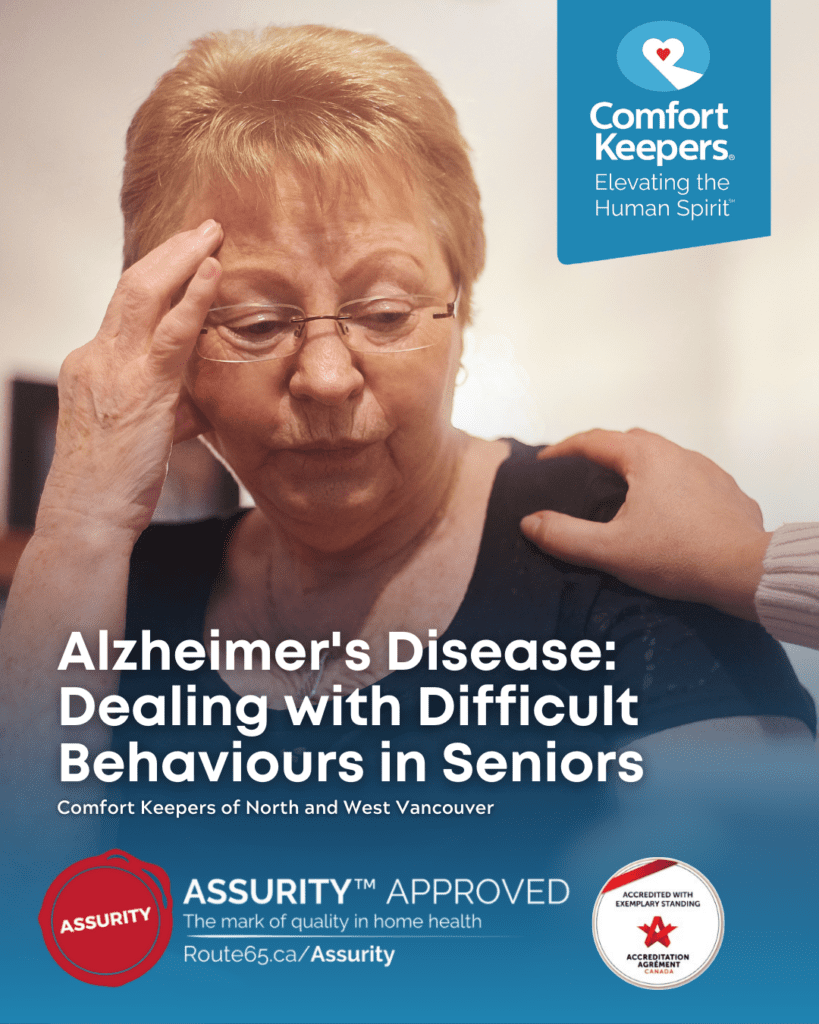
What Every Senior and Caregiver Needs to Know About Dealing with Difficult Alzheimer’s Behaviour
Alzheimer’s Disease | Caring for a loved one can be a rewarding experience, but it’s not without challenges. These challenges can be significantly more impactful for those caring for a senior with Alzheimer’s disease or other form of dementia. Changes in behaviours can occur for a variety of reasons, including over-stimulation, physical discomfort, confusion, exhaustion caused by sleep problems, medication, or changes in routine.
Understanding the cause of behavioural changes is critical for caregivers, families and friends. And, it’s helpful for caregivers to know how to manage behaviours that will allow them to provide safe and effective support and diffuse tense situations.
Seniors with Alzheimer’s and Difficult Behavior Examples:
- Depression
- Anxiety
- Confusion
- Aggression or anger
- Suspicion
- Hallucinations
- Pacing or wandering
The most important thing that caregivers need to remember is that challenging behaviours may not be entirely avoidable. It’s also not the fault of the person with Alzheimer’s or dementia. These behaviours are sometimes a common product of the disease. And, there is specialized support a caregiver can use to help keep a challenging behaviour from escalating.
Alzheimer’s Disease: Tips for Dealing with Difficult Behavior
While there is no guaranteed approach that will work with every person or situation, there are some methods that can help caregivers manage trying times:
Tip #1 – Staying calm:
It’s not uncommon for caregivers to feel attacked or helpless when they are caring for someone exhibiting difficult behaviours. Remembering that it isn’t personal and that it’s a symptom of the disease, can help caregivers manage their emotions and avoid contributing to tense or difficult situations. Arguing or reasoning can often escalate an outburst, so caregivers must stay calm and supportive
Tip #2 – Keeping a schedule:
Seniors who suffer from Alzheimer’s disease and other dementias often find it reassuring to have a set schedule for meals, activities and daily tasks. Creating a schedule, and sticking to it as much as possible, can help prevent anxiety, confusion and anger.
Tip #3 – Exercise:
Exercise, with approval from a physician, is a great stress reliever for both seniors and caregivers. And, participating in activities together helps foster important emotional connections.
Tip #4 – Participating in activities:
Whether it’s an enjoyable hobby, household chore or physician-approved exercise, participating in joyful activities has been shown to help manage challenging behaviours. These can be pre-scheduled or introduced when difficult behaviours are recognized. For example, caregivers can ask for help folding laundry to ease anxiety or can play music or sing to calm someone feeling confused, angry or depressed.
Tip #5 – Mindful communication:
Caregivers shouldn’t underestimate the power of communication. Caregivers can use soothing tones, speak in a friendly way and make eye contact to convey normalcy, understanding and compassion. This can help seniors experiencing anxiety or frustration calm themselves.

The Best Senior Home Care in North and West Vancouver is Comfort Keepers®
Our senior home care agency offers in-home care focusing on aging in place. Our services include dementia care, end-of-life care, post-surgery care, and palliative care. Comfort Keepers can assist seniors with living transition services, personal care, companionship care, and more!
Quality and Accredited Elderly Care: Happier, Healthier, and at Home with 24/7 Senior Care Opportunities!
Do you need a home care solution for yourself or a loved one? Have you been thinking about retirement homes and their alternatives as a solution? Comfort Keepers® enables seniors to maintain happy, healthy lives in the comfort of their own homes. In-home care services are available in North Vancouver, West Vancouver, and the surrounding areas.
Comfort Keepers® is a Senior Care Agency That Can Make a Difference with Interactive Caregiving™
Our in-home caregivers ensure our senior clients have the best quality of life. The Interactive Caregiving™ program ensures that a senior’s safety, nutrition, mental well-being, and everyday needs are met. This program brings joy and good health to each client’s home.
Comfort Keepers® North Vancouver and West Vancouver Can Help with In-Home Elderly Care Services!
If you are concerned about the health and well-being of a loved one we can help! Comfort Keepers offers 24-hour care and delivers top-quality and compassionate care for seniors. We are dedicated to safety technology solutions that foster independence and enhance well-being.
Locally Owned and Operated Home Health Care Agency
Our care centers around companionship for seniors. Empathetic care originates from the soul and allows us to meet our client’s requirements. The seasoned in-home caregivers employed by Comfort Keepers are carefully chosen based on their empathetic qualities.
Contact the Comfort Keepers® North Vancouver and West Vancouver office at (604) 998-8806 to learn more about our unique in-home care solutions for seniors.
Comfort Keepers is an Accredited Senior Care Agency in North and West Vancouver, BC
Accreditation is a rigorous process that involves industry experts evaluating an organization’s processes, policies, and procedures. Comfort Keepers® North and West Vancouver has been awarded Exemplary Standing by Accreditation Canada. This achievement recognizes that Comfort Keepers® meets or exceeds the stringent quality standards for Home Care companies established by Accreditation Canada.
References
alz.org Canada. “Alzheimer’s and Dementia in Canada”. Web. 2019.
National Institute on Aging. “Managing Personality and Behavior Changes in Alzheimer’s.” Web. 2017.
Verywell Health. “Complete Guide to Challenging Behaviors in Dementia.” Web. 2019.
Alzheimer’s Association. “Stages and Behaviors.” Web.
How to Choose a Home Care Agency in West Vancouver: 7 Critical Questions to Ask (Beyond Just Price)

Choosing a home care agency for a loved one is one of the most significant decisions a family can make. It’s a process filled with complex emotions and a desire to get it exactly right. You’re not just hiring a service; you’re inviting someone into your home to care for a person you cherish.
In West Vancouver, you have options. But as you compare websites and make calls, the information can start to blur. It’s easy to get caught up comparing hourly rates, but the true value of exceptional care lies far beyond the price tag. The best decision comes from asking deeper, more insightful questions – the kind that reveal an agency’s true commitment to quality, safety, and your family’s peace of mind.
This guide provides a framework to help you navigate this process with confidence. It’s designed to empower you with seven critical questions that cut through the marketing noise and get to the heart of what makes a home care agency truly trustworthy.

1. What is your accreditation status, and what does it really mean?
This is arguably the most important question you can ask. Anyone can start a home care business, but only the best voluntarily submit themselves to a rigorous, impartial, third-party evaluation.
In Canada, the gold standard for healthcare evaluation is Accreditation Canada. Think of them as an independent auditor for quality and safety. When an agency says they are “accredited,” you need to dig deeper. Ask them: “Accredited by whom, and to what level?”
Look for the highest possible standing. For example, Comfort Keepers North and West Vancouver has been awarded ‘Accredited with Exemplary Standing’ by Accreditation Canada. This isn’t a simple pass/fail grade; it’s the top-tier recognition, signifying that the agency has exceeded the most rigorous national standards for home care.
What to look for in the answer:
- Specificity: They should name the accrediting body (like Accreditation Canada) and their specific level of achievement.
- Meaning: They should be able to explain what their accreditation means for you – covering areas like client safety protocols, infection prevention and control, and robust employee safety and training programs.
- Commitment: Accreditation isn’t a one-time award; it’s a commitment to continuous improvement. A great agency will talk about how they maintain these high standards every day.
This external validation is your assurance that an agency operates at the highest level of excellence. If you want to understand this better, you can explore in detail what ‘Accredited with Exemplary Standing’ means for your family’s peace of mind.
2. How do you vet, train, and support your caregivers?
The caregiver, or ‘Comfort Keeper’ as we call them, is the person who will build a relationship with your loved one. Their skill, compassion, and reliability are paramount. Research confirms that families are willing to invest in quality to avoid the stress of poor service, and that quality begins with the caregiver.
Simply stating “our caregivers are trained” is not enough. You need to understand the depth of that training and the rigour of their vetting process.
What to look for in the answer:
- Rigorous Vetting: The process should include comprehensive criminal background checks, vulnerable sector checks, and thorough reference checks.
- Continuous Education: A one-time orientation isn’t sufficient. Ask about ongoing professional development. Do they receive specialized training for conditions like dementia or post-operative recovery? How often is this training updated?
- A Culture of Support: Happy, supported caregivers provide better care. Ask how the agency supports its team. Do they offer fair wages, a healthy work-life balance, and mentorship? An agency that invests in its people is investing in your loved one’s care.
Understanding the importance of caregiver training, background checks, and ongoing support is crucial for ensuring your loved one is in safe, competent, and compassionate hands.
3. What is your care philosophy? Is it active or passive?
This question gets to the core of how an agency views its role. Is their job simply to perform tasks for a senior, or is it to engage with them to create a more fulfilling and independent life?
Many agencies follow a passive, task-based model: do the laundry, prepare the meal, provide a bath. While these tasks are necessary, they miss a vital component of well-being. An active, engaged philosophy focuses on enhancing a person’s physical, mental, and emotional health.
At Comfort Keepers, we call this Interactive Caregiving. It’s a philosophy of “doing with” our clients, not just “doing for” them. This could mean preparing a meal together instead of just serving one, going for a walk to the local West Van seawall instead of sitting indoors, or working on a puzzle together to keep the mind sharp.
What to look for in the answer:
- A Defined Philosophy: They should be able to articulate their approach to care beyond a simple checklist of services.
- Examples of Engagement: Ask for specific examples of how they keep clients active and engaged in their own care.
- Focus on the Whole Person: Their language should reflect a commitment to mental, emotional, and social well-being, not just physical assistance.
Learning about different home care models like passive care vs. engaged, interactive support will help you choose an agency that truly enriches your loved one’s quality of life.
4. How do you ensure consistent and reliable care?
One of the biggest anxieties for families is inconsistency. What happens if the regular caregiver is sick or goes on vacation? Will you be left without support? A professional agency should have robust systems in place to guarantee seamless care.
What to look for in the answer:
- Caregiver Matching: How do they match caregivers with clients based on personality, skills, and needs? A good match is the foundation of a trusting relationship.
- Scheduling Systems: Do they have a dedicated scheduling team to manage shifts and ensure coverage?
- Contingency Plans: They must have a clear and proven backup plan. They should be able to immediately provide a qualified replacement caregiver who is fully briefed on your loved one’s care plan.
- Communication: How will they communicate schedule changes with you? Proactive communication is a sign of a well-run agency.
5. How do you create and adapt care plans as needs evolve?
The needs of an older adult can change, sometimes gradually and sometimes suddenly. A great home care agency doesn’t just provide a static service; it acts as a long-term partner, adapting the care plan to meet evolving needs. This flexibility is critical, especially when you consider that 87% of older adults prefer to remain in their homes as they age.
What to look for in the answer:
- Initial In-Home Assessment: The process should begin with a thorough, complimentary assessment conducted by an experienced care coordinator to understand your family’s specific situation.
- Customized Care Plans: The plan should be tailored to the individual, not a one-size-fits-all template. It should detail specific activities, schedules, and goals.
- Regular Reviews: Ask how often they review and update the care plan. This should be a collaborative process involving you, your loved one, and the care team.
- A Full Spectrum of Services: Can they scale the care up or down as needed? This could mean moving from a few hours of companionship a week to more intensive personal care or even 24-hour support.
6. How do you maintain open communication and transparency with families?
When you can’t be there yourself, you need to trust that care is being delivered as promised and be kept in the loop about your loved one’s well-being. Transparency and open communication are non-negotiable.
What to look for in the answer:
- Clear Communication Channels: Who is your primary point of contact at the agency? How can you reach them?
- Regular Updates: How do they provide updates on care? This could be through care logs left in the home, phone calls, or a secure online family portal.
- Family Involvement: How are families involved in care decisions? A great agency sees you as a vital part of the care team.
- Feedback Mechanism: Is there a formal process for providing feedback or raising concerns? How are issues resolved?
7. How is your pricing structured, and what is the total value?
While we started by saying to look beyond price, the financial aspect is, of course, an important consideration. The goal isn’t to find the cheapest option, but the one that provides the best value. High-quality care is an investment in safety, independence, and peace of mind – often a more sustainable and preferred alternative to the high costs of assisted living facilities.
What to look for in the answer:
- Transparent Pricing: They should provide a clear, easy-to-understand schedule of fees with no hidden costs. Ask directly if there are extra charges for things like mileage or weekend care.
- Value Proposition: They should be able to articulate the value you receive for your investment. This connects back to all the previous questions: the quality assurance of accreditation, the expertise of highly trained caregivers, and the life-enriching philosophy of interactive care.
- No Long-Term Contracts: You should not be locked into a long-term contract. Services should be flexible and adaptable to your needs.
Making Your Confident Choice in West Vancouver
Choosing the right home care agency is a journey of trust. By asking these seven questions, you move beyond the surface and gain a true understanding of an agency’s values, quality, and commitment.
Your goal is to find a partner who not only provides excellent care but also gives your family the invaluable gift of peace of mind.
If you’re ready to discuss how a truly personalized and accredited approach to home care can support your family, we invite you to connect with us. Let’s start a conversation about your unique needs.
Frequently Asked Questions
Q: What if my parent is resistant to the idea of having a caregiver?
A: This is very common. We recommend starting slowly, perhaps with just a few hours a week focused on companionship or help with errands. Our experienced care coordinators are skilled at introducing the concept of care gently, and our caregiver matching process focuses on finding a personality that will click with your loved one, turning a caregiver into a trusted friend.
Q: What happens if we don’t like the caregiver you send?
A: Your satisfaction is our priority. While we pride ourselves on our matching process, we understand that personal chemistry is key. If, for any reason, the match isn’t right, we will work with you to find a Comfort Keeper who is a better fit, no questions asked.
Q: How quickly can you start providing care?
A: We can typically begin services very quickly after the initial in-home assessment is completed. In urgent situations, care can often be arranged within 24 to 48 hours. Our goal is to provide support when you need it most.
The Best Senior Home Care in North and West Vancouver is Comfort Keepers®
Our senior home care agency offers in-home care focusing on aging in place. Our services include dementia care, end-of-life care, post-surgery care, and palliative care. Comfort Keepers can assist seniors with living transition services, personal care, companionship care, and more!
Quality and Accredited Elderly Care: Happier, Healthier, and at Home with 24/7 Senior Care Opportunities!
Do you need a home care solution for yourself or a loved one? Have you been thinking about retirement homes and their alternatives as a solution? Comfort Keepers® enables seniors to maintain happy, healthy lives in the comfort of their own homes. In-home care services are available in North Vancouver, West Vancouver, and the surrounding areas.
Comfort Keepers® is a Senior Care Agency That Can Make a Difference with Interactive Caregiving™
Our in-home caregivers ensure our senior clients have the best quality of life. The Interactive Caregiving™ program ensures that a senior’s safety, nutrition, mental well-being, and everyday needs are met. This program brings joy and good health to each client’s home.
Comfort Keepers® North Vancouver and West Vancouver Can Help with In-Home Elderly Care Services!
If you are concerned about the health and well-being of a loved one we can help! Comfort Keepers offers 24-hour care and delivers top-quality and compassionate care for seniors. We are dedicated to safety technology solutions that foster independence and enhance well-being.
Locally Owned and Operated Home Health Care Agency
Our care centers around companionship for seniors. Empathetic care originates from the soul and allows us to meet our client’s requirements. The seasoned in-home caregivers employed by Comfort Keepers are carefully chosen based on their empathetic qualities.
Contact the Comfort Keepers® North Vancouver and West Vancouver office at (604) 998-8806 to learn more about our unique in-home care solutions for seniors.
Comfort Keepers is an Accredited Senior Care Agency in North and West Vancouver, BC
Accreditation is a rigorous process that involves industry experts evaluating an organization’s processes, policies, and procedures. Comfort Keepers® North and West Vancouver has been awarded Exemplary Standing by Accreditation Canada. This achievement recognizes that Comfort Keepers® meets or exceeds the stringent quality standards for Home Care companies established by Accreditation Canada.
Recognizing the Signs: When is it Time for Professional Dementia Home Care?
Watching a loved one navigate the challenges of dementia is one of life’s most difficult journeys. You step in, driven by love and commitment, determined to provide the best care possible. But as the days turn into months, you might be feeling the immense weight of this responsibility. If you’re wondering whether you’re reaching a limit, or if there’s a better way to support both your loved one and yourself, you’re asking the right questions. This isn’t about giving up; it’s about finding the right support at the right time.
The reality is, you are far from alone in this experience. Research shows that a staggering 70% of caregivers for individuals with dementia find the task of coordinating care to be highly stressful. What starts as a manageable set of tasks can slowly evolve into a role that consumes all your time, energy, and emotional reserves. Recognizing the tipping point is a crucial step in ensuring the well-being of everyone involved.
An Honest Assessment: Are You Approaching the Tipping Point?
It can be difficult to see the full picture when you’re in the thick of it. Taking a moment for an honest self-assessment can provide the clarity you need. Consider these questions across three key areas to gauge where you currently stand.
Your Personal Well-being
- Are you consistently feeling overwhelmed, anxious, or irritable? Chronic stress is a hallmark of burnout.
- Have you withdrawn from hobbies, friendships, or activities you once enjoyed? Social isolation is a common side effect of intensive caregiving.
- Is your sleep frequently disrupted? Worrying about your loved one’s safety or attending to their nighttime needs can lead to severe exhaustion.
- Are you neglecting your own health? Have you missed doctor’s appointments, stopped exercising, or developed poor eating habits?
- Do you feel a sense of hopelessness or resentment? These are difficult but normal feelings when care demands become unsustainable. If you’re struggling, it’s important to understand the common signs of caregiver burnout.
Your Loved One’s Safety and Needs
- Have there been any recent accidents, falls, or close calls at home? As dementia progresses, mobility and judgment can decline, increasing safety risks.
- Is medication management becoming complicated or prone to error? Administering multiple medications on a strict schedule can be a significant challenge.
- Are they showing signs of increased agitation, aggression, or confusion that you struggle to manage? Specialized training is often needed to de-escalate these situations effectively.
- Is their personal hygiene declining? Resistance to bathing or grooming can be a sensitive issue that a professional can navigate with dignity.
- Are they wandering or at risk of leaving the home unattended? This is a critical safety concern that may require constant supervision.
The Complexity of Care
- Does your loved one require physical assistance with tasks like transferring from a bed to a chair? Providing physical support without proper training can lead to injury for both of you.
- Are you spending the majority of your day on care-related tasks, leaving little time for anything else? The increasing time commitment is a clear sign that needs are escalating.
- Do you feel unequipped to handle the advancing symptoms of their condition? Dementia care requires adapting to new challenges as the illness progresses through different stages.
- Is the stress of caregiving impacting your relationships with your partner, children, or colleagues? When caregiving consumes your life, other vital connections can suffer.
If you answered “yes” to several of these questions, it doesn’t mean you’ve failed. It means you’ve done an incredible job for as long as you could, and now it’s time to add an expert to your care team.
The Shift to Professional Care: What Real Support Looks Like
Deciding to bring in professional help can feel like a monumental step, often accompanied by feelings of guilt. But reframing this decision is key: you are not stepping back, you are stepping up to provide a higher, more sustainable level of care. Modern dementia care is centered on a personalized, home-based approach – allowing your loved one to remain in their familiar, comfortable surroundings while receiving expert support.
This is where a partner like Comfort Keepers makes a tangible difference. Our philosophy isn’t simply to “do for” your loved one; it’s built on a principle we call Interactive Caregiving. We focus on “doing with” our clients, engaging them in daily tasks and activities to the best of their ability. This approach helps preserve their independence, elevates their sense of purpose, and brings moments of joy back into their day.
A professional in-home caregiver provides much more than just a helping hand. They offer:
- Specialized Dementia Training: To manage complex behaviors with compassion and expertise.
- Respite for You: Giving you the essential time to rest, recharge, and focus on your own health.
- Safety and Supervision: Reducing the risk of falls, medication errors, and wandering.
- Companionship: Alleviating the loneliness and isolation that can affect both you and your loved one.
Choosing a provider with proven excellence, like our “Accredited with Exemplary Standing” seal from Accreditation Canada, ensures you’re partnering with a team that meets the highest standards of safety and quality care in the country.
Frequently Asked Questions About In-Home Dementia Care
It’s natural to have questions as you consider this transition. Here are answers to some of the most common concerns we hear from families on the North Shore.
Will bringing in a professional mean my loved one loses their independence?
Quite the opposite. The goal of high-quality in-home care is to enhance independence. Our Interactive Caregiving approach encourages participation in daily life, from preparing a simple meal together to folding laundry or going for a walk. This helps maintain cognitive function and physical skills for as long as possible, fostering a sense of dignity and self-worth.
I feel incredibly guilty about asking for help. Is that normal?
Yes, it is completely normal. This feeling often stems from a deep sense of love and personal responsibility. But it’s vital to remember that caregiver burnout is a real and serious condition. Bringing in professional support is a proactive choice for a sustainable care solution. It allows you to shift your role from an exhausted, full-time caregiver back to being a loving son, daughter, or spouse.
What makes Comfort Keepers North & West Vancouver different from other agencies?
As a locally owned and operated franchise on the North Shore, we are deeply invested in our community. Our care is distinguished by three key factors: our Interactive Caregiving philosophy, our status as a founding member of the North Shore Senior Services Circle, and our “Accredited with Exemplary Standing” certification. This combination of a personalized approach, community trust, and the highest national quality standards sets us apart.
How do we get started? What is the process?
It begins with a conversation. We offer a free, no-obligation in-home assessment where we meet with you and your loved one to understand your unique situation. We listen to your challenges, learn about your loved one’s personality and preferences, and assess the home environment. From there, we develop a customized care plan tailored specifically to your needs, which can be adapted as your loved one’s journey evolves.
Your Next Step: Gaining Clarity and Confidence
Recognizing that you need more support is a sign of strength and profound love. You’ve navigated this challenging path with dedication, and now you have the opportunity to build a support system that benefits both you and the person you cherish. You don’t have to make this decision alone.
Let us help you explore the options and create a plan that brings peace of mind back to your family. Contact Comfort Keepers of North and West Vancouver today for a complimentary care consultation. Let’s find a solution together.
The Best Senior Home Care in North and West Vancouver is Comfort Keepers®
Our senior home care agency offers in-home care focusing on aging in place. Our services include dementia care, end-of-life care, post-surgery care, and palliative care. Comfort Keepers can assist seniors with living transition services, personal care, companionship care, and more!
Quality and Accredited Elderly Care: Happier, Healthier, and at Home with 24/7 Senior Care Opportunities!
Do you need a home care solution for yourself or a loved one? Have you been thinking about retirement homes and their alternatives as a solution? Comfort Keepers® enables seniors to maintain happy, healthy lives in the comfort of their own homes. In-home care services are available in North Vancouver, West Vancouver, and the surrounding areas.
Comfort Keepers® is a Senior Care Agency That Can Make a Difference with Interactive Caregiving™
Our in-home caregivers ensure our senior clients have the best quality of life. The Interactive Caregiving™ program ensures that a senior’s safety, nutrition, mental well-being, and everyday needs are met. This program brings joy and good health to each client’s home.
Comfort Keepers® North Vancouver and West Vancouver Can Help with In-Home Elderly Care Services!
If you are concerned about the health and well-being of a loved one we can help! Comfort Keepers offers 24-hour care and delivers top-quality and compassionate care for seniors. We are dedicated to safety technology solutions that foster independence and enhance well-being.
Locally Owned and Operated Home Health Care Agency
Our care centers around companionship for seniors. Empathetic care originates from the soul and allows us to meet our client’s requirements. The seasoned in-home caregivers employed by Comfort Keepers are carefully chosen based on their empathetic qualities.
Contact the Comfort Keepers® North Vancouver and West Vancouver office at (604) 998-8806 to learn more about our unique in-home care solutions for seniors.
Comfort Keepers is an Accredited Senior Care Agency in North and West Vancouver, BC
Accreditation is a rigorous process that involves industry experts evaluating an organization’s processes, policies, and procedures. Comfort Keepers® North and West Vancouver has been awarded Exemplary Standing by Accreditation Canada. This achievement recognizes that Comfort Keepers® meets or exceeds the stringent quality standards for Home Care companies established by Accreditation Canada.
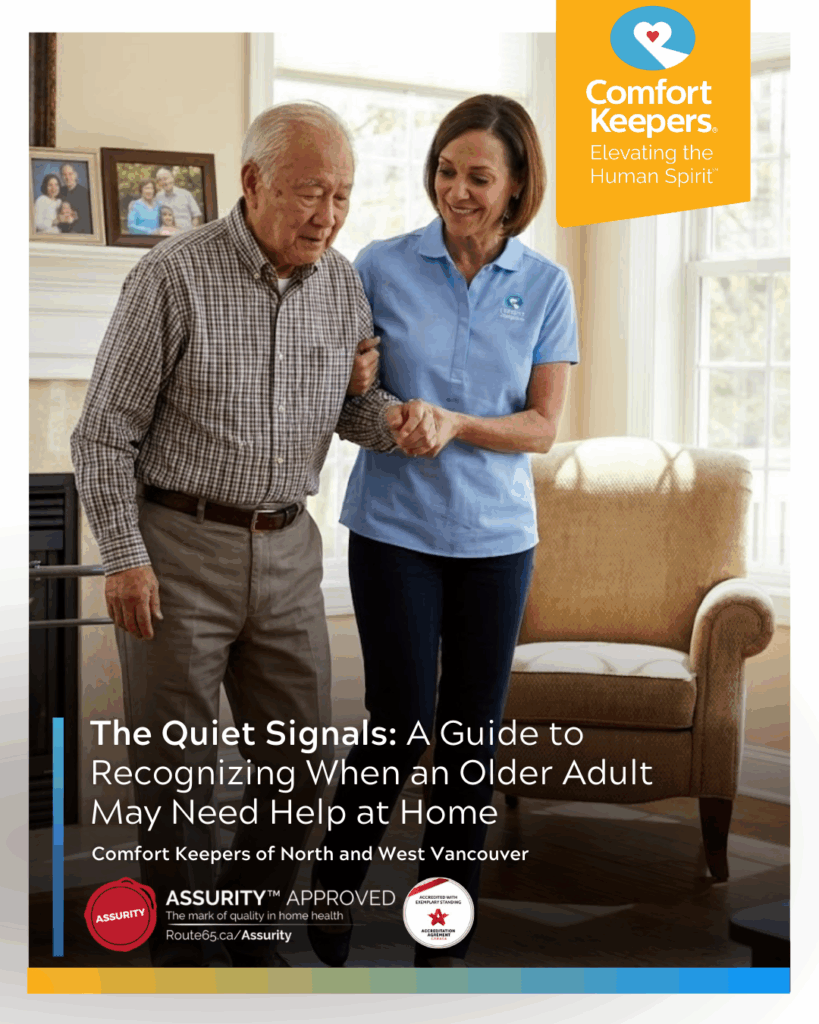
The Quiet Signals: A Guide to Recognizing When an Older Adult May Need Help at Home
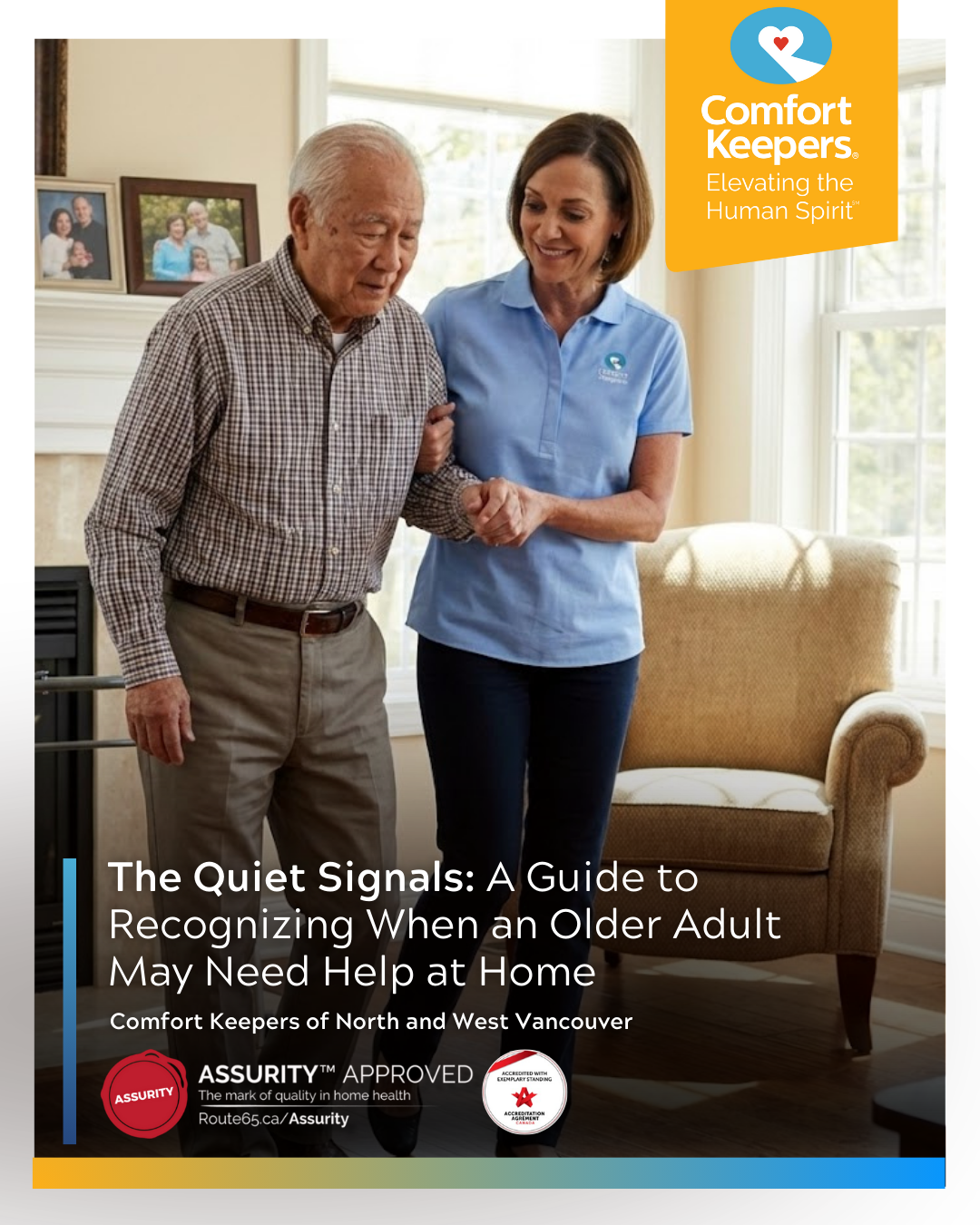
It often starts with a feeling. A sense of unease after a phone call with your mom, or a moment of worry when you notice your dad seems a bit unsteady on his feet during a visit. These moments are subtle, easy to dismiss as just a “bad day.” But sometimes, they’re the quiet, early signals that a loved one’s needs are changing.
Recognizing this shift isn’t about looking for a crisis. It’s about noticing the small patterns that suggest a little extra support could make a world of difference, preserving their independence and quality of life for years to come. This guide is designed to help you understand those signals, distinguish them from normal aging, and feel more confident in knowing when and how to help.
The Crucial Difference: Normal Aging vs. Warning Signs
One of the biggest challenges for families is telling the difference between the natural, expected changes of aging and the red flags that indicate a need for support. It can feel like a grey area, but there are clear distinctions. Understanding this difference is the first step toward providing the right kind of help.
| A Normal Part of Aging | A Potential Warning Sign |
| Forgetting a name or an appointment occasionally. | Frequent memory loss that disrupts daily life, like forgetting how to use the stove or getting lost. |
| Making a miscalculation in the chequebook once in a while. | Difficulty managing finances, unpaid bills piling up, or unusual purchases. |
| Needing glasses to read or having trouble hearing in a crowd. | Neglecting personal grooming, wearing dirty clothes, or a noticeable decline in hygiene. |
| Feeling tired and wanting to rest more often. | Significant withdrawal from hobbies, friends, and social activities they once enjoyed. |
| Taking longer to do certain physical tasks. | Noticeable trouble with walking, balance, or mobility; frequent falls or unexplained bruises. |
Seeing a change on the right side of this chart doesn’t mean the sky is falling. It simply means it’s time to pay closer attention.
A Closer Look: The Three Key Areas to Observe
When you’re trying to understand if a loved one needs more support, it helps to look at their life holistically. Changes rarely happen in isolation. A decline in one area often creates a ripple effect, impacting others. We can group these signs into three main categories.
1. Changes in Daily Living and Personal Care
These are often the most tangible signs and relate to Activities of Daily Living (ADLs) and Instrumental Activities of Daily Living (IADLs).
- Changes in Nutrition: Is there spoiled food in the fridge that never gets thrown out? Is the pantry or fridge consistently empty? You might notice significant weight loss or gain, or a reliance on easy-to-make, low-nutrition foods. This can be caused by anything from decreased mobility, making grocery shopping difficult, to depression, reducing their appetite.
- Lapses in Personal Hygiene: One of the most common signs is a decline in personal grooming. This might look like infrequent bathing, unkempt hair, body odour, or wearing the same clothes for several days. This isn’t about laziness; it can signal memory issues, depression, or physical challenges that make bathing feel like a monumental and unsafe task.
- A Messy or Unkempt Home: Look for changes in their environment. Are piles of mail and newspapers accumulating? Is the home unusually cluttered or dirty? This can indicate that the physical work of housekeeping has become too overwhelming. Piles of unopened bills can also be a red flag for cognitive difficulties or trouble managing finances.
- Medication Mishaps: Check the medicine cabinet. Are prescriptions expired? Are pill bottles still full near the end of the month? Finding missed doses -or worse, discovering they’ve taken too much – is a serious safety concern that signals a clear need for oversight.
2. Shifts in Mood, Mind, and Social Habits
Cognitive and emotional changes can be subtle, but they are powerful indicators of a person’s overall well-being.
- Increased Forgetfulness and Confusion: This goes beyond misplacing keys. We’re talking about forgetting important appointments, getting lost in familiar places, asking the same questions repeatedly, or struggling to follow a conversation. Leaving the stove on or the front door unlocked are significant safety risks tied to memory lapses.
- Changes in Mood and Personality: Have you noticed your normally cheerful parent becoming withdrawn, irritable, or unusually anxious? Sudden mood swings, a loss of interest in life (apathy), or paranoia can be signs of underlying issues like depression, isolation, or the early stages of dementia.
- Social Withdrawal: A key component of healthy aging is staying connected. Pay attention if your loved one suddenly stops participating in hobbies they once loved, declines invitations from friends, or stops attending religious services or community events. Social isolation is a major health risk for seniors and can accelerate both physical and mental decline.
3. Unseen Risks in the Home Environment
Sometimes the biggest clues are found not in what a person does, but in what their environment says about their safety.
- Unexplained Bumps and Bruises: If you notice bruises on their arms or legs and they can’t explain how they got them, it could be a sign of unreported falls or struggles with mobility. They may be “furniture walking” – holding onto walls and furniture to get around – which is a major indicator of instability and fall risk.
- Driving Difficulties: Look for new dents or scratches on their car. Have they mentioned getting a traffic ticket, having a near-miss, or feeling less confident behind the wheel? Driving requires complex cognitive and physical skills, and a decline in ability is a serious safety concern for them and others.
- Home Hazards: A safe home environment can quickly become hazardous. Look for clutter that creates tripping hazards, poor lighting in hallways or on stairs, and burnt-out lightbulbs that haven’t been changed. These small things can dramatically increase the risk of a fall.
It’s Not Just About Them – It’s About You, Too
If you’re reading this, chances are you’re the person who worries, who calls to check in, who helps with groceries or appointments. Being a family caregiver is a role born of love, but it can also be incredibly stressful.
Feeling frustrated, overwhelmed, or even guilty is normal. You may find yourself struggling to balance your parents’ needs with your own job, family, and well-being. Recognizing these early signs isn’t just about getting help for your loved one; it’s also about getting support for yourself. Proactively addressing small needs now can prevent them from becoming a crisis that leads to caregiver burnout later.
How to Start the Conversation (Without Starting a Fight)
Broaching the subject of needing help can feel like walking on eggshells. The key is to approach it with empathy, respect, and a focus on their goals, not their limitations.
- Start with “I” Statements: Instead of saying, “You’re not eating right,” try, “I was worried when I saw the fridge was empty because I want to make sure you’re feeling your best.”
- Focus on a Shared Goal: Frame the conversation around what they want. For example, “Dad, I know how much you love living in this house. I was thinking about ways we can make sure you can stay here safely and comfortably for as long as possible.”
- Offer Choices, Not Demands: Giving your loved one a sense of control is crucial. Rather than saying, “You need a caregiver,” ask, “Would it be helpful if someone came by a couple of times a week to help with laundry and meals so you have more energy for your gardening?”
- Introduce Help Incrementally: Often, the idea of “care” sounds overwhelming. Start small. Suggesting help with housekeeping or transportation is often less threatening than personal care. Exploring the different types of in-home care services can show that support is flexible and tailored to specific needs, not a complete takeover of their life.
Frequently Asked Questions
What are the very first subtle indicators I might miss?
Look for the small things that break a long-standing pattern. Is your meticulously organized dad’s desk now covered in unopened mail? Is your mom, who always loved to cook, now relying on frozen dinners? Other subtle signs include scorch marks on pots and pans (from forgetting food on the stove) or a decline in personal correspondence (no longer sending birthday cards or emails).
My parent is very stubborn and refuses to accept help. What can I do?
This is incredibly common. The key is patience and framing. Often, resistance comes from a fear of losing independence. Involve them in the decision-making process as much as possible. Sometimes, bringing in a neutral third party, like a trusted doctor or a professional care manager, can help depersonalize the conversation and present options from an expert perspective.
Does needing a little help mean they have to move out of their home?
Absolutely not. In fact, the entire goal of recognizing these signs early is to do the opposite. By introducing support proactively, you can address safety and wellness concerns before they become so severe that living at home is no longer an option. The aim is to help seniors age in place with dignity and independence.
Your Next Step: From Observation to Understanding
Noticing these quiet signals is the first, most important step. It’s an act of love and a commitment to your loved one’s well-being. You’ve moved from a place of vague worry to one of informed observation.
The next step isn’t to jump to conclusions, but to continue the journey of understanding. Start a private journal to track the signs you see. Talk to other family members to see if they’ve noticed similar changes. Most importantly, continue to approach the situation with the compassion and respect your loved one deserves. You’re now equipped to be their best advocate, ensuring they get the support they need to live safely, happily, and independently at home.
The Best Senior Home Care in North and West Vancouver is Comfort Keepers®
Our senior home care agency offers in-home care focusing on aging in place. Our services include dementia care, end-of-life care, post-surgery care, and palliative care. Comfort Keepers can assist seniors with living transition services, personal care, companionship care, and more!
Quality and Accredited Elderly Care: Happier, Healthier, and at Home with 24/7 Senior Care Opportunities!
Do you need a home care solution for yourself or a loved one? Have you been thinking about retirement homes and their alternatives as a solution? Comfort Keepers® enables seniors to maintain happy, healthy lives in the comfort of their own homes. In-home care services are available in North Vancouver, West Vancouver, and the surrounding areas.
Comfort Keepers® is a Senior Care Agency That Can Make a Difference with Interactive Caregiving™
Our in-home caregivers ensure our senior clients have the best quality of life. The Interactive Caregiving™ program ensures that a senior’s safety, nutrition, mental well-being, and everyday needs are met. This program brings joy and good health to each client’s home.
Comfort Keepers® North Vancouver and West Vancouver Can Help with In-Home Elderly Care Services!
If you are concerned about the health and well-being of a loved one we can help! Comfort Keepers offers 24-hour care and delivers top-quality and compassionate care for seniors. We are dedicated to safety technology solutions that foster independence and enhance well-being.
Locally Owned and Operated Home Health Care Agency
Our care centers around companionship for seniors. Empathetic care originates from the soul and allows us to meet our client’s requirements. The seasoned in-home caregivers employed by Comfort Keepers are carefully chosen based on their empathetic qualities.
Contact the Comfort Keepers® North Vancouver and West Vancouver office at (604) 998-8806 to learn more about our unique in-home care solutions for seniors.
Comfort Keepers is an Accredited Senior Care Agency in North and West Vancouver, BC
Accreditation is a rigorous process that involves industry experts evaluating an organization’s processes, policies, and procedures. Comfort Keepers® North and West Vancouver has been awarded Exemplary Standing by Accreditation Canada. This achievement recognizes that Comfort Keepers® meets or exceeds the stringent quality standards for Home Care companies established by Accreditation Canada.
Five Tips to Make the Holidays Easier for Seniors


What Everyone in North and West Vancouver Needs to Know About Making the Holidays Easier for Seniors and Their Families
Make the Holidays Easier for Seniors | Here are five tips to make the holidays easier for seniors. The holidays are joyous times that inspire feelings of togetherness, fond recollections of past times, and hope for the future. Family gatherings and even those with friends are sure to lift one’s spirits as new memories are forged among people of all ages.
For seniors, many times holidays bring about certain challenges that present with aging. Some challenges are common while others may be unique to the individual. In any case, the result may induce feelings of immense stress and upheaval even during times of holiday cheer. If you have a senior in your life, whether family or friend, the following tips will help you recognize some of these challenges as well as offer ways to alleviate the stress they may cause.
Five Tips to Make the Holidays Easier for Seniors
Tip #1 Cooking for Holiday Gatherings:
Cooking large meals for holiday gatherings may be hard for a senior to accomplish. The reasons may vary from not being accustomed to preparing large meals to the orchestration it involves to pull it off. Offer to help plan and prepare the meal together. This takes the pressure off the senior of doing it all alone and provides bonding time for you both! An alternative would be to host the dinner in your own home or ask guests to bring their favourite prepared dishes to share.
Tip #2 Travelling to Holiday Events or Parties:
Occasionally gatherings may require travel, whether in town or out. Sometimes, driving (especially at night) may be intimidating for seniors with troubled eyesight. Offer to attend parties or events with the seniors so they feel more comfortable about going.
Tip #3 Dealing with Loneliness and Isolation:
Some seniors, especially those who have lost a spouse or other beloved elderly friends, may experience increased loneliness during the holidays. Others may become mildly depressed for the same reasons, which can lead to a greater sense of isolation. To potentially prevent this from happening, make sure to visit the senior in your life often during the holidays. Offer to take them to holiday events. Have fun baking holiday goodies together. Even helping address Christmas cards and chatting over a cup of warm apple cider can lift everyone’s spirits.
Tip #4 Presents:
The gift of giving has become a fun hallmark of the Christmas season. However, for seniors presents can cause stress for various reasons. Some may be on limited budgets and unable to purchase gifts for all family members, or become simply overwhelmed by the idea of shopping in crowded stores. Other seniors may have problems wrapping gifts because of arthritis. You can help by suggesting family and groups of friends draw names to alleviate cost burdens for all. Offer to join a senior on a shopping spree to assist in choosing gifts and navigating crowds. Or, ask the senior to provide you with a shopping list and complete that task for them. Encourage the use of gift bags instead of wrapping presents, or plan a present-wrapping afternoon so you can help.
Tip #5 Hire a Caregiver to Assist:
The bustling holiday season is the perfect time to consider hiring a temporary caregiver to help with all elements of holiday preparations. Companies such as Comfort Keepers® assist seniors in areas of light housekeeping, accompanying seniors to social functions, meal preparation, and even helping with Christmas cards and wrapping presents. This might be especially important if your senior loved one lives far away from family. As caregivers who specialize in caring for the senior population, Comfort Keepers® can provide help and company to ensure your loved one has a happy holiday season.
The Best Senior Home Care in North and West Vancouver is Comfort Keepers®
Our senior home care agency offers in-home care focusing on aging in place. Our services include dementia care, end-of-life care, post-surgery care, and palliative care. Comfort Keepers can assist seniors with living transition services, personal care, companionship care, and more!
Quality and Accredited Elderly Care: Happier, Healthier, and at Home with 24/7 Senior Care Opportunities!
Do you need a home care solution for yourself or a loved one? Have you been thinking about retirement homes and their alternatives as a solution? Comfort Keepers® enables seniors to maintain happy, healthy lives in the comfort of their own homes. In-home care services are available in North Vancouver, West Vancouver, and the surrounding areas.
Comfort Keepers® is a Senior Care Agency That Can Make a Difference with Interactive Caregiving™
Our in-home caregivers ensure our senior clients have the best quality of life. The Interactive Caregiving™ program ensures that a senior’s safety, nutrition, mental well-being, and everyday needs are met. This program brings joy and good health to each client’s home.
Comfort Keepers® North Vancouver and West Vancouver Can Help with In-Home Elderly Care Services!
If you are concerned about the health and well-being of a loved one we can help! Comfort Keepers offers 24-hour care and delivers top-quality and compassionate care for seniors. We are dedicated to safety technology solutions that foster independence and enhance well-being.
Locally Owned and Operated Home Health Care Agency
Our care centers around companionship for seniors. Empathetic care originates from the soul and allows us to meet our client’s requirements. The seasoned in-home caregivers employed by Comfort Keepers are carefully chosen based on their empathetic qualities.
Contact the Comfort Keepers® North Vancouver and West Vancouver office at (604) 998-8806 to learn more about our unique in-home care solutions for seniors.
Comfort Keepers is an Accredited Senior Care Agency in North and West Vancouver, BC
Accreditation is a rigorous process that involves industry experts evaluating an organization’s processes, policies, and procedures. Comfort Keepers® North and West Vancouver has been awarded Exemplary Standing by Accreditation Canada. This achievement recognizes that Comfort Keepers® meets or exceeds the stringent quality standards for Home Care companies established by Accreditation Canada.
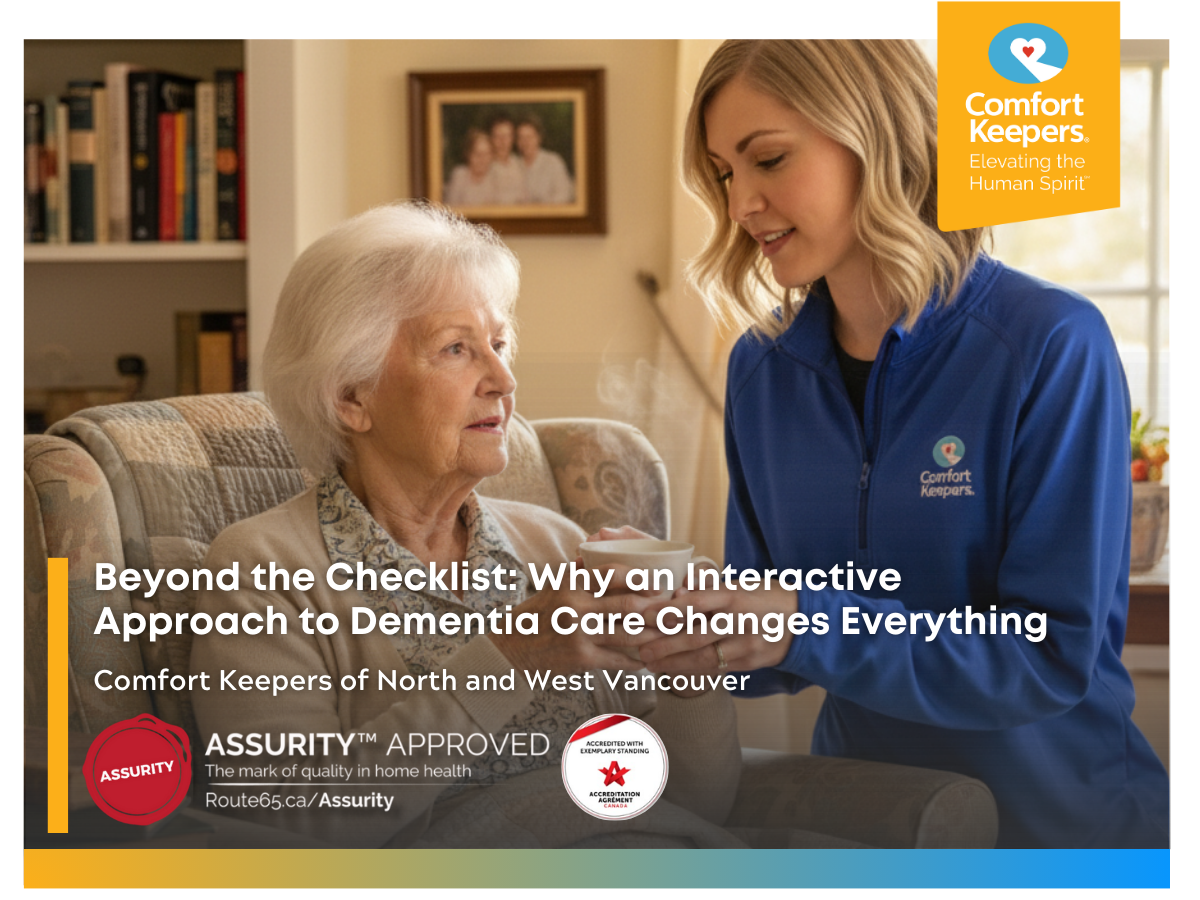
Beyond the Checklist: Why an Interactive Approach to Dementia Care Changes Everything
You’ve likely read a dozen articles listing activities for seniors with dementia. You’ve bookmarked ideas for puzzles, music, and memory games. Yet, a nagging feeling remains: is simply keeping a loved one busy the same as helping them live well?
This is the critical question that many families face when evaluating care options. The search for quality dementia care often gets bogged down in checklists of services, but the most significant factor in your loved one’s well-being isn’t the list of things a caregiver does – it’s the philosophy that guides how they do them.
The truth is, not all care models are created equal. While one approach can lead to passivity and withdrawal, another can unlock moments of joy, connection, and purpose. The difference lies in engagement, and the science is clear: meaningful interaction doesn’t just improve mood; it can fundamentally alter the course of cognitive decline. Research shows that frequent social engagement can delay the onset of dementia by an average of five years and is linked to a 38% reduction in dementia risk.
Understanding this distinction is the first step to making a truly confident decision for your family.
The Two Paths of Dementia Care: A Framework for Evaluation
When you look closely, most dementia care falls into one of two distinct models. Recognizing them is key to choosing a path that promotes dignity and quality of life.
The Passive Model: Activity-Based Care
This is the traditional, task-oriented approach. It’s driven by a schedule and focuses on completing a list of duties: mealtime, bath time, and activity time. The caregiver “does for” the client, often with the best intentions of efficiency and safety.
- Focus: Task completion and supervision.
- Dynamic: The senior is a passive recipient of care.
- Typical Scene: A caregiver prepares lunch and serves it while the senior watches television. The task is done, but an opportunity for connection is lost.
- Outcome: While physical needs are met, this model can inadvertently lead to feelings of loneliness, helplessness, and a faster decline in cognitive and physical abilities.
The Engaged Model: Person-Centered Care
This modern approach puts the individual first. It’s built on understanding the person’s history, preferences, and remaining abilities. The goal isn’t just to complete tasks, but to use them as opportunities for collaboration and connection. The caregiver “does with” the client.
- Focus: Emotional well-being and relationship building.
- Dynamic: The senior is an active participant in their own life.
- Typical Scene: The caregiver and senior prepare lunch together, perhaps washing vegetables or setting the table, sharing stories along the way.
- Outcome: This model is proven to reduce agitation and depression while improving overall quality of life. It fosters a sense of purpose and preserves independence for as long as possible.
The Gold Standard: Introducing Interactive Caregiving™
At Comfort Keepers North & West Vancouver, we’ve built our entire dementia care program on the engaged model, refining it into a proprietary philosophy we call Interactive Caregiving™. It’s a holistic approach that transforms everyday routines into opportunities to stimulate the mind, body, and spirit.
The core principle is simple but powerful: shared activity is a tool for connection. Whether it’s preparing a meal, folding laundry, or looking through a photo album, our caregivers are trained to turn these moments into meaningful interactions that enrich our clients’ lives. We focus on what they can do, not what they can no longer do.
The Four Pillars of Interactive Caregiving™ in Action
Our philosophy is grounded in four pillars that work together to support a person’s whole health.
1. Mental Stimulation and Cognitive Engagement
An active mind maintains sharper cognitive function. High engagement in cognitive activities is shown to have a strong protective effect, reducing dementia risk with a hazard ratio of 0.58. We go beyond generic puzzles and integrate mental stimulation directly into daily life.
- Instead of just listening to music: We encourage clients to share memories associated with favorite songs or sing along, sparking emotional and cognitive recall.
- Instead of just looking at photos: We use them as conversation starters to discuss family history, past careers, and cherished life events, reinforcing their sense of identity.
- Instead of just reading a book: We might read aloud together from a newspaper and discuss current events or stories, promoting engagement with the world.
2. Physical Activity and Mobility
Physical activity helps maintain strength, balance, and mood. Our approach integrates movement safely and naturally throughout the day.
- Doing with: We invite clients to join in light housekeeping tasks like folding towels or sweeping, which provides a sense of contribution and gentle exercise.
- Getting outdoors: A short walk in the garden or to the mailbox isn’t just exercise; it’s a chance to discuss the changing seasons, see neighbours, and enjoy fresh air.
- Following their lead: If a client enjoys gardening, we’ll help them tend to indoor plants. If they loved to dance, we’ll put on their favourite music.
3. Emotional Support and Dignity
Dementia can be a confusing and frustrating experience. Our caregivers are trained to provide consistent emotional support, build trust, and preserve our clients’ dignity at every turn.
- Effective Communication: We use proven techniques for someone living with dementia, such as maintaining eye contact, speaking clearly, and using non-verbal cues to offer reassurance.
- Validating Feelings: We acknowledge and validate emotions, rather than dismissing or correcting them, which helps reduce anxiety and agitation.
- Promoting Independence: We empower clients by offering choices whenever possible, from what to wear to what to eat, reinforcing their sense of control.
4. Shared Routines and Home Safety
Consistent routines create a predictable and secure environment, which is especially comforting for someone with dementia. We make clients active partners in these daily rhythms.
- Meal Preparation: Helping to plan a menu or wash vegetables provides purpose and stimulates the senses.
- Home Safety: We collaborate on tasks like tidying up pathways, turning it into a shared goal rather than a caregiver’s chore. This fosters a sense of ownership over their environment.
Your Evaluation Checklist: 7 Questions to Ask Any Care Provider
Choosing a care partner is a major decision. Use these questions to look beyond the sales pitch and understand the core philosophy of any provider you consider.
- Can you describe your specific care philosophy for clients with dementia? Is it documented?
- How do you train your caregivers to engage with clients, not just supervise them?
- How do you learn about my loved one’s personal history, hobbies, and preferences to build a care plan?
- Can you provide examples of how you turn daily tasks into interactive moments?
- How do you measure success and quality of life for your clients?
- How do you support a client’s emotional well-being and help manage challenging behaviors like agitation or confusion?
- Is the goal of your care to “do for” my loved one or “do with” them?
Frequently Asked Questions
My loved one is in the later stages of dementia. Can they still benefit from Interactive Caregiving™?
Absolutely. While the activities may be adapted, the philosophy remains the same. Engagement in later stages might focus more on sensory stimulation – the feel of a soft blanket, the sound of a familiar song, the scent of a favorite food, or the comfort of a hand to hold. The goal is always to connect and provide comfort and dignity, regardless of cognitive ability.
How are Comfort Keepers caregivers trained in this specific philosophy?
Every caregiver completes extensive training in our Interactive Caregiving™ methodology, which includes specialized modules on Alzheimer’s and dementia care. This training is ongoing and covers communication techniques, activity planning, and strategies for managing dementia-related behaviors with empathy and respect. It’s a core competency, not an add-on.
What does Interactive Caregiving™ look like on a typical day?
It looks like life, just with gentle support. It might start with the caregiver and client choosing an outfit for the day together. They might then collaborate on preparing breakfast, chatting while they work. Later, they could spend time looking through a photo album, going for a short walk, or listening to classic radio shows. The day is a fluid blend of meeting essential needs – like personal care and nutrition – and creating moments of connection and joy.
Choosing the right care is about finding a partner who sees the person, not just the diagnosis. It’s about ensuring your loved one feels safe, respected, and connected to the life they’ve lived. The philosophy of care is the foundation for everything else.
To learn more about how our accredited, award-winning approach can make a difference for your family, explore our website and see how we bring Interactive Caregiving™ to life for seniors in North & West Vancouver.
The Best Senior Home Care in North and West Vancouver is Comfort Keepers®
Our senior home care agency offers in-home care focusing on aging in place. Our services include dementia care, end-of-life care, post-surgery care, and palliative care. Comfort Keepers can assist seniors with living transition services, personal care, companionship care, and more!
Quality and Accredited Elderly Care: Happier, Healthier, and at Home with 24/7 Senior Care Opportunities!
Do you need a home care solution for yourself or a loved one? Have you been thinking about retirement homes and their alternatives as a solution? Comfort Keepers® enables seniors to maintain happy, healthy lives in the comfort of their own homes. In-home care services are available in North Vancouver, West Vancouver, and the surrounding areas.
Comfort Keepers® is a Senior Care Agency That Can Make a Difference with Interactive Caregiving™
Our in-home caregivers ensure our senior clients have the best quality of life. The Interactive Caregiving™ program ensures that a senior’s safety, nutrition, mental well-being, and everyday needs are met. This program brings joy and good health to each client’s home.
Comfort Keepers® North Vancouver and West Vancouver Can Help with In-Home Elderly Care Services!
If you are concerned about the health and well-being of a loved one we can help! Comfort Keepers offers 24-hour care and delivers top-quality and compassionate care for seniors. We are dedicated to safety technology solutions that foster independence and enhance well-being.
Locally Owned and Operated Home Health Care Agency
Our care centers around companionship for seniors. Empathetic care originates from the soul and allows us to meet our client’s requirements. The seasoned in-home caregivers employed by Comfort Keepers are carefully chosen based on their empathetic qualities.
Contact the Comfort Keepers® North Vancouver and West Vancouver office at (604) 998-8806 to learn more about our unique in-home care solutions for seniors.