



Palliative caregiving is an act of devotion that demands strength, patience, and emotional resilience. Providing care for a loved one facing a terminal illness in North and West Vancouver often includes managing physical needs, navigating complex emotions, and coordinating medical support. The responsibility does not pause. It becomes an around-the-clock commitment.
Caregiver burnout is a recognized medical and psychological condition caused by sustained emotional and physical strain. According to Mental Health Research Canada (MHRC), 33% of working caregivers report experiencing symptoms of burnout.
For those providing care to individuals with dementia or Alzheimer’s disease, this figure rises to 45%, highlighting the substantial impact of long-term caregiving responsibilities.
Professional support, such as End-of-Life Care and Dementia Care, offers structured relief. Without this support, the caregiving role risks becoming unsustainable. Recognizing this reality is important to building a plan that protects the caregiver’s health while ensuring dignified, compassionate support for the care recipient.
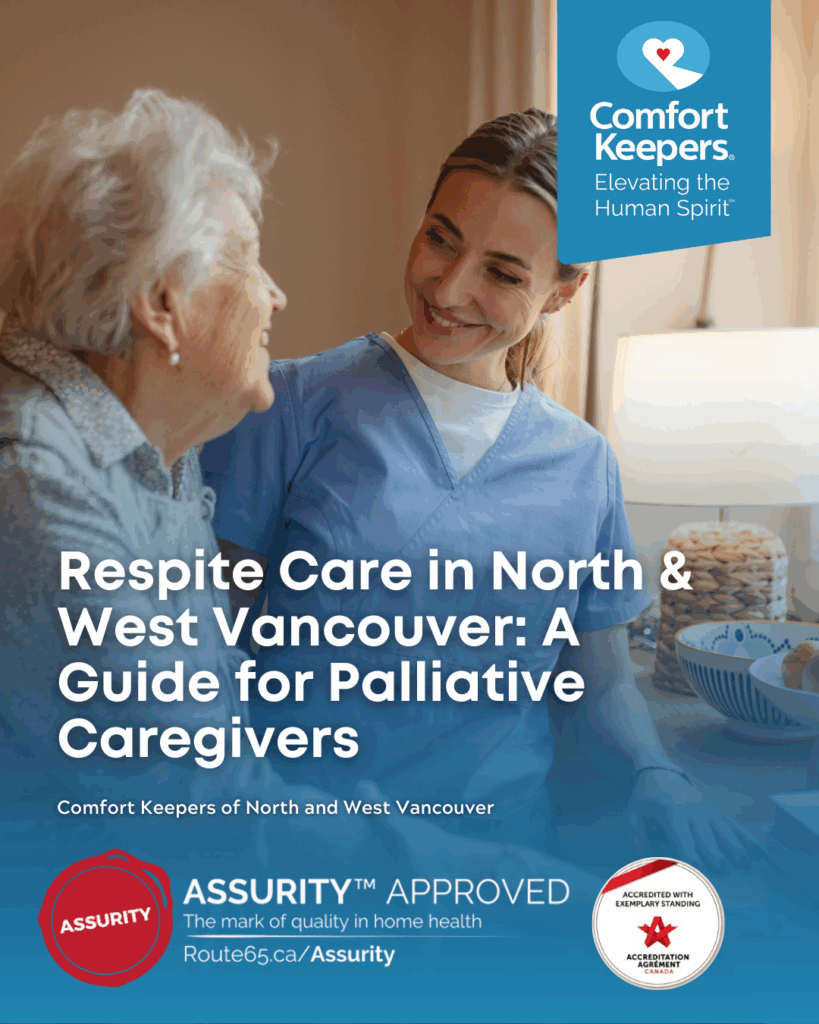
Recognizing Burnout: Early Signs and Emotional Depletion in Palliative Caregiving
Caregiver burnout is a clinical and emotional syndrome that arises from sustained stress, high emotional load, and inadequate recovery time. Burnout affects up to 45% of Canadian dementia caregivers, a statistic that underscores how intense and isolating this role can become.
The symptoms of caregiver burnout are listed below:
- Chronic exhaustion despite adequate sleep
- Irritability or emotional instability, often without a clear cause
- Withdrawal from hobbies, social circles, or previously enjoyed activities
- Physical symptoms such as headaches, fatigue, or gastrointestinal discomfort
- Perceived helplessness when responsibilities feel insurmountable
- Reduced empathy, followed by guilt
These indicators signal compromised emotional capacity and diminished personal health. Caregivers navigating palliative care for loved ones in North & West Vancouver often experience anticipatory grief, a phenomenon that arises when mourning begins before physical loss occurs.
Without formal intervention or routine relief, symptoms can escalate, leading to emotional fatigue, caregiver detachment, or medical complications.
For families unsure of their risk level, Comfort Keepers offers a simple, self-guided Care Survey to assess individual needs and determine the urgency of relief.
Recognizing burnout at an early stage enables caregivers to implement sustainable plans that preserve both compassion and capacity. Respite care does not disrupt care continuity; it reinforces it.
The Role of Respite Care: An Essential Support System
Respite care is a professional service designed to temporarily relieve family caregivers from their daily duties while ensuring uninterrupted, high-quality care for the recipient.
Unlike long-term care or hospitalization, respite services are flexible and short-term in nature, designed to address both physical exhaustion and emotional fatigue.
In-home respite care provides comfort through familiar surroundings and personalized attention. Overnight respite options and adult day programs serve those who require extended support.
These structured services address core needs such as nutrition, mobility, medication reminders, and emotional companionship, without removing the loved one from their established environment.
Comfort Keepers enhances respite through Interactive Caregiving™, a model that emphasizes active engagement, mental stimulation, and personalized interaction. These methods strengthen caregiver-client trust while promoting wellness for seniors.
In-home care complements respite by supporting more advanced health needs. This includes wound care, medication monitoring, and mobility assistance, delivered with professionalism and compassion.
Learn more about structured Respite Care Services built specifically for families in North and West Vancouver.
Your Recharge Plan with Comfort Keepers
A structured care plan designed by Comfort Keepers enables family caregivers in North and West Vancouver to receive personalized support while ensuring consistent, compassionate care for their loved one. This “Recharge Plan” allows for breaks that can span a few hours to several days, depending on each family’s needs.
The services included in each care plan are given below:
- Personal care: Bathing, grooming, dressing, and toileting with respect and dignity.
- Meal preparation: Nutritious meals suited to dietary preferences and medical conditions.
- Mobility assistance: Help with safe movement around the home.
- Companionship: Engaging conversation and emotional support to reduce isolation.
- Housekeeping: Light cleaning, laundry, and other practical household tasks.
- Transportation: Access to safe Transportation Services for appointments or errands.
- Nurse assessment support: Clinical tasks such as wound care, medication management, and Nurse Assessments when needed.
Comfort Keepers is more than a care provider. It is a trusted partner. As a locally operated agency with deep ties to the North Shore, Comfort Keepers has earned Accreditation Canada’s “Exemplary Standing,” the highest level of recognition for safe, high-quality service.
Families can review the full Care Services Overview to explore how every component supports caregiver rest and patient wellness.
Public vs Private Respite in North and West Vancouver: What Are Your Options?
Respite services in North and West Vancouver include a mix of public, non-profit, and private care providers. Understanding the differences between these systems enables families to make informed choices about support.
The main care models are described below:
- Subsidized respite care is available through publicly funded programs that offer short-term stays to relieve family caregivers. Access typically involves eligibility assessments and coordination through health service networks.
- Community-based services are expanding through local partnerships to include adult day programs and occasional overnight support, aimed at reducing caregiver fatigue and enhancing senior well-being.
- Private in-home care: Personalized plans like those from Comfort Keepers offer immediate access, flexible scheduling, and specialized support tailored to family dynamics.
Home support programs help transition care between hospital, home, and temporary stays. Comfort Keepers offers Transition Services that bridge these care phases smoothly, ensuring continuity and emotional stability for both the caregiver and recipient.
Preparing Your Loved One for Respite: Emotional Readiness & Trust Building
Successful respite care begins with trust and emotional preparation. Many caregivers worry that their loved one might feel abandoned or confused by a new caregiver entering their home.
Suggestions for smooth transitions are given below:
- Explain the benefit: Frame the visit as a helpful friend or professional providing support while the primary caregiver takes a short break.
- Personalized caregiver matching: Comfort Keepers selects professionals based on compatibility, personality, and care needs.
- Gradual onboarding: Introduction visits and familiarization routines reduce anxiety and ensure emotional comfort.
A supportive care environment reduces the risk of emotional disruption during the caregiver’s absence. Home previews and trial visits ease the transition process and establish a routine that promotes mutual trust.
Cost Transparency: Understanding Pricing for Respite Care
Respite care pricing in North and West Vancouver is determined by several factors, including the level of care required, the duration of support, and any additional services provided. These variables affect the total cost, which is why Comfort Keepers builds custom care plans tailored to each family’s specific situation.
The pricing factors are outlined below:
- Care hours per week or month: More extended care plans may offer flexible rates.
- Service type: Tasks like nurse assessment, mobility support, or overnight supervision require specialized caregivers.
- Subsidy eligibility: Some families may be eligible for government support or community funding to offset their expenses.
Comfort Keepers provides full transparency throughout the planning phase, including detailed cost breakdowns and guidance on available funding options. Each family begins with a no-obligation, free consultation to assess needs and create a plan that works financially and emotionally.
Why Families in North and West Vancouver Trust Comfort Keepers
Trust is earned through real-life experiences, and Comfort Keepers has supported hundreds of families across the North Shore with compassionate, professional respite care.
A caregiver from Canyon Heights recently shared:
“When my father’s dementia progressed, I was completely overwhelmed. Comfort Keepers matched us with a caregiver who not only understood memory care but truly cared about my dad as a person. It changed everything for us.”
The care team is deeply embedded in the North and West Vancouver community, including areas like Delbrook, Edgemont Village, and Deep Cove. Caregivers are not just service providers; they are neighbors, allies, and trained professionals invested in preserving dignity and comfort at every stage.
Local trust is also fostered through strong connections with community partners, healthcare networks, and families who recommend Comfort Keepers based on consistent results.
Taking the First Step Toward Caregiver Recovery
Self-care is not indulgence; it is a responsibility. Sustainable caregiving requires emotional and physical recovery. Acknowledging the need for respite is a proactive act of love, not withdrawal.
Comfort Keepers offers more than service. We offer a partnership. Through personalized respite planning, local coordination, and transparent communication, families in North and West Vancouver can rest, recharge, and return to caregiving with renewed strength.
Transition services are available for those moving between hospital, hospice, or home-based care. Integrated plans ensure comfort for the client and recovery for the caregiver.
Schedule your no-cost consultation today. Let the Comfort Keepers team support you through every step of your caregiving journey.
Frequently Asked Questions: Addressing Caregiver Concerns
Respite care services are designed to support both the caregiver and the individual receiving care. Below are answers to the most common questions families in North & West Vancouver ask when considering professional respite support:
Will my loved one feel abandoned during respite care?
Comfort Keepers’ caregiver-matching process is built around trust and comfort. Respite care is introduced gradually, with a familiar, friendly face who feels more like a companion than a clinician. Visits are framed as supportive, personalized interactions, not clinical interventions.
How do I prepare a senior loved one for a new caregiver?
Preparation begins with open communication and positivity. Framing the visit as a helpful friend arriving to provide companionship and assistance encourages acceptance. For further support, Comfort Keepers provides a guide on easing the transition into Interactive Caregiving™ routines.
What qualifications do Comfort Keepers caregivers have?
Every caregiver undergoes rigorous background screening, insurance verification, and ongoing training. Caregivers are trained in dementia care, in-home senior care, and personalized engagement through the Interactive Caregiving™ model. Each professional is selected for empathy and reliability.
What does respite care cost in North & West Vancouver?
Pricing is determined by duration, care level, and services provided. Comfort Keepers offers transparent, customized care plans starting with a free in-home consultation. Some families may also qualify for subsidies or government-supported services, discussed during the consultation.

The Best Senior Home Care in North and West Vancouver is Comfort Keepers®
Our senior home care agency offers in-home care focusing on aging in place. Our services include dementia care, end-of-life care, post-surgery care, and palliative care. Comfort Keepers can assist seniors with living transition services, personal care, companionship care, and more!
Quality and Accredited Elderly Care: Happier, Healthier, and at Home with 24/7 Senior Care Opportunities!
Do you need a home care solution for yourself or a loved one? Have you been thinking about retirement homes and their alternatives as a solution? Comfort Keepers® enables seniors to maintain happy, healthy lives in the comfort of their own homes. In-home care services are available in North Vancouver, West Vancouver, and the surrounding areas.
Comfort Keepers® is a Senior Care Agency That Can Make a Difference with Interactive Caregiving™
Our in-home caregivers ensure our senior clients have the best quality of life. The Interactive Caregiving™ program ensures that a senior’s safety, nutrition, mental well-being, and everyday needs are met. This program brings joy and good health to each client’s home.
Comfort Keepers® North Vancouver and West Vancouver Can Help with In-Home Elderly Care Services!
If you are concerned about the health and well-being of a loved one we can help! Comfort Keepers offers 24-hour care and delivers top-quality and compassionate care for seniors. We are dedicated to safety technology solutions that foster independence and enhance well-being.
Locally Owned and Operated Home Health Care Agency
Our care centers around companionship for seniors. Empathetic care originates from the soul and allows us to meet our client’s requirements. The seasoned in-home caregivers employed by Comfort Keepers are carefully chosen based on their empathetic qualities.
Contact the Comfort Keepers® North Vancouver and West Vancouver office at (604) 998-8806 to learn more about our unique in-home care solutions for seniors.
Comfort Keepers is an Accredited Senior Care Agency in North and West Vancouver, BC
Accreditation is a rigorous process that involves industry experts evaluating an organization’s processes, policies, and procedures. Comfort Keepers® North and West Vancouver has been awarded Exemplary Standing by Accreditation Canada. This achievement recognizes that Comfort Keepers® meets or exceeds the stringent quality standards for Home Care companies established by Accreditation Canada.
How to Stay Active After Retirement in North & West Vancouver
Regular physical activity after retirement significantly reduces fall risk, improves cognitive health, and supports independent living for older adults. According to the Canadian Society for Exercise Physiology (CSEP), adults aged 65+ must engage in at least 150 minutes of moderate-to-vigorous aerobic activity per week, in addition to muscle-strengthening exercises twice weekly and balance-focused movements several times per week.
As of July 2024, 18.9% of Canada’s population was aged 65 or older. Public health data from 2023/24 reveals that more than 80% of Canadian seniors fail to meet these recommended activity levels, contributing to over 81,000 fall-related hospitalizations, excluding Quebec. These preventable injuries not only strain healthcare systems but also jeopardize the quality of life for older adults.
At Comfort Keepers North and West Vancouver, our team supports these national guidelines by integrating functional movement routines and fall-prevention strategies into our personalized Homecare Services. Through our care philosophy, we help older adults remain physically active in safe, familiar environments, especially when attending community classes becomes difficult or unsafe.
Group Fitness with a Purpose: Benefits Beyond Exercise
Participating in group fitness programs delivers not only physical benefits but also important social and emotional advantages that reduce isolation, support mental well-being, and ease the burden on family caregivers.
Studies consistently show that older adults who engage in structured, social exercise are less likely to suffer from depression and more likely to maintain daily independence.
At Comfort Keepers North and West Vancouver, our care teams often hear from clients who have rediscovered joy and confidence through regular participation in group wellness activities.
One local family caregiver recently shared, “I am very pleased that I chose Comfort Keepers. Their commitment to client care and the integrity of their staff make families of loved ones completely at ease knowing that they are being looked after the way a family member would look after them. In essence, I am happy to say that Comfort Keepers are our “extended family.” I would highly recommend Comfort Keepers to anyone who asks for in-home care, as they are, in my opinion, the best and most trusted in their field.” – BARBARA S. Comfort Keepers Client.
While community centres offer group fitness like Pickleball, Water Aerobics, and Line Dancing, not every older adult can or wants to attend these public settings.
Our caregivers deliver tailored in-home routines through our Interactive Caregiving™ approach, focusing on meaningful engagement that matches the client’s mobility level, interests, and health goals. Whether it’s guided stretching, gentle resistance exercises, or collaborative meal prep, the emphasis is always on “doing with,” not “doing for.”
In-Home Alternatives: Fitness Support When You Can’t Get Out
When attending local fitness classes becomes difficult due to weather, mobility challenges, or recovery from surgery, in-home fitness support provides a safe and effective alternative. At Comfort Keepers North and West Vancouver, our care teams deliver personalized wellness routines directly in the home, ensuring older adults remain active regardless of circumstance.
Clients recovering from hip replacements, cardiac events, or other procedures receive clinically informed movement support. Our caregivers incorporate safe, low-impact exercises tailored to medical history and physician recommendations.
To further assist those adjusting after hospital discharge or managing long-term conditions, we offer Transition Services that bridge the gap between institutional care and home life. These include range-of-motion routines, strength training with resistance bands, and balance drills using stability balls or yoga blocks, all carefully monitored for safety.
Affordable tools such as resistance bands, yoga mats, and pedal exercisers can turn any living space into a fitness zone. Our caregivers educate clients on proper technique, monitor fatigue, and adjust routines based on progress, helping older adults rebuild strength and confidence without leaving home.
How to Choose the Right Activities for Your Needs
Selecting the most suitable fitness activities depends on individual health goals, chronic conditions, and personal preferences. Understanding the difference between aerobic, strength, and balance-based exercises helps older adults build a well-rounded program.
- Aerobic exercises like brisk walking, Aquafit, or cycling support cardiovascular health. For beginners, community programs such as ActivAge and Choose to Move offer structured, low-impact routines.
- Strength training focuses on muscle mass retention and bone density. Resistance bands, light weights, and guided bodyweight exercises can be practiced at home or in classes such as Chair Strength.
- Balance activities, including Tai Chi, Chair Yoga, and heel-to-toe walking, are essential for fall prevention and postural control.
Our caregivers at Comfort Keepers North and West Vancouver help match each client with appropriate activities, whether through in-home guidance or referrals to nearby programs. When needed, we collaborate with family members and healthcare providers to ensure alignment with medical goals.
Safety First: When and How to Consult a Doctor
All physical activity programs for older adults must begin with a safety assessment, particularly when chronic conditions, mobility issues, or medications are involved. British Columbia’s fall-risk assessment tools recommend reviewing vision, medications, blood pressure, and recent incidents of dizziness or imbalance before starting or modifying any routine.
Warning signs that require immediate medical consultation include:
- Chest pain or tightness during exertion
- New or unexplained shortness of breath
- Frequent dizziness or light-headedness
- Falls or near-falls within the past month
At Comfort Keepers North and West Vancouver, our caregivers monitor for these symptoms during care delivery. When needed, we escalate concerns to primary care providers or specialists to ensure safe continuation of fitness routines.
Vitamin D supplementation, medication reviews, and footwear checks are often overlooked but essential components of senior exercise safety. We encourage families to consult our educational resource, the Falls & Senior Home Safety Guide, which outlines practical steps for hazard reduction and balance improvement.
The 12-Week Retirement Fitness Plan (Updated for 2025)
Structured fitness routines improve consistency, motivation, and long-term health outcomes among older adults. At Comfort Keepers North and West Vancouver, we encourage clients to follow a flexible 12-week plan that balances walking, strength training, and balance exercises, while adjusting intensity according to ability.
Build the Habit in Weeks 1-4
- 20–30 minutes of brisk walking, five days per week
- Resistance band strength training, two days per week
- Daily balance drills: single-leg stance, heel-to-toe walk (5 minutes)
Increase the Challenge in Weeks 5-8
- 30–35 minutes of aerobic activity, three days per week
- Interval walking or aquatic cardio, once per week
- Resistance training 2–3 times weekly
- Daily balance work (10 minutes)
Sustain & Expand in Weeks 9-12
- Add hill walks, aquatic classes, or group movement sessions
- Increase resistance levels during strength workouts
- Integrate weekly Tai Chi or Chair Yoga sessions
- Practice advanced balance (eyes closed, uneven surfaces)
Each plan is adaptable to injury history, chronic disease, and individual goals. Our caregivers support safe execution, monitor fatigue, and adjust schedules based on recovery. When formal exercise is not feasible, Interactive Caregiving™ techniques keep older adults engaged through meaningful movement woven into daily life.
Seasonal Adjustments for Year-Round Success
Sustaining an active lifestyle through British Columbia’s seasonal changes requires planning and creativity. In winter months, wet sidewalks and reduced daylight may deter outdoor movement. Our team at Comfort Keepers North and West Vancouver recommends senior-friendly indoor options such as:
- Mall walking programs at Capilano Mall and Park Royal
- Indoor recreation centres offering drop-in classes and walking tracks
- Home-based movement: stretching routines, stair stepping, or guided online fitness sessions
Municipal recreation departments across the North Shore publish detailed 55+ activity guides, including the North Vancouver Recreation and Culture Commission (NVRC) and the District of West Vancouver. This list programs by date, location, accessibility, and fitness type, ideal for adapting routines to weather and personal schedules.
For clients with mobility or driving limitations, we coordinate Transportation Services to help them safely attend fitness appointments, community centres, or mall walking sessions during poor weather. Our team ensures consistent activity remains a reality, not a seasonal goal.
Nutrition & Wellness: Fueling Your Active Lifestyle
Nutritional health and physical fitness are interdependent pillars of senior wellness. Without adequate protein, hydration, and nutrient density, exercise efforts may be undermined by fatigue, muscle loss, or blood sugar fluctuations.
Older adults living on pensions or fixed incomes face unique dietary challenges. At Comfort Keepers North and West Vancouver, we work closely with clients and families to provide meal planning support, grocery navigation, and supplementation strategies when necessary.
Clients and caregivers can explore our in-depth resource: Healthy Eating Tips for Seniors on a Fixed Income to find affordable solutions that support active living. Topics include:
- Budget-friendly protein sources (eggs, legumes, canned tuna)
- Hydration tips for older adults with reduced thirst sensitivity
- Healthy snack ideas to fuel light exercise or recovery
Our caregivers also assist with meal prep, hydration reminders, and grocery support, ensuring each client remains physically nourished as they pursue fitness and mobility goals.
Comfort Keepers’ Approach: Interactive Caregiving™ in Action
Interactive Caregiving™ is Comfort Keepers North and West Vancouver’s signature philosophy of “doing with” instead of “doing for”. This method engages seniors physically, emotionally, and mentally, allowing them to take an active role in their daily lives, whether that includes meal preparation, light stretching, or assisted walking.
Our care team is trained to identify opportunities to include therapeutic movement in everyday activities, making physical wellness accessible even for clients managing dementia, mobility limitations, or post-surgery recovery. For seniors requiring clinical supervision, we provide personalized Interactive Caregiving that supports safe exercise implementation.
In cases where family members need temporary relief, Respite Care allows our caregivers to step in and support active living without interruption, maintaining movement routines critical for long-term wellness.
Getting Started Today: Your Local Support System
Building a consistent fitness routine starts with simple, local steps. At Comfort Keepers North and West Vancouver, our team supports seniors in creating active lifestyles that fit British Columbia’s seasons and individual needs.
Stay active in any weather with indoor mall walking, home-based resistance bands, or aqua-fit at local recreation centres. Seniors can use municipal 55+ guides to find updated programs.
Social connections boost commitment. Group walks followed by coffee or library-hosted classes offer both movement and community.
Prevent falls with regular balance and strength exercises. Activities like Tai Chi and single-leg drills are part of our personalized home support plans, especially for clients with mobility concerns.
Affordable options are widely available. Free or low-cost programs, community parks, and grant-funded classes are accessible across North and West Vancouver. Our Transportation Services ensure clients reach them safely.
Track progress weekly by logging minutes, steps, or balance holds. Caregivers can assist with goal setting and motivation.
This week’s action plan:
- Try a new aerobic activity
- Start with Week 1 of the 12-week fitness plan
- Use BC’s fall-risk checklist
- Take our Care Survey to personalize your plan
Our team is here to make active aging safe, enjoyable, and sustainable, right from your home.
Common Questions About Senior Fitness and Staying Active in Retirement
What are the best senior exercise programs in North Vancouver?
North Vancouver offers both community-based and at-home senior fitness options. Popular activities include Tai Chi, Chair Yoga, balance classes, and low-impact aerobics. For seniors needing additional support, our team at Comfort Keepers North and West Vancouver can assist with safe, personalized at-home programs through our Interactive Caregiving™ approach.
Can Comfort Keepers help with fitness after surgery or during recovery?
Yes, we support post-surgery recovery with in-home fitness and mobility care. Our Transition Services ensure safe movement, balance training, and physical rehabilitation for seniors healing at home.
Where can seniors find free or low-cost classes in West Vancouver?
Seniors can access free or low-cost wellness programs through municipal recreation centres and community parks. Options include outdoor fitness zones, drop-in chair yoga, and 55+ group fitness classes. For seniors with mobility or transportation challenges, our Transportation Services can help ensure safe access.
What’s the difference between Tai Chi and Chair Yoga for seniors?
Tai Chi emphasizes flowing movement and balance, while Chair Yoga focuses on flexibility and strength with seated support. Both are excellent for fall prevention and gentle conditioning. We often integrate these practices into care plans to promote safe, low-impact fitness at home.

How do I know if my aging parent needs help staying active?
Warning signs include frequent sitting, missed appointments, or recent falls. If an aging parent shows reduced energy, social withdrawal, or difficulty moving around safely, they may benefit from structured support. Start with our Care Survey to determine their fitness and caregiving needs.
The Best Senior Home Care in North and West Vancouver is Comfort Keepers®
Our senior home care agency offers in-home care focusing on aging in place. Our services include dementia care, end-of-life care, post-surgery care, and palliative care. Comfort Keepers can assist seniors with living transition services, personal care, companionship care, and more!
Quality and Accredited Elderly Care: Happier, Healthier, and at Home with 24/7 Senior Care Opportunities!
Do you need a home care solution for yourself or a loved one? Have you been thinking about retirement homes and their alternatives as a solution? Comfort Keepers® enables seniors to maintain happy, healthy lives in the comfort of their own homes. In-home care services are available in North Vancouver, West Vancouver, and the surrounding areas.
Comfort Keepers® is a Senior Care Agency That Can Make a Difference with Interactive Caregiving™
Our in-home caregivers ensure our senior clients have the best quality of life. The Interactive Caregiving™ program ensures that a senior’s safety, nutrition, mental well-being, and everyday needs are met. This program brings joy and good health to each client’s home.
Comfort Keepers® North Vancouver and West Vancouver Can Help with In-Home Elderly Care Services!
If you are concerned about the health and well-being of a loved one we can help! Comfort Keepers offers 24-hour care and delivers top-quality and compassionate care for seniors. We are dedicated to safety technology solutions that foster independence and enhance well-being.
Locally Owned and Operated Home Health Care Agency
Our care centers around companionship for seniors. Empathetic care originates from the soul and allows us to meet our client’s requirements. The seasoned in-home caregivers employed by Comfort Keepers are carefully chosen based on their empathetic qualities.
Contact the Comfort Keepers® North Vancouver and West Vancouver office at (604) 998-8806 to learn more about our unique in-home care solutions for seniors.
Comfort Keepers is an Accredited Senior Care Agency in North and West Vancouver, BC
Accreditation is a rigorous process that involves industry experts evaluating an organization’s processes, policies, and procedures. Comfort Keepers® North and West Vancouver has been awarded Exemplary Standing by Accreditation Canada. This achievement recognizes that Comfort Keepers® meets or exceeds the stringent quality standards for Home Care companies established by Accreditation Canada.
Senior Falls: Risk Factors and Prevention Strategies
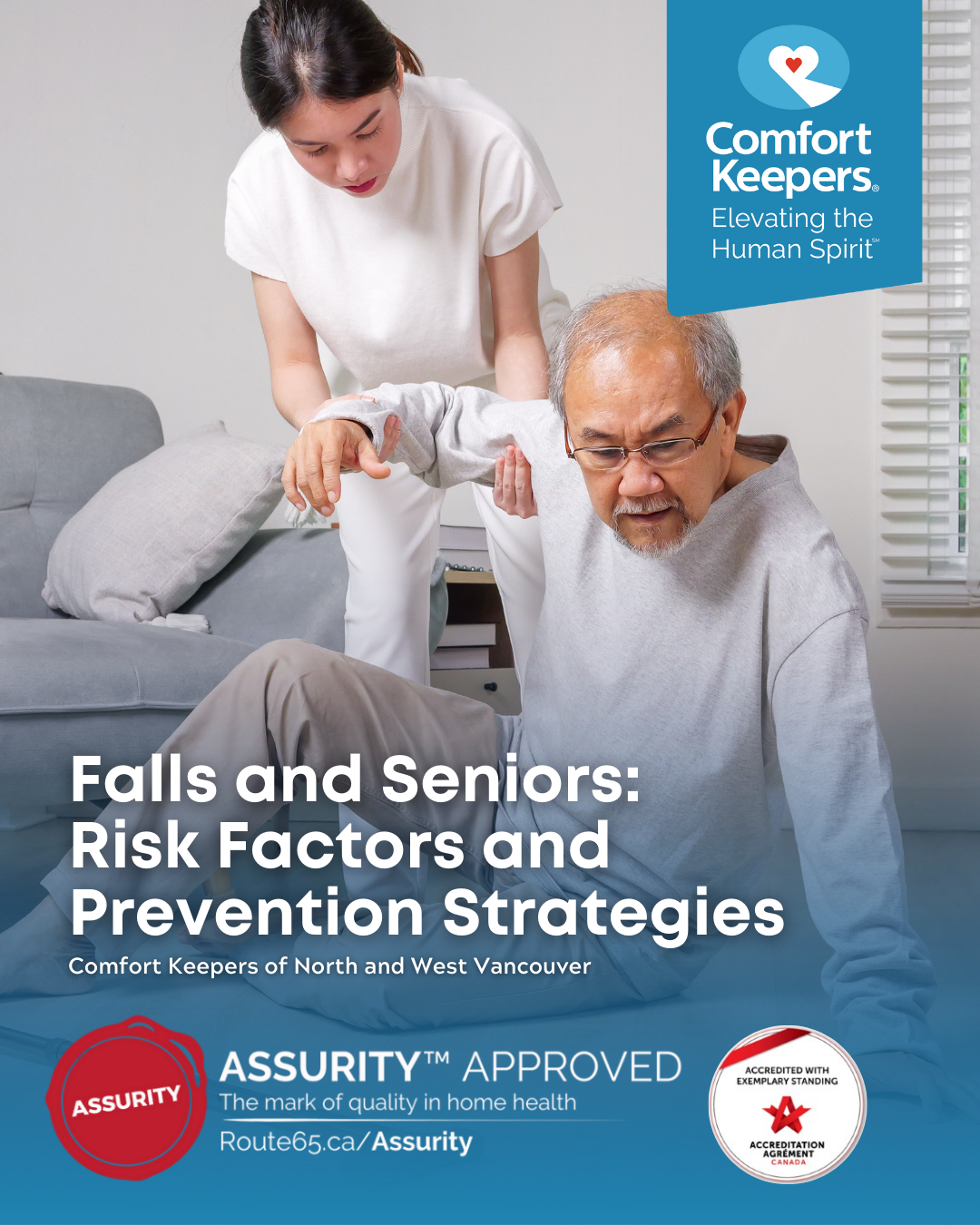
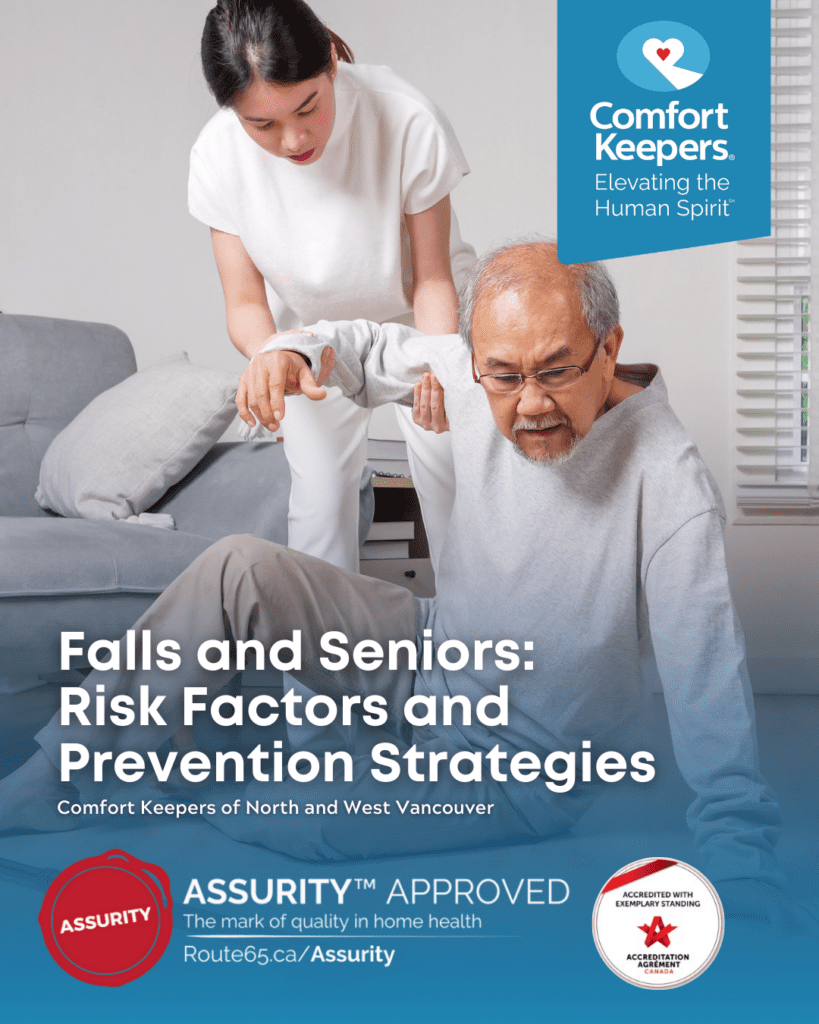
What Every Senior in North Vancouver and West Vancouver Needs to Know About Falling
Falls – Risk Factors and Prevention Strategies | More than one-third of Canadian seniors experience falls, which can have a devastating physical and psychological impact, resulting in disability, chronic pain, loss of independence, reduced quality of life, and even death. Falls are the leading cause of injury for seniors And, falling once doubles someone’s chances of falling again.
Preventing accidents in the home, including falls, is one of the most important planning strategies for helping seniors stay independent. Fractures, head trauma, and other injuries can cause long-term mobility issues and have lasting physical effects. And, once an injury occurs, it can affect someone’s ability to live the way they want and enjoy the same lifestyle and activities.
Senior Fall Risk Factors Include:
- Muscle weakness
- Heart disease
- Parkinson’s disease
- Alzheimer’s disease and other dementia
- Malnutrition
- Low blood pressure
- Poor vision
- Ear infections or inflammation
- Pain or sensitivity in the legs or feet
There are some precautions that seniors and their families can take to reduce the likelihood of a fall. Evaluating risk factors and taking preventative measures in a way that considers the unique lifestyle, needs, and health of a senior can help.
Falls – Risk Factors and Prevention Strategies
#1. Minimize trip hazards:
Some fall hazards are obvious; flights of stairs, slippery shower floors, or cords that are too far from a wall outlet. However, there are less obvious features that can be an issue for someone with dizziness or vision loss. These can include loose rugs, certain types of carpeting, dimly lit hallways, or a dog toy in the middle of the floor. Removing the hazard or installing safety devices, like grab bars and brighter light bulbs, can help.
#2. Evaluate footwear:
Footwear that has an open back, doesn’t fit properly, is worn out, or has a slippery bottom can all contribute to tripping or balance problems. There are a variety of safe shoe options to fit any activity and personal style…safe shoes don’t have to be boring!
#3. Know the effects of medication:
Seniors and their families should talk to a healthcare professional about how a person’s specific medications – both prescription and over-the-counter – can have side effects that cause dizziness or balance issues.
#4. Nutrition and exercise:
Having healthy habits when it comes to diet and exercise can prevent weakness in the legs and feet, and can reduce pain. Seniors should always talk to their doctor about any diet and exercise plan and can ask specific questions about how these things affect their fall risk factors.
#5. Focus on mental health:
Studies show that there is a correlation between depression in seniors and falls. According to one report, “both depression and fear of falling are associated with impairment of gait and balance.” Positive mental well-being can improve many areas of a senior’s life, and reduced fall risk is another benefit. Connecting with loved ones, finding a sense of purpose, engaging in enjoyable activities, and experiencing joy can improve physical and mental quality of life.
Some families only think about fall prevention after a loved one is hurt. Taking precautions before an accident happens can help seniors maintain their physical health and their independence.

The Best Senior Home Care in North and West Vancouver is Comfort Keepers®
Our senior home care agency offers in-home care focusing on aging in place. Our services include dementia care, end-of-life care, post-surgery care, and palliative care. Comfort Keepers can assist seniors with living transition services, personal care, companionship care, and more!
Quality and Accredited Elderly Care: Happier, Healthier, and at Home with 24/7 Senior Care Opportunities!
Do you need a home care solution for yourself or a loved one? Have you been thinking about retirement homes and their alternatives as a solution? Comfort Keepers® enables seniors to maintain happy, healthy lives in the comfort of their own homes. In-home care services are available in North Vancouver, West Vancouver, and the surrounding areas.
Comfort Keepers® is a Senior Care Agency That Can Make a Difference with Interactive Caregiving™
Our in-home caregivers ensure our senior clients have the best quality of life. The Interactive Caregiving™ program ensures that a senior’s safety, nutrition, mental well-being, and everyday needs are met. This program brings joy and good health to each client’s home.
Comfort Keepers® North Vancouver and West Vancouver Can Help with In-Home Elderly Care Services!
If you are concerned about the health and well-being of a loved one we can help! Comfort Keepers offers 24-hour care and delivers top-quality and compassionate care for seniors. We are dedicated to safety technology solutions that foster independence and enhance well-being.
Locally Owned and Operated Home Health Care Agency
Our care centers around companionship for seniors. Empathetic care originates from the soul and allows us to meet our client’s requirements. The seasoned in-home caregivers employed by Comfort Keepers are carefully chosen based on their empathetic qualities.
Contact the Comfort Keepers® North Vancouver and West Vancouver office at (604) 998-8806 to learn more about our unique in-home care solutions for seniors.
Comfort Keepers is an Accredited Senior Care Agency in North and West Vancouver, BC
Accreditation is a rigorous process that involves industry experts evaluating an organization’s processes, policies, and procedures. Comfort Keepers® North and West Vancouver has been awarded Exemplary Standing by Accreditation Canada. This achievement recognizes that Comfort Keepers® meets or exceeds the stringent quality standards for Home Care companies established by Accreditation Canada.
References
Canadian Patient Safety Institute. “Falls”. Web, 2019.
Centers for Disease Control and Prevention. “Falls Are Serious and Costly.” Web.
Better Health While Aging. “Why Older People Fall & How to Reduce Fall Risk.” Web. 2017.
Mayo Clinic. “Fall Prevention: Simple tips to prevent falls.” Web. 2016.
Canadian Institutes of Health Research. “The Complex Interplay of Depression and Falls in Older Adults: A Clinical Review.” Web. 2016
Beyond Comfort: How Interactive Caregiving™ Revolutionizes Palliative Care Outcomes
If you’re reading this, you’ve likely moved past the initial, confusing questions. You understand the fundamental difference between palliative care and hospice. You know that palliative care is about maximizing the quality of life for someone with a serious illness, often alongside curative treatments.
But that knowledge leaves you with a much more profound and personal question: How do you choose care that doesn’t just manage symptoms, but actively elevates the human spirit?
Most care providers will give you a list of services. We believe that’s not enough. True quality of life isn’t found in a checklist; it’s found in moments of connection, purpose, and joy. This is the principle behind our unique approach, Interactive Caregiving™, a philosophy designed to do more than just provide comfort – it’s designed to create it, day after day.
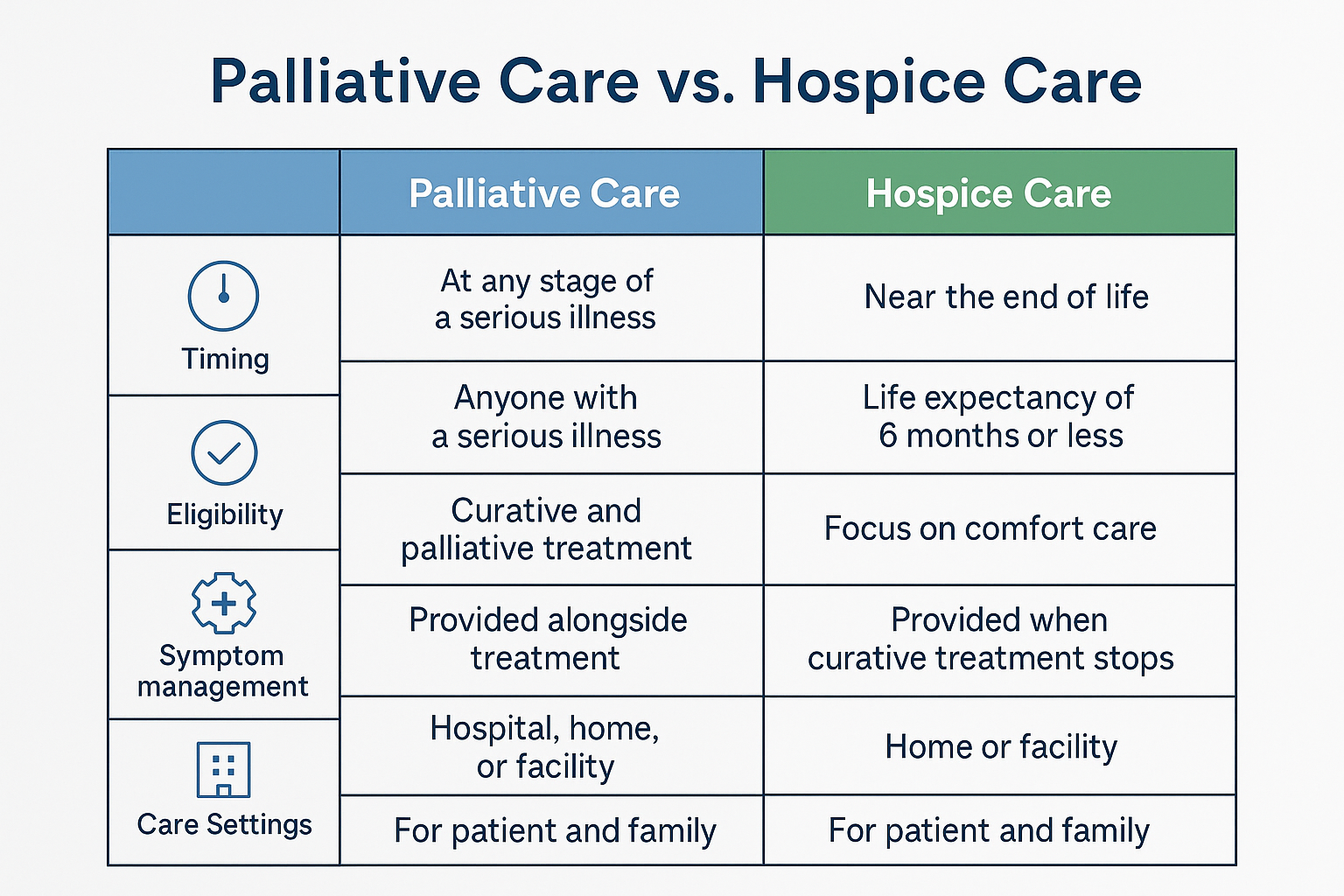
The Foundation: Palliative Care vs. Hospice at a Glance
To ensure we’re all on the same page, let’s quickly clarify the roles of these two essential types of care. While both focus on comfort and quality of life, their timing and goals differ significantly. Palliative care can begin at any stage of a serious illness, while hospice care is reserved for the final phase when curative treatments have stopped.
The Gap in Standard Care: Why Passive Support Isn’t Enough
The conventional model of palliative support is often clinical and passive. It focuses on what needs to be managed: pain, symptoms, decline. While critically important, this approach can inadvertently overlook the person at the center of the care – their passions, their history, their desire for connection.
A passive approach can lead to days filled with waiting, isolation, and a diminishing sense of self. It addresses the body but can neglect the spirit. This is the gap that many families feel but can’t quite articulate. They want more than just management; they want engagement. They want a loved one to feel like a participant in their own life, not just a recipient of care.
This is where a true care philosophy becomes the most important factor in your decision. It’s the difference between merely existing and truly living, right to the very end.
Introducing Interactive Caregiving™ for Palliative Care: A Philosophy of Engagement
At Comfort Keepers North & West Vancouver, we don’t just offer a list of services. We practice a philosophy. Interactive Caregiving™ is our distinctive approach that transforms day-to-day care into opportunities for meaningful interaction. It’s built on the understanding that activity, conversation, and collaboration are essential for maintaining dignity and purpose.
For palliative care clients, this means we go beyond physical comfort to actively engage their minds and hearts. Our caregivers are trained to be more than helpers; they are partners in living. They work with clients, not just for them, turning routine tasks into moments of connection and shared accomplishment. This philosophy shifts the focus from loss and decline to creating positive moments and lifting the human spirit.
The Science of Connection: Evidence-Based Benefits of an Interactive Approach
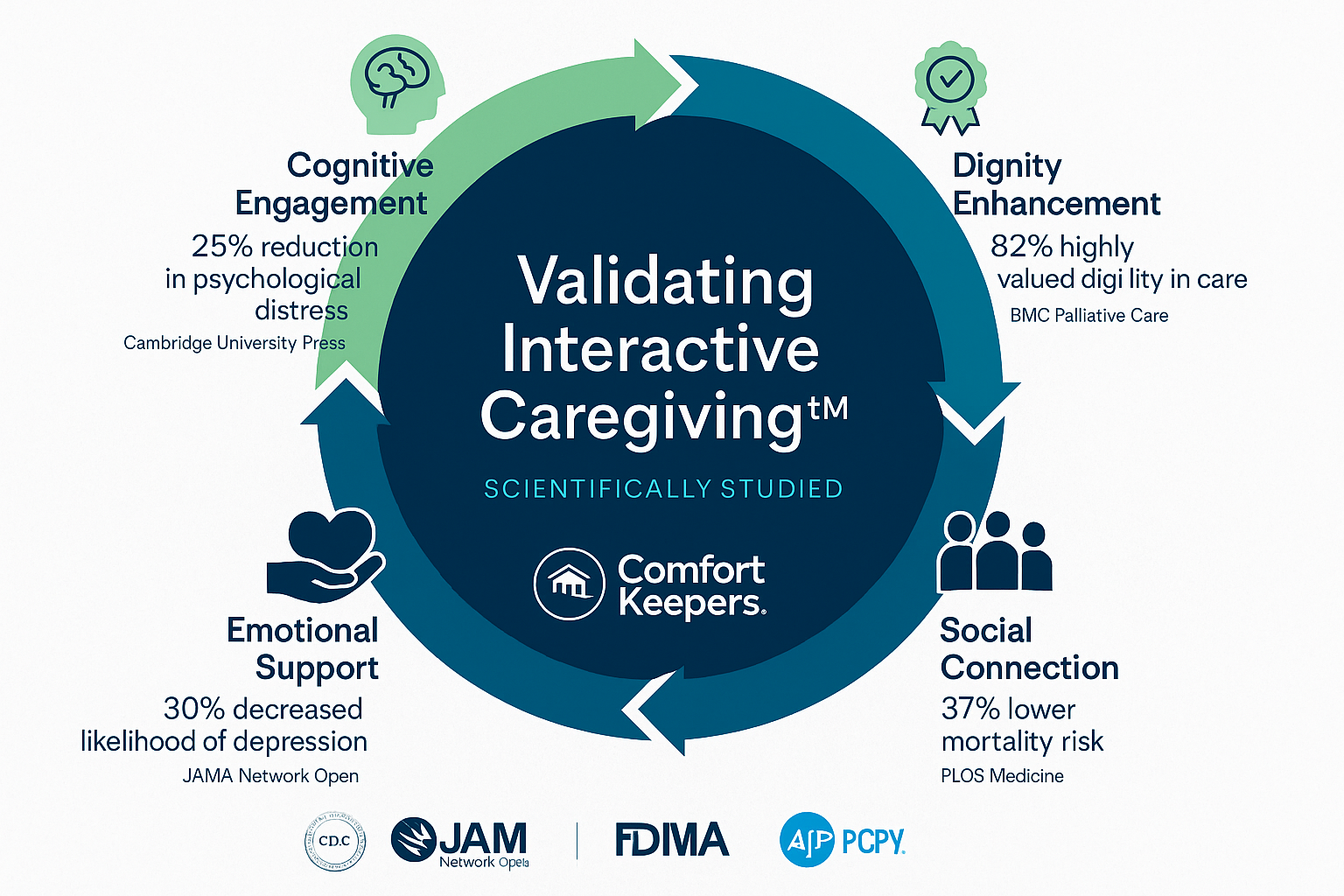
This philosophy isn’t just a feel-good idea; it’s grounded in science. Research consistently shows that an active, person-centered approach to care yields significant benefits that clinical management alone cannot achieve.
The data is clear:
- Improved Quality of Life: Palliative care itself is proven to improve quality of life and reduce symptom burden, according to landmark studies published in the JAMA Network. Our interactive model amplifies this effect by addressing the psychosocial and emotional needs that are central to well-being.
- Reduced Psychological Distress: Non-pharmacological, engaging activities are evidence-based methods for reducing stress and improving mood. Research highlighted by Cambridge University Press shows that activities like music therapy, creative expression, and even simple games enhance communication and provide emotional relief for palliative patients.
- A Greater Sense of Agency: A study in Frontiers in Virtual Reality found that even virtual experiences tailored to a patient’s wishes could significantly decrease emotional distress by giving them a sense of control and escape. This principle of agency is at the core of Interactive Caregiving™, where we empower clients to make choices and participate in activities they enjoy.
Emerging trends in palliative care are moving toward what we have always practiced: early, holistic, and person-centered models that see the whole individual (Hospice News). An active, engaged approach is no longer a “nice-to-have” – it’s becoming the evidence-backed standard for superior care.
Interactive Caregiving™ in Action: What This Looks Like for Your Loved One
So, what does this philosophy actually look like during a typical day? It’s about finding opportunities for engagement in the small moments that make up a life. Instead of doing tasks for a client, our caregivers do them with a client, adapted to their energy and ability.
Fostering Mental & Cognitive Wellbeing
Instead of the television being on all day, a caregiver might engage a client by:
- Reading the local newspaper aloud together and discussing the day’s events.
- Working on a crossword puzzle or jigsaw puzzle at a comfortable pace.
- Organizing a bookshelf or a box of old recipes, sparking conversation and memories.
Lifting the Spirit
To nurture emotional well-being, a caregiver can focus on activities that bring joy and a sense of legacy:
- Looking through old photo albums and sharing stories about family and friends.
- Creating a playlist of favorite songs from different eras of their life.
- Helping write letters or record messages for grandchildren.
Nurturing Social Connection
To combat the isolation that often accompanies serious illness, a caregiver can facilitate connection:
- Helping set up a video call with a family member who lives far away.
- Tending to indoor plants or a small herb garden together.
- Preparing a simple meal or baking a favorite recipe, enjoying the smells and tastes of home.
These aren’t just activities to keep seniors engaged; they are deliberate strategies to affirm a person’s identity and value.
How This Active Approach Improves Palliative Outcomes
The difference is profound. By shifting from a passive to an active model, we directly improve palliative outcomes. Clients who experience Interactive Caregiving™ often show:
- A stronger sense of purpose and dignity.
- Reduced feelings of loneliness and depression.
- Improved communication with family members.
- A greater feeling of control over their daily lives.
This approach doesn’t just make the days more pleasant; it makes them more meaningful. It helps preserve the essence of who your loved one is, ensuring they are seen, heard, and valued as an individual.
Empowering Your Choice: 5 Questions to Ask Any Palliative Care Provider
As you evaluate your options, you have the power to look beyond the standard service list. Use these questions to understand the core philosophy of any provider you consider. Their answers will reveal whether they offer passive support or a truly interactive partnership.
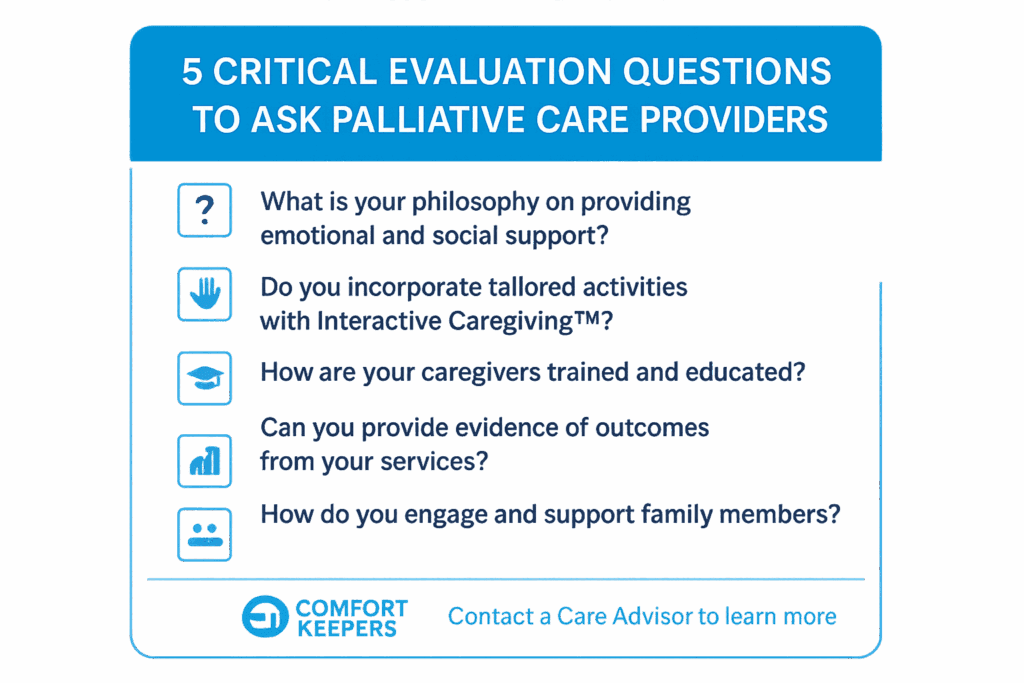
- “What is your specific philosophy for providing emotional and social support, beyond clinical care?”
- “Can you give me examples of how your caregivers actively engage clients during the day?”
- “How do you train your caregivers to adapt activities for someone with changing energy levels and abilities?”
- “How do you personalize a care plan to reflect a client’s unique hobbies, interests, and life story? Can you give me examples of this service?”
- “How do you engage and support family members?”
The answers to these questions will tell you everything you need to know about what a provider truly values.
Your Questions About Palliative Care, Answered
Does this type of care replace my loved one’s medical team?
Absolutely not. Our in-home care services are designed to work in concert with your loved one’s doctors, nurses, and other medical professionals. We complement their clinical care by focusing on the holistic, non-medical support that enhances their quality of life.
How is palliative care paid for?
Coverage varies. Some aspects may be covered by provincial health plans or private insurance. We work with families to navigate their options and can create a customized care plan that fits your budget and needs.
How do you match a caregiver with a client?
We believe personality and connection are just as important as skills. We carefully match clients with caregivers based on shared interests, personality traits, and the specific needs of the care plan to foster a genuine, trusting relationship.
When is the right time to start palliative care?
The evidence suggests that the earlier, the better. Palliative care can be beneficial from the moment of diagnosis of a serious illness. Starting early allows a trusted relationship to form and provides support through every stage of the illness, not just at the end.
Comfort Keepers North and West Vancouver Can Help
Choosing a palliative care partner is one of the most important decisions you can make. It’s a decision that goes beyond logistics and touches the very heart of what it means to live with dignity and grace. By focusing on a philosophy of active, joyful engagement, you can ensure your loved one’s days are not just comfortable, but truly meaningful.If you believe in a care approach that lifts the spirit, let’s talk.
The Best Senior Home Care in North and West Vancouver is Comfort Keepers®
Our senior home care agency offers in-home care focusing on aging in place. Our services include dementia care, end-of-life care, post-surgery care, and palliative care. Comfort Keepers can assist seniors with living transition services, personal care, companionship care, and more!
Quality and Accredited Elderly Care: Happier, Healthier, and at Home with 24/7 Senior Care Opportunities!
Do you need a home care solution for yourself or a loved one? Have you been thinking about retirement homes and their alternatives as a solution? Comfort Keepers® enables seniors to maintain happy, healthy lives in the comfort of their own homes. In-home care services are available in North Vancouver, West Vancouver, and the surrounding areas.
Comfort Keepers® is a Senior Care Agency That Can Make a Difference with Interactive Caregiving™
Our in-home caregivers ensure our senior clients have the best quality of life. The Interactive Caregiving™ program ensures that a senior’s safety, nutrition, mental well-being, and everyday needs are met. This program brings joy and good health to each client’s home.
Comfort Keepers® North Vancouver and West Vancouver Can Help with In-Home Elderly Care Services!
If you are concerned about the health and well-being of a loved one we can help! Comfort Keepers offers 24-hour care and delivers top-quality and compassionate care for seniors. We are dedicated to safety technology solutions that foster independence and enhance well-being.
Locally Owned and Operated Home Health Care Agency
Our care centers around companionship for seniors. Empathetic care originates from the soul and allows us to meet our client’s requirements. The seasoned in-home caregivers employed by Comfort Keepers are carefully chosen based on their empathetic qualities.
Contact the Comfort Keepers® North Vancouver and West Vancouver office at (604) 998-8806 to learn more about our unique in-home care solutions for seniors.
Comfort Keepers is an Accredited Senior Care Agency in North and West Vancouver, BC
Accreditation is a rigorous process that involves industry experts evaluating an organization’s processes, policies, and procedures. Comfort Keepers® North and West Vancouver has been awarded Exemplary Standing by Accreditation Canada. This achievement recognizes that Comfort Keepers® meets or exceeds the stringent quality standards for Home Care companies established by Accreditation Canada.
The Comfort Keepers Difference in Palliative Care: Why Our Accredited Approach Matters
When you’re looking for palliative care for a loved one, you quickly move past the basic definitions. You already know it’s about providing comfort, dignity, and quality of life during a serious illness. The real question – the one that keeps you up at night – is much simpler and far more complex: Who can I trust?
You’re not just choosing a service; you’re entrusting a family member’s well-being to someone else. In a sea of providers, how do you find the one that offers true peace of mind? The answer lies in a standard of excellence that isn’t just promised but proven. It lies in accreditation.
Beyond the Basics: What “Quality” Palliative Care Really Means
Most families begin their search on government or national health websites. These resources are excellent for understanding what palliative care is, but they stop short of helping you choose a provider. They define the service, but they don’t define the standard.
This creates a critical gap for families. As the need for palliative support grows – with nearly 60% of Canadians who passed away in 2021–2022 receiving some form of it – the demand for care at home is rising even faster. The Canadian Institute for Health Information (CIHI) reports that the number of people receiving palliative care at home has nearly doubled in just five years. This shift highlights the deep desire for comfort in familiar surroundings.
But as you evaluate options, “quality” can feel like a vague and subjective term. True quality isn’t just about compassion; it’s about a professional commitment to the highest standards of safety, training, and consistency. It’s about having a proven framework for excellence.
The Unseen Factor: Why Accreditation Matters for Your Family’s Peace of Mind
This is where accreditation becomes the single most important factor in your decision. At Comfort Keepers North and West Vancouver, we have earned the “Accredited with Exemplary Standing” seal from Accreditation Canada. This isn’t just a certificate on our wall; it is an active, ongoing commitment to meeting and exceeding the most rigorous national standards for healthcare.
For a provider to achieve this, they must voluntarily undergo an intensive, multi-day evaluation by external surveyors who scrutinize every aspect of their operation – from caregiver training and safety protocols to client communication and ethical practices. “Exemplary Standing” is the highest possible rating, reserved only for organizations that demonstrate a deep and integrated culture of quality and safety.
Choosing an accredited provider means you are choosing a partner who has been independently verified as one of the best. It transforms your decision from a leap of faith into a confident choice.
From Standard to Service: How Our Accreditation Translates into Better Care
What does “Exemplary Standing” actually look like in your loved one’s home? It translates directly into tangible benefits that you and your family will experience every day.
- Rigorous Caregiver Training
Accreditation demands more than basic certification. Our caregivers receive specialized, ongoing training specifically for the complexities of palliative support. This includes advanced skills in:
- Symptom and Pain Management: Understanding how to recognize, report, and help manage discomfort according to the client’s care plan.
- Emotional and Psychological Support: Learning to provide a calming, empathetic presence and facilitate difficult conversations with dignity.
- Family Communication: Knowing how to keep the family informed and supported, reducing your burden and anxiety.
This level of training, verified by Accreditation Canada, ensures the palliative caregiver in your home is not just a helper, but a highly skilled professional.
- Consistent, Proven Protocols
Peace of mind comes from reliability. Our accredited status means we operate with documented, evidence-based protocols for every aspect of care. Whether it’s medication reminders, personal care safety, or how we communicate with your family doctor, there is a proven process in place.
This eliminates guesswork and ensures every client receives the same high standard of care, every single time. It means you can trust that your loved one’s needs will be met consistently and professionally, day in and day out.
- A Culture of Safety and Improvement
Accreditation isn’t a one-time achievement; it’s a commitment to continuous improvement. We are required to constantly measure our performance, solicit feedback from families, and actively seek ways to make our care even safer and more effective. This creates a culture of accountability where excellence is the daily standard. It means we don’t just rest on our reputation – we work to earn your trust every day.
The Comfort Keepers Difference: A Checklist for Choosing a Palliative Care Provider
When you compare providers, it’s essential to ask questions that go beyond the surface. Use this checklist to evaluate your options and see why accreditation should be your non-negotiable standard.
Questions to Ask Any Palliative Care Provider:
- Accreditation: Is your organization formally accredited by a recognized national body like Accreditation Canada? Can you show me your standing?
- Caregiver Training: What specific training do your caregivers receive for palliative and end-of-life care, beyond basic certification? Is it ongoing?
- Care Protocols: Do you have documented, evidence-based protocols for pain management, safety, and communication?
- Caregiver Matching: How do you ensure the caregiver assigned is a good fit for my loved one’s personality and specific needs?
- Quality Assurance: How do you measure the quality of your care and ensure standards are being met consistently?
- Family Support: How will you keep my family and me informed and involved in the care process?
An accredited provider will have clear, confident answers to every one of these questions.
Frequently Asked Questions about Palliative Care Standards
1. Isn’t all home care regulated in British Columbia?
While there are provincial regulations for community care facilities, voluntary accreditation by a body like Accreditation Canada goes far beyond basic licensing. It represents a proactive commitment to achieving the highest national standards of excellence and safety, which is not required of all providers.
2. What is the difference between palliative care and hospice care?
Palliative care can be provided at any stage of a serious illness, often alongside curative treatments, with the goal of improving quality of life. Hospice care is a specific type of palliative care for individuals who are approaching the last six months of life and are no longer seeking curative treatment. Our accredited approach supports clients across this entire spectrum.
3. My loved one wants to stay home, but their needs are getting more complex. Can you handle that?
Absolutely. Supporting clients at home is our specialty. Our accredited protocols and highly trained caregivers are specifically equipped to handle complex needs safely and effectively in a home environment. We work closely with your family and other healthcare providers to ensure a seamless circle of care.
4. How does your approach support the family, not just the person receiving care?
We understand that a serious illness affects the entire family. Our model, which includes our unique Interactive Caregiving™ philosophy, is designed to reduce family stress. Clear communication protocols keep you informed, our reliable service allows you to step back from caregiving duties to simply be a son or daughter again, and the peace of mind from our accredited status is our ultimate promise to you.
Conclusion: Choosing Confidence, Not Just Care
In the end, choosing a palliative care provider is an act of trust. By selecting a partner with “Accredited with Exemplary Standing,” you are basing that trust on a foundation of proven, independently verified excellence. You are choosing a team that is held to the highest possible standard, ensuring your loved one receives care that is not only compassionate but also exceptionally safe, skilled, and reliable.
Comfort Keepers North and West Vancouver Can Help
You don’t have to navigate this journey alone. Let us show you what confident, accredited care feels like. If you’re ready to discuss how we can support your family with our accredited palliative care services, schedule a free, no-obligation in-home consultation with one of our North or West Vancouver care coordinators today.
The Best Senior Home Care in North and West Vancouver is Comfort Keepers®
Our senior home care agency offers in-home care focusing on aging in place. Our services include dementia care, end-of-life care, post-surgery care, and palliative care. Comfort Keepers can assist seniors with living transition services, personal care, companionship care, and more!
Quality and Accredited Elderly Care: Happier, Healthier, and at Home with 24/7 Senior Care Opportunities!
Do you need a home care solution for yourself or a loved one? Have you been thinking about retirement homes and their alternatives as a solution? Comfort Keepers® enables seniors to maintain happy, healthy lives in the comfort of their own homes. In-home care services are available in North Vancouver, West Vancouver, and the surrounding areas.
Comfort Keepers® is a Senior Care Agency That Can Make a Difference with Interactive Caregiving™
Our in-home caregivers ensure our senior clients have the best quality of life. The Interactive Caregiving™ program ensures that a senior’s safety, nutrition, mental well-being, and everyday needs are met. This program brings joy and good health to each client’s home.
Comfort Keepers® North Vancouver and West Vancouver Can Help with In-Home Elderly Care Services!
If you are concerned about the health and well-being of a loved one we can help! Comfort Keepers offers 24-hour care and delivers top-quality and compassionate care for seniors. We are dedicated to safety technology solutions that foster independence and enhance well-being.
Locally Owned and Operated Home Health Care Agency
Our care centers around companionship for seniors. Empathetic care originates from the soul and allows us to meet our client’s requirements. The seasoned in-home caregivers employed by Comfort Keepers are carefully chosen based on their empathetic qualities.
Contact the Comfort Keepers® North Vancouver and West Vancouver office at (604) 998-8806 to learn more about our unique in-home care solutions for seniors.
Comfort Keepers is an Accredited Senior Care Agency in North and West Vancouver, BC
Accreditation is a rigorous process that involves industry experts evaluating an organization’s processes, policies, and procedures. Comfort Keepers® North and West Vancouver has been awarded Exemplary Standing by Accreditation Canada. This achievement recognizes that Comfort Keepers® meets or exceeds the stringent quality standards for Home Care companies established by Accreditation Canada.
Personal Care vs. Companionship in North Vancouver: Which In-Home Senior Care is Right for Your Loved One?

Making the right care decision for a loved one can feel overwhelming. You’re navigating a world of new terminology while balancing the deep responsibility you feel for their well-being. If you’re weighing options like personal care and companion care, you’re not just looking for definitions – you’re looking for clarity and confidence. You’re in the right place.
This guide is designed to move beyond generic descriptions and give you a simple, professional framework to help you confidently determine the exact level of support your loved one needs.

The Foundational Question: What Help Do They Truly Need?
Before you can choose a service, you must accurately assess the need. In professional home care, we do this by looking at two distinct categories of daily tasks:
- Activities of Daily Living (ADLs): These are the fundamental self-care tasks essential for a person’s health and safety. Think of these as the core activities required to get through the day.
- Instrumental Activities of Daily Living (IADLs): These are the more complex tasks required to live independently within a community. They involve managing a household and interacting with the outside world.
Understanding the difference between ADLs and IADLs is the single most important step in choosing the right type of care. Let’s break down what that means for your family.
Personal Care: Essential Hands-On Support for Daily Living (ADLs)
Personal care is hands-on, physical assistance with Activities of Daily Living (ADLs). This type of care is for seniors who have difficulty with the essential tasks of self-care due to mobility issues, cognitive decline, or physical frailty. It is a direct intervention to ensure their safety and physical well-being.
This level of care is crucial for preventing injuries. According to research published in The Gerontologist, over 34% of older adults report falling each year, and a fall can be a life-altering event that threatens their independence. Professional personal care directly mitigates this risk.
A personal care plan typically includes help with:
- Bathing and Grooming: Assisting with showering, dressing, and personal hygiene to maintain dignity and health.
- Mobility Assistance: Helping your loved one move safely around the home, transfer from a bed to a chair, and reduce the risk of falls.
- Toileting and Incontinence Care: Providing compassionate and respectful assistance with one of the most sensitive aspects of personal care.
- Positioning and Transfers: Ensuring proper body positioning to maintain skin integrity and comfort for those who are bed-bound.
- Feeding Assistance: Helping with the physical act of eating when a senior is unable to do so independently.
Companion Care: Fostering Independence and Well-Being (IADLs)
Companion care focuses on Instrumental Activities of Daily Living (IADLs) and, just as importantly, on emotional health and social engagement. This type of care is ideal for a senior who can manage their basic personal care (ADLs) but needs support with the tasks that keep their household running and their spirits high.
Struggles with IADLs are often the first signs your elderly parent may need assistance at home. Companion care acts as the frontline defense against senior isolation, which can have health impacts as serious as smoking or obesity. It’s about ensuring a safe environment and providing meaningful social connection – something that an astounding 90% of seniors who prefer to age at home desperately need to thrive.
A companion care plan often includes help with:
- Meal Preparation: Planning and cooking nutritious meals, which is vital for maintaining energy and cognitive health.
- Light Housekeeping: Assisting with laundry, vacuuming, and tidying up to ensure a safe and pleasant living space.
- Errands and Transportation: Providing transport to appointments, the grocery store, or social outings.
- Medication Reminders: Helping your loved one stay on track with their prescribed medication schedule.
- Companionship and Activities: Engaging in conversation, playing games, going for walks, and simply being a friendly, reassuring presence to support the importance of social interaction for seniors living alone.
At-a-Glance: Personal Care vs. Companion Care
Sometimes a simple chart makes the distinction clearest. Use this as a quick reference as you evaluate your loved one’s situation.

The Comfort Keepers Difference: Care That’s More Than Just a Task List
The reality of care is that needs are rarely confined to one box. A senior who needs personal care for bathing also needs the dignity of conversation. A senior who needs companion care for meals also needs someone who ensures they are moving safely around the kitchen.
This is where a holistic approach becomes essential. At Comfort Keepers North & West Vancouver, we don’t see personal care and companion care as separate silos. We deliver both through our unique philosophy called Interactive Caregiving™.

Interactive Caregiving™ transforms routine care tasks into opportunities for connection and engagement. When our caregiver helps your mom get dressed, they are also talking with her about her day and encouraging her to do as much as she safely can for herself. When they prepare a meal, they might invite your dad to help wash vegetables or set the table.
This approach ensures that every interaction is built on respect, purpose, and connection – elevating the human spirit while providing for physical needs. It’s the difference between a task list and true, compassionate care.
Frequently Asked Questions
1. Can we combine personal care and companion care services?
Absolutely. In fact, most clients benefit from a blended approach. Needs are dynamic, and the best care plans are flexible, incorporating hands-on help where needed and companionship throughout every visit.
2. What happens if our loved one’s needs change over time?
This is a normal and expected part of the aging journey. At Comfort Keepers, care plans are not static. We conduct regular assessments and maintain open communication with you and your loved one to adjust the level and type of care as needs evolve.
3. Is in-home care covered by provincial health plans or private insurance?
Coverage varies significantly. While provincial plans may cover some aspects of medical home care, non-medical personal and companion care are often paid for privately. Some long-term care insurance policies do provide coverage, and it’s always best to check with your specific provider. We can help you understand the options during a consultation.
4. How are Comfort Keepers caregivers trained for these specific needs?
Our caregivers undergo a rigorous screening, hiring, and training process. They are trained in all aspects of personal and companion care, including safety protocols, dementia care, and our Interactive Caregiving™ philosophy. This ensures they have both the hard skills and the compassionate approach to provide exceptional care.
5. What’s the difference between hiring an agency like Comfort Keepers vs. a private caregiver?
When you work with an agency like Comfort Keepers, you are getting more than just one person. You get a professionally managed, fully insured, and bonded care team. We handle all scheduling, find replacement caregivers if someone is sick, manage payroll, and provide ongoing supervision and training. This provides a level of reliability, safety, and peace of mind that can be difficult to achieve when hiring privately.
Taking the Next Confident Step
You’ve taken the time to understand the nuances of in-home care, and you now have a framework to assess your family’s needs. With approximately 70% of Canadians aged 65 and older requiring some form of care, making this decision is a proactive and loving step.
Comfort Keepers North and West Vancouver Can Help
The next step is a simple conversation. We invite you to schedule a free, no-obligation care consultation with our team in North & West Vancouver. We can talk through your checklist, answer your specific questions, and help you design a care plan that brings comfort, joy, and independence back to your loved one’s life.
The Best Senior Home Care in North and West Vancouver is Comfort Keepers®
Our senior home care agency offers in-home care focusing on aging in place. Our services include dementia care, end-of-life care, post-surgery care, and palliative care. Comfort Keepers can assist seniors with living transition services, personal care, companionship care, and more!
Quality and Accredited Elderly Care: Happier, Healthier, and at Home with 24/7 Senior Care Opportunities!
Do you need a home care solution for yourself or a loved one? Have you been thinking about retirement homes and their alternatives as a solution? Comfort Keepers® enables seniors to maintain happy, healthy lives in the comfort of their own homes. In-home care services are available in North Vancouver, West Vancouver, and the surrounding areas.
Comfort Keepers® is a Senior Care Agency That Can Make a Difference with Interactive Caregiving™
Our in-home caregivers ensure our senior clients have the best quality of life. The Interactive Caregiving™ program ensures that a senior’s safety, nutrition, mental well-being, and everyday needs are met. This program brings joy and good health to each client’s home.
Comfort Keepers® North Vancouver and West Vancouver Can Help with In-Home Elderly Care Services!
If you are concerned about the health and well-being of a loved one we can help! Comfort Keepers offers 24-hour care and delivers top-quality and compassionate care for seniors. We are dedicated to safety technology solutions that foster independence and enhance well-being.
Locally Owned and Operated Home Health Care Agency
Our care centers around companionship for seniors. Empathetic care originates from the soul and allows us to meet our client’s requirements. The seasoned in-home caregivers employed by Comfort Keepers are carefully chosen based on their empathetic qualities.
Contact the Comfort Keepers® North Vancouver and West Vancouver office at (604) 998-8806 to learn more about our unique in-home care solutions for seniors.
Comfort Keepers is an Accredited Senior Care Agency in North and West Vancouver, BC
Accreditation is a rigorous process that involves industry experts evaluating an organization’s processes, policies, and procedures. Comfort Keepers® North and West Vancouver has been awarded Exemplary Standing by Accreditation Canada. This achievement recognizes that Comfort Keepers® meets or exceeds the stringent quality standards for Home Care companies established by Accreditation Canada.
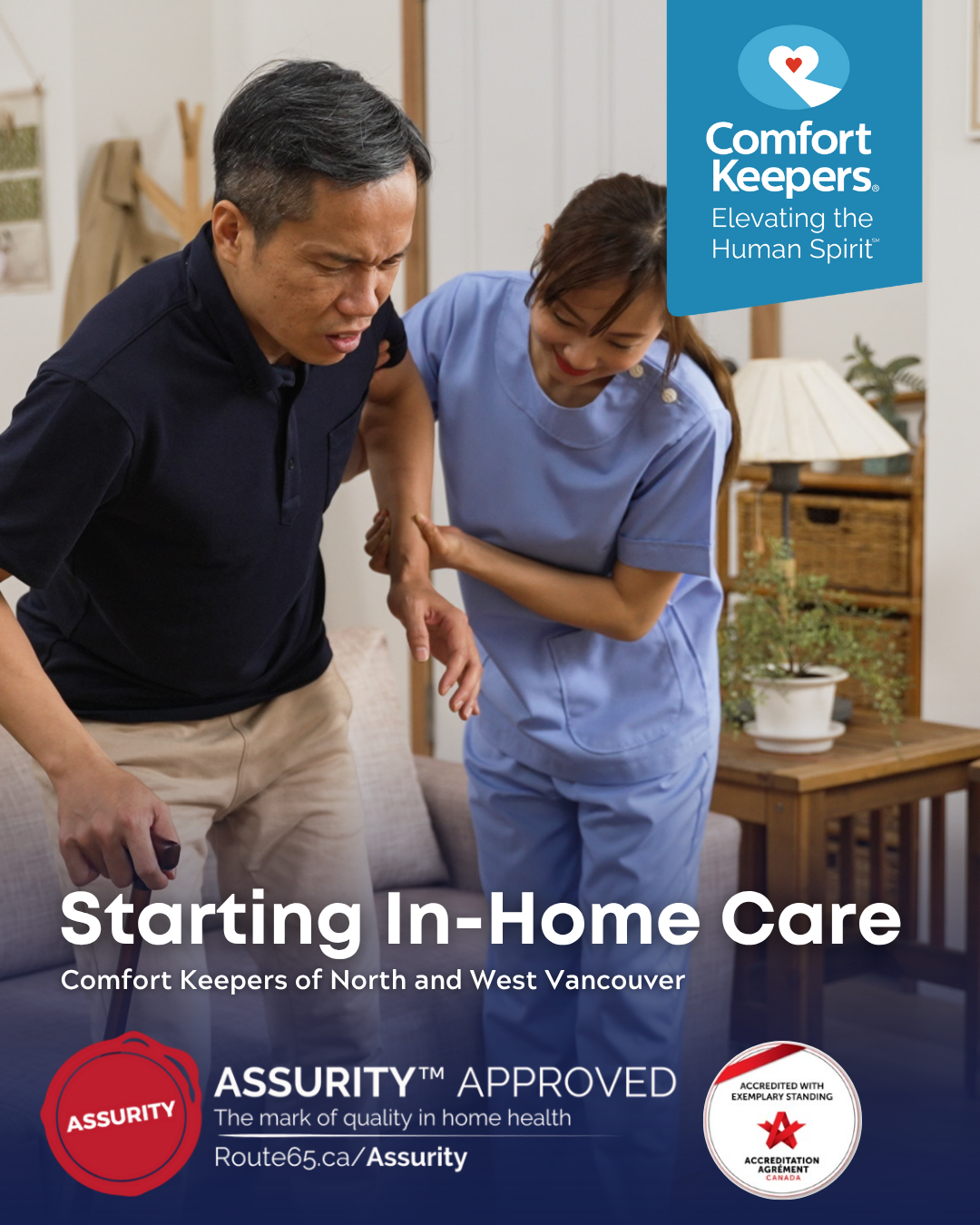
Starting In-Home Care: A Guide From Your First Consultation to Your Personalized Care Plan
Making the decision to explore in-home care is a significant step, one often filled with more questions than answers. You might be feeling a mix of hope and uncertainty, wanting the best for your loved one while feeling unsure about the process. We understand. This isn’t just a service; it’s a relationship built on trust and a partnership in well-being.
Many families we speak with are concerned about losing control or facing a complicated, clinical process. That’s not how we do things. Our approach is different, it’s a conversation, a collaboration designed to listen, understand, and empower you. This guide will walk you through each step, from our first phone call to the moment your dedicated caregiver arrives, so you know exactly what to expect and can move forward with confidence.
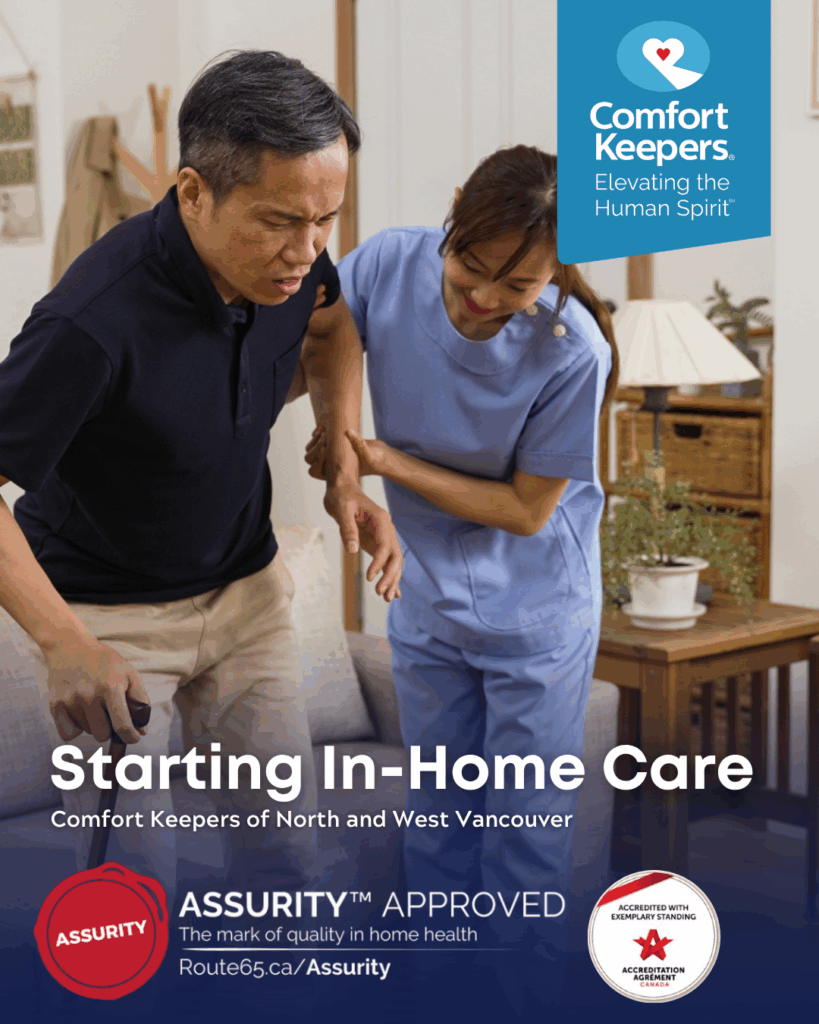
Part 1: Preparing for Your In-Home Consultation
The goal of our first meeting isn’t to sell you a package of services. It’s to listen. We want to understand your family’s unique situation, your loved one’s personality and preferences, and your specific goals for care. This initial conversation is always free and carries no obligation. It’s simply the first step in getting to know each other.
To make the most of this time, a little preparation can go a long way.
Who Should Be There?
Whenever possible, the conversation should include your loved one who will be receiving care, along with any key family members or decision-makers. This ensures everyone’s voice is heard and that the plan we create truly reflects your loved one’s wishes and the family’s needs.
What to Have Ready
Having a few things on hand can help the conversation flow smoothly:
- A list of current medications and dosages.
- Contact information for doctors or other healthcare providers.
- A general idea of the daily routine and any specific challenges you’re facing.
- Notes on what’s working well now and what you hope to improve.
Questions to Ask Us
This is your meeting. We encourage you to ask questions to ensure you feel completely comfortable. Here are a few to get you started:
- How do you select, screen, and train your caregivers?
- How do you handle caregiver absences or emergencies?
- What is your process for matching a caregiver to my loved one’s personality?
- How do you communicate with families about the care being provided?
- Can the care plan be adjusted if our needs change?
Part 2: What to Expect During the In-Home Assessment
Forget the image of a sterile clipboard and checklist. Think of this as a structured, yet warm, conversation. Our consultations are thorough – typically lasting 65-90 minutes – because understanding the whole person is the foundation of exceptional care. Research shows that a thorough consultation directly impacts satisfaction, with comprehensive assessments leading to patient satisfaction rates above 90%.
We focus the conversation on five key areas to build a complete picture of your loved one’s needs and goals.
- Health and Medical History: We’ll discuss current health conditions, medication management, and mobility to understand the physical support required.
- Daily Living Needs: We’ll talk about Activities of Daily Living (ADLs) like bathing and dressing, and Instrumental Activities of Daily Living (IADLs) like meal preparation, light housekeeping, and transportation. This helps us tailor the level of hands-on support.
- Home Safety Evaluation: We’ll gently walk through the home with you to identify and address potential safety concerns, such as fall risks, poor lighting, or accessibility issues. This proactive step is crucial for maintaining independence safely.
- Emotional and Social Well-being: We don’t just see tasks; we see a person. We want to know about your loved one’s hobbies, interests, and social connections. Our Interactive Caregiving™ philosophy focuses on engaging the mind and spirit, not just caring for the body.
- Your Goals and Preferences: This is the most important part. What does a “good day” look like? What activities bring joy? We build the care plan around your loved one’s personal wishes to ensure they feel respected, in control, and happy at home.
Part 3: From Assessment to Care Plan: Creating Your Roadmap for Care
Following our conversation, we don’t just hand you a pre-packaged plan. We collaborate with you to create a detailed, personalized roadmap for care. This document is a transparent and comprehensive guide that outlines everything you need to know.
What’s in the Care Plan?
Your personalized care plan will clearly detail:
- The specific in-home care services to be provided (e.g., personal care, companionship, meal prep).
- A proposed schedule for care visits.
- Specific goals we’ve agreed upon (e.g., improving nutrition, increasing social activity).
- Information about the care team and communication protocols.
Reviewing and Adjusting Your Plan
Life isn’t static, and neither is your care plan. Needs can change overnight or evolve over months. Your plan is a living document. We conduct regular reviews and encourage open communication so we can adapt the services and schedule to ensure the care provided is always the right care.
Part 4: Meeting Your Caregiver: The Start of a Meaningful Relationship
One of the biggest anxieties families have is about the person who will be coming into the home. We take this concern seriously. A key area often overlooked by other agencies is caregiver compatibility. We believe the right caregiver does more than perform tasks; they become a trusted companion.
Our matching process goes beyond skills and availability. We consider:
- Personality and Temperament: We look for shared traits and a compatible energy level.
- Interests and Life Experiences: Finding common ground can spark conversation and build a genuine bond.
- Specific Skills: We match caregivers with the right training and experience for your loved one’s needs, such as dementia care or vision loss support through our partnership with the CNIB.
Before the first official care visit, we will facilitate an introduction between you, your loved one, and the selected caregiver. This gives everyone a chance to meet, ask questions, and begin building a comfortable rapport from day one.
Frequently Asked Questions
What if we don’t feel the caregiver is a good fit?
Your comfort and satisfaction are our top priority. If, for any reason, you feel the match isn’t right, please let us know immediately. We will listen to your feedback and work to find a caregiver who is a better fit.
How is pricing determined?
Because every care plan is unique, so is the pricing. We develop a customized plan based on the specific type and frequency of services your loved one needs. We’ll discuss all costs transparently during our consultation, with no hidden fees.
How do you ensure caregivers are safe and trustworthy?
Every Comfort Keepers caregiver is an employee, not a contractor. They undergo a rigorous screening process that includes a national criminal background check, reference checks, and a comprehensive interview process. They are also bonded, insured, and covered by workers’ compensation for your family’s protection.
Is the care plan flexible?
Absolutely. We review care plans regularly, at least every six months, and anytime there is a change in your loved one’s condition or needs. We are your partners in care, and we adapt as your needs evolve.

Your Partner in Care, Every Step of the Way, is Comfort Keepers
Starting the journey of in-home care can feel like a monumental task, but you don’t have to do it alone. By transforming a clinical assessment into a collaborative conversation, we can build a plan that not only supports daily needs but truly elevates the human spirit.
The Best Senior Home Care in North and West Vancouver is Comfort Keepers®
Our senior home care agency offers in-home care focusing on aging in place. Our services include dementia care, end-of-life care, post-surgery care, and palliative care. Comfort Keepers can assist seniors with living transition services, personal care, companionship care, and more!
Quality and Accredited Elderly Care: Happier, Healthier, and at Home with 24/7 Senior Care Opportunities!
Do you need a home care solution for yourself or a loved one? Have you been thinking about retirement homes and their alternatives as a solution? Comfort Keepers® enables seniors to maintain happy, healthy lives in the comfort of their own homes. In-home care services are available in North Vancouver, West Vancouver, and the surrounding areas.
Comfort Keepers® is a Senior Care Agency That Can Make a Difference with Interactive Caregiving™
Our in-home caregivers ensure our senior clients have the best quality of life. The Interactive Caregiving™ program ensures that a senior’s safety, nutrition, mental well-being, and everyday needs are met. This program brings joy and good health to each client’s home.
Comfort Keepers® North Vancouver and West Vancouver Can Help with In-Home Elderly Care Services!
If you are concerned about the health and well-being of a loved one we can help! Comfort Keepers offers 24-hour care and delivers top-quality and compassionate care for seniors. We are dedicated to safety technology solutions that foster independence and enhance well-being.
Locally Owned and Operated Home Health Care Agency
Our care centers around companionship for seniors. Empathetic care originates from the soul and allows us to meet our client’s requirements. The seasoned in-home caregivers employed by Comfort Keepers are carefully chosen based on their empathetic qualities.
Contact the Comfort Keepers® North Vancouver and West Vancouver office at (604) 998-8806 to learn more about our unique in-home care solutions for seniors.
Comfort Keepers is an Accredited Senior Care Agency in North and West Vancouver, BC
Accreditation is a rigorous process that involves industry experts evaluating an organization’s processes, policies, and procedures. Comfort Keepers® North and West Vancouver has been awarded Exemplary Standing by Accreditation Canada. This achievement recognizes that Comfort Keepers® meets or exceeds the stringent quality standards for Home Care companies established by Accreditation Canada.
Is Companion Care Worth It? A Practical Guide to the ROI of Senior Well-being

When exploring care options for an aging loved one, one of the first questions is always about cost. You see an hourly rate and the mental math begins, weighing the expense against your family’s budget. It’s a practical and necessary consideration.
But this initial question – “How much does it cost?” – often obscures a far more critical one: “What is the cost of inaction?”
When you frame the decision this way, companion care transforms from a recurring expense into a strategic investment in your loved one’s health, safety, and independence – an investment with a tangible return that often far exceeds the initial outlay. Let’s move beyond the hourly rate and calculate the true value.

The Hidden ROI of Companion Care: Beyond Peace of Mind
While the emotional benefits of companionship are profound, the financial return on investment (ROI) is surprisingly direct. Proactive, in-home support isn’t just about providing comfort; it’s about preventing costly crises.
How is this possible? The savings come from:
- Preventing Falls: A caregiver can help with mobility and identify household hazards, preventing falls that lead to expensive hospital stays and rehabilitation.
- Improving Nutrition: Consistent, nutritious meals boost the immune system and overall health, reducing the likelihood of illness.
- Medication Adherence: Gentle reminders ensure medications are taken correctly, preventing complications from missed or incorrect doses.
- Early Detection: A regular companion is often the first to notice subtle changes in health or cognition, allowing for early intervention before a small issue becomes a major medical event.
This proactive approach helps delay or even prevent the need for more intensive and significantly more expensive care, such as assisted living or a nursing home, where costs can easily exceed $9,000 a month.
Calculating the Cost of Inaction: The Health Risks of Senior Isolation
If there’s a financial ROI for providing care, there is also a documented health cost for not addressing loneliness. According to the National Poll on Healthy Aging, a staggering one in four seniors is socially isolated. This isn’t just a matter of feeling lonely; it’s a serious health risk.
Research published in the medical journal JAMA provides a stark warning for families: chronic loneliness and social isolation are linked to a 29% higher risk of mortality and a 40% higher risk of dementia.
Choosing to invest in companion care is a direct, preventative measure against these outcomes. It’s a strategic decision to protect not just your loved one’s happiness, but their cognitive and physical health for years to come.
The Intangible Dividend: Quantifying Quality of Life
Beyond the balance sheet, there are the returns you can’t put a price on, but which matter most. This is the intangible dividend of high-quality companion care. It’s the peace of mind your family gains knowing your loved one is safe, engaged, and happy.
This value is measured in:
- Renewed Purpose: Rediscovering a hobby, enjoying a walk in the park, or simply having meaningful conversations can restore a sense of purpose and joy.
- Sustained Independence: With support for daily tasks like errands and light housekeeping, seniors can maintain their independence and dignity in the comfort of their own home.
- Reduced Family Stress: Professional companionship relieves the pressure on family caregivers, allowing you to spend quality time with your loved one as a son, daughter, or grandchild -not just a caregiver.
These outcomes are the true heart of the investment, fostering a positive environment where your loved one can thrive.
How the Right Companionship Delivers Measurable Value: The Interactive Caregiving™ Difference
Not all companion care is created equal. The full value we’ve discussed isn’t delivered by someone who simply sits in the room. It’s achieved through active, purposeful engagement.
This is the principle behind the Comfort Keepers North & West Vancouver approach to companion care, which we call Interactive Caregiving™. It’s a philosophy that transforms routine activities into opportunities for connection and stimulation. A Comfort Keeper isn’t a passive observer; they are a partner in well-being.
Our Interactive Caregiving™ framework focuses on four key areas:
- An Engaged Mind: Doing puzzles, discussing current events, or reminiscing over photo albums helps keep the mind sharp and active.
- An Active Body: Taking walks, doing light exercises, or gardening encourages mobility and physical health.
- A Nutritious Diet: Cooking and sharing meals together makes eating a social, enjoyable experience, combating malnutrition.
- A Safe Home: Our caregivers are trained to identify and mitigate potential safety risks in the home environment.
This holistic method is specifically designed to combat the risks of isolation and inactivity, directly contributing to the positive health outcomes and financial ROI that make professional care a wise investment.
A Practical Framework: When is the Investment Worth It for Your Family?
How can you determine if the ROI for companion care is high for your specific situation? If you recognize your loved one in several of the following scenarios, the value of professional support is likely to be significant.
Use these indicators to evaluate when companion care delivers the most value, empowering confident family decisions:
Signs of Increasing Health & Safety Risks:
- They have had a recent fall or hospitalization.
- You worry about their safety when they are alone.
- They sometimes forget to take their medication.
- Their diet has become less healthy or they are losing weight.
Indications of Growing Social & Emotional Needs:
- They live alone and express feelings of loneliness.
- They have stopped participating in hobbies or social activities they once enjoyed.
- Their mood seems lower, or they appear less motivated than usual.
- They primarily rely on you for social interaction.
Signs of Increasing Family Caregiver Strain:
- You live far away and struggle to provide consistent support.
- Your work or personal responsibilities make it difficult to visit as often as you’d like.
- You feel more like a manager of their care than a family member during your time together.
If these points resonate, it’s a strong indicator that professional companionship will deliver immediate and long-term value for both your loved one and your entire family.
Your Next Step: Investing in Independence
Choosing care for a loved one is one of the most important decisions a family can make. By looking beyond the hourly rate to see the profound ROI – in medical savings, improved health, and priceless peace of mind – you can make a confident choice.
Companion care isn’t an expense; it’s an investment in keeping the spirit elevated, the mind engaged, and the body safe. It’s an investment in independence.
To learn how a personalized care plan can deliver this value to your family, let’s talk. Schedule a complimentary in-home care consultation with our North/West Vancouver team today.
Frequently Asked Questions
1. What is the difference between companion care and personal care?
Companion care focuses on emotional support and socialization. Activities include conversation, hobbies, meal preparation, and errands. Personal care involves hands-on assistance with activities of daily living (ADLs) like bathing, dressing, and mobility. Many of our in-home care services can be combined to create a plan that includes both.
2. Is companion care covered by provincial health plans or insurance?
Generally, government health plans do not cover non-medical companion care. However, some long-term care insurance policies or veterans’ benefits may provide coverage. We can help you explore your options during a consultation.
3. How do you ensure your caregivers are trustworthy and qualified?
Every Comfort Keeper undergoes a rigorous screening process, including comprehensive background checks, reference checks, and a detailed interview. They are bonded, insured, and trained in our Interactive Caregiving™ philosophy to ensure the highest standard of compassionate, professional care.
4. My parent is resistant to the idea of having a “stranger” in the house. How can we approach this?
This is a very common and understandable concern. We recommend starting slowly, perhaps with just a few hours a week. Our process involves carefully matching a caregiver’s personality to your loved one to foster a genuine connection. Framing it as “getting a little help” rather than “needing care” can also make the transition smoother.
5. How is pricing determined?
Pricing is customized based on a personalized care plan. During a free, no-obligation consultation, we assess the specific needs and desired frequency of care to provide a clear and transparent pricing structure tailored to your family.
The Best Senior Home Care in North and West Vancouver is Comfort Keepers®
Our senior home care agency offers in-home care focusing on aging in place. Our services include dementia care, end-of-life care, post-surgery care, and palliative care. Comfort Keepers can assist seniors with living transition services, personal care, companionship care, and more!
Quality and Accredited Elderly Care: Happier, Healthier, and at Home with 24/7 Senior Care Opportunities!
Do you need a home care solution for yourself or a loved one? Have you been thinking about retirement homes and their alternatives as a solution? Comfort Keepers® enables seniors to maintain happy, healthy lives in the comfort of their own homes. In-home care services are available in North Vancouver, West Vancouver, and the surrounding areas.
Comfort Keepers® is a Senior Care Agency That Can Make a Difference with Interactive Caregiving™
Our in-home caregivers ensure our senior clients have the best quality of life. The Interactive Caregiving™ program ensures that a senior’s safety, nutrition, mental well-being, and everyday needs are met. This program brings joy and good health to each client’s home.
Comfort Keepers® North Vancouver and West Vancouver Can Help with In-Home Elderly Care Services!
If you are concerned about the health and well-being of a loved one we can help! Comfort Keepers offers 24-hour care and delivers top-quality and compassionate care for seniors. We are dedicated to safety technology solutions that foster independence and enhance well-being.
Locally Owned and Operated Home Health Care Agency
Our care centers around companionship for seniors. Empathetic care originates from the soul and allows us to meet our client’s requirements. The seasoned in-home caregivers employed by Comfort Keepers are carefully chosen based on their empathetic qualities.
Contact the Comfort Keepers® North Vancouver and West Vancouver office at (604) 998-8806 to learn more about our unique in-home care solutions for seniors.