
Skip to content
Call Us At (604) 998-8806
Maple Leaf Maple Leaf Maple Leaf

Respite Care in North and West Vancouver: How Temporary Relief Prevents Caregiver Burnout

Respite Care in North and West Vancouver: How Temporary Relief Prevents Caregiver Burnout

You pour your heart into caring for your loved one, navigating appointments, managing medications, and providing constant companionship. It’s a role born from love, but it’s also one of the most demanding jobs in the world. If you’re feeling exhausted, stretched thin, and isolated, you’re not alone. Research shows that between 40% and 70% of family caregivers experience clinical symptoms of depression.

The truth is, you cannot pour from an empty cup. Providing the best care for your loved one means first taking care of yourself. This isn’t a luxury; it’s a necessity. For families in North & West Vancouver, this is where respite care becomes essential. It’s the planned, temporary relief that allows you to step back, recharge, and return to your role with renewed energy and focus.

This guide is designed to walk you through the process of evaluating respite care, helping you understand when you need it, what your options are, and how to find a solution that brings peace of mind to both you and your loved one.

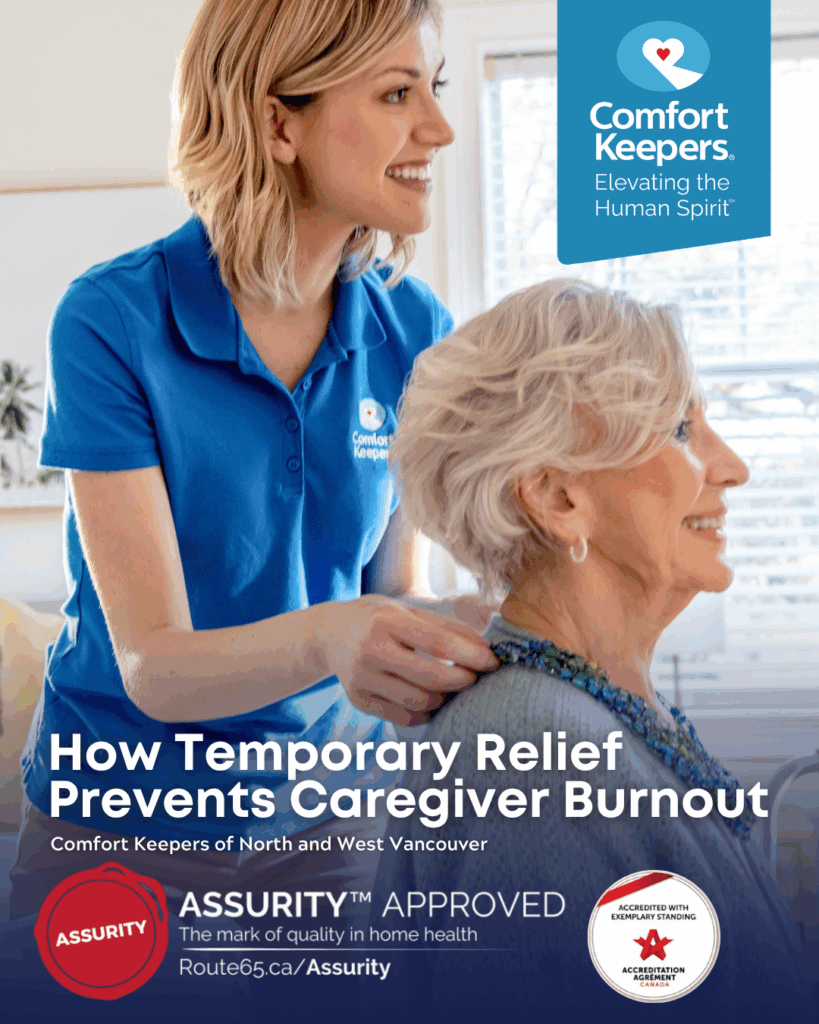
Senior woman with Caregiver, both smiling | Comfort Keepers North and West Vancouver | Respite Care: How Temporary Relief Prevents Caregiver Burnout | BLOG POST

What is Respite Care and Why is it Essential?

At its core, respite care is a short-term break for caregivers. It’s a support service that allows you to take a few hours, a day, or even a few weeks for yourself, while a trained professional steps in to provide safe, compassionate care for your loved one.

But it’s more than just “babysitting for seniors.” It’s a strategic tool for sustaining your own health and well-being. Think of it as a vital part of your overall care plan. The benefits are profound: a survey from the ARCH National Respite Network found that an overwhelming 98% of caregivers reported that respite care helped them become better caregivers and fostered a less stressful home environment. By preventing burnout, respite care protects the very foundation of the support system your loved one relies on – you.

Recognizing the Signs: When to Consider Respite Care

Caregiver burnout doesn’t happen overnight. It’s a gradual process of emotional, mental, and physical exhaustion. Acknowledging the signs is the first step toward getting the support you need.

Ask yourself if you’re experiencing any of the following:

  • Constant fatigue or changes in sleep patterns: You feel tired all the time, even after a night’s sleep, or you struggle with insomnia.
  • Increased stress and irritability: Small problems feel overwhelming, and you find yourself getting frustrated or angry more easily.
  • Social withdrawal: You’ve stopped seeing friends or participating in hobbies you once enjoyed because you lack the time or energy.
  • Feelings of guilt or resentment: You feel guilty for wanting a break but also resentful of the demands caregiving places on your life.
  • Neglecting your own health: You’re skipping your own doctor’s appointments, eating poorly, or not getting enough exercise. Research confirms this is common, with 23% of caregivers reporting that their role has negatively impacted their own health.

If this checklist resonates with you, it’s not a sign of failure. It’s a clear signal that it’s time to seek support.

Types of Respite Care Available in North & West Vancouver

When you start looking for respite care, you’ll find a few different models. The key is to find the one that fits your family’s unique needs and provides the least disruption for your loved one.

  • In-Home Respite Care: This is often the most comfortable and convenient option. A professional caregiver comes directly to your home, allowing your loved one to stay in their familiar surroundings and maintain their routine. This is the model Comfort Keepers specializes in, offering unparalleled flexibility.
  • Adult Day Centers: These facilities offer supervised care in a group setting for a portion of the day, providing structured activities and social interaction.
  • Short-Term Residential Care: For longer breaks, some assisted living or nursing facilities offer short-term stays where your loved one can receive round-the-clock care.

For most families in the North & West Vancouver area, the flexibility of in-home care is the ideal solution. At Comfort Keepers, we don’t believe in one-size-fits-all packages. Our services are designed around your life, whether you need:

  • A few hours a week to run errands or attend an appointment.
  • A full day of support to catch up on work or simply rest.
  • Overnight or 24-hour care so you can take a weekend trip or a longer vacation.

How Comfort Keepers Provides Seamless Respite Care in Your Home

The idea of leaving your loved one with someone new can be daunting. We understand that trust is paramount. That’s why our process is built on communication, transparency, and creating a perfect match between our clients and caregivers.

Here’s how we ensure a seamless transition every time:

  1. In-Home Consultation: It all starts with a conversation. We visit you and your loved one at home for a no-obligation assessment. This isn’t just about logistics; it’s about getting to know your family – your loved one’s personality, their routines, their preferences, and their care needs.
  2. Personalized Care Plan: Based on our conversation, we create a detailed and customized care plan. This document outlines everything from medication reminders and meal preferences to favorite activities and conversation topics, ensuring our caregiver can provide consistent, personalized support.
  3. Thoughtful Caregiver Matching: We don’t just send the next available person. We carefully match your loved one with a caregiver whose skills, experience, and personality are the best fit. All our Comfort Keepers are thoroughly vetted, insured, and trained in our unique Interactive Caregiving™ philosophy, which focuses on engaging clients physically, mentally, and emotionally.
  4. Continuity of Care: Our goal is to become a trusted extension of your family. The caregiver arrives fully prepared, armed with the care plan and ready to build a genuine connection. This ensures your loved one feels safe and supported, allowing you to relax completely during your break.

Understand how Comfort Keepers North and West Vancouver ensures seamless, personalized respite care so your loved one is supported while you rest.

Planning for Your First Respite Break: A Step-by-Step Guide

A little preparation can make the first respite experience smooth and stress-free for everyone involved.

  • Step 1: Introduce the Idea Early: Talk to your loved one about the caregiver who will be visiting. Frame it positively: “Mary is a lovely person who will be coming to spend some time with you while I take care of some appointments.”
  • Step 2: Create a Home Information Sheet: While our care plan is comprehensive, it’s helpful to have a quick reference sheet with emergency contacts, doctor’s information, location of fire extinguishers, and any household quirks.
  • Step 3: Plan a Low-Stress First Visit: For the first session, consider staying home for the first 30 minutes to help your loved one and the caregiver get acquainted. Then, plan a short outing for yourself.
  • Step 4: Communicate with the Caregiver: Before you leave, have a brief chat with the Comfort Keeper. Review the plan for the day and answer any last-minute questions.
  • Step 5: Enjoy Your Break (Guilt-Free!): Trust that your loved one is in good hands. Use this time for yourself. Get a coffee, take a walk, read a book – do whatever it is that recharges you.

Addressing the Cost: How to Pay for Respite Care in North & West Vancouver

The cost of respite care is a primary concern for many families. While Medicare typically does not cover these services, there are several other avenues for funding.

  • Private Pay: This is the most common method. Comfort Keepers offers flexible, hourly rates, so you only pay for the care you need. We work with you to create a schedule that fits your budget.
  • Long-Term Care Insurance: Many long-term care insurance policies include benefits for in-home care and respite services. We can provide the necessary documentation to help you file a claim with your provider.
  • Veterans Affairs (VA) Benefits: If your loved one is a veteran, they may be eligible for aid through the VA that can be used for in-home care services.
  • Provincial Programs: It’s always worth checking for any local or provincial tax credits or programs that may be available to support family caregivers.

Our team at Comfort Keepers North & West Vancouver can help you understand these options and find the best path forward for your family’s financial situation.


Frequently Asked Questions about Respite Care

It’s natural to have questions when considering in-home care. Here are answers to some of the most common ones we hear.

How do you select your caregivers?

Our caregivers, our Comfort Keepers, are the heart of our company. Each one is carefully selected for their empathy, reliability, and passion for helping others. They undergo a rigorous screening process, including criminal background checks and reference checks, and receive extensive training in safety, specialized care (like dementia care), and our Interactive Caregiving philosophy.

What if my loved one is resistant to having a caregiver?

This is a very common and understandable concern. The key is a gradual and positive introduction. Our in-home consultation includes your loved one, so they are part of the process from the beginning. By matching them with a caregiver who shares similar interests, we help foster a genuine friendship, transforming the caregiver from a “stranger” into a welcome companion.

Can your caregivers help with personal care needs?

Absolutely. Our caregivers are trained to provide discreet and dignified assistance with personal care tasks like bathing, grooming, and dressing. They can also assist with mobility, meal preparation, light housekeeping, and medication reminders.

What happens if our regular caregiver is sick?

We have a team of dedicated Comfort Keepers in North & West Vancouver. If your regular caregiver is unavailable, we will arrange for another qualified caregiver, who has been fully briefed on your loved one’s care plan, to step in, ensuring there is never a gap in care.


Reclaim Your Well-being and Be an Even Better Caregiver

Choosing respite care is not giving up. It’s an act of love for both your family member and yourself. It’s a choice to remain strong, healthy, and present for the person who needs you most. You don’t have to do this alone.

If you are a family caregiver in North & West Vancouver, we are here to support you. Let us provide the temporary relief you need so you can continue to provide the loving care your family deserves.

The Best Senior Home Care in North and West Vancouver is Comfort Keepers®

Our senior home care agency offers in-home care focusing on aging in place. Our services include dementia care, end-of-life care, post-surgery care, and palliative care. Comfort Keepers can assist seniors with living transition services, personal care, companionship care, and more! 

Quality and Accredited Elderly Care: Happier, Healthier, and at Home with 24/7 Senior Care Opportunities!

Do you need a home care solution for yourself or a loved one? Have you been thinking about retirement homes and their alternatives as a solution? Comfort Keepers® enables seniors to maintain happy, healthy lives in the comfort of their own homes. In-home care services are available in North Vancouver, West Vancouver, and the surrounding areas.

Comfort Keepers® is a Senior Care Agency That Can Make a Difference with Interactive Caregiving™

Our in-home caregivers ensure our senior clients have the best quality of life. The Interactive Caregiving™ program ensures that a senior’s safety, nutrition, mental well-being, and everyday needs are met. This program brings joy and good health to each client’s home.

Comfort Keepers® North Vancouver and West Vancouver Can Help with In-Home Elderly Care Services!

If you are concerned about the health and well-being of a loved one we can help! Comfort Keepers offers 24-hour care and delivers top-quality and compassionate care for seniors.  We are dedicated to safety technology solutions that foster independence and enhance well-being.

Locally Owned and Operated Home Health Care Agency

Our care centers around companionship for seniors. Empathetic care originates from the soul and allows us to meet our client’s requirements. The seasoned in-home caregivers employed by Comfort Keepers are carefully chosen based on their empathetic qualities.  

Contact the Comfort Keepers® North Vancouver and West Vancouver office at (604) 998-8806 to learn more about our unique in-home care solutions for seniors.

Comfort Keepers is an Accredited Senior Care Agency in North and West Vancouver, BC

Accreditation is a rigorous process that involves industry experts evaluating an organization’s processes, policies, and procedures. Comfort Keepers® North and West Vancouver has been awarded Exemplary Standing by Accreditation Canada. This achievement recognizes that Comfort Keepers® meets or exceeds the stringent quality standards for Home Care companies established by Accreditation Canada.

Maple Leaf Maple Leaf Maple Leaf

In-Home Senior Care Costs in BC: A Guide for North and West Vancouver Families

In-Home Senior Care Costs in BC: A Guide for North and West Vancouver Families

Navigating the world of senior care can feel overwhelming. You’re balancing your loved one’s needs, your own responsibilities, and a critical question that underlies it all: what will this cost? When you search for answers, you’re often met with vague government websites or private company pages that hide their prices, adding stress and uncertainty to an already emotional process.

Let’s clear that up right now.

For families in North and West Vancouver, private in-home care typically ranges from $35 per hour for companionship to over $85 per hour for specialized nursing care. The final cost depends on a blend of public and private options, the specific services needed, and how you structure the care plan.

This guide is designed to be the transparent resource you’ve been looking for. We’ll break down every factor that influences cost, explore public subsidies, and give you the tools to compare providers fairly. Our goal is to replace your uncertainty with confidence, empowering you to make the best decision for your family.

Senior woman with caregiver, both are smiling | Comfort Keepers North and West Vancouver | In-Home Senior Care Costs BC | BLOG POST

Section 1: The 3 Tiers of Care & How They Impact Your Budget

Not all care is the same, and understanding the differences is the first step in building a realistic budget. The hourly rate for in-home care is directly tied to the level of skill and responsibility required from the caregiver. Here’s a simple breakdown:

  • Companionship & Homemaking: This is the most accessible level of care. It focuses on social engagement and household support, including tasks like meal preparation, light housekeeping, errands, and providing a friendly presence to combat isolation.
  • Personal Care: This involves hands-on assistance with activities of daily living (ADLs). Caregivers at this level have specialized training to help with sensitive tasks like bathing, dressing, grooming, toileting, and mobility support.
  • Skilled & Nursing Care: This is the highest level of in-home support, provided by Licensed Practical Nurses (LPNs) or Registered Nurses (RNs). It includes complex medical tasks such as medication administration, wound care, post-surgery support, and managing chronic health conditions.

The primary reason for the price difference is the level of training, certification, and liability involved. A companion providing conversation and a nutritious meal requires a different skill set than a nurse managing a complex medication schedule, and the rates reflect that expertise.

Section 2: The Public Option – Unlocking BC’s Subsidized Home Care

Before exploring private options, it’s crucial to understand what publicly funded support is available. The Government of British Columbia offers subsidized home support services through regional health authorities. For residents of North and West Vancouver, this is managed by Vancouver Coastal Health (VCH).

Here’s how it generally works:

  1. Needs Assessment: The process begins with a call to the VCH Home Health Service Line. A case manager will conduct an assessment to determine your loved one’s eligibility based on their health needs.
  2. Income-Based Contribution: If deemed eligible, you don’t pay an hourly rate. Instead, you pay a daily rate based on your loved one’s after-tax income. This amount is capped, but it’s important to note that this subsidy is for the client, not the family.
  3. Limitations to Consider: While this is an invaluable service, families often face challenges with waitlists and limitations on the number of care hours provided. The public system is designed to meet essential needs, which may not cover the full scope of support a family is looking for.

Many families use the subsidized hours as a foundation and supplement them with private care to create a comprehensive and flexible support system. It’s also important to understand if other programs can help. While BC’s Medical Services Plan (MSP) generally does not cover non-medical in-home care, you can learn more by exploring financial assistance options for senior care in British Columbia.

Section 3: A Transparent Look at Private Care Pricing

When you need more flexibility, specific services, or immediate support, private care is the most common solution. Reputable agencies don’t just provide a caregiver; they offer a fully managed service that includes rigorous screening, training, scheduling coordination, insurance, and 24/7 on-call support for emergencies.

At Comfort Keeper North & West Vancouver, we believe in transparent, personalized pricing. After a thorough, no-cost consultation in your home, we build a care plan tailored to your specific needs, schedule, and budget. Our pricing reflects the value of that comprehensive support.

Here’s how factors influence the final cost:

  • Total Hours: The number of hours per week is the biggest determinant. We offer everything from short, 3-hour wellness visits to 24/7 live-in care. We can help you determine the right number of care hours for your loved one to ensure they have the support they need without over-budgeting.
  • Time of Day: Overnight and weekend care may have different rates than standard daytime hours.
  • Level of Care: As discussed in Section 1, the rate will align with whether companionship, personal care, or nursing support is required.
  • Care for Couples: We can often design a cost-effective plan to care for two people in the same home.

Instead of a generic price list, we provide a detailed plan that shows you exactly what you’re paying for – a plan built on a foundation of trust and a commitment to elevating your loved one’s quality of life.

Section 4: The Hidden Costs Checklist – How to Compare Providers Fairly

When you’re comparing private care agencies, the hourly rate is only part of the story. Some providers have lower advertised rates but make up for it with hidden fees that can surprise you later. To protect yourself and make a true apples-to-apples comparison, you need to ask the right questions.

We believe in arming families with information. Use this checklist during your consultations with any potential provider:

  • Minimum Hours: Is there a minimum number of hours required per visit or per week? (e.g., a 3-hour minimum is common).
  • Travel & Mileage: Do you charge for the caregiver’s travel time to and from my home? Are mileage costs for errands or appointments billed separately?
  • Holiday Rates: What is the surcharge for services provided on statutory holidays?
  • Supply Fees: Are basic supplies like gloves included, or are they an extra charge?
  • Cancellation Policy: What is the policy and potential fee for cancelling a scheduled visit?
  • Long-Term Contracts: Am I required to sign a long-term contract, or are services provided on a flexible basis?

A trustworthy provider will answer these questions clearly and provide all details in writing. This transparency is a hallmark of a professional, client-focused organization.

Section 5: Beyond the Hourly Rate – The True Value of In-Home Care

It’s natural to focus on the hourly cost, but it’s equally important to consider the immense value that professional in-home care delivers. This isn’t just an expense; it’s an investment in safety, dignity, and peace of mind.

Consider what the cost of quality care truly provides:

  • Independence: The overwhelming majority of seniors want to age in their own homes. Care makes this possible, allowing them to remain in a familiar, comfortable environment.
  • One-on-One Attention: Unlike in a facility where staff-to-resident ratios can be high, in-home care provides dedicated, one-on-one attention tailored to your loved one’s unique personality and needs.
  • Safety & Risk Reduction: A professional caregiver can identify and mitigate fall risks, ensure medication is taken correctly, and provide immediate support in case of an emergency.
  • Peace of Mind for Families: Knowing your parent is safe, well-fed, and socially engaged allows you to move from being a stressed caregiver to being a loving son or daughter again.
  • Cost-Effectiveness: For many, in-home care can be more affordable than the high monthly cost of an assisted living or long-term care facility, especially when needs don’t yet require 24/7 medical supervision.

When you look beyond the hourly rate, you see the profound impact that professional, compassionate care has on the entire family’s well-being.

Your Next Step: A Clear and Confident Plan

Understanding the cost of in-home care is the first step toward making a confident decision. You are no longer navigating this alone. You now have a framework for understanding the tiers of care, the role of public subsidies, and the right questions to ask any private provider.

The next step is to translate this knowledge into a concrete plan for your loved one.

We invite you to schedule a complimentary, no-obligation in-home care and cost assessment with one of our Care Coordinators. This isn’t a sales call. It’s a personalized planning session where we listen to your needs, answer your specific questions, and provide a detailed, transparent quote based on a care plan we design together.

Contact Comfort Keepers of North & West Vancouver Today to Schedule Your Free Consultation. Let us help you create a plan that brings comfort, safety, and joy back into your loved one’s life.


Frequently Asked Questions

1. Why is there such a wide range in private care costs ($35-$85+/hour)?

The range reflects the significant difference in skill, training, and certification between service levels. Companionship focuses on social and household support, while personal care requires training for hands-on assistance. Specialized nursing care, at the top of the range, is provided by licensed medical professionals who can manage complex health needs, justifying the higher rate.

2. Are there any government tax credits to help offset the cost?

Yes, Canada and British Columbia have several tax credits that can help. The Canada Caregiver Credit, the Disability Tax Credit (DTC), and the Medical Expense Tax Credit can provide significant financial relief for eligible families. We recommend consulting with a financial advisor to see which credits your family may qualify for.

3. How do I know I’m getting good value and not just paying for a brand name?

Value is determined by reliability, expertise, and the quality of the service. A reputable agency like Comfort Keepers North & West Vancouver invests heavily in caregiver screening, continuous training (such as our Interactive Caregiving™ model), comprehensive insurance, and 24/7 support systems. These behind-the-scenes investments ensure you get a reliable, professional, and compassionate caregiver every time, which is the true measure of value.


The Best Senior Home Care in North and West Vancouver is Comfort Keepers®

Our senior home care agency offers in-home care focusing on aging in place. Our services include dementia care, end-of-life care, post-surgery care, and palliative care. Comfort Keepers can assist seniors with living transition services, personal care, companionship care, and more! 

Quality and Accredited Elderly Care: Happier, Healthier, and at Home with 24/7 Senior Care Opportunities!

Do you need a home care solution for yourself or a loved one? Have you been thinking about retirement homes and their alternatives as a solution? Comfort Keepers® enables seniors to maintain happy, healthy lives in the comfort of their own homes. In-home care services are available in North Vancouver, West Vancouver, and the surrounding areas.

Comfort Keepers® is a Senior Care Agency That Can Make a Difference with Interactive Caregiving™

Our in-home caregivers ensure our senior clients have the best quality of life. The Interactive Caregiving™ program ensures that a senior’s safety, nutrition, mental well-being, and everyday needs are met. This program brings joy and good health to each client’s home.

Comfort Keepers® North Vancouver and West Vancouver Can Help with In-Home Elderly Care Services!

If you are concerned about the health and well-being of a loved one we can help! Comfort Keepers offers 24-hour care and delivers top-quality and compassionate care for seniors.  We are dedicated to safety technology solutions that foster independence and enhance well-being.

Locally Owned and Operated Home Health Care Agency

Our care centers around companionship for seniors. Empathetic care originates from the soul and allows us to meet our client’s requirements. The seasoned in-home caregivers employed by Comfort Keepers are carefully chosen based on their empathetic qualities.  

Contact the Comfort Keepers® North Vancouver and West Vancouver office at (604) 998-8806 to learn more about our unique in-home care solutions for seniors.

Comfort Keepers is an Accredited Senior Care Agency in North and West Vancouver, BC

Accreditation is a rigorous process that involves industry experts evaluating an organization’s processes, policies, and procedures. Comfort Keepers® North and West Vancouver has been awarded Exemplary Standing by Accreditation Canada. This achievement recognizes that Comfort Keepers® meets or exceeds the stringent quality standards for Home Care companies established by Accreditation Canada.

Maple Leaf Maple Leaf Maple Leaf

Preparing Seniors for Natural Disasters in North and West Vancouver

Preparing Seniors for Natural Disasters in North and West Vancouver
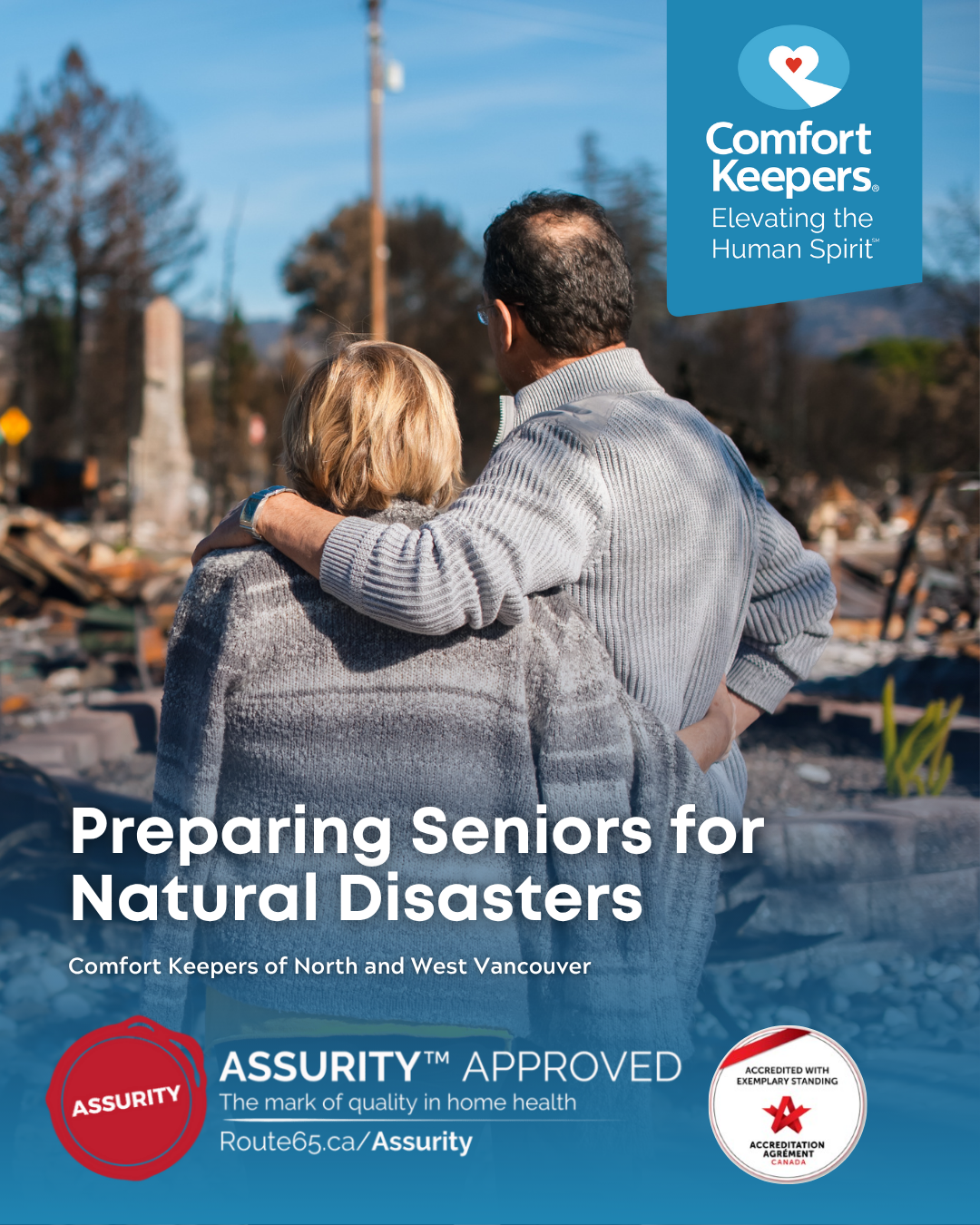
Senior couple stands before the aftermath of a natural disaster | Preparing Seniors for Natural Disasters | Comfort Keepers North and West Vancouver | BLOG POST

What Every Senior in North Vancouver and West Vancouver Needs to Know About Natural Disaster Preparation

A 2014 study revealed less than 25 percent of seniors have an emergency plan. Of those surveyed, one-quarter said they live alone, and one-third were disabled or in poor/fair health.

Preparing Seniors for Natural Disasters | As the seasons change, it’s a good time to evaluate how your family is prepared for emergencies. If you are the caregiver for an older family member, you may need to help your loved one get ready for unexpected events. Since most people over the age of 50 report that they are not prepared for natural disasters, it may fall to families and healthcare providers to help older adults become proactive in their emergency plans. Our older population is most vulnerable at a time of crisis, so getting prepared today means a faster response time and less stress in the future.

Preparing Seniors for Natural Disasters: The Emergency Kit

Your loved one may need to survive alone after a disaster. The general rule of thumb is to create a 3-day supply kit and keep its contents current. You may even want to consider creating a full “stay at home” kit and a lighter “emergency travel” kit with common items your loved one needs. Be sure your loved one knows where the kit is and what supplies are in it.

Recommended Items for The Emergency Kit

  • 3-day supply of non-perishable food and water (1 gallon of water per person, per day for drinking and sanitation)
  • Battery-powered radio or television (include extra batteries)
  • Flashlight (include extra batteries)
  • First aid kit
  • Sanitation and hygiene items (moist towelettes and toilet paper)
  • Matches and candles in a waterproof container
  • Extra clothing
  • Blankets
  • Basic kitchen utensils and a manual can opener
  • Multi-purpose tools, such as a Swiss army knife
  • Cash and coins
  • Whistle to signal for help
  • Medications
  • Medical devices (including hearing aids with batteries, oxygen, and wheelchair batteries)

Preparing Seniors for Natural Disasters: The Emergency Checklist

Along with a general emergency kit, older adults may need additional items to stay organized and safe. With your loved one’s help, create a list of items and information he or she might need in the event of a natural disaster.

The Emergency Checklist Could Include:

  • Names and dosage amounts for all medications
  • Doctor names/locations with phone numbers
  • Pharmacy names/locations with phone numbers
  • Special instructions for care or comfort in case your loved one has limited communication
  • Emergency contact information for family or friends
  • Blood type
  • Duplicates of important documents, including passport, driver’s license, social security card, wills, deeds, financial statements, and insurance information (should be kept in a secure location)
  • Personal care assistance plan (if your loved one receives help from a home healthcare agency, find out how the agency will respond to an emergency and designate backup plans for caregivers)

Preparing Seniors for Natural Disasters: How to Manage Stress

With some natural disasters, there is a time of warning when you can prepare, but there may also be a time to worry. As a possible emergency arises, older people may feel stressed and isolated. Having an emergency plan and a kit can help them feel prepared.

Strategies to Help Manage Stress Could Be:

  • Maintain typical routines, meal patterns, and normal sleep as much as possible.
  • Minimize talk about the disaster and avoid 24-hour news reports on the crisis.
  • Seek out positive activities to pass the time.

Older adults may also want to volunteer or provide assistance to others. This is a great way to showcase their strengths and resilience. Plus, finding ways for them to contribute to the efforts may ease some of the worry and helpless feelings.

As families and caregivers, we want to work together to help our loved ones feel empowered and safe, no matter what emergencies arise. At Comfort Keepers®, we understand that many seniors want to stay in their own homes and feel protected there. By starting preparations today, your loved ones can feel more peace of mind and reassurance that if a crisis happens, they are not alone.

A box being filled with canned goods | Preparing Seniors for Natural Disasters | Comfort Keepers North and West Vancouver

The Best Senior Home Care in North and West Vancouver is Comfort Keepers®

Our senior home care agency offers in-home care focusing on aging in place. Our services include dementia care, end-of-life care, post-surgery care, and palliative care. Comfort Keepers can assist seniors with living transition services, personal care, companionship care, and more! 

Quality and Accredited Elderly Care: Happier, Healthier, and at Home with 24/7 Senior Care Opportunities!

Do you need a home care solution for yourself or a loved one? Have you been thinking about retirement homes and their alternatives as a solution? Comfort Keepers® enables seniors to maintain happy, healthy lives in the comfort of their own homes. In-home care services are available in North Vancouver, West Vancouver, and the surrounding areas.

Comfort Keepers® is a Senior Care Agency That Can Make a Difference with Interactive Caregiving™

Our in-home caregivers ensure our senior clients have the best quality of life. The Interactive Caregiving™ program ensures that a senior’s safety, nutrition, mental well-being, and everyday needs are met. This program brings joy and good health to each client’s home.

Comfort Keepers® North Vancouver and West Vancouver Can Help with In-Home Elderly Care Services!

If you are concerned about the health and well-being of a loved one we can help! Comfort Keepers offers 24-hour care and delivers top-quality and compassionate care for seniors.  We are dedicated to safety technology solutions that foster independence and enhance well-being.

Locally Owned and Operated Home Health Care Agency

Our care centers around companionship for seniors. Empathetic care originates from the soul and allows us to meet our client’s requirements. The seasoned in-home caregivers employed by Comfort Keepers are carefully chosen based on their empathetic qualities.  

Contact the Comfort Keepers® North Vancouver and West Vancouver office at (604) 998-8806 to learn more about our unique in-home care solutions for seniors.

Comfort Keepers is an Accredited Senior Care Agency in North and West Vancouver, BC

Accreditation is a rigorous process that involves industry experts evaluating an organization’s processes, policies, and procedures. Comfort Keepers® North and West Vancouver has been awarded Exemplary Standing by Accreditation Canada. This achievement recognizes that Comfort Keepers® meets or exceeds the stringent quality standards for Home Care companies established by Accreditation Canada. 


References:

  • Abrahms, Sally. “A Caregiver’s Natural Disaster Prep List.” AARP.org. Web. 10 May 2012.
  • Soglin, Becky. “UI study: Older adults in U.S. not prepared for natural disasters.” Iowa Now. Web. 25 March 2014.
  • Sollitto, Marlo. “12 Tips to Prepare the Elderly for Disasters.” AgingCare.com. Web. 20 June 2015.
  • “Preparing Makes Sense for Older Americans. Get Ready Now.” Ready.gov. Web. 1 July 2015.
  • Tralle, Minnell L. “Before a Natural Disaster: Planning and Preparing Tips for Older Adults.” University of Minnesota Extension. Web. May 2015.

Maple Leaf Maple Leaf Maple Leaf

Men’s Health and Prostate Cancer: The Causes, Symptoms and Treatments

Men’s Health and Prostate Cancer: The Causes, Symptoms and Treatments
Senior male outside smiling | Men's Health and Prostate Cancer: The Causes, Symptoms and Treatments | Comfort Keepers North Vancouver and West Vancouver | BLOG POST

What Every Family in North and West Vancouver, BC, Needs to Know About Prostate Cancer

The month of June is dedicated to Men’s Health, a vital aspect of every man’s overall well-being.  Prostate cancer, the most prevalent cancer among Canadian men, is also the third leading cause of cancer-related deaths, as reported by the Canadian Cancer Society.

Men’s Health and Prostate Cancer: A Growing Concern for Seniors

In 2017, the Canadian Cancer Society projected 21,600 new prostate cancer cases and 4,000 related deaths. This high occurrence, linked to longer lifespans, affects men over 65 by 80%. While the precise cause is still unclear, substantial progress has been made in scientific research regarding the role of genetic factors.

Men’s Health and the Potential Causes and Risk Factors of Prostate Cancer

Researchers note that, in many instances, prostate cancer can be caused by alterations in the normal prostate cell’s DNA. Some changes are inherited genetically, passed on from one generation to the next. 

As with many cancers, the genetic factor is not to be underestimated. In fact, a man is twice as likely to have prostate cancer if his brother has/had it. Those that have Lynch syndrome, a hereditary disorder caused by genetic changes, also are at higher risk.

Some of these changes, known as acquired mutations, may occur during the course of one’s life. One potential source for these acquired mutations is diet, as some studies have suggested that vitamin D deficiency may be a predictor of aggressive prostate cancer. 

Exposure to certain chemicals may be another source of acquired mutations. A recent study found that U.S. veterans exposed to Agent Orange, a chemical defoliant used during the Vietnam War, had a significantly increased (48% higher) risk of development versus veterans who had not been exposed.

Symptoms of Prostate Cancer in Seniors

The risk of developing prostate cancer increases once men reach the age of 50. However, one of the more challenging aspects of prostate cancer is that symptoms often do not manifest until later stages of development, since it tends to grow slowly. 

Common Symptoms of Prostate Cancer:

  • Frequent urination (especially urges at night)
  • Difficulty urinating
  • Bladder control difficulty
  • Blood in the urine and/or semen
  • Swelling in the legs or pelvis
  • Chronic bone pain
  • Erectile dysfunction

As some men may have an “out of sight, out of mind” attitude toward medical issues, it is vital that they discuss testing with a physician as close to the age of 50 as possible – especially if they’ve experienced any of the symptoms listed above. 

Screening is often done either by testing for prostate-specific antigen levels (PSA) levels in the blood, or by a digital rectal exam (DRE). If the results come back positive, the doctor may wish to test further.

Although screening can help detect prostate cancer, it does not always help gauge the severity or threat level. Additionally, test results may be false-positive (signifying that a man does have cancer when he does not), or false-negatives (signifying that he does have cancer when he does not).

Men’s Health and Cancer Treatment Options

As mentioned, doctors may not have a full understanding of how threatening a man’s prostate cancer may be – which can make it difficult to recommend treatment. Often times, these treatments – done through surgery and/or radiation – can negatively affect various aspects of normal living, especially for older men. 

Many health communities tend to agree that screening (and potentially treatment) for older men may not be greatly beneficial since they are more likely to die from other conditions, should they exist.

That is not to say that prostate cancer does not pose a threat. While treatment may potentially be more harmful than the cancer itself, it’s not to be taken lightly. If your aging loved one is concerned about his prostate and unsure about screening, it’s important to begin the discussion with his doctor and to see what the best course of action is, given factors such as age and health. Screening/treatment should always be mutually agreed upon by both your loved one and his doctor.

A senior male, smiling | Men's Health and Prostate Cancer | Comfort Keepers North and West Vancouver

Comfort Keepers® Can Help with Men’s Health

At Comfort Keepers® North and West Vancouver, our caregivers can help provide a daily routine for your loved one that promotes good health and independent living. We can also make sure that he has transportation to and from any scheduled appointments. 

The Best Senior Home Care in North and West Vancouver is Comfort Keepers®

Our senior home care agency offers in-home care focusing on aging in place. Our services include dementia care, end-of-life care, post-surgery care, and palliative care. Comfort Keepers can assist seniors with living transition services, personal care, companionship care, and more! 

Quality and Accredited Elderly Care: Happier, Healthier, and at Home with 24/7 Senior Care Opportunities!

Do you need a home care solution for yourself or a loved one? Have you been thinking about retirement homes and their alternatives as a solution? Comfort Keepers® enables seniors to maintain happy, healthy lives in the comfort of their own homes. In-home care services are available in North Vancouver, West Vancouver, and the surrounding areas.

Comfort Keepers® is a Senior Care Agency That Can Make a Difference with Interactive Caregiving™

Our in-home caregivers ensure our senior clients have the best quality of life. The Interactive Caregiving™ program ensures that a senior’s safety, nutrition, mental well-being, and everyday needs are met. This program brings joy and good health to each client’s home.

Comfort Keepers® North Vancouver and West Vancouver Can Help with In-Home Elderly Care Services!

If you are concerned about the health and well-being of a loved one we can help! Comfort Keepers offers 24-hour care and delivers top-quality and compassionate care for seniors.  We are dedicated to safety technology solutions that foster independence and enhance well-being.

Locally Owned and Operated Home Health Care Agency

Our care centers around companionship for seniors. Empathetic care originates from the soul and allows us to meet our client’s requirements. The seasoned in-home caregivers employed by Comfort Keepers are carefully chosen based on their empathetic qualities.  

Contact the Comfort Keepers® North Vancouver and West Vancouver office at (604) 998-8806 to learn more about our unique in-home care solutions for seniors.

Comfort Keepers is an Accredited Senior Care Agency in North and West Vancouver, BC

Accreditation is a rigorous process that involves industry experts evaluating an organization’s processes, policies, and procedures. Comfort Keepers® North and West Vancouver has been awarded Exemplary Standing by Accreditation Canada. This achievement recognizes that Comfort Keepers® meets or exceeds the stringent quality standards for Home Care companies established by Accreditation Canada. 


References:

  • National Cancer Institute. “Prostate Cancer Overview.” Web. 2017.
  • Cancer Treatment Centers of America. “Prostate Cancer Symptoms.” Web. 2017.
  • American Cancer Society. “Early Detection.” Web. 2017.
  • Medical News Today. “Prostate Cancer: Symptoms and Causes” by Christian Nordqvist. Web. 2017.
Maple Leaf Maple Leaf Maple Leaf

Skin Protection Tips for Seniors in British Columbia

Skin Protection Tips for Seniors in British Columbia
Senior woman smiling while wearing large brimmed hat | Comfort Keepers North and West Vancouver | BLOG POST

What Every Senior in North and West Vancouver, BC, Needs to Know About Skin Health Ahead of the Summer Season

Skin protection tips for seniors: What do you need to know? While healthy skin has clear cosmetic advantages, it’s also essential to overall well-being, especially for seniors. As we age, natural changes in the skin can make older adults more susceptible to the harsh effects of summer weather.

Chief among them are the impacts of being outdoors – the sun, the heat, and the environment. Caregivers can easily help their senior loved ones enjoy the great outdoors and the many fun activities that go along with it by being aware of potential risks and taking some practical yet effective precautions.

The Importance of Skin Protection Tips for Seniors

Our skin has many important functions. It serves to protect us from the environment, helps us control our body temperature, fluid and electrolyte balance, and through its nerve receptors, allows us to feel sensations like touch, pain, and pressure.

Over time, skin changes occur due to genetic makeup, nutrition, environmental and other factors like smoking, but the greatest single factor is sun exposure. 

Aging and Skin Protection Tips for Seniors

With aging, the outermost layer of our skin thins and the number of cells that contain pigment decrease. The skin’s strength and elasticity also decreases, blood vessels in the middle layer become fragile, and the subcutaneous fat layer that provides padding and insulation reduces. Age also changes our glands. They produce less oil as we age making it more difficult to keep skin moist, and sweat glands produce less sweat making it harder to keep cool.

Wrinkles and sagging skin are among the most visible signs of growing older, but there are other common effects of age-related deterioration as well. Aging skin appears more pale and translucent, is more fragile and tears easily. 

Skin Protection Tips and the Effects of Sun on Senior Skin

Skin that has been exposed to the sun frequently and consistently produces a leathery, weather-beaten appearance and large pigmented spots called age spots, liver spots or lentigos, may also appear in sun-exposed areas. The most serious diseases directly related to sun exposure are skin cancers such as basal cell, squamous cell carcinoma, and the deadliest, melanoma which is much more likely to spread to other parts of the body when left untreated.

Skin Protection Tips for Sensitive Senior Skin

Older people bruise easily and may bleed under the skin, a condition known as senile purpura. The dwindling fat layer leaves senior skin at risk of injury and reduces his or her ability to maintain body temperature. The lack of natural insulation can cause hypothermia in air conditioning. Because seniors perspire less, it’s harder for them to keep cool and increases their risk for becoming overheated or developing heat stroke.

Skin Protection Tips and Senior Skin Disorders

More than 90% of all older people have some type of skin disorder, too. Common difficulties include those caused by conditions such as blood vessel diseases like arteriosclerosis, diabetes, heart disease, liver disease, nutritional deficiencies, obesity, reactions to medications, and allergies to plants, or other substances to name a few. 

While the effects of aging can’t be reversed, maintaining proper care means having healthy skin and more importantly, healthy senior people.

Here are seven skin protection tips for seniors:

#1. Opt to shower or bathe every other day to avoid dry skin:

Take a sponge bath on alternate days, cleansing gently with moisturizing soap or detergent-free cleansers that do not need to be rinsed. Such cleansers do the job of removing dirt and natural oils but don’t impact the natural acid balance of mature skin.

#2. Apply moisturizer on a daily basis:

Advanced skincare products that nourish the skin from the outside and deliver amino acids, vitamins, antioxidants and ingredients that are gentle and soothing make skin stronger and more resilient.

#3. Stay out of direct sunlight as much as possible:

To protect your senior’s skin from harmful UV rays, the American Cancer Society uses a catch phrase that can help your senior remember some of the key steps to protect him or herself when going out in the sun – “Slip! Slop! Slap! And Wrap!” Meaning, “Slip on a shirt. Slop on Sunscreen. Slap on a hat. And Wrap on sunglasses to protect the eyes and sensitive skin around them.”

#4. Keep hydrated and well fed:

Good nutrition and adequate fluids are especially important for seniors in the hot summer months. Dehydration increases the risk of skin injury.

#5. Protect fragile skin:

Take care to avoid injuries that can cut or tear fragile skin or caustic substances that can disrupt the skin’s protective barrier. Cover small wounds with band aids made for sensitive skin so as not to cause added injury when removing after wounds have healed.

#6. Remember the special needs of seniors with common diseases like diabetes:

Diabetics are more prone to bacterial and fungal infections and itchy skin. Protecting the skin of your senior loved one, especially on extremities, is essential.

#7. Avoid alcohol-based solutions:

astringents, strong bacterial soaps and products that are harsh and damaging for older skin. Hand-sanitizers can be especially drying and using a hand moisturizer afterwards can be important.

Cook-outs, trips to the beach, a day at the pool, walks in the park, fishing at the lake, and other outdoor activities are all part of summertime traditions that everyone enjoys, especially seniors. Most involve the potential to soak up the sun. Think ahead and anticipate your senior loved ones’ needs to protect his or her skin beforehand to assure that summer fun is worry-free.

A senior man applies sunscreen | Skin Protection Tips for British Columbia Seniors | Comfort Keepers North and West Vancouver

The Best Senior Home Care in North and West Vancouver is Comfort Keepers®

Our senior home care agency offers in-home care focusing on aging in place. Our services include dementia care, end-of-life care, post-surgery care, and palliative care. Comfort Keepers can assist seniors with living transition services, personal care, companionship care, and more! 

Quality and Accredited Elderly Care: Happier, Healthier, and at Home with 24/7 Senior Care Opportunities!

Do you need a home care solution for yourself or a loved one? Have you been thinking about retirement homes and their alternatives as a solution? Comfort Keepers® enables seniors to maintain happy, healthy lives in the comfort of their own homes. In-home care services are available in North Vancouver, West Vancouver, and the surrounding areas.

Comfort Keepers® is a Senior Care Agency That Can Make a Difference with Interactive Caregiving™

Our in-home caregivers ensure our senior clients have the best quality of life. The Interactive Caregiving™ program ensures that a senior’s safety, nutrition, mental well-being, and everyday needs are met. This program brings joy and good health to each client’s home.

Comfort Keepers® North Vancouver and West Vancouver Can Help with In-Home Elderly Care Services!

If you are concerned about the health and well-being of a loved one we can help! Comfort Keepers offers 24-hour care and delivers top-quality and compassionate care for seniors.  We are dedicated to safety technology solutions that foster independence and enhance well-being.

Locally Owned and Operated Home Health Care Agency

Our care centers around companionship for seniors. Empathetic care originates from the soul and allows us to meet our client’s requirements. The seasoned in-home caregivers employed by Comfort Keepers are carefully chosen based on their empathetic qualities.  

Contact the Comfort Keepers® North Vancouver and West Vancouver office at (604) 998-8806 to learn more about our unique in-home care solutions for seniors.

Comfort Keepers is an Accredited Senior Care Agency in North and West Vancouver, BC

Accreditation is a rigorous process that involves industry experts evaluating an organization’s processes, policies, and procedures. Comfort Keepers® North and West Vancouver has been awarded Exemplary Standing by Accreditation Canada. This achievement recognizes that Comfort Keepers® meets or exceeds the stringent quality standards for Home Care companies established by Accreditation Canada.


References

  • ‘Aging Changes in Skin,’ from Minaker KL. Common clinical sequelae of aging, published on MedlinePlus (http://www.medline.com)
  • ‘Skin Care Benefits Overall Health For Seniors,” published by ARAcontent on Princeton Online, (http://www.princetononline.com)
  • ‘Sun Safety: Melanoma,’ published by ARAcontent, Princeton Online, (http://www.princetononline.com)
  • ‘Skin Cancer Prevention and Early Detection,’ published by the American Cancer Society online, (http://www.americancancersociety.com)
Maple Leaf Maple Leaf Maple Leaf

Promoting Bone Health to North and West Vancouver’s Senior Community

Promoting Bone Health to North and West Vancouver’s Senior Community
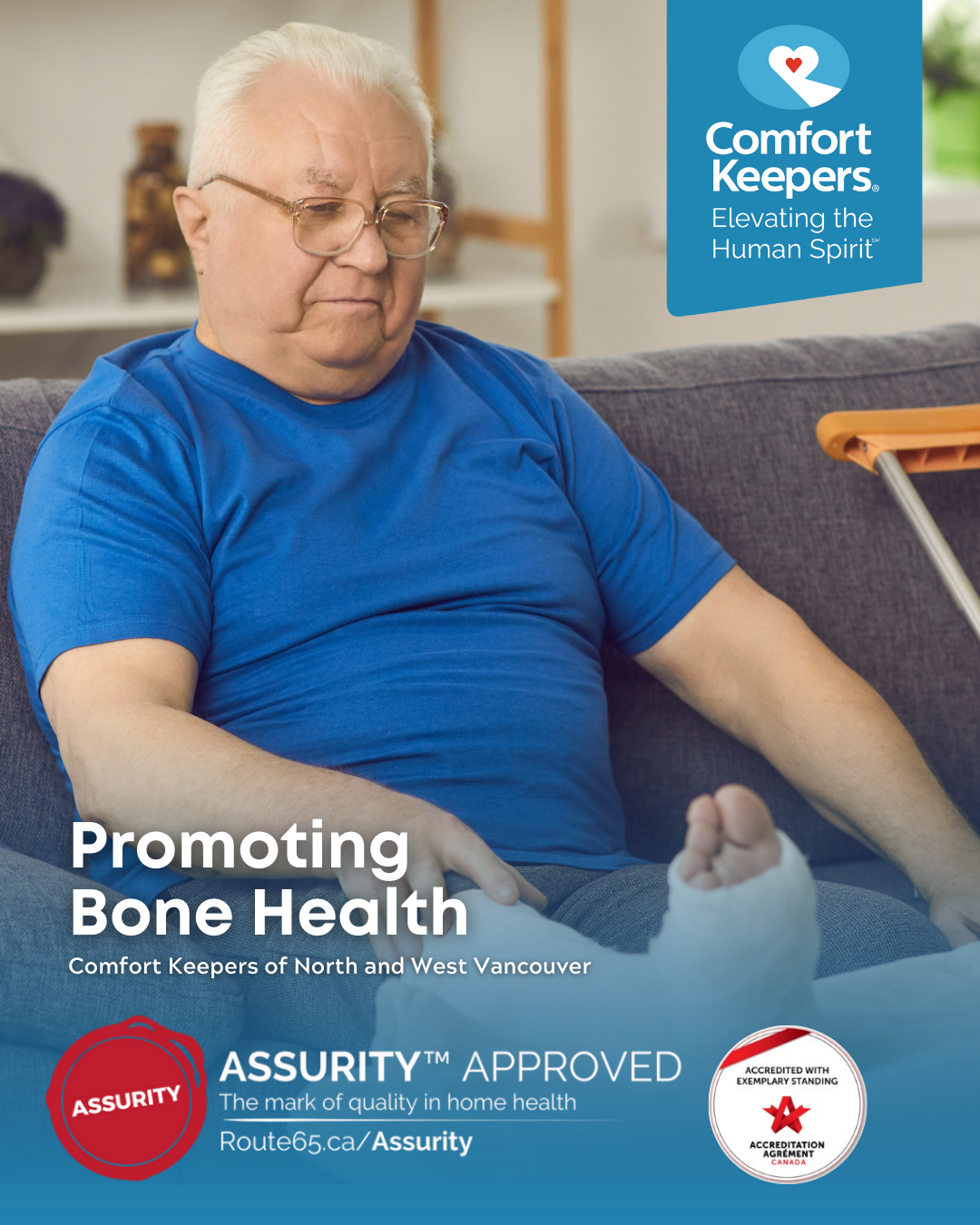
Senior male seated on couch with cast on leg and crutch beside | Promoting Bone Health | Comfort Keepers North and West Vancouver | BLOG POST

What Every Senior in North Vancouver and West Vancouver Needs to Know About Bone Health

According to the National Osteoporosis Foundation (NOF), low bone mass and osteoporosis affect 52 million Americans. It accounts for two million fractures and $19 billion in related expenses each year.

Promoting Bone Health | After the age of 50, women have a 50-percent chance of suffering an osteoporosis-related fracture. The risk increases dramatically after the first occurrence. Men 50 and over have a 25-percent chance of suffering an osteoporosis-related fracture. A variety of preventive health strategies help slow and lessen the effects of osteoporosis, a natural weakening of the bones as we age.

Osteoporosis Prevention and Treatment Options

The high physical and financial cost of osteoporosis makes prevention or treatment a top priority for seniors. Here are some leading options:

Medications Related to Bone Health

Most osteoporosis drugs block the effect of bone-destroying cells that increase in number as we get older. A compound called Denosumab helps prevent the formation of harmful cells. Declaring it one of 2009’s “Top 10 Medical Breakthroughs,” Time magazine states that two studies showed Denosumab to be effective in preventing fractures in the two largest at-risk populations for osteoporosis, postmenopausal women and men in treatment for prostate cancer. 

Other osteoporosis drugs, such as Fosamax, Boniva, Actonel, and Reclast, belong to a group of drugs called bisphosphonates. According to the Mayo Clinic, these drugs, much like the female hormone estrogen, inhibit bone breakdown, preserve bone mass and even increase bone density in the spine and hip, reducing the risk of fractures.

The drug Evista also mimics estrogen’s positive effects on bone density. Calcitonin, a hormone produced by the thyroid gland, slows bone loss. Forteo is a powerful drug that stimulates new bone growth.

Talk with your physician about these drugs, their benefits, and their side effects to help determine if any may be effective and safe for you.

Hormone Therapy for Bone Health

Estrogen therapy is generally not the first choice for maintaining bone density due to the availability of other options and the increased risk of blood clots, breast and endometrial cancer, and heart disease.

Calcium for Bone Health

The amount of calcium our bones require from food and supplements changes as we age, according to the Institute of Medicine (IOM). It rises from 210 to 270 milligrams a day during the first year of life and peaks at 1,300 milligrams from ages 9 to 18 before declining to 1,000 milligrams from ages 19 to 50 and rising to 1,200 milligrams at ages 51 and up.

Natural sources of calcium include dairy products, almonds, broccoli, spinach, cooked kale, canned salmon with bones, sardines, and soy products. Those who have trouble getting adequate calcium from their diet may consider a supplement, but the IOM recommends limiting total calcium intake to 2,500 milligrams a day. (Required calcium intake varies by individual. Always check with your doctor before taking a calcium supplement or any other nutritional supplement.) 

Vitamins for Bone Health

Vitamin D is also essential to bone health. Many people get adequate amounts of this nutrient from sunlight. But that is not always possible if you live at a high latitude, are housebound, regularly use sunscreen, or avoid the sun to reduce the risk of skin cancer. Vitamin D is available in oily fish and egg yolks. If this does not provide enough, a good alternative is a vitamin D supplement or a calcium supplement that includes vitamin D.

While calcium and vitamin D are good for your bones, cigarettes and alcohol are not. Do not smoke, and limit your alcohol consumption. Smoking increases bone loss, as it inhibits the production of estrogen and reduces the absorption of calcium in the intestine. Consumption of more than two alcoholic drinks a day decreases bone formation and reduces calcium absorption.

Physical Therapy and Exercise for Bone Health

Often used in combination with medications and other therapies, physical therapy helps improve bone strength, posture, muscle strength, and balance, thereby making falls less likely. Exercise also reduces the risk of falling. A lifetime of exercise is ideal, but you can realize the benefits no matter when you start. (However, see your doctor before you begin.) For the best overall results, combine weight-bearing exercises, such as walking, and strength training with weights.

Fall Prevention

In addition to exercise, you can reduce the risk of falls and broken bones by taking steps toward making your or your loved one’s home safer. This can start by checking for and removing hazards, such as electrical cords, area rugs, and slippery surfaces, which might cause trips or falls. Also, improve lighting inside your home and around outside areas such as pathways or sidewalks.

There are a variety of means for preventing or treating osteoporosis. Talk to your doctor and find the best way to care for your bones.

Tips to Prevent Falls in Seniors

Tip #1 – Check the ingredients:

Check over-the-counter skin care products to ensure they aren’t alcohol-based. Alcohol can irritate the skin further, so choose products that include ceramides, lipids, and hyaluronic acid – natural moisturizers that the body produces less of with age.

Tip #2 – Humidifier:

Use a humidifier in the home to help distribute moisture and prevent dry skin.

Tip #3 – No sense is good sense:

Avoid using fragrances, as they can inflame psoriasis.

Tip #4 – Omega-3 fatty acids:

With physician/dietician approval, follow a healthy diet that includes cold water fish, omega-3 fatty acids, and nuts. Also, consider adding turmeric to your diet. This natural supplement’s anti-inflammatory properties are known to help reduce psoriasis flare-ups.  

Tip #5 – Try mocktails:

Avoid alcohol. Studies have shown that alcohol is a trigger for psoriasis, and frequent consumption can even increase the chances of developing the condition.

Tip #6 – Healthy weight:

Maintain a healthy weight through exercise and – as noted above – a healthy diet. Doing so will also help to reduce the risk of other psoriasis-related health problems, such as heart disease and diabetes. Remember to consult a physician before beginning any exercise regimen.

Tip #7 – Low to no stress:

Reduce stress whenever and however possible. Like alcohol, stress is a known psoriasis trigger – but unlike alcohol, stress can be harder to avoid in day-to-day life. To help keep it at bay, consider practicing yoga, meditation, or other activities that can bring a sense of peace.

Tip #8 – Support system:

Maintain a strong support network. Late-onset psoriasis can lead to feelings of anxiety and depression, so whether it be friends, family, or an actual support group, having people to talk to about the condition can help improve emotional well-being.

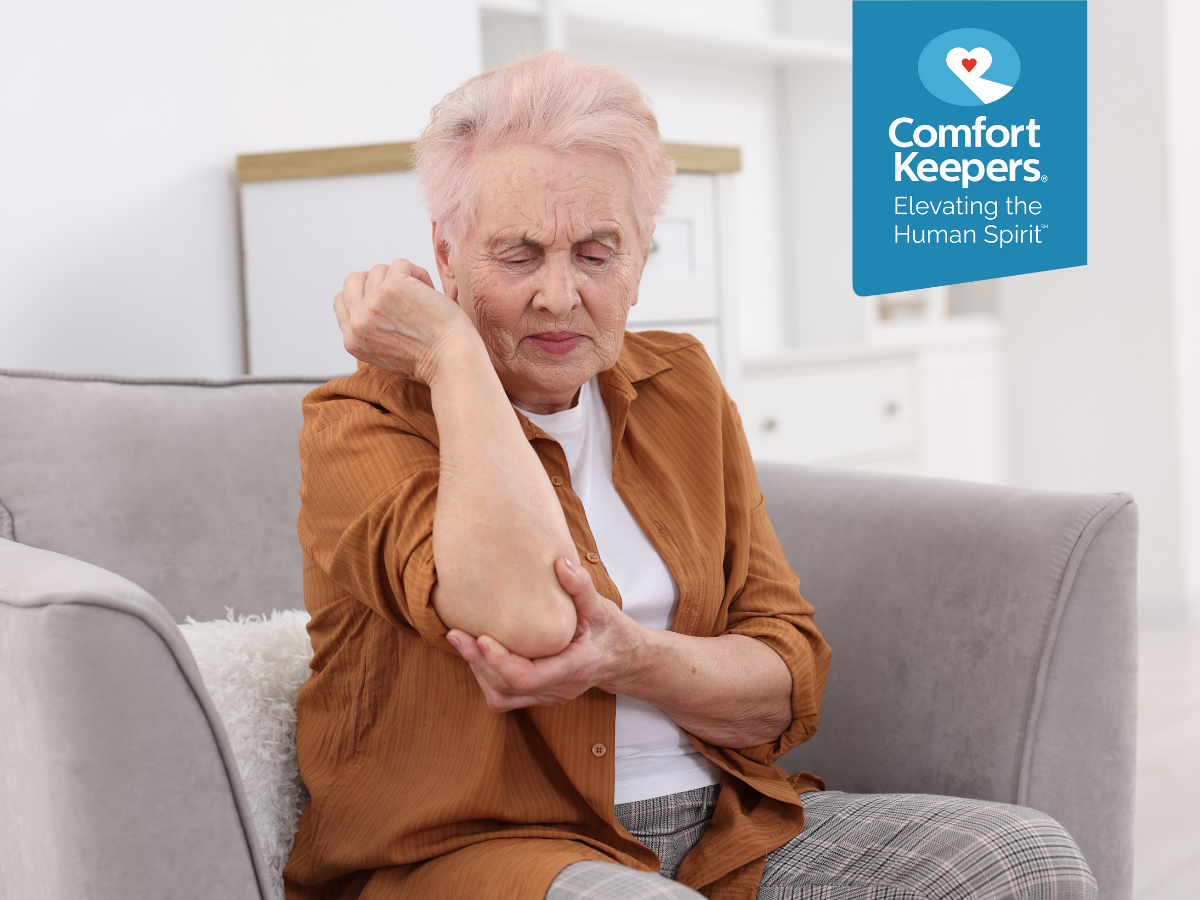
A senior woman seated on a couch holding her elbow | Promoting Bone Health | Comfort Keepers North and West Vancouver

The Best Senior Home Care in North and West Vancouver is Comfort Keepers®

Our senior home care agency offers in-home care focusing on aging in place. Our services include dementia care, end-of-life care, post-surgery care, and palliative care. Comfort Keepers can assist seniors with living transition services, personal care, companionship care, and more! 

Quality and Accredited Elderly Care: Happier, Healthier, and at Home with 24/7 Senior Care Opportunities!

Do you need a home care solution for yourself or a loved one? Have you been thinking about retirement homes and their alternatives as a solution? Comfort Keepers® enables seniors to maintain happy, healthy lives in the comfort of their own homes. In-home care services are available in North Vancouver, West Vancouver, and the surrounding areas.

Comfort Keepers® is a Senior Care Agency That Can Make a Difference with Interactive Caregiving™

Our in-home caregivers ensure our senior clients have the best quality of life. The Interactive Caregiving™ program ensures that a senior’s safety, nutrition, mental well-being, and everyday needs are met. This program brings joy and good health to each client’s home.

Comfort Keepers® North Vancouver and West Vancouver Can Help with In-Home Elderly Care Services!

If you are concerned about the health and well-being of a loved one we can help! Comfort Keepers offers 24-hour care and delivers top-quality and compassionate care for seniors.  We are dedicated to safety technology solutions that foster independence and enhance well-being.

Locally Owned and Operated Home Health Care Agency

Our care centers around companionship for seniors. Empathetic care originates from the soul and allows us to meet our clients’ requirements. The seasoned in-home caregivers employed by Comfort Keepers are carefully chosen based on their empathetic qualities.  

Contact the Comfort Keepers® North Vancouver and West Vancouver office at (604) 998-8806 to learn more about our unique in-home care solutions for seniors.

Comfort Keepers is an Accredited Senior Care Agency in North and West Vancouver, BC

Accreditation is a rigorous process that involves industry experts evaluating an organization’s processes, policies, and procedures. Comfort Keepers® North and West Vancouver has been awarded Exemplary Standing by Accreditation Canada. This achievement recognizes that Comfort Keepers® meets or exceeds the stringent quality standards for Home Care companies established by Accreditation Canada.


References:

Canadian Dermatology Association. “ Psoriasis” Web. 2018.
SkinCareGuide. “Psoriasis in the Elderly.” Web. 2018.
HealthCentral. “Common Questions about Late-Onset Psoriasis” by Sarah Markel. Web. 2018.
HealthLine. “Psoriasis by the Numbers: Facts, Statistics, and You” by Ann Pietrangelo & reviewed by Debra Sullivan, PhD, MSN, RN, CNE, COI. Web. 2018.
HealthLine. “10 Ways to Treat Psoriasis at Home” by Brian Krans and Cathie Ericson & medically reviewed by Debra Sullivan, PhD, MSN, RN, CNE, COI. Web. 2018. 
WebMD. “Aging with Psoriasis” by Camille Noe Pagan. Web. 2018.


Maple Leaf Maple Leaf Maple Leaf

Helping British Columbia’s Seniors Manage Their Parkinson’s Disease Symptoms

Helping British Columbia’s Seniors Manage Their Parkinson’s Disease Symptoms
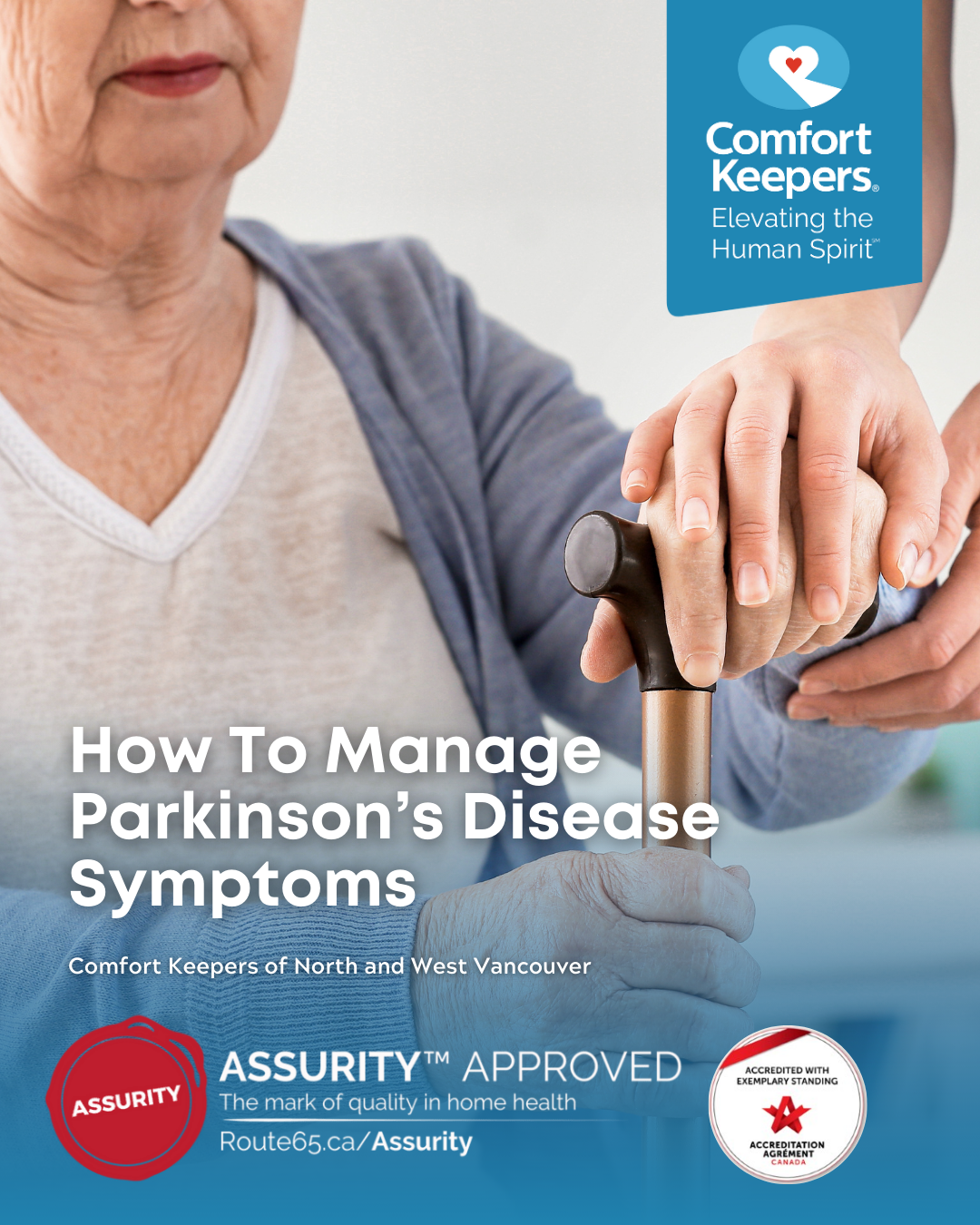
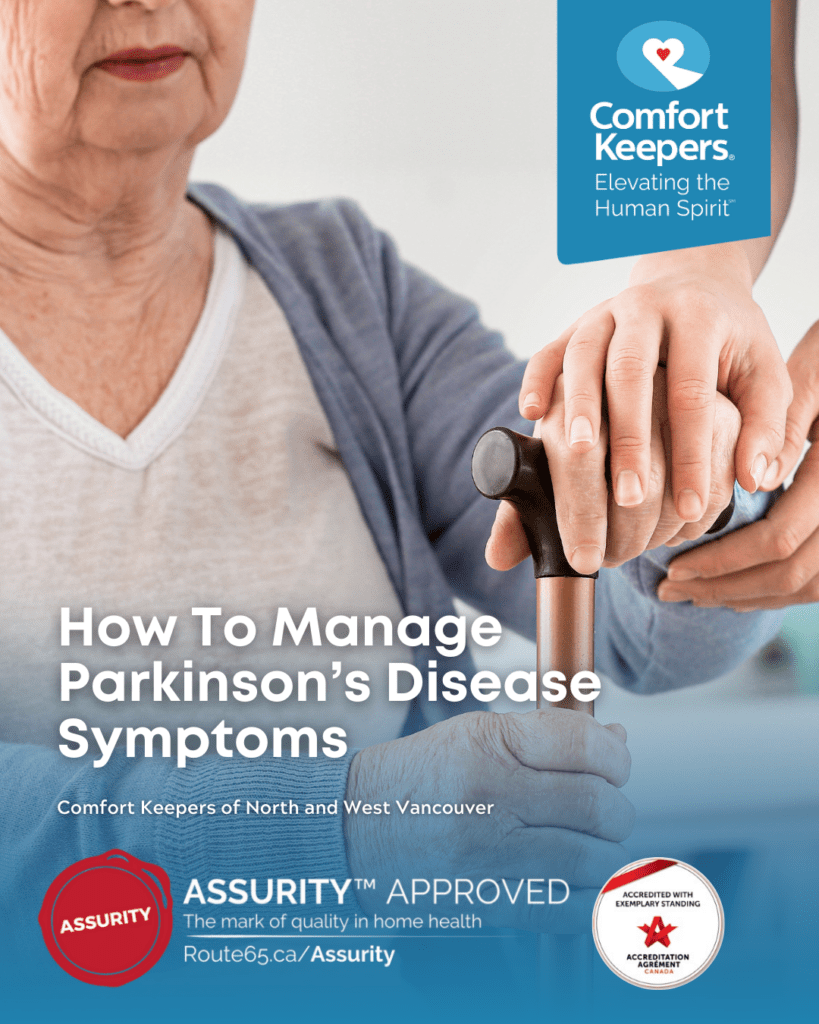
Senior with c ane | How To Manage Parkinsons Disease Symptoms - Comfort Keepers North Vancouver and West Vancouver - BLOG POST

What Every Senior in North and West Vancouver, BC Needs to Know About Parkinson’s Disease

What do you need to know about managing Parkinson’s Disease symptoms? Parkinson’s Disease affects 1 in every 500 people in Canada; most people diagnosed are over the age of 60. Parkinson’s disease affects both men and women.  Statistically, however, men have a slightly higher chance of developing the disease.  The risk of developing Parkinson’s disease also increases with age, with the average age of onset being 65 years.

#DYK: Over 100,000 Canadians are living with Parkinson’s today and approximately 6,600 new cases of PD are diagnosed each year in Canada

While there is no known cure for Parkinson’s, taking steps to manage the disease can increase a senior’s quality of life and help to reduce the impact of symptoms.

Parkinson’s Disease Can Manifest in the Following Ways:

  • Tremors
  • Balance problems
  • Cognitive impairment
  • Mood disorders
  • Short steps and slowed movement (bradykinesia)
  • Speech and writing changes

Those that have been diagnosed with Parkinson’s should discuss management strategies with a healthcare professional. There are a variety of medications and therapies that a doctor can recommend.

Four Everyday Symptom Management Strategies Can Include:

#1. Finding Ways to Relieve Stress: 

There is ample evidence that stress can make symptoms worse. However, they usually return to normal levels once the cause of stress is removed. Activities that can help reduce stress include meditation, yoga, deep breathing, getting outside, spending time with loved ones, participating in hobbies or physical activity approved by a physician.

#2. Maintaining a Good Diet: 

For those with Parkinson’s, proper nutrition will not only help manage symptoms, but can help slow the progression of the disease in some seniors. In addition to healthy, nutritious food, it’s important to prevent dehydration too.

#3. Adapting Your Home: 

Depending on the Parkinson’s symptoms that someone is experiencing, there are a variety of ways to improve everyday life with a few adjustments to living space. For those with trouble walking, or those that need a wheelchair, wide walkways help manage mobility. Mattresses with adjustable features can be helpful for anyone with difficulty getting in and out of bed, and grab bars may be helpful for those with balance issues.

#4. Preventing Falls: 

Having trouble walking is a common Parkinson’s disease symptom. Minimizing fall risk is an important safety management strategy that is easy to execute. Wearing proper footwear, making sure rooms are properly lit and removing trip hazards can all help reduce the risk of falls.

Comfort Keepers® Can Help with Managing Parkinson’s Disease Symptoms

For those who need extra help, in-home caregivers can help facilitate stress management activities, provide support for physician-approved diet and exercise plans and will evaluate a home for safety as part of an in-home assessment. 

Caregivers can also help with mobility, improve home safety, provide transportation to appointments and events and can help seniors maintain positive mental health through connection, engagement, and companionship. 

A senior male is seated on a couch | Promoting Bone Health | Comfort Keepers North and West Vancouver

The Best Senior Home Care in North and West Vancouver is Comfort Keepers®

Our senior home care agency offers in-home care focusing on aging in place. Our services include dementia care, end-of-life care, post-surgery care, and palliative care. Comfort Keepers can assist seniors with living transition services, personal care, companionship care, and more! 

Quality and Accredited Elderly Care: Happier, Healthier, and at Home with 24/7 Senior Care Opportunities!

Do you need a home care solution for yourself or a loved one? Have you been thinking about retirement homes and their alternatives as a solution? Comfort Keepers® enables seniors to maintain happy, healthy lives in the comfort of their own homes. In-home care services are available in North Vancouver, West Vancouver, and the surrounding areas.

Comfort Keepers® is a Senior Care Agency That Can Make a Difference with Interactive Caregiving™

Our in-home caregivers ensure our senior clients have the best quality of life. The Interactive Caregiving™ program ensures that a senior’s safety, nutrition, mental well-being, and everyday needs are met. This program brings joy and good health to each client’s home.

Comfort Keepers® North Vancouver and West Vancouver Can Help with In-Home Elderly Care Services!

If you are concerned about the health and well-being of a loved one we can help! Comfort Keepers offers 24-hour care and delivers top-quality and compassionate care for seniors.  We are dedicated to safety technology solutions that foster independence and enhance well-being.

Locally Owned and Operated Home Health Care Agency

Our care centers around companionship for seniors. Empathetic care originates from the soul and allows us to meet our client’s requirements. The seasoned in-home caregivers employed by Comfort Keepers are carefully chosen based on their empathetic qualities.  

Contact the Comfort Keepers® North Vancouver and West Vancouver office at (604) 998-8806 to learn more about our unique in-home care solutions for seniors.

Comfort Keepers is an Accredited Senior Care Agency in North and West Vancouver, BC

Accreditation is a rigorous process that involves industry experts evaluating an organization’s processes, policies, and procedures. Comfort Keepers® North and West Vancouver has been awarded Exemplary Standing by Accreditation Canada. This achievement recognizes that Comfort Keepers® meets or exceeds the stringent quality standards for Home Care companies established by Accreditation Canada. 


References

Mayo Clinic. “Parkinson’s Disease.” Web. 2018.

UCB Canada.  “Parkinson’s Disease.”  Web. 2019.

WebMD. “Parkinson’s Disease Guide: Living & Managing.” Web.

Parkinson’s Foundation. “Statistics.” Web. 2016.

Maple Leaf Maple Leaf Maple Leaf

5 Tips For Helping A Loved One With Parkinson’s Disease

5 Tips For Helping A Loved One With Parkinson’s Disease
Senior woman being handed a cup from caregiver | 5 Tips For Helping A Loved One With Parkinson's Disease | Comfort Keepers North and West Vancouver | BLOG POST

What Every Senior in North Vancouver and West Vancouver Needs to Know About Parkinson’s Disease

5 Tips For Helping A Loved One With Parkinson’s  | Parkinson’s disease is a condition that can affect how someone goes about their everyday life. When someone you love has Parkinson’s disease, it’s easy to see how much the condition affects even the simplest tasks.

April is World Parkinson’s Disease Awareness Day, a moment to raise awareness about this nervous system disease. #WorldParkinsonsDiseaseDay.

Symptoms such as poor balance, tremors, and involuntary movements can make even simple tasks difficult.

If you have a loved one with Parkinson’s disease, they must know that you are there for them. There are many ways you can help a loved one manage Parkinson’s disease.

5 Tips That Will Help Seniors Cope with Parkinson’s Disease

Tip #1 – Learn As Much As You Can About Parkinson’s Disease:

One of the best ways to help a loved one manage Parkinson’s Disease is by learning as much information about the condition as possible. While you may be familiar with the many symptoms of Parkinson’s, there is still a lot to learn about what causes those symptoms and how the condition will progress. By learning more about the condition, you can plan more efficiently as the condition progresses and learn about different treatments that may ease symptoms. 

There are many resources you can utilize to learn about Parkinson’s Disease. By doing so, you will provide better help to your loved one and make the process easier for yourself. As more information about Parkinson’s Disease comes out, you will be able to help your loved one cope with this condition. 

Tip #2 – Identify When Symptoms of Parkinson’s Disease Are Worsening: 

Parkinson’s Disease is a condition that progresses over time. However, because of its gradual progression, it may be easy to miss when symptoms have worsened. That’s why it’s so important to pay daily attention to how your loved one is coping with the symptoms of Parkinson’s Disease.

It’s important to note that not all symptoms of Parkinson’s Disease have a physical form – up to 50% of people with Parkinson’s Disease will suffer from depression at some point. Parkinson’s Disease is very much affected by mental health. If you notice a change in your loved one’s mood, you should encourage them to seek help from a mental health professional. If they need support, make it known that you are willing to accompany them. This can make a huge difference in how your loved one copes with the condition. 

Tip #3 – Be Understanding with Your Loved ones with Parkinson’s Disease:

Parkinson’s Disease can leave people feeling out of control of their bodies. This can cause side effects, such as slower movement, trouble talking, and more. You must be understanding with your loved one. Never show frustration with something out of their control, because you may inadvertently make your loved one feel like they are a burden. 

While your loved one can seek help from professionals such as speech therapists and physical therapists, it’s important to be patient. Parkinson’s Disease can make many activities take longer than they used to, and this is out of your loved one’s control. Assist them when necessary – if they are having trouble walking, let them hold on to you. If they are having trouble speaking, assist them with other forms of communication such as text messaging. 

Tip #4 – Keep A Parkinson’s Disease Diary:

Keeping a diary of every day you spend with your loved one with Parkinson’s Disease is a great way to keep track of any changes to their health. It’s also a great way to check in on their progress, and how they are coping. For example, looking back 3 months prior – how were they? What were their symptoms like compared to now? A diary is a great way to keep track of the progress of the disease and can also be used for medical appointments! 

Tip #5 – Be A Good Listener: 

Being a good listener is incredibly important when helping a loved one cope with Parkinson’s Disease. Your loved one will likely be going through a wide range of emotions, and you must express that you are there to listen without judgment. Encourage seniors to express their emotions and be supportive and positive. By doing so, your loved one can have a better outlook in terms of both mental and physical health. 

Parkinson’s Disease mustn’t be treated as a secret that needs to be hidden. Being open about one’s feelings during this time can help your loved one cope with Parkinson’s and can give you a better understanding of how they’re dealing with their symptoms. 

A senior male is seated at the kitchen counter going over his medications with his caregiver | 5 Tips For Helping A Loved One With Parkinson’s Disease | Comfort Keepers North and West Vancouver

The Best Senior Home Care in North and West Vancouver is Comfort Keepers®

Our senior home care agency offers in-home care focusing on aging in place. Our services include dementia care, end-of-life care, post-surgery care, and palliative care. Comfort Keepers can assist seniors with living transition services, personal care, companionship care, and more! 

Quality and Accredited Elderly Care: Happier, Healthier, and at Home with 24/7 Senior Care Opportunities!

Do you need a home care solution for yourself or a loved one? Have you been thinking about retirement homes and their alternatives as a solution? Comfort Keepers® enables seniors to maintain happy, healthy lives in the comfort of their own homes. In-home care services are available in North Vancouver, West Vancouver, and the surrounding areas.

Comfort Keepers® is a Senior Care Agency That Can Make a Difference with Interactive Caregiving™

Our in-home caregivers ensure our senior clients have the best quality of life. The Interactive Caregiving™ program ensures that a senior’s safety, nutrition, mental well-being, and everyday needs are met. This program brings joy and good health to each client’s home.

Comfort Keepers® North Vancouver and West Vancouver Can Help with In-Home Elderly Care Services!

If you are concerned about the health and well-being of a loved one we can help! Comfort Keepers offers 24-hour care and delivers top-quality and compassionate care for seniors.  We are dedicated to safety technology solutions that foster independence and enhance well-being.

Locally Owned and Operated Home Health Care Agency

Our care centers around companionship for seniors. Empathetic care originates from the soul and allows us to meet our client’s requirements. The seasoned in-home caregivers employed by Comfort Keepers are carefully chosen based on their empathetic qualities.  

Contact the Comfort Keepers® North Vancouver and West Vancouver office at (604) 998-8806 to learn more about our unique in-home care solutions for seniors.

Comfort Keepers is an Accredited Senior Care Agency in North and West Vancouver, BC

Accreditation is a rigorous process that involves industry experts evaluating an organization’s processes, policies, and procedures. Comfort Keepers® North and West Vancouver has been awarded Exemplary Standing by Accreditation Canada. This achievement recognizes that Comfort Keepers® meets or exceeds the stringent quality standards for Home Care companies established by Accreditation Canada.