

Skip to content
Call Us At (604) 998-8806
Maple Leaf Maple Leaf Maple Leaf

Alzheimer’s Disease: Dealing with Difficult Behaviours in Seniors

Alzheimer’s Disease: Dealing with Difficult Behaviours in Seniors
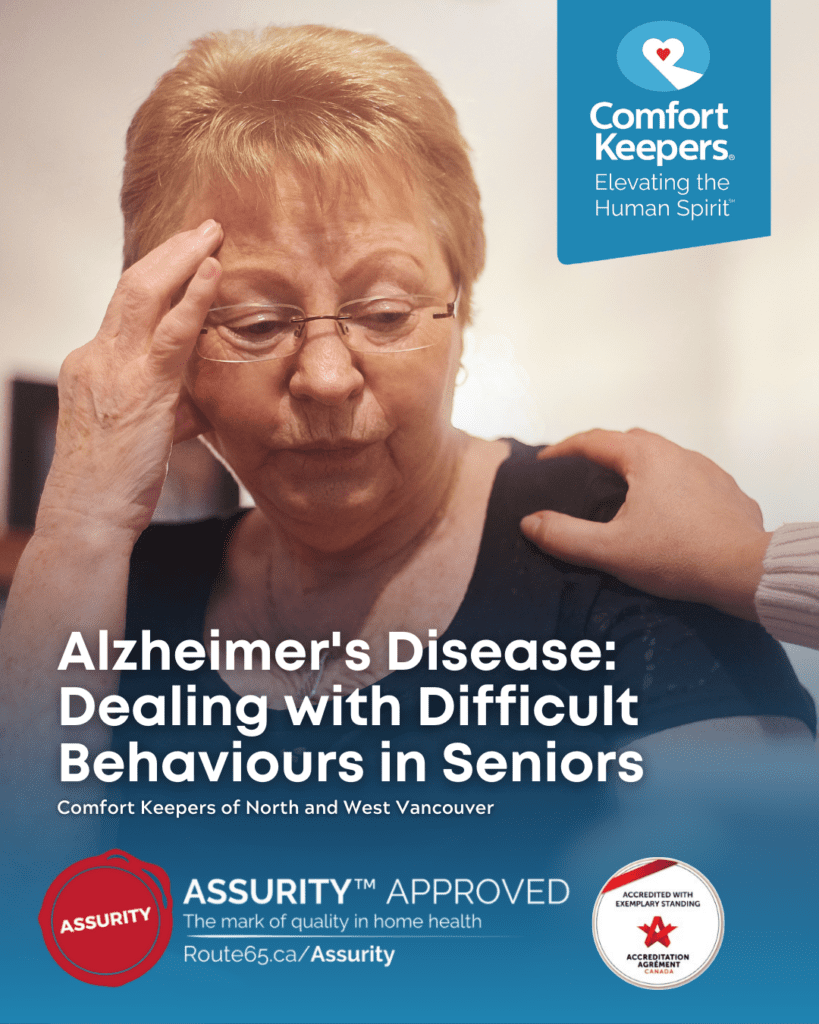
Senior woman with hand to forehead and caregiver's hand on her shoulder | Alzheimer's Disease: Dealing with Difficult Behaviours in Seniors | Comfort Keepers North and West Vancouver | BLOG POST

What Every Senior and Caregiver Needs to Know About Dealing with Difficult Alzheimer’s Behaviour

Alzheimer’s Disease | Caring for a loved one can be a rewarding experience, but it’s not without challenges. These challenges can be significantly more impactful for those caring for a senior with Alzheimer’s disease or other form of dementia. Changes in behaviours can occur for a variety of reasons, including over-stimulation, physical discomfort, confusion, exhaustion caused by sleep problems, medication, or changes in routine.

Understanding the cause of behavioural changes is critical for caregivers, families and friends. And, it’s helpful for caregivers to know how to manage behaviours that will allow them to provide safe and effective support and diffuse tense situations.

Seniors with Alzheimer’s and Difficult Behavior Examples:

  • Depression
  • Anxiety
  • Confusion
  • Aggression or anger
  • Suspicion
  • Hallucinations
  • Pacing or wandering

The most important thing that caregivers need to remember is that challenging behaviours may not be entirely avoidable. It’s also not the fault of the person with Alzheimer’s or dementia. These behaviours are sometimes a common product of the disease. And, there is specialized support a caregiver can use to help keep a challenging behaviour from escalating.

Alzheimer’s Disease: Tips for Dealing with Difficult Behavior

While there is no guaranteed approach that will work with every person or situation, there are some methods that can help caregivers manage trying times:

Tip #1 – Staying calm:

It’s not uncommon for caregivers to feel attacked or helpless when they are caring for someone exhibiting difficult behaviours. Remembering that it isn’t personal and that it’s a symptom of the disease, can help caregivers manage their emotions and avoid contributing to tense or difficult situations. Arguing or reasoning can often escalate an outburst, so caregivers must stay calm and supportive

Tip #2 – Keeping a schedule:

Seniors who suffer from Alzheimer’s disease and other dementias often find it reassuring to have a set schedule for meals, activities and daily tasks. Creating a schedule, and sticking to it as much as possible, can help prevent anxiety, confusion and anger.

Tip #3 – Exercise:

Exercise, with approval from a physician, is a great stress reliever for both seniors and caregivers. And, participating in activities together helps foster important emotional connections.

Tip #4 – Participating in activities:

Whether it’s an enjoyable hobby, household chore or physician-approved exercise, participating in joyful activities has been shown to help manage challenging behaviours. These can be pre-scheduled or introduced when difficult behaviours are recognized. For example, caregivers can ask for help folding laundry to ease anxiety or can play music or sing to calm someone feeling confused, angry or depressed. 

Tip #5 – Mindful communication:

Caregivers shouldn’t underestimate the power of communication. Caregivers can use soothing tones, speak in a friendly way and make eye contact to convey normalcy, understanding and compassion. This can help seniors experiencing anxiety or frustration calm themselves.

Seemingly distraught senior woman sits with head resting in hands | Alzheimer's Disease: Dealing with Difficult Behaviours in Seniors | Comfort Keepers North and West Vancouver

The Best Senior Home Care in North and West Vancouver is Comfort Keepers®

Our senior home care agency offers in-home care focusing on aging in place. Our services include dementia care, end-of-life care, post-surgery care, and palliative care. Comfort Keepers can assist seniors with living transition services, personal care, companionship care, and more! 

Quality and Accredited Elderly Care: Happier, Healthier, and at Home with 24/7 Senior Care Opportunities!

Do you need a home care solution for yourself or a loved one? Have you been thinking about retirement homes and their alternatives as a solution? Comfort Keepers® enables seniors to maintain happy, healthy lives in the comfort of their own homes. In-home care services are available in North Vancouver, West Vancouver, and the surrounding areas.

Comfort Keepers® is a Senior Care Agency That Can Make a Difference with Interactive Caregiving™

Our in-home caregivers ensure our senior clients have the best quality of life. The Interactive Caregiving™ program ensures that a senior’s safety, nutrition, mental well-being, and everyday needs are met. This program brings joy and good health to each client’s home.

Comfort Keepers® North Vancouver and West Vancouver Can Help with In-Home Elderly Care Services!

If you are concerned about the health and well-being of a loved one we can help! Comfort Keepers offers 24-hour care and delivers top-quality and compassionate care for seniors.  We are dedicated to safety technology solutions that foster independence and enhance well-being.

Locally Owned and Operated Home Health Care Agency

Our care centers around companionship for seniors. Empathetic care originates from the soul and allows us to meet our client’s requirements. The seasoned in-home caregivers employed by Comfort Keepers are carefully chosen based on their empathetic qualities.  

Contact the Comfort Keepers® North Vancouver and West Vancouver office at (604) 998-8806 to learn more about our unique in-home care solutions for seniors.

Comfort Keepers is an Accredited Senior Care Agency in North and West Vancouver, BC

Accreditation is a rigorous process that involves industry experts evaluating an organization’s processes, policies, and procedures. Comfort Keepers® North and West Vancouver has been awarded Exemplary Standing by Accreditation Canada. This achievement recognizes that Comfort Keepers® meets or exceeds the stringent quality standards for Home Care companies established by Accreditation Canada.


References

alz.org Canada.  “Alzheimer’s and Dementia in Canada”. Web.  2019.

National Institute on Aging. “Managing Personality and Behavior Changes in Alzheimer’s.” Web. 2017.

Verywell Health. “Complete Guide to Challenging Behaviors in Dementia.” Web. 2019.

Alzheimer’s Association. “Stages and Behaviors.” Web. 

Maple Leaf Maple Leaf Maple Leaf

The Quiet Signals: A Guide to Recognizing When an Older Adult May Need Help at Home

The Quiet Signals: A Guide to Recognizing When an Older Adult May Need Help at Home

It often starts with a feeling. A sense of unease after a phone call with your mom, or a moment of worry when you notice your dad seems a bit unsteady on his feet during a visit. These moments are subtle, easy to dismiss as just a “bad day.” But sometimes, they’re the quiet, early signals that a loved one’s needs are changing.

Recognizing this shift isn’t about looking for a crisis. It’s about noticing the small patterns that suggest a little extra support could make a world of difference, preserving their independence and quality of life for years to come. This guide is designed to help you understand those signals, distinguish them from normal aging, and feel more confident in knowing when and how to help.

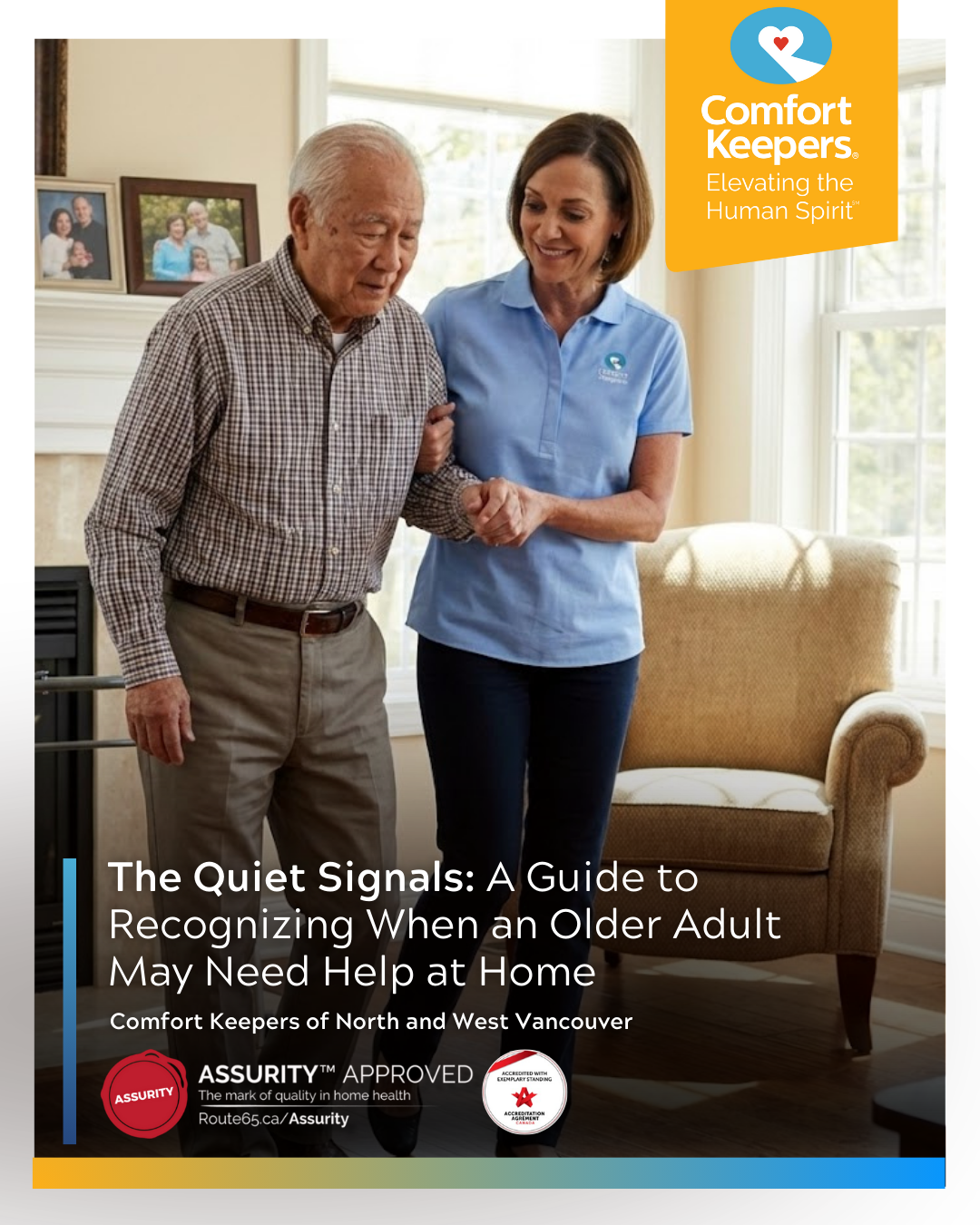
A senior man assisted by his caregiver | The Quiet Signals: A Guide to Recognizing When an Older Adult May Need Help at Home | Comfort Keepers North and West Vancouver

The Crucial Difference: Normal Aging vs. Warning Signs

One of the biggest challenges for families is telling the difference between the natural, expected changes of aging and the red flags that indicate a need for support. It can feel like a grey area, but there are clear distinctions. Understanding this difference is the first step toward providing the right kind of help.

A Normal Part of AgingA Potential Warning Sign
Forgetting a name or an appointment occasionally.Frequent memory loss that disrupts daily life, like forgetting how to use the stove or getting lost.
Making a miscalculation in the chequebook once in a while.Difficulty managing finances, unpaid bills piling up, or unusual purchases.
Needing glasses to read or having trouble hearing in a crowd.Neglecting personal grooming, wearing dirty clothes, or a noticeable decline in hygiene.
Feeling tired and wanting to rest more often.Significant withdrawal from hobbies, friends, and social activities they once enjoyed.
Taking longer to do certain physical tasks.Noticeable trouble with walking, balance, or mobility; frequent falls or unexplained bruises.

Seeing a change on the right side of this chart doesn’t mean the sky is falling. It simply means it’s time to pay closer attention.

A Closer Look: The Three Key Areas to Observe

When you’re trying to understand if a loved one needs more support, it helps to look at their life holistically. Changes rarely happen in isolation. A decline in one area often creates a ripple effect, impacting others. We can group these signs into three main categories.

1. Changes in Daily Living and Personal Care

These are often the most tangible signs and relate to Activities of Daily Living (ADLs) and Instrumental Activities of Daily Living (IADLs).

  • Changes in Nutrition: Is there spoiled food in the fridge that never gets thrown out? Is the pantry or fridge consistently empty? You might notice significant weight loss or gain, or a reliance on easy-to-make, low-nutrition foods. This can be caused by anything from decreased mobility, making grocery shopping difficult, to depression, reducing their appetite.
  • Lapses in Personal Hygiene: One of the most common signs is a decline in personal grooming. This might look like infrequent bathing, unkempt hair, body odour, or wearing the same clothes for several days. This isn’t about laziness; it can signal memory issues, depression, or physical challenges that make bathing feel like a monumental and unsafe task.
  • A Messy or Unkempt Home: Look for changes in their environment. Are piles of mail and newspapers accumulating? Is the home unusually cluttered or dirty? This can indicate that the physical work of housekeeping has become too overwhelming. Piles of unopened bills can also be a red flag for cognitive difficulties or trouble managing finances.
  • Medication Mishaps: Check the medicine cabinet. Are prescriptions expired? Are pill bottles still full near the end of the month? Finding missed doses -or worse, discovering they’ve taken too much – is a serious safety concern that signals a clear need for oversight.

2. Shifts in Mood, Mind, and Social Habits

Cognitive and emotional changes can be subtle, but they are powerful indicators of a person’s overall well-being.

  • Increased Forgetfulness and Confusion: This goes beyond misplacing keys. We’re talking about forgetting important appointments, getting lost in familiar places, asking the same questions repeatedly, or struggling to follow a conversation. Leaving the stove on or the front door unlocked are significant safety risks tied to memory lapses.
  • Changes in Mood and Personality: Have you noticed your normally cheerful parent becoming withdrawn, irritable, or unusually anxious? Sudden mood swings, a loss of interest in life (apathy), or paranoia can be signs of underlying issues like depression, isolation, or the early stages of dementia.
  • Social Withdrawal: A key component of healthy aging is staying connected. Pay attention if your loved one suddenly stops participating in hobbies they once loved, declines invitations from friends, or stops attending religious services or community events. Social isolation is a major health risk for seniors and can accelerate both physical and mental decline.

3. Unseen Risks in the Home Environment

Sometimes the biggest clues are found not in what a person does, but in what their environment says about their safety.

  • Unexplained Bumps and Bruises: If you notice bruises on their arms or legs and they can’t explain how they got them, it could be a sign of unreported falls or struggles with mobility. They may be “furniture walking” – holding onto walls and furniture to get around – which is a major indicator of instability and fall risk.
  • Driving Difficulties: Look for new dents or scratches on their car. Have they mentioned getting a traffic ticket, having a near-miss, or feeling less confident behind the wheel? Driving requires complex cognitive and physical skills, and a decline in ability is a serious safety concern for them and others.
  • Home Hazards: A safe home environment can quickly become hazardous. Look for clutter that creates tripping hazards, poor lighting in hallways or on stairs, and burnt-out lightbulbs that haven’t been changed. These small things can dramatically increase the risk of a fall.

It’s Not Just About Them – It’s About You, Too

If you’re reading this, chances are you’re the person who worries, who calls to check in, who helps with groceries or appointments. Being a family caregiver is a role born of love, but it can also be incredibly stressful.

Feeling frustrated, overwhelmed, or even guilty is normal. You may find yourself struggling to balance your parents’ needs with your own job, family, and well-being. Recognizing these early signs isn’t just about getting help for your loved one; it’s also about getting support for yourself. Proactively addressing small needs now can prevent them from becoming a crisis that leads to caregiver burnout later.

How to Start the Conversation (Without Starting a Fight)

Broaching the subject of needing help can feel like walking on eggshells. The key is to approach it with empathy, respect, and a focus on their goals, not their limitations.

  • Start with “I” Statements: Instead of saying, “You’re not eating right,” try, “I was worried when I saw the fridge was empty because I want to make sure you’re feeling your best.”
  • Focus on a Shared Goal: Frame the conversation around what they want. For example, “Dad, I know how much you love living in this house. I was thinking about ways we can make sure you can stay here safely and comfortably for as long as possible.”
  • Offer Choices, Not Demands: Giving your loved one a sense of control is crucial. Rather than saying, “You need a caregiver,” ask, “Would it be helpful if someone came by a couple of times a week to help with laundry and meals so you have more energy for your gardening?”
  • Introduce Help Incrementally: Often, the idea of “care” sounds overwhelming. Start small. Suggesting help with housekeeping or transportation is often less threatening than personal care. Exploring the different types of in-home care services can show that support is flexible and tailored to specific needs, not a complete takeover of their life.

Frequently Asked Questions

What are the very first subtle indicators I might miss?

Look for the small things that break a long-standing pattern. Is your meticulously organized dad’s desk now covered in unopened mail? Is your mom, who always loved to cook, now relying on frozen dinners? Other subtle signs include scorch marks on pots and pans (from forgetting food on the stove) or a decline in personal correspondence (no longer sending birthday cards or emails).

My parent is very stubborn and refuses to accept help. What can I do?

This is incredibly common. The key is patience and framing. Often, resistance comes from a fear of losing independence. Involve them in the decision-making process as much as possible. Sometimes, bringing in a neutral third party, like a trusted doctor or a professional care manager, can help depersonalize the conversation and present options from an expert perspective.

Does needing a little help mean they have to move out of their home?

Absolutely not. In fact, the entire goal of recognizing these signs early is to do the opposite. By introducing support proactively, you can address safety and wellness concerns before they become so severe that living at home is no longer an option. The aim is to help seniors age in place with dignity and independence.


Your Next Step: From Observation to Understanding

Noticing these quiet signals is the first, most important step. It’s an act of love and a commitment to your loved one’s well-being. You’ve moved from a place of vague worry to one of informed observation.

The next step isn’t to jump to conclusions, but to continue the journey of understanding. Start a private journal to track the signs you see. Talk to other family members to see if they’ve noticed similar changes. Most importantly, continue to approach the situation with the compassion and respect your loved one deserves. You’re now equipped to be their best advocate, ensuring they get the support they need to live safely, happily, and independently at home.

The Best Senior Home Care in North and West Vancouver is Comfort Keepers®

Our senior home care agency offers in-home care focusing on aging in place. Our services include dementia care, end-of-life care, post-surgery care, and palliative care. Comfort Keepers can assist seniors with living transition services, personal care, companionship care, and more! 

Quality and Accredited Elderly Care: Happier, Healthier, and at Home with 24/7 Senior Care Opportunities!

Do you need a home care solution for yourself or a loved one? Have you been thinking about retirement homes and their alternatives as a solution? Comfort Keepers® enables seniors to maintain happy, healthy lives in the comfort of their own homes. In-home care services are available in North Vancouver, West Vancouver, and the surrounding areas.

Comfort Keepers® is a Senior Care Agency That Can Make a Difference with Interactive Caregiving™

Our in-home caregivers ensure our senior clients have the best quality of life. The Interactive Caregiving™ program ensures that a senior’s safety, nutrition, mental well-being, and everyday needs are met. This program brings joy and good health to each client’s home.

Comfort Keepers® North Vancouver and West Vancouver Can Help with In-Home Elderly Care Services!

If you are concerned about the health and well-being of a loved one we can help! Comfort Keepers offers 24-hour care and delivers top-quality and compassionate care for seniors.  We are dedicated to safety technology solutions that foster independence and enhance well-being.

Locally Owned and Operated Home Health Care Agency

Our care centers around companionship for seniors. Empathetic care originates from the soul and allows us to meet our client’s requirements. The seasoned in-home caregivers employed by Comfort Keepers are carefully chosen based on their empathetic qualities.  

Contact the Comfort Keepers® North Vancouver and West Vancouver office at (604) 998-8806 to learn more about our unique in-home care solutions for seniors.

Comfort Keepers is an Accredited Senior Care Agency in North and West Vancouver, BC

Accreditation is a rigorous process that involves industry experts evaluating an organization’s processes, policies, and procedures. Comfort Keepers® North and West Vancouver has been awarded Exemplary Standing by Accreditation Canada. This achievement recognizes that Comfort Keepers® meets or exceeds the stringent quality standards for Home Care companies established by Accreditation Canada.

Maple Leaf Maple Leaf Maple Leaf

Reducing the Risk of Falls for Seniors Living in North and West Vancouver

Reducing the Risk of Falls for Seniors Living in North and West Vancouver
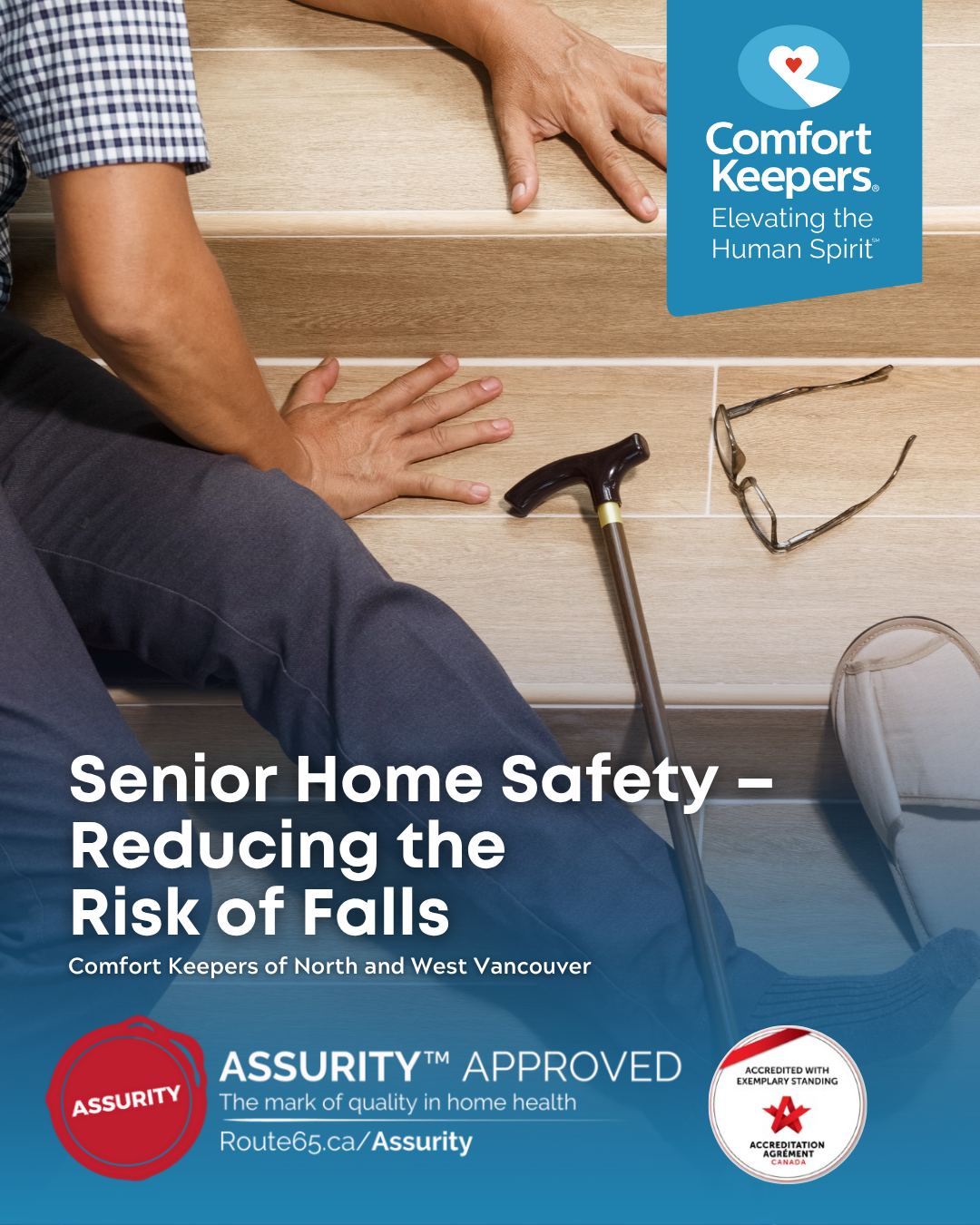
Senior male fallen on stairs | Senior Home Safety - Reducing the Risk of Falls | Comfort Keepers North and West Vancouver | BLOG POST

What Every Senior in North Vancouver and West Vancouver Needs to Know About Fall Risk Reduction

Senior Home Safety | One of the greatest threats to senior well-being and quality of life is falling. In fact, falls represent the leading cause of both fatal and non-fatal injuries of Canadian seniors. Here are a few key facts to highlight not only how pervasive falls are among this age group, but the toll they take:

  • Falls account for more than half of all injuries among seniors.
  • Every 13 seconds, an older adult is treated in the emergency room for a fall; every 20 minutes, an older adult dies from a fall.
  • 87 percent of all fractures in the elderly are due to falls. Two-thirds of those who fall will do so again within six months

In addition to the physical and financial impact, the dread associated with falling can be enough to immobilize some older adults, making them afraid to do much of anything. And for those who already experience feelings of loneliness and isolation, fear of falling can often make matters worse. But fear should never get in the way of quality of life, even when it comes to falls in the home.

Although there are several factors involved in senior falls, one of the most significant is the hazardous nature of their living environment. Obstacles such as loose rugs, poor lighting, and the absence of handrails all pose a serious threat. Fortunately, these factors can be controlled. With a few alterations and additions, seniors can manage their living environment, thus reducing their risk of falling.

Senior Home Safety Tips for Caregivers and Families

  • In the Bedroom
    • Ensure that night lights are installed so that there is adequate illumination.
    • Keep an easy-to-use light source, such as a touch lamp, within reach of the bed.
  • In the Bathroom
    • Install grab bars on the inside/outside of the shower, as well as next to the toilet.
    • Place a non-slip mat in the shower and on all surfaces that may become wet.
    • Install a shower chair or bath bench to reduce standing.
  • In the Kitchen
    • Keep frequently used cooking utensils or appliances visible and on the counter or on nearby shelves, to reduce having to get them out of the cupboards.
    • Install non-slip rubber mats to allow for secure footing.
  • In the Hallways
    • Eliminate any form of clutter (boxes, newspapers, shoes, etc.) so that pathways are clear.
    • Remove small throw rugs that may cause tripping.
    • Ensure carpeting is firmly secured to the floor.
    • Install nightlights to provide ample illumination.
  • Other Considerations
    • Move any electrical cords away from walking paths.
    • Install a second handrail on staircases to allow for additional balance support.

Senior Home Safety and Other Ways to Reduce the Risk of Falling

In addition to safety precautions in the home, there are lifestyle changes that seniors can make to reduce their risk of falling. First and foremost, it’s important to stay physically active. While this may seem counterintuitive and likely to result in a fall, frequently engaging in a safe, structured regimen will increase strength, flexibility, coordination, and balance. Always check with your physician before embarking on an exercise program.

Seniors should also receive regular eye examinations. Since even the smallest change in eyesight can change visibility, they must have the correct prescription for eyeglasses or contact lenses. Finally, medications should be reviewed with a physician to evaluate side effects and their chances of contributing to falls.

Even the idea of falling is frightening to older adults and family caregivers alike. But as mentioned, this fear should not stop seniors from leading fulfilling, independent lives. Observing safety precautions in the home and making the necessary changes are important first steps in getting back on track, but there may come a time when seniors need additional support.

The Best Senior Home Care in North and West Vancouver is Comfort Keepers®

Our senior home care agency offers in-home care focusing on aging in place. Our services include dementia care, end-of-life care, post-surgery care, and palliative care. Comfort Keepers can assist seniors with living transition services, personal care, companionship care, and more! 

Quality and Accredited Elderly Care: Happier, Healthier, and at Home with 24/7 Senior Care Opportunities!

Do you need a home care solution for yourself or a loved one? Have you been thinking about retirement homes and their alternatives as a solution? Comfort Keepers® enables seniors to maintain happy, healthy lives in the comfort of their own homes. In-home care services are available in North Vancouver, West Vancouver, and the surrounding areas.

Comfort Keepers® is a Senior Care Agency That Can Make a Difference with Interactive Caregiving™

Our in-home caregivers ensure our senior clients have the best quality of life. The Interactive Caregiving™ program ensures that a senior’s safety, nutrition, mental well-being, and everyday needs are met. This program brings joy and good health to each client’s home.

Comfort Keepers® North Vancouver and West Vancouver Can Help with In-Home Elderly Care Services!

If you are concerned about the health and well-being of a loved one we can help! Comfort Keepers offers 24-hour care and delivers top-quality and compassionate care for seniors.  We are dedicated to safety technology solutions that foster independence and enhance well-being.

Locally Owned and Operated Home Health Care Agency

Our care centers around companionship for seniors. Empathetic care originates from the soul and allows us to meet our client’s requirements. The seasoned in-home caregivers employed by Comfort Keepers are carefully chosen based on their empathetic qualities.  

Contact the Comfort Keepers® North Vancouver and West Vancouver office at (604) 998-8806 to learn more about our unique in-home care solutions for seniors.

Comfort Keepers is an Accredited Senior Care Agency in North and West Vancouver, BC

Accreditation is a rigorous process that involves industry experts evaluating an organization’s processes, policies, and procedures. Comfort Keepers® North and West Vancouver has been awarded Exemplary Standing by Accreditation Canada. This achievement recognizes that Comfort Keepers® meets or exceeds the stringent quality standards for Home Care companies established by Accreditation Canada. 


References:

Veteran Affairs Canada. ”Fall Fact Sheet”.  Web 2018.

National Institute on Aging. “Fall-Proofing Your Home.” Web. 2018.

National Council on Aging. “18 Steps to Fall Proofing Your Home” by Scott A. Trudeau. Web. 2016.

National Council on Aging. “Fall Prevention Statistics.” Web. 2018.

WebMD. “Aging Well: Making Your Home Fall-Proof” by Healthwise Staff (Reviewed by Anne C. Poinier, MD and Elizabeth A. Phelan, MD, MS. Web. 2015.

AgingCare. “How to Prevent a Senior from Falling” Web. 2018.

Maple Leaf Maple Leaf Maple Leaf

Seniors and the Positive Impact of Social Media

Seniors and the Positive Impact of Social Media
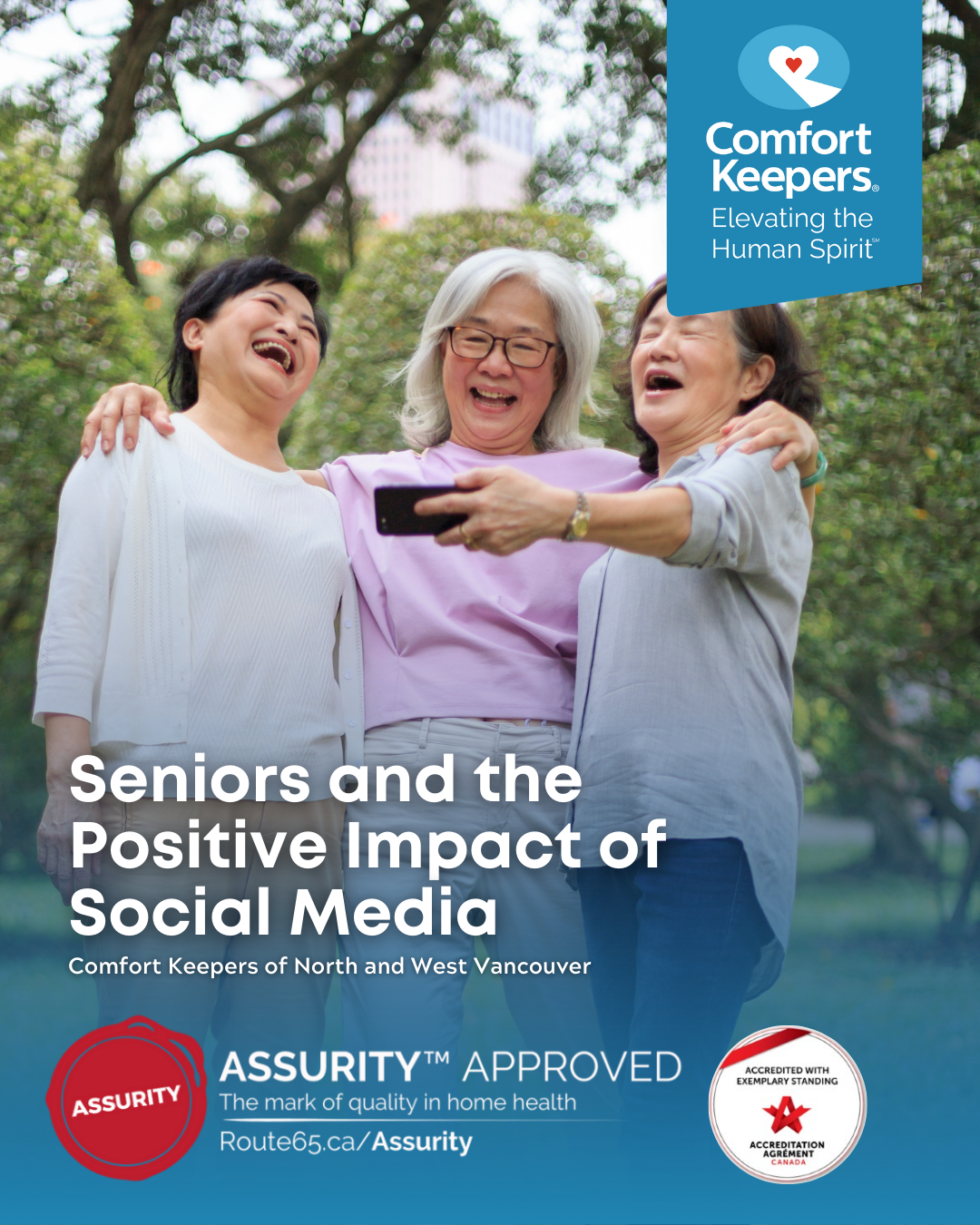
Three Senior Women Taking a selfie. | Seniors and The Positive Impact of Social Media | Comfort Keepers North and West Vancouver | BLOG POST

What Every Senior in North Vancouver and West Vancouver Needs to Know About Social Media and its Positive Impact

Seniors and the Positive Impact of Social Media | Despite the myth that older people can’t manage technology because of cognitive deficits, seniors are flocking to social media at a rapid pace. In fact, Facebook, Twitter, Google+ (and Hangouts), Pinterest, and Instagram all note higher adoption rates among adults 65 and older ─ and see seniors as their fastest-growing audience.

According to Pew Research, 59% of adults age 65 and older are online, and 46% of those adults are using social media.

Seniors and Social Media: The Social, Mental and Physical Benefits 

Older adults who have had positive experiences on social media have reported elevated moods. An American Psychological Association (APA) study found that seniors who spend time on social media sites were more likely to participate in activities that can lead to greater health, such as cooking healthier recipes and finding easier ways to clean and maintain their homes.

The study also indicates that they have lower blood pressure fewer instances of diabetes, and fewer negative health habits such as smoking, depression, or disease. This is attributed to the ability for self-education on any number of topics, and remaining in the know about the latest technology trends.

Seniors and Social Media; It Helps Keep the Family Together

Facebook is particularly useful for linking up with loved ones. It makes for more frequent conversations and helps close the generation gap. Sharing current photos allows seniors to see their grandchildren change and grow, and creates a closeness and involvement that may not have existed, especially if the family isn’t living close by.

Video chats also are a great way to communicate in “real time”. There is also the opportunity to relive fond memories or create new ones through postings of photos and home videos.

Seniors and Social Media: Offering Families Peace of Mind

When a family lives apart, there can be stress and anxiety on both ends. Social media allows seniors and their families an easy way to check in as often as they wish. This is especially important if the senior is living alone and may experience ill health, a fall, or may not be eating or sleeping well, taking medications, or getting any form of exercise. Family caregivers can use social media to ask critical questions that will let them know what’s occurring in their loved one’s life.

Seniors and Social Media: Provides a Sense of Belonging and Community Engagement 

Feeling connected is very important to any senior’s well-being. Social media allows seniors to make plans with others to meet up outside of the home. It also allows seniors who are unable to leave home to socialize online to combat loneliness.

Seniors and Social Media: Shopping Online Offers Convenience & Savings 

Even if a senior can’t venture out of the home – due to physical limitations, inability to drive, or inclement weather, for example – he or she can always shop online and enjoy the ease of home delivery. In addition, there are lots of money-saving coupons and online sales, which can be especially convenient and sensible for those who are penny-pinchers or on a fixed income.

Seniors and Social Media: Online Precautions 

As a caregiver, you may want to monitor the senior’s activities. You may want to make sure that the loved one is not falling for phishing scams and the like. You may also want to make sure they are connecting with trustworthy people – especially if they are conversing in chat rooms and through blogs. Also, watch their monetary spending – you don’t want your senior overspending on items they don’t need.

Seniors and Social Media: Teaching Seniors How to Use Social Media

A great source for seniors – and family members – is AARP’s Social Media Education Center. There, you can find out how to use specific (and commonly used) social media websites, apps, and blogs.

A senior male engages excitedly on his laptop | Seniors and the Positive Impact of Social Media | Comfort Keepers North and West Vancouver

The Best Senior Home Care in North and West Vancouver is Comfort Keepers®

Our senior home care agency offers in-home care focusing on aging in place. Our services include dementia care, end-of-life care, post-surgery care, and palliative care. Comfort Keepers can assist seniors with living transition services, personal care, companionship care, and more! 

Quality and Accredited Elderly Care: Happier, Healthier, and at Home with 24/7 Senior Care Opportunities!

Do you need a home care solution for yourself or a loved one? Have you been thinking about retirement homes and their alternatives as a solution? Comfort Keepers® enables seniors to maintain happy, healthy lives in the comfort of their own homes. In-home care services are available in North Vancouver, West Vancouver, and the surrounding areas.

Comfort Keepers® is a Senior Care Agency That Can Make a Difference with Interactive Caregiving™

Our in-home caregivers ensure our senior clients have the best quality of life. The Interactive Caregiving™ program ensures that a senior’s safety, nutrition, mental well-being, and everyday needs are met. This program brings joy and good health to each client’s home.

Comfort Keepers® North Vancouver and West Vancouver Can Help with In-Home Elderly Care Services!

If you are concerned about the health and well-being of a loved one we can help! Comfort Keepers offers 24-hour care and delivers top-quality and compassionate care for seniors.  We are dedicated to safety technology solutions that foster independence and enhance well-being.

Locally Owned and Operated Home Health Care Agency

Our care centers around companionship for seniors. Empathetic care originates from the soul and allows us to meet our client’s requirements. The seasoned in-home caregivers employed by Comfort Keepers are carefully chosen based on their empathetic qualities.  

Contact the Comfort Keepers® North Vancouver and West Vancouver office at (604) 998-8806 to learn more about our unique in-home care solutions for seniors.

Comfort Keepers is an Accredited Senior Care Agency in North and West Vancouver, BC

Accreditation is a rigorous process that involves industry experts evaluating an organization’s processes, policies, and procedures. Comfort Keepers® North and West Vancouver has been awarded Exemplary Standing by Accreditation Canada. This achievement recognizes that Comfort Keepers® meets or exceeds the stringent quality standards for Home Care companies established by Accreditation Canada.


References:

Maple Leaf Maple Leaf Maple Leaf

Senior Falls: Risk Factors and Prevention Strategies

Senior Falls: Risk Factors and Prevention Strategies
Senor male fallen to ground and caregiver assisting him up | Falls and Seniors: Risk Factors and Prevention Strategies | Comfort Keepers North and West Vancouver | BLOG POST

What Every Senior in North Vancouver and West Vancouver Needs to Know About Falling

Falls – Risk Factors and Prevention Strategies | More than one-third of Canadian seniors experience falls, which can have a devastating physical and psychological impact, resulting in disability, chronic pain, loss of independence, reduced quality of life, and even death. Falls are the leading cause of injury for seniors And, falling once doubles someone’s chances of falling again.

Preventing accidents in the home, including falls, is one of the most important planning strategies for helping seniors stay independent. Fractures, head trauma, and other injuries can cause long-term mobility issues and have lasting physical effects. And, once an injury occurs, it can affect someone’s ability to live the way they want and enjoy the same lifestyle and activities. 

Senior Fall Risk Factors Include:

  • Muscle weakness
  • Heart disease
  • Parkinson’s disease
  • Alzheimer’s disease and other dementia
  • Malnutrition
  • Low blood pressure
  • Poor vision
  • Ear infections or inflammation
  • Pain or sensitivity in the legs or feet

There are some precautions that seniors and their families can take to reduce the likelihood of a fall. Evaluating risk factors and taking preventative measures in a way that considers the unique lifestyle, needs, and health of a senior can help. 

Falls – Risk Factors and Prevention Strategies

#1. Minimize trip hazards:

Some fall hazards are obvious; flights of stairs, slippery shower floors, or cords that are too far from a wall outlet. However, there are less obvious features that can be an issue for someone with dizziness or vision loss. These can include loose rugs, certain types of carpeting, dimly lit hallways, or a dog toy in the middle of the floor. Removing the hazard or installing safety devices, like grab bars and brighter light bulbs, can help.

#2. Evaluate footwear:

Footwear that has an open back, doesn’t fit properly, is worn out, or has a slippery bottom can all contribute to tripping or balance problems. There are a variety of safe shoe options to fit any activity and personal style…safe shoes don’t have to be boring!

#3. Know the effects of medication:

Seniors and their families should talk to a healthcare professional about how a person’s specific medications – both prescription and over-the-counter – can have side effects that cause dizziness or balance issues.

#4. Nutrition and exercise:

Having healthy habits when it comes to diet and exercise can prevent weakness in the legs and feet, and can reduce pain. Seniors should always talk to their doctor about any diet and exercise plan and can ask specific questions about how these things affect their fall risk factors.

#5. Focus on mental health:

Studies show that there is a correlation between depression in seniors and falls. According to one report, “both depression and fear of falling are associated with impairment of gait and balance.” Positive mental well-being can improve many areas of a senior’s life, and reduced fall risk is another benefit. Connecting with loved ones, finding a sense of purpose, engaging in enjoyable activities, and experiencing joy can improve physical and mental quality of life. 

Some families only think about fall prevention after a loved one is hurt. Taking precautions before an accident happens can help seniors maintain their physical health and their independence.

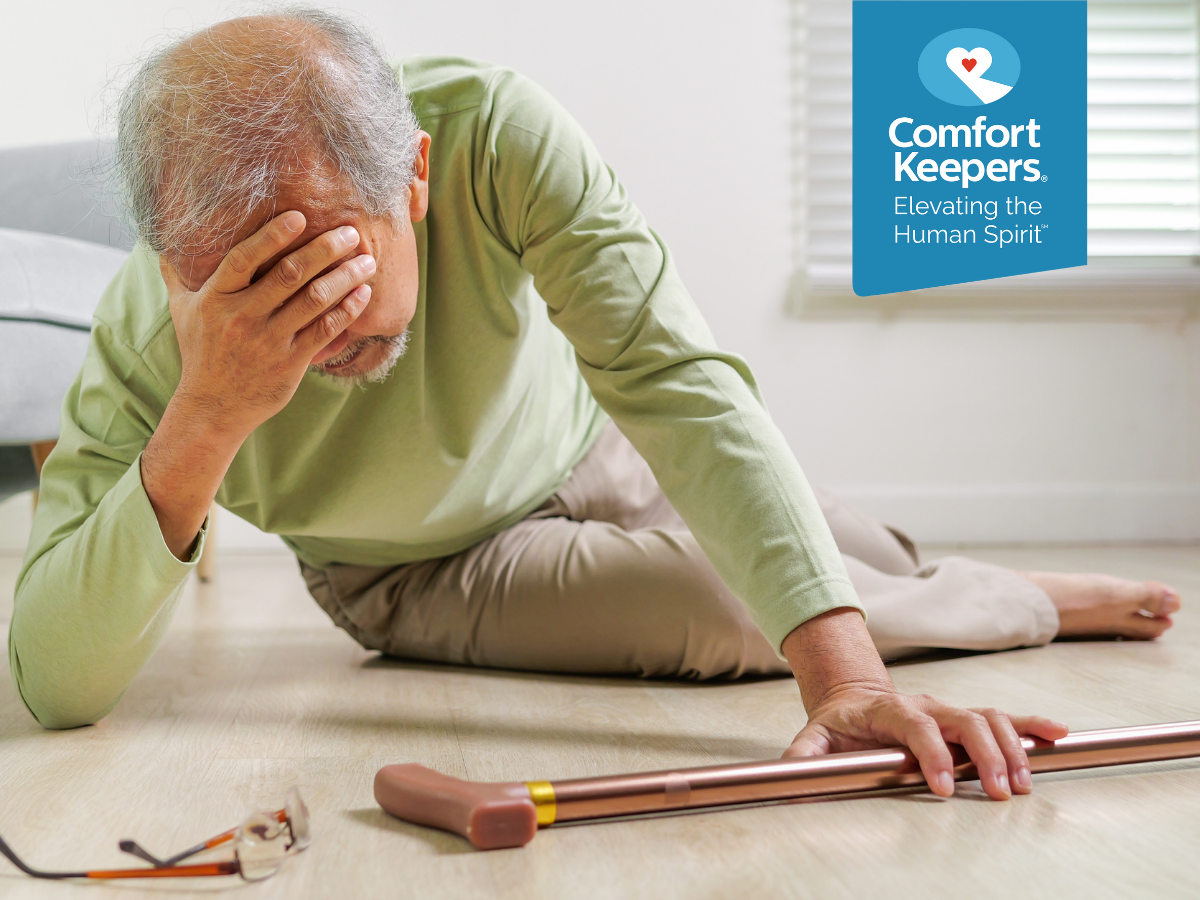
A senior man after falling to the floor | Senior Falls: Risk Factors and Prevention Strategies | Comfort Keepers North and West Vancouver

The Best Senior Home Care in North and West Vancouver is Comfort Keepers®

Our senior home care agency offers in-home care focusing on aging in place. Our services include dementia care, end-of-life care, post-surgery care, and palliative care. Comfort Keepers can assist seniors with living transition services, personal care, companionship care, and more! 

Quality and Accredited Elderly Care: Happier, Healthier, and at Home with 24/7 Senior Care Opportunities!

Do you need a home care solution for yourself or a loved one? Have you been thinking about retirement homes and their alternatives as a solution? Comfort Keepers® enables seniors to maintain happy, healthy lives in the comfort of their own homes. In-home care services are available in North Vancouver, West Vancouver, and the surrounding areas.

Comfort Keepers® is a Senior Care Agency That Can Make a Difference with Interactive Caregiving™

Our in-home caregivers ensure our senior clients have the best quality of life. The Interactive Caregiving™ program ensures that a senior’s safety, nutrition, mental well-being, and everyday needs are met. This program brings joy and good health to each client’s home.

Comfort Keepers® North Vancouver and West Vancouver Can Help with In-Home Elderly Care Services!

If you are concerned about the health and well-being of a loved one we can help! Comfort Keepers offers 24-hour care and delivers top-quality and compassionate care for seniors.  We are dedicated to safety technology solutions that foster independence and enhance well-being.

Locally Owned and Operated Home Health Care Agency

Our care centers around companionship for seniors. Empathetic care originates from the soul and allows us to meet our client’s requirements. The seasoned in-home caregivers employed by Comfort Keepers are carefully chosen based on their empathetic qualities.  

Contact the Comfort Keepers® North Vancouver and West Vancouver office at (604) 998-8806 to learn more about our unique in-home care solutions for seniors.

Comfort Keepers is an Accredited Senior Care Agency in North and West Vancouver, BC

Accreditation is a rigorous process that involves industry experts evaluating an organization’s processes, policies, and procedures. Comfort Keepers® North and West Vancouver has been awarded Exemplary Standing by Accreditation Canada. This achievement recognizes that Comfort Keepers® meets or exceeds the stringent quality standards for Home Care companies established by Accreditation Canada. 


References

Canadian Patient Safety Institute. “Falls”. Web, 2019.

Centers for Disease Control and Prevention. “Falls Are Serious and Costly.” Web.

Better Health While Aging. “Why Older People Fall & How to Reduce Fall Risk.” Web. 2017.

Mayo Clinic. “Fall Prevention: Simple tips to prevent falls.” Web. 2016.

Canadian Institutes of Health Research. “The Complex Interplay of Depression and Falls in Older Adults: A Clinical Review.” Web. 2016

Maple Leaf Maple Leaf Maple Leaf

Preparing Seniors for Natural Disasters in North and West Vancouver

Preparing Seniors for Natural Disasters in North and West Vancouver
Senior couple stands before the aftermath of a natural disaster | Preparing Seniors for Natural Disasters | Comfort Keepers North and West Vancouver | BLOG POST

What Every Senior in North Vancouver and West Vancouver Needs to Know About Natural Disaster Preparation

A 2014 study revealed less than 25 percent of seniors have an emergency plan. Of those surveyed, one-quarter said they live alone, and one-third were disabled or in poor/fair health.

Preparing Seniors for Natural Disasters | As the seasons change, it’s a good time to evaluate how your family is prepared for emergencies. If you are the caregiver for an older family member, you may need to help your loved one get ready for unexpected events. Since most people over the age of 50 report that they are not prepared for natural disasters, it may fall to families and healthcare providers to help older adults become proactive in their emergency plans. Our older population is most vulnerable at a time of crisis, so getting prepared today means a faster response time and less stress in the future.

Preparing Seniors for Natural Disasters: The Emergency Kit

Your loved one may need to survive alone after a disaster. The general rule of thumb is to create a 3-day supply kit and keep its contents current. You may even want to consider creating a full “stay at home” kit and a lighter “emergency travel” kit with common items your loved one needs. Be sure your loved one knows where the kit is and what supplies are in it.

Recommended Items for The Emergency Kit

  • 3-day supply of non-perishable food and water (1 gallon of water per person, per day for drinking and sanitation)
  • Battery-powered radio or television (include extra batteries)
  • Flashlight (include extra batteries)
  • First aid kit
  • Sanitation and hygiene items (moist towelettes and toilet paper)
  • Matches and candles in a waterproof container
  • Extra clothing
  • Blankets
  • Basic kitchen utensils and a manual can opener
  • Multi-purpose tools, such as a Swiss army knife
  • Cash and coins
  • Whistle to signal for help
  • Medications
  • Medical devices (including hearing aids with batteries, oxygen, and wheelchair batteries)

Preparing Seniors for Natural Disasters: The Emergency Checklist

Along with a general emergency kit, older adults may need additional items to stay organized and safe. With your loved one’s help, create a list of items and information he or she might need in the event of a natural disaster.

The Emergency Checklist Could Include:

  • Names and dosage amounts for all medications
  • Doctor names/locations with phone numbers
  • Pharmacy names/locations with phone numbers
  • Special instructions for care or comfort in case your loved one has limited communication
  • Emergency contact information for family or friends
  • Blood type
  • Duplicates of important documents, including passport, driver’s license, social security card, wills, deeds, financial statements, and insurance information (should be kept in a secure location)
  • Personal care assistance plan (if your loved one receives help from a home healthcare agency, find out how the agency will respond to an emergency and designate backup plans for caregivers)

Preparing Seniors for Natural Disasters: How to Manage Stress

With some natural disasters, there is a time of warning when you can prepare, but there may also be a time to worry. As a possible emergency arises, older people may feel stressed and isolated. Having an emergency plan and a kit can help them feel prepared.

Strategies to Help Manage Stress Could Be:

  • Maintain typical routines, meal patterns, and normal sleep as much as possible.
  • Minimize talk about the disaster and avoid 24-hour news reports on the crisis.
  • Seek out positive activities to pass the time.

Older adults may also want to volunteer or provide assistance to others. This is a great way to showcase their strengths and resilience. Plus, finding ways for them to contribute to the efforts may ease some of the worry and helpless feelings.

As families and caregivers, we want to work together to help our loved ones feel empowered and safe, no matter what emergencies arise. At Comfort Keepers®, we understand that many seniors want to stay in their own homes and feel protected there. By starting preparations today, your loved ones can feel more peace of mind and reassurance that if a crisis happens, they are not alone.

A box being filled with canned goods | Preparing Seniors for Natural Disasters | Comfort Keepers North and West Vancouver

The Best Senior Home Care in North and West Vancouver is Comfort Keepers®

Our senior home care agency offers in-home care focusing on aging in place. Our services include dementia care, end-of-life care, post-surgery care, and palliative care. Comfort Keepers can assist seniors with living transition services, personal care, companionship care, and more! 

Quality and Accredited Elderly Care: Happier, Healthier, and at Home with 24/7 Senior Care Opportunities!

Do you need a home care solution for yourself or a loved one? Have you been thinking about retirement homes and their alternatives as a solution? Comfort Keepers® enables seniors to maintain happy, healthy lives in the comfort of their own homes. In-home care services are available in North Vancouver, West Vancouver, and the surrounding areas.

Comfort Keepers® is a Senior Care Agency That Can Make a Difference with Interactive Caregiving™

Our in-home caregivers ensure our senior clients have the best quality of life. The Interactive Caregiving™ program ensures that a senior’s safety, nutrition, mental well-being, and everyday needs are met. This program brings joy and good health to each client’s home.

Comfort Keepers® North Vancouver and West Vancouver Can Help with In-Home Elderly Care Services!

If you are concerned about the health and well-being of a loved one we can help! Comfort Keepers offers 24-hour care and delivers top-quality and compassionate care for seniors.  We are dedicated to safety technology solutions that foster independence and enhance well-being.

Locally Owned and Operated Home Health Care Agency

Our care centers around companionship for seniors. Empathetic care originates from the soul and allows us to meet our client’s requirements. The seasoned in-home caregivers employed by Comfort Keepers are carefully chosen based on their empathetic qualities.  

Contact the Comfort Keepers® North Vancouver and West Vancouver office at (604) 998-8806 to learn more about our unique in-home care solutions for seniors.

Comfort Keepers is an Accredited Senior Care Agency in North and West Vancouver, BC

Accreditation is a rigorous process that involves industry experts evaluating an organization’s processes, policies, and procedures. Comfort Keepers® North and West Vancouver has been awarded Exemplary Standing by Accreditation Canada. This achievement recognizes that Comfort Keepers® meets or exceeds the stringent quality standards for Home Care companies established by Accreditation Canada. 


References:

  • Abrahms, Sally. “A Caregiver’s Natural Disaster Prep List.” AARP.org. Web. 10 May 2012.
  • Soglin, Becky. “UI study: Older adults in U.S. not prepared for natural disasters.” Iowa Now. Web. 25 March 2014.
  • Sollitto, Marlo. “12 Tips to Prepare the Elderly for Disasters.” AgingCare.com. Web. 20 June 2015.
  • “Preparing Makes Sense for Older Americans. Get Ready Now.” Ready.gov. Web. 1 July 2015.
  • Tralle, Minnell L. “Before a Natural Disaster: Planning and Preparing Tips for Older Adults.” University of Minnesota Extension. Web. May 2015.
Maple Leaf Maple Leaf Maple Leaf

Promoting Bone Health to North and West Vancouver’s Senior Community

Promoting Bone Health to North and West Vancouver’s Senior Community
Senior male seated on couch with cast on leg and crutch beside | Promoting Bone Health | Comfort Keepers North and West Vancouver | BLOG POST

What Every Senior in North Vancouver and West Vancouver Needs to Know About Bone Health

According to the National Osteoporosis Foundation (NOF), low bone mass and osteoporosis affect 52 million Americans. It accounts for two million fractures and $19 billion in related expenses each year.

Promoting Bone Health | After the age of 50, women have a 50-percent chance of suffering an osteoporosis-related fracture. The risk increases dramatically after the first occurrence. Men 50 and over have a 25-percent chance of suffering an osteoporosis-related fracture. A variety of preventive health strategies help slow and lessen the effects of osteoporosis, a natural weakening of the bones as we age.

Osteoporosis Prevention and Treatment Options

The high physical and financial cost of osteoporosis makes prevention or treatment a top priority for seniors. Here are some leading options:

Medications Related to Bone Health

Most osteoporosis drugs block the effect of bone-destroying cells that increase in number as we get older. A compound called Denosumab helps prevent the formation of harmful cells. Declaring it one of 2009’s “Top 10 Medical Breakthroughs,” Time magazine states that two studies showed Denosumab to be effective in preventing fractures in the two largest at-risk populations for osteoporosis, postmenopausal women and men in treatment for prostate cancer. 

Other osteoporosis drugs, such as Fosamax, Boniva, Actonel, and Reclast, belong to a group of drugs called bisphosphonates. According to the Mayo Clinic, these drugs, much like the female hormone estrogen, inhibit bone breakdown, preserve bone mass and even increase bone density in the spine and hip, reducing the risk of fractures.

The drug Evista also mimics estrogen’s positive effects on bone density. Calcitonin, a hormone produced by the thyroid gland, slows bone loss. Forteo is a powerful drug that stimulates new bone growth.

Talk with your physician about these drugs, their benefits, and their side effects to help determine if any may be effective and safe for you.

Hormone Therapy for Bone Health

Estrogen therapy is generally not the first choice for maintaining bone density due to the availability of other options and the increased risk of blood clots, breast and endometrial cancer, and heart disease.

Calcium for Bone Health

The amount of calcium our bones require from food and supplements changes as we age, according to the Institute of Medicine (IOM). It rises from 210 to 270 milligrams a day during the first year of life and peaks at 1,300 milligrams from ages 9 to 18 before declining to 1,000 milligrams from ages 19 to 50 and rising to 1,200 milligrams at ages 51 and up.

Natural sources of calcium include dairy products, almonds, broccoli, spinach, cooked kale, canned salmon with bones, sardines, and soy products. Those who have trouble getting adequate calcium from their diet may consider a supplement, but the IOM recommends limiting total calcium intake to 2,500 milligrams a day. (Required calcium intake varies by individual. Always check with your doctor before taking a calcium supplement or any other nutritional supplement.) 

Vitamins for Bone Health

Vitamin D is also essential to bone health. Many people get adequate amounts of this nutrient from sunlight. But that is not always possible if you live at a high latitude, are housebound, regularly use sunscreen, or avoid the sun to reduce the risk of skin cancer. Vitamin D is available in oily fish and egg yolks. If this does not provide enough, a good alternative is a vitamin D supplement or a calcium supplement that includes vitamin D.

While calcium and vitamin D are good for your bones, cigarettes and alcohol are not. Do not smoke, and limit your alcohol consumption. Smoking increases bone loss, as it inhibits the production of estrogen and reduces the absorption of calcium in the intestine. Consumption of more than two alcoholic drinks a day decreases bone formation and reduces calcium absorption.

Physical Therapy and Exercise for Bone Health

Often used in combination with medications and other therapies, physical therapy helps improve bone strength, posture, muscle strength, and balance, thereby making falls less likely. Exercise also reduces the risk of falling. A lifetime of exercise is ideal, but you can realize the benefits no matter when you start. (However, see your doctor before you begin.) For the best overall results, combine weight-bearing exercises, such as walking, and strength training with weights.

Fall Prevention

In addition to exercise, you can reduce the risk of falls and broken bones by taking steps toward making your or your loved one’s home safer. This can start by checking for and removing hazards, such as electrical cords, area rugs, and slippery surfaces, which might cause trips or falls. Also, improve lighting inside your home and around outside areas such as pathways or sidewalks.

There are a variety of means for preventing or treating osteoporosis. Talk to your doctor and find the best way to care for your bones.

Tips to Prevent Falls in Seniors

Tip #1 – Check the ingredients:

Check over-the-counter skin care products to ensure they aren’t alcohol-based. Alcohol can irritate the skin further, so choose products that include ceramides, lipids, and hyaluronic acid – natural moisturizers that the body produces less of with age.

Tip #2 – Humidifier:

Use a humidifier in the home to help distribute moisture and prevent dry skin.

Tip #3 – No sense is good sense:

Avoid using fragrances, as they can inflame psoriasis.

Tip #4 – Omega-3 fatty acids:

With physician/dietician approval, follow a healthy diet that includes cold water fish, omega-3 fatty acids, and nuts. Also, consider adding turmeric to your diet. This natural supplement’s anti-inflammatory properties are known to help reduce psoriasis flare-ups.  

Tip #5 – Try mocktails:

Avoid alcohol. Studies have shown that alcohol is a trigger for psoriasis, and frequent consumption can even increase the chances of developing the condition.

Tip #6 – Healthy weight:

Maintain a healthy weight through exercise and – as noted above – a healthy diet. Doing so will also help to reduce the risk of other psoriasis-related health problems, such as heart disease and diabetes. Remember to consult a physician before beginning any exercise regimen.

Tip #7 – Low to no stress:

Reduce stress whenever and however possible. Like alcohol, stress is a known psoriasis trigger – but unlike alcohol, stress can be harder to avoid in day-to-day life. To help keep it at bay, consider practicing yoga, meditation, or other activities that can bring a sense of peace.

Tip #8 – Support system:

Maintain a strong support network. Late-onset psoriasis can lead to feelings of anxiety and depression, so whether it be friends, family, or an actual support group, having people to talk to about the condition can help improve emotional well-being.

A senior woman seated on a couch holding her elbow | Promoting Bone Health | Comfort Keepers North and West Vancouver

The Best Senior Home Care in North and West Vancouver is Comfort Keepers®

Our senior home care agency offers in-home care focusing on aging in place. Our services include dementia care, end-of-life care, post-surgery care, and palliative care. Comfort Keepers can assist seniors with living transition services, personal care, companionship care, and more! 

Quality and Accredited Elderly Care: Happier, Healthier, and at Home with 24/7 Senior Care Opportunities!

Do you need a home care solution for yourself or a loved one? Have you been thinking about retirement homes and their alternatives as a solution? Comfort Keepers® enables seniors to maintain happy, healthy lives in the comfort of their own homes. In-home care services are available in North Vancouver, West Vancouver, and the surrounding areas.

Comfort Keepers® is a Senior Care Agency That Can Make a Difference with Interactive Caregiving™

Our in-home caregivers ensure our senior clients have the best quality of life. The Interactive Caregiving™ program ensures that a senior’s safety, nutrition, mental well-being, and everyday needs are met. This program brings joy and good health to each client’s home.

Comfort Keepers® North Vancouver and West Vancouver Can Help with In-Home Elderly Care Services!

If you are concerned about the health and well-being of a loved one we can help! Comfort Keepers offers 24-hour care and delivers top-quality and compassionate care for seniors.  We are dedicated to safety technology solutions that foster independence and enhance well-being.

Locally Owned and Operated Home Health Care Agency

Our care centers around companionship for seniors. Empathetic care originates from the soul and allows us to meet our clients’ requirements. The seasoned in-home caregivers employed by Comfort Keepers are carefully chosen based on their empathetic qualities.  

Contact the Comfort Keepers® North Vancouver and West Vancouver office at (604) 998-8806 to learn more about our unique in-home care solutions for seniors.

Comfort Keepers is an Accredited Senior Care Agency in North and West Vancouver, BC

Accreditation is a rigorous process that involves industry experts evaluating an organization’s processes, policies, and procedures. Comfort Keepers® North and West Vancouver has been awarded Exemplary Standing by Accreditation Canada. This achievement recognizes that Comfort Keepers® meets or exceeds the stringent quality standards for Home Care companies established by Accreditation Canada.


References:

Canadian Dermatology Association. “ Psoriasis” Web. 2018.
SkinCareGuide. “Psoriasis in the Elderly.” Web. 2018.
HealthCentral. “Common Questions about Late-Onset Psoriasis” by Sarah Markel. Web. 2018.
HealthLine. “Psoriasis by the Numbers: Facts, Statistics, and You” by Ann Pietrangelo & reviewed by Debra Sullivan, PhD, MSN, RN, CNE, COI. Web. 2018.
HealthLine. “10 Ways to Treat Psoriasis at Home” by Brian Krans and Cathie Ericson & medically reviewed by Debra Sullivan, PhD, MSN, RN, CNE, COI. Web. 2018. 
WebMD. “Aging with Psoriasis” by Camille Noe Pagan. Web. 2018.


Maple Leaf Maple Leaf Maple Leaf

Managing Diabetes in British Columbia’s Seniors

Managing Diabetes in British Columbia’s Seniors
Senior male seated a table checking glucose levels | Managing Diabetes in Seniors | Comfort Keepers North Vancouver West Vancouver | BLOG POST

What Every Senior in North Vancouver and West Vancouver, BC, Needs to Know About Managing Diabetes 

What do you need to know about managing diabetes? Seniors represent almost 48% of the total number of people managing diabetes, and that number is expected to increase as the population of adults aged over 60 increases.

As you know, diabetes is a condition that prevents someone’s body from properly processing sugar, leading to elevated blood sugar levels and negative health effects as a result. While diabetes has its signs and symptoms, it can also make other conditions, like heart and kidney disease, worse.

Diabetes can be managed, but it’s often important for seniors to seek help from their care team, including their family, physician, nutritionist, and caregiver.

Five Strategies for Managing Diabetes:

#1 – Education:

There is a lot for someone to learn when they receive a diabetes diagnosis. Depending on the physician’s recommendation, a senior’s diet, exercise, medication, and treatment plan may need to change. There are new symptoms, risk factors, and medical needs that a senior may have that may complicate the disease. Seniors need to learn about their diabetes and how to treat it.

#2 – Diet:

Diet plays a huge part in diabetes management for seniors. A nutritious diet, low in sugar, is important for reducing symptoms and complications from the disease. Sugar from fruit should be avoided too, along with saturated fats. Diabetes educators can help seniors plan meals that will successfully help them maintain their health.

#3 – Exercise and activity:

Before beginning a new activity or exercise plan seek advice from a healthcare professional. The American Diabetes Association recommends 30 minutes of exercise per day, five days per week, but that level of activity isn’t always possible for some. For some, shorter periods of activity, throughout the day, can be just as helpful in managing diabetes. Seniors should always speak to their physician before starting any exercise program.

#4 – Prescribed medication is critical:

Missing a dose of medication can negatively affect seniors with diabetes. Caregivers can prompt seniors to take their medication and set up a system of reminders, whether that’s a pill box, an alarm, a checklist. In addition to prescribed medications, vaccines can also be a useful tool in diabetes management – for example, complications that are caused by the flu can be more severe for those with diabetes.

#5 – Check glucose and other levels:

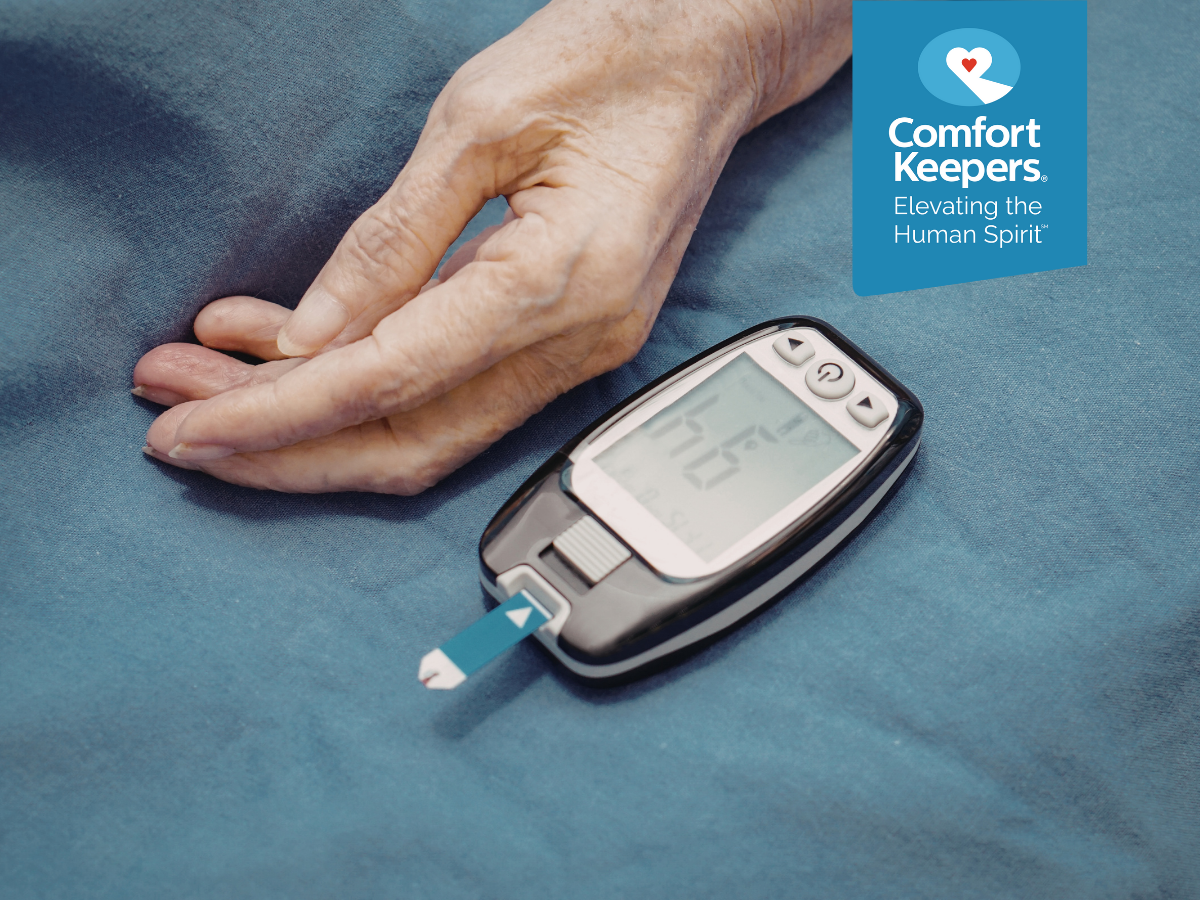
Regularly checking blood pressure and cholesterol levels can alert a physician to a possible issue. The physician can then instruct what to do and what to avoid. Most seniors with diabetes will need to keep an eye on their glucose levels. A senior hand lays next to a blood sugar monitor | Preventing Diabetes in British Columbia's Seniors | Comfort Keepers North and West Vancouver

The Best Senior Home Care in North and West Vancouver is Comfort Keepers®

Our senior home care agency offers in-home care focusing on aging in place. Our services include dementia care, end-of-life care, post-surgery care, and palliative care. Comfort Keepers can assist seniors with living transition services, personal care, companionship care, and more! 

Quality and Accredited Elderly Care: Happier, Healthier, and at Home with 24/7 Senior Care Opportunities!

Do you need a home care solution for yourself or a loved one? Have you been thinking about retirement homes and their alternatives as a solution? Comfort Keepers® enables seniors to maintain happy, healthy lives in the comfort of their own homes. In-home care services are available in North Vancouver, West Vancouver, and the surrounding areas.

Comfort Keepers® is a Senior Care Agency That Can Make a Difference with Interactive Caregiving™

Our in-home caregivers ensure our senior clients have the best quality of life. The Interactive Caregiving™ program ensures that a senior’s safety, nutrition, mental well-being, and everyday needs are met. This program brings joy and good health to each client’s home.

Comfort Keepers® North Vancouver and West Vancouver Can Help with In-Home Elderly Care Services!

Our trained caregivers offer 24-hour care and deliver compassionate, top-quality care for seniors.  We are dedicated to safety technology solutions that foster independence and enhance well-being.

Locally Owned and Operated Home Health Care Agency

We treat each client as we would a cherished family member. Our mission is to deliver excellent care services prioritizing respect and dignity, enabling seniors to maintain their independence and enjoy the best possible quality of life.

Empathetic care originates from the soul and allows us to meet client requirements. Contact Comfort Keepers® North Vancouver and West Vancouver at (604) 998-8806 to learn more about our unique in-home care solutions for seniors.

Comfort Keepers is an Accredited Senior Care Agency in North and West Vancouver, BC

Accreditation is a rigorous process that involves industry experts evaluating an organization’s processes, policies, and procedures. Comfort Keepers® North and West Vancouver has been awarded Exemplary Standing by Accreditation Canada. This achievement recognizes that Comfort Keepers® meets or exceeds the stringent quality standards for Home Care companies established by Accreditation Canada. 


References:

Diabetes Canada.  “Diabetes Statistics in Canada”. Web 2019.
Endocrine Web. “9 Ways Older People Can Manage Their Diabetes to Stay Healthier.” Web. 2015.
National Council for Aging Care. “Seniors and Diabetes: A Complete Guide.” Web.
Diabetes Forecast. “5 Ways to Help Seniors With Diabetes.” Web. 2014.
American Diabetes Association. “Older Adults.” Web.