



Long Distance Caregiving: How to Care for a Parent in Ottawa When You Live Somewhere Else

The call comes on a Tuesday afternoon. Your mother slipped on the front steps of her house in Ottawa. She is fine, she insists, just a bruise. You are four hours away on the 401, or in Montreal, or in Vancouver, and by the time you could get there she will have already told you three more times that it was nothing.
This is the reality of long distance caregiving: you are responsible for someone whose daily life you cannot see. You hear the version of events your parents choose to share, usually the reassuring one, and you make decisions based on incomplete information. At Comfort Keepers® In-Home Senior Care Ottawa and Kanata, this is one of the most common situations families bring to us, and it has a particular shape in this city. Ottawa raises people who leave for work in Toronto, Montreal, Calgary, or across the border, and their parents stay behind in the houses where those families grew up.
Long Distance Caregiving Is More Common Than It Looks
If you feel like the only one managing a parent’s care from another city, you are not. Statistics Canada found that of the roughly 1.65 million Canadians aged 45 and over who were caring for a parent or parent-in-law, about 360,000 of them, or 22%, were helping a parent who lived at least an hour away by car.
The same research documented something long distance caregivers often sense but rarely see confirmed: distance itself carries a cost. Caregivers living further from their parent were more likely to take on extra expenses, and when they did, the amounts were larger. About 62% of those living more than half a day’s journey away incurred extra costs, roughly twice the rate of caregivers living in the same neighbourhood. They were also more likely to miss full days of work.
In other words, the strain of being a long distance caregiver is not a personal failing or a sign that you are doing it wrong. It is a structural feature of the situation.
What You Cannot See From Far Away
The hardest part of long distance caregiving is that decline is quiet. It does not announce itself in a phone call. These are the things that most often go unnoticed until a visit:
- The state of the house. A parent can sound perfectly composed on the phone while the mail piles up, the fridge holds expired food, or the laundry has not been done in weeks. Housekeeping is usually the first thing to slip, and it is invisible over a video call framed on someone’s face.
- Weight loss. Cooking for one is tiring, and many older adults quietly downgrade to toast and tea.
Three months between visits is more than enough time for a noticeable change that nobody mentioned.
- Medication routines. A parent will rarely volunteer that they have been skipping doses or doubling up when they forget. Pill organizers left untouched on a counter tell a story that a phone conversation will not.
- Social withdrawal. A parent who has stopped going to church, the community centre, or their weekly coffee will not usually frame it as a problem. It comes out as “I did not feel like going,” which sounds like a preference rather than a warning sign.
Winter, specifically. This is where Ottawa differs from almost anywhere else a caregiver might be calling from. Between December and March, an unshovelled walkway or an icy driveway in Ottawa is not an inconvenience, it is a fall risk. If you live somewhere with milder winters, it is easy to underestimate how much a single storm can isolate a parent for days.
Warning Signs Worth Acting On
Some changes can wait for your next visit. These generally cannot:
- New bruises, or a fall your parent mentions only in passing
- Confusion during phone calls, or repeating the same story within one conversation
- Unopened mail, unpaid bills, or unusual bank activity
- A neighbour or friend calling you first, which usually means it has been noticeable for a while
- Missed medical appointments
- A parent who stops answering the phone or begins avoiding video calls
That last one deserves attention. A parent who was comfortable with video calls and suddenly is not may be hiding something they do not want seen, whether that is the house, their appearance, or how much they are struggling.
Building a Local Network from a Distance
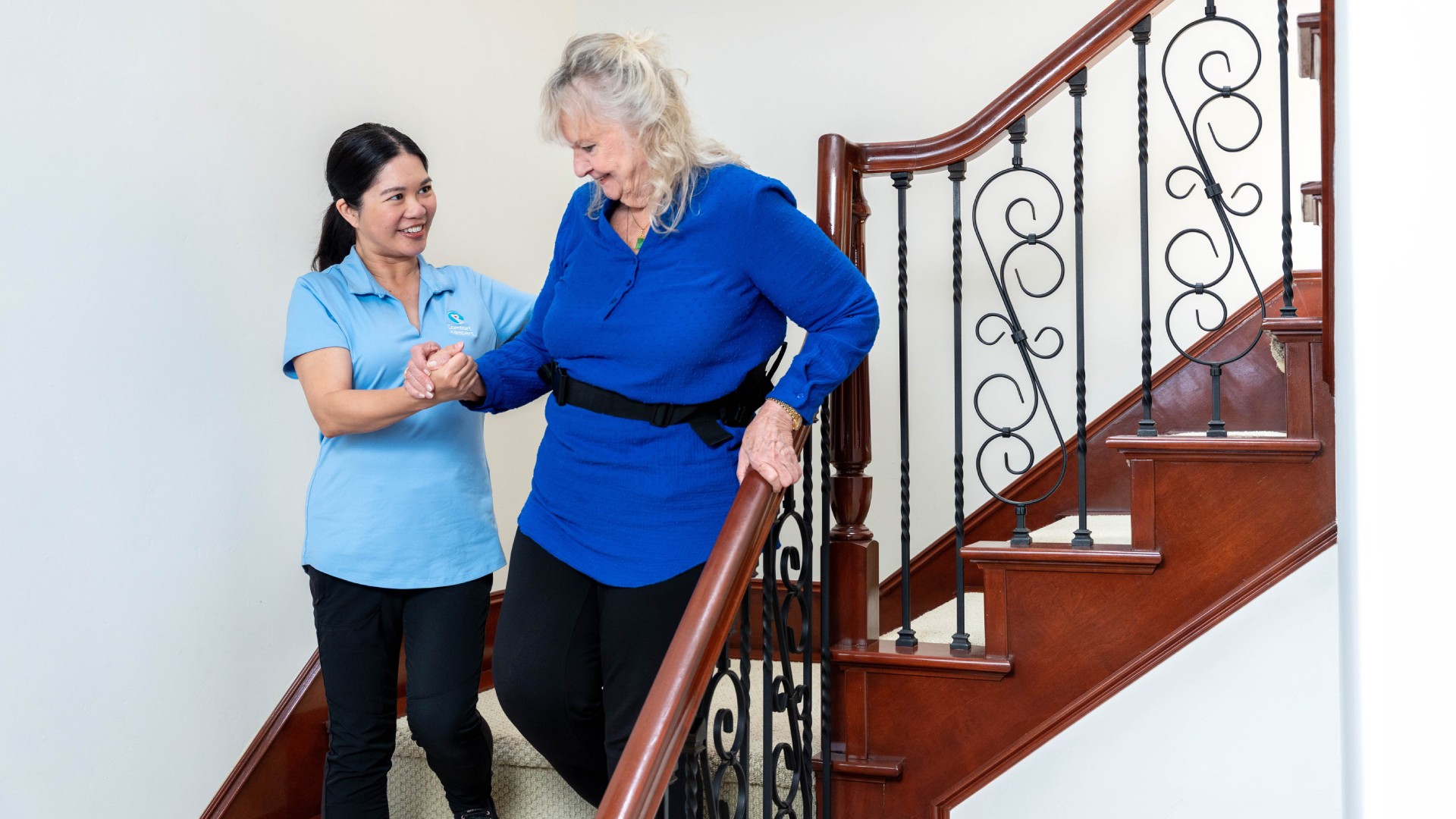
The most effective thing a remote caregiver can do is stop trying to be everywhere at once and start connecting with people who are nearby.
Start with the practical: make sure you have direct contact information for your primary care physician, pharmacist, and at least one neighbor who is willing to be contacted. Ask your parent for permission to be listed as a contact with their healthcare providers, as privacy regulations will otherwise exclude you from the conversation when you need them most.
An interesting option to consider is in-home care for seniors. At Comfort Keepers® In-Home Senior Care Ottawa and Kanata, we are professionals in in-home care for seniors in Ottawa. We excel at creating personalized care plans tailored to each family’s needs, ranging from respite care to 24/7 in-home care. And with our Interactive Caregiving™ approach, we ensure a high quality of life for all our patients.
What families can do now
Change the way you phrase questions. “How are you?” invites a reassuring response. “What did you eat today?” or “Who did you talk to this week?” provide helpful information. Specific questions are harder to avoid than general ones.
Approach your visits differently. When you’re in Ottawa, resist the temptation to spend the entire trip catching up. Open the refrigerator. Check the medication. Go up the stairs your parent uses daily. Check if the bathroom has a grab bar. A visit is your only chance to get the information that distance obscures.
And be honest about what remote care can’t do. You can manage appointments, handle finances, and call every night from anywhere in the world. You can’t notice that your father has been having balance problems for three weeks, or make sure your mother eats a full meal on a Tuesday in February. Those things require someone to be present.
This is where professional in-home care is a game-changer for the long-distance caregiver. A caregiver who visits regularly in Ottawa becomes your eyes and ears: someone who prepares meals, encourages walks, monitors medication, and alerts you to any changes before that dreaded phone call arrives.
At Comfort Keepers® In-Home Senior Care Ottawa and Kanata, our care is based on precisely this kind of daily, consistent attention, and our caregivers keep families informed no matter where in the world they live. If you’re managing care for a family member from another city and aren’t sure what you might be overlooking, we’d be happy to discuss it with you. Contact us!