Swollen Ankles in the Elderly: Causes and When to Worry
You notice it at the end of the day. The sock has left a deep ring above her ankle. You press the skin with a finger and it takes a few seconds to come back.
Her shoes feel tight by dinner, even though they fit fine in the morning. She says it is nothing, it has been doing that for a while.
Swollen ankles in the elderly are usually manageable. Occasionally they are the first warning of something that needs looking at this week. Telling the two apart is easier than it sounds.
What the swelling is
The medical name is Edema. It means fluid has leaked out of the blood vessels and settled in the tissue.
Gravity decides where it collects. That is why it drops to the ankles and feet of someone who spends the day sitting, and why it is better on waking and worse by late afternoon.
Edema in the elderly almost never has a single cause. In an older adult, two or three things are usually a little off at the same time, which is why the swelling creeps in rather than appearing overnight.
The most common causes of swollen ankles in older adults
- Sitting still for long stretches. The leg muscles are the pump that sends blood back to the heart. If they do not move, that pump does not work.
- Worn-out vein valves. This is the most common chronic cause. It is not dangerous, but it does not go away on its own.
- Medication. Several common blood pressure drugs list ankle swelling as a known side effect, and so do steroids, some diabetes medications and regular use of anti-inflammatory painkillers.
- A heart that is pumping with less force than it used to.
- Liver or kidney problems, which carry their own warning signs worth knowing separately.
- Low protein, after months of poor eating.
- Hot weather, a long flight, or a day of heavy salt.
Of that whole list, medication is the one families overlook most. If the swelling started within a few weeks of a new prescription or a dose change, say so at the appointment. That timing matters.
Swollen legs in the elderly: when it climbs above the ankle
Swelling that stays at the ankle is usually gravity and veins.
Swelling that climbs the calf or reaches the thigh is a different picture. Swollen legs in the elderly usually mean one of two things: either there is more fluid than the lower leg can hold, which raises questions about the heart and the kidneys, or something is blocking the blood’s return higher up. Both need a doctor.
Watch the skin, not just the size. If it is tight, shiny, weeping, or broken open anywhere, this has moved from monitoring to treatment. Swollen skin tears easily and heals slowly, and an open sore on a swollen leg can take months to close.
One leg or both?
If nothing else here sticks, let it be this.
Both legs swollen roughly equally usually points to something affecting the whole body: the heart, the kidneys, the liver, a medication, heat, or long periods of sitting. It needs investigating, but it is generally not an emergency.
One swollen leg is a different matter. There the likely cause is local: a clot in a deep vein, a skin infection, or an injury. If there is also pain, warmth, redness or tenderness in the calf, that needs a doctor the same day. A clot that travels to the lungs is life-threatening, and entirely preventable if it is found first.
So the first question is not how swollen. It is whether both legs look the same.
When to see a doctor
Seek urgent care if any of these happen:
- One leg swells suddenly, with pain, warmth or redness.
- The swelling comes with shortness of breath or chest pain.
- There is rapid weight gain over a few days.
- The skin has broken open, is weeping, or is hot and red with a fever.
Book an appointment soon, without it being urgent, if the swelling no longer clears overnight, if it began after a change in medication, if they are urinating noticeably less than before, or if it is getting worse month over month.
The doctor will ask specific things: when it started, whether it is one leg or two, whether it is gone by morning, what medication changed recently, and whether their weight has moved. Those are easy to answer if somebody has been paying attention. Impossible if nobody has.
This article is general information and is not a substitute for medical advice. Persistent or sudden swelling in an older adult should be assessed by their own doctor.
What helps at home

Elevation is the simplest thing that works, and most people do it wrong. A recliner with the footrest halfway up is not enough. The legs need to be above the level of the heart, which means lying down with cushions underneath. Twenty to thirty minutes, a few times a day, beats one long session in the evening.
Movement counts just as much. Short walks are ideal, and most low-impact exercise for seniors helps for the same reason. But for someone who cannot stand easily, pointing and flexing the feet while seated, a dozen times an hour, keeps that pump working.
Compression stockings help a great deal, with one condition that is not negotiable: a doctor has to approve them first. In an older adult with poor arterial circulation they can do real harm. This is not a drugstore purchase to make on your own judgement.
And if they are prescribed, getting them on in the morning is genuinely hard with arthritic hands. That is why so many pairs end up in a drawer.
The rest is straightforward. Keep salt down, because sodium pulls fluid into the tissue. Check that shoes and slippers actually fit the swollen foot instead of squeezing it. And look at the skin every day for redness, cracks or sore spots, because swollen skin breaks down quietly.
Why somebody noticing matters more than any remedy
Swelling changes slowly, and slow change is exactly what the person living with it stops seeing.
Laces get looser. Socks leave deeper marks. The chair gets chosen over the walk. None of it registers as a before and after, because there never is a clear before.
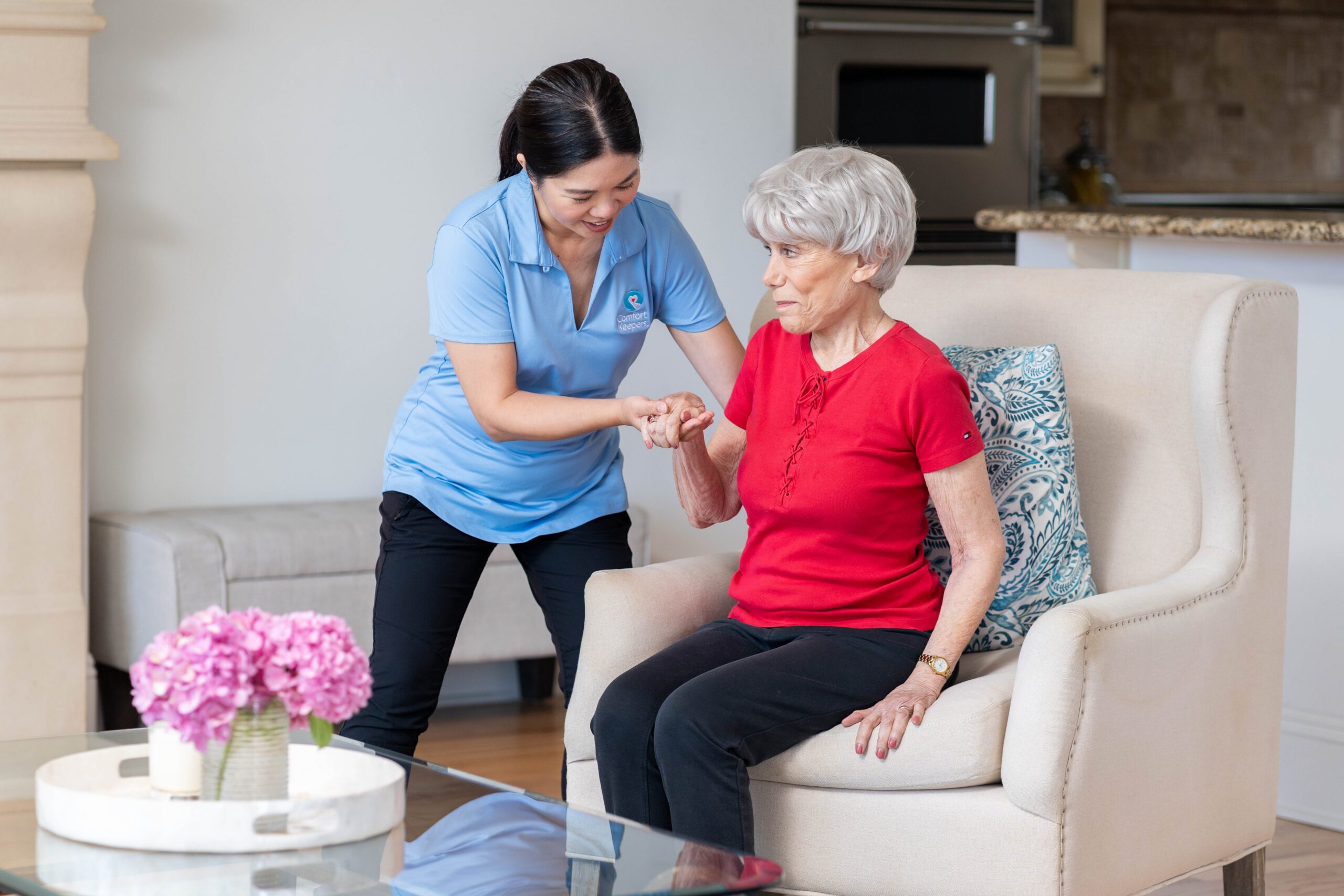
A caregiver from Comfort Keepers® In-Home Senior Care Ottawa and Kanata is there for the things that only work if they happen every day: prompting the elevation breaks, getting the compression stockings on in the morning, encouraging a short walk, cooking with less salt, and checking the skin while helping with personal care.
And because they see the same legs every day, they catch what matters: one ankle bigger than the other, skin turning red and warm, shoes that stopped fitting this week. Then they report it with dates instead of impressions.
That is the difference between a swollen ankle somebody looks at in time and one that ends in an open wound or a hospital stay.
If the swelling is one of several things that have changed lately, it may be time to look at professional help at home.
If you would like to talk about what that could look like for your parent, contact Comfort Keepers® In-Home Senior Care Ottawa and Kanata and we will walk you through it.