



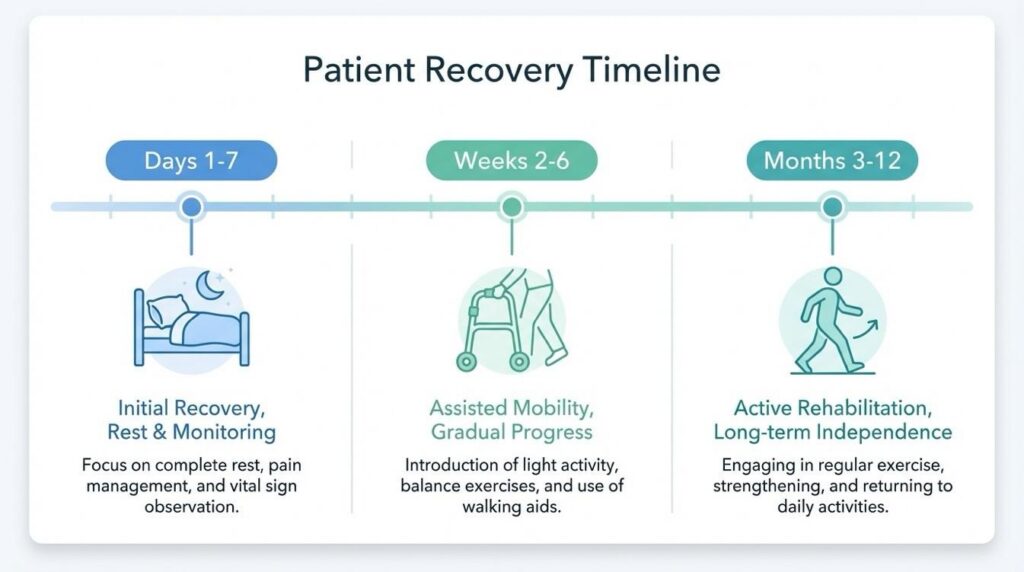
For many seniors, hip surgery recovery can take 6 to 12 months. Comfort Keepers Tri-Cities can support a safer, more comfortable recovery at home after surgery with non-medical assistance and daily-living support. While patients often regain basic mobility within 2 to 6 weeks, full independence requires a combination of home safety modifications and professional in-home support.
Understanding what lies ahead can transform a potentially stressful experience into a manageable and positive journey toward independence.

Understanding the Hip Replacement Recovery Timeline at Home
While every individual heals at their own pace, having a general roadmap helps manage expectations. For most seniors, the journey to full mobility is a marathon, not a sprint, often spanning up to a year.
The First 48 Hours to One Week
The initial days after discharge are the most intensive. You will likely experience fatigue and some discomfort as the anesthesia fully leaves your system. During this period, mobility is limited, and the risk of falls is highest. Most patients are encouraged to stand and take short, assisted walks almost immediately, but 24-hour support is often necessary to assist with transfers between the bed, chair, and bathroom
Weeks 2–6: Regaining Mobility
This phase is often defined by rapid improvement. By weeks 2 through 4, many seniors can move with less reliance on walkers, though a cane may still be needed. Physical therapy exercises become part of the daily routine to strengthen the muscles around the new joint. However, energy levels may still fluctuate, making household chores like cooking or laundry difficult to manage alone.
Long-Term Recovery (Months 3–12)
By the three-month mark, most seniors resume their standard daily activities. However, full recovery – defined as the return of complete muscle strength and the absence of pain – can take six to twelve months. Consistency with prescribed exercises during this window is vital for long-term success.
Preparing Your Home for a Safe Recovery
A safe environment is your best defence against readmission. Before your surgery date or immediately upon discharge, it is crucial to “accident-proof” your living space to accommodate reduced mobility.
Essential Safety Modifications
Falls are the leading cause of re-injury after hip surgery. To mitigate this risk, remove all throw rugs and loose electrical cords that could catch on a walker or cane. In the bathroom, installing grab bars near the toilet and inside the shower is non-negotiable for safety. Ensure that all hallways and staircases are well-lit, perhaps by adding motion-sensor night lights to guide late-night trips to the washroom
Creating a Main-Floor “Recovery Station”
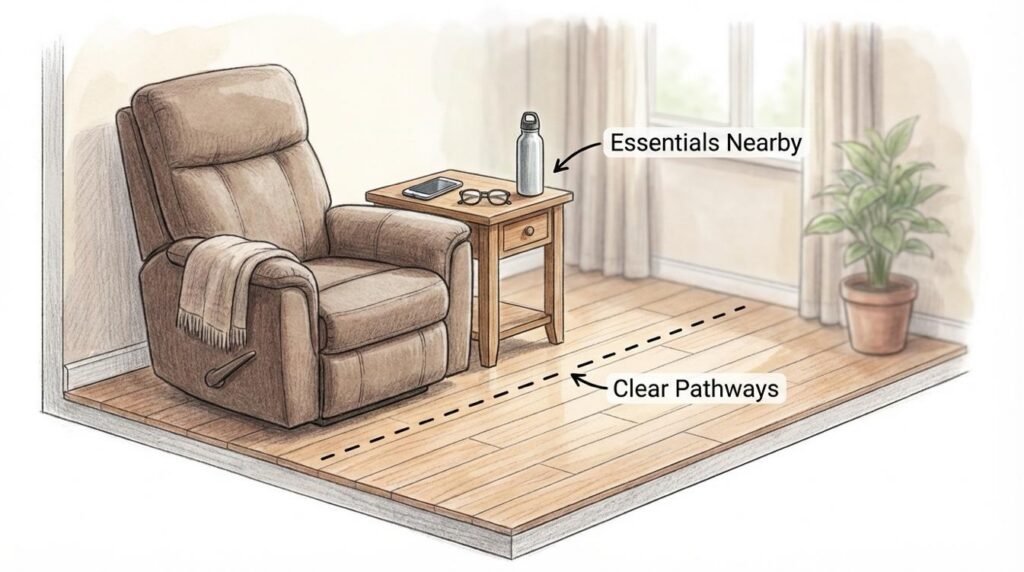
Stairs can be a significant barrier during early recovery. If possible, set up a temporary bedroom on the main floor of your home to avoid navigating steps multiple times a day. Keep essential items – phone, medications, water, and reading glasses – on a sturdy table within arm’s reach of your favourite chair. This setup minimizes the need to twist or bend, which are movements often restricted by surgeons during the initial healing period.
The Critical Role of In-Home Care
Professional support bridges the gap between medical discharge and independent living. For families in Coquitlam, Port Coquitlam, and Port Moody, in-home care acts as a safety net that allows seniors to focus entirely on healing.
Why Seniors Benefit from Professional Support
The benefits of in-home care extend beyond simple companionship. Professional caregivers significantly reduce the risk of hospital readmission by ensuring medication adherence and assisting with safe mobility. They handle physically demanding tasks such as grocery shopping, meal preparation, and light housekeeping, which safeguards the recovering senior from overexertion. Furthermore, having a companion alleviates the isolation that often accompanies a long recovery period.
What to Expect from a Caregiver vs. Home Care Nurse
It is important to distinguish between non-medical caregivers and home care nurses. A home care nurse typically visits periodically to administer injections, change wound dressings, and monitor vital signs. In contrast, a caregiver (or home support worker) provides sustained daily assistance with Activities of Daily Living (ADLs) such as bathing, dressing, and toileting. They act as the eyes and ears for the medical team, alerting family members to any changes in the senior’s condition.
Hiring In-Home Care in the Tri-Cities, BC
Finding reliable care in British Columbia’s Lower Mainland does not have to be overwhelming. Whether you are in Anmore, Belcarra, or the heart of Coquitlam, local options are available to suit various levels of need.
Local Options in Coquitlam, Port Coquitlam, and Port Moody
In the Tri-Cities, families can choose between private hires and agency-managed care. Agencies often provide greater peace of mind as they handle background checks, insurance, and scheduling backup in case a caregiver falls ill. When looking for “How do I hire in-home care after hip surgery in Tri-Cities BC?”, prioritize agencies that offer flexible, hourly care plans that can scale down as your loved one recovers.
Steps to Finding the Right Care Provider
1. Assess Your Needs: Determine if you need 24/7 monitoring or just a few hours of help each morning.
2. Verify Credentials: Ensure the provider is insured and bonded, and that their staff receives specific training in post-operative care.
3. Schedule a Consultation: Reputable providers will offer a free in-home assessment to meet the senior and discuss specific recovery goals.
4. Ask About Continuity: Inquire if the same caregiver will be visiting regularly, as consistent faces build trust and comfort.
If you or a loved one is facing an upcoming surgery, do not wait until discharge day to plan your support. Contact Comfort Keepers Tri-Cities today to schedule a free in-home consultation and ensure a safe, comfortable recovery. Our team is ready to create a personalized care plan that meets your unique needs. Call us now to secure the peace of mind you deserve during your recovery journey.

Frequently Asked Questions
Q: What is the typical hip replacement recovery timeline for seniors at home?
A: Most seniors can resume light daily activities within 3 to 6 weeks, but full recovery typically takes 6 to 12 months. The first two weeks are the most intensive, requiring significant assistance with mobility and personal care.
Q: How do I prepare my home for hip surgery recovery?
A: You should remove tripping hazards like loose rugs, install grab bars in the bathroom, improve lighting in hallways, and arrange a “recovery station” on the main floor so you don’t have to climb stairs frequently.
Q: What are the benefits of in-home care for seniors recovering from hip surgery?
A: In-home care reduces the risk of falls, ensures medications are taken on time, assists with daily hygiene and meals, and provides transportation to follow-up appointments, all of which lower the chance of hospital readmission.
Q: What should I expect from a home care nurse after surgery?
A: A home care nurse typically handles medical tasks such as checking vital signs, changing surgical dressings, and administering medication, whereas a personal caregiver assists with daily living tasks like bathing, cooking, and mobility.
Q: How do I hire in-home care after hip surgery in Tri-Cities BC?
A: You can hire care by contacting a licensed local agency like Comfort Keepers Tri-Cities. The process involves an initial consultation to assess your specific recovery needs, followed by the matching of a compatible, vetted caregiver to your home.
First Steps to In-Home Care: A Tri-Cities Guide to a Smooth Transition

Taking the first step toward in-home care can feel like standing at a complex crossroads. You know your loved one needs more support, but the path forward seems filled with questions, paperwork, and difficult conversations. It’s a journey defined by a deep sense of responsibility, and it’s completely normal to feel overwhelmed. In fact, research shows that up to 43% of family caregivers experience significant anxiety during this time.
You are not alone, and you don’t have to navigate this process without a map.
This guide is designed to be that map for families in Coquitlam, Port Coquitlam, and Port Moody. We’ll walk you through each stage – from recognizing the need to finding the perfect caregiver – transforming uncertainty into a clear, manageable plan. Our goal is to empower you with the confidence to make the best decision for your family, ensuring a smooth and positive transition for everyone involved.

Step 1: Clarifying Your Needs and Addressing Hesitations
Before you can explore solutions, it’s essential to have a clear picture of the situation. This isn’t just about medical needs; it’s about understanding the whole person – their daily routines, their social engagement, and what brings them joy.
Common Signs It Might Be Time for Support
Often, the need for care reveals itself in small, subtle changes. Do any of these feel familiar?
- Changes in physical ability: Increasing difficulty with walking, dressing, or bathing. More frequent falls or near-misses.
- Shifts in household management: Unopened mail piling up, expired food in the fridge, or a noticeable decline in home cleanliness.
- Social withdrawal: A loss of interest in hobbies, skipping social events, or less communication with friends and family.
- Cognitive slips: Forgetting appointments, mismanaging medications, or repeated confusion about familiar tasks.
Recognizing these signs is the first, most critical step. From here, you can start a gentle, supportive dialogue. If you’re unsure how to begin, having that initial conversation in a way that feels respectful and collaborative is key. Remember, the overwhelming preference for seniors – nearly 85% – is to age in place. Framing in-home care as a tool to preserve that independence, rather than take it away, can make all the difference.
Step 2: Navigating the Tri-Cities Care Landscape
In British Columbia, families have two primary avenues for in-home care: publicly funded services through Fraser Health and private care providers. Understanding how they work together is crucial.
Publicly Funded Care: Fraser Health
Fraser Health provides subsidized home and community care services for eligible BC residents.
- Eligibility: To qualify, an individual must be a BC resident, a Canadian citizen or permanent resident, and require care due to a health condition that impacts their independence.
- The Process: It starts with a call to the Fraser Health Home Health Service Line. A case manager will conduct an assessment to determine eligibility and the level of care needed.
- What It Covers: Services typically include nursing, physiotherapy, and some personal support. However, there can be limitations on the number of hours and the types of non-medical support provided, such as companionship or transportation.
Fraser Health is an essential part of the system, but families often find there are gaps between the support provided and the support their loved one truly needs to thrive.
Private In-Home Care: The Path to Personalized Support
This is where private providers like Comfort Keepers Tri-Cities come in. Private care offers a level of flexibility, choice, and personalization that complements the public system. You can start immediately, choose the exact services you need, and ensure a consistent caregiver who truly connects with your family. It’s the ideal solution for filling the gaps left by public services or for families who want a more comprehensive, holistic approach from day one.
Step 3: The Assessment and Planning Process – A Model for Success
Starting with a private provider shouldn’t be complicated. A great agency will guide you through a clear, empathetic process designed to give you peace of mind. Here’s what that journey looks like with Comfort Keepers Tri-Cities, serving as a blueprint for what you should expect from any quality provider.
The Initial Consultation: A Conversation, Not an Interrogation
The first talk is about understanding your family’s unique situation. It should be a no-obligation conversation where you feel heard and respected. We discuss your loved one’s daily routines, health challenges, personal preferences, and – just as importantly – your family’s anxieties and goals. This initial step is foundational to building a plan that truly works. You can learn more about what this involves in our guide to our in-home assessment.
Developing a Personalized Care Plan
Following the consultation, a customized care plan is created. This is far more than a schedule of tasks. It’s a holistic strategy that addresses physical, mental, emotional, and social well-being. At Comfort Keepers, we call this Interactive Caregiving™.
This approach means we don’t just do for our clients; we do with them. A caregiver might prepare a meal alongside your mother, encouraging her participation, or go for a walk with your father to his favourite park. It’s about fostering engagement and purpose, which are vital for a senior’s quality of life. The plan is always flexible and evolves as your loved one’s needs change.
Finding the Right Caregiver: The Human Connection
This is arguably the most important step. A caregiver becomes an integral part of your loved one’s life, so the match needs to be right on both a professional and personal level. We focus on finding a caregiver whose skills, personality, and even interests align with your family’s. We ensure they are thoroughly vetted, trained, and insured, removing the risks and administrative burdens that come with hiring independently.
A Smooth Transition and Ongoing Support
The first few days with a new caregiver set the tone for the entire relationship. A smooth start involves clear communication, a gentle introduction, and a focus on building trust. As you move forward, regular check-ins and open lines of communication with the agency are essential. Preparing for this stage is simple when you have a plan for getting your home ready for a caregiver.
Step 4: Critical Considerations Competitors Often Overlook
A truly smooth transition involves looking beyond the daily care schedule. Here are a few key areas that are often missed but are vital for your family’s long-term peace of mind.
- Financial Planning: Understand the costs and explore all available funding options. In Canada, this can include the Canada Caregiver Credit, the Disability Tax Credit, and benefits available through long-term care insurance or Veterans Affairs. A transparent provider will discuss costs openly and help you understand the value you’re receiving.
- Legal Protections: Ensure key legal documents like Powers of Attorney for health and finances are in place. When you work with an agency like Comfort Keepers Tri-Cities, you are protected from the liabilities of being an employer – we handle payroll, insurance, and workers’ compensation. This is a critical distinction that protects your family from significant legal and financial risk.
- Technology Integration: Modern care can be enhanced with technology. Tools like personal emergency response systems or senior-friendly tablets for family video calls can provide an extra layer of safety and connection, complementing the in-person support from a caregiver.
Your Next Steps Toward Peace of Mind
Starting the in-home care journey may feel daunting, but every step you take is a step toward ensuring your loved one can live safely, comfortably, and joyfully in the home they love. By breaking the process down into manageable stages, you can move forward with clarity and confidence.
If you’re ready to take the next step, we invite you to book a free, no-obligation in-home consultation. Let’s have a conversation about your family’s needs and how we can create a supportive path forward, together.

Frequently Asked Questions
Q1. What qualifies a person for home care in BC?
A1. For publicly funded care through Fraser Health, eligibility is based on a needs assessment that considers health status and ability to perform daily activities. For private care, the only requirement is the desire for support. Any senior who wishes to enhance their safety, comfort, or quality of life at home can qualify for private services.
Q2. What is the most common home care service?
A2. Personal care and companionship are among the most requested services. Personal care includes assistance with daily activities like bathing, dressing, and mobility. Companionship focuses on social interaction, emotional support, and engagement in hobbies – addressing the crucial need to combat loneliness and isolation.
Q3. Who pays for in-home care in British Columbia?
A3. Publicly funded services through Fraser Health are subsidized by the provincial government, though a co-payment based on income may be required. Private in-home care is typically paid for directly by the client or their family, or through private health insurance, long-term care insurance, or veterans’ benefits.
Q4. What should I prepare for an in-home care assessment?
A4. For a productive assessment, it’s helpful to have a list of your loved one’s medications, their BC Services Card (CareCard), and contact information for their primary doctor. Most importantly, come prepared with your questions and concerns, and be ready to share details about your loved one’s daily routine, preferences, and what a “good day” looks like for them.
The Best, Expert Senior Home Care in Tri-Cities, British Columbia is Comfort Keepers® Coquitlam
At Comfort Keepers®, we provide personalized, compassionate in-home care services for seniors in Tri-Cities of Coquitlam, Port Coquitlam (PoCo), Port Moody, Anmore, and Belcarra, BC.
We proudly support thousands of families each year with home health care services—helping loved ones remain safe, happy, and independent in the homes they love.
Elderly Care at Home: Home is The Best Place to Be
Providing care for an aging parent or loved one can be both fulfilling and incredibly demanding, especially for family members balancing careers and busy households. That’s where we come in.
Comfort Keepers® Tri-Cities offers professional, flexible care solutions that lighten the load for families and give everyone peace of mind—knowing their loved one is in good hands.
We offer a range of services that include companionship care for seniors, personal care services, non-medical homecare and Tri-Cities respite care.
Comfort Keepers® Tri-Cities Can Help with Companion Care and Interactive Caregiving™
At Comfort Keepers® Coquitlam, we believe in more than just meeting physical needs. The team at Comfort Keepers® elevates the human spirit. Trained caregivers build meaningful relationships, bring joy into everyday moments, and provide support that goes beyond routine care.
Our senior homecare caregivers help provide our elderly clients with personal home care to help maintain the highest possible quality of life. Caregivers deliver Interactive Caregiving™, a system of care that addresses safety, nutrition, mind, body, and activities of daily living (ADLs).
Comfort Keepers® Tri-Cities Provides Home Care and a Wide Range of In-Home Care Services for Seniors.
Are you looking for reliable home care in the Tri-Cities of Coquitlam, Port Coquitlam (PoCo), Port Moody, Anmore, and Belcarra?
Learn more about our unique service, which offers personal care, companionship care, palliative and end-of-life care.
Contact the Comfort Keepers® Tri-Cities office today to schedule a free in-home consultation. Let us show you how our care can make a meaningful difference in your loved one’s life.
How to Talk to Your Aging Parent About Accepting In-Home Care?

Discussing the need for extra help with an aging parent is one of the most delicate conversations you will ever have. For many Canadians, this discussion often happens during a crisis- after a fall on icy pavement or a sudden hospital discharge – but the most effective conversations start much earlier.
In Canada, where the “sandwich generation” often finds themselves balancing the needs of growing children with aging parents, the emotional weight of this topic is significant. Your parent may view in-home care as a loss of independence, while you see it as a necessary step for their safety. Bridging this gap requires patience, empathy, and a strategic approach that honours their dignity while addressing reality.

Recognizing the Signs: When is the Right Time for Help?
Before initiating the conversation, it is helpful to have concrete observations to share. Vague concerns can be easily dismissed, but specific examples are harder to ignore. Watch for these indicators that your parents may need assistance to remain safe at home.
1. Physical and Cognitive Red Flags
Changes in physical appearance or cognitive function are often the first visible signs.
- Unexplained Weight Loss: This may indicate difficulty cooking, shopping for groceries, or even forgetting to eat.
- Medication Mismanagement: Finding loose pills on the floor, expired medication bottles, or unfilled prescriptions can have serious health consequences.
- Personal Hygiene: A noticeable decline in grooming habits, such as wearing the same clothes for days or infrequent bathing, often signals that these tasks have become physically exhausting or confusing.
- Mobility Issues: Difficulty getting up from a chair, unsteady walking, or unexplained bruising may suggest recent falls that they haven’t told you about.
2. Household Indicators
The state of your parent’s home can act as a mirror for their overall well-being.
- Kitchen Neglect: Look for spoiled food in the fridge or a pantry stocked only with processed, easy-to-eat items.
- Financial Disarray: A pile of unopened mail, late payment notices, or uncashed cheques can indicate cognitive decline or overwhelm.
- Home Maintenance: In the Tri-Cities area, where seasons change drastically, failing to manage seasonal tasks like yard work or heating maintenance can be a safety hazard.

Overcoming the Emotional Hurdles of the “Care Conversation”
The resistance to in-home care is rarely about the care itself; it is about what the care represents. For your parent, accepting help often feels like the first step toward losing their autonomy.
Dealing with Guilt and Role Reversal
It is normal to feel guilty about suggesting care, as if you are “outsourcing” your love. However, professional care often restores the parent-child relationship. Instead of being the task-master who nags about pills and showers, you can return to being the son or daughter who provides companionship and emotional support.
Understanding the Fear of “The Nursing Home”
Many seniors equate “care” with being forced out of their home. It is vital to frame in-home care as the tool that prevents a move to a facility. Emphasize that bringing in a caregiver is a strategy to maintain their independence at home, not a step toward leaving it.
Strategic Conversation Starters for Canadian Families
How you start the conversation sets the tone. Avoid “you” statements (“You need help”), which can sound accusatory. Instead, use “I” statements to frame the issue around your feelings and concerns.
Try these conversation openers:
- “Mom, I’ve been worried about you slipping on the ice when you go for groceries. It would give me such peace of mind if we had someone to help with the heavy lifting during the winter.”
- “I know you want to stay in this house forever. I want that too. Let’s look at what kind of support we can put in place to make sure that stays possible.”
- “I notice you haven’t been driving as much lately. Would you be open to having someone drive you to your appointments and coffee dates so you don’t have to worry about traffic?”

What to Do When They Say “No”: Handling Refusal
If your parent refuses, do not force the issue immediately unless safety is at imminent risk. Back off and try a different angle later.
The “Housekeeper” Strategy
If the word caregiver triggers resistance, change the vocabulary. Many seniors are more open to hiring a “housekeeper,” “personal assistant,” or “driver.” Once the professional is in the home and trust is established, the role can naturally expand to include more personal care tasks.
The Trial Period
Ask for a compromise. Suggest a trial run of just a few weeks. Say, “Let’s just try this for six weeks while you recover from this cold. If you don’t like it after that, we can discuss other options.” Most seniors find that once they experience the companionship and help, they are reluctant to let it go.
Designing a Smooth Introduction to In-Home Care
Introducing a stranger into the home is intimate and can be awkward. A smooth introduction is key to long-term success.
The “Meet and Greet” Approach
Never have a caregiver show up unexpectedly. Arranging a casual “meet and greet” while you are present allows your parent to get to know the caregiver as a person, not just a worker.
At Comfort Keepers Tri-Cities, we specialize in matching caregivers to clients based not just on medical needs, but on personality and shared interests. Whether your parent loves gardening, history, or quiet walks, we ensure the caregiver we introduce feels like a companion rather than a clinical necessity. Our goal is to make the transition as seamless and friendly as possible, turning apprehension into relief.
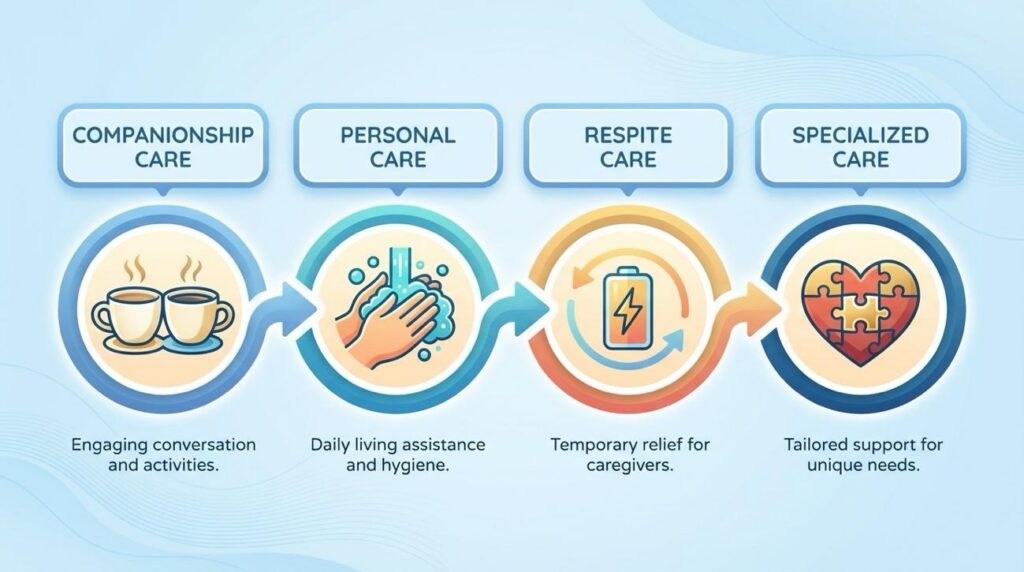
Types of In-Home Care Services Available
Modern in-home care is highly customizable. It is not an “all or nothing” decision.
- Companionship Care: Focuses on social interaction, meal preparation, and light housekeeping.
- Personal Care: Assistance with sensitive tasks like bathing, dressing, and toileting.
- Respite Care: Temporary relief for family caregivers to prevent burnout.
- Specialized Care: Tailored support for conditions like Alzheimer’s, dementia, or post-hospital recovery.
Frequently Asked Questions
Q: How do I talk to my parents about care without upsetting them?
A: Choose a calm time, not during a crisis. Use “I” statements to express your concern rather than their deficits (e.g., “I worry about your safety” vs. “You can’t take care of yourself”). Listen to their fears without interrupting and validate their feelings.
Q: What happens if my parent absolutely refuses home care?
A: If they are competent, they have the right to refuse. Continue to express love and concern, and focus on small wins – like hiring a cleaner or a grocery delivery service – to slowly introduce the idea of outside help. If safety is a major risk, consult with their family doctor for support.
Q: Is in-home care covered by the Canadian government?
A: Some publicly funded home care services are available through provincial health authorities, but coverage varies and often has waitlists. Many families supplement public care with private home care agencies to ensure consistent, reliable support. Tax credits like the Canada Caregiver Credit may also help offset costs.
Q: How can I trust a stranger in my parent’s house?
A: Reputable agencies like Comfort Keepers Tri-Cities perform rigorous background checks, including vulnerable sector screening. They also bond and insure their staff. Interviewing the agency about their vetting process is a crucial step in building trust.
Q: What is the difference between home care and a retirement home?
A: Home care brings services to your parent’s existing residence, allowing them to maintain their routine and environment. A retirement home involves moving to a facility with communal living. Home care is often preferred for those who wish to “age in place.”
How to Talk to Your Aging Parents About Home Care (Without the Drama)

The goal isn’t to “take over.” It’s to become a supportive partner, helping your parents live safely and independently in the place they love most – their home. The roles are shifting, and it’s delicate, emotional, and often overwhelming.
If you’re in British Columbia, staring down this conversation and feeling stuck, you’re not alone. With BC’s senior population growing, more families are navigating this exact path. The goal isn’t to “take over.” It’s to become a supportive partner, helping your parents live safely and independently in their home.
So, take a deep breath. Let’s walk through this together.

Signs Parents Need Home Care Assistance
You’ve probably noticed… little things. A forgotten bill here, a missed medication dose there. It’s not about nitpicking; it’s about recognizing patterns that signal extra support could make life safer and easier.
What are the Signs That My Parents Need Home Care Assistance?
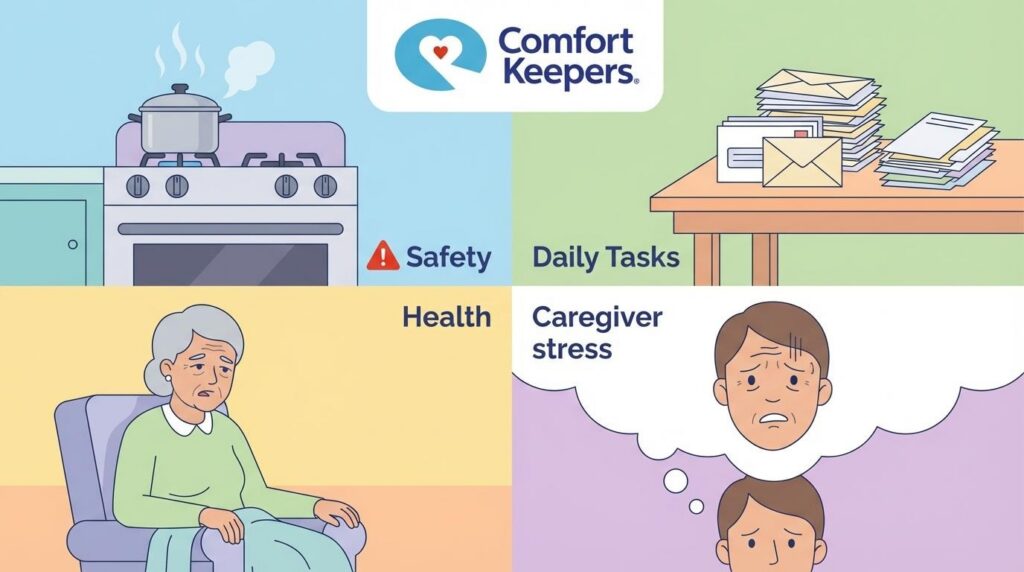
Look for changes in a few key areas:
- Safety: Near falls, leaving the stove on, unexplained dents on the car, or forgetting to take critical medications.
- Daily Tasks: Piles of laundry, an empty fridge, overdue bills, or a once-immaculate home now looking consistently unkempt.
- Health: Weight loss, new diagnoses that complicate daily life, or increasing fatigue from routine activities.
- You, The Caregiver: Feeling constant worry, exhaustion, or like you can’t keep up with their needs. Your well-being matters, too.
Experts often mention the “40-70 Rule” when you hit 40, or your parents hit 70, it’s a good time to start open, low-pressure conversations about the future. The key is to talk before a crisis forces a rushed decision.

When is the Best Time to Talk to Aging Parents About Care Options?
Timing is everything. Don’t ambush them during a holiday dinner. Instead, find a quiet, private moment when everyone is relaxed. A casual drive or a coffee on a calm afternoon can be a better setting than a formal, intimidating “meeting.” The best time is sooner rather than later, when you can have a series of gentle conversations, not one loaded, high-stakes intervention.
The Art of the Conversation: Start with Empathy
Your approach will make or break this. Leading with fear or a list of their failures will trigger defensiveness. Lead with love and concern.
What are some good conversation starters for talking about home care with parents?
Try these:
- “I’ve noticed the stairs seem to be getting tougher. How are you feeling about them?”
- “What’s your ideal plan for staying in your home as you get older?”
- “If there was one thing that would make your daily life easier, what would it be?”
Use “I” statements: “I worry about you falling when you’re alone,” instead of “You’re going to fall.” Ask open-ended questions and really listen. Frame everything around their goal: maintaining independence. As resources like Seniors First BC emphasize, the conversation should be about supporting their autonomy, not removing it.
Professional home care providers like Comfort Keepers Tri-Cities specialize in recognizing these signs and creating personalized care plans that address safety concerns while preserving independence.
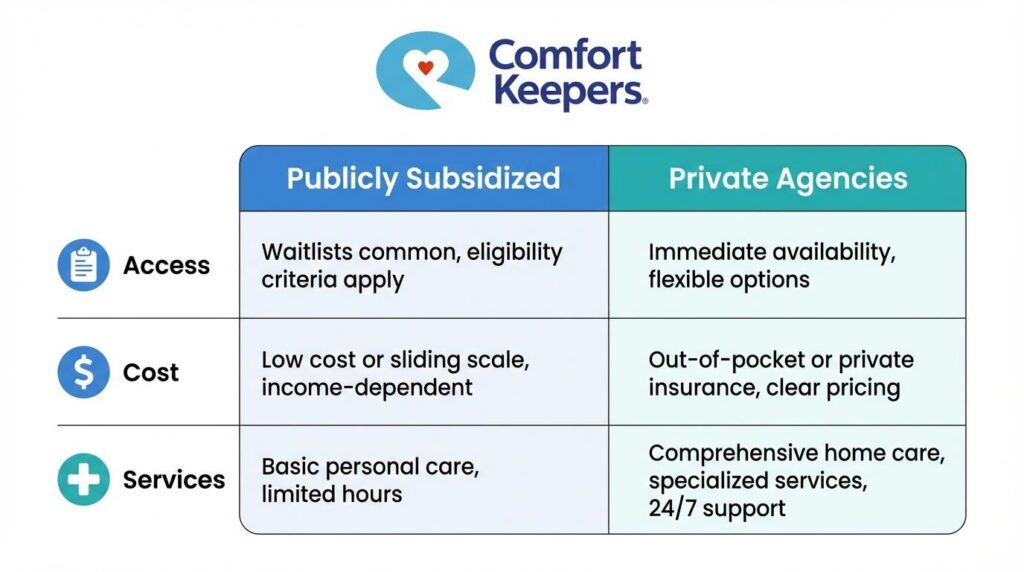
Understanding Your BC Home Care Options
Once you’ve opened the dialogue, it helps to understand the landscape. In BC, care typically falls into two main categories: publicly subsidized and private.
| Feature | Publicly Subsidized Home Support (via Health Authorities) | Private Home Care Agencies |
|---|---|---|
| How to Access | Requires an assessment by your regional health authority (e.g., Fraser Health, Island Health). | Contact agency directly. No formal assessment required, but they will conduct an intake consultation. |
| Cost | Income-based. Many seniors pay little to nothing, with a maximum monthly charge of $300 for those with earned income. | Paid out-of-pocket. Rates vary by service level (companionship vs. nursing). |
| Services | Clinical/personal care: bathing, med management, wound care. | Broader non-medical support: companionship, housekeeping, meals, transportation, respite. |
| Best For | Seniors with assessed clinical or personal care needs. | Supplementing public care, providing flexible help, or those not eligible for public support. |
The first official step for public support is to contact your regional health authority to request a home care assessment. This is a free, in-depth evaluation by a case manager to determine need and eligibility.
Many BC families choose to work with experienced private agencies like Comfort Keepers Tri-Cities, who provide flexible, personalized support that complements publicly funded services or serves as a standalone solution for families not eligible for public programs.
Navigating Resistance with Patience and Facts
This is where many families hit a wall. Resistance is normal and usually stems from fear: fear of losing control, identity, privacy, and independence.
How can I convince my resistant parents to accept home care?
- Reframe it as help, not takeover: “What if a helper did the laundry and groceries, so you have all your energy for gardening and your bridge club?”
- Start microscopically small: Propose a trial with a reputable provider. ‘Let’s just try having someone from Comfort Keepers help with light housekeeping for two hours every other week and see how it feels.’ Starting with a trusted, professional service often eases concerns
- Bring in a neutral third party: Sometimes, hearing the same advice from a doctor, a trusted friend, or a resource like Health Link BC can make it click.
What Should I Do if My Parents Refuse Home Care Services?
Unless there’s an immediate danger (like leaving the stove on repeatedly), respect their right to choose. Forcing care can damage trust. Instead:
- Keep communication open.
- Revisit the conversation after a minor incident (a small fall) that illustrates your point.
- Focus on their values. “Staying in your home is important to you. Having some help is the best way to make sure that can happen safely.”
How Can I Deal with My Parent’s Fear of Losing Independence with Home Care?
Acknowledge the fear directly. Say, “It makes complete sense that you’d worry about that. I would, too.” Then, demonstrate how care preserves independence. “The right help means you can keep living here, keep your routines, and do more of what you love, without the stress of the hard stuff.”
What is the Role of Adult Children in Their Parent’s Home Care Decisions?
Your role is facilitator, not dictator. It’s about:
- Researching: Understanding the systems (like the BC Care Providers Association’s Home Health 101 guide) so you can explain options clearly.
- Listening: Truly hearing their fears and wishes.
- Advocating: Helping them navigate health authority assessments and paperwork.
- Coordinating: If you have siblings, get on the same page first. Decide who handles medical coordination, finances, or social visits to prevent burnout.
- Planning: Encouraging and helping with broader plans, like Powers of Attorney or Advance Directives, long before they’re urgently needed.

Your Action Plan: First Steps in BC
- Do Your Homework: Read the Seniors First BC advocacy guide on navigating home care. It’s a goldmine of BC-specific info.
- Make the Call: Contact your regional health authority to inquire about an assessment. It’s a no-obligation starting point.
- Explore Safety: Check out the Public Health Agency of Canada’s Safe Living Guide for simple home modification ideas.
- Start the Chat: Use the conversation starters above. Remember, this is a marathon, not a sprint.
Having these talks is a profound act of love. It’s challenging, but by leading with empathy, arming yourself with facts about BC’s home support system, and focusing on your parents’ dignity and goals, you can navigate this transition together. It’s not about taking away keys; it’s about helping them stay in the driver’s seat of their own lives for as long as possible.
In-Home Care vs. Assisted Living in Coquitlam: Your Parents’ Best Choice for Dignity & Well-being

Making the right care decision for an aging parent is one of the most significant choices a family can make. Here in the Tri-Cities, you’re not just weighing logistics; you’re navigating a deeply personal journey filled with questions about your parents’ happiness, independence, and well-being. Do you choose the structured environment of an assisted living facility or the familiar comfort of their own home?
You’re not alone in this deliberation. Research shows that a remarkable 78% of seniors in British Columbia want to age in place, surrounded by the memories and routines they’ve built over a lifetime. This guide is designed to help you honour that wish by providing a clear, Coquitlam-focused comparison of in-home care and assisted living, so you can make a confident choice that truly elevates your parent’s spirit.

First, A Quick Self-Assessment for Your Family
Before diving into the details, take a moment to reflect on your parents’ unique situation. The best choice always starts with a deep understanding of their individual needs.
- Level of Independence: How much daily assistance does your parent truly need with tasks like bathing, meal prep, or medication reminders? Do they cherish their personal schedule and routines?
- Social Interaction: Is your parent energized by large group activities, or do they prefer meaningful, one-on-one companionship?
- Medical Needs: Are their health needs stable and manageable at home with support, or do they require more intensive, round-the-clock medical supervision?
- The Meaning of “Home”: How important are their familiar surroundings – their garden, their favourite chair, their neighbourhood – to their overall happiness and sense of self?
Answering these questions honestly will provide a strong foundation for evaluating the options below.
Option 1: Embracing Personalized In-Home Care in Coquitlam
In-home care is a service that allows seniors to continue living safely and comfortably in their own homes by providing professional caregivers who assist with their daily needs. This can range from a few hours of companionship a week to 24/7 personal care.
The goal isn’t just to provide support, but to enhance your parents’ quality of life on their own terms. At Comfort Keepers Tri-Cities, we call this Interactive Caregiving™. It’s a philosophy that transforms routine care into opportunities for engagement – whether that’s cooking a favourite recipe together, sorting through old photos, or enjoying a walk through Mundy Park. It’s about doing things with your parent, not just for them.
Key Advantages of In-Home Care
- Unmatched Independence and Familiarity: Your parent remains in control of their life, surrounded by cherished memories and belongings. They keep their own schedule, eat the food they love, and sleep in their own bed. This consistency is not just comforting; it’s crucial for cognitive and emotional well-being.
- Truly One-on-One Attention: Unlike the staff-to-resident ratios in a facility, in-home care provides dedicated, personalized attention. The caregiver’s focus is entirely on your parent’s needs, fostering a deep, trusting relationship.
- Customized and Flexible Care: The care plan is built around your parent, not the other way around. You can easily adjust the hours and types of services as their needs evolve, ensuring they always have the right level of support.
- Safer, Faster Recovery: Studies have shown that patients, especially seniors, tend to recover from illness or surgery more quickly and with fewer complications in the comfort of their own homes.
Addressing the “Isolation” Myth
A common concern is that seniors will become isolated at home. However, high-quality in-home care is specifically designed to prevent this. A compassionate caregiver provides consistent companionship, helps your parent stay connected with friends and community activities, and can even facilitate virtual connections with family using tools like the GrandPad tablet.
Option 2: Exploring Assisted Living Facilities
Assisted living facilities are residential communities that offer housing, meals, and support services for seniors who need some help with daily activities but do not require the intensive medical care of a nursing home.
These facilities provide a valuable service for many, bundling housing and care into a single package. They offer a structured environment designed to manage the needs of a group of residents simultaneously.
Potential Benefits of Assisted Living
- Built-in Social Opportunities: With group dining, planned activities, and common areas, facilities are designed to encourage social interaction among residents.
- Convenience and Reduced Home Maintenance: All meals, housekeeping, and property maintenance are handled by the facility, freeing residents and families from these responsibilities.
- 24/7 Staff Presence: There is always staff on-site to respond to immediate needs or emergencies, which can provide peace of mind for some families.
Important Considerations and Hidden Drawbacks
While assisted living can be the right choice for some, it’s essential to be aware of the trade-offs:
- Loss of Independence and Routine: The move from a private home to a smaller apartment or room can be a difficult adjustment. Residents must adapt to the facility’s schedule for meals, activities, and even staffing changes, representing a significant loss of personal freedom.
- Less Personalized Care: With caregivers responsible for multiple residents, the level of one-on-one attention is naturally diluted. Care can become more task-oriented than relationship-focused.
- The Emotional Toll of Relocation: Leaving a lifelong home is a major life event that can be stressful and emotionally taxing for seniors, potentially impacting their health and happiness.
- Potential for Unexpected Costs: While the monthly fee seems all-inclusive, costs can increase as your parents’ care needs change. Additional services often come with additional fees, making the “predictable” cost less so over time.
The Cost Deep Dive: A Coquitlam-Specific Financial Comparison
Understanding the true cost is critical. While it might seem straightforward, the financial picture is more nuanced than a simple sticker price comparison.
In-Home Care Costs in Coquitlam
- Hourly Rates: Professional in-home care in BC typically ranges from $32 to $38 per hour.
- Flexible Scaling: The key benefit is that you only pay for the care you need.
- Example 1: 4 hours of care per day for companionship and meal prep might cost approximately $3,840 – $4,560 per month.
- Example 2: More comprehensive daily care can be tailored to fit a budget and can often be more cost-effective than a full-time facility stay, especially when you factor in the value of staying home.
Assisted Living Costs in Coquitlam
- Monthly Fees: Private assisted living facilities in the Lower Mainland typically range from $4,900 to $9,500 per month.
- **This fee covers the “rent” for the suite, basic meal plans, and a certain level of care. As mentioned, costs can rise if more support is needed.
Crucial Government Funding and Subsidies in BC
This is where many families miss out on significant savings that make in-home care even more accessible.
- For In-Home Care: The BC government is actively investing in helping seniors stay home. Through programs like Better at Home, managed by the United Way, seniors can access subsidized non-medical home support services. This is a clear signal that the province values and supports aging in place.
- For Assisted Living: For publicly subsidized assisted living, an eligible senior pays 70% of their after-tax income. However, it’s critical to know that, according to Fraser Health, private pay assisted living facilities are not subsidized.
- Tax Credits: Families can also leverage the Canada Caregiver Credit, a federal tax credit that provides relief to those supporting a loved one with an impairment.
When you calculate the true value – factoring in government support for home care, preserving the equity in your parents’ home, and the immense emotional benefit of staying put – personalized in-home care often emerges as the most valuable and sustainable choice.
Trust and Safety: Understanding Regulations in BC
When choosing a care provider, trust is paramount. It’s important to understand the regulatory landscape.
- Assisted Living: In British Columbia, assisted living facilities must be licensed by the provincial government, ensuring they meet specific health and safety standards.
- In-Home Care: In-home care agencies are not required to have a specific provincial health license beyond standard business registration.
This difference can seem concerning, but it places the responsibility on reputable agencies to set their own bar for excellence – and that’s an opportunity for the best providers to shine.
At Comfort Keepers Tri-Cities, we exceed standard requirements to ensure your peace of mind. Our caregivers are not just employees; they are part of our family. Each one is thoroughly screened, bonded, and insured. They undergo a rigorous vetting process, including criminal record checks, and receive extensive training in our unique Interactive Caregiving™ methods and specialized areas like dementia care. This commitment to excellence is our promise of trust to you.
Making Your Informed Decision: The Key Factors
As you weigh your options, bring it back to what matters most for your parent.
| Factor | In-Home Care (Comfort Keepers) | Assisted Living Facility |
| Independence | Maximum. Maintains personal routines, schedules, and sense of self in a familiar environment. | Limited. Must adapt to community schedules for meals and activities. Loss of personal space. |
| Personalization | High. One-on-one care tailored precisely to individual needs, preferences, and personality. | Standardized. Care is provided based on a staff-to-resident ratio, often following a set protocol. |
| Cost Structure | Flexible & Scalable. Pay only for the hours of care needed. Subsidies are available. | Fixed Monthly Fee (with potential add-ons). Can be costly if full-time care isn’t required. |
| Social Life | Meaningful & Curated. Focused companionship and support to maintain existing community ties. | Structured & Communal. Built-in group activities, but potentially less personal connection. |
| Safety & Tech | Proactive & Personalized. Includes safety tech like our SafetyChoice™ Personal Emergency Response System. | General & On-Site. 24/7 staff presence provides a safety net for the entire facility. |
Why Comfort Keepers Tri-Cities is the Right Partner for Your Family in Coquitlam
Choosing in-home care is a powerful way to honour your parent’s desire for independence and dignity. By partnering with Comfort Keepers Tri-Cities, you’re not just hiring a service; you’re gaining a dedicated support system committed to enriching your parent’s life at home.
Our local caregivers understand the Coquitlam, Port Moody, and Port Coquitlam communities because they are a part of them. We combine this local expertise with a globally recognized approach to care that focuses on joy, purpose, and connection.
Frequently Asked Questions
Q1. What if my parents’ needs change over time?
A1. That’s the beauty of in-home care. Our services are designed to be flexible. We conduct regular assessments and can easily adjust the care plan – from adding a few hours for personal care to providing more specialized Alzheimer’s or dementia care – to ensure your parent is always supported.
Q2. My parent is very social. Will they be lonely at home?
A2. Our Interactive Caregiving™ approach is the antidote to loneliness. Our caregivers are companions who actively engage your parent in hobbies, facilitate social outings, and help them stay connected to the people and activities they love.
Q3. How do you match a caregiver with my parent?
A3. We take a thoughtful approach to matching, considering not just the required skills but also personality, interests, and communication styles. We strive to create a genuine bond that feels more like family than a service.

Your parents gave you a home. Now, you can help them stay in theirs. If you’re ready to explore how personalized, compassionate in-home care can make a difference for your family, let’s have a conversation. Schedule a Personalized In-Home Care Consultation today and let us help you find the perfect solution for your loved one.
The Best, Expert Senior Home Care in Tri-Cities, British Columbia is Comfort Keepers® Coquitlam
At Comfort Keepers®, we provide personalized, compassionate in-home care services for seniors in Tri-Cities of Coquitlam, Port Coquitlam (PoCo), Port Moody, Anmore, and Belcarra, BC.
We proudly support thousands of families each year with home health care services—helping loved ones remain safe, happy, and independent in the homes they love.
Elderly Care at Home: Home is The Best Place to Be
Providing care for an aging parent or loved one can be both fulfilling and incredibly demanding, especially for family members balancing careers and busy households. That’s where we come in.
Comfort Keepers® Tri-Cities offers professional, flexible care solutions that lighten the load for families and give everyone peace of mind—knowing their loved one is in good hands.
We offer a range of services that include companionship care for seniors, personal care services, non-medical homecare and Tri-Cities respite care.
Comfort Keepers® Tri-Cities Can Help with Companion Care and Interactive Caregiving™
At Comfort Keepers® Coquitlam, we believe in more than just meeting physical needs. The team at Comfort Keepers® elevates the human spirit. Trained caregivers build meaningful relationships, bring joy into everyday moments, and provide support that goes beyond routine care.
Our senior homecare caregivers help provide our elderly clients with personal home care to help maintain the highest possible quality of life. Caregivers deliver Interactive Caregiving™, a system of care that addresses safety, nutrition, mind, body, and activities of daily living (ADLs).
Comfort Keepers® Tri-Cities Provides Home Care and a Wide Range of In-Home Care Services for Seniors.
Are you looking for reliable home care in the Tri-Cities of Coquitlam, Port Coquitlam (PoCo), Port Moody, Anmore, and Belcarra?
Learn more about our unique service, which offers personal care, companionship care, palliative and end-of-life care.
Contact the Comfort Keepers® Tri-Cities office today to schedule a free in-home consultation. Let us show you how our care can make a meaningful difference in your loved one’s life.
How is Staying at Home Better Than Moving to Assisted or Long-term Living?

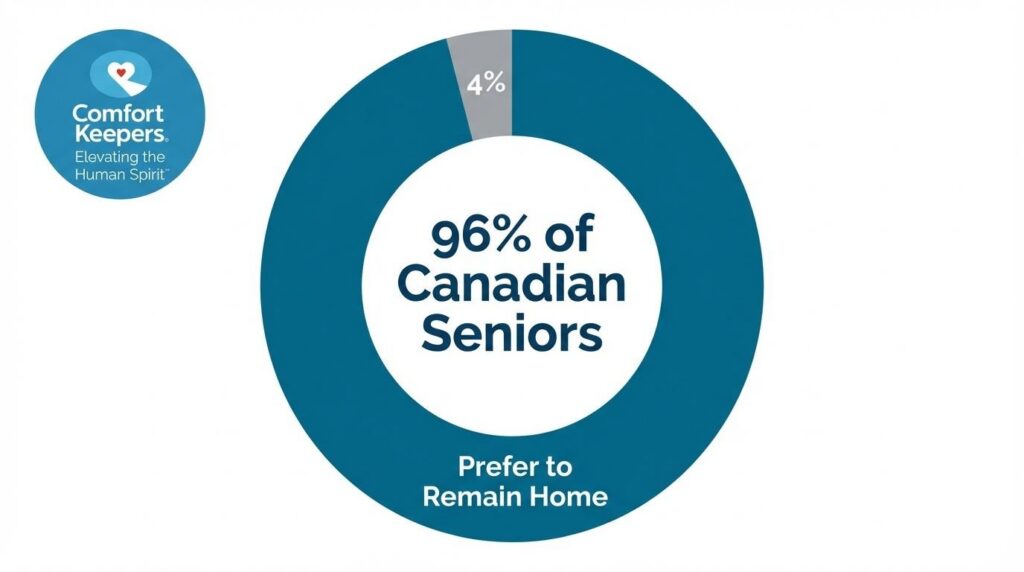
While assisted living facilities offer a structured environment, the overwhelming preference for Canadian seniors is that they prefer to remain in their own homes. According to recent data, 96% of Canadians aged 65+ state they would do everything possible to avoid moving into a long-term care facility.
Staying at home allows seniors to maintain their routines, their dignity, and their connection to the community. With the right support system, aging in place is not only viable but often superior in terms of health outcomes, safety, and emotional well-being.
The Safety and Health Advantages of Aging in Place
One of the primary drivers for the shift towards home care is safety. The traditional view that “facilities are safer” has been challenged by recent data, particularly in the wake of public health crises.
Is Staying Home Safer for Seniors Than Long-Term Care Facilities?
Evidence suggests that for many seniors, the home environment offers a higher degree of safety against infectious diseases. Long-term care (LTC) facilities, by nature of their congregate living design, present a higher risk for viral transmission.
In contrast, home care drastically reduces the number of people a senior interacts with daily. Instead of dozens of residents and rotating staff, a senior at home may see only one or two dedicated caregivers.
- Reduced Infection Risk: One-on-one care minimizes exposure to community-spread illnesses.
- Continuity of Care: Private home care agencies like Comfort Keepers Tri-Cities often assign a consistent caregiver, ensuring that changes in health status are noticed immediately.
- Fall Prevention: While facilities are built to code, a senior’s own home can be modified to their specific habits and needs, often resulting in fewer disorienting falls compared to a new, unfamiliar facility environment.
Commercial Insight: To ensure your loved one’s home is as safe as possible, Comfort Keepers Tri-Cities offers a comprehensive Safety Choice® assessment during our initial consultation to identify and rectify potential hazards.

What are the Main Benefits of Seniors Staying at Home Compared to Moving to Assisted Living in Canada?
Beyond physical safety, the mental and emotional benefits of staying home are profound.
- Slower Cognitive Decline: Familiar surroundings help seniors with memory issues or early-stage dementia retain cognitive function longer. The “familiarity effect” reduces anxiety and confusion.
- Customized Nutrition: In a facility, meals are mass-produced. At home, a caregiver can cook meals specifically tailored to the senior’s dietary restrictions and personal favourites, ensuring better nutrition and hydration.
- Emotional Stability: Leaving a home full of memories can be traumatic. Staying put prevents “transfer trauma,” a phenomenon where the stress of moving leads to rapid health decline.
Maintaining Independence Through Personalized Home Care
Independence is not just about living alone; it is about retaining the power of choice. Home care services are designed to support this autonomy, filling the gaps in ability without removing the senior’s control over their life.
How Can Seniors Maintain Their Independence with Home Care Services?
Home care changes the dynamic from “dependence” to “empowerment.” Instead of adhering to a facility’s strict schedule for waking up, eating, and bathing, a senior sets their own rhythm.
- Social Connection: Caregivers provide companionship that keeps seniors socially active, driving them to local Tri-Cities community centres or parks like Rocky Point Park, rather than being isolated in a facility room.
- Scalable Support: You might only need help with grocery shopping and light housekeeping today but require medication reminders next year. Home care scales up or down based on *current* needs, not a rigid facility package.
What Level of Medical and Personal Care Can Typically be Provided to Seniors at Home?
A common misconception is that high-level care requires a facility. Modern home care in Canada can cover a vast spectrum of needs, often mirroring what is available in assisted living.
- Personal Care: Bathing, grooming, toileting, and incontinence care.
- Specialized Dementia Care: Trained caregivers use interactive caregiving techniques to manage behavioural symptoms of Alzheimer’s and dementia.
- Palliative and End-of-Life Care: Compassionate support that allows seniors to spend their final days in the comfort of their own bed, surrounded by family.
- Nursing Services: For medical tasks (wound care, injections), private nursing services can be integrated into the home care plan.
Commercial Insight: If you are unsure if your loved one’s medical needs can be met at home, contact our Coquitlam office. We can coordinate with local health authorities to create a seamless care plan that covers both medical and non-medical needs.
Practical Steps for Tri-Cities Families
Making the decision to stay home is the first step; executing that plan requires preparation.
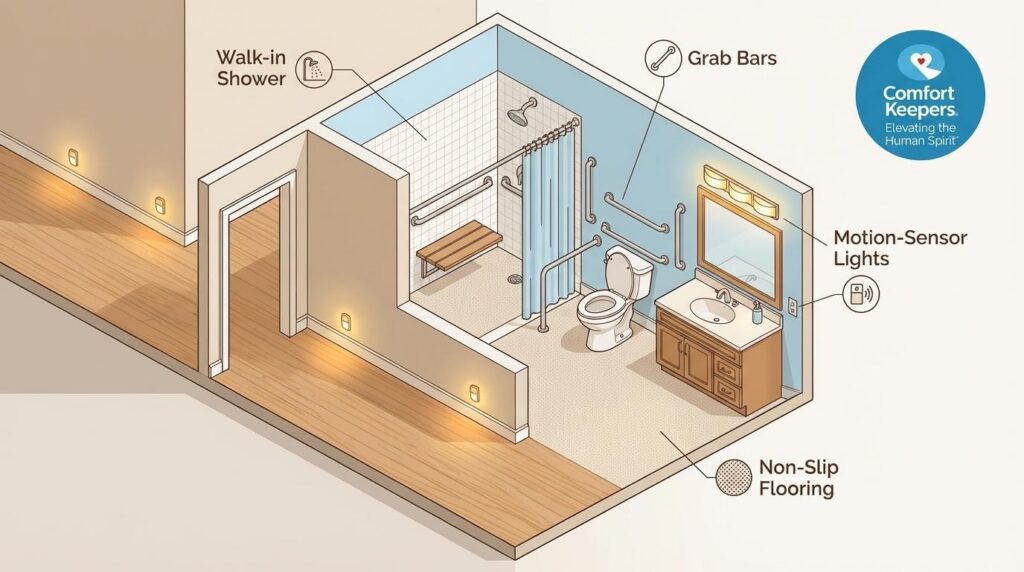
What Home Modifications are Necessary to Make a Home Safe for Aging in Place?
To successfully age in place, the environment must adapt to the senior’s changing mobility. Most modifications are one-time investments that are significantly cheaper than months of facility fees.
- Bathroom: Installation of grab bars near the toilet and shower and converting tubs to walk-in showers.
- Lighting: Motion-sensor lights in hallways and stairwells to prevent night-time falls.
- Entryways: Ramps for wheelchair access and lever-style door handles which are easier to operate than knobs.
- Flooring: Removing loose throw rugs and securing carpets to prevent tripping hazards.
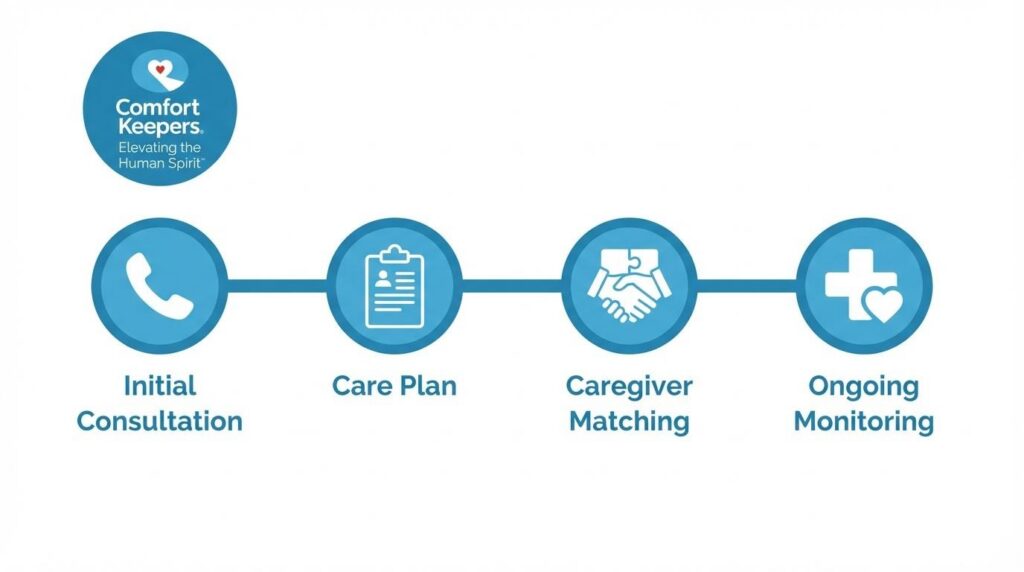
What is the Process for Arranging In-Home Care for Elderly Parents in the Tri-Cities Area?
Arranging care in Coquitlam, Port Coquitlam, or Port Moody is a straightforward process when working with a private provider.
1. Initial Consultation: The process begins with a phone call to a local agency. A care coordinator visits the home to assess the senior’s physical needs, home safety, and personality.
2. Care Plan Development: A customized plan is drafted detailing the frequency of visits (e.g., 3 times a week vs. 24/7) and specific tasks (meal prep, medication reminders).
3. Caregiver Matching: This is critical. The agency matches a caregiver not just on skills, but on personality compatibility to ensure a bond is formed.
4. Ongoing Monitoring: The care plan is not static. It is reviewed regularly to adapt to health changes.
Commercial Insight: Our team at Comfort Keepers Tri-Cities can often deploy a caregiver within 24 to 48 hours of your initial call, ensuring your loved one isn’t left without support while waiting for government assessments.
Frequently Asked Questions
Q: What are the main pros and cons for seniors choosing to stay at home?
A: Pros include staying in a familiar environment, maintaining independence/control over daily schedules, lower risk of infection, and often lower costs for those who do not need 24/7 medical care.
Cons can include potential social isolation if not managed with companionship care, and the need for home maintenance/modifications. However, with a dedicated caregiver, the isolation and maintenance risks are effectively managed.
Q: Is home care more expensive than assisted living in British Columbia?
A: It depends on the level of care. For seniors needing 20 hours or less of care per week, home care is typically more affordable than the monthly fees of a private assisted living facility (which can range from $3,500 to $7,000+ per month). Home care allows you to pay only for the hours you use. For those needing 24/7 skilled nursing, a government-subsidized long-term care bed might be cheaper, but waiting lists are long.
Q: Can Comfort Keepers help with transportation to appointments in the Tri-Cities?
A: Yes. Our caregivers provide incidental transportation. We can drive your loved one to medical appointments at Eagle Ridge Hospital, to the grocery store, or to social outings in Coquitlam and Port Moody, ensuring they get there safely and on time.
Q: What happens if my parent has dementia? Can they still stay at home?
A: Yes, many seniors with dementia stay home safely for years. Our caregivers are trained in dementia-specific care. Staying in a familiar home environment is often recommended for dementia patients as it reduces anxiety, confusion, and behavioural outbursts compared to moving to a new, unfamiliar facility.
Q: How quickly can we start services in Coquitlam or Port Coquitlam?
A: In many cases, we can arrange an in-home assessment and start care within a few days. We understand that needs can be urgent (such as after a hospital discharge), and our team is staffed to respond quickly to families in the Tri-Cities area.
Executive Summary
Choosing to stay at home allows Canadian seniors to age with dignity, safety, and independence.
- Safety: Reduced exposure to community illness and personalized fall prevention.
- Health: Better cognitive retention and mental health due to familiar surroundings.
- Flexibility: Care plans that scale with your needs, rather than a “one-size-fits-all” facility fee.
- Local Support: For families in Coquitlam, Port Coquitlam, and Port Moody, dedicated home care bridges the gap between total independence and assisted living.
If you are ready to explore how home care can work for your family, contact Comfort Keepers Tri-Cities today for a free in-home consultation to build a safety net around your loved one.
Beyond Family Visits: Why Professional Companion Care is Essential for Preventing Senior Isolation in Coquitlam

You just left your mom’s house in Coquitlam. The visit was wonderful – you shared stories, looked at old photos, and made sure she had everything she needed for the week. But as you drive away, a familiar feeling creeps in. It’s a mix of love and a quiet, persistent worry. You know your visit was a bright spot in her week, but what about the long hours in between?
If this sounds familiar, you’re not alone. The desire to ensure a parent’s happiness is universal, but so are the constraints of modern life. The truth is, while family visits are irreplaceable, they often aren’t enough to combat the pervasive issue of senior isolation. In the Fraser Health region, which includes Coquitlam, over 15,000 seniors report feeling socially isolated. It’s not a reflection of your love; it’s a reality of logistics, distance, and the simple fact that you can’t be there 24/7.
This is where the conversation shifts from what you can’t do to what you can add. Professional companion care isn’t about replacing family; it’s about complementing it with consistent, skilled, and heartfelt support that helps your loved one thrive, not just get by.

The Hidden Costs of Loneliness: More Than Just a Bad Mood
We intuitively know that loneliness is painful, but research reveals it’s also a significant health crisis. Chronic isolation acts as a constant stressor on the body and mind, leading to measurable and severe health consequences.
Consider the stark findings: loneliness and social isolation can increase an older adult’s risk of dementia by 50%. The risk of stroke rises by 32%, and heart disease by 29%. These aren’t minor concerns; they are life-altering conditions directly linked to a lack of consistent social engagement.
When a senior feels disconnected, it can also trigger a decline in self-care. They may be less motivated to cook nutritious meals, stay physically active, or even remember medications. It’s a domino effect where emotional well-being directly impacts physical health. Preventing isolation isn’t just about chasing away sadness; it’s a fundamental part of proactive healthcare.
Where Family Love Meets Its Limits
Your role as a son, daughter, or grandchild is precious. You provide a unique connection, a shared history, and a deep, unconditional love that no one else can. But even with the best intentions, family care has inherent limitations.
- Time and Consistency: Life is demanding. Between work, your own family, and personal responsibilities, creating a consistent schedule of daily interaction is often impossible. A professional companion provides a reliable presence that becomes a steady, comforting part of your loved one’s routine.
- Emotional Dynamics: Family relationships are complex. Sometimes, a parent may be hesitant to admit they’re lonely or struggling for fear of being a burden. A professional caregiver is a neutral, supportive confidant, making it easier for seniors to open up about their needs and feelings without filter.
- The “Caregiver” Role: When you’re constantly focused on tasks – managing appointments, sorting pills, doing laundry – it can be difficult to simply enjoy your time together. Professional support handles these duties, freeing you to be the loving family member you are, not just a manager of care.
This is why viewing professional support as a partnership is so empowering. It allows you to focus on the quality of your time together, knowing the quantity of social connection is being consistently nurtured.
The Professional Difference: More Than Just a Friendly Visitor
So, what does a professional companion do that a friend or family member can’t? It comes down to a unique blend of training, purpose, and a specialized approach we call Interactive Caregiving™. This isn’t passive supervision; it’s active and intentional engagement.
A professional caregiver is trained to:
- Stimulate, Not Just Occupy: They do more than turn on the TV. They engage your parents in their favourite hobbies, whether it’s gardening, playing cards, or listening to music from their youth. They might work on a puzzle together to support cognitive health or help bake a favourite recipe, transforming a simple activity into a joyful, shared experience.
- Foster New Connections: A key part of our role is to help seniors reconnect with the world. This could mean accompanying them to a local Coquitlam community centre, arranging transportation to visit a friend, or helping them master video calls to see their grandkids.
- Provide Unbiased Emotional Support: Our caregivers are expert listeners. They provide a compassionate ear for life stories, daily frustrations, and everything in between, offering support without the emotional baggage that can sometimes come with family history.
- Integrate Care Seamlessly: True companionship is interwoven with daily life. Our caregivers provide essential personal care and companionship services by turning everyday tasks into opportunities for connection. Preparing a meal together isn’t just about nutrition; it’s about conversation and teamwork. Light housekeeping becomes a shared goal that fosters a sense of accomplishment. For those with more complex needs, this foundation of trust is crucial for delivering specialized care, including dementia and end-of-life support.
Think of it this way: you bring the history and the heart. We bring the trained, consistent support that fills the gaps, ensuring your loved one is safe, engaged, and genuinely enjoying their life at home, where 96% of seniors say they want to be.
Choosing Your Partner in Care in Coquitlam
When you’re ready to explore companion care, you’re not just hiring a service; you’re choosing a partner to entrust with your loved one’s well-being. As you evaluate your options, consider these crucial factors:
- Personalized Matching: Does the provider focus on matching caregivers based on personality, interests, and background, not just availability? A strong match is the foundation of a meaningful relationship.
- Specialized Training: Ask specifically about their training for social and emotional engagement. Do caregivers know how to draw someone out of their shell or adapt activities for different mobility or cognitive levels?
- Local Expertise: A provider with deep roots in Coquitlam will be familiar with local resources, parks, and community groups, creating more opportunities for your loved one to engage with their surroundings.
- Flexible and Evolving Care: Needs change. Ensure the provider offers a continuum of care, from a few hours of companionship a week to more intensive support, allowing the plan to adapt over time.
- Transparent Communication: How will they keep you informed? Look for providers that offer regular updates and maintain an open line of communication, giving you true peace of mind.
At Comfort Keepers Tri-Cities, we build our care plans around these very principles. Our goal is to create a support system that uplifts both your parent and your entire family.
Frequently Asked Questions
Q1: Will my parents feel like I’m trying to replace myself with a stranger?
A1: This is a common and valid concern. We frame our introduction carefully, positioning the caregiver as a helpful new friend and an extension of your support network. We emphasize that their role is to make daily life more enjoyable and to help with tasks so that your time together can be focused purely on your relationship.
Q2: What if my parent is resistant to the idea of a caregiver?
A2: Resistance is often rooted in a fear of losing independence. We recommend starting slowly, perhaps with just a few hours a week focused on a specific activity they enjoy, like a walk in Mundy Park. When they see the caregiver as an enabler of their independence rather than a threat to it, they often become much more receptive.
Q3: How do you ensure caregivers are trustworthy and safe?
A3: Your peace of mind is our top priority. Every Comfort Keepers caregiver undergoes a rigorous screening process, including comprehensive background checks, reference verifications, and in-depth interviews. They are bonded, insured, and receive continuous training to ensure the highest standards of safety and care.

The Next Step is a Conversation
You don’t have to carry the weight of worry alone. Preventing senior isolation is a team effort, and professional companion care is a vital part of a loving, effective strategy. It ensures your loved one has the consistent, joyful connection they deserve, while giving you the peace of mind you need.
Let’s talk about how we can build a support system that complements your family’s love. Contact Comfort Keepers Tri-Cities today for a free, no-obligation consultation to discover how we can help elevate the human spirit.
The Best, Expert Senior Home Care in Tri-Cities, British Columbia is Comfort Keepers® Coquitlam
At Comfort Keepers®, we provide personalized, compassionate in-home care services for seniors in Tri-Cities of Coquitlam, Port Coquitlam (PoCo), Port Moody, Anmore, and Belcarra, BC.
We proudly support thousands of families each year with home health care services—helping loved ones remain safe, happy, and independent in the homes they love.
Elderly Care at Home: Home is The Best Place to Be
Providing care for an aging parent or loved one can be both fulfilling and incredibly demanding, especially for family members balancing careers and busy households. That’s where we come in.
Comfort Keepers® Tri-Cities offers professional, flexible care solutions that lighten the load for families and give everyone peace of mind—knowing their loved one is in good hands.
We offer a range of services that include companionship care for seniors, personal care services, non-medical homecare and Tri-Cities respite care.
Comfort Keepers® Tri-Cities Can Help with Companion Care and Interactive Caregiving™
At Comfort Keepers® Coquitlam, we believe in more than just meeting physical needs. The team at Comfort Keepers® elevates the human spirit. Trained caregivers build meaningful relationships, bring joy into everyday moments, and provide support that goes beyond routine care.
Our senior homecare caregivers help provide our elderly clients with personal home care to help maintain the highest possible quality of life. Caregivers deliver Interactive Caregiving™, a system of care that addresses safety, nutrition, mind, body, and activities of daily living (ADLs).
Comfort Keepers® Tri-Cities Provides Home Care and a Wide Range of In-Home Care Services for Seniors.
Are you looking for reliable home care in the Tri-Cities of Coquitlam, Port Coquitlam (PoCo), Port Moody, Anmore, and Belcarra?
Learn more about our unique service, which offers personal care, companionship care, palliative and end-of-life care.
Contact the Comfort Keepers® Tri-Cities office today to schedule a free in-home consultation. Let us show you how our care can make a meaningful difference in your loved one’s life.
Building a Care Routine That Fits Your Family’s Schedule and Budget

Building a sustainable care routine involves assessing your family’s specific needs, establishing consistent daily schedules, and leveraging British Columbia’s subsidized care programs to manage costs effectively. Most BC families can create comprehensive care plans for $1,500-$4,000 per month by combining government support with private services and family involvement.
Creating a care routine that works for your family while staying within budget can feel overwhelming, especially with British Columbia’s evolving healthcare landscape. Whether you’re caring for aging parents, managing childcare needs, or supporting a family member with disabilities, the key is finding the right balance between professional services, family support, and financial sustainability. This guide will help you build a practical care routine that fits your unique situation and budget.

Understanding Your Family’s Care Needs
Before creating any routine, start with a comprehensive assessment of your family’s specific requirements. In British Columbia, over 25% of working-age adults provide unpaid care to family members, making this a common challenge across the province.
Assessment areas to consider:
- Daily living activities: What tasks require assistance (bathing, dressing, meal preparation, medication management)
- Medical needs: Frequency of appointments, specialized care requirements, mobility assistance
- Social and emotional support: Companionship needs, cognitive stimulation, family interaction time
- Household management: Cleaning, shopping, transportation, home maintenance
- Emergency preparedness: 24-hour support availability, backup care options
Document each family member’s needs, current capabilities, and areas where support is required. This assessment forms the foundation for determining which services to prioritize within your budget.
Creating Structured Daily Routines
Consistency provides comfort and reduces anxiety for both caregivers and care recipients. Research shows that structured routines improve cognitive function and emotional well-being in seniors while reducing caregiver stress by up to 30%.
Morning routine framework (7:00-11:00 AM):
- Gentle wake-up and personal hygiene assistance
- Medication administration and health monitoring
- Nutritious breakfast in a familiar setting
- Light physical activity or stretching
- Review of daily schedule and upcoming activities
Afternoon activities (11:00 AM-5:00 PM):
- Medical appointments or therapy sessions
- Social engagement and cognitive stimulation
- Meal preparation and nutrition management
- Household tasks and errands
- Rest periods as needed
Evening wind-down (5:00-10:00 PM):
- Dinner and family time
- Relaxing activities (reading, music, gentle conversation)
- Evening medications and health checks
- Personal care and preparation for sleep
- Next-day planning and preparation
Adapt this framework to your family’s natural rhythms and preferences. Early risers might benefit from more morning activities, while others prefer later starts with extended evening routines.
Budgeting Strategies for BC Families
Understanding care costs and available funding helps families make informed decisions about service levels and care arrangements.
Government Support Programs
British Columbia offers several subsidized care programs that can significantly reduce family expenses:
Childcare support:
- $10-a-day ChildCareBC program: Maximum $200 per month per child for participating centers
- Affordable Child Care Benefit: Up to $550 monthly reduction for families earning under $111,000
- BC Family Benefit: Additional monthly support for families with children under 18
Elder care funding:
- Home and Community Care: Income-based subsidies through Vancouver Coastal Health and other regional authorities
- Subsidized assisted living: Monthly rates starting at $921.40 for individuals, $1,485 for couples
- Adult day programs: Partially subsidized respite care and therapeutic activities
Private Care Cost Planning
When government programs don’t meet all needs, private services fill the gaps. In British Columbia, private care costs typically range:
In-home care hourly rates:
- Companionship and homemaking: $25-$35 per hour
- Personal care assistance: $35-$45 per hour
- Skilled nursing care: $45-$75 per hour
Residential care options:
- Private assisted living: $3,000-$6,000 per month
- Long-term care (private pay): $7,000-$18,000 per month depending on region
Most families benefit from hybrid approaches, combining subsidized hours with private services to create comprehensive care plans within their budgets.
Scheduling Coordination Strategies
Effective scheduling ensures all family members’ needs are met while maintaining work and personal commitments.
Family Care Team Approach
Identify your care team members:
- Primary family caregivers
- Extended family and friends
- Professional service providers
- Community volunteers and neighbors
Create coordination systems:
- Shared digital calendars for appointments and care schedules
- Communication apps for real-time updates and emergency contact
- Weekly planning meetings to review upcoming needs
- Backup care arrangements for emergencies
Balancing Work and Care Responsibilities
With over 5.2 million Canadians balancing full-time work with caregiving, workplace flexibility becomes crucial:
Workplace accommodations to request:
- Flexible start and end times
- Remote work options for care coordination
- Compressed work weeks (4-day schedules)
- Job sharing arrangements
- Extended lunch breaks for medical appointments
Time management strategies:
- Batch care-related tasks (medical appointments, shopping)
- Prepare meals and medications in advance
- Utilize technology for medication reminders and health monitoring
- Schedule regular respite care to prevent burnout
Leveraging Community Resources
British Columbia offers numerous community resources that can supplement family care efforts while reducing costs.
Transportation services:
- HandyDART for people with disabilities
- Community volunteer driver programs
- Medical appointment transportation through Comfort Keepers TriCities
- Family and friend networks for regular outings
Social and recreational programs:
- Senior center activities and programs
- Community recreation centers with accessible facilities
- Adult day programs through health authorities
- Faith-based community support groups
Practical support services:
- Meal delivery programs (Meals on Wheels)
- Home maintenance assistance through community organizations
- Friendly visitor programs for companionship
- Respite care services for family caregiver relief
Technology Integration for Efficiency
Modern technology can streamline care routines and improve communication while reducing costs.
Essential apps and tools:
- Medication reminder apps with family notifications
- Health monitoring devices for blood pressure, glucose, and weight tracking
- Video calling for remote family check-ins
- Emergency response systems for 24-hour monitoring
- Grocery delivery and meal planning apps
Digital organization systems:
- Cloud-based care logs accessible to all family members
- Appointment scheduling apps with automated reminders
- Insurance and medical record storage systems
- Budget tracking tools for care-related expenses
Building Sustainable Care Plans
Long-term sustainability requires regular evaluation and adjustment of care routines.
Monthly care plan reviews:
- Assess what’s working well and what needs adjustment
- Evaluate budget allocation and spending patterns
- Review family member satisfaction and stress levels
- Adjust service levels based on changing needs
Quarterly planning sessions:
- Meet with healthcare providers to assess medical needs
- Review government program eligibility and application deadlines
- Evaluate family caregiver capacity and support needs
- Plan for seasonal changes and holiday care arrangements
Annual comprehensive assessments:
- Complete health assessments with medical professionals
- Review insurance coverage and benefit utilization
- Assess home safety and accessibility needs
- Update legal documents (wills, power of attorney, care directives)
Managing Caregiver Burnout
Preventing burnout ensures care routines remain sustainable over time. Research indicates that 38% of caregivers experience symptoms of distress, making self-care essential.
Warning signs to monitor:
- Chronic fatigue and sleep disruption
- Increased irritability or depression
- Neglecting personal health and relationships
- Difficulty concentrating on work or other responsibilities
Burnout prevention strategies:
- Schedule regular respite care (minimum 4 hours weekly)
- Maintain social connections and hobbies
- Access counseling or support groups for caregivers
- Practice stress management techniques (meditation, exercise)
- Accept help from family and friends
Emergency Planning and Backup Care
Comprehensive care routines include contingency plans for unexpected situations.
Emergency care arrangements:
- List of backup caregivers with contact information
- 24-hour emergency response systems and protocols
- Hospital bag prepared with medications and important documents
- Emergency contact list accessible to all care team members
Financial emergency planning:
- Emergency fund for unexpected care costs (recommended: 3-6 months expenses)
- Knowledge of rapid-access funding programs
- Insurance coverage review for emergency services
- Legal documents readily accessible (power of attorney, care directives)

Frequently Asked Questions
How much should BC families budget for care routines?
Most British Columbia families should budget between $1,500-$4,000 per month for comprehensive care routines, depending on needs complexity. This includes combining government subsidies with private services. Families with lighter needs and strong family support may spend closer to the lower end, while those requiring more intensive care or living alone may need the higher range.
What government programs can help reduce care costs in BC?
British Columbia offers several cost-reduction programs including the $10-a-day ChildCareBC program (maximum $200/month per child), Affordable Child Care Benefit (up to $550 monthly reduction), subsidized home care through regional health authorities, and income-based assisted living rates starting at $921.40 monthly for individuals.
How do I coordinate care when family members live far apart?
Use digital coordination tools including shared calendars, video calling for remote check-ins, care management apps for real-time updates, and establish local support networks. Consider hiring local care coordinators who can provide on-site oversight and communicate with distant family members regularly.
What’s the difference between subsidized and private care in BC?
Subsidized care is income-tested and provided through government programs with limited hours and waitlists, while private care offers more flexibility, immediate availability, and customized services at higher hourly rates ($25-$75). Most families combine both for comprehensive coverage within their budget.
How can working families balance employment with care responsibilities?
Request workplace accommodations like flexible schedules, remote work options, and compressed work weeks. Utilize respite care services, batch care tasks efficiently, and leverage technology for care coordination. Many employers are required to accommodate caregiving needs to the point of undue hardship.
What emergency preparations should families make?
Prepare backup caregiver lists, 24-hour emergency response systems, hospital bags with medications and documents, emergency contact information, and financial reserves for unexpected costs. Ensure legal documents (power of attorney, care directives) are current and accessible.
How do families assess changing care needs over time?
Conduct monthly care plan reviews, quarterly planning sessions with healthcare providers, and annual comprehensive assessments. Monitor for changes in physical abilities, cognitive function, medication needs, and family caregiver capacity. Adjust services and routines accordingly.
Key Takeaways
Building a sustainable family care routine in British Columbia requires balancing individual needs, family resources, and available government support. Start with comprehensive needs assessment, leverage BC’s subsidized programs like $10-a-day childcare and income-based elder care, and combine government support with private services to create comprehensive care plans typically costing $1,500-$4,000 monthly.
Success depends on consistent daily routines, effective family coordination, and regular plan evaluation. Most importantly, prioritize caregiver well-being through respite care and community support to ensure long-term sustainability. With proper planning and resource utilization, BC families can create care routines that honor their loved ones’ needs while maintaining their own quality of life.
Ready to get started with professional care support? Contact Comfort Keepers Tri-Cities for a free consultation to discuss how we can help create a care routine that fits your family’s unique schedule and budget. Our experienced team understands the challenges BC families face and can help you develop a sustainable care plan.