



How is Staying at Home Better Than Moving to Assisted or Long-term Living?
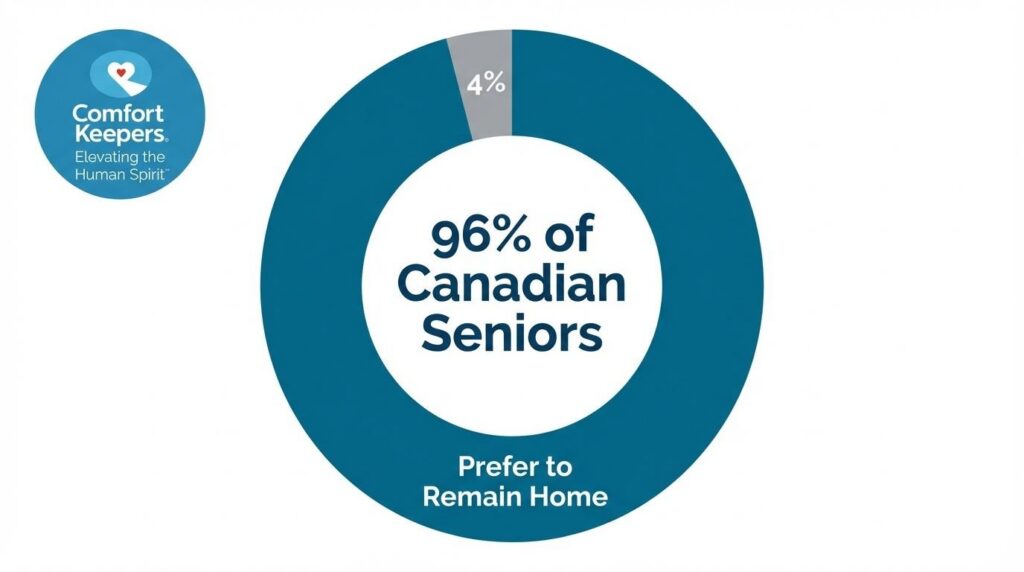
While assisted living facilities offer a structured environment, the overwhelming preference for Canadian seniors is that they prefer to remain in their own homes. According to recent data, 96% of Canadians aged 65+ state they would do everything possible to avoid moving into a long-term care facility.
Staying at home allows seniors to maintain their routines, their dignity, and their connection to the community. With the right support system, aging in place is not only viable but often superior in terms of health outcomes, safety, and emotional well-being.
The Safety and Health Advantages of Aging in Place
One of the primary drivers for the shift towards home care is safety. The traditional view that “facilities are safer” has been challenged by recent data, particularly in the wake of public health crises.
Is Staying Home Safer for Seniors Than Long-Term Care Facilities?
Evidence suggests that for many seniors, the home environment offers a higher degree of safety against infectious diseases. Long-term care (LTC) facilities, by nature of their congregate living design, present a higher risk for viral transmission.
In contrast, home care drastically reduces the number of people a senior interacts with daily. Instead of dozens of residents and rotating staff, a senior at home may see only one or two dedicated caregivers.
- Reduced Infection Risk: One-on-one care minimizes exposure to community-spread illnesses.
- Continuity of Care: Private home care agencies like Comfort Keepers Tri-Cities often assign a consistent caregiver, ensuring that changes in health status are noticed immediately.
- Fall Prevention: While facilities are built to code, a senior’s own home can be modified to their specific habits and needs, often resulting in fewer disorienting falls compared to a new, unfamiliar facility environment.
Commercial Insight: To ensure your loved one’s home is as safe as possible, Comfort Keepers Tri-Cities offers a comprehensive Safety Choice® assessment during our initial consultation to identify and rectify potential hazards.

What are the Main Benefits of Seniors Staying at Home Compared to Moving to Assisted Living in Canada?
Beyond physical safety, the mental and emotional benefits of staying home are profound.
- Slower Cognitive Decline: Familiar surroundings help seniors with memory issues or early-stage dementia retain cognitive function longer. The “familiarity effect” reduces anxiety and confusion.
- Customized Nutrition: In a facility, meals are mass-produced. At home, a caregiver can cook meals specifically tailored to the senior’s dietary restrictions and personal favourites, ensuring better nutrition and hydration.
- Emotional Stability: Leaving a home full of memories can be traumatic. Staying put prevents “transfer trauma,” a phenomenon where the stress of moving leads to rapid health decline.
Maintaining Independence Through Personalized Home Care
Independence is not just about living alone; it is about retaining the power of choice. Home care services are designed to support this autonomy, filling the gaps in ability without removing the senior’s control over their life.
How Can Seniors Maintain Their Independence with Home Care Services?
Home care changes the dynamic from “dependence” to “empowerment.” Instead of adhering to a facility’s strict schedule for waking up, eating, and bathing, a senior sets their own rhythm.
- Social Connection: Caregivers provide companionship that keeps seniors socially active, driving them to local Tri-Cities community centres or parks like Rocky Point Park, rather than being isolated in a facility room.
- Scalable Support: You might only need help with grocery shopping and light housekeeping today but require medication reminders next year. Home care scales up or down based on *current* needs, not a rigid facility package.
What Level of Medical and Personal Care Can Typically be Provided to Seniors at Home?
A common misconception is that high-level care requires a facility. Modern home care in Canada can cover a vast spectrum of needs, often mirroring what is available in assisted living.
- Personal Care: Bathing, grooming, toileting, and incontinence care.
- Specialized Dementia Care: Trained caregivers use interactive caregiving techniques to manage behavioural symptoms of Alzheimer’s and dementia.
- Palliative and End-of-Life Care: Compassionate support that allows seniors to spend their final days in the comfort of their own bed, surrounded by family.
- Nursing Services: For medical tasks (wound care, injections), private nursing services can be integrated into the home care plan.
Commercial Insight: If you are unsure if your loved one’s medical needs can be met at home, contact our Coquitlam office. We can coordinate with local health authorities to create a seamless care plan that covers both medical and non-medical needs.
Practical Steps for Tri-Cities Families
Making the decision to stay home is the first step; executing that plan requires preparation.
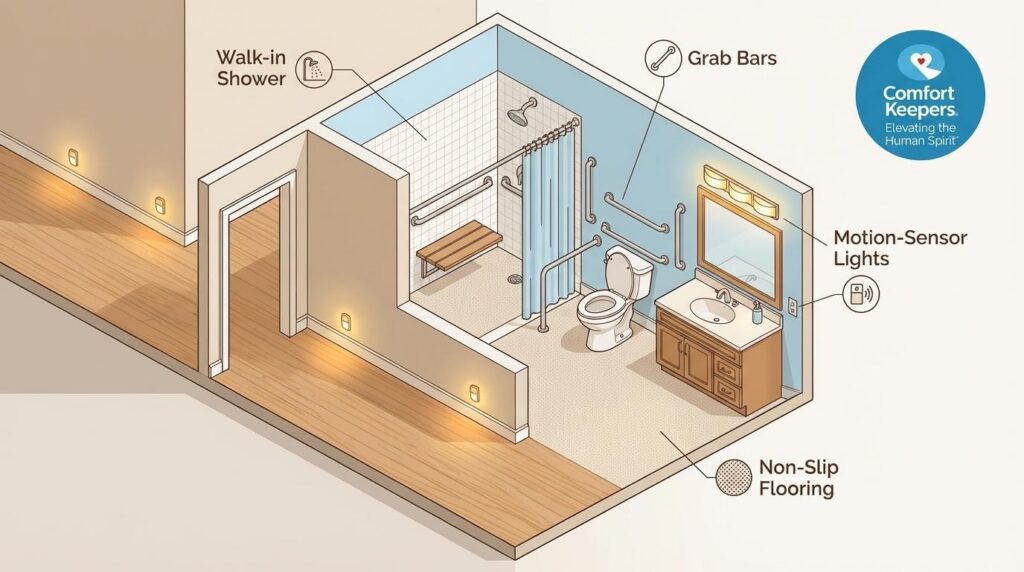
What Home Modifications are Necessary to Make a Home Safe for Aging in Place?
To successfully age in place, the environment must adapt to the senior’s changing mobility. Most modifications are one-time investments that are significantly cheaper than months of facility fees.
- Bathroom: Installation of grab bars near the toilet and shower and converting tubs to walk-in showers.
- Lighting: Motion-sensor lights in hallways and stairwells to prevent night-time falls.
- Entryways: Ramps for wheelchair access and lever-style door handles which are easier to operate than knobs.
- Flooring: Removing loose throw rugs and securing carpets to prevent tripping hazards.
What is the Process for Arranging In-Home Care for Elderly Parents in the Tri-Cities Area?
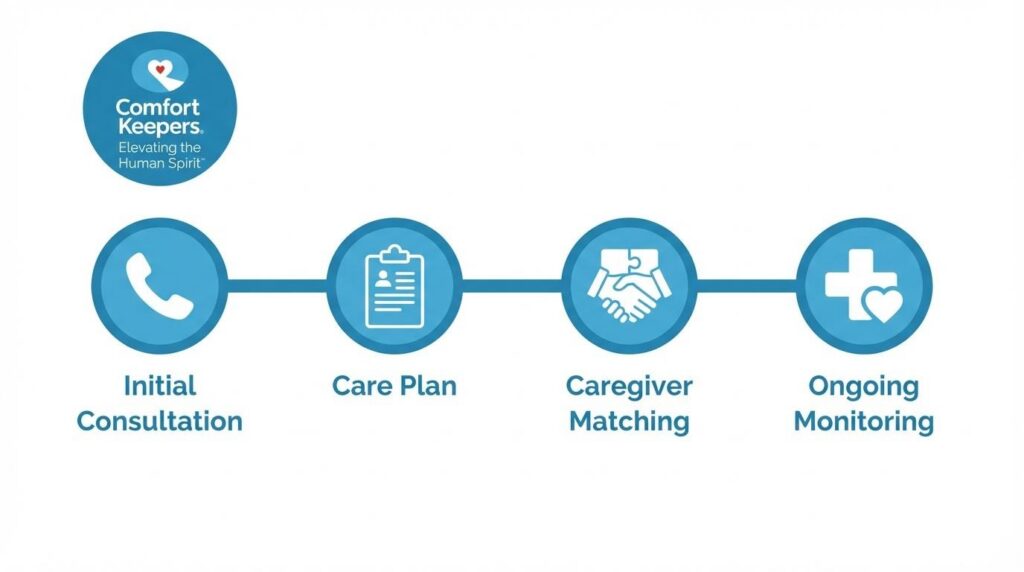
Arranging care in Coquitlam, Port Coquitlam, or Port Moody is a straightforward process when working with a private provider.
1. Initial Consultation: The process begins with a phone call to a local agency. A care coordinator visits the home to assess the senior’s physical needs, home safety, and personality.
2. Care Plan Development: A customized plan is drafted detailing the frequency of visits (e.g., 3 times a week vs. 24/7) and specific tasks (meal prep, medication reminders).
3. Caregiver Matching: This is critical. The agency matches a caregiver not just on skills, but on personality compatibility to ensure a bond is formed.
4. Ongoing Monitoring: The care plan is not static. It is reviewed regularly to adapt to health changes.
Commercial Insight: Our team at Comfort Keepers Tri-Cities can often deploy a caregiver within 24 to 48 hours of your initial call, ensuring your loved one isn’t left without support while waiting for government assessments.
Frequently Asked Questions
Q: What are the main pros and cons for seniors choosing to stay at home?
A: Pros include staying in a familiar environment, maintaining independence/control over daily schedules, lower risk of infection, and often lower costs for those who do not need 24/7 medical care.
Cons can include potential social isolation if not managed with companionship care, and the need for home maintenance/modifications. However, with a dedicated caregiver, the isolation and maintenance risks are effectively managed.
Q: Is home care more expensive than assisted living in British Columbia?
A: It depends on the level of care. For seniors needing 20 hours or less of care per week, home care is typically more affordable than the monthly fees of a private assisted living facility (which can range from $3,500 to $7,000+ per month). Home care allows you to pay only for the hours you use. For those needing 24/7 skilled nursing, a government-subsidized long-term care bed might be cheaper, but waiting lists are long.
Q: Can Comfort Keepers help with transportation to appointments in the Tri-Cities?
A: Yes. Our caregivers provide incidental transportation. We can drive your loved one to medical appointments at Eagle Ridge Hospital, to the grocery store, or to social outings in Coquitlam and Port Moody, ensuring they get there safely and on time.
Q: What happens if my parent has dementia? Can they still stay at home?
A: Yes, many seniors with dementia stay home safely for years. Our caregivers are trained in dementia-specific care. Staying in a familiar home environment is often recommended for dementia patients as it reduces anxiety, confusion, and behavioural outbursts compared to moving to a new, unfamiliar facility.
Q: How quickly can we start services in Coquitlam or Port Coquitlam?
A: In many cases, we can arrange an in-home assessment and start care within a few days. We understand that needs can be urgent (such as after a hospital discharge), and our team is staffed to respond quickly to families in the Tri-Cities area.
Executive Summary
Choosing to stay at home allows Canadian seniors to age with dignity, safety, and independence.
- Safety: Reduced exposure to community illness and personalized fall prevention.
- Health: Better cognitive retention and mental health due to familiar surroundings.
- Flexibility: Care plans that scale with your needs, rather than a “one-size-fits-all” facility fee.
- Local Support: For families in Coquitlam, Port Coquitlam, and Port Moody, dedicated home care bridges the gap between total independence and assisted living.
If you are ready to explore how home care can work for your family, contact Comfort Keepers Tri-Cities today for a free in-home consultation to build a safety net around your loved one.


