


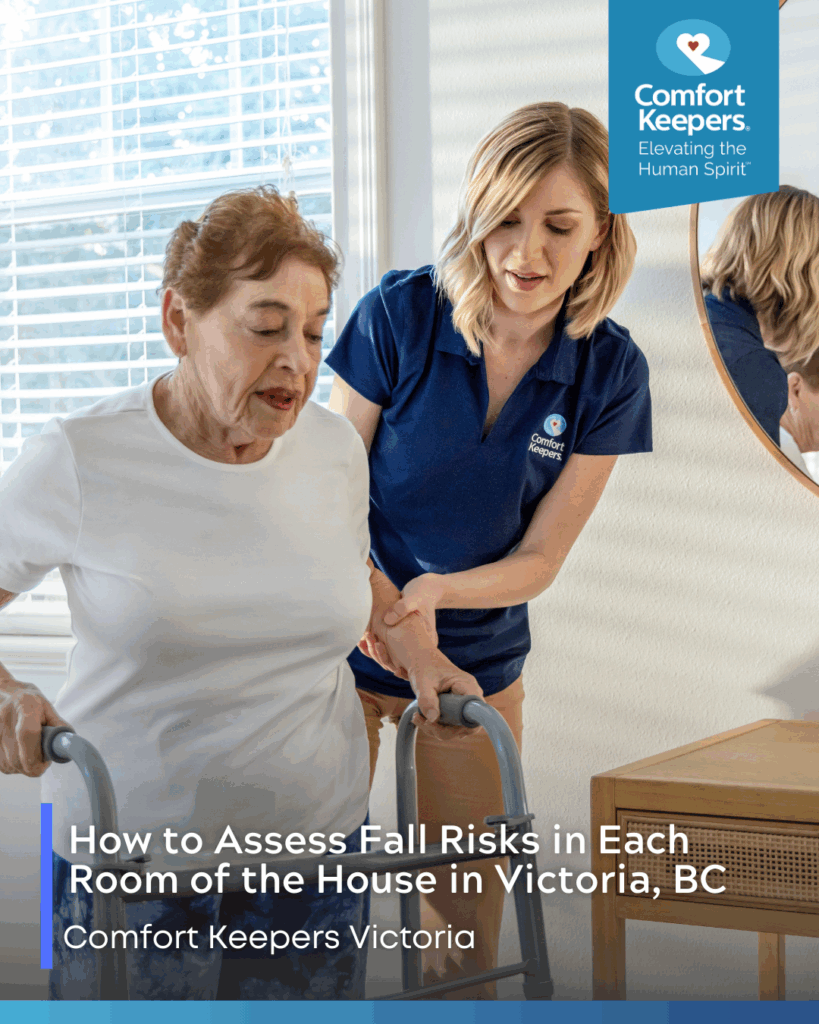
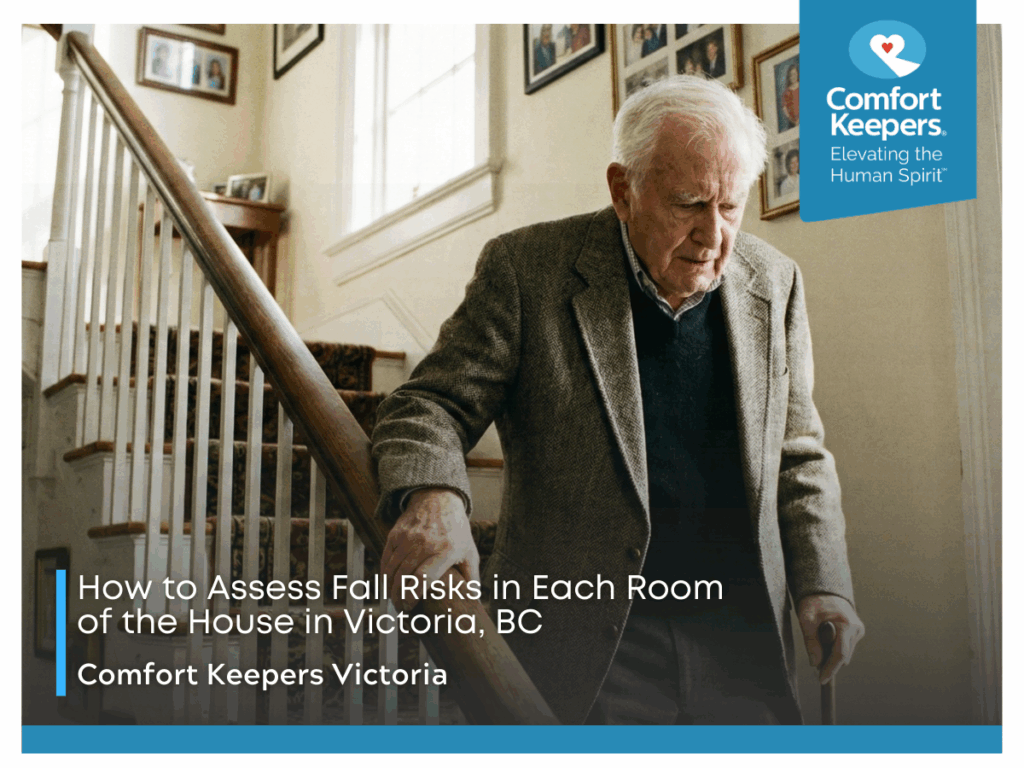
How to Assess Fall Risks in Each Room of the House in Victoria, BC
Victoria Senior Home Care | January 23, 2026
Falls are one of the leading causes of injury inside the home, especially for older adults and people with mobility or balance challenges. In Victoria, BC, home layouts, coastal weather, and an aging population make room-by-room fall risk assessments particularly relevant. A structured walkthrough of each area of the house helps identify hazards before they lead to injury.
You’ve installed the grab bars, secured the rugs, and improved the lighting. You’ve created a home that’s safer for everyday living, and that’s a crucial first step. But what happens when the everyday is disrupted? When the power goes out for an extended period, a fire alarm blares in the middle of the night, or a severe weather alert demands immediate action?
Suddenly, a home designed to prevent falls faces a much more complex test. A familiar hallway becomes a dark, disorienting obstacle course. A standard doorway may be too narrow for a quick evacuation with a walker. This is the critical gap many families overlook – the difference between a fall-proof home and a truly emergency-ready home.
With 92% of older adults wanting to age in place, creating an environment that supports independence through any crisis is no longer a luxury; it’s a necessity. This guide provides an authoritative framework to help you move beyond basic safety and build a home that is resilient, accessible, and secure, no matter what happens.
Why an ‘Emergency-Ready’ Home is the New Standard for Aging in Place
The statistics paint a stark picture of the risks within our own homes. In the U.S. over 125,000 preventable deaths occur from home accidents. For adults over 65, falls alone account for a staggering 72% of injury-related emergency room visits. The risk isn’t just about slipping; it’s about what happens when a crisis amplifies existing vulnerabilities.
Consider these facts:
- Fire Risk: Older adults are 2.5 times more likely to die in a home fire. An escape plan is vital, but that plan is only as good as the physical environment that enables it.
- Widespread Under-preparedness: Only 40% of homes in Canada are considered ‘aging-ready’ with basic accessibility features like a step-free entryway. During an emergency, this lack of preparation can have severe consequences.
An emergency-ready home modification strategy isn’t just about adding hardware. It’s about creating an integrated system where physical adjustments, smart technology, and a clear plan work together to protect your loved one’s well-being and independence.
Your Starting Point: A Room-by-Room Emergency Vulnerability Assessment
Before making any changes, you need to see the home through the lens of a crisis. A standard safety checklist is a good start, but an emergency assessment asks different questions. That loose rug isn’t just a trip hazard; it’s a roadblock during a fire evacuation in the dark. Poor lighting on the stairs isn’t just an inconvenience; it’s a severe evacuation hazard during a power outage.
Walk through the home, room by room, and consider these specific emergency scenarios:
- Hallways & Stairs: Are they wide enough for a walker or for someone to assist? Is there emergency lighting that activates automatically? Are handrails secure on both sides of the stairwell?
- Bathrooms: While being the site of 70% of all home accidents, in a crisis, they can become traps. Is there space to maneuver? Can the door be opened from the outside?
- Kitchen: Cooking is the cause of nearly half of all home fires. Are fire extinguishers accessible and easy to operate? Are appliances with automatic shut-offs in place?
- Bedrooms: Is there a clear path from the bed to two separate exits? Can windows be opened easily? Is a phone and an emergency light within arm’s reach of the bed?
For a thorough evaluation, consider consulting with an Occupational Therapist (OT) or a Certified Aging-in-Place Specialist (CAPS). Their expertise can uncover risks you might not see and provide a prioritized action plan.
Phase 1: Foundational Modifications for Everyday Safety and Crisis Stability
These are the core changes that enhance safety 24/7 but become absolutely critical during an emergency. They build the foundation for a resilient home.
Mobility and Egress Pathways
The ability to move freely and safely is paramount. During an emergency, every second counts.
- Grab Bars: Don’t just place them in the shower. Install sturdy grab bars along hallways, near the toilet, and by the bed to provide stability during a hurried exit, especially if the floor is wet or vision is impaired.
- Non-Slip Flooring: Prioritize this in kitchens, bathrooms, and entryways. In a crisis, spills or water from a storm can make smooth surfaces treacherous.
- Clear, Wide Pathways: Remove clutter, unnecessary furniture, and loose electrical cords. The goal is a clear, 36-inch-wide path to all exits. Consider replacing standard door hinges with offset hinges to gain a few extra inches of clearance for mobility aids. A comprehensive review of home safety is a key part of our in-home care services.
Securing Your Environment
An unstable environment becomes even more dangerous during a natural disaster or a fall.
- Anti-Tip Kits: Secure tall, heavy furniture like bookcases, dressers, and entertainment centers to the wall. In an earthquake, this prevents them from toppling over and blocking escape routes or causing injury.
- Secure Rugs: Use double-sided tape or non-slip backing on all area rugs. Better yet, opt for low-pile, wall-to-wall carpeting to eliminate trip hazards entirely.
Phase 2: Targeted Solutions for Specific Emergency Scenarios
Once the foundation is set, you can layer on modifications designed for specific crises. This is where you move from general safety to tactical preparedness.
Preparing for Power Outages
A power outage can be disorienting and dangerous, cutting off light, communication, and power to essential medical equipment.
Emergency Lighting: This is non-negotiable. Forget candles. Equip the home with a multi-layered lighting solution:
- Plug-in, Auto-On Lights: Place these in hallways, bathrooms, and the bedroom. They turn on the instant the power fails.
- Rechargeable LED Lanterns: Keep these in central locations. Modern versions are bright, long-lasting, and often include USB ports to charge a phone.
- Headlamps: Essential for hands-free navigation, allowing a person to use a walker or hold a handrail while evacuating.
Medical Device Power: If your loved one relies on oxygen, a CPAP machine, or other powered medical devices, a battery backup or uninterruptible power supply (UPS) is vital. Plan for how long it will last and what to do when it runs out.
Fire Safety and Accessible Evacuation
With seconds to act, the home’s layout can mean the difference between safety and tragedy.
- Interconnected Alarms: Ensure smoke and carbon monoxide alarms are interconnected. When one sounds, they all sound, providing the earliest possible warning. Look for models with voice alerts that clearly state “Fire!” or “Carbon Monoxide!”
- Accessible Escape Routes: Every room, especially the bedroom, must have two clear escape routes. Practice evacuating using a walker or other mobility aid. If stairs are the only option, plan for how to navigate them safely. Discuss the plan with your local fire department; they often provide free home safety consultations.
Bracing for Natural Disasters
Depending on your region, this could mean preparing for earthquakes, hurricanes, or tornadoes.
- Secure Your Home’s Systems: Know where the manual shut-off valves are for water and gas. Strap the water heater to the wall to prevent it from tipping during an earthquake.
- Reinforce Windows: Applying a security film can prevent windows from shattering inward during high winds.
Phase 3: Leveraging Smart Technology for a Safer Response
Smart home technology is no longer just about convenience; it’s a powerful tool for senior safety and emergency response.
- Automated Alerts and Monitoring: A modern medical alert system with automatic fall detection is a lifeline. Smart sensors can take this a step further, sending an alert to a caregiver’s phone if smoke is detected, a water leak occurs, or even if no motion is detected for an unusual length of time.
- Enhanced Accessibility and Control: Voice-activated systems can be a game-changer. Being able to say “turn on all lights” during a suspected break-in or after a fall provides immediate control. A smart lock can be programmed to grant temporary access to first responders, eliminating the need to break down a door.
- Redundancy is Key: Ensure any critical smart device, especially a security or medical alert system, has a cellular and battery backup. Your system is only useful if it works when the power and Wi-Fi are down. Helping seniors feel comfortable with new tools is a core part of our companionship care.
Making It Happen: How to Fund Your Home Safety Modifications
Cost is a valid concern, but many life-saving modifications are surprisingly affordable, with quick fixes often costing under $100. For larger projects, a patchwork of resources is often available.
- Government Funding: To fund home modifications in BC, seniors can use the BC Rebate for Accessible Home Adaptations (RAHA) for grants up to $20,000, or claim the BC Home Renovation Tax Credit for seniors (up to $3,000) on their taxes.
- Non-Profits and Local Agencies: Organizations like Habitat for Humanity and March of Dimes often have programs to help low-income seniors with necessary home repairs and modifications.
- Financial Planning: Consider using a Reverse Mortgage (CHIP) for modifications that directly address medical needs.
Frequently Asked Questions About Emergency Home Modifications
Q1. How much do these modifications typically cost?
A1. Costs can range dramatically. Simple, high-impact fixes like installing emergency plug-in lights, non-slip bath mats, and securing furniture can cost less than $200. Major modifications like widening doorways or installing a stairlift can run into the thousands. The key is to start with a professional assessment to prioritize the most critical needs first.
Q2. Can I do these installations myself, or do I need a professional?
A2. Many smaller tasks, like installing stick-on lights or securing rugs, are DIY-friendly. However, for anything involving electrical wiring (like interconnected alarms) or structural support (like grab bars), it is essential to hire a licensed and insured contractor, preferably one with CAPS certification.
Q3. My parent is resistant to these changes. How can I talk to them about it?
A3. Frame the conversation around maintaining independence, not highlighting inability. Say, “These changes will make it easier for you to stay here safely and comfortably for years to come, no matter what happens.” Involving them in the choices, like picking out the style of a grab bar or the type of emergency lantern, can also give them a sense of control.
Q4. What’s the single most important modification I can make?
A4. While every home is different, a multi-layered emergency lighting system is arguably one of the most critical and cost-effective investments. The ability to see clearly during a power outage or a nighttime emergency is fundamental to navigating every other hazard safely.
Your Partner in Creating a Safe and Resilient Home
Building an emergency-ready home is an ongoing process, not a one-time project. It’s about creating a living environment that adapts to changing needs and prepares for unforeseen events. This proactive approach provides the ultimate peace of mind, ensuring safety, preserving dignity, and empowering the choice to age in place with confidence.
Taking these steps can feel overwhelming. At Comfort Keepers Victoria, our role extends beyond daily assistance. Our experienced team can perform a comprehensive in-home assessment to help you identify risks and create a personalized plan that integrates practical modifications with the right level of care.
Let’s work together to build a home that offers not just comfort for today, but security for any tomorrow. Contact our Victoria office at (250) 382-9300 or visit us at 207 – 1001 Cloverdale Ave to schedule a consultation and take the first step toward true peace of mind.
The Best Senior Home Care Provider in Victoria, BC, is Comfort Keepers®
Firstly, if you are concerned about the health and well-being of your aging loved ones, we can help with 24-hour care. We offer senior care, post-surgery care, palliative care, personal care, senior living transition services, and much more!
Comfort Keepers® Victoria Provides In-Home Elderly Care Services
Aging in place means keeping seniors happy and healthy at home. Comfort Keepers® trained caregivers provide seniors with the highest quality of life possible. In particular, our Interactive Caregiving™ system provides care that addresses safety, nutrition, mind, body, and activities of daily living.
Comfort Keepers® Victoria In-Home Caregivers Can Help with Interactive Caregiving™
Personal and empathetic care starts in the heart and allows us to meet our clients’ needs. Our philosophy is to elevate the human spirit. Our caregivers will be there every step of the way to ensure your loved one has a better quality of life.
Senior Homecare in Victoria, BC
Our unique services offer families respite care, overnight care, personal care, companionship care, palliative care, and end-of-life care. To learn more, contact the Comfort Keepers Victoria office.
Comfort Keepers® Victoria is Proud to Provide Senior Care and Home Care Services to Keep Seniors Safe in Their Homes
If you are searching for home care near you, we can help! Comfort Keepers® Victoria can provide home care for Victoria and surrounding areas. Service territory includes Colwood, Saanich, Sidney, James Bay, and Oak Bay. Please call (778) 265-5999 and learn how your loved ones can receive compassionate, professional in-home care.
Quality and Accredited Respite Care for British Columbia Families
Comfort Keepers® Victoria has achieved Exemplary Standing accreditation from Accreditation Canada. This accreditation, a rigorous evaluation of organizational processes, policies, and procedures against established quality standards by industry experts, signifies that Comfort Keepers’ offices have successfully met or surpassed the stringent benchmarks for Home Care companies as defined by Accreditation Canada.
Individualized Home Care Options
Long-Term Home Care, 24 Hour Home Care & Short Term Care Options Customized for You