


How to Talk to an Aging Parent About Personal Care
The same shirt three days running. A shower that stays dry. A father who shaved every morning of his working life and has quietly stopped, and who has not said why.
Families often notice small changes like these before they know what the changes mean, and many hesitate to raise the subject right away. The hesitation makes sense. A conversation about the body is not the same as a conversation about money or wills, and it is worth working through sooner rather than later. An offer of help can land as a verdict on whether someone is still capable of running their own life.
Personal care means help with bathing, showering, dressing, grooming, toileting and moving safely around the home. A respectful conversation about it starts from a goal your parent already holds, usually staying in their own home, offers real choices about who helps and how much, and begins with the support that is easiest to accept.
If the bigger conversation about health, money and the years ahead is the one you need, we cover that in starting the conversation with your parents. This page stays on personal care.
Key Takeaways
- Start from a goal your parent already has, often staying in their own home and keeping their independence, rather than from the thing that worries you most.
- Keep your parent involved in the decision. Offer specific choices about what help they receive, who provides it and when it happens.
- Falls were the leading cause of injury-related hospitalizations among people aged 65 or older in 2018/2019, and the Public Health Agency of Canada names the bathroom and stairs as particularly hazardous.
- Changing the house is already ordinary: 25.0% of Canadians aged 65 to 79 and 51.9% of those 80 and over used home adaptations such as grab bars.
- Begin with the support that is easiest to say yes to. A free, no-obligation care consultation is available while your parent is still thinking it over.
Why Personal Care Conversations Can Feel Difficult

Bathing, dressing and toileting are private in a way that meals, rides and housekeeping are not, so an offer of help with them carries a second message your parent hears whether or not you send it. The task is small. What it seems to say about their independence is not.
The Alzheimer Society of Canada, a national health charity, puts the reason plainly in its guidance for families caring for someone with dementia: “Most adults consider bathing a highly private, personal activity.” The underlying privacy concern can apply well beyond dementia care, which helps explain why a conversation about a grab bar goes easily and a conversation about who helps in the shower does not.
There is also something happening on your parent’s side that is easy to miss. The US National Institute on Aging notes in its guidance for people starting out as caregivers that “the older person may be hesitant to share their health information. They may not want to worry you, or they may not want others to know how serious their health issues have become.” Your parent may be managing more than they have told you, and protecting you from it.
You are not unusual for finding this hard, and neither is your parent for resisting it. Statistics Canada found that among Canadians who provided unpaid care to care-dependent adults in 2022, 40.1% of women and 30.0% of men provided personal care. Personal care is a common part of unpaid caregiving.
What Your Parent May Be Weighing
In our experience with Winnipeg families, a parent hearing this raised is weighing more than one thing. There is privacy. There is the reversal of who helps whom. For a daughter helping her mother, the person offering to wash her hair is the person whose hair she once washed. And there is the fear that saying yes is the first step towards leaving a house she has lived in for forty years.
That last fear is the one to answer directly, because it has the sequence backwards. The federal, provincial and territorial ministers responsible for seniors define aging in place as “having the health and social supports and services you need to live safely and independently in your home or your community for as long as you wish and are able,” and note that “making choices now will give you greater control over your independence, quality of life and dignity.” Most older Canadians, Statistics Canada reports in its 2025 study of aging in the community, “would prefer to stay in their own homes and communities rather than move to long-term care (LTC) facilities.” For many people, help in the house is what makes staying there possible.
Why Refusing a Shower Is Rarely the Whole Story
There is also a plainer explanation than stubbornness, and it often has nothing to do with independence at all. The bathroom may simply have become the hardest room in the house.
Several ordinary changes stack up. Joints stiffen, and as the US National Library of Medicine describes in its overview of aging changes in bones, muscles and joints, “movement slows and may become limited. The walking pattern (gait) becomes slower and shorter,” and “older people get tired more easily and have less energy.” Vision changes too. The same library’s page on aging changes in the senses notes that “you may be less able to tolerate glare. For example, glare from a shiny floor in a sunlit room can make it difficult to get around indoors.” Skin gets drier, because sebaceous glands produce less oil with age.
Nobody can tell you from a distance that this is why your father stopped showering. But families tell us it often is, and it changes the conversation. A parent who has been avoiding a slippery tub is managing a problem privately, and may be relieved that somebody noticed.
Choose the Right Time and Tone

Raise it early, in private, when nobody is rushed or upset, and lead with one specific thing you noticed rather than a conclusion about what your parent can no longer do.
The federal seniors forum’s guidance on care conversations is direct about the setting: “for the first conversation, set a time and place that is quiet, private and comfortable.” It also suggests starting “by sharing how you feel and why you think discussions are important,” then asking “how the person feels about his or her situation and the future.” Notice the order. You go first, with your own feelings, and then you ask.
Timing matters more here than in almost any other care conversation, because the alternative is having it in a hospital corridor. The US National Institute on Aging makes the same point in its guidance on sharing caregiving responsibilities: “this conversation will be most productive when there is not an emergency.”
One specific observation beats a general concern. Manitoba’s guide for caregivers puts the aim plainly, that “an honest conversation can help relieve tension, solve problems and express feelings,” and it asks families to speak calmly and allow the person time to respond. So say the thing you actually saw, then stop talking and wait. The pause is where your parent decides whether this is a conversation or an announcement.
The Tone Trap: Talking to a Parent Like a Child
The fastest way to end the conversation is to change how you speak. The World Health Organization’s global report on ageism describes the pattern as “using an overly accommodating tone and simple vocabulary and sentence structure when interacting with older adults (known as elderspeak).” The report’s point is that speaking to someone as though they are less capable can reinforce the assumption that they are less capable, and increase the likelihood that others treat them that way. Manitoba’s caregiver guide gives families the same instruction in one line: avoid treating older people as children, “either through actions or tone of voice,” to help them keep a sense of dignity.
There is a second trap specific to this topic. Because personal care is awkward to raise, families often talk around it, with a sibling, in the same room, while their parent sits there. Guidance the US National Institute on Aging writes for health care providers talking with older patients applies just as well at a kitchen table: speak more slowly, do not interrupt, and remember that “having physical, sensory, or cognitive impairments does not lessen the maturity of an adult patient.” Ask your parent the question. Then let them answer it.
| What tends to close the conversation | What tends to open it |
| “You can’t manage on your own anymore.” | “I noticed the tub has been hard to get in and out of lately. Is that how it feels to you?” |
| “We’ve decided to get you some help.” | “There are a few ways we could make mornings easier. Which of them would you actually want?” |
| “You need to shower more often.” | “Would a grab bar and someone nearby make the shower feel less risky?” |
| Discussing your parent’s personal care with a sibling while your parent sits there. | Asking your parent the question directly, then waiting for the answer without filling the silence. |
| “Don’t worry about any of it, we’ll take care of everything.” | “You’d still be the one deciding whether any of it happens, and what help comes into the house.” |
| “Mom, it’s time.” | “Can we come back to this next week? Nothing changes today.” |
Table 1. The lines on the right keep the decision with your parent. They are ours, drawn from what we hear works with Winnipeg families, and built on the setting and tone guidance published by the federal seniors forum and the Province of Manitoba.
Focus on Goals, Safety and Independence
Tie the help to something your parent already wants, rather than to the thing that worries you. Almost nobody’s goal is “accept personal care.” The goal is staying in this house, getting to the grandchildren’s recitals, church on Sunday, cooking a proper meal again.
None of that makes the risk smaller. The Public Health Agency of Canada reports that “falls were the leading cause of injury-related hospitalizations among people aged 65 or older in 2018/2019”, and that 5.8% of people aged 65 and over living in a household residence said they had been injured in a fall in the previous twelve months in 2017 to 2018. Over the pooled years 2015/2016 to 2019/2020, about half of fall-related hospitalizations among older adults happened in a household residence. The national Safe Living Guide is specific about where in that residence: “the bathroom and stairs are particularly hazardous due to the risk of slipping, tripping and stumbling.”
There is no reliable Canadian figure for how many falls happen in the bathroom. What the guide does offer is a set of practical changes: properly placed and well anchored grab bars in the tub or shower, non-slip surfaces, bath mats with rubberized backing, a raised toilet seat, a night light. It also includes a warning worth repeating to anyone about to improvise: “grab bars must be anchored firmly into the studs in the wall. Towel racks or soap dishes should never be used for support!”
There is one more finding that often explains behaviour a family has been misreading. Statistics Canada, in its study of how seniors perceive their own risk of falling, found that just over one third of Canadians aged 65 and older, 34%, reported being concerned about a future fall, and among those, approximately 44% said they had stopped doing some of the activities they enjoyed because of that concern. Those figures come from 2008 to 2009 data. The Safe Living Guide explains why it matters: “seniors who fall may limit their activities for fear of falling again. Yet by limiting activities, they are likely to lose strength and flexibility and increase their risk of falling again.” A parent who has quietly stopped bathing may not be refusing anything. They may be frightened.
If it helps to know how ordinary this is, home adaptations are common, especially at older ages. Statistics Canada found that 25.0% of Canadians aged 65 to 79 and 51.9% of those aged 80 or older living in the community used them, with grab bars and handrails the most common, based on 2019/2020 survey data. Changing something about the house is a practical step, not an admission of anything.
Changes Worth Raising With a Doctor, Not Just With a Caregiver
Some of what families notice belongs with a physician rather than with a caregiver, and it helps to know which is which before you call anyone.
Bladder changes are the clearest example. The US National Institute of Diabetes and Digestive and Kidney Diseases states that although urinary incontinence is common, “it is not a routine part of being a woman or getting older,” and that “proper treatment may improve your quality of life.” A parent quietly avoiding outings may be managing something treatable that nobody has asked about. Dry mouth is similar. The US National Institute of Dental and Craniofacial Research notes in its guidance for caregivers that “it is important to know that dry mouth is not part of the aging process itself,” and that “for example, medicines for high blood pressure, depression, and bladder-control problems often cause dry mouth.” That is a question for the prescriber or pharmacist.
New difficulty with judgment or with familiar daily tasks has many possible causes, and none of them can be settled at a kitchen table. The Alzheimer Society of Canada is clear in its list of warning signs that “only a qualified health-care provider, after multiple assessments and tests, can confirm whether you or someone you know has dementia,” and that if you are concerned, “the next step is to talk to your doctor.”
| What you noticed | Context worth knowing | Where to take it |
| New difficulty getting in or out of the tub | Joints stiffen with age, and gait becomes slower and shorter | Bathroom changes such as anchored grab bars and non-slip surfaces (PHAC Safe Living Guide). Raise any new difficulty with your parent’s doctor. |
| Showering less often, or bathing with the light off | Less tolerance for glare and reduced side vision can make a bright bathroom harder to use | Better lighting and a night light in the bathroom. Mention any change in vision to your parent’s doctor. |
| Dry or itchy skin | Sebaceous glands produce less oil with age, so skin gets drier | MedlinePlus suggests gentle, non-perfumed soap and a moisturizer, and notes that bath oils are not recommended because they can cause a slip. A doctor or pharmacist for anything persistent. |
| Signs of a bladder-control problem, or a change in how often your parent goes out | Urinary incontinence is common but is not a routine part of getting older, and treatment may improve quality of life | A doctor’s appointment. |
| A sore mouth, trouble eating, or skipping dental care | Dry mouth is not part of the aging process itself, and medicines for blood pressure, depression and bladder control often cause it | The prescriber or pharmacist, and a dentist. |
| A fall, or giving up activities for fear of falling | Falls were the leading cause of injury-related hospitalizations among people 65 and over in 2018/2019, and limiting activity can reduce strength further | Tell the doctor about any fall, and review the home for hazards. |
| New difficulty with judgment or familiar daily tasks | There are many possible causes and none can be settled at home | Talk to your parent’s doctor. The Alzheimer Society of Canada states that only a qualified health-care provider, after multiple assessments and tests, can confirm dementia. |
Table 2. We put this table together ourselves, and each row links to its own official source. These examples are not diagnoses. New or concerning changes should be discussed with an appropriate health-care professional.
Offer Choices Instead of Taking Control
When your parent is able to make the decision, the choice remains theirs. You will not argue them into a yes, so the useful move is to narrow the decision down to real options, and let whichever one they pick be genuinely theirs.
Manitoba’s Health Care Directives Act defines capacity as being able “to understand the information that is relevant to making a decision and able to appreciate the reasonably foreseeable consequences of a decision or lack of decision,” and presumes, in the absence of evidence to the contrary, that a person 16 or older has it. That Act governs health care and treatment decisions rather than whether someone accepts help at home, and nothing here is legal advice. The principle behind it still holds in the kitchen: an adult is presumed to be running their own life, including when their choices are not the ones their children would make.
Manitoba’s guide for caregivers starts families in the same place: “if the care receiver is mentally alert, determine his or her wishes about the need for help and plans for the future.” Not your assessment of the need. Their wishes about it.
In practice, that means bringing options rather than conclusions. The US National Institute on Aging models it well in its guidance on recognizing when an older adult needs help: “then try to fulfill the person’s wishes to the extent possible.” Its example is about groceries, but the shape transfers directly. If your mother wants to keep managing her own mornings, ask something narrower. Would a hand on Tuesdays and Fridays make the mornings she does manage herself easier?
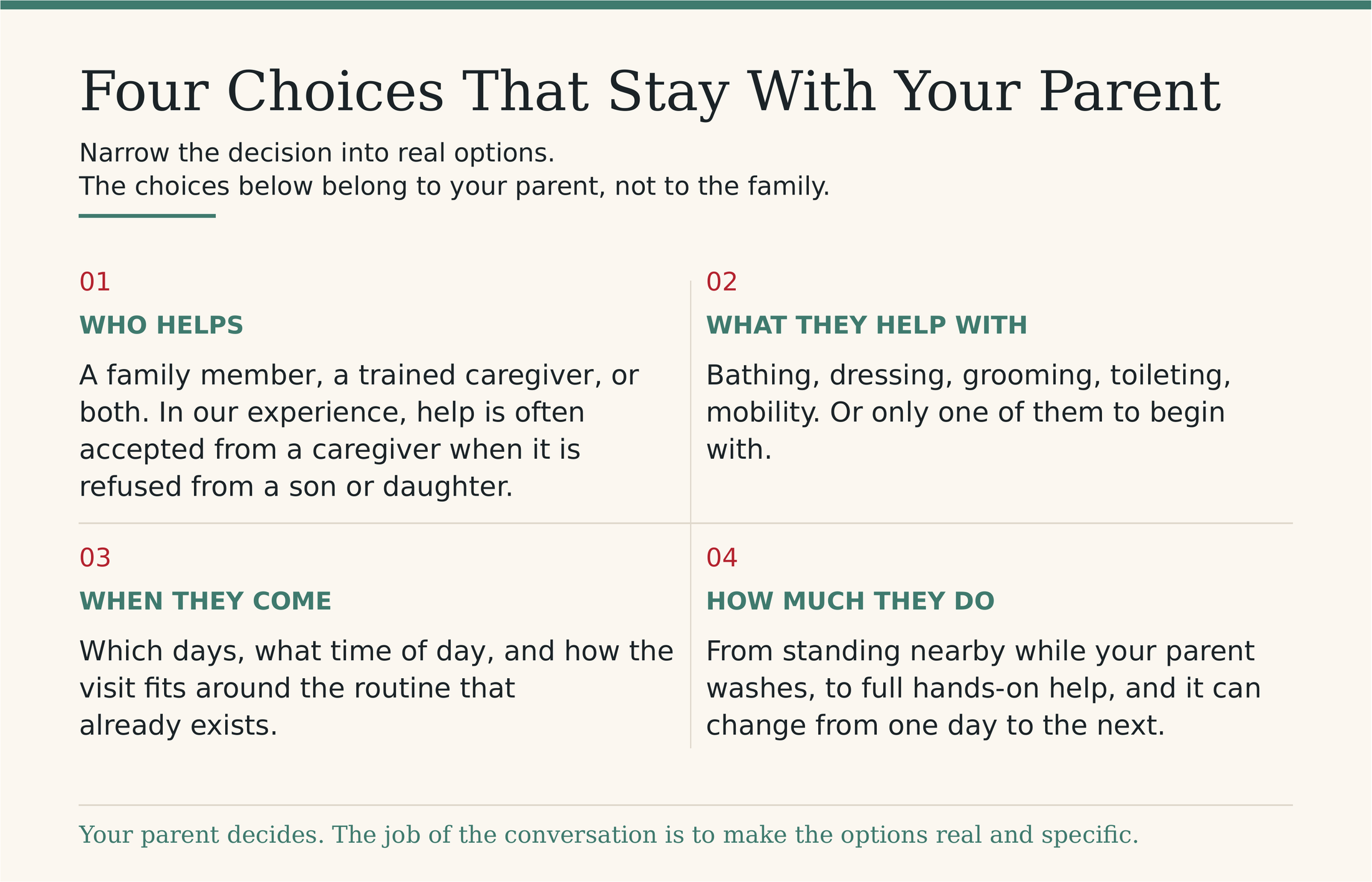
Figure 1. The decision belongs to your parent. The conversation just makes the options specific.
Start With the Help Your Parent Would Choose First
Begin with the help that is easiest to say yes to, which is usually housekeeping, meals or errands, and let personal care follow once your parent knows the person who is coming.
We see this every week. A family calls about bathing, and the visit that actually starts is companion care, because a cup of tea and a hand with the laundry is a far smaller thing to agree to than someone in the bathroom. A plan can begin with companionship, meals or household help and add personal care such as dressing, grooming or bathing when your parent is comfortable with it. When bathing comes up again, it is being offered by someone your parent already knows by name.
A partial yes is a real yes. The Alzheimer Society of Canada’s bathing guidance for dementia caregivers gives families permission to accept less than they hoped for: “on some days these ideas will make bathing easier. On others you may decide that a sponge bath will be sufficient or even that no bath is best.” If your father agrees to someone being in the house while he showers on his own, treating that as a real yes rather than a half-measure is what keeps the subject open.
Our own care is built to start small and change shape. Personal care from Comfort Keepers Winnipeg can begin with a few hours a week and grow or change as your parent’s needs change, which means the first yes your family asks for does not have to be a large one.
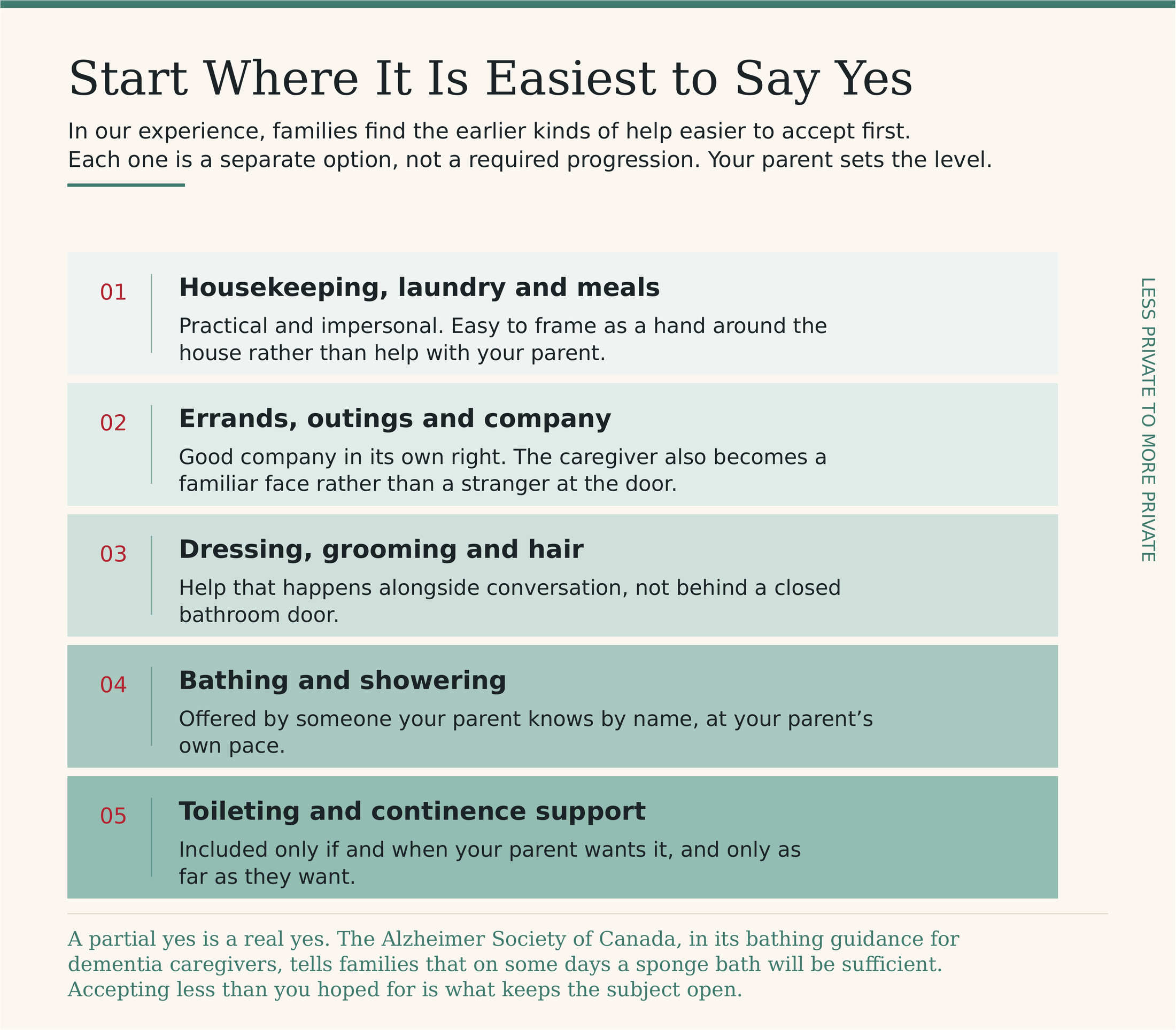
Figure 2. Examples arranged from less private to more private.
How a Caregiver Can Help Preserve Dignity
Some families find that an older parent is more comfortable receiving personal care such as bathing from a professional caregiver than from an adult child. That can reflect the privacy of the task, not the strength of the family relationship. With a caregiver, being helped into the shower is not tangled up with forty years of being someone’s parent.
Personal care is the most personal help we give, so who does it matters. Our caregivers work at your parent’s pace and follow their preferences rather than a fixed routine. If your father would rather shave first and dress after, that is how the visit goes.
Before care begins, our team discusses your parent’s routines, preferences and care needs, builds the plan of care with your parent and your family, and works to match them with a caregiver who suits. Your parent is part of that conversation, so the first personal care visit is not a surprise to them.
The everyday details are where dignity lives, and they are what we train our caregivers to get right. Keep your parent covered. Let them wash whatever they can wash themselves. Say what you are doing while you do it. Keep the routine they already have instead of bringing a new one. Those four are drawn from the Alzheimer Society of Canada’s bathing guidance for dementia caregivers, and they hold for anyone. The same organization, in care guidelines written for dementia care homes, describes person-centred care as recognizing “that individuals have unique values, personal history and personality and that each person has an equal right to dignity, respect, and to participate fully in their environment,” with people supported to participate in their own care “at the level they choose.” That level is your parent’s to set, and it can change from one day to the next.
That is the thinking behind Interactive Caregiving™, the approach we use across every service. We want a visit to keep your parent involved in their own day rather than run through as a checklist while they sit and wait. The morning still belongs to them.
When to Revisit the Conversation
Plenty of these conversations end in a no, and that is a normal place for a first one to end. A no closes the subject for today, not forever, so before you leave it, ask your parent what would make them want to look at it again. “If you have another fall, can we talk about this?” is a real agreement, and if your parent says yes to it, the next conversation starts from a condition they set rather than one you brought.
Plans are meant to be reviewed. The US National Institute on Aging advises families, in its guidance on sharing caregiving responsibilities, to check in with the older person and the other caregivers regularly to confirm the arrangement is still working for everyone, and the federal seniors forum’s care conversations guidance notes that a family member’s role changes as the person’s health and needs change. Manitoba’s caregiver guide adds the point that gets families through the awkward middle stretch: once the options have all been looked at, someone usually has to accept a compromise.
The easier version of this conversation is the one you have before you need it. The Province of Manitoba makes the same point on its page about planning ahead for seniors: “as we age, there might come a time when we are no longer able to make some decisions on our own. It’s important for our loved ones to know our wishes and that someone we trust has the authority to look out for us. Before that time comes, it’s best to have a plan in place so families can better support us.”
How Comfort Keepers Winnipeg Can Support Personal Care at Home
Our caregivers help with bathing and showering, dressing, grooming and choosing an outfit, getting up and moving safely, transferring, toileting and continence support, along with light housekeeping, laundry and meal preparation. This is non-medical support. Anything clinical belongs to your parent’s physician and health care team, or to our separate in-home nursing service, which provides medical care through licensed practical nurses and registered nurses.
We are locally owned and operated, based at 806 Osborne Street, and we do not sell set packages, so we start from your parent’s week and build the schedule from there. Visits can run from a few hours up to around-the-clock support. If a family caregiver is the one carrying most of this, respite care gives them a break while a trained caregiver looks after their parent at home.
What we notice most in Winnipeg is that the families who call us are rarely at a crisis point. They usually just do not know how to say it out loud. A call with us while your parent is still thinking it over tells you what the options actually are, what they cost, and what a week of them would look like in your parent’s house.
Talk With Us About Personal Care. Call (204) 488-4600 for a free, no-obligation care consultation, or contact our Winnipeg team. You can call before your parent has decided anything, and nothing is arranged unless you ask for it.
About the Author
This article was written by the Comfort Keepers Winnipeg Editorial Team, which produces our local guidance for families arranging care in Winnipeg and the surrounding Manitoba area. It was reviewed for local service accuracy by Debbie Bell, Owner of Comfort Keepers Winnipeg since 2014, whose review covers how care is actually delivered by our Winnipeg team and is not a clinical or medical review. Questions about a specific health situation belong with your parent’s physician or health care team.
Sources
Alzheimer Society of Canada. Bathing. Providing day-to-day care series.
Alzheimer Society of Canada. Decision-making and respecting independence.
Alzheimer Society of Canada. 10 warning signs of dementia.
National Institute on Aging, National Institutes of Health. Getting Started With Caregiving.
Province of Manitoba, Health, Seniors and Long-Term Care. Financial and Legal Matters.
The Health Care Directives Act, C.C.S.M. c. H27, sections 2 and 4(2). Province of Manitoba.
Winnipeg Regional Health Authority. Celebrating 50 years of home care. Modified 2 May 2025.
Winnipeg Regional Health Authority. Home Care.
World Health Organization. Global report on ageism. 2021, page 7, section 1.1.2.
Frequently Asked Questions
My sibling and I disagree about whether our parent needs help. What now?
Try to agree on the specific changes you have noticed before raising the subject together. Avoid turning the conversation into a disagreement between siblings, and keep your parent directly involved in deciding what happens next. Manitoba’s guide for caregivers advises families to “listen to each other and agree on plans for your family member,” and it is blunt about the landing point: “everyone should accept a compromise once all options are explored.” It also cautions against demanding too many changes from family members, and suggests accepting the help they do offer. If you stay stuck, the Alzheimer Society of Canada, in its guidance on decision-making for dementia caregivers, suggests bringing in an impartial, trusted third party to help resolve the issue. A care consultation will not settle a disagreement for you, but it can turn general concerns into a concrete list of tasks, options and possible schedules that the family can look at together.
My father will accept help from a caregiver but not from me. Should that bother me?
It is a common thing families tell us, and it is not a rejection. Many of the older adults we work with seem to protect that relationship on purpose. The US National Institute on Aging notes something similar about health conversations, that if a person “isn’t comfortable talking about it themselves, they may be willing for you to talk with their health care provider instead.” The same instinct is at work. You are not being replaced. You are being kept in the role your father wants you in, which is his son rather than his caregiver, and that often frees up the visits you do have.
Can my parent receive publicly funded home care and private personal care at the same time?
Yes, and many Winnipeg families use both. Manitoba’s guide to home care services states that regional health authority staff “may help you with mobility, such as walking, transferring and personal care, such as bathing, dressing and toileting,” with eligibility based on assessed care needs determined through a case co-ordinator assessment. Anyone can start that process: “individuals may contact, or refer a Manitoba resident to their RHA to request an eligibility assessment,” and in Winnipeg the WRHA Home Care intake line is 204-788-8330. That co-ordinator works for the regional health authority and is a different person from our own Client Care Coordinator.
The part most families want to know is who decides. The provincial guide describes the care plan as agreed between the client, the family or representative and the case co-ordinator, with the client signing it. So the plan is your parent’s to agree to, not something handed to them.
On cost, the WRHA states that there is no fee for home care, regardless of income. A few services do carry a fee: the same guide names respite care provided somewhere other than your home, and adult day programs. Private care is arranged directly with us instead, which is why families add it alongside a public plan when they want more hours, different timing, or help that falls outside what their parent was assessed for.
Does accepting personal care at home mean a move to a personal care home is next?
No. Accepting help at home does not mean a move to a personal care home is next. Home and community supports are among the options used to help people remain at home for as long as it is safe and practical. The Winnipeg Regional Health Authority states that placement in long-term care “is only considered when the client can no longer be supported by formal and informal community supports and all options for community living have been reviewed,” and that clients waiting for placement from home “can most often stay home with the appropriate supports until a bed at the care home of their choosing is available.” Support at home is one of the options that has to be explored, not a step past it.