



What Every Senior in Edmonton, AB, Needs to Know About Healthy Eating and Optimal Health
Maintaining Good Senior Health | Most of us know that what we eat impacts our body—we know we should eat more fruits and vegetables, and try to reduce fat and sugar. Maintaining a healthy diet is even more important than maintaining good health for seniors. A poor diet can impact weight issues, immunity or the ability to fight off a disease, and problems with muscles, joints, and bones.
Many seniors are balancing health diagnoses alongside lifelong food habits. While change isn’t easy, eating good foods that make sense for your body and health can make seniors feel better.
Your in-home care provider can work with you and your doctor to understand foods to avoid, possible ways your medicines could interact with food choices, and the best way for you to maintain balanced nutrition.
Maintaining Good Senior Health with In-Home Care
Home care providers can also help create a daily routine with healthy habits like regular meals, preparing fresh foods, medication reminders, and drinking enough water. These daily habits can improve senior health and help maintain better health in the long run.
Skipping a meal or binge dieting can be as bad as a poor nutritional diet. Enjoying regular, balanced meals is a key part of good health every day.
For many seniors, cost becomes a factor in daily expenses, including food. The National Institute on Aging has a handy guide for shopping efficiently for healthy foods. Your in-home care provider can assist you with grocery shopping and meal preparation, including finding recipes that use local produce when it’s in season and healthy.
Comfort Keepers® Edmonton is Proud to Offer a Wide Range of Home Senior Care Services
Our trained caregivers will ensure your loved one is comfortable, independent and safe in their home. On top of that, we will also aim to enhance their overall health, quality of life and general happiness.
Top-Notch Home Accredited Healthcare for Seniors in Edmonton, Alberta
For over 15 years Comfort Keepers Edmonton has offered a broader range of senior care services. We offer retirement care, respite care, senior care, companionship care, end-of-life care, post-surgery care, palliative care, personal care, and senior living transition services. If you are concerned about the health and well-being of your aging loved ones, we can provide 24-hour care and more!
Helping Seniors Age-in-Place with Companionship Care and Interactive Caregiving™
Empathetic care starts in the heart and allows us to meet our clients’ needs. Our trained caregivers are selected with one specific quality in mind: empathy. We strive to stimulate our clients emotionally, mentally and socially, thus enhancing their overall quality of life.
Our Interactive Caregiving™ ™ provides a system of care that addresses companionship, safety, nutrition, mind, body, and activities of daily living (ADLs). The system increases seniors’ sense of well-being, independence and companionship by focusing on Senior Mind, Senior Body, Senior Nutrition, and Senior Safety.
Affordable and Client-Directed Homecare is Available for Qualifying Albertans
Comfort Keepers® Edmonton is an Approved Service Provider for the Client Directed Homecare Invoicing (CDHCI) Program Offered by Alberta Health Services.
What is the Client Directed Home Care Invoicing Program (CDHCI)?
CDHCI is a great program provided by Alberta Health Services (AHS), allowing clients to choose an approved agency like Comfort Keepers Edmonton for personal care, respite care, and Homemaking needs. The chosen agency can then bill AHS directly for services rendered for approved hours through Alberta Blue Cross. Read more about the program HERE.
Accredited Home Care in Edmonton, AB

Comfort Keepers® Edmonton brings over 25 years of experience—including 16 years dedicated to caring for our local community.
We are also proudly awarded the “Accredited with Exemplary Standing” seal by Accreditation Canada. This honour demonstrates Comfort Keepers’ commitment to offering safe, high-quality home care to its senior clients in Edmonton, AB.
To learn more about senior in-home care in Edmonton, contact the Comfort Keepers® office. Our service territory includes Edmonton, St Albert, Sherwood Park, and surrounding areas. Contact the Comfort Keepers Edmonton office at 780-465-4665.
The Blueprint for Mobility: A Guide to Nutrition for Senior Bone, Muscle, and Joint Health

Watching a loved one struggle with mobility or feeling your own body slow down can be unsettling. You search for answers, trying to piece together advice on exercise, diet, and supplements. It’s easy to feel overwhelmed, wondering if you’re focusing on the right things. Are you just managing decline, or can you actively build a stronger foundation for the years ahead?
The truth is, lasting mobility isn’t built on a single pillar. It’s a powerful synergy between how you move and, just as importantly, how you fuel your body. Many resources treat these as separate topics, but that’s like trying to build a house with only half the blueprint.
This guide provides the other half. We’ll move beyond the basics of “eat your vegetables” and explore the specific nutritional strategies that directly support bone density, preserve muscle mass, and soothe aching joints. This is the information you need to make confident, informed decisions about health and independence.

Understanding the Body’s Changing Needs
As we age, our body’s internal architecture undergoes a natural shift. Understanding these changes is the first step toward effectively addressing them.
The Challenge to Bone Density
Our bones are in a constant state of remodeling. However, after age 50, the rate of bone loss can start to outpace bone formation. This can lead to conditions like osteopenia (low bone mass) and osteoporosis, where bones become brittle and more susceptible to fractures.
The numbers are significant: osteoporosis affects approximately 11.9% of adults aged 40 with over 2.2 million Canadians affected (2015-2016 data). This isn’t an inevitability but a critical signal to focus on bone-supporting nutrients.
The Fight Against Muscle Loss (Sarcopenia)
Have you noticed it’s a little harder to open a jar or get up from a chair? This could be sarcopenia, the age-related loss of muscle mass and strength. It affects 5-13% of adults over 65 and can rise to 50% in those over 80. By age 80, an individual’s muscle mass can decline to just 40% of what it was at age 20. This decline impacts everything from balance and stability to metabolism and overall energy.
Maintaining Joint Comfort and Flexibility
Joints rely on cartilage for cushioning and synovial fluid for lubrication. Over time, cartilage can wear down, and inflammation can increase, leading to the stiffness and discomfort associated with conditions like osteoarthritis. The right diet can play a major role in managing inflammation and supporting the health of your connective tissues.
Your Nutritional Toolkit for Strength and Resilience
Think of food as the raw material your body uses to repair and reinforce itself. Providing high-quality materials is essential for maintaining a strong structure.
The Macronutrient Foundation: Protein is Paramount
While all macronutrients are important, protein is the undisputed star for combating sarcopenia. As we age, our bodies experience “anabolic resistance,” meaning we need more protein to stimulate muscle growth than we did when we were younger.
The old protein recommendations are being revised. Current research now suggests that older adults should aim for 1.2 to 2.0 grams of protein per kilogram of body weight per day.
- What this looks like: For a 150 lb (68 kg) person, this means consuming 82-136 grams of protein daily.
- Best Sources: Focus on high-quality sources like lean chicken, fish, eggs, Greek yogurt, cottage cheese, lentils, and beans. Spreading this intake throughout the day – about 25-30 grams per meal – is more effective for muscle synthesis.
Beyond Calcium: The Unsung Heroes of Bone Health
We all know calcium and Vitamin D are crucial for bones, but they don’t work in isolation. A team of other micronutrients is vital for ensuring calcium is properly absorbed and utilized.
- Magnesium: Helps convert Vitamin D into its active form. Found in spinach, almonds, and avocados.
- Vitamin K: Activates proteins that help mineralize bones. Abundant in leafy greens like kale, collards, and spinach.
- Potassium: Helps neutralize acids that can leach calcium from bones. Rich sources include sweet potatoes, bananas, and tomatoes.
- Boron and Silicon: These trace minerals play a role in bone formation and reducing calcium loss. Surprisingly, one of the best sources of boron is prunes, which studies suggest can help slow bone breakdown.
The Hydration Advantage for Joints and Muscles
Hydration is one of the most overlooked aspects of musculoskeletal health. Water is a primary component of the synovial fluid that lubricates your joints. Even mild dehydration can concentrate this fluid, increasing friction and stiffness. For muscles, water is essential for transporting nutrients and flushing out waste products.
- Senior Hydration Strategy: Thirst signals can diminish with age, so you can’t always rely on them. Aim to sip water consistently throughout the day rather than drinking large amounts at once. Herbal tea and water-rich foods like cucumber and melon also contribute.
An Anti-Inflammatory Approach to Soothe Joints
Chronic inflammation is a key driver of joint pain. An anti-inflammatory diet focuses on foods that calm this response.
- Embrace Omega-3 Fatty Acids: Found in fatty fish like salmon, mackerel, and sardines, as well as flaxseeds and walnuts. These fats are powerful anti-inflammatory agents.
- Load Up on Antioxidants: Berries, dark leafy greens, and colorful vegetables are packed with compounds that fight cellular stress.
- Foods to Limit: Processed foods, sugary drinks, and refined carbohydrates can promote inflammation and should be minimized.
Making smart nutritional choices is a cornerstone of a proactive health plan. When combined with safe, appropriate movement, the results are compounded, leading to greater strength, better balance, and more confident living. Explore more tips on creating a healthy and supportive home environment.
Where Can Edmonton Seniors Find the Best Deals on Healthy Food?
The key lies in knowing both where—and when—to shop. Edmonton offers a variety of excellent, budget-friendly options for seniors looking to stock up on fresh, nutritious ingredients that support strong bones, healthy muscles, and flexible joints.
But nutrition is only part of the equation—regular movement plays an equally important role. Gentle, consistent activity like walking, stretching, or light strength training helps maintain mobility, improve balance, and support overall joint function, making it easier to stay independent and enjoy daily life.
Edmonton’s Best Farmers’ Markets for Seniors
Old Strathcona Farmers’ Market (Saturdays, year-round): This indoor market offers competitive prices on local produce, with many vendors offering senior discounts on Saturday mornings. The heated indoor space makes winter shopping comfortable.
Edmonton Downtown Farmers’ Market (Saturdays, May-October): Features direct-from-farm pricing and accepts both cash and card. Many vendors offer bulk discounts perfect for seniors who meal prep.
Callingwood Farmers’ Market (Saturdays): Smaller but often has the best prices on root vegetables and seasonal produce that stores well.
Fresh Express Mobile Farmers’ Market: This nonprofit specifically serves Edmonton seniors with below-retail pricing on Alberta-grown produce. They buy direct from farmers and deliberately target areas with food-insecure populations, resulting in savings of 20-40% compared to grocery stores.
The City of Edmonton hosts a variety of markets for local produce and more. Find the Farmer’s Market in Edmonton that’s closest to you.
Special Considerations in Modern Senior Health
The landscape of health is always evolving. Staying informed about new developments is key to optimal wellness.
Nutrition for Individuals on GLP-1 Medications
A growing number of adults are using GLP-1 medications (like Ozempic or Wegovy) for diabetes management or weight loss. While effective, these medications can sometimes accelerate muscle loss along with fat loss.
For seniors on these medications, hitting the higher end of the protein recommendation (1.5-2.0 g/kg/day) becomes even more critical to ensure muscle mass is preserved. Pairing this high-protein diet with resistance exercise is the most effective strategy to maintain strength and metabolic health.
Creating a Plan That Works for You
This information provides the blueprint, but building the house requires a personalized approach. Every individual has unique needs, preferences, and health conditions. The goal is to create sustainable habits, not a restrictive diet. Starting with small, consistent changes – like adding a protein-rich smoothie in the morning or switching to salmon once a week – can make a significant difference over time.
For many families, ensuring a loved one consistently meets these nutritional goals can be a challenge. That’s where we can make a world of difference, assisting with everything from meal planning and preparation to grocery shopping, all tailored to individual health needs.

Frequently Asked Questions
Q1. Can I get all of these nutrients from food alone, or do I need supplements?
A1. For most people, a well-balanced diet is the best source of these nutrients. However, some individuals, particularly those with absorption issues or dietary restrictions, may benefit from supplements. Vitamin D is often difficult to get from food alone. It’s essential to consult with your doctor or a registered dietitian before starting any new supplement regimen.
Q2. How much protein is too much for a senior?
A2. While the recommended intake has increased, individuals with pre-existing kidney conditions may need to moderate their protein consumption. This is another reason why consulting with a healthcare professional to create a personalized plan is so important.
Q3. What is the single most important dietary change I can make for my joint health?
A3. While there’s no single magic bullet, focusing on hydration and incorporating more omega-3 fatty acids are two of the most impactful changes you can make. Swapping out a processed snack for a handful of walnuts or ensuring you finish a full water bottle by noon are simple, powerful first steps.
Q4. How can in-home care support better nutrition and mobility?
A4. Professional in-home care goes far beyond basic companionship. A dedicated caregiver can assist with planning and preparing nutritious meals that align with specific dietary needs, provide transportation for grocery shopping, offer reminders for hydration, and encourage safe, gentle movement throughout the day. This creates a supportive ecosystem that makes healthy choices easier and more consistent.
Take the Next Step Toward Confident Aging
Building a foundation of strength and mobility is one of the greatest investments you can make in your or your loved one’s future. It’s about more than just preventing falls; it’s about preserving the independence and vitality that make life rich and fulfilling.
By understanding the powerful connection between nutrition and movement, you are now equipped to make more empowered decisions.
If you’re exploring options to support a loved one at home, understanding their specific needs is the first step. Learn more about how we can help create a customized plan that prioritizes safety, nutrition, and overall well-being.
Comfort Keepers® Edmonton is Proud to Offer a Wide Range of Home Senior Care Services
Our trained caregivers will ensure your loved one is comfortable, independent and safe in their home. On top of that, we will also aim to enhance their overall health, quality of life and general happiness.
Top-Notch Home Accredited Healthcare for Seniors in Edmonton, Alberta
For over 15 years Comfort Keepers Edmonton has offered a broader range of senior care services. We offer retirement care, respite care, senior care, companionship care, end-of-life care, post-surgery care, palliative care, personal care, and senior living transition services. If you are concerned about the health and well-being of your aging loved ones, we can provide 24-hour care and more!
Helping Seniors Age-in-Place with Companionship Care and Interactive Caregiving™
Empathetic care starts in the heart and allows us to meet our clients’ needs. Our trained caregivers are selected with one specific quality in mind, empathy. We strive to stimulate our clients emotionally, mentally and socially, thus enhancing their overall quality of life.
Our Interactive Caregiving™ ™ provides a system of care that addresses companionship, safety, nutrition, mind, body, and activities of daily living (ADLs). The system increases seniors’ sense of well-being, independence and companionship by focusing on Senior Mind, Senior Body, Senior Nutrition, and Senior Safety.
Accredited Home Care in Edmonton, AB
Comfort Keepers® Edmonton brings over 25 years of experience—including 16 years dedicated to caring for our local community.
We are also proudly awarded the “Accredited with Exemplary Standing” seal by Accreditation Canada. This honour demonstrates Comfort Keepers’ commitment to offering safe, high-quality home care to its senior clients in Edmonton, AB.
To learn more about senior in-home care in Edmonton, contact the Comfort Keepers® office. Our service territory includes Edmonton, St Albert, Sherwood Park, and surrounding areas, contact the Comfort Keepers Edmonton office at 780-465-4665.
Edmonton Senior Health: Obesity in Seniors

What Every Senior in Edmonton, AB, Needs to Know About the Dangers of Obesity
Obesity in Seniors | You’ve probably seen charts and statistics over the last decade showing the United States as one of the world’s most obese countries. You’ll frequently see news coverage of this “national epidemic.”
Despite valiant attempts in the U.S. to educate the public about proper nutrition and exercise, the same issue remains, and the sad fact is that about one-third of adults are obese. The reporting of obesity as reaching “epidemic” levels could be slightly exaggerated, but regardless, obesity warrants our concern at this point.
Understanding Obesity in Seniors
Body Mass Index (BMI) is an individual’s body fat based on weight and height. The desired BMI is 19 – 25, indicating a typical healthy weight. Those scoring 30 or above are generally considered obese.
As a person’s BMI levels increase, so does the risk of developing certain chronic diseases, such as hypertension heart disease, or even leading to stroke. Extra weight gain adds stress to the knees and other joints, creating diminished mobility with declined physical ability. As studies show, there may even be a connection between obesity and early cognitive impairment or decline.
Prevent Obesity in Seniors
Of course, obesity can be a concern for adults as they age since they are already in a higher risk category for the diseases and conditions mentioned above. Fortunately, lifestyle changes can be adopted to eliminate excess weight and prevent obesity. At any age, it’s best to consult a doctor before starting any of the following weight loss tips.
Three Tips to Prevent Obesity in Seniors
Tip #1. Eat Healthy Foods:
Control food portions and caloric intake. Provide the proper nourishment. Skip the salty and sugary snacks and consume whole fruits and vegetables instead.
Tip #2. Exercise:
High-intensity exercise isn’t necessary for health benefits. Just make an elevated heart rate your goal with low-impact activities (e.g. walking and swimming). This will also assist in burning calories. A half-hour per day can be perfect as a successful exercise regimen.
Tip #3. Strength Training:
Even at rest, the body’s muscle tissue burns calories more efficiently than fat tissue. It’s important to strengthen the muscle groups using free weights or other weight-bearing exercises for a minimum of 20 minutes, 2-3 times per week. If you don’t know where to start, sign up for a strength training class at your local gym or YMCA.
The health and well-being of our aging loved ones is a priority. Encourage seniors to follow the above tips and reduce excess weight to prevent obesity. This will keep them looking forward to a happier, healthier future.

Comfort Keepers® Edmonton is Proud to Offer a Wide Range of Home Senior Care Services
Our trained caregivers will ensure your loved one is comfortable, independent and safe in their home. On top of that, we will also aim to enhance their overall health, quality of life and general happiness.
Top-Notch Home Healthcare for Seniors in Edmonton, Alberta
Comfort Keepers of Edmonton offers a broader range of senior care services. We offer retirement care, respite care, senior care, companionship care, end-of-life care, post-surgery care, palliative care, personal care, and senior living transition services. If you are concerned about the health and well-being of your aging loved ones, we can provide 24-hour care and more!
Helping Seniors Age-in-Place with Companionship Care and Interactive Caregiving™
Empathetic care starts in the heart and allows us to meet our clients’ needs. Our trained caregivers are selected with one specific quality in mind: empathy. We strive to stimulate our clients emotionally, mentally and socially, thus enhancing their overall quality of life.
Our Interactive Caregiving™ provides a system of care that addresses companionship, safety, nutrition, mind, body, and activities of daily living (ADLs). The system increases seniors’ sense of well-being, independence and companionship by focusing on Senior Mind, Senior Body, Senior Nutrition, and Senior Safety.
Affordable and Client-Directed Homecare is Available for Qualifying Albertans
Comfort Keepers® Edmonton is an Approved Service Provider for the Client Directed Homecare Invoicing (CDHCI) Program Offered by Alberta Health Services.
What is the Client Directed Home Care Invoicing Program (CDHCI)?
CDHCI is a great program provided by Alberta Health Services (AHS), allowing clients to choose an approved agency like Comfort Keepers Edmonton for Personal Care, Respite Care and Homemaking needs. The chosen agency can then bill AHS directly for services rendered for approved hours through Alberta Blue Cross. Read more about the program HERE.
Accredited Home Care Edmonton
Comfort Keepers® Edmonton was awarded the “Accredited with Exemplary Standing” seal by Accreditation Canada. This honour demonstrates Comfort Keepers’ commitment to offering safe, high-quality home care to its senior clients in Edmonton, AB.
To learn more about senior in-home care in Edmonton, contact the Comfort Keepers® office. Our service territory includes Edmonton, Devon, Sherwood Park, Stony Plain and surrounding areas. Contact the Comfort Keepers Edmonton office at 780-465-4665.personal care, respite care,
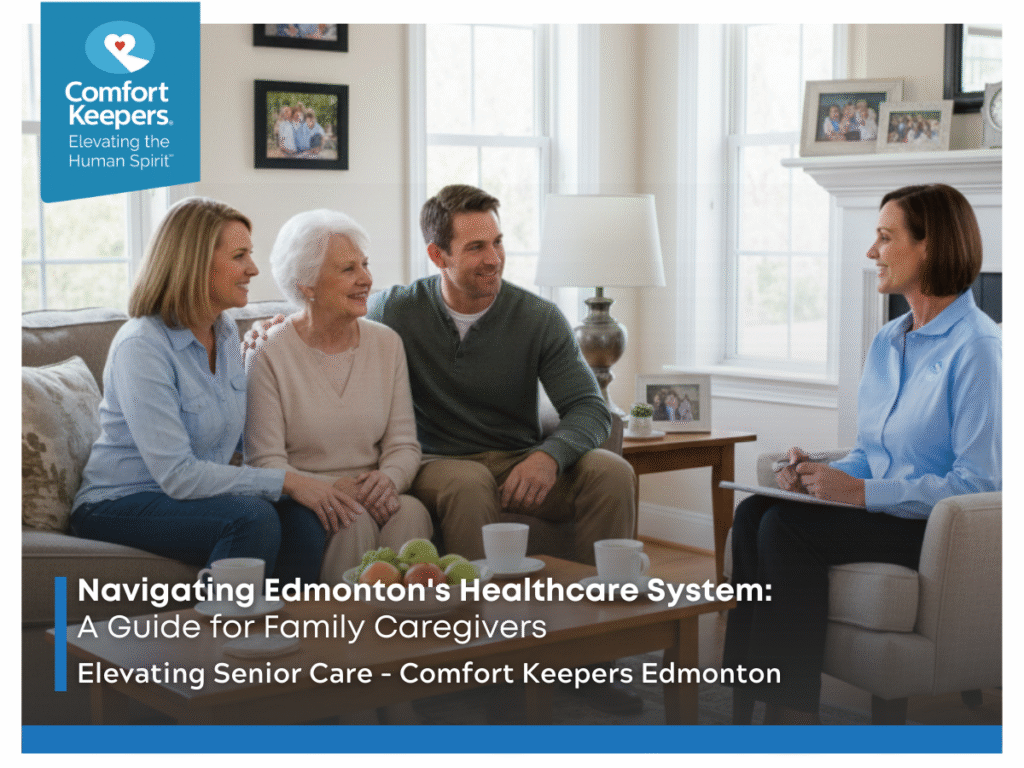
Navigating Edmonton’s Healthcare System: A Guide for Family Caregivers

Watching a loved one’s health change is one of life’s most difficult challenges. Suddenly, you’re not just a son, daughter, or spouse – you’re a caregiver, thrust
into the complex world of healthcare appointments, acronyms, and critical decisions. If you’re feeling overwhelmed, you are not alone. In fact, with nearly half of Canadian caregivers reporting fatigue and anxiety, that feeling is the norm, not the exception.
The good news is that you don’t have to navigate this journey without a map. This guide is designed to be your trusted resource for understanding and managing Edmonton’s healthcare system. We’ll translate the official jargon, outline your options, and provide a clear, step-by-step framework to help you make confident decisions for the person you care about most.

Understanding Edmonton’s Healthcare Landscape: A Primer
Before you can navigate the system, it helps to understand the key players and the language they speak. Edmonton’s continuing care system is undergoing important changes designed to improve clarity, accountability, and access for seniors and families.
As of 2024, Alberta Health Services (AHS) has been restructured into distinct health system pillars. Continuing care services including home care, supportive living, and long-term care are now overseen by Assisted Living Alberta (ALA)
Here’s What You Need to Know to Get Started:
Assisted Living Alberta (ALA): When you hear about public home care, supportive living assessments, or long-term care placements, ALA is the organization facilitating them.
Primary Care Network (PCN): Your loved one’s family doctor is likely part of a PCN in Edmonton. These networks are designed to coordinate care and provide access to a team of health professionals, like nurses, dietitians, and social workers.
Continuing Care: This is a broad term used by AHS to describe all the services for people who need ongoing care outside of a hospital. It includes everything from in-home care, supportive living, and long-term care facilities.
The demand for these services is growing rapidly. With Edmonton’s senior population projected to surge by 121% by 2030 understanding your options now is more critical than ever.
Step 1: Assessing Needs & Finding the Right Care Path
The journey always begins with a single question: “What kind of help does my loved one actually need?” Answering this honestly is the foundation for every decision that follows.
The First Signs and Next Steps
Recognizing the need for care often starts with small observations: difficulty with meal preparation, forgetting medications, increasing social isolation, or a recent fall. Once you’ve noticed a change, the next step is a more formal assessment.
Your first point of contact should be your loved one’s family doctor or PCN. They can provide a medical evaluation. For a broader assessment of daily living needs, you can contact AHS Continuing Care directly to request an in-home assessment by a case manager.
Decoding the Levels of Care in Edmonton
AHS and private providers offer a spectrum of care options. Understanding the terminology is key to finding the right fit.
- In-Home Care: This is for individuals who want to remain in their own homes but need assistance with daily activities. Services can range from companionship and light housekeeping to personal care and specialized dementia care. This option offers the most independence.
- Supportive Living (SL): These are facilities that provide housing, meals, and support services. They are graded by level of care. For instance, SL4 facilities offer 24/7 professional nursing care, while others focus more on daily living assistance.
- Long-Term Care (LTC): Also known as nursing homes, these facilities provide 24/7 nursing and personal care for individuals with complex medical needs who can no longer live safely at home or in supportive living.
Step 2: Navigating Providers: Public vs. Private Options
In Edmonton, you have two primary pathways for accessing care: the publicly funded system through AHS/ALA and privately funded services.
AHS-Funded Continuing Care
How it Works: You begin with an assessment by an AHS case manager, who determines eligibility and the level of care needed. They will then authorize services which may be delivered by AHS staff or a contracted agency.
Pros: Costs are subsidized by the government, making it more affordable. The assessment process is standardized.
Cons: Waitlists for home care hours and placements in supportive living or long-term care can be long. You typically have less choice over which specific caregiver or facility you are assigned.
Client Directed Home Care Invoicing (CDHCI)
For some seniors and families in Edmonton, publicly funded home care through Assisted Living Alberta (ALA) may not provide enough flexibility, consistency, or choice. In these cases, the Client Directed Homecare Invoicing(CDHCI) program offers an important alternative within the public system.
The CDHCI program allows eligible clients (based on approval by an AHS Case Manager assessment) to direct how their approved home care funding is used by choosing an ALA-approved private agency to deliver authorized services. These non-medical services typically include personal care, respite care, and homemaking support. Approved providers bill Alberta Blue Cross directly for authorized hours, reducing administrative burden for families.
This model gives seniors and caregivers:
- Greater choice over who provides care
- More consistent caregivers
- Flexible scheduling within approved hours
- A smoother experience compared to managing individual caregivers
CDHCI is often used as a bridge between public and private care, allowing seniors to remain at home with reliable support while still accessing public funding and the flexibility to add more private paid hours if needed.
Comfort Keepers Edmonton is an approved CDHCI service provider and has been involved with the program since the first pilot in 2022!
Privately Funded Care
How it Works: You contact a private provider like Comfort Keepers Edmonton directly. The process usually starts with a complimentary in-home consultation to create a personalized care plan.
Pros: Services can begin almost immediately. You have maximum flexibility and choice in the type of care, schedule, and specific caregiver. It can supplement AHS services or serve as a standalone solution.
Cons: The cost is paid directly by you or through private insurance.
Many families find a hybrid approach works best, using private services to fill gaps while waiting for AHS support or to “top up” the hours provided by the public system.
Step 3: Mastering Medical Appointments & Communication
As a caregiver, you often become the primary liaison between your loved one and their medical team. This role is crucial, and being prepared can make a world of difference.
How to Be an Effective Health Advocate
- Prepare a Binder: Keep a dedicated binder with your loved one’s medical history, a list of current medications (including dosages), allergies, and contact information for all their doctors and specialists. Bring this to every appointment.
- Create a Question List: Before each visit, sit down with your loved one and write down any questions or concerns. This ensures nothing is forgotten during the appointment.
- Take Notes: During the visit, write down the doctor’s answers, new instructions, and any planned next steps. Don’t be afraid to ask for clarification or for information to be written down for you.
- Confirm Understanding: Before leaving, summarize the key takeaways with the doctor. For example, “So, to be clear, we are stopping the blue pill and starting this new prescription tomorrow morning.”
- App-based programs: Coordinating care between a family doctor, a cardiologist, and a physiotherapist in Edmonton can feel like a full-time job. There are app-based programs designed to help organize and provide resources for family caregivers and the circle of care for a loved one such as Team CarePal and blueBell Connect (a blueBell Village tool)
Step 4: Advocating for Your Loved One
Patient advocacy means ensuring your loved one’s voice is heard, and their care aligns with their wishes and values. It’s about speaking up when something doesn’t feel right and knowing where to turn for help.
Your Advocacy Toolkit
- Know Their Wishes: Have open conversations about their healthcare preferences. This includes understanding their wishes for end-of-life care, which should be documented in a Personal Directive.
- Leverage Local Resources: Organizations like Caregivers Alberta provide invaluable support, education, and advocacy resources specifically for Albertans. The AHS Family Caregiver Centre is another key resource for finding support and information.
- Healthcare Consultants: like Peace of Mind Consulting and Nana’s Navigator supports Edmonton seniors and families by helping them navigate care decisions, understand funding pathways, and plan care transitions with confidence.
- Follow the Chain of Command: If you have a concern at a hospital or care facility, start with the direct care provider (e.g., the nurse). If unresolved, speak to the unit manager. AHS also has a formal Patient Relations department for escalating serious issues.
Remember, your insights as a caregiver are incredibly valuable. You know your loved one best, and your observations can provide critical information to the healthcare team.
Don’t Forget the Most Important Person: You!
The emotional and financial strain on caregivers is immense. Research shows that one in four caregivers reports fair or poor mental health. You cannot pour from an empty cup. Prioritizing your own well-being is not selfish – it’s essential for sustainable care.
Seek Respite Care: Everyone needs a break. Respite care services provide temporary relief, allowing you to rest and recharge, knowing your loved one is in good hands.
Find Your Community: Connect with local support groups in Edmonton. Sharing your experiences with others who understand can be a powerful way to combat feelings of isolation.
Set Boundaries: It’s okay to say no. You don’t have to do everything yourself. Ask other family members or friends for help with specific tasks like grocery shopping or driving to an appointment.
Frequently Asked Questions
Q1. What is the first step if I think my parent needs home care in Edmonton?
A1. Your first step should be to schedule a visit with their family doctor to discuss your concerns. Concurrently, you can reach out to AHS Continuing Care for a public assessment or contact a private provider like Comfort Keepers Edmonton for a complimentary, no-obligation in-home care consultation.
Q2. How much does continuing care cost in Alberta?
A2. For ALA-funded services, home care costs are subsidized, up to hours approved based on the assessment by a Case Manager. For designated supportive living and long-term care, AHS covers medical costs, but residents pay a government-regulated “accommodation charge” for room and board. Private care costs vary by provider and the level of service required.
Q3. What’s the difference between a Personal Directive and a Power of Attorney?
A3. A Personal Directive (PD) allows you to name an agent to make personal and healthcare decisions on your behalf if you become unable to. An Enduring Power of Attorney (EPA) allows you to appoint someone to make financial and legal decisions. Both are critical documents for advanced care planning.
Q4. Can I get paid to be a family caregiver in Alberta?
A4. While there isn’t a direct salary program for family caregivers, programs like the Client Directed Homecare Invoicing(CDHCI) program through AHS allow eligible clients to receive funds to hire their own homecare agency There are also federal tax credits available, such as the Canada Caregiver Credit.
Your Path Forward Starts Here
Navigating Edmonton’s healthcare system on behalf of a loved one is a profound act of love and commitment. It can be challenging, but with the right information and support, you can move forward with confidence and clarity.
You’ve already taken the most important step by seeking out information. The next step is to translate that knowledge into action. Whether you’re just beginning to explore options or need immediate support, our team is here to help you understand the next steps for your family’s unique situation. Here are some resources to help you with the next steps:
Starting The Conversation
20 Questions to Ask When Hiring a Homecare Provider
We invite you to schedule a conversation with one of our Edmonton care coordinators. We can help you build a personalized care plan, understand how to blend public and private services, and find the solution that brings you and your loved one peace of mind.
Comfort Keepers® Edmonton is Proud to Offer a Wide Range of Home Senior Care Services
Our trained caregivers will ensure your loved one is comfortable, independent and safe in their home. On top of that, we will also aim to enhance their overall health, quality of life and general happiness.
Top-Notch Home Accredited Healthcare for Seniors in Edmonton, Alberta

Comfort Keepers Edmonton for over 15 years has offered a broader range of senior care services. We offer retirement care, respite care, senior care, companionship care, end-of-life care, post-surgery care, palliative care, personal care, and senior living transition services. If you are concerned about the health and well-being of your aging loved ones, we can provide 24-hour care and more!
Helping Seniors Age-in-Place with Companionship Care and Interactive Caregiving™
Empathetic care starts in the heart and allows us to meet our clients’ needs. Our trained caregivers are selected with one specific quality in mind, empathy. We strive to stimulate our clients emotionally, mentally and socially, thus enhancing their overall quality of life.
Our Interactive Caregiving™ ™ provides a system of care that addresses companionship, safety, nutrition, mind, body, and activities of daily living (ADLs). The system increases seniors’ sense of well-being, independence and companionship by focusing on Senior Mind, Senior Body, Senior Nutrition, and Senior Safety.
Accredited Home Care Edmonton
Comfort Keepers® Edmonton was awarded the “Accredited with Exemplary Standing” seal by Accreditation Canada. This honour demonstrates Comfort Keepers’ commitment to offering safe, high-quality home care to its senior clients in Edmonton, AB.
To learn more about senior in-home care in Edmonton, contact the Comfort Keepers® office. Our service territory includes Edmonton, St Albert, Sherwood Park, and surrounding areas, contact the Comfort Keepers Edmonton office at 780-465-4665.
Seniors Who Suffer from Loneliness and Depression

Comfort Keepers in Edmonton, AB, Can Help to Support Families and Ward Off Loneliness and Depression
Seniors Suffering from Loneliness and Depression | The holidays may be full of celebrations and gatherings. Senior adults who struggle with physical and emotional challenges might not feel the festive season.
Chronic illness, pain, and limited mobility can all challenge older adults’ ability to participate in holiday festivities. The results may be feelings of isolation and loneliness. This sadness or depression can have an impact on their physical and emotional well-being.
Loneliness Studies and Seniors
Recent studies conclude that loneliness may affect the brain and possibly even hurry the onset of dementia. Researchers have also stated that there’s a connection between loneliness and heart disease.
#1. Harvard Research
Harvard researchers tracked 44,000 people with cardiac disease and found that 8 % of patients living alone died after just four years, in comparison with only 5.7 % of those who were living at home with a spouse, friend, or family member.
#2. University of California Research
When researchers at the University of California in San Francisco monitored a group of seniors for six years, they found that almost one-fourth (22.8 %) of all the elderly adults who had reported feeling isolated or lonely had died by the end. Yet another 25 % had significant health declines.
Here’s the good news: older adults who reported that they were content and satisfied with their lives, only 12.5 % had a health decline, and 14.2 % had died.

Comfort Keepers® Edmonton is Proud to Offer a Wide Range of Home Senior Care Services
Our trained caregivers will ensure your loved one is comfortable, independent and safe in their home. On top of that, we will also aim to enhance their overall health, quality of life and general happiness.
Top-Notch Home Accredited Healthcare for Seniors in Edmonton, Alberta
For over 15 years Comfort Keepers Edmonton has offered a broader range of senior care services. We offer retirement care, respite care, senior care, companionship care, end-of-life care, post-surgery care, palliative care, personal care, and senior living transition services. If you are concerned about the health and well-being of your aging loved ones, we can provide 24-hour care and more!
Helping Seniors Age-in-Place with Companionship Care and Interactive Caregiving™
Empathetic care starts in the heart and allows us to meet our clients’ needs. Our trained caregivers are selected with one specific quality in mind, empathy. We strive to stimulate our clients emotionally, mentally and socially, thus enhancing their overall quality of life.
Our Interactive Caregiving™ ™ provides a system of care that addresses companionship, safety, nutrition, mind, body, and activities of daily living (ADLs). The system increases seniors’ sense of well-being, independence and companionship by focusing on Senior Mind, Senior Body, Senior Nutrition, and Senior Safety.
Affordable and Client-Directed Homecare is Available for Qualifying Albertans
Comfort Keepers® Edmonton is an Approved Service Provider for the Client Directed Homecare Invoicing (CDHCI) Program Offered by Alberta Health Services.
What is the Client Directed Home Care Invoicing Program (CDHCI)?
CDHCI is a great program provided by Alberta Health Services (AHS), allowing clients to choose an approved agency like Comfort Keepers Edmonton for Personal Care, Respite Care and Homemaking needs. The chosen agency can then bill AHS directly for services rendered for approved hours through Alberta Blue Cross. Read more about the program HERE.
Accredited Home Care Edmonton
Comfort Keepers® Edmonton was awarded the “Accredited with Exemplary Standing” seal by Accreditation Canada. This honour demonstrates Comfort Keepers’ commitment to offering safe, high-quality home care to its senior clients in Edmonton, AB.
To learn more about senior in-home care in Edmonton, contact the Comfort Keepers® office. Our service territory includes Edmonton, St Albert, Sherwood Park, and surrounding areas. Contact the Comfort Keepers Edmonton office at 780-465-4665.
Caregiver Self-Care: Proactive Strategies to Build Resilience and Prevent Burnout
If you’re a family caregiver, you’ve likely heard the advice to “take care of yourself” more times than you can count. While well-intentioned, that advice can feel unrealistic when you’re juggling appointments, medications, emotional support, and daily responsibilities for someone you love. When every hour is accounted for, self-care often feels like one more task on an already full plate.
The challenge is that caregiver self-care is often treated as a reaction—something we turn to only when burnout is already setting in. A more sustainable approach is to build resilience before exhaustion takes over. By focusing on proactive self-care strategies, caregivers can protect their own health while continuing to provide compassionate, reliable support for their loved ones.
This guide explores practical, time-efficient ways caregivers can strengthen resilience, manage stress, and prevent burnout—without guilt.
The Shift: From Burnout Prevention to Proactive Resilience
Caregiving is deeply meaningful, but it’s also demanding. Research consistently shows that caregivers experience high levels of emotional stress and reduced overall well-being. Waiting until burnout appears is like responding to a fire alarm instead of fireproofing your home.
Consider the reality for caregivers: an astonishing 64% report high emotional stress, and 41% experience low overall well-being. These aren’t just numbers; they represent millions of caregivers feeling stretched thin. The traditional “burnout prevention” model often kicks in too late.
Proactive resilience focusses on:
- Building Reserves: Intentionally stocking up on physical and emotional energy before you’re running on empty.
- Developing Skills: Learning and practicing techniques for managing stress and setting boundaries before they become critical issues.
- Anticipating Needs: Understanding the stages of caregiving and preparing for future challenges, rather than just reacting to them.
This approach helps caregivers maintain clarity, patience, and energy over the long term—benefiting both the caregiver and the person receiving care.
Your Resilience Toolkit: Practical, Time-Efficient Strategies
The single biggest obstacle to self-care is time. With caregivers dedicating an average of 27 hours a week to their duties – many far more – long, elaborate routines are simply unrealistic. That’s why the most effective strategies are built on “micro-interventions”small, powerful actions that fit into the cracks of your day.
Micro-Resilience Routines for the Busiest Days (5-15 Minutes)
These brief routines can reset your nervous system and replenish your energy without demanding significant time.
- Mindful Morning Start (3 Minutes): Before you even get out of bed, take five slow, deep breaths. Focus on the feeling of the air entering and leaving your body. This simple practice, rooted in Mindfulness-Based Stress Reduction (MBSR), is proven to reduce anxiety and depression in caregivers.
- Midday Energy Reset (5 Minutes): Step away for a moment. Do a few simple stretches, drink a full glass of water, or just sit in silence and look out a window. The goal is to consciously interrupt the cycle of stress.
- Evening Wind-Down (10 Minutes): Before sleep, put your phone away. Spend ten minutes writing down three things you’re grateful for or one challenge you handled well that day. This helps shift your focus from worry to a sense of accomplishment and peace.
Setting Healthy Boundaries: Your First Line of Defense
Saying “no” can be one of the hardest things for a caregiver to do, but it’s also one of the most powerful acts of self-preservation. Boundaries protect your time, energy, and emotional health.
Helpful boundary-setting scripts:
- “I want to help, but I can’t take that on right now. Can we explore another option?”
- “I need help managing everything. Could you assist with one specific task?”
- “I’m unavailable Wednesday mornings—that time is reserved.”
Clear communication helps caregivers sustain their role without sacrificing their own well-being.
Boosting Your Confidence: The Power of Self-Efficacy
Did you know that up to 55% of family caregivers perform complex medical tasks with little to no training? This can be a major source of stress and self-doubt. Proactively building your competence – what experts call “self-efficacy” – is a direct way to reduce anxiety.
Focus on mastering one task at a time, whether it’s organizing medications or learning a safe transfer technique. As your confidence grows, your stress level will naturally decrease. When you feel capable, you regain a sense of control in a situation that can often feel uncontrollable. This is a core component of our philosophy at Comfort Keepers Edmonton, where our caregivers receive continuous training to provide specialized care for conditions like dementia and other complex needs with confidence.
Fueling Your Body and Mind: The Pillars of Physical Resilience
You can’t pour from an empty cup. Your physical health is the engine that powers your ability to care for others. Proactive self-care means treating your body with the same attention you give your loved one.
Nutrition for Sustained Energy
When you’re short on time, it’s easy to rely on caffeine and sugary snacks. Instead, focus on quick, nutrient-dense options that provide lasting energy.
- Keep hard-boiled eggs, cheese sticks, or nuts on hand.
- Make a large batch of oatmeal or a healthy soup to eat throughout the week.
- Prepare pre-cut vegetables for easy snacking.
Movement That Fits Your Life
You don’t need a gym to stay active but try:
- A 10-minute walk
- Gentle stretching or chair yoga
- Light movement while watching TV
Managing the Emotional Toll Before It Takes Over
Caregiving brings love, frustration, fulfillment, and guilt—often all at once. Acknowledging these emotions without judgment is essential to long-term resilience.
From Guilt to Self-Compassion
Caregiver guilt is common, but it doesn’t have to control you. When you feel guilty for taking a break, reframe the thought. Instead of “I’m being selfish,” try “I’m recharging so I can be a better caregiver.” Treat yourself with the same kindness and compassion you so freely give to others.
Building Your Support Ecosystem
Asking for help is a sign of strength, not weakness. A strong support system is essential for long-term resilience. Go beyond just family and friends; consider professional support to give yourself the regular, reliable breaks you need. Exploring options like respite care services can provide you with peace of mind, knowing your loved one is in compassionate hands while you take vital time for yourself.
Frequently Asked Questions about Caregiver Self-Care
Q1. I feel too guilty to take time for myself. How do I overcome that?
A1. This is the most common barrier caregivers face. Start by reframing self-care as a vital part of your caregiving plan. It’s not selfish; it’s strategic. Remind yourself that by recharging, you are protecting your ability to provide loving care for the long term. Start small – even a 15-minute break is a victory.
Q2. I literally have no time. Are 5-minute breaks really enough?
A2. Absolutely. The principle of “micro-interventions” is based on the idea that frequent, short breaks are more effective at preventing stress buildup than infrequent, long ones. A 5-minute deep breathing exercise can lower your heart rate and clear your mind, making a real difference in your ability to cope with the next challenge.
Q3. My family doesn’t support me taking breaks. What can I do?
A3. This is where boundary-setting and clear communication are key. Use “I” statements to explain your needs without placing blame. For example, “I am feeling exhausted and need a two-hour break on Saturday to recharge. Can we work together to make that happen?” Sometimes, bringing in a neutral third party, like a care manager or trusted advisor, can help facilitate these conversations.
Q4. When is it time to seek professional help for my loved one?
A4. If you’re consistently feeling overwhelmed, if your loved one’s needs are becoming too complex for you to manage safely, or if your own physical or mental health is declining, it’s time to explore professional support. This isn’t a failure – it’s a loving decision to ensure your loved one gets the best possible care while you get the support you need.
Take the First Step Toward Sustainable Care
Being a caregiver is one of the most profound roles you will ever have. Protecting your own well-being is the most important thing you can do to honor that role. By shifting your mindset from reactive burnout prevention to proactive resilience building, you are making a powerful choice for both yourself and the person you care for.
Building a sustainable care plan is a journey, and you don’t have to do it alone. An in-home assessment isn’t just about evaluating your loved one’s needs; it’s about understanding your entire family’s situation and creating a support system that works for everyone.
If you’re ready to build a more resilient caregiving plan, contact us today. Let us be your partner in providing compassionate care while helping you maintain your own health and well-being.
Comfort Keepers® Edmonton is Proud to Offer a Wide Range of Home Senior Care Services
Our trained caregivers will ensure your loved one is comfortable, independent and safe in their home. On top of that, we will also aim to enhance their overall health, quality of life and general happiness.
Top-Notch Home Accredited Healthcare for Seniors in Edmonton, Alberta
For over 15 years Comfort Keepers Edmonton has offered a broader range of senior care services. We offer retirement care, respite care, senior care, companionship care, end-of-life care, post-surgery care, palliative care, personal care, and senior living transition services. If you are concerned about the health and well-being of your aging loved ones, we can provide 24-hour care and more!
Helping Seniors Age-in-Place with Companionship Care and Interactive Caregiving™
Empathetic care starts in the heart and allows us to meet our clients’ needs. Our trained caregivers are selected with one specific quality in mind, empathy. We strive to stimulate our clients emotionally, mentally and socially, thus enhancing their overall quality of life.
Our Interactive Caregiving™ ™ provides a system of care that addresses companionship, safety, nutrition, mind, body, and activities of daily living (ADLs). The system increases seniors’ sense of well-being, independence and companionship by focusing on Senior Mind, Senior Body, Senior Nutrition, and Senior Safety.
Affordable and Client-Directed Homecare is Available for Qualifying Albertans
Comfort Keepers® Edmonton is an Approved Service Provider for the Client Directed Homecare Invoicing (CDHCI) Program Offered by Alberta Health Services.
What is the Client Directed Home Care Invoicing Program (CDHCI)?
CDHCI is a great program provided by Alberta Health Services (AHS), allowing clients to choose an approved agency like Comfort Keepers Edmonton for Personal Care, Respite Care and Homemaking needs. The chosen agency can then bill AHS directly for services rendered for approved hours through Alberta Blue Cross. Read more about the program HERE.
Accredited Home Care Edmonton
Comfort Keepers® Edmonton was awarded the “Accredited with Exemplary Standing” seal by Accreditation Canada. This honour demonstrates Comfort Keepers’ commitment to offering safe, high-quality home care to its senior clients in Edmonton, AB.
To learn more about senior in-home care in Edmonton, contact the Comfort Keepers® office. Our service territory includes Edmonton, Devon, Sherwood Park, Stony Plain and surrounding areas, contact the Comfort Keepers Edmonton office at 780-465-4665.
Helping Edmonton’s Seniors Who Suffer from Alzheimer’s and Other Chronic Diseases

What Every Senior in Edmonton, AB, Needs to Know About Disease Management
Helping Seniors Who Suffer from Alzheimer’s | According to the Alzheimer’s Association, there are over 5 million people in the U.S. over 65 years old with this devastating disease. Alzheimer’s disease causes thinking and memory issues, as well as behaviour changes that eventually affect an adult’s work, family, and social relationships. Even basic activities of daily living become problematic.
Chronic Conditions in Alzheimer’s Patients
People with Alzheimer’s Disease in the U.S. have chronic health issues just the same as other older adults. People with dementia usually suffer from at least one other chronic disease or health condition. Other common medical problems include heart disease, diabetes, stroke, arthritis, chronic skin ulcers, and retinal disorders.
Managing Health
Memory loss, lack of judgment, and inability to reason make healthcare management impossible. For example, an Alzheimer’s patient won’t be able to follow pharmaceutical or nutritional instructions, and they also won’t recognize when conditions are worsening.
Caregivers Can Help
As a caregiver of an Alzheimer’s patient, you may be able to lower the discomfort from chronic disease by overseeing the older patient’s safety and nutrition. You can also make provisions for adequate exercise and sleep.
Four Tips for How Caregivers Can Help
Tip #1. Living Area
Be sure living areas are safe. Since senior falls are common, secure a grab bar in at least the bath area. A shower bench will allow the adult to be safely seated during a shower.
Tip #2. Diet
Provide healthy food. The elderly patient needs healthy foods, especially for diabetes, high blood pressure, and cholesterol.
Tip #3. Exercise
Encourage adequate exercise. Chronic conditions become more challenging as the disease worsens. The patient can use a stationary bike, exercise balls, stretch bands, or walk.
Tip #4. Sleep
Resolve sleep issues if possible. Sleeping through the night can be challenging for seniors with Alzheimer’s. Create a comfortable sleep environment to promote restful sleep, with regular sleeping and waking times.
Additional Things to Consider About Alzheimer’s
Someone with Alzheimer’s Disease cannot give details about additional symptoms or problems with medications. Remember that Alzheimer’s patients can’t tell you if something hurts so you need to pay attention as to whether there are noticeable signs of pain or discomfort.
Consult with the Alzheimer’s patient’s medical specialist for information and additional help. When working with an older adult suffering from Alzheimer’s disease, surround yourself with others who care, too.

Comfort Keepers® Edmonton is Proud to Offer a Wide Range of Home Senior Care Services
Our trained caregivers will ensure your loved one is comfortable, independent and safe in their home. On top of that, we will also aim to enhance their overall health, quality of life and general happiness.
Top-Notch Home Accredited Healthcare for Seniors in Edmonton, Alberta
For over 15 years Comfort Keepers Edmonton has offered a broader range of senior care services. We offer retirement care, respite care, senior care, companionship care, end-of-life care, post-surgery care, palliative care, personal care, and senior living transition services. If you are concerned about the health and well-being of your aging loved ones, we can provide 24-hour care and more!
Helping Seniors Age-in-Place with Companionship Care and Interactive Caregiving™
Empathetic care starts in the heart and allows us to meet our clients’ needs. Our trained caregivers are selected with one specific quality in mind, empathy. We strive to stimulate our clients emotionally, mentally and socially, thus enhancing their overall quality of life.
Our Interactive Caregiving™ ™ provides a system of care that addresses companionship, safety, nutrition, mind, body, and activities of daily living (ADLs). The system increases seniors’ sense of well-being, independence and companionship by focusing on Senior Mind, Senior Body, Senior Nutrition, and Senior Safety.
Affordable and Client-Directed Homecare is Available for Qualifying Albertans
Comfort Keepers® Edmonton is an Approved Service Provider for the Client Directed Homecare Invoicing (CDHCI) Program Offered by Alberta Health Services.
What is the Client Directed Home Care Invoicing Program (CDHCI)?
CDHCI is a great program provided by Alberta Health Services (AHS), allowing clients to choose an approved agency like Comfort Keepers Edmonton for Personal Care, Respite Care and Homemaking needs. The chosen agency can then bill AHS directly for services rendered for approved hours through Alberta Blue Cross. Read more about the program HERE.
Accredited Home Care Edmonton
Comfort Keepers® Edmonton was awarded the “Accredited with Exemplary Standing” seal by Accreditation Canada. This honour demonstrates Comfort Keepers’ commitment to offering safe, high-quality home care to its senior clients in Edmonton, AB.
To learn more about senior in-home care in Edmonton, contact the Comfort Keepers® office. Our service territory includes Edmonton, Devon, Sherwood Park, Stony Plain and surrounding areas, contact the Comfort Keepers Edmonton office at 780-465-4665.
The Essential Guide to Practical In-Home Caregiving Skills
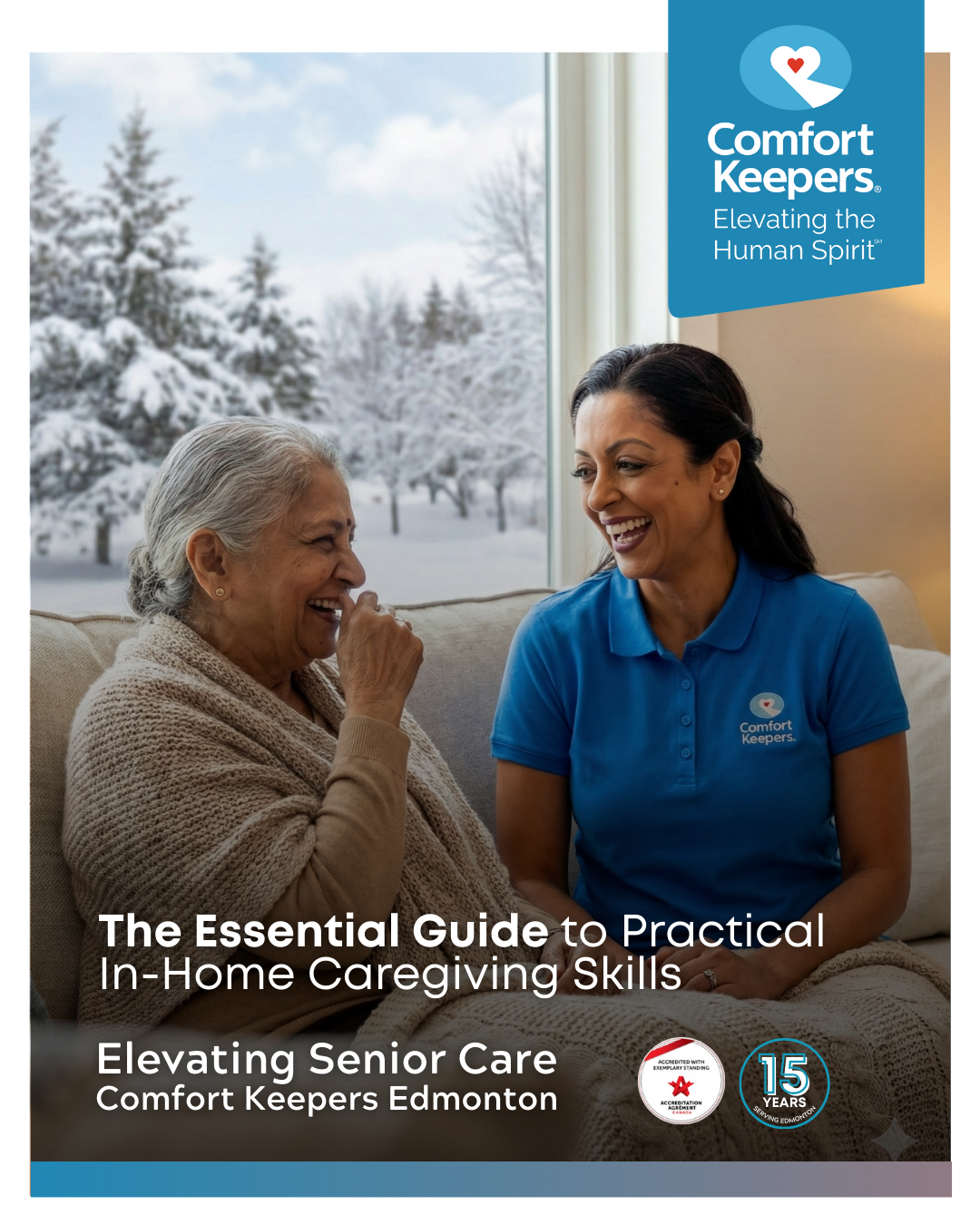
Stepping into the role of a family caregiver is one of the most profound acts of love. But alongside the desire to help, a wave of questions can feel overwhelming. How do I help them move safely? Am I managing their medications correctly? How do I handle personal care while preserving their dignity?
You’re not alone in feeling this way. While many caregivers perform complex medical tasks, research shows that only 22% receive the necessary training. This guide is designed to bridge that gap. It’s a practical, hands-on resource to build your confidence and competence, transforming your uncertainty into skilled, compassionate care.

The Foundation: More Than Just Tasks
Before diving into specific techniques, let’s establish three principles that turn routine tasks into moments of connection and respect.
Dignity and Respect First
Every interaction is an opportunity to honour your loved one’s autonomy. Involve them in decisions whenever possible, from choosing their outfit to deciding when to bathe. Explain what you’re doing before you do it. This person-centered approach is the core of compassionate care and a cornerstone of our philosophy at Comfort Keepers Edmonton.
Your Well-being is Non-Negotiable
Caregiving is a marathon, not a sprint. The statistics are stark: one in five caregivers reports being in poor health themselves. Mastering proper techniques isn’t just about your loved one’s safety; it’s about protecting your own body from strain and injury. Using supportive equipment can reduce physical strain by as much as 47%, a crucial factor in sustaining your ability to provide care long-term.
Observation is Your Most Powerful Tool
Your loved one may not always be able to articulate their needs. Learn to watch for subtle changes in their appetite, mobility, mood, or confusion levels. Noticing these shifts early is key to proactive care and can prevent small issues from becoming larger problems.
Module 1: Personal Hygiene with Dignity and Ease
Assisting with personal hygiene is often the most sensitive area of caregiving. The goal is to ensure health and comfort while navigating the task with empathy and respect.
Bathing and Showering
- Prepare Everything First: Gather towels, soap, shampoo, lotion, and fresh clothes. Make sure the room is warm and comfortable.
- Talk Through the Process: A running commentary of what you’re doing and what’s next can reduce anxiety.
- Tackle Resistance with Calm: If your loved one is resistant, try a different time of day. Sometimes, gentle persistence is needed, but never force. Frame it as a way to feel refreshed and comfortable.
- Essential Equipment: A shower chair, handheld shower nozzle, and long-handled brushes can dramatically increase safety and independence. For those who are bed-bound, no-rinse shampoos and body washes are excellent alternatives.
Oral Health and Grooming
Good oral hygiene prevents painful infections and supports overall health. Assist with brushing, flossing, and denture care daily. Similarly, helping with simple grooming tasks like combing hair or shaving maintains a sense of identity and self-esteem.
Incontinence Care
Managing incontinence is about three things: promptness, skin protection, and a matter-of-fact attitude.
- Change incontinence briefs as soon as they are soiled.
- Clean the area thoroughly with gentle wipes or cleansers.
- Apply a barrier cream to protect the skin from moisture and breakdown.
Module 2: Safe Mobility and Transfer Mastery
This is where proper technique is absolutely critical to prevent injury to both you and your loved one.
Proper Body Mechanics for You
Remember these rules for every lift and transfer:
- Bend at your knees, not your back.
- Keep your feet shoulder-width apart for a stable base.
- Hold your loved one close to your center of gravity.
- Pivot with your feet; never twist your back.
Step-by-Step Transfer: Bed to Wheelchair
- Position the Wheelchair: Place it at a 45-degree angle to the bed, as close as possible. Lock the brakes and move the footrests out of the way.
- Sit Up: Help your loved one sit on the edge of the bed with their feet flat on the floor. Let them sit for a moment to avoid dizziness.
- Use a Gait Belt: A gait belt is a caregiver’s best friend. Secure it snugly around your loved one’s waist. It gives you a safe place to hold onto, rather than pulling on their arms.
- Ready, Set, Stand: Communicate clearly. On the count of three, instruct them to push off the bed as you support them with the gait belt, using your legs to lift.
- Pivot and Sit: Pivot your feet (don’t twist your back) until they are in front of the wheelchair. Have them reach back for the armrests, and then slowly help them lower into the chair.
Essential Mobility Equipment
- Gait Belt: For secure transfers.
- Walker/Cane: Ensure it is professionally fitted. Incorrect height can increase fall risk.
- Sliding Board: An incredibly useful tool for those with limited leg strength, allowing them to slide from a bed to a chair.
- Home Modifications: Installing grab bars in the bathroom and ensuring clear, well-lit pathways are some of the most effective ways to prevent falls. If you are exploring how to adapt your home, a professional in-home assessment can identify specific safety needs.
Module 3: Medication Management with Confidence
Managing multiple prescriptions can be daunting. Your system must be clear, consistent, and error-proof.
The “Five Rights”
Before giving any medication, always check the:
- Right Person
- Right Medication
- Right Dose
- Right Time
- Right Route (e.g., by mouth, topical)
Organization Systems
- Weekly or multi-dose pill organizers – A simple weekly pill box is a good start, also consider monthly blister packaging by your pharmacy.
- Smart dispensers that alert caregivers to missed doses.
- Medication log with dosages and prescriber details.
Bring your list to every appointment to avoid errors and ensure coordinated care.
Module 4: Creating a Safe Home Environment
A Practical Fall Prevention Audit
- Lighting: Bright, glare-free, with night lights in hallways and bathrooms
- Floors: Remove throw rugs, tape down carpet edges, clear clutter
- Bathrooms: Grab bars, non-slip mats, raised toilet seats if needed
- Stairs: Sturdy handrails on both sides
Smart Home Supports
Technology can reduce hospital visits and improve peace of mind.
- Voice assistants for hands-free help
- Motion sensors to detect nighttime wandering
- Fall detection devices that automatically alert caregivers
Conclusion: You Don’t Have to Do This Alone
Caregiving is a journey—one that requires skill, patience, and support. Learning these techniques is an empowering step that protects both you and your loved one. But remember: you are not expected to shoulder everything yourself.
If you ever need:
- Help with personal care
- Support with mobility
- Medication reminders
- A home safety assessment
- Respite care so you can recharge
Comfort Keepers Edmonton is here to help you provide safe, compassionate care at home.
Frequently Asked Questions
What if my loved one refuses help, especially with personal care?
This is very common and often rooted in a desire for independence or feelings of embarrassment. The key is patience and communication. Try to understand the reason for the refusal. Offer choices to give them a sense of control. If resistance continues, it might be a sign that help from a professional caregiver, who is not a family member, could be a more comfortable solution for them.
Can I really learn to do all this without formal medical training?
Absolutely. Millions of family caregivers master these skills every day. The goal is not to become a nurse, but to become a competent and confident caregiver. This guide is a starting point. Don’t hesitate to ask your loved one’s doctor or pharmacist to demonstrate specific techniques. Remember, even professionals offering specialized dementia care started with these fundamentals.
I’m feeling completely burned out. What can I do?
Caregiver burnout is real and serious. Acknowledging it is the first step. It’s crucial to schedule time for yourself, even if it’s just for an hour. Ask other family members or friends for help. Explore respite care options, which provide short-term relief for primary caregivers. Protecting your own health is essential to providing good care.
You Are Capable, and You Are Not Alone
Mastering these practical skills will empower you to provide safe, effective, and dignified care. Each task you learn is another way you are elevating the human spirit – both your loved ones’ and your own.
At Comfort Keepers Edmonton, we see the incredible work family caregivers do every day. If you reach a point where the tasks feel too demanding or you simply need a break, we are here to support you. Our compassionate caregivers can step in with the expertise you need, creating a personalized care plan that complements the loving support you already provide.
Contact us today to learn how we can help you and your family on this journey.
Comfort Keepers® Edmonton is Proud to Offer a Wide Range of Home Senior Care Services
Our trained caregivers will ensure your loved one is comfortable, independent and safe in their home. On top of that, we will also aim to enhance their overall health, quality of life and general happiness.
Top-Notch Home Accredited Healthcare for Seniors in Edmonton, Alberta
For over 15 years Comfort Keepers Edmonton has offered a broader range of senior care services. We offer retirement care, respite care, senior care, companionship care, end-of-life care, post-surgery care, palliative care, personal care, and senior living transition services. If you are concerned about the health and well-being of your aging loved ones, we can provide 24-hour care and more!
Helping Seniors Age-in-Place with Companionship Care and Interactive Caregiving™
Empathetic care starts in the heart and allows us to meet our clients’ needs. Our trained caregivers are selected with one specific quality in mind, empathy. We strive to stimulate our clients emotionally, mentally and socially, thus enhancing their overall quality of life.
Our Interactive Caregiving™ ™ provides a system of care that addresses companionship, safety, nutrition, mind, body, and activities of daily living (ADLs). The system increases seniors’ sense of well-being, independence and companionship by focusing on Senior Mind, Senior Body, Senior Nutrition, and Senior Safety.
Affordable and Client-Directed Homecare is Available for Qualifying Albertans
Comfort Keepers® Edmonton is an Approved Service Provider for the Client Directed Homecare Invoicing (CDHCI) Program Offered by Alberta Health Services.
What is the Client Directed Home Care Invoicing Program (CDHCI)?
CDHCI is a great program provided by Alberta Health Services (AHS), allowing clients to choose an approved agency like Comfort Keepers Edmonton for Personal Care, Respite Care and Homemaking needs. The chosen agency can then bill AHS directly for services rendered for approved hours through Alberta Blue Cross. Read more about the program HERE.
Accredited Home Care Edmonton