


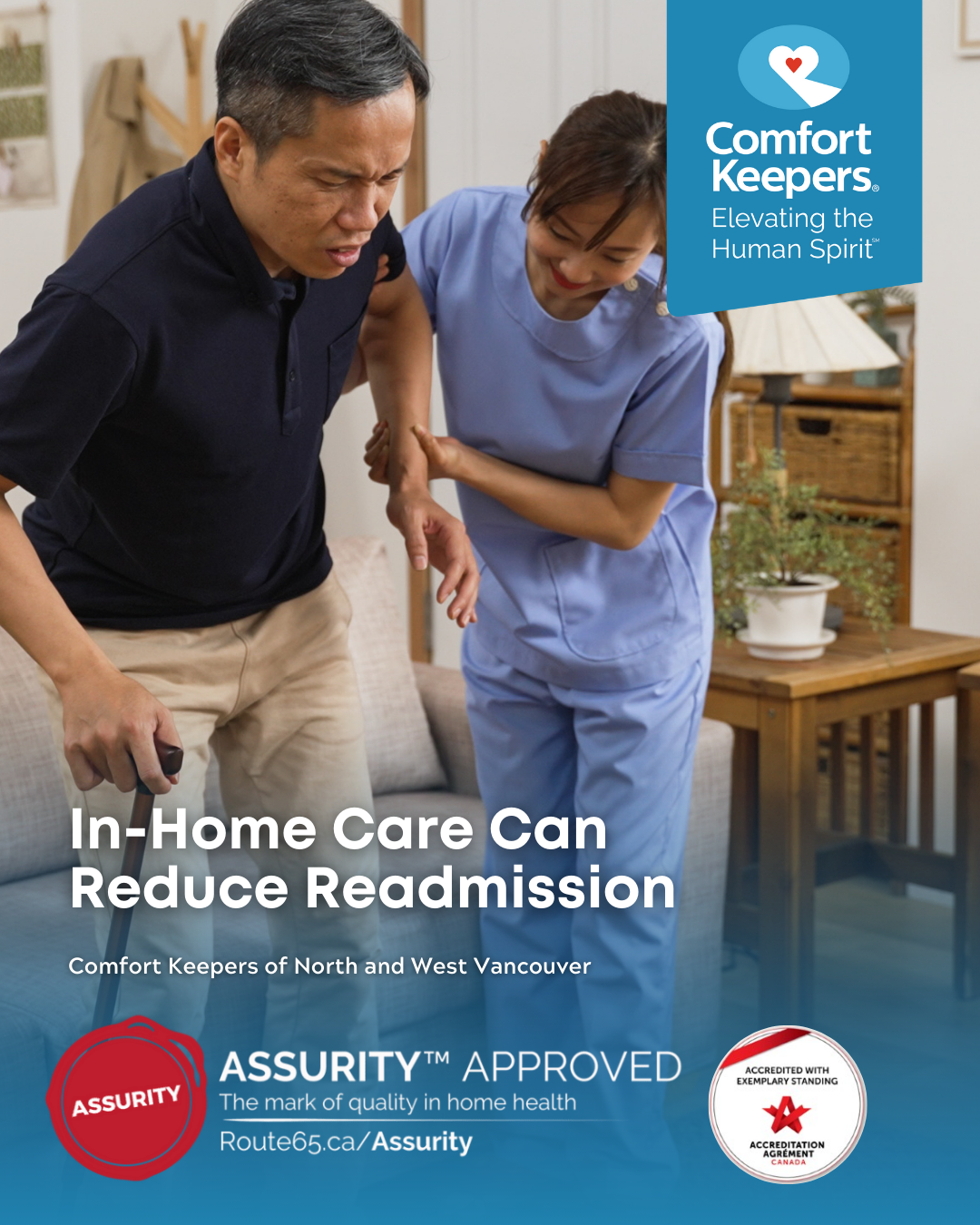

What Every Senior in North Vancouver and West Vancouver, BC Needs to Know About Reducing Hospital Readmission
Did you know that seniors who receive in-home care can reduce readmission? Did you know that hospitals face penalties for high rates of readmissions for specific diseases? As a result, doctors and other medical personnel are seeking ways to reduce the chance of seniors returning.
According to Kathleen Morris, Director of Health System Analysis and Emerging Issues at the Canadian Institute for Health Information (CIHI);
- New research shows 1 in 12 patients return within 30 days of being discharged from a Canadian hospital.
- This costs the health system an estimated $1.8 billion over 11 months.
- Hospital readmissions can be avoided if patients, families, caregivers, and hospital staff prepare ahead for the day of discharge.
There are many reasons seniors need to be readmitted to the hospital, but preventable causes are of interest. Research indicates that caregivers are critical in helping seniors overcome some of the main preventable causes of returning to the hospital.
Three Ways In-Home Care Can Reduce Readmission
#1 – Many seniors are unable to appropriately follow prescribed medication schedules
On average, seniors with chronic conditions fill 50 different prescriptions annually. It is not difficult to imagine how someone could get confused about newly prescribed medicines. Caregivers can remind seniors to take medications as prescribed and help seniors keep a list of those medications and dosages.
#2 – Failing to follow up with the physician after a hospital discharge is also a main reason for hospital readmissions.
A full two-thirds of patients readmitted to the hospital could have avoided the trip with a doctor’s follow-up. However, for some, transportation difficulties and forgetting to make or keep appointments can prevent follow-up. Hospital staff can aid the senior by setting up appointments for the individual before discharge, and caregivers can help ensure that the senior gets to those appointments on time.
#3 – Having a discharge plan for the senior before he or she leaves the hospital can be crucial for recovery, but when a person is ill, it is difficult to focus on critical information.
Caregivers can make an impact when armed with the senior’s discharge plan. They can help the senior follow the plan and notify the family or other approved individuals when there are problems or changes with the senior.
They can also help explain the information or ensure that the appropriate persons are notified if the older individual has questions about his or her course of treatment. This takes the stress off the senior so they can focus on recovery.

The Best Senior Home Care in North and West Vancouver is Comfort Keepers®
Our senior home care agency offers in-home care focusing on aging in place. Our services include; dementia care, end-of-life care, post-surgery care, and palliative care. Comfort Keepers can assist seniors with living transition services, personal care, companionship care, and more!
Quality and Accredited Elderly Care: Happier, Healthier, and at Home with 24/7 Senior Care Opportunities!
Do you need a home care solution for yourself or a loved one? Have you been thinking about retirement homes and their alternatives as a solution? Comfort Keepers® enables seniors to maintain happy, healthy lives in the comfort of their own homes. In-home care services are available in North Vancouver, West Vancouver, and the surrounding areas.
Comfort Keepers® is a Senior Care Agency That Can Make a Difference with Interactive Caregiving™
Our in-home caregivers ensure our senior clients have the best quality of life. The Interactive Caregiving™ program ensures that a senior’s safety, nutrition, mental well-being, and everyday needs are met. This program brings joy and good health to each client’s home.
Comfort Keepers® North Vancouver and West Vancouver Can Help with In-Home Elderly Care Services!
If you are concerned about the health and well-being of a loved one we can help! Comfort Keepers offers 24-hour care and delivers top-quality and compassionate care for seniors. We are dedicated to safety technology solutions that foster independence and enhance well-being.
Locally Owned and Operated Home Health Care Agency
Our care centers around companionship for seniors. Empathetic care originates from the soul and allows us to meet our client’s requirements. The seasoned in-home caregivers employed by Comfort Keepers are carefully chosen based on their empathetic qualities.
Contact the Comfort Keepers® North Vancouver and West Vancouver office at (604) 998-8806 to learn more about our unique in-home care solutions for seniors.
Comfort Keepers is an Accredited Senior Care Agency in North and West Vancouver, BC
Comfort Keepers® North and West Vancouver accredited with Exemplary Standing with Accreditation Canada. Accreditation is an intensive process in which industry experts examine an organization’s processes, policies, and procedures against quality standards. To achieve accredited status, Comfort Keepers® met or exceeded the rigorous standards for Home Care companies, outlined by Accreditation Canada.
References
American Hospital Association. (September 2011). Examining the drivers of readmissions and reducing unnecessary readmissions for better patient care 2011 AHA Policy Research</em>. Retrieved from http://www.aha.org/research/policy/2011.shtml.
Robert Wood Johnson Foundation. (February 2013). Ten things you should know about care transitions. Retrieved from http://www.rwjf.org/content/dam/farm/toolkits/toolkits/2013/rwjf404086.
When Is It Time to Consider Respite Care for Families in North and West Vancouver?


What Every Family in North and West Vancouver Needs to Know About Respite Care for Their Loved One
When is it time to consider respite care? | Respite care is not self-indulgent. It’s a necessity. Caring for an older or ill family member can be hugely rewarding and bring you closer – but being consumed by it will drain you physically and emotionally, and eventually cause burnout.
Does Your Aging Loved One Require Respite Care?
That’s why caregivers need to seek occasional respite from their responsibilities, whether for a few hours a week to run personal errands – or longer to take a much-needed vacation. Respite care offers a chance to de-stress, restore physical and mental energy, and establish a balanced life.
Fast Fact
In a study, 60% of family caregivers, ages 19-64, reported “fair or poor” health and one or more chronic conditions or disabilities, compared with only 33%
of non-caregivers.
The Many Benefits of Respite Care
Respite care for loved ones provides short-term breaks for caregivers, ensuring the well-being of the caregiver and the client. After all, you want to be at your very best, both physically and mentally.
Five Benefits of Respite Care:
#1 – Leisure time for renewal:
Take a walk, read a book, browse the internet, visit an art gallery or museum, listen to music – whatever brings joy and a sense of calm.
#2 – A change of venue:
Escaping the day-to-day of caregiving can help you relax, bring you a new perspective on the situation, and give you a chance to clear your head to come up with new solutions to problems or concerns.
#3 – Enjoyment and pleasure:
As a caregiver, you must remember that you have the right to enjoy life. You also have no reason to feel guilty.
#4 – A renewed sense of self:
Caregivers are individuals who need to live their lives and keep a firm grip on their own identity.
#5 – Socialization:
Don’t be isolated or feel alone. Take time to engage with friends, family, and co-workers by sharing meals, conversations, and experiences.
Related Article: In-Home Care Can Reduce Hospital Readmission
Eight Things to Do Once You’ve Secured Respite Care:
#1 – Involve your loved one:
Keep your loved one informed when planning for time off from your caregiving duties. Involve your loved ones to decide how long you will be away, and who will fill in for you when you’re gone. Express how they will benefit from your relaxed and refreshed state. Reinforce the idea that they will also benefit from socializing with other people.
#2 – Acknowledge your role:
The National Family Caregivers Association completed a survey that showed some often refuse that their caregiver role is separate from their role as a parent or spouse. The survey found that a shift in this attitude impacts work/life balance.
#3 – Assess your needs:
Decide what care is necessary in your absence. Determine what skills are needed to take care of your loved one.
#4 – Stay organized:
Use a calendar to organize and plan for assistance, and don’t forget to schedule time for yourself. Schedule some respite time and indicate how you plan to use it.
#5 – Create your own space:
Once you’ve decided on having respite relief, find a place for yourself. You shouldn’t have to leave the house to spend time relaxing or with hobbies.
#6 – Deal with your feelings:
Bottling up your emotions takes a toll on your psyche and your health. Share feelings of frustration with friends and family. Seek support from others who are in a similar situation. Talk with a professional counsellor, or join a caregiver support group.
#7 – Remember to say “no” when it’s necessary:
Accept that you can’t do everything, and resist the urge to take on more than you can handle. If someone asks you to do something you cannot do, be honest and explain why you can’t – and don’t feel bad about it.
#8 – Stay positive:
Do your best not to dwell on the negative. Hold a family meeting or call a senior care mediator to resolve conflicts with siblings and relatives. Remember to be proud of all you are doing, and focus on the rewards of caring for someone you love.
Respite care isn’t about indulgence; it’s a vital necessity. While caring for an older or ill family member can be deeply rewarding and strengthen bonds, becoming consumed by it can take a toll on your physical and emotional well-being, leading to burnout.

The Best Senior Home Care in North and West Vancouver is Comfort Keepers®
Our senior home care agency offers in-home care focusing on aging in place. Our services include: dementia care, end-of-life care, post-surgery care, and palliative care. Comfort Keepers can assist seniors with living transition services, personal care, companionship care, and more!
Quality and Accredited Elderly Care: Happier, Healthier, and at Home with 24/7 Senior Care Opportunities!
Do you need a home care solution for yourself or a loved one? Have you been thinking about retirement homes and their alternatives as a solution? Comfort Keepers® enables seniors to maintain happy, healthy lives in the comfort of their own homes. In-home care services are available in North Vancouver, West Vancouver, and the surrounding areas.
Comfort Keepers® is a Senior Care Agency That Can Make a Difference with Interactive Caregiving™
Our in-home caregivers ensure our senior clients have the best quality of life. The Interactive Caregiving™ program ensures that a senior’s safety, nutrition, mental well-being, and everyday needs are met. This program brings joy and good health to each client’s home.
Comfort Keepers® North Vancouver and West Vancouver Can Help with In-Home Elderly Care Services!
If you are concerned about the health and well-being of a loved one we can help! Comfort Keepers offers 24-hour care and delivers top-quality and compassionate care for seniors. We are dedicated to safety technology solutions that foster independence and enhance well-being.
Locally Owned and Operated Home Health Care Agency
Our care centers around companionship for seniors. Empathetic care originates from the soul and allows us to meet our client’s requirements. The seasoned in-home caregivers employed by Comfort Keepers are carefully chosen based on their empathetic qualities.
Contact the Comfort Keepers® North Vancouver and West Vancouver office at (604) 998-8806 to learn more about our unique in-home care solutions for seniors.
Comfort Keepers is an Accredited Senior Care Agency in North and West Vancouver, BC
Comfort Keepers® North and West Vancouver accredited with Exemplary Standing with Accreditation Canada. Accreditation is an intensive process in which industry experts examine an organization’s processes, policies, and procedures against quality standards. To achieve accredited status, Comfort Keepers® met or exceeded the rigorous standards for Home Care companies, outlined by Accreditation Canada.
References:
AARP. Caregiving Resource Center. “What Is Respite Care? A Break for the Caregiver.” Web. 2016.
AgingCare.com. “The Importance of Respite Care”. Web. 2016.
The Commonwealth Fund. “A Look at Working-Age Caregivers’ Roles, Health Concerns, and Need for Support” by Alice Ho, Sara R. Collins, Karen Davis, and Michelle M. Doty. Whitepaper. Web. 2016.
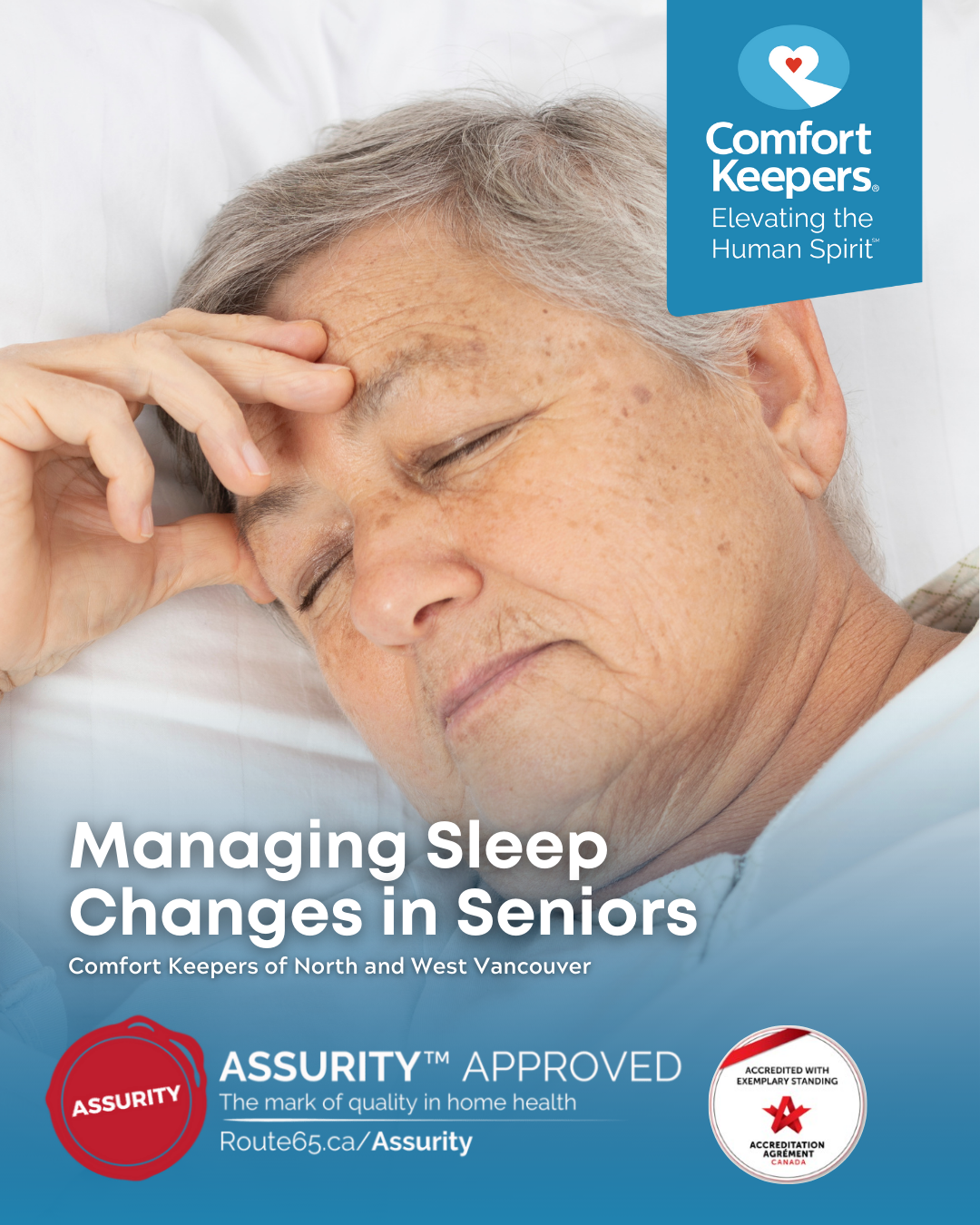
Managing Sleep Changes in Seniors
What Every Senior in North Vancouver and West Vancouver, BC, Needs to Know About Getting Enough Sleep
Sleep changes in seniors can happen for a variety of reasons. Insomnia and the inability to stay asleep are common complaints of older adults. It is not uncommon for seniors to sleep lighter than they did when they were young but, a good night’s sleep is still necessary. Having insomnia or feeling sleepy throughout the day could indicate an underlying problem.
Sleep quality affects general health, just as physical symptoms do. Older adults with healthy sleep patterns may sleep less or less deeply but will feel rested and energetic during the day. Seniors who get less sleep are tired and lack energy may need to address the underlying causes of their insomnia and nocturnal wakefulness.
Sleep Changes in Seniors: What causes insomnia and nighttime wakefulness?
Many factors can contribute to insomnia and wakefulness. Lack of exercise, improper diet, and unstructured days may cause some seniors to have insomnia. Medications can interfere with normal circadian rhythms and cause drowsiness during the day or alertness at night.
Physiological factors such as nighttime pain, illness, dementia, heart disease, or problems breathing while sleeping (sleep apnea) can interfere with sleep. Insomnia and wakefulness are also strongly associated with psychological factors such as depression or anxiety. Finally, poor sleep habits (see below) can strongly contribute to insomnia.
Sleep Changes in Seniors: Can seniors improve their sleep quality?
The first step is to assess and change any poor sleep habits. Poor sleep habits include drinking alcohol, caffeine, or too many fluids in the evenings; smoking (nicotine affects sleep); exercising before bed; and eating late meals.
It is important to associate the bed with sleep and intimacy by not reading, working, eating, or watching television in bed. Also, seniors should not try to go to bed when they just are not tired. Some studies indicate that increasing the amount of time spent in bed can interrupt normal circadian rhythms. Limiting bedtime to 7 to 8 hours may improve sleep quality.
Additionally, seniors should limit napping, which can cause nighttime wakefulness and engage in relaxation techniques before bedtime.
Senior adults who experience insomnia may want to talk with their doctors to determine if physical problems or medications are affecting their sleep. They should be sure to discuss any physical or breathing discomfort, pain, urinary problems, or other factors they notice are keeping them up at night.
They should also note the amount of caffeine and alcohol they ingest and whether they feel anxious, stressed, sad, depressed, or nervous. Identifying physical or psychological problems or sleep disorders and treating them can help individuals overcome insomnia and sleep interruptions, so they can get a better, more restful night’s sleep.

The Best Senior Home Care in North and West Vancouver is Comfort Keepers®
Our senior home care agency offers in-home care focusing on aging in place. Our services include dementia care, end-of-life care, post-surgery care, and palliative care. Comfort Keepers can assist seniors with living transition services, personal care, companionship care, and more!
Quality and Accredited Elderly Care: Happier, Healthier, and at Home with 24/7 Senior Care Opportunities!
Do you need a home care solution for yourself or a loved one? Have you been thinking about retirement homes and their alternatives as a solution? Comfort Keepers® enables seniors to maintain happy, healthy lives in the comfort of their own homes. In-home care services are available in North Vancouver, West Vancouver, and the surrounding areas.
Comfort Keepers® is a Senior Care Agency That Can Make a Difference with Interactive Caregiving™
Our in-home caregivers ensure our senior clients have the best quality of life. The Interactive Caregiving™ program ensures that a senior’s safety, nutrition, mental well-being, and everyday needs are met. This program brings joy and good health to each client’s home.
Comfort Keepers® North Vancouver and West Vancouver Can Help with In-Home Elderly Care Services!
If you are concerned about the health and well-being of a loved one we can help! Comfort Keepers offers 24-hour care and delivers top-quality and compassionate care for seniors. We are dedicated to safety technology solutions that foster independence and enhance well-being.
Locally Owned and Operated Home Health Care Agency
Our care centers around companionship for seniors. Empathetic care originates from the soul and allows us to meet our client’s requirements. The seasoned in-home caregivers employed by Comfort Keepers are carefully chosen based on their empathetic qualities.
Contact the Comfort Keepers® North Vancouver and West Vancouver office at (604) 998-8806 to learn more about our unique in-home care solutions for seniors.
Comfort Keepers is an Accredited Senior Care Agency in North and West Vancouver, BC
Accreditation is a rigorous process that involves industry experts evaluating an organization’s processes, policies, and procedures. Comfort Keepers® North and West Vancouver has been awarded Exemplary Standing by Accreditation Canada. This achievement recognizes that Comfort Keepers® meets or exceeds the stringent quality standards for Home Care companies established by Accreditation Canada.
References
Carskadon, M.A., Brown, E. and Dement, W.C. (1982). Sleep fragmentation in the elderly: Relationship to daytime sleep tendency. Neurobiology of Aging, 3, 321-327.
Geriatric Mental Health Foundation. (n.d.). Sleeping well as we age: Insomnia is not a normal part of aging. Retrieved from http://www.gmhfonline.org/gmhf/consumer/factsheets/hlthage_sleep.html.
WebMD. (2013). Aging and sleep. Retrieved from http://www.webmd.com/sleep-disorders/guide/aging-affects-sleep.