
Skip to content
Call Us At 519-942-9101
Maple Leaf Maple Leaf Maple Leaf

Mutually Beneficial: The Value of Respite Care

Mutually Beneficial: The Value of Respite Care

Mutually Beneficial: The Value of Respite Care

Knowing Your Limits

The Value of Respite Care: Caring for an aging loved one can be a rewarding experience. In many cases, it provides the opportunity to give back to someone who may have played an important part in your life, allowing for a genuine reconnection. Caring for a parent, in particular, can be especially valuable, as there is often a sense of things coming “full circle.”

Fast Facts

According to the 2012 GSS, at some point in their lives, 46% of Canadians had provided some type of care to a family member or friend with a long-term health condition, disability or aging needs.

However, even in the most ideal situations, caregiving can ultimately become a demanding job – one that’s taxing on the mind, body, and spirit. And for those who work a full-time job and have a family to take care of, assisting a loved one can add a great deal of stress. Many discover that, while initially rewarding, family caregiving can yield negative results in the long run. In fact, a recent study, conducted by the Stanford Center for Longevity and the Stanford University of Psychology Department, found that family caregivers are more likely to experience depression when caring for a severely ill loved one.

Related Article: Malnutrition in Seniors

It seems only natural that family caregivers would desire a break, but we often push ourselves past reasonable limits, with the mentality of “I can do it all” and that anything less would be seen as a sign of weakness. In reality, asking for help is anything but selfish – and finding temporary relief, or respite care, can greatly benefit both parties.

Respite care can allow family caregivers to:

  • Look at the caregiving situation from a different perspective
  • Catch up with family and friends or even meet new people
  • Focus on personal health and wellbeing
  • Remain involved in hobbies or pastimes
  • Find time for relaxation and personal comfort
  • Run errands or take care of finances
  • Return to the loved one with a renewed sense of purpose

Respite care allows seniors to still receive the appropriate level of care, even in the absence of a family caregiver. Additionally, seniors may feel as if they’re a burden on their loved ones, so having a care professional substitute can help reduce feelings of guilt.

Next steps in the value of respite care

There is no set protocol for getting respite care for an aging loved one, as it will always depend on the situation itself and the individuals involved. There are, however, certain things to consider, the first and most important of which is communication with your loved one. He or she should be apprised of not only the desire to find respite care, but also how much time will be needed, where you will be, and why you’re doing it in the first place. The discussion should ultimately reference the benefits listed above, and focus on the long-term goal of strengthening the relationship.

Cost is certainly a factor, and knowing the exact needs of your loved will dictate the level of expertise and skillset needed in his or her caregiver. Carefully assess what he or she requires on a daily basis, and communicate everything to the care providers you speak to. Organization is the other important factor. While relief from caregiving certainly will offer peace of mind, you’ll feel much better knowing who is watching your loved one and when. Similarly, you will want to keep family and friends updated so that they don’t needlessly worry about the loved one’s care situation and arrangements.

The Value of Respite Care

Caregiver support can come from other family members, friends, faith group volunteers, adult daycare centers, in-home care services, and residential facilities. While there are plenty of options to explore, it’s important to remember that what you choose should ultimately align with your loved one’s needs and your budget. No matter what, it will take careful planning and organization, but the benefits are invaluable – for both you and your loved one.

Bonus Article: Supporting Family Caregivers

Comfort Keepers® Can Help

Trusting your loved one with someone else is not any easy decision, but with Comfort Keepers®, you can trust that he or she will be in capable hands. Our compassionate, professional caregivers – who we call Comfort Keepers® – will stay with your loved one while you take care of yourself, for as much, or as little, time as you need. To learn more about our style of respite care and other in-home services, contact your local Comfort Keepers Orangeville office today.


References:

AARP. “Develop a Respite Plan.” Web. 2017.

AARP. “What is Respite Care? A Break for the Caregiver.” Web. 2017.

Alzheimer’s Association. “Alzheimer’s and Dementia Caregiver Center: Respite Care.” Web. 2017

Stanford Center on Longevity. “Age and Emotional Well-Being: The Varied Emotional Experience of Family Caregivers” by Sarah Raposo, Jessica Barnes, Tamara Sims, Amy Yotopoulos, Lara Carstensen, Mary Bowman, Jacquelyn Kung. Web. 2017.

Statistics Canada. “Portrait of caregivers, 2012.”  Web. 2017.

Maple Leaf Maple Leaf Maple Leaf

Enhancing Seniors Well Being

Enhancing Seniors Well Being

Self-Engagement in Well Being Enhances Quality of Life

Enhancing Seniors Well Being | Ensuring senior adults are actively involved in their own health and wellbeing is a priority for health professionals and policy makers. As the number of older adults increases, there is a rising threat of strain on resources, both financial and medical. However, there are many reasons why this should also be a priority for the senior adults themselves. Many younger people fear that getting older will mean years of poor health, mobility problems, cognitive decline, and loss of independence. The truth is, however, that many of these difficulties associated today with growing older are preventable or at least manageable. Adults can grow older and remain active by making choices that benefit their overall health.

Fast Facts About Seniors

Nine out of ten Canadians aged 75 or older live with at least one chronic disease, and seven percent live with five or more.

Why Seniors Should Care About Their Well Being

One could make the argument that we all have to die somehow, so why not enjoy life while we are here? The logic breaks down, however, when one considers that poor choices do not necessarily lead to a speedy end of life. People are living longer. Those who reach the age of 65 today can expect to live 19.2 additional years on average. That is five years longer than their counterparts in 1960. More commonly, lack of interest in personal wellbeing and poor health choices result in reduced ability and independence and an overall reduced quality of life. Consider the statistics:

  • Chronic conditions, such as heart disease, diabetes, and chronic lower respiratory disease are on the rise in the older population; more than 7 million Canadians over 50 years of age suffer from at least one.
  • Many chronic conditions are often preventable with a healthy diet and exercise.
  • In 2010, the most recent data available at the time of printing, 38 percent of adults aged 65 or older were obese and the numbers continue to rise.
  • In 2010, only 11 percent of adults aged 65 or older engaged in aerobic or muscle-strengthening exercise.
  • Older adults (65 or older) are the most sedentary age group, spending 10 hours or more daily sitting or lying down.
  • In 2010, 10 percent of both men and women aged 65 or older were current smokers, but 53 percent of men and 29 percent of women were former smokers.

The consequences of poor choices for older adults means more time spent needing help and care and a greater financial burden. This can also result in increased rates of depression for older individuals as they begin to lose control over their own lives.

Related Article: Seniors and the Road to Quality Sleep

Motivating Change

Perhaps the greatest motivator for enhancing seniors well being is the perceived control over one’s health. Seniors who actively make decisions that impact their overall quality of life are empowered; they “beat” the ageist stereotype of the frail, incompetent, senile, elderly individual. Simple education can be a motivating factor for seniors to take an interest and control over their personal wellbeing. Fully understanding the impacts of decisions can guide the individual in making better decisions.

Even those who are already facing physical challenges can enjoy the benefits of a healthy lifestyle and reduce the impacts of, or in some cases reverse, the chronic conditions that lead to a reduced quality of life. Family, friends, spouses, and caregivers can support the older adult and ensure he or she has access to the resources needed to remain active and follow through with healthy choices. Becoming involved with the older adult while supporting their choices has the added benefit of increasing the senior individual’s social engagement, yet another factor in increased quality of life. Better yet, the older adult may just teach their younger counterparts a few things about growing old gracefully.

Comfort Keepers® Can Help Enhance Senior Well Being

At Comfort Keepers®, we want to help preserve all areas of Enhancing Senior Well Being. Our caregivers can help seniors follow the recommended steps that promote quality sleep and let the family know of any dramatic changes in sleep behavior. Contact a the Comfort Keepers Orangeville office today to learn more about our in-home care services.

Bonus Article: What To Expect with Home Care


References

AARP. (n.d.) Chronic conditions among older Americans.  Retrieved from http://assets.aarp.org/rgcenter/health/beyond_50_hcr_conditions.pdf.

Centers for Disease Control and Prevention. (May 11, 2011). Chronic disease prevention and health promotion: Healthy aging at a glance 2011. Retrieved from http://www.cdc.gov/chronicdisease/resources/publications/aag/chronic.htm.

National Health Service. (November 7, 2013). The importance of exercise as you get older. Retrieved from http://www.nhs.uk/Livewell/fitness/Pages/activities-for-the-elderly.aspx.

Phillips, E.M., Schneider, J.C., and Mercer, G.R. (2004). Motivating elders to initiate and maintain exercise. Arch Phys Med Rehabil.,85(Suppl 3), S52-57. Retrieved from http://www.instituteoflifestylemedicine.org/file/doc/publications/articles_by/MotivatingElders_Phillips.pdf.

Maple Leaf Maple Leaf Maple Leaf

Seniors and Post-Holiday Blues

Seniors and Post-Holiday Blues

Seniors and Post-Holiday Blues: Why it Happens and What to Do

Seniors and Post-Holiday Blues | The holidays can be a time of joy, togetherness and connection. For seniors that are isolated from family and friends, these happy feelings can be replaced with anxiety or depression once the festivities end.

Feeling blue after the holidays is not uncommon for older adults – especially for those that are isolated from loved ones, suffering from a physical illness or those with a less busy lifestyle.

Related Article: Home Security Tips for Seniors

Taking a proactive approach to combatting sadness following the holidays is critical. Depression can have long-lasting negative health impacts, and the effect of social isolation is also significant –it can have a negative health effect equivalent to smoking 15 cigarettes a day.

There are many ways to keep the post-holiday blues away. Making plans, being active and continuing to connect with loved ones are some of the top ways to move forward into the new year with positive momentum and intentional action.

Some specific ideas for Seniors to avoid the Post-Holiday Blues include:

  • Plan travel and reunions: Booking a getaway, or making plans to see family and friends, can help those that live far from their loved ones. A trip or reunion doesn’t need to be expensive or elaborate – scheduling an outing or dinner with the family in the coming months can help lift spirits.
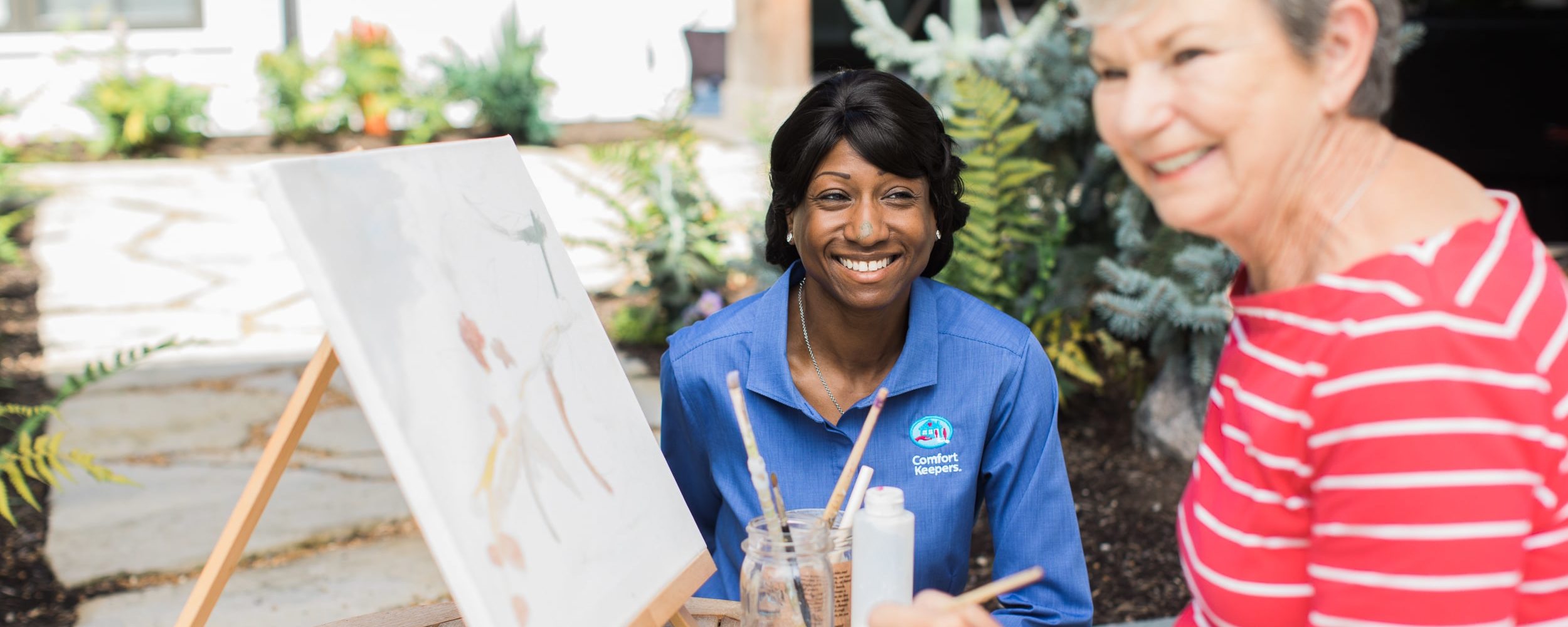
  • Learn something new: For some seniors, anxiety and depression can be worse when they are idle. Taking up a hobby or learning a new skill can provide a challenge that is enjoyable, and activity can combat negative thinking.
  • Relive the best moments: Collecting photos and memories from the latest holiday season, and looking at past year’s mementos, can bring back the joy felt while celebrating. And remembering the best times can help seniors feel gratitude and connection – even when the ones they love aren’t right there.
  • Give back: Volunteering is a great way to ease post-holiday sadness. Helping others in need, whether it’s a short- or long-term commitment, can have a positive impact on everyone involved. And, there are volunteer opportunities available for those that are able to get out into the community as well as activities for those that have mobility issues or prefer to volunteer from their own home.
  • Physical activity is good for the body and soul: Fitness centers often have discounts at the beginning of the year, and there are low-impact exercises that can be done at home or outside. And physical activity can improve both the body and the mind. Older adults should always consult with their doctor before starting a new exercise program.
  • Dance and sing into the new year: Turning someone’s mood around can be as simple as listening to happy songs, playing an instrument or dancing the afternoon away. Seniors can ask family and friends for suggestions, make playlists of their favorite tunes or take time to rediscover an album they love.

Comfort Keepers®Can Help

Our goal is to provide uplifting in-home care that benefits seniors and their families. The individualized care plans we create for our clients that consider physical goals as well as non-physical mental health needs. Our caregivers can provide transportation to community events, support physician-prescribed exercise regimens, provide companionship and help families stay connected through technology. We strive to elevate the human spirit through quality, compassionate, joyful care.

To learn more about our in-home care services, contact your local Comfort Keepers Orangeville location today.

Bonus Article: In-Home Care That Elevates the Human Spirit


References:

Health Resources & Services Administration. “The Loneliness Epidemic.” Web. 2019.

U.S. News. “Depression in Seniors: Why the Holidays Can Be Hard.” Web. 2018.

HelpGuide. “Depression in Older Adults: Signs, Symptoms, Treatment. Web. 2019.

WebMD. “Holiday Depression and Stress.” Web. 2018.

National Council on Aging. Mental Health this Holiday and Beyond: 4 Steps to Combat Lonliness in Seniors.” Web. 2016.

Maple Leaf Maple Leaf Maple Leaf

Herbal Gardening and Its Benefits

Herbal Gardening and Its Benefits

Herbal Gardening and Its Benefits

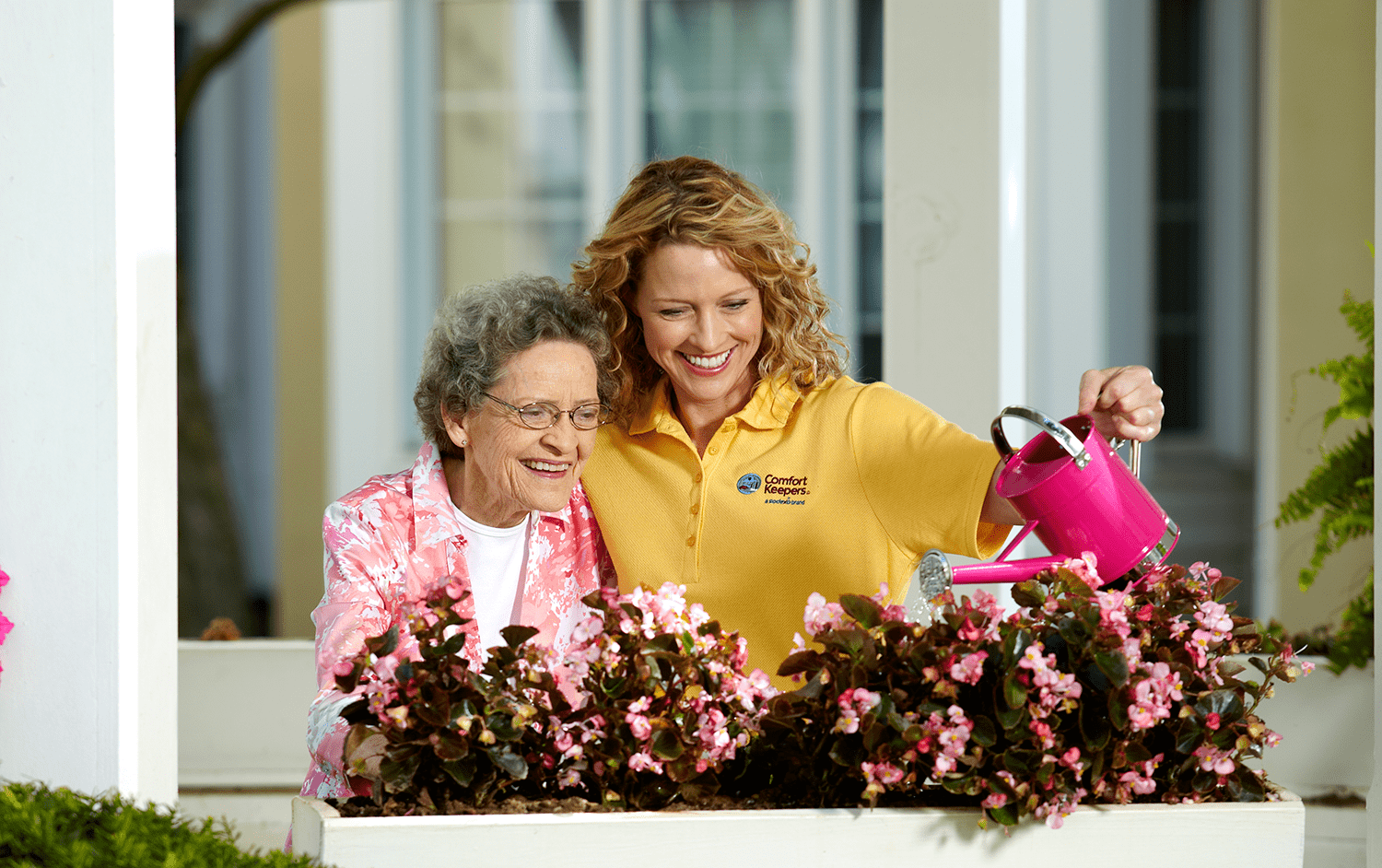
Herbal Gardening and Its Benefits – You don’t need a green thumb or a huge plot of land to reap the benefits of growing fresh herbs. Not only are herbs versatile and capable of lending great flavor to foods, and as natural remedies that benefit personal health and beauty, but the specific act of growing an herbal garden itself helps in many ways, especially for seniors.

Planting an herb garden is a wonderful way to enjoy the sights, smells and tastes of a wide variety of plants. Fresh herbs are often easy to cultivate and can grow in a small garden in the back yard, in pots on an outdoor patio or sunroom, or even in a window box inside a kitchen. Gardening is a terrific hobby and allows your senior loved one an opportunity to show his or her creativity. It is a great activity that can be shared with others like grandchildren, with friends in a club as a social activity, or even alone. Not only is gardening relaxing but it also improves hand-eye coordination, motor skills and self-esteem.

Benefits of Herbal Gardening

Herbs have many values but a few of the most common uses include aromatherapy, medicinal, as seasonings and flavorings in foods and beverages, and in salads. Many herbs are chockfull of cancer-fighting antioxidants, valuable nutrients, fat-free flavor, and more. Before beginning any herbal treatment, caregivers should check with their senior’s doctor to make certain that it does not interfere with medications that he or she may already be taking.

The Herbal Benefits:

Aromatherapy

The word Aromatherapy is derived from ‘aroma’ meaning fragrance or smell, and ‘therapy’ meaning treatment. This ancient herbal art can enhance health in many ways. It is a stress reliever and mood enhancer and can be successful in treating minor disorders. Some examples are to stimulate the immune system and strengthen your body’s ability to resist disease and infections, to alleviate digestive problems like constipation and abdominal spasms, to enhance the respiratory system to treat coughs, sinusitis and tonsillitis, to ease muscular pain by promoting relaxation and toning, improving circulation and lowering blood pressure, combating stress-related disorders like insomnia and tension headaches, and even in treating anxiety, depression, and grief. Think of growing and using relaxing herbs such as chamomile, lavender or mint, rosemary, oregano, thyme, chive and sage for this purpose. The herbs can be dried and used in potpourri, simmered in pot on the stove to release their fragrance, hung upside down and used as natural air freshener, wrapped in a gauze bag and used in a bath or even dried and steeped to make herbal tea.

In the Medicine Cabinet

In the medicinal world, herbs have been used for centuries to help with a variety of ailments. (Again, it’s important to check with your senior’s doctor before using any herbs for medicinal purposes.) ‘Old fashioned remedies’ are for the most part herb based and have been used for generations to help with conditions from upset stomachs to anxiety and even strengthening the immune system. The first apothecaries (pharmacies) were stocked with botanical ingredients. Garlic is considered to be good for the heart and cholesterol conditions and has been shown in studies to possess anti-bacterial an anti-viral properties effective in boosting the immune system and fighting all types of infections. Lemon balm, lavender, and marjoram can calm nerves and reduce anxiety. And peppermint is soothing and settling to a ‘sour stomach.’ ‘The wise, old herbs,’ as sage and rosemary are known, have been shown in studies to enhance brain function and may help to ward away Alzheimer’s disease.

Related Article – Summer Safety for Seniors

In the Kitchen

Seasonings are of course the most common uses of herbs found in any herb garden. Herbs add a lot of flavor to recipes besides providing various health benefits. No herb garden would be complete without basil, oregano, sage, thyme, chives or mint to season up dinner each and every night. Consider planting some lemon basil, lemon thyme, Thai thyme or another variation of any number of great herbs that offer different flavors. Use the herbs in cooking. You can add delicious, healthy herbs to marinades, sauces and soups. Herbal vinegars are not only decorative but mineral-rich as well.

Salads can be made with many herbs and are a special treat during the spring and summer months. Consider a borage with some mesclun lettuces topped with some chives, dill, oregano and basil. It doesn’t have to stop there, many herbs lend themselves to being eaten in their raw form and add great flavor to any salad.

When looking for a healthy remedy to help your senior stay engaged, active and healthy, a small herb garden can be just what the doctor ordered in more ways than one!

Comfort Keepers® Can Help

Comfort Keepers can help. Our caregivers can provide wellness support, remind clients to take medication, provide transportation to scheduled appointments, and support physician-prescribed exercise regimens and diets. As part of an individualized care plan, caregivers can let a senior’s care team know if there are changes in behavior or physical characteristics. Our goal is to see that clients have the means to find the joy and happiness in each day, regardless of age or acuity.

To learn more about our in-home care services, contact your the Comfort Keepers Orangeville location today.

Bonus Article: What to Expect with Home Care


References

‘Health Benefits of Gardening’, by the editors of PureHealthMD, www.DiscoveryFit&Health.com

‘Health Benefits of Planting an Herb Garden’, By Marc Courtiol, Natural Health Journals, www.NaturalHealthJournals.com

‘Therapeutic Benefit of Aromatherapy’ by Angi Kocsi, www.spasincanada.ca

“To grow old and healthy eat those old brain-favouring herbs’, by Angi Kocsi, www.spasincanada.ca

“Aromatherapy – a World of Fragrance’, by Angi Kocsi, www.spasincanada.ca

“The Multitude of Benefits from an Herb Garden’, by Linda L. Kinyon, Yahoo! Contributor Network, May 28, 2012, www.Yahoo!.com