


How to Talk to Your Aging Parents About Home Care (Without the Drama)
The goal isn’t to “take over.” It’s to become a supportive partner, helping your parents live safely and independently in the place they love most – their home. The roles are shifting, and it’s delicate, emotional, and often overwhelming.
If you’re in British Columbia, staring down this conversation and feeling stuck, you’re not alone. With BC’s senior population growing, more families are navigating this exact path. The goal isn’t to “take over.” It’s to become a supportive partner, helping your parents live safely and independently in their home.
So, take a deep breath. Let’s walk through this together.

Signs Parents Need Home Care Assistance
You’ve probably noticed… little things. A forgotten bill here, a missed medication dose there. It’s not about nitpicking; it’s about recognizing patterns that signal extra support could make life safer and easier.
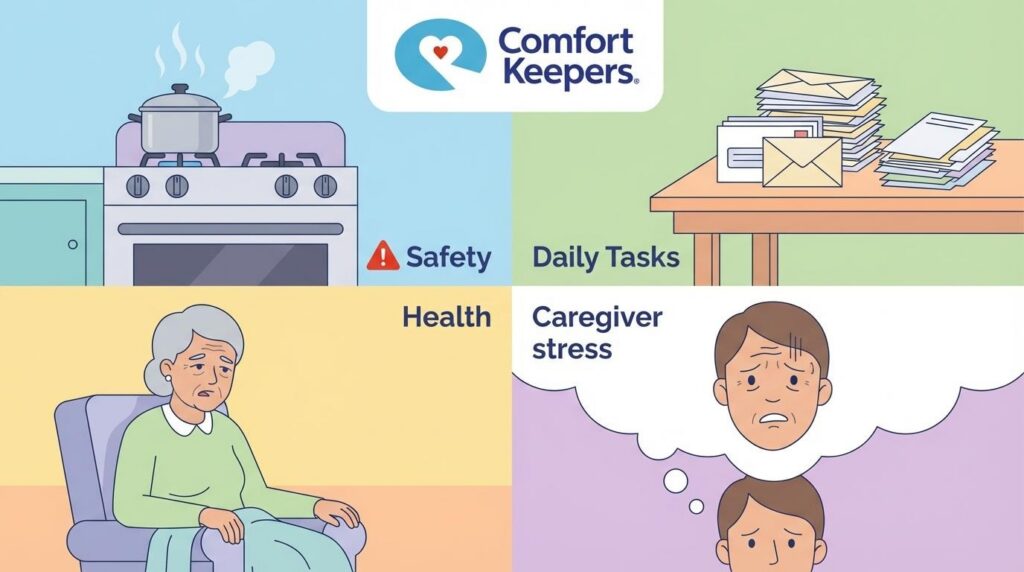
What are the Signs That My Parents Need Home Care Assistance?
Look for changes in a few key areas:
- Safety: Near falls, leaving the stove on, unexplained dents on the car, or forgetting to take critical medications.
- Daily Tasks: Piles of laundry, an empty fridge, overdue bills, or a once-immaculate home now looking consistently unkempt.
- Health: Weight loss, new diagnoses that complicate daily life, or increasing fatigue from routine activities.
- You, The Caregiver: Feeling constant worry, exhaustion, or like you can’t keep up with their needs. Your well-being matters, too.
Experts often mention the “40-70 Rule” when you hit 40, or your parents hit 70, it’s a good time to start open, low-pressure conversations about the future. The key is to talk before a crisis forces a rushed decision.

When is the Best Time to Talk to Aging Parents About Care Options?
Timing is everything. Don’t ambush them during a holiday dinner. Instead, find a quiet, private moment when everyone is relaxed. A casual drive or a coffee on a calm afternoon can be a better setting than a formal, intimidating “meeting.” The best time is sooner rather than later, when you can have a series of gentle conversations, not one loaded, high-stakes intervention.
The Art of the Conversation: Start with Empathy
Your approach will make or break this. Leading with fear or a list of their failures will trigger defensiveness. Lead with love and concern.
What are some good conversation starters for talking about home care with parents?
Try these:
- “I’ve noticed the stairs seem to be getting tougher. How are you feeling about them?”
- “What’s your ideal plan for staying in your home as you get older?”
- “If there was one thing that would make your daily life easier, what would it be?”
Use “I” statements: “I worry about you falling when you’re alone,” instead of “You’re going to fall.” Ask open-ended questions and really listen. Frame everything around their goal: maintaining independence. As resources like Seniors First BC emphasize, the conversation should be about supporting their autonomy, not removing it.
Professional home care providers like Comfort Keepers Tri-Cities specialize in recognizing these signs and creating personalized care plans that address safety concerns while preserving independence.
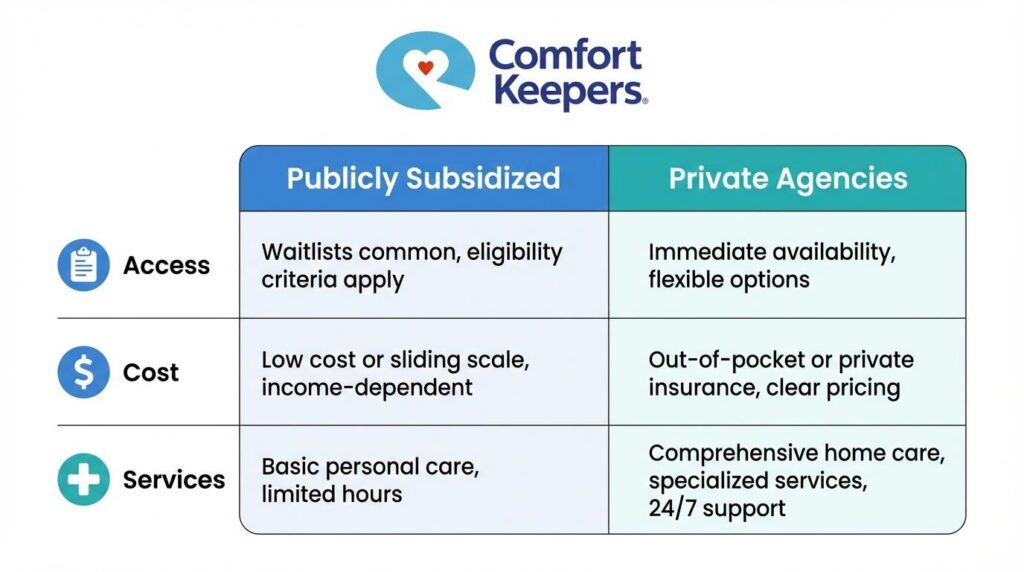
Understanding Your BC Home Care Options
Once you’ve opened the dialogue, it helps to understand the landscape. In BC, care typically falls into two main categories: publicly subsidized and private.
| Feature | Publicly Subsidized Home Support (via Health Authorities) | Private Home Care Agencies |
|---|---|---|
| How to Access | Requires an assessment by your regional health authority (e.g., Fraser Health, Island Health). | Contact agency directly. No formal assessment required, but they will conduct an intake consultation. |
| Cost | Income-based. Many seniors pay little to nothing, with a maximum monthly charge of $300 for those with earned income. | Paid out-of-pocket. Rates vary by service level (companionship vs. nursing). |
| Services | Clinical/personal care: bathing, med management, wound care. | Broader non-medical support: companionship, housekeeping, meals, transportation, respite. |
| Best For | Seniors with assessed clinical or personal care needs. | Supplementing public care, providing flexible help, or those not eligible for public support. |
The first official step for public support is to contact your regional health authority to request a home care assessment. This is a free, in-depth evaluation by a case manager to determine need and eligibility.
Many BC families choose to work with experienced private agencies like Comfort Keepers Tri-Cities, who provide flexible, personalized support that complements publicly funded services or serves as a standalone solution for families not eligible for public programs.
Navigating Resistance with Patience and Facts
This is where many families hit a wall. Resistance is normal and usually stems from fear: fear of losing control, identity, privacy, and independence.
How can I convince my resistant parents to accept home care?
- Reframe it as help, not takeover: “What if a helper did the laundry and groceries, so you have all your energy for gardening and your bridge club?”
- Start microscopically small: Propose a trial with a reputable provider. ‘Let’s just try having someone from Comfort Keepers help with light housekeeping for two hours every other week and see how it feels.’ Starting with a trusted, professional service often eases concerns
- Bring in a neutral third party: Sometimes, hearing the same advice from a doctor, a trusted friend, or a resource like Health Link BC can make it click.
What Should I Do if My Parents Refuse Home Care Services?
Unless there’s an immediate danger (like leaving the stove on repeatedly), respect their right to choose. Forcing care can damage trust. Instead:
- Keep communication open.
- Revisit the conversation after a minor incident (a small fall) that illustrates your point.
- Focus on their values. “Staying in your home is important to you. Having some help is the best way to make sure that can happen safely.”
How Can I Deal with My Parent’s Fear of Losing Independence with Home Care?
Acknowledge the fear directly. Say, “It makes complete sense that you’d worry about that. I would, too.” Then, demonstrate how care preserves independence. “The right help means you can keep living here, keep your routines, and do more of what you love, without the stress of the hard stuff.”
What is the Role of Adult Children in Their Parent’s Home Care Decisions?
Your role is facilitator, not dictator. It’s about:
- Researching: Understanding the systems (like the BC Care Providers Association’s Home Health 101 guide) so you can explain options clearly.
- Listening: Truly hearing their fears and wishes.
- Advocating: Helping them navigate health authority assessments and paperwork.
- Coordinating: If you have siblings, get on the same page first. Decide who handles medical coordination, finances, or social visits to prevent burnout.
- Planning: Encouraging and helping with broader plans, like Powers of Attorney or Advance Directives, long before they’re urgently needed.

Your Action Plan: First Steps in BC
- Do Your Homework: Read the Seniors First BC advocacy guide on navigating home care. It’s a goldmine of BC-specific info.
- Make the Call: Contact your regional health authority to inquire about an assessment. It’s a no-obligation starting point.
- Explore Safety: Check out the Public Health Agency of Canada’s Safe Living Guide for simple home modification ideas.
- Start the Chat: Use the conversation starters above. Remember, this is a marathon, not a sprint.
Having these talks is a profound act of love. It’s challenging, but by leading with empathy, arming yourself with facts about BC’s home support system, and focusing on your parents’ dignity and goals, you can navigate this transition together. It’s not about taking away keys; it’s about helping them stay in the driver’s seat of their own lives for as long as possible.


