Caregiver Burnout in Winnipeg: When Respite Care May Help
Caring for an aging parent, a spouse, or a close friend is deeply meaningful work. It is also tiring in a way that adds up quietly over months, until one ordinary morning you realize there is very little left to give. That build-up has a name, caregiver burnout, and it is far more common than most families expect. In this guide, our Winnipeg team walks through the signs worth watching for, why asking for help feels so hard, and how flexible respite care can give you a real break before you reach a breaking point.
Caregiver burnout is prolonged physical, mental, and emotional exhaustion brought on by the ongoing demands of caring for someone. In Winnipeg, family caregivers can ease that strain with respite care: in-home help, adult day programs, or short facility stays that provide planned relief through both public and private services.
Key Takeaways
- Caregiver burnout is gradual physical, mental, and emotional exhaustion, and respite care gives Winnipeg family caregivers planned relief before a crisis.
- Caregiving is common. In 2022, about one in five Canadians aged 15 and older (21 percent) were unpaid caregivers to an adult with a long-term condition. Among unpaid caregivers, 56 percent reported feeling tired and 44 percent reported feeling worried or anxious.
- Burnout shows up in three ways, physical, emotional, and behavioural, and it builds so slowly that many caregivers do not notice it in themselves.
- Respite care can be a few hours of in-home help, an adult day program, or a short facility stay, and it is available through both public and private providers.
- Start small and early. Talk with our Winnipeg team about a few hours of respite, or reach Winnipeg public home care through the WRHA intake line at 204-788-8330.
Caregiver Stress Is Common and Often Builds Gradually
Caregiver stress is the physical and emotional strain of looking after someone who needs help, and it is one of the most common experiences in family life. It rarely arrives all at once. It builds slowly, which is exactly why so many caregivers miss it in themselves until they are running on empty.
You are in very large company. In 2022, about one in five people in Canada aged 15 and older, 21 percent, were unpaid caregivers to an adult with a long-term health condition or disability. Among all unpaid caregivers, 56 percent said the role left them feeling tired, and 44 percent felt worried or anxious. The strain can run deeper when a loved one has ongoing needs. In its most recent reporting from participating provinces and territories, which do not include Manitoba, the Canadian Institute for Health Information found that more than two in five unpaid caregivers of long-stay home care clients experience distress, and two in three of those caregivers say it has become difficult to keep going.
What makes caregiver stress so easy to overlook is the way it accumulates. The Canadian Psychological Association explains that the strain grows out of the number, duration, and intensity of caregiving tasks, and that if it is not addressed, stress can become chronic, especially in long-term caregiving. A single hard week is manageable. It is the months of broken sleep, missed plans, and constant low-level worry that gradually wear a person down.
| Measure | Figure |
| Canadians 15+ who were unpaid caregivers to a care-dependent adult | About 1 in 5 (21%) |
| Unpaid caregivers who felt tired | 56% |
| Unpaid caregivers who felt worried or anxious | 44% |
| Caregivers of adults reporting a negative health or well-being impact | 74% |
Sources: Statistics Canada, 2022 and 2024; National Seniors Council.
What We Mean by Caregiver Burnout
Caregiver burnout is more than ordinary tiredness. Brain Injury Canada describes it as reaching a point of physical, mental, and emotional exhaustion where you can no longer function. Everyday tiredness eases after a good night of sleep or a weekend off. Burnout can persist even after that kind of rest, because the demands that caused it are still there the next morning. Recognizing that difference is what tells you it may be time to bring in support, rather than simply trying harder.
Common Signs You May Need More Support
The signs of caregiver burnout tend to cluster into three areas: physical, emotional, and behavioural. You will not have all of them. Noticing a few is simply a sign that the load has grown faster than the support around you, and that is a solvable problem.

Figure 1. Signs of caregiver burnout, grouped as physical, emotional, and behavioural. Sources: Alzheimer Society of Canada; Canadian Psychological Association.
On the physical side, the Alzheimer Society of Canada lists ongoing exhaustion, trouble sleeping, and getting sick more often, such as colds and flu you cannot seem to shake. The Canadian Psychological Association adds disturbed sleep, feeling worn out despite rest, and a weakened immune system.
Emotionally, watch for anxiety, low mood, irritability, and a short temper, along with resentment toward the person you care for or toward other family members, and the guilt that often follows it. Trouble concentrating is common too. One caregiver quoted by the Alzheimer Society said she used to finish the daily crossword and now feels lucky to solve half of it.
Behaviourally, burnout often shows up as pulling away: losing interest in friends and activities you used to enjoy, and quietly letting your own needs slide by skipping meals, sleep, or your own medical appointments to keep everything else going.
Signs That Deserve Extra Attention
Some signs are more serious than tiredness and stress. If low mood does not lift, if you feel hopeless for weeks at a time, or if you ever have thoughts of harming yourself, please treat that as a reason to reach out now rather than later. You can speak with your family doctor, and the 9-8-8 Suicide Crisis Helpline is available by call or text, any time, day or night. Asking for help at that point is not weakness. It is the same care you have been giving your loved one, finally turned toward yourself.
Why Caregivers Put Off Asking for Help

Many caregivers delay asking for help, and usually for the same handful of reasons: guilt, a deep sense of duty, and how genuinely hard it can be to find the right support.
The Canadian Mental Health Association points out that many caregivers feel obligated to put the needs of others ahead of their own, so taking time to rest can feel selfish even when you are exhausted. There is also a practical barrier. The National Seniors Council notes that many caregivers find it difficult to get information and advice about caregiver resources. When you are already stretched thin, the effort of figuring out where to even start becomes its own obstacle.
It can help to look at what accepting help actually does. Bringing in support protects your ability to keep showing up for your loved one. You are not imagining that your own needs matter, either. Manitoba was the first province in Canada to formally recognize family caregivers in law, and its Caregiver Recognition Act states that caregivers should be acknowledged as individuals with their own needs within and beyond the caring role. As the Government of Canada guidance for caregivers puts it plainly, do not be afraid to ask for help, and remember you are not alone.
From our Winnipeg team
In our experience, families often wait until they are worn out before they call us, and we often hear the same wish afterward: that they had started sooner. Even one predictable block of time each week, set aside for yourself, can change how the whole week feels.
What Respite Care Can Look Like
Respite care is planned relief for a family caregiver. Someone trusted steps in to look after your loved one so you can rest, work, or simply catch your breath, and it can take several forms: in-home help, an adult day program, or a short stay in a care facility.
Manitoba’s public system describes respite as short periods of in-home relief for your caregiver, and the Winnipeg Regional Health Authority describes its facility respite as a planned period of relief to families. In every case, the person you care for is looked after, and you get time that is genuinely your own.
Whichever form fits, the goal is the same: dependable support that lets you step away without worry. That is what our respite care for family caregivers in Winnipeg is built around. For families supporting someone with memory loss, respite pairs naturally with dementia and Alzheimer’s care at home, and for those who mainly need company and a watchful eye, it overlaps with companion care.
| Type | What it is | Where it comes from |
| In-home respite | A caregiver comes to the home for periods of relief; private care can flex to a few hours, evenings, or overnight | Manitoba Home Care (short periods); private providers such as Comfort Keepers (flexible hours) |
| Adult day program | The person attends a program away from home for recreation and socialization, which also gives the caregiver relief | WRHA / Manitoba Home Care |
| Facility short-stay | The person stays temporarily in a care setting for a longer period of relief (a normal stay is about two weeks) | WRHA / Manitoba Home Care |
Sources: Province of Manitoba, Home Care; Winnipeg Regional Health Authority.
What an In-Home Respite Visit Can Include
An in-home respite visit is built around your loved one’s routine. Depending on what would help most, one of our caregivers can share company and conversation, prepare a meal, offer medication reminders, help with bathing, dressing, or moving safely around the home, and be a reassuring presence while you are away. This is what we mean by Interactive Caregiving: keeping your loved one involved in the day rather than doing everything for them. Our respite care service page covers what a visit can include in more detail.
How to Start With a Manageable Amount of Support
You do not have to hand over everything at once. Many families start with a small, manageable amount of respite, often just a few hours a week, and adjust from there as they see what helps.
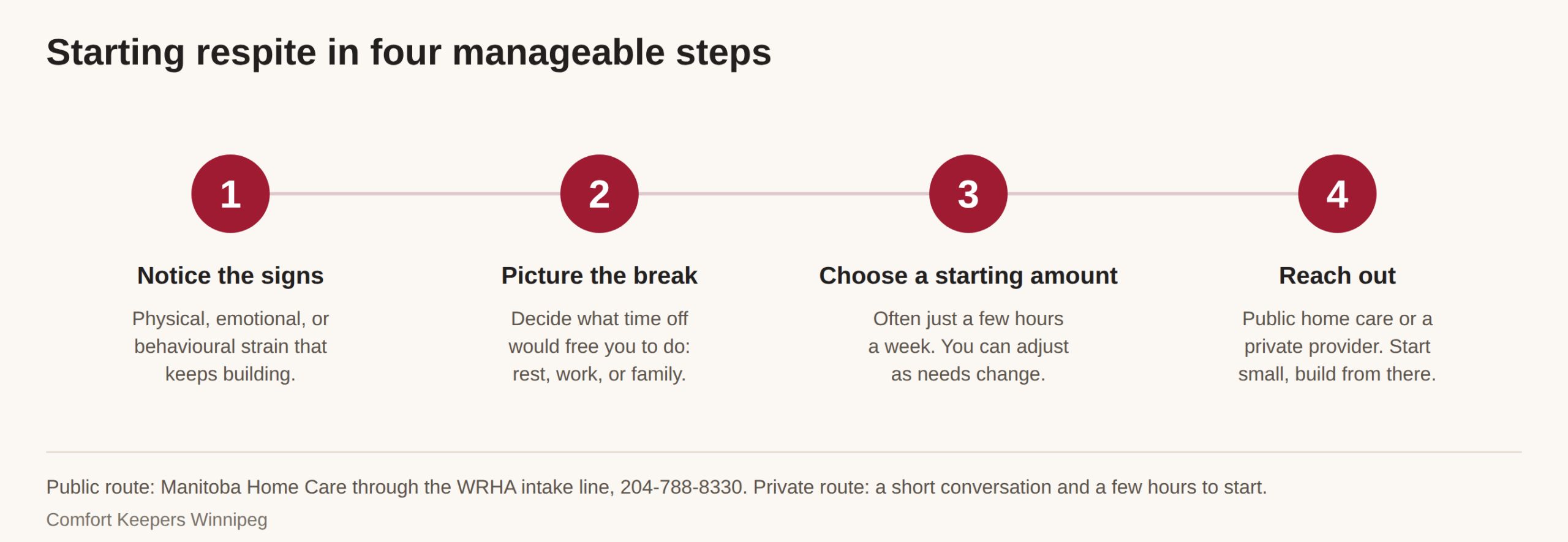
Figure 2. How to begin respite care in four manageable steps, from noticing the signs to reaching out.
There are two routes, and many Winnipeg families use both. The public route runs through the Manitoba Home Care Program, which provides services based on assessed need and does not require a doctor’s referral. You can request an assessment yourself through the Winnipeg Regional Health Authority Home Care intake line at 204-788-8330, and dialling 2-1-1 in Manitoba connects you, free and around the clock, to help finding respite and other community services. The private route may be quicker to arrange and can offer more scheduling flexibility: a short conversation about your situation, a simple care plan, and a trial of a few hours so you and your loved one can see how it feels. If you want to weigh the two side by side, our guide to private home care versus Manitoba Home Care goes deeper.
Worried your loved one will not take to someone new? That is one of the most common concerns we hear, and it is why matching the right caregiver and easing in gradually matter so much. A familiar face, arriving on a predictable schedule, usually becomes a welcome part of the week.
When to Seek Professional Health Support
If caregiver stress is affecting your own health, your sleep, or your mood, that is the signal to talk with your family doctor or a mental health professional. And if you ever feel you are in crisis, support is available any time, right away.
This matters because the toll is real. The Public Health Agency of Canada, citing a review of the research, notes that caregivers of older adults have higher rates of depression and anxiety disorders than people who are not caregivers. You do not have to wait until things feel unbearable. Health Canada’s advice is direct: if you need to talk with someone beyond your circle of family and friends, speak with your family physician or contact a mental health professional.
If you are struggling right now, please use these Manitoba and Canada-wide resources:
- 9-8-8 Suicide Crisis Helpline: call or text 9-8-8, any time, in English or French. If your safety is at risk, call 9-1-1 right away.
- Klinic Crisis Line: 204-786-8686 or 1-888-322-3019, 24 hours a day.
- Manitoba Suicide Prevention and Support Line: 1-877-435-7170, free from anywhere, 24 hours a day.
- 2-1-1 Manitoba: dial 2-1-1 to find local services, 24 hours a day in more than 150 languages.
Caregiver stress and burnout are sensitive subjects, and there is no shame in needing support to carry them. Reaching out early is good care, for yourself and for the person who depends on you.
Plan Respite Before a Crisis
The best time to arrange respite is before you feel you cannot go on. Planning a break early protects your own health and the quality of care your loved one receives, and it keeps you from having to make big decisions in the middle of an emergency.
The Government of Canada encourages caregivers to notice the early signs of strain, feeling anxious, sleeping poorly, or not eating well, and to reach out for support before those signs deepen. We would say the same. A few hours of respite each week, arranged now, can help make caregiving more sustainable and lower the risk of reaching a crisis.
If you are in Winnipeg and even a small break would help, you do not have to sort it out on your own.
Why Winnipeg Families Count on Comfort Keepers
When you are ready for support, you do not have to arrange it alone. Comfort Keepers Winnipeg is a locally owned and led team that helps families across the city care for the people they love, and respite is one of the first ways we can lighten the load.
Here is what you can count on from our Winnipeg team:
- Local ownership and accountability. You work with a Winnipeg team led by owner Debbie Bell, not a distant call centre.
- Caregivers who are carefully screened and trained, and matched to your loved one, with the same familiar face on a steady schedule wherever possible.
- Our Interactive Caregiving approach, which keeps your loved one engaged in the day rather than simply having things done for them.
- A personalized plan that can start with a few hours of respite and grow to companion care, personal care, dementia care, transportation, post-hospital support, 24-hour care, or in-home nursing as needs change.
- A no-pressure care conversation whenever you are ready, with coordination alongside your family and, where needed, your health-care team.
When you would like to talk it through, call our Winnipeg office at (204) 488-4600 or reach us through our respite care for family caregivers in Winnipeg page. Tell us what a good week would look like for you, and we will help you build the support to get there.
About the Author and How This Guide Was Reviewed
Written by the Comfort Keepers Winnipeg Editorial Team. Reviewed for local service accuracy by Debbie Bell, Owner of Comfort Keepers Winnipeg, who has led the local office since 2014 and brings a health-care background to the Winnipeg team’s work with families. You can read more about Debbie on her owner profile page.
This article provides general information and does not replace medical advice, diagnosis, or treatment. Respite care is primarily non-medical; Comfort Keepers Winnipeg also offers in-home nursing for certain clinical needs.
References
Canadian Institute for Health Information. Caregiver Distress (indicator). Data updated March 2026.
Canadian Psychological Association. Psychology Works Fact Sheet: Caregiver Stress. 2022.
Alzheimer Society of Canada. Reducing caregiver stress.
Brain Injury Canada. Mental health for the caregiver. 2020.
Canadian Mental Health Association. Care for the Caregiver.
National Seniors Council (Government of Canada). Dialogue – Caregivers of older adults. 2025.
Health Canada. Mental Health – Coping With Stress.
Province of Manitoba. Your Guide to Home Care Services in Manitoba.
Province of Manitoba. Home Care Services in Manitoba.
The Caregiver Recognition Act, C.C.S.M. c. C24. Manitoba Laws.
Winnipeg Regional Health Authority. Home Care.
Winnipeg Regional Health Authority. Respite Care.
9-8-8 Suicide Crisis Helpline.
Klinic Community Health. Crisis Lines.
Province of Manitoba. Mental Health and Addictions: Crisis and support lines (2-1-1).
Frequently Asked Questions
H3: What is the difference between caregiver stress and caregiver burnout?
Caregiver stress is the ongoing strain of looking after someone. Caregiver burnout is what that stress can build into when it is not addressed: a deeper physical, mental, and emotional exhaustion that does not lift with a single good night of sleep. Catching stress early is how you keep it from turning into burnout.
Is respite care only for people caring for someone with dementia?
No. Respite care supports any family caregiver, including those caring for someone with dementia, someone recovering from a hospital stay, or someone who simply needs more help than one person can give. It is true that dementia caregivers tend to feel more strain. A 2018 analysis by the Canadian Institute for Health Information found that 45 percent of caregivers of seniors with dementia showed signs of distress, compared with 26 percent of caregivers of seniors without dementia. But you do not need a specific diagnosis to deserve a break.
Can respite care be scheduled for evenings, overnight, or weekends?
Often, yes. Private in-home respite can usually offer flexible timing, including evenings, overnights, and weekends, which public programs may be less able to accommodate. That makes it useful for caregivers who work during the day, who are up at night with a loved one, or who just need a dependable window that is theirs.
Does Manitoba Home Care provide respite, or only private companies?
Both offer it. Manitoba’s public home care includes respite among its services, and private providers add options the public system may not, such as flexible timing and longer or overnight visits. Many Winnipeg families combine the two, using public support where it fits and private respite to fill the gaps.
How do I access publicly funded respite care in Winnipeg?
Contact the Winnipeg Regional Health Authority Home Care intake line at 204-788-8330 to request a home care assessment. You can refer yourself, and no doctor’s referral is required; eligibility and the amount of respite are based on assessed need. Dialling 2-1-1 can also help you find respite and other community services.
Will respite care disrupt my loved one’s routine?
It should not, when it is handled with care. We start with a meet-and-greet so your loved one can get comfortable, and where possible the first visits happen while you are still at home. Keeping the same caregiver on a steady schedule helps the visit become a familiar, welcome part of the week.
Is respite care a medical or nursing service?
Respite care itself is primarily non-medical, such as companionship, personal care, meals, and supervision. Comfort Keepers Winnipeg also offers separate in-home nursing services for certain clinical needs, which can be coordinated with your loved one’s health-care team. If the main need is a break for you, respite is usually the right starting point.