


Beyond the Checklist: How to Uncover a Senior’s Life Story for Truly Personalized Care
Imagine this: an older adult sits quietly in their favourite chair, their daily care managed with perfect efficiency. Meals arrive on time, medications are administered, and the house is tidy. Yet, something is missing. There’s a distance, a lack of connection. The care is correct, but it isn’t meaningful.
Now, picture a different scene. The same person is animatedly tapping their foot to the sound of big band music playing softly in the background. They’re sharing a story about seeing Glenn Miller live, sparked by a caregiver who learned they were an avid dancer in their youth. The care isn’t just about tasks, it’s about connection, joy, and acknowledging a life fully lived.
This transformation is the power of person-centred care. It’s an approach that moves beyond the medical chart and daily checklist to see the unique individual, their history, their passions, and their preferences. And the key to unlocking it isn’t a complex medical device, it’s the simple, profound act of learning their story.
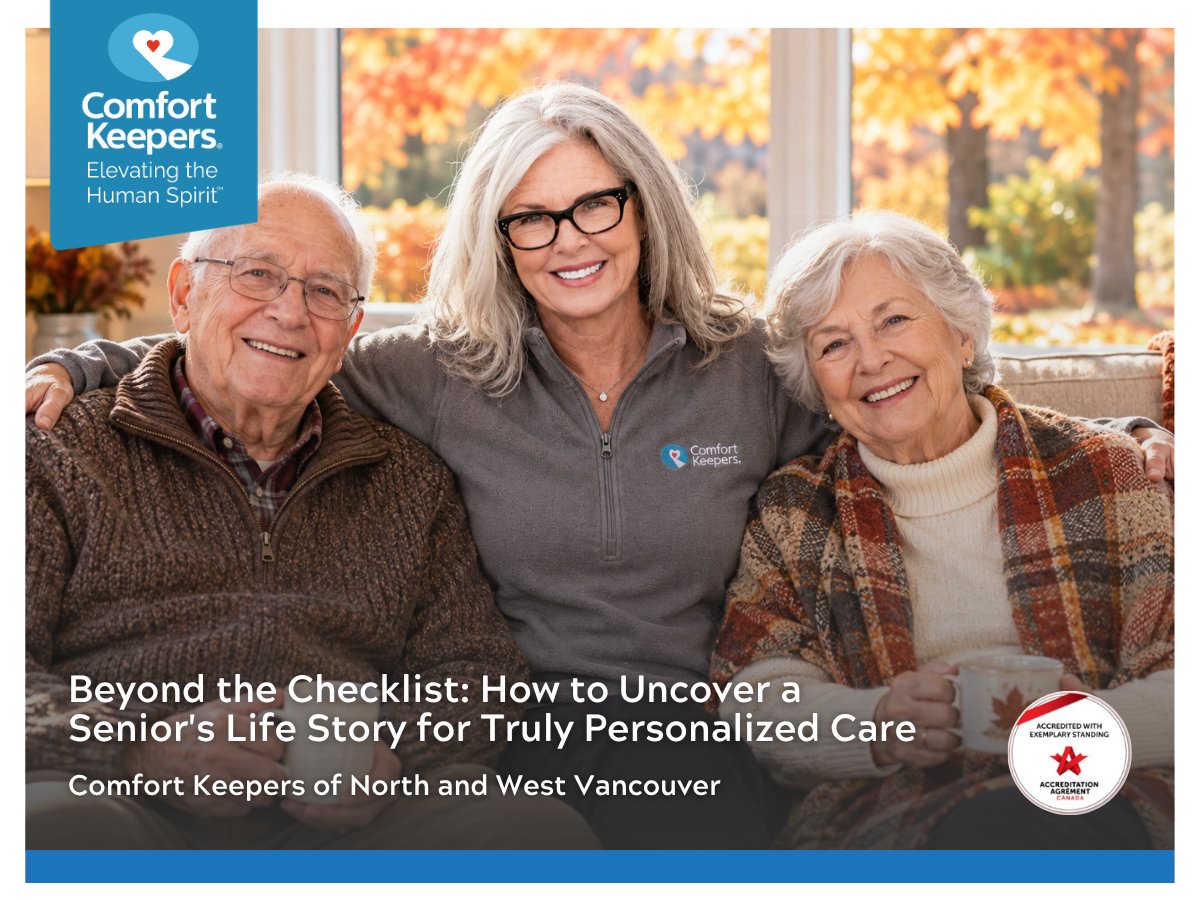
What is Person-Centred Care, Really?
At its heart, person-centred care is a philosophy that places the senior and their values at the core of all planning and decision-making. It’s a shift from “doing for” someone to “doing with” them. Instead of imposing a rigid schedule, it seeks to understand what a “good day” looks like from their perspective and then builds the support needed to make that happen.
A common misconception is that this approach is only for individuals living with dementia. While it is incredibly effective in dementia care, the principles apply to every single person. Everyone, regardless of cognitive ability, has a right to be seen, heard, and respected as the individual they are. This philosophy is the foundation of compassionate approaches like Interactive Caregiving™, which focus on engaging seniors in their own care to elevate their well-being.
The “Aha Moment”: Why a Life Story is the Key to Better Care
Collecting a senior’s life history isn’t just about gathering interesting anecdotes. It’s a diagnostic tool that provides the “why” behind their behaviours and preferences. When you understand someone’s past, you gain incredible insight into their present.
Here’s how a generic care plan can be transformed:
Before: “Assist client with morning routine at 8 AM.”
After (Learning They Were a Farmer): “Open the curtains at 7 AM to let in the morning light, just as they would have on the farm. Play gentle folk music and discuss the weather while preparing breakfast.”
Before: “Encourage fluid intake.”
After (Learning Their Favourite Drink was Iced Tea on the Porch): “Prepare a fresh pitcher of iced tea in the afternoon and suggest enjoying a glass together on the patio.”
This detailed understanding does more than just make the day pleasant. It builds trust, reduces anxiety, and dramatically increases a senior’s willingness to accept care. When they feel their identity is respected, they become an active partner in their own well-being.
Your Toolkit for Discovery: Practical Ways to Gather a Life History
So, how do you begin this journey of discovery? It’s not a formal interrogation but a series of gentle, open-ended conversations. Here are a few practical tools to guide you.
The Art of the Conversation: It Starts with Listening
The most powerful tool you have is genuine curiosity. Instead of asking yes/no questions, try open-ended prompts that invite storytelling.
Conversation Starters:
- “Tell me about the house you grew up in.”
- “What was your very first job? What did you learn there?”
- “I’d love to hear about your wedding day.”
- “What kind of music did you love to listen to when you were a teenager?”
- “What is one of the most memorable trips you’ve ever taken?”
The key is to listen actively. Pay attention not just to the words but to the emotions behind them. What makes them smile? What topics do they return to? These are the threads that weave the tapestry of their life.
Tool #1: The Life Map or Timeline
A life map is a wonderful visual tool for organizing a person’s history. It can be as simple as a line drawn on a large piece of paper.
How to Create One:
- Start Simple: Begin with a timeline marking decades.
- Plot the Big Moments: Add key life events like birth, marriage, children’s births, significant career changes, or major moves.
- Flesh it Out: Fill in the spaces with smaller but meaningful details. Where did they go to school? What were their favourite hobbies during different life stages? Who were their closest friends?
- Make it a Shared Activity: Creating this map with the senior can be a joyful and collaborative reminiscence activity in itself.
Tool #2: Memory Prompts and Cue Cards
Sometimes, memories need a little nudge. Sensory prompts can be incredibly effective at unlocking stories that have been dormant for years.
Examples of Effective Prompts:
- Photographs: Go through old photo albums together. Ask, “Who is this?” and “What was happening on this day?”
- Music: Create a playlist of popular songs from their teens and twenties. Music has a powerful, direct link to memory and emotion.
- Objects: A vintage kitchen utensil, a familiar brand of soap, or a piece of fabric can all trigger memories and stories.
- Scents: The smell of baking bread, freshly cut grass, or a specific perfume can transport someone back in time.
Tool #3: The Family Interview Guide
Family members are an invaluable resource, holding pieces of the story the senior may have forgotten or may not think to share. When you talk to them, you’re not just fact-checking, you’re gathering perspectives.
Questions for Family Members:
- “What always makes your mom/dad laugh?”
- “What are some of their proudest accomplishments?”
- “Are there any family traditions that are especially important to them?”
- “How did they typically spend their Sundays?”
- “Is there anything that easily frustrates or upsets them?”
It’s important to remember that memories can differ between family members. The goal isn’t to find the one “correct” story but to gather a rich, multi-faceted portrait of the person. This process can be a source of comfort and support for the entire family, reinforcing the idea that they are not alone on this journey.
Translating Stories into Action: From Information to a Living Care Plan
The information you gather is only valuable if it’s put into practice. The final, most important step is to connect each insight to a concrete action in the care plan.
- Life Story Insight: A gentleman was a meticulous carpenter for 40 years. Care Action: Involve him in simple, tactile activities like sorting nuts and bolts, sanding a small piece of wood, or organizing a toolbox. This honours his skills and provides a sense of purpose.
- Cultural Insight: A woman comes from a culture where the eldest child is deeply respected. Care Action: Ensure the caregiver understands this dynamic and facilitates regular, private calls with her eldest son, acknowledging his important role in her life.
- Personal Preference: A senior has always been a “night owl,” never going to bed before 11 PM. Care Action: Adjust the evening routine to align with their lifelong sleep pattern rather than forcing an arbitrary 9 PM bedtime, reducing potential conflict and respecting their autonomy.
Navigating Common Challenges with Empathy
This process isn’t always straightforward. You may encounter hurdles, but they can be navigated with patience and understanding.
When a Senior is Reluctant to Share
Trust is built over time. If a senior is private or hesitant, don’t push. Start by sharing a little about yourself. Use gentle, indirect methods like looking at photos or listening to music together. Sometimes the best stories emerge when there’s no pressure to tell them.
When Memory is a Hurdle
For seniors with cognitive decline, memories may be fragmented or factually inaccurate. That’s okay. Focus on the emotional truth of the story. The feeling of pride, love, or accomplishment that a memory evokes is more important than getting every detail right.
Respecting Cultural and Personal Boundaries
Always ask for permission. Treat the life story as the precious, personal history that it is. Ensure the information is documented respectfully and shared only with those directly involved in the person’s care, always with their consent.

Frequently Asked Questions (FAQ)
What is person-centred care in simple terms?
It’s an approach to care that focuses on the whole person, their life history, values, and preferences, not just their medical needs. It treats them as an active partner in their own care.
How long does it take to gather a life history?
It’s not a one-time interview but an ongoing conversation. The story will unfold over weeks and months as trust and rapport grow.
What if the family isn’t available or helpful?
While family is a great resource, you can still learn a tremendous amount from the senior themselves through conversation, observation, and using memory prompts. Friends, neighbours, and community members can also offer valuable insights.
Is this only for people with dementia?
Absolutely not. Every person deserves to have their identity and preferences known and respected. Person-centred care improves the quality of life for all seniors.
How do I document this information respectfully?
Use a “One-Page Profile” or a dedicated section in the care plan that summarizes key information in a positive, respectful tone. Focus on strengths and what is important to the person. Always prioritize privacy and consent.
Learning someone’s life story is more than a technique, it’s an act of profound respect. It’s the difference between caring for a patient and caring for a person. By taking the time to uncover the history, passions, and preferences that make someone unique, you build a foundation of trust and connection that transforms care from a series of tasks into a meaningful human relationship.
Embarking on this journey of discovery is the first and most important step. If you’re exploring how to put these principles into practice for a loved one, understanding the full range of in-home care services available can provide a clear path forward. Comfort Keepers North and West Vancouver is here to help you get started with a care plan built around your loved one’s story.