



Overnight Care vs 24-Hour Home Care in Winnipeg: What Is the Difference?
Overnight care and 24-hour home care sound alike, and families often use the terms interchangeably, but they describe different amounts of help. Overnight care handles the night hours, when a loved one needs help or a watchful presence after dark. 24-hour home care is continuous, around-the-clock support, provided by caregivers who work in rotating shifts so someone is always awake and ready to help. Live-in care is a third option, where one caregiver stays in the home with set periods of rest.
If you have started wondering which of these your parent or spouse needs, you are already doing the hard part, which is paying attention. As needs grow, the daytime help that once felt like plenty can begin to fall short, and the nights are often where it shows first. Below we explain what each type of care means in plain language, how our Winnipeg team actually delivers it, and how to think about which one fits your family.
Key Takeaways
- Overnight care covers the night hours only. 24-hour home care is continuous, around-the-clock support delivered by rotating shifts, so there is always someone awake and ready to help.
- Live-in care means one caregiver stays in the home with set periods of rest. Comfort Keepers Winnipeg’s 24-hour care is shift-based rather than live-in.
- Families often move toward continuous care after a fall, a hospital discharge, or as dementia progresses, when the Alzheimer Society of Canada notes that care “may be required 24 hours a day.”
- Continuous coverage relies on rotating, rested caregivers. Manitoba Employment Standards even sets specific pay and rest rules for live-in (residential) caregivers, including a 12-hour daily pay structure and a 36-hour weekly rest period.
- Manitoba’s public home care helps people stay home “for as long as is safely possible,” but it is not described as an overnight or 24-hour in-home service.
- To talk it through, call our Winnipeg team at (204) 488-4600 and we will help you weigh whether overnight, 24-hour, or a mix of support fits.
Overnight Care, 24-Hour Care, and Live-In Care at a Glance
The quickest way to tell these apart is with two questions: how much of the day is covered, and whether a caregiver is awake the whole time. In-home care can run anywhere from a few hours a day to around-the-clock support, and where a family lands on that range is what separates overnight care, 24-hour home care, and live-in care. This is the same language we use when we sit down to plan care with a family, and the table below lays out the differences.
| Care type | What it covers | Is a caregiver awake? | How it is staffed | Often a fit when |
| Overnight care | The night hours only | Yes, awake through the night | A caregiver present for the overnight period | Days are manageable, but nights have become the worry |
| 24-hour home care | The whole day and night, continuously | Yes, someone is always awake | Caregivers in rotating 6- or 8-hour shifts | Help is needed at any hour and safety cannot lapse |
| Live-in care | Around the clock, with the caregiver living in | Not the whole time; rests and sleeps in the home | One caregiver with set rest periods | A family prefers a single resident caregiver and accepts set rest hours |
Table 1. Overnight, 24-hour, and live-in care compared. Comfort Keepers Winnipeg’s 24-hour service is shift-based, not live-in.
Why Families Begin Looking for More Continuous Care

Most families do not decide on continuous care out of nowhere. It usually follows a change: a fall, a hospital stay, a difficult stretch of nights, or the slow realization that a few hours of daytime help no longer covers what is happening the rest of the time. These are the situations we hear about most often from Winnipeg families.
When the nights become the hard part. A parent who manages fine during the day may be a different story after dark: getting up to the bathroom, unsteady on their feet, waking confused, or calling out and finding no one there. When no one is present overnight, a small stumble can turn into a fall with hours before anyone knows.
When safety and falls are the worry. Each year, an estimated 20% to 30% of seniors fall (Public Health Agency of Canada, Seniors’ Falls in Canada), and falls remain the leading cause of injury-related hospitalizations among older Canadians (Public Health Agency of Canada, 2024 surveillance report). People who live with dementia are especially at risk of falling (Alzheimer Society of Canada). A caregiver who is present and awake cannot promise a fall will never happen, but consistent supervision may help reduce the risk, and it means someone is right there if a fall does occur.
When dementia needs are rising. Care needs tend to grow over time. In the middle stage, people living with dementia “need help with many daily tasks,” and in the later stages the Alzheimer Society of Canada notes that “care may be required 24 hours a day” (What to expect as dementia progresses). Evenings can be harder, with more confusion around nightfall, sometimes called sundowning. Some people become disoriented and try to leave the home; the Alzheimer Society notes that six in ten people who live with dementia are at risk of getting lost (Disorientation and losing one’s way), and that this can happen at any time of the day or night (Alzheimer Society of B.C.).
After a hospital stay. Coming home after a hospital stay is a vulnerable time. The Government of Canada describes care transitions as “critical to the person’s recovery and quality of life” (Care options), and the Canadian Institute for Health Information tracks hospital stays that are extended because home-care services or supports are not yet ready (Canadian Institute for Health Information). Because discharge can sometimes be delayed while home supports are being arranged, it can help to plan needed support early. Continuous or overnight care may then support the first weeks back at home and scale down as recovery progresses.
When the family caregiver is running low on sleep. Often the person who needs help is not the only one struggling. A spouse or adult child covering the nights loses their own sleep, and that cannot hold for long. The Alzheimer Society is direct about it: “You cannot care for a person with dementia alone” (Reducing caregiver stress), and “you shouldn’t have to do it all alone” (Long-term care). Bringing in overnight or 24-hour care lets the family rest and simply be family again.
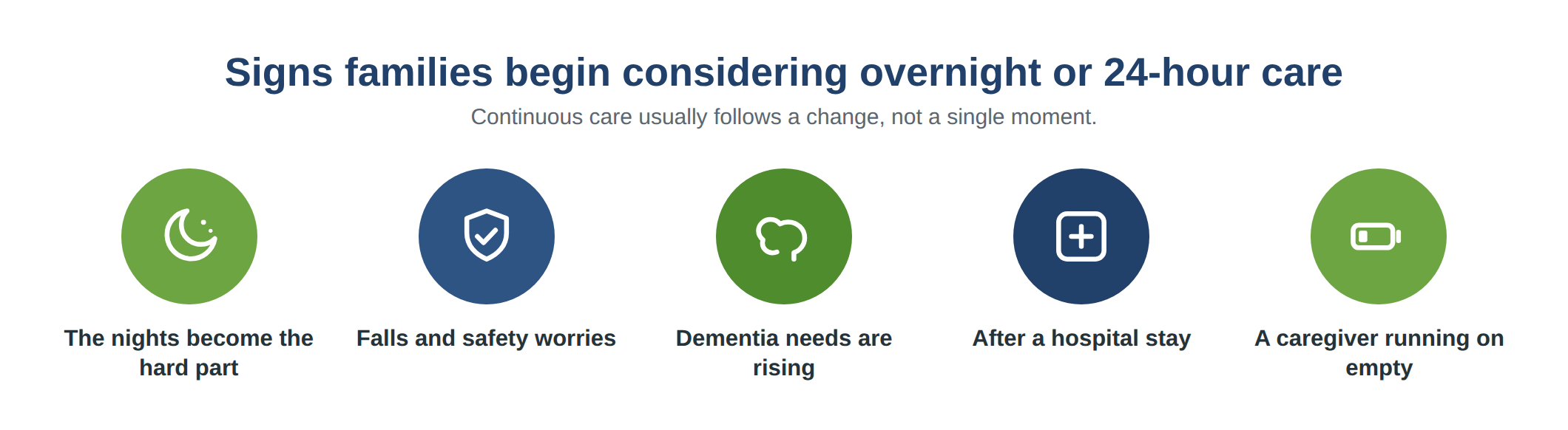
Figure 1. Common signs that lead Winnipeg families to consider overnight or 24-hour care.
What Overnight Care Usually Means
Overnight care covers the night hours, when a loved one needs help or supervision while they sleep. A caregiver is present through the night, so if your loved one gets up, someone is there to gently guide them back to bed, help them to the bathroom, or simply offer calm reassurance. It suits families whose days are manageable but whose nights have become the concern, when a parent is unsteady after dark, wakes often, or should not be alone if something goes wrong in the middle of the night.
Overnight support is mostly practical, hands-on personal care and supervision rather than medical treatment. The caregiver helps with things like getting to the bathroom safely, repositioning, a glass of water, and settling back to sleep, and they stay awake and alert to respond. When the days start to need covering too, that is where 24-hour care comes in.
What 24-Hour Home Care Usually Means
24-hour home care provides continuous, around-the-clock support for a senior who needs help at any hour of the day or night. Our caregivers work in scheduled shifts, usually six or eight hours each, so there is always someone awake and ready to help with personal care, mobility, safety, or a bit of reassurance during the night.
What sets our 24-hour care apart is how it is staffed. It is shift-based rather than live-in, so no one is expected to work a full 24 hours or to sleep on the job. That matters because the person helping your loved one at three in the morning is rested and alert, not someone who has been awake and on duty for twenty hours. Around-the-clock supervised care is often associated with moving into a facility; the Government of Canada notes that “long-term care is for people who require supervised care around the clock” (Health Canada). 24-hour home care offers that continuous coverage while your loved one stays in their own home, with familiar surroundings and routines.
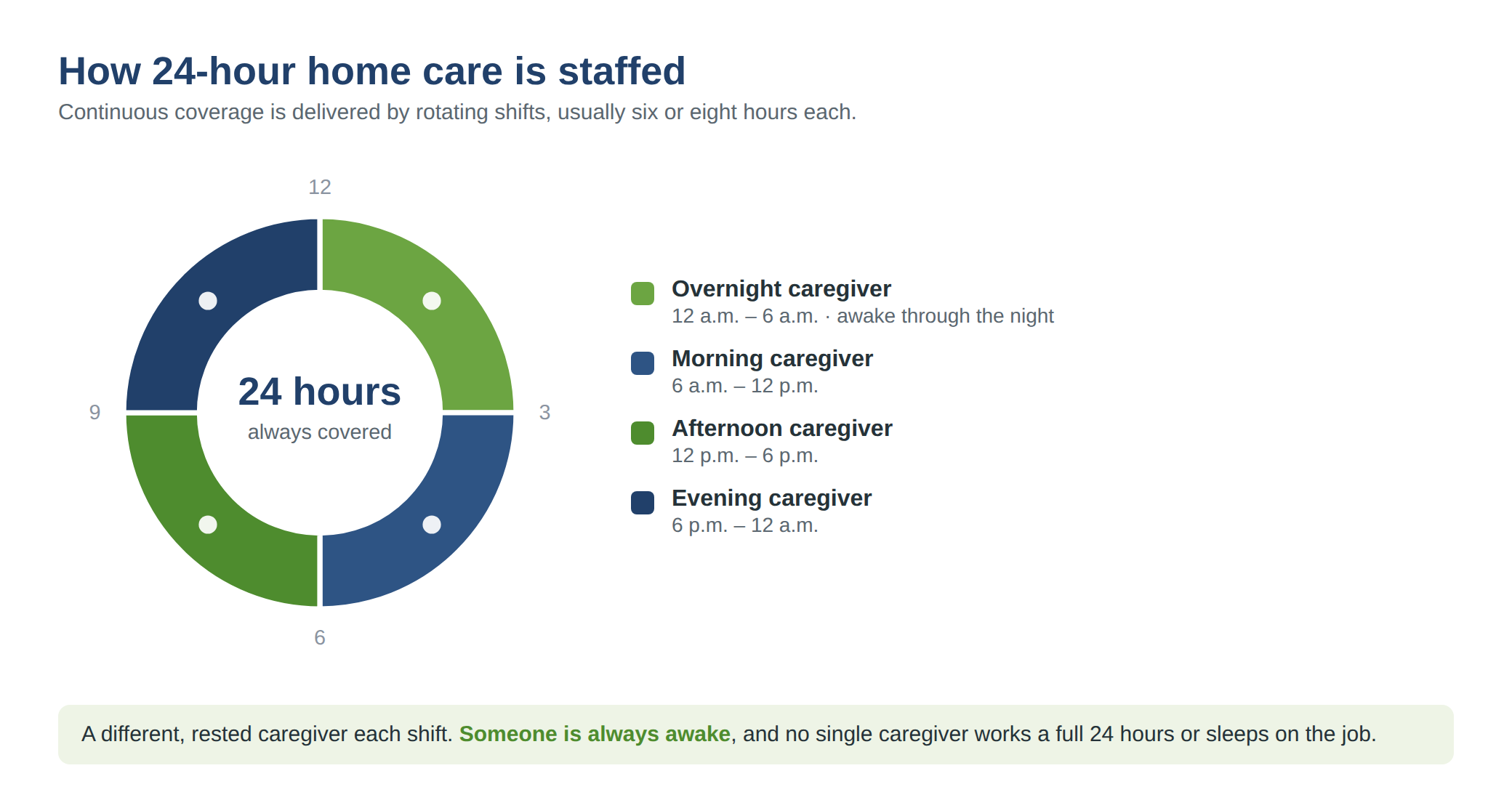
Figure 2. In 24-hour home care, rotating shifts mean a rested caregiver is always awake.
How Live-In Care May Differ
Live-in care means a caregiver stays in the home with set periods of rest. Unlike shift-based 24-hour care, a live-in caregiver lives in the home and sleeps there, so they are resting during part of the night rather than awake and on duty the entire time. For some families that arrangement works well. For others, the concern is exactly what happens during those rest hours.
Manitoba’s own rules show why the distinction matters. Manitoba Employment Standards sets specific pay and rest rules for residential caregivers, who “must reside in the client’s home during periods of work.” Those rules include a 12-hour daily pay structure and a 36-hour weekly rest period, subject to prescribed overtime and rest-period provisions (Government of Manitoba, Residential Caregivers). In plain terms, even a live-in caregiver needs protected rest and sleep, which is the practical reason continuous, always-awake coverage is delivered through rotating shifts rather than a single person. Our Winnipeg 24-hour care is shift-based, with someone awake at all times. Live-in care is a separate arrangement, where a caregiver stays in the home with defined rest periods, and our team can talk through whether it is the right fit for your family.
Questions About Scheduling, Rest and Caregiver Rotation
Once you are weighing continuous care, the practical questions come down to scheduling and rest, because that is where the models genuinely differ. Fatigue and very long shifts can affect alertness. NIOSH cites nursing research showing higher error and fatigue risks as shifts get longer: on shifts of 12 hours or more, nurses had more than three times the odds of an error compared with a regular eight-hour shift (CDC / NIOSH). Home care is a different work setting, but the research helps explain why continuous coverage should rely on caregiver rotation rather than expecting one person to stay awake and attentive around the clock.
That rotation is why caregivers work in six- or eight-hour shifts and hand over to the next caregiver: the coverage never lapses, and no one is running on empty. We also keep the same small team of caregivers with your loved one over time, so they see familiar faces rather than a stranger every shift. Continuity is not a small thing: the Alzheimer Society of Canada names “continuity of care” and trusting relationships between families and staff as key factors in good, person-centred care (Providing person-centred care).
If you are interviewing any provider about continuous care, these questions are worth asking:
- Is your 24-hour care shift-based with someone always awake, or a single live-in caregiver who sleeps overnight?
- How long are the shifts, and how many caregivers rotate through a full day?
- Will the same small team return, so my loved one sees familiar faces?
- What happens overnight specifically, if my parent gets up, needs the bathroom, or becomes disoriented?
- Is there backup coverage if an assigned caregiver is unavailable?
Matching the Care Model to the Person’s Needs
The right model follows the pattern of need: when help is needed, how predictable it is, and whether it is safe for your loved one to be on their own at any point in the day or night. There is no diagnosis involved here, just an honest look at what the days and nights actually require. The table below is a starting point for that conversation.
| What you are seeing | A model that may fit | Why |
| Predictable help needed during the day | Scheduled daytime visits | Support is needed at known times, and nights are fine on their own |
| The nights are the problem: bathroom trips, unsteadiness, waking anxious or confused | Overnight care | Coverage is needed for the night window, when the risk is highest |
| Help is needed at unpredictable times, and safety cannot lapse at any hour | 24-hour home care | Continuous, always-awake coverage keeps someone ready day and night |
| A temporary spike after a fall or a hospital stay | Temporary overnight or 24-hour care | Intensive support can carry recovery, then scale back down |
| The family caregiver is out of sleep and cannot cover the nights | Overnight or 24-hour relief | Rested, rotating caregivers let the family recover and stay well |
Table 2. A plain-language starting point, not a medical assessment. Every family is different, and care can blend these models.
A few things are worth keeping in mind alongside the table. Care does not have to start big. Many families begin with a few hours or a few nights a week and add more as needs change. And because our care is primarily non-medical, part of our job is to notice when a loved one’s needs are growing beyond what we can safely support at home, and to help you plan the next step and coordinate with your family, physician, and Manitoba home care.
How to Discuss Options With Comfort Keepers Winnipeg
The simplest next step is a conversation about what is actually happening at home. From there, we can help you sort out whether overnight care, full 24-hour care, or a mix of support fits, and we can start where you need it and adjust as things change. Our approach, which we call Interactive Caregiving, keeps your loved one engaged in everyday life rather than simply doing everything for them.
It also helps to know how private care fits with Manitoba’s public system. Home care through the Winnipeg Regional Health Authority can be part of the picture, and the province describes its goal as helping people “stay in their homes for as long as is safely possible” (Your Guide to Home Care Services in Manitoba). You can reach WRHA Home Care intake directly at 204-788-8330 (WRHA Home Care), and many families combine public support with private care to cover the hours that matter most.
Discuss More Continuous Care
When you are ready, we are here. Call our Winnipeg team at (204) 488-4600, or visit our 24-Hour Home Care page to talk through more continuous care. We are based at 806 Osborne Street and we care for families across Winnipeg.
About the Author and Reviewer
This guide was written by the Comfort Keepers Winnipeg Editorial Team and reviewed for local service accuracy by Debbie Bell, Owner of Comfort Keepers Winnipeg, who has led the local office since 2014 and brings a background in health care to the Winnipeg team’s work. Debbie’s review confirms that the local service information here reflects how our Winnipeg team actually supports families. It is a local service-accuracy review, not a clinical or medical review. You can learn more on Debbie Bell’s profile page. This article provides general information and does not replace medical advice, diagnosis, or treatment.
Last reviewed and updated: August 2026.
References
Public Health Agency of Canada. Seniors’ Falls in Canada: Second Report (2014).
Public Health Agency of Canada. Surveillance Report on Falls Among Older Adults in Canada (2024).
Alzheimer Society of Canada. Living Safely and Independently.
Alzheimer Society of Canada. What to Expect as the Person’s Dementia Progresses (updated 2024).
Alzheimer Society of Canada. Disorientation and Losing One’s Way (updated 2023).
Alzheimer Society of B.C. Wandering and Dementia.n
Alzheimer Society of Canada. Reducing Caregiver Stress.
Alzheimer Society of Canada. Long-Term Care.
Alzheimer Society of Canada. Providing Person-Centred Care.
Government of Canada. Care Options: Choosing the Best Plan (2024).
Government of Canada / Health Canada. Home and Community Health Care.
Government of Canada. Core Community Supports to Age in Community.
Government of Manitoba. Your Guide to Home Care Services in Manitoba (PDF).
Government of Manitoba. Home Care Services FAQ.
Government of Manitoba, Employment Standards. Residential Caregivers.
CDC / NIOSH. Training for Nurses on Shift Work and Long Work Hours (Modules 2 and 3).
Winnipeg Regional Health Authority. Home Care.
Winnipeg Regional Health Authority. Self and Family Managed Care.
Frequently Asked Questions
What is the difference between overnight care and respite care?
Overnight care is defined by when it happens: it covers the night hours. Respite care is defined by its purpose: giving a family caregiver a break. The Government of Canada describes respite as “day, evening or night care to give unpaid caregivers … a break from caregiving” (Core community supports). Overnight care can serve as respite when it is the nights the family needs covered, but respite can also be daytime or a longer stretch.
Is overnight care medical care, or the same as hiring a night nurse?
Overnight care is not the same as hiring a night nurse. It is primarily non-medical support: help through the night, supervision, and reassurance. We do offer in-home nursing as a separate service for specific clinical needs, so if skilled nursing is what your loved one requires, that is a different service we can talk about.
Does someone need a formal assessment before overnight or 24-hour care can start?
You do not need to wait for a WRHA assessment to contact us. Our own care-planning and assessment process is arranged directly with our Winnipeg team, usually starting with a conversation and an in-home visit. Manitoba’s public home care is arranged differently, through an assessment by a case coordinator; you can reach WRHA Home Care intake at 204-788-8330 (WRHA Home Care). Many families use both.
Does Manitoba home care or the WRHA pay for overnight or 24-hour care at home?
Manitoba’s public home care is provided based on assessed need and is not described as an overnight or 24-hour in-home service, and the province notes that home care “is not an insured benefit covered under the provisions of the Canada Health Act” (Manitoba Home Care FAQ). Some families use the WRHA’s Self and Family Managed Care option, where they “receive funding to either purchase services or to employ staff” (Self and Family Managed Care), and combine it with private care.
Is 24-hour home care only for people with dementia?
No. Dementia is one common reason, but families also arrange continuous care after a fall or a hospital stay, during a period of frailty, or when someone is at risk of falling and should not be left alone. What matters is how much help is needed and when, not a particular diagnosis.