


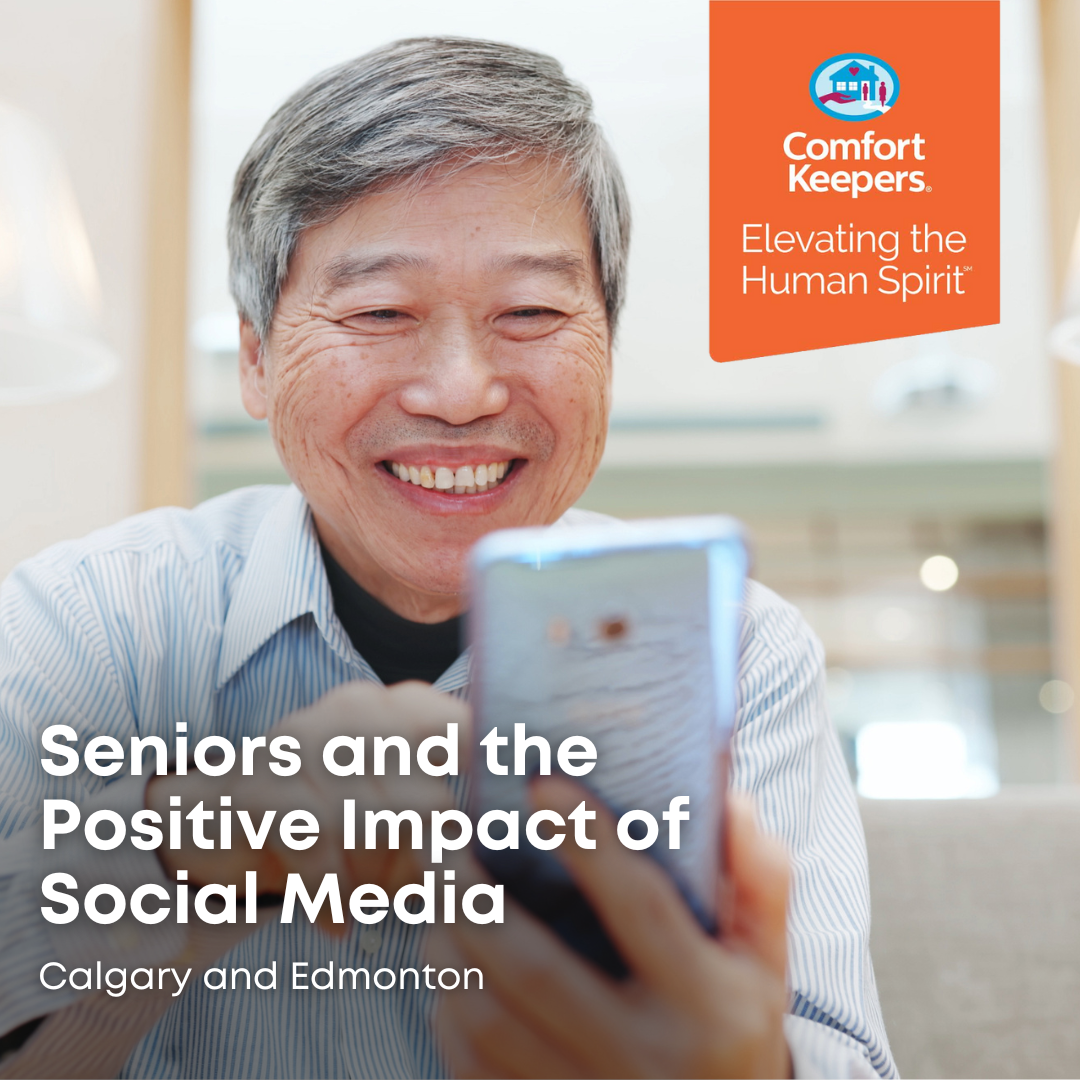
The Positive Impact of Social Media for Seniors | According to Pew Research, 59% of adults age 65 and older are online, and 46% of those adults are using social media.
Despite the myth that older people can’t manage technology because of cognitive deficits, seniors are flocking to social media at a rapid pace. In fact, Facebook, Twitter, Google+ (and Hangouts), Pinterest, and Instagram all note higher adoption rates among adults 65 and older ─ and see seniors as their fastest growing audience.
Seniors Benefit Socially, Mentally, and Physically from Social Media
Older adults who have had positive experiences on social media have reported elevated moods. An American Psychological Association (APA) study found that seniors who spend time on social media sites were more likely to participate in activities that can lead to greater health, such as cooking healthier recipes, and finding easier ways to clean and maintain their homes. The study also indicates that they have lower blood pressure and fewer instances of diabetes, and less negative health habits such as smoking, depression, or disease. This is attributed to the ability for self-education on any number of topics, and remaining in-the-know about the latest technology trends.
Social Media Keeps the Family Together
Facebook is particularly useful for linking up with loved ones. It makes for more frequent conversations and helps close the generation gap.
Sharing current photos allows seniors to see their grandchildren change and grow, and creates a closeness and involvement that may not have existed, especially if the family isn’t living close by. Video chats also are a great way to communicate in “real time”. There is also the opportunity to relive fond memories or create new ones through postings of photos and home videos.
59% of adults age 65 and older are online, and 46% of those adults are using social media.
Pew Research
Social Media and Family Peace of Mind
When a family lives apart, there can be stress and anxiety on both ends. Social media allows seniors and their families an easy way to check in as often as they wish. This is especially important if the senior is living alone and may experience ill health, a fall, or may not be eating or sleeping well, taking medications, or getting any form of exercise. Family caregivers can use social media to ask critical questions that will let them know what’s occurring in their loved one’s life.
Social Media Creates Community Engagement and a Sense of Belonging
Feeling connected is very important to any senior’s wellbeing. Social media allows the senior to make plans with others to meet up outside of the home. It also allows seniors who are unable to leave home to socialize online to combat loneliness.
Related Article: Combating Loneliness in Seniors
Shopping Online offers Convenience and Savings
Even if a senior can’t venture out of the home – due to physical limitations, inability to drive, or inclement weather, for example – he or she can always shop online and enjoy the ease of home delivery. In addition, there are lots of money-saving coupons and online sales, which can be especially convenient and sensible for those who are penny-pinchers or on a fixed income.
Some Precautions Should Be Taken
As a caregiver, you may want to monitor the senior’s activities. You may want to make sure that the loved one is not falling for phishing scams and the like. You may also want to make sure they are connecting with trustworthy people – especially if they are conversing in chat rooms and through blogs. Also watch their monetary spending – you don’t want your senior overspending on items they don’t need.
Learning How to Use Social Media
A great source for seniors – and family members – is AARP’s Social Media Education Center. There, you can find out about how to use specific (and commonly used) social media websites, apps, and blogs. Visit http://www.aarp.org/home-family/personal-technology/tek/social-media-education-center/
Comfort Keepers® caregivers also help families look after their loved ones. Our unique approach to in-home care,’ Interactive Caregiving™, can help by keeping senior clients engaged physically, mentally and emotionally while living independently at home.
References:
- SeniorCareCorner.com. “5 Benefits of Social Media for Seniors – Let’s Help Them Get Online.” by Barry Birkett. Web. 2015.
- NPR.org. “Why Are Seniors The Fastest-Growing Demographic On Social Media?” Web. 2013.
- AARP. Social Media Education Center. Web. 2015.
Comfort Keepers® Can Help
At Comfort Keepers®, we understand the importance of maintaining social wellness and offering technology solutions for the value it can bring to seniors’ lives. Our trusted caregivers not only provide meaningful companionship, but they can also help in getting seniors to and from places they need to go. We also offer technology solutions that can enhance socialization and keep seniors connected to their loved ones. For more information about Comfort Keepers’ services, reach out to the Calgary, Alberta office today.
If you liked this article; The Positive Impact of Social Media for Seniors, here a couple more suggestions:
Combating Loneliness in Seniors
How Senior Home Care Services Improve Our Mental Health
Social Wellness and Its Benefits to Seniors
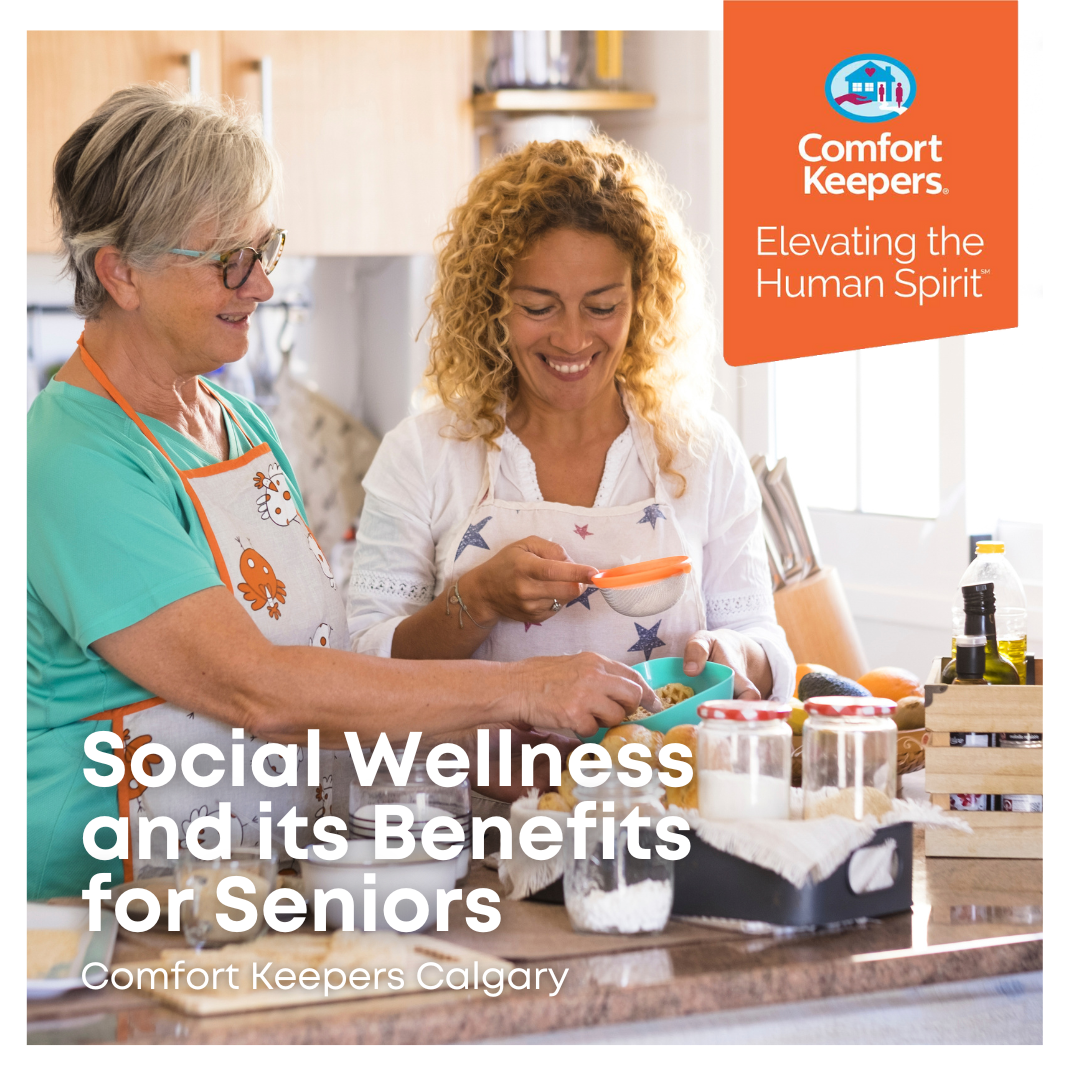
Social Wellness is a big piece of the puzzle
Social wellness and it benefits to seniors | When it comes to feeling our happiest and healthiest, two of the most significant factors are undoubtedly physical and mental wellbeing. There’s no question that staying fit, following a healthy diet, and keeping the brain sharp, are pivotal in shaping the way we live our lives.
But what about social wellness? Often described as one’s ability to communicate and maintain meaningful relationships with others, social wellness is just as vital as physical and mental wellness, and requires the same level of maintenance. As we age, it’s especially important that we foster positive social engagement to not only safeguard against isolation, but to also improve various aspects of our physical health.
According to Statistics Canada, over 24.6% of the Canadian population, 65 and over live alone.
Canada’s Guide to Retirement Living and Care
Why Is Social Wellness for Seniors Important?
Let’s face it, almost every aspect of life changes as we reach our senior years. Children may move away, friends and family may pass away, and certain health conditions may make it harder to fully enjoy the things we love doing. And as these changes occur, it’s important that we talk about them. Without a support system of friends and family in place, many of life’s events can slowly begin to take their toll on us and potentially lead to a downward spiral of loneliness, isolation, and even major depression. But by nurturing current relationships and taking steps to build new ones, seniors can create a reliable network that allows them to learn new skills, view things from different perspectives, and see how others effectively manage the challenges of aging.
Did You Know?: Socially active seniors had a 70% lower rate of cognitive decline than those who were less socialized.
Though it may go without saying, maintaining social wellness brings about a number of other health benefits as well. Not only can it help strengthen our immune system, but it can lead to better sleep and increased productivity. Studies also show that increased socialization can enhance our cognitive abilities and even reduce our risk of Alzheimer’s and dementia. In fact, one study showed that socially active seniors had a 70% lower rate of cognitive decline than those who were less socialized.
What Can Seniors Do to Improve their Social Wellness?
One of the barriers some seniors may face is that they may not know what opportunities are available to them. That’s why we’ve put together a list of some of the ways seniors can begin to build and maintain their social connections:
- Volunteer, or become involved in community efforts and activities.
- Join a senior center, and make connections with like-minded individuals.
- Continue learning through online courses or those offered by universities and community colleges.
- Find a new hobby or interest, or revisit old ones.
- Invite a friend or friends over for coffee or tea.
- Take a part-time job.
- Offer assistance to someone in the family.
- Join an exercise group or class.
- Reach out to those at a church, synagogue, temple, or other place of worship to sign up for upcoming events.
- Utilize social media to stay connected with friends and families (near and far).
Have you Heard about The National Day of Joy? | Social Wellness and Its Benefits to Seniors
On Wednesday June 29, 2022 celebrate the #NationalDayofJoy with Comfort Keepers Calgary!
No matter who we are, where we are, our age, or what we went through, one thing is universally true: we all could use more joy in our lives!
On the last Wednesday of June, simply take some time and do something that brings joy to yourself or others. If you feel inspired to share your joy stories with the world, post your Day of Joy activity on social media using #NationalDayofJoy. We can’t wait to see what you’re up to!
https://www.comfortkeepers.com/dayofjoy
Comfort Keepers® Can Help
At Comfort Keepers®, we understand the importance of maintaining social wellness and the value it can bring to seniors’ lives. Our trusted caregivers not only provide meaningful companionship, but they can also help in getting seniors to and from places they need to go. Whether it’s a trip to the senior center to visit friends, or to the local college for a weekly class, we’ll be there to help. We also offer technology solutions that can enhance socialization and keep seniors connected to their loved ones. For more information about Comfort Keepers’ services, reach out to the Calgary, Alberta office today.
References:
Psychology Today. “The Health Benefits of Socializing” by Angela K. Troyer Ph.D. C. Psych. Web. 2018.
Everyday Health. “How to Stay Socially Engaged as You Age” by Krisha McCoy. Web. 2018.
How Stuff Works – Health. “Top 5 Ways for the Aging to Remain Socially Engaged” Web. 2018.
Keeping the Senior Mind Healthy & Active

Keeping The Senior Mind Healthy & Active | While decreased mental capabilities are a normal part of aging, it is important to keep in mind that healthy lifestyle choices can prevent memory loss and other cognitive issues. At Comfort Keepers Calgary, we have a vast experience helping older adults adopt and maintain healthy, mind-boosting routines that do wonders for both their cognitive health and mood.
Mental Benefits of Physical Activity for Seniors
Most people know that physical activity plays an important role in human health, keeping our bodies in good shape and condition. However, not too many folks are aware that exercising also comes with plenty of benefits for the mind. For example, medical professionals believe that engaging in physical activity on a regular basis can even prevent dementia! According to a study that followed women over 65 determined that those who walked more during the day were healthier and less likely to experience a diminishment in their mental abilities.
#DYK – According to a study that followed women over 65 determined that those who walked more during the day were healthier and less likely to experience a diminishment in their mental abilities.
Understanding the benefits of physical activity, at Comfort Keepers Calgary, we encourage seniors to stay physically active and assist them with their personalized exercise routines.

Benefits of Mental Exercises for Seniors
Not many people know that mental exercises exist and that they really work. Researchers discovered that even those daily activities we perform every day, like using a computer, can keep our brains healthy for longer; slowing down the effect aging has on our mental capacities.
Comfort Keepers Calgary promote mental activity among our clients, making sure that the activities they perform bring them joy and mental engagement as well. Some of the most common activities for seniors include board games, puzzles, baking, gardening, and sewing.
#DYK – Seniors age 65 and older should get at least 2.5 hours of moderate aerobic exercise (such as brisk walking) every week.
https://familydoctor.org/exercise-seniors/
Benefits of Socializing for Seniors
Loneliness can take a serious toll on both our mental health and agility. Since socializing brings happiness to our lives and also provides opportunities for mental exercise, we make sure that our caregivers are compatible with the clients they care for so that they could develop a strong, positive bond and enjoy the experience.
Related Article: Combating Loneliness in Seniors
Keeping the Senior Mind Healthy & Active | We Help Seniors with Worsened Mental Functions
Our care providers assist and support seniors with decreased mental functions. We provide the following services:
- Medication, food, and fluid reminders
- Assistance with household tasks and chores, such as cooking and cleaning
- Transportation in the area
- Running errands
- Companionship and interaction
We have worked with many seniors diagnosed with dementia and we can ensure that your loved one leads an active, happy life at home, regardless of their condition. We offer personalized care plans that can be altered at any time and provide unparalleled flexibility in terms of scheduling care. Give us a call today to learn more about how we can help your parent!
Comfort Keepers® Can Help
Comfort Keepers can help. Our caregivers can provide wellness support, remind clients to take medication, provide transportation to scheduled appointments, and support physician-prescribed exercise regimens and diets. As part of an individualized care plan, caregivers can let a senior’s care team know if there are changes in behavior or physical characteristics. Our goal is to see that clients have the means to find the joy and happiness in each day, regardless of age or acuity.
To learn more about our in-home care services, contact your Comfort Keepers Calgary today.
Bonus Article: What to Expect with In-Home Care
In-Home Care Offers Cost-Effective Option for Aging in Place in Calgary

In-Home Care Offers Cost-Effective Option for Aging in Place
In-Home Care Offers Cost-Effective Option for Aging in Place in Calgary | Most families today are unaware the wealth of options available when considering care for senior loved ones. When seniors begin to demonstrate difficulty with certain daily tasks, families may automatically believe that it is time for assisted living or a nursing home. However, they may not realize exactly what that entails or that these are not necessarily the best options for every senior. Today, the senior care industry and new technologies make it possible for older adults to continue to live in their own homes safely and with assistance.
Fast Facts
In 2009, the average out-of-pocket monthly cost for a senior to age in his or her own home was $928 versus $3500 for that same senior to live in an institutional setting.
Why is it important to have cost-effective in-home care options to age in place?
A Statistics Canada study showed that 92% of all Canadians over 65 are living at home.The reasons are understandable; aging in place has many benefits. Seniors who remain in their own homes as they age enjoy the consistency of belonging to communities where they may have lived for many years surrounded by friends and families. This offers both emotional and social benefits as they have an already established support network. Overall, quality of life is better when seniors are as independent as possible and can participate in their communities in a meaningful way. Remaining in the home also avoids the stress of relocation and acclimating to new environments, and, even more compelling: aging in place can be cost effective.
Since many seniors own their homes outright, they may not have mortgage expenses. Even if they are paying a mortgage, the expense may be cheaper than the fees for assisted living. On average, the monthly cost of an assisted living facility in 2014 was $3500. This cost increases when you add additional services, such as cleaning, laundry and personal care which are often sold a la carte. Long-term care homes (or nursing homes) vary in cost depending on the provider whether public, private, not-for-profit or religious-based organizations. Provinces will share the cost with you at the facilities they support. For example; in Alberta, basic accommodations are $1,708 a month, semi-private rooms are $2,012 and private rooms are $2,362.
Related Article: In-Home Care Can Help Reduce Re-Admission
What’s more, many seniors who are placed in assisted living or nursing homes, could age in their own homes with a few home modifications and assistance with activities of daily living. Many families who are considering care for their loved ones do not realize that assistance with daily living activities is not automatically provided when the senior moves into assisted living. These are generally add-on services. In this respect, aging in the home can also be more cost effective than receiving this same assistance in an institutional setting. On average, in 2009, out-of-pocket monthly costs for seniors to obtain assistance with daily activities in their own homes was $554 versus $1065 in an institution.
Comfort Keepers Helps Seniors Age in Place
For seniors who wish to remain in their own homes and continue to be part of their communities, there are many options. In-home care can be a viable, cost-effective solution for those who may need some assistance to help keep them independent participants in their communities. As the seniors’ needs change, the care provided in the home can adapt to those changes to provide more care and services to help keep them safe and healthy in their own homes. For more information on how in-home care can help your loved one and adapt to his or her changing needs, contact your local Comfort Keepers® Calgary today.
Bonus Article: How to Support Family Caregivers
References
Canadian Association of Retired Persons. (February 7, 2014). Majority of Seniors Living at Home, StatsCan Study Reveals – CARP.
Crary, D. (November 21, 2011). Aging in place: A little help can go a long way. USA Today. Retrieved from http://usatoday30.usatoday.com/news/health/story/health/story/2011-11-21/Aging-in-place-a-little-help-can-go-a-long-way/51330714/1.
Leong, Melissa. (May 24, 2014). The Unexpected costs of caring for your parents. National Post. Retrieved from: http://business.financialpost.com/personal-finance/retirement/parenting-your-parents-the-cost-of-caring-for-your-elderly-loved-ones
Genworth Financial. (2014). Genworth 2014 cost of care survey. Retrieved from https://www.genworth.com/dam/Americas/US/PDFs/Consumer/corporate/130568_032514_CostofCare_FINAL_nonsecure.pdf.
U.S. Department of Housing and Urban Development. (Fall 2013). Measuring the costs and savings of aging in place. Retrieved from http://www.huduser.org/portal/periodicals/em/fall13/highlight2.html.
Battling Sleep Changes As We Age

Battling Sleep Changes As We Age
Battling Sleep Changes As We Age | As we age, we often experience normal changes in our sleeping patterns. But disturbed sleep, waking up tired every day, and other symptoms of insomnia are not a normal part of aging. Why does sleep change as we age and what is normal?
It’s important for caregivers to understand that even the healthiest seniors find that their sleep habits change. At any age, insomnia is the most common sleep complaint, but for adults over the age of 65 even more so. In fact, one out of every four senior adults reports symptoms of poor sleep. And while a good many seniors may feel like insomniacs, some of the symptoms that they experience are because in reality, as we age we don’t ‘sleep like we used to.’
What are some of the normal sleep changes that seniors experience?
For one, aging adults feel sleepy earlier in the evening and wake up earlier in the morning. Changes in our circadian rhythm, the internal body clock that regulates sleep and waking, are responsible for this change in sleep pattern called advanced sleep phase syndrome. Also quite normally, the older we get the more likely we are to become ‘light sleepers.’ Physiologically, our aging bodies produce lower levels of the growth hormone melatonin which is the cause for a decrease in deep sleep. Not only do we spend less time in deeper sleep cycles, but we spend less time sleeping on the whole – about half an hour less on average. Healthy older people tend to awake during the night, too, so that on any given night, an older person sleeps 15 percent less than someone younger. And it generally takes longer for seniors to fall asleep.
Regardless, sleeping well is especially important for the physical, emotional and mental wellbeing of your senior loved one. Caregivers of seniors should know that while changes such as these take some getting used to, they don’t mean that your senior should spend the night tossing and turning and not getting a good night’s sleep. So how do increase his or her chances of getting a good night’s sleep when these normal changes are impacting the senior in your care?
Related Article: Seniors and Sleep: How Much Sleep Do They Need?
Most cases of so called insomnia in elderly people can be remedied with some common sense solutions. If your senior’s sleep issues are not the result of more serious health conditions such as sleep apnea, RLS (restless leg syndrome), depression, heartburn, arthritis or the side effects of various medications that he or she may take — all which require intervention of a medical professional for treatment.
A few helpful sleep tips to follow | Battling Sleep Changes As We Age:
- Make sure your senior follows a regular sleeping schedule, going to bed and rising at the same time each day.
- Avoid letting him or her take long or frequent naps during the day.
- Make sure your loved one gets regular exercise.
- Take your senior outside or sit in natural light; it regulates the body’s sleep-wake cycle.
- Minimize caffeine and alcohol.
- Make sure that the bed is for sleeping only. If the senior is unable to fall asleep in 15 minutes, encourage him or her to get up, move to a chair and try another activity.
As always, if your senior’s health situation changes and he or she has frequent, chronic sleep problems, talk to their doctor. But these simple-to-follow steps may do the trick to help your senior loved one sleep soundly through the night.
Comfort Keepers® Can Help | Battling Sleep Changes As We Age
Comfort Keepers can help. Our caregivers can provide wellness support, remind clients to take medication, provide transportation to scheduled appointments, and support physician-prescribed exercise regimens and diets. As part of an individualized care plan, caregivers can let a senior’s care team know if there are changes in behavior or physical characteristics. Our goal is to see that clients have the means to find the joy and happiness in each day, regardless of age or acuity.
To learn more about our in-home care services, contact your the Comfort Keepers Calgary location today.
Bonus Article: The Comfort Keepers Difference
References
‘How do my sleep habits change as I age?’ by Molly Edmonds, Discovery Health, http://health.howstuffworks.com/wellness/aging/aging-process/sleep/aging.htm
‘Insomnia in Older Adults. Tips for Sleeping Better as You Age’, HELPGUIDE.org, http://www.helpguide.org/life/sleep_aging.htm
‘Aging and Sleep’, National Sleep Foundation, nsf@sleepfoundation.org
Engaging Communications with Older Adults
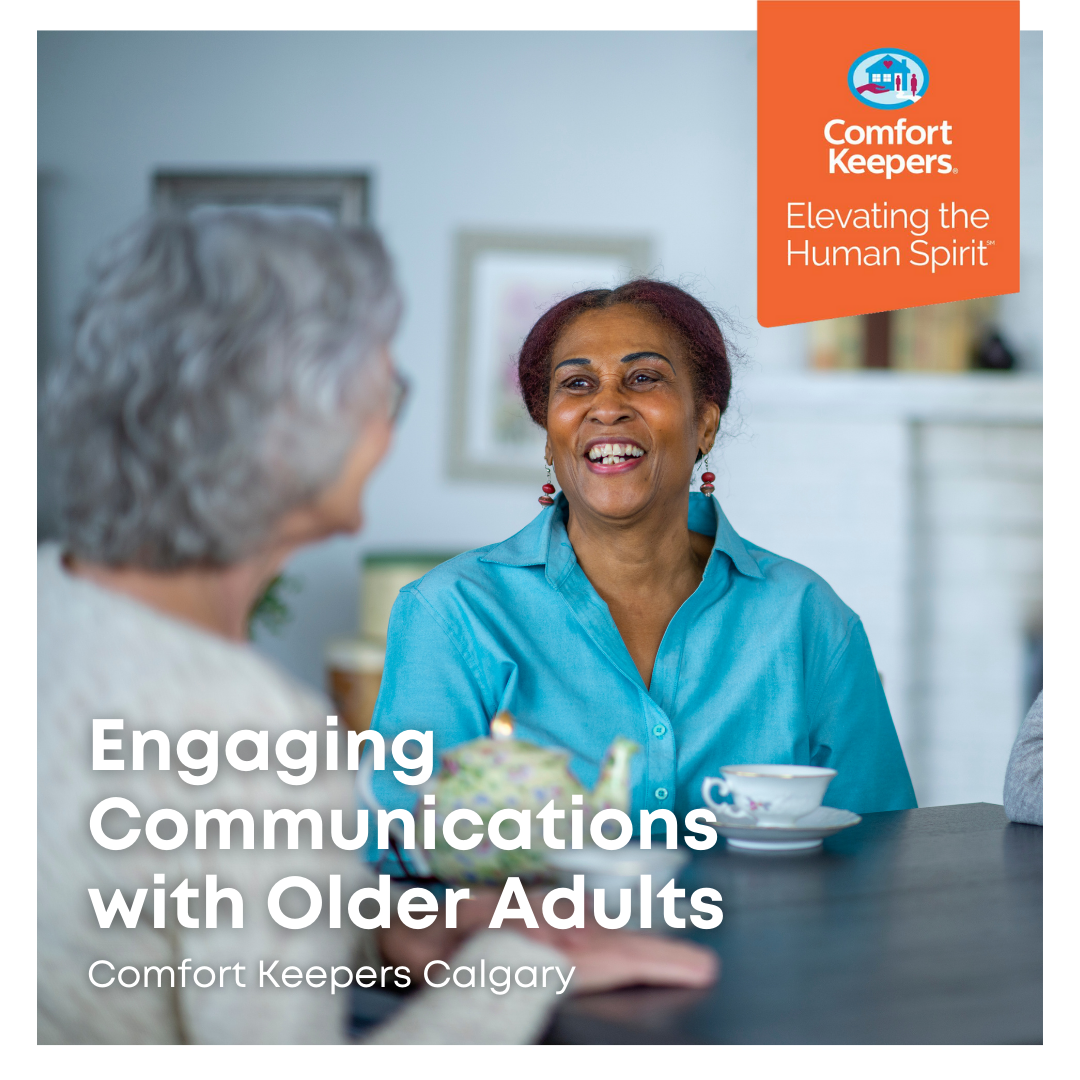
Engaging Communications with Older Adults
Engaging Communications with Older Adults | Effective communicators know their audience, and they change their communications to suit those audiences. The language a doctor uses when consulting with colleagues will not be the same, hopefully, as that used when speaking with patients. Mothers speak with their children differently than they would with their spouses. How you verbally interact on a job interview will differ from how you interact when out to dinner with friends, or with the neighbor, or with the sales clerk at the grocery store. By changing your communication strategy, you ensure that your message is successfully transmitted to the other person.
Fast Facts
Many conditions can cause communication problems in adults, including dementia, strokes, brain injuries, Huntington’s disease, and ALS. Medications can also affect memory, which can in turn affect comprehension.
Sometimes, though, needed changes in communication are not always instantly recognized. Communication needs for older adults can sometimes change slowly and imperceptibly over time. These changes occur due to sensory and memory loss, slower comprehension times, psychological factors, and aging processes. This inadvertently can increase communication barriers between older adults and their loved ones as their loved ones continue to use the same communication strategy with the older person without realizing that their strategy should change for their message to be comprehended.
When this happens, people can get frustrated and angry as they feel the older person is “just not listening to them.” In some cases this can escalate to the person shouting at the senior in a poor attempt to “get their message across.” This can even lead to elder abuse as tempers flare. At the other end of the spectrum, communications between older individuals and their loved ones can cease as the communication divide increases.
Related Article: Combating Lonliness in Seniors
Situations like these can be avoided by changing communication strategies. The American Speech-Language-Hearing Association provides the following useful tips to ensure you are speaking with, not speaking at, an older adult:
- Reduce background noises that may distract the other person. Move to a quieter area or turn off noisy devices.
- Ease into conversations by speaking first of casual matters then move into discussing more serious topics. This acts as a sort of “warm-up period” for the conversation.
- Discuss topics that are familiar to the person so he or she can become engaged in the conversation.
- Avoid switching quickly from topic to topic. Stay focused.
- Avoid verbosity. Speak in short sentences and ask short questions. (This is probably a good practice no matter what the age of the listener is.)
- Allow the older person time to respond and allow him or her to reminisce.
- When decisions need to be made, offer the older adult choices rather than asking open-ended questions.
- Listen actively to what the older person is saying. If the message is unclear, look for physical clues and ask for clarification.
Remember, a conversation is two way, so allow the older adult to converse comfortably and change your approach as necessary. Refrain from speaking to the older person as if he or she were a child. Doing so can strengthen relationships and provide an enjoyable experience for all parties involved.
Comfort Keepers® can help.
Our trained caregivers help provide senior clients with the highest quality of life possible to keep them happy and healthy at home. Our Interactive Caregiving™ engages clients physically, emotionally, mentally and socially ─ and provides a system of care that addresses safety, nutrition, mind, body, and activities of daily living (ADLs). Contact Comfort Keepers Calgary for more information on services provided to Seniors in Calgary, Alberta.
Bonus Article: What to Expect with Home Care
References
American Speech-Language-Hearing Association. (n.d.). Communicating better with older people. Retrieved from http://www.asha.org/public/speech/development/Communicating-Better-With-Older-People/.
The Gerontological Society of America. (2012). Communicating with older adults: An evidence-based review of what really works. Retrieved from http://www.agingresources.com/cms/wp-content/uploads/2012/10/GSA_Communicating-with-Older-Adults-low-Final.pdf.
Reducing the Risk of Pneumonia in Seniors

Reducing the Risk of Pneumonia in Seniors
Reducing the Risk of Pneumonia in Seniors | Pneumonia may be caused by bacteria, viruses, or fungi, and results in inflammation and decreased circulation to one or both of the lungs. As circulation to the lungs decreases, oxygen in the blood declines. While cases of pneumonia can range from mild to severe, seniors are much more susceptible to this disease than normal, healthy adults. Similarly, once they have this condition it takes them longer to recover from it, especially those who are frail who may require up to several months to return to health.
If you are a caregiver, it is essential to understand how to reduce the risk pneumonia in seniors, and spot the symptoms should they occur.
Risk Reduction Strategies for Pneumonia in Seniors
- Frequent hand washing is very important. One of the reasons pneumonia is so common among seniors is that it can quickly spread in locations where they meet, such as senior centers, places of worship, or other social gathering places. Many germs and other microbes are spread through touch, and hand washing can dramatic reduce the spread of illness. It is a good idea to remind seniors to wash their hands regularly, especially in winter. At home, post signs above wash areas/sinks to remind the senior to wash his or her hands routinely and use hand sanitizers.
- Keep up with regular dental hygiene. Remind seniors about good dental care. Pneumonia can occur from tooth and gum infections, so daily brushing and flossing ─ or keeping dentures clean ─ is a must. Germ-killing mouthwash is also helpful.
- Immunizations are key. The Mayo Clinic and the National Heart, Lung and Blood Institute both advise seniors and anyone at risk for pneumonia to get vaccinated against bacterial pneumococcal pneumonia. It’s a one-time vaccine that can prevent or reduce the severity of pneumonia. His or her doctor may also recommend a booster vaccine after five years. It’s also a good idea to vaccinate seniors against other illnesses that can lead to pneumonia, particularly influenza.
- Talk to seniors about smoking. Smoking is a major risk factor for pneumonia. It greatly increases a person’s likelihood of getting the disease because it harms the ability of the lungs to defend against infection. Quitting smoking altogether can help at-risk seniors fend against pneumonia.
- Encourage good general health. Good overall health habits are critical to preventing pneumonia in seniors and keep the immune system strong enough to fight off infection. Help them follow appropriate nutritional guidelines for seniors (and any pre-existing conditions), and encourage them to get plenty of rest and physical exercise.
Related Article: Post Hospital Care After Pneumonia
Be Familiar with the Symptoms of Pneumonia in Seniors
The incidence of pneumonia increases with age, and seniors with pneumonia complain of fewer symptoms than do younger people. That’s why it is important that you be aware of the following symptoms:
- Coughing
- Chest pain
- Chills
- Fever
- Confusion
- Fatigue
- Shortness of breath
- Delirium
- Worsening of chronic confusion
- Falls
As soon as these symptoms appear, the senior should be taken to a doctor. Pneumonia is a serious illness, so it should be treated as such and strict standards should be maintained to help him or her prevent – or cope – with it.
Bonus Article: Vaccines Can Help Prevent Pneumonia
Comfort Keepers® can help.
Our trained caregivers help provide senior clients with the highest quality of life possible to keep them happy and healthy at home. Our Interactive Caregiving™ engages clients physically, emotionally, mentally and socially ─ and provides a system of care that addresses safety, nutrition, mind, body, and activities of daily living (ADLs). Contact Comfort Keepers Calgary for more information on services provided to Seniors in Calgary, Alberta.
References:
Assisted Living Today. “Pneumonia in the Elderly – Simple Tips for Prevention and Treatment”. Web. 2015.
Oxford Journals: Clinical Infectious Diseases. “Community-Acquired Pneumonia in the Elderly” by
Thomas T. Yoshikawa. Web.
Medical News Today. “Top 10 Causes of Death in the US”. Web. 2015.
New York Times. Health Guide. “Pneumonia – Adults (Community Acquired)”. Monday, November 2, 2015.
Maintaining Joy: Ways for Seniors to Stay Healthy During the Holidays

Finding the Right Balance & Maintaining Joy: Ways for Seniors to Stay Healthy During the Holidays
Maintaining Joy: Ways for Seniors to Stay Healthy During the Holidays | The older we get, the more intense the holiday season seems to become, with an increasing number of responsibilities. There are parties to attend, relatives to visit, dinners to cook, gifts to buy and wrap – all within the span of just a few weeks. While these activities serve a greater purpose in celebrating with others, they still can be taxing on the body and mind. One of the primary reasons for this is that it’s more difficult to balance the rigorous holiday schedule with our own, and as a result, our health tends to go on the backburner.
A study out of the Chartered Institute of Environmental Health found that someone is 100 percent more likely to catch a cold on a plane than in regular daily life.
The consequences of pushing ourselves to “do it all” during the holidays can become more severe with age. Without taking the proper precautions, seniors can experience everything from mental exhaustion to physical illness. Fortunately, there are steps that they can take to preserve their health and ensure their holiday season is full of comfort and joy.
Tips for Staying Healthy During the Holidays
- Dress appropriately: Even if it’s for less than five minutes, having protection against even mild cold temperatures is imperative. Seniors should wear layers of light, warm clothing, along with gloves, scarves, and hats. In extreme cold, seniors should avoid going outside altogether.
- Combat germs and the flu: It isn’t just the holiday season; influenza gets the spotlight this time of year as well. To help reduce the risk of getting the flu, seniors should wash their hands frequently throughout the day, with soap and warm water (for at least 20 seconds) and use hand sanitizer while in public. Although the best time to get a flu vaccine is in mid-October, getting one in November and December can still help with risk reduction.
- Stay active: If the summer sun inspires us to get out and exert energy, the gray overcast skies and snow do the exact opposite. Keeping a consistent workout schedule can be difficult during the holidays, but dedicating at least 30 minutes to moderate physical activity (with physician approval) can help keep the immune system strong.
- Eat wisely: What goes better with good company than good food? There’s always plenty of rich foods and snacks to enjoy at holiday parties. However, seniors – especially those with existing health conditions – may want to think twice before overindulging so as not to create or worsen any short-term or long-term health problems. Seniors should opt for healthier options whenever possible, even if it’s just taking from the veggie tray instead of the bowl of chips.
- Get plenty of rest: With the holiday season representing such a unique opportunity to spend quality time with loved ones, there’s an ever-present temptation to do everything and soak up as much of the time as possible. However, it’s just as important that the time that is spent together is quality time, and to that end, seniors should make sure they are well-rested. They should maintain a consistent sleep schedule (allowing for 8 or more hours) and take breaks throughout the day.
- Keep the immune system strong before flying: The last thing anyone wants to do before a flight is more prep work. That being said, giving the immune system a little boost before flying can help reduce the risk of illness and exhaustion. In the days leading up to air travel, seniors should do whatever they can do de-stress, even if it’s just practicing meditation or taking soothing baths. This will add extra protection against the plethora of germs from fellow passengers.
Related Article: Cold Weather Falls are Avoidable
Comfort Keepers® Can Help
At Comfort Keepers®, we understand that hope, joy, and purpose are all central to senior wellbeing – especially during the holiday season. Our compassionate caregivers will foster these qualities for senior clients throughout the holidays and year-round, seeing that they have what they need to stay healthy and safe.
Learn more about our services by calling a local Comfort Keepers Calgary location today.
Bonus Article: What to Expect with Home Care
References
Centers for Disease Control and Prevention. “12 Ways to Have a Healthy Holiday Season.” Web. 2018.
Care.com. “11 Tips for Keeping Seniors Healthy Over the Holidays,” by Megan Horst-Hatch. Web. 2018.
Health.com. “25 Ways to Fight Holiday Stress,” by Laurie Pawlik-Kienlen. Web. 2018.
Healthline.com. “The Science of Why You Get Sick During the Holidays.” Web. 2018.