


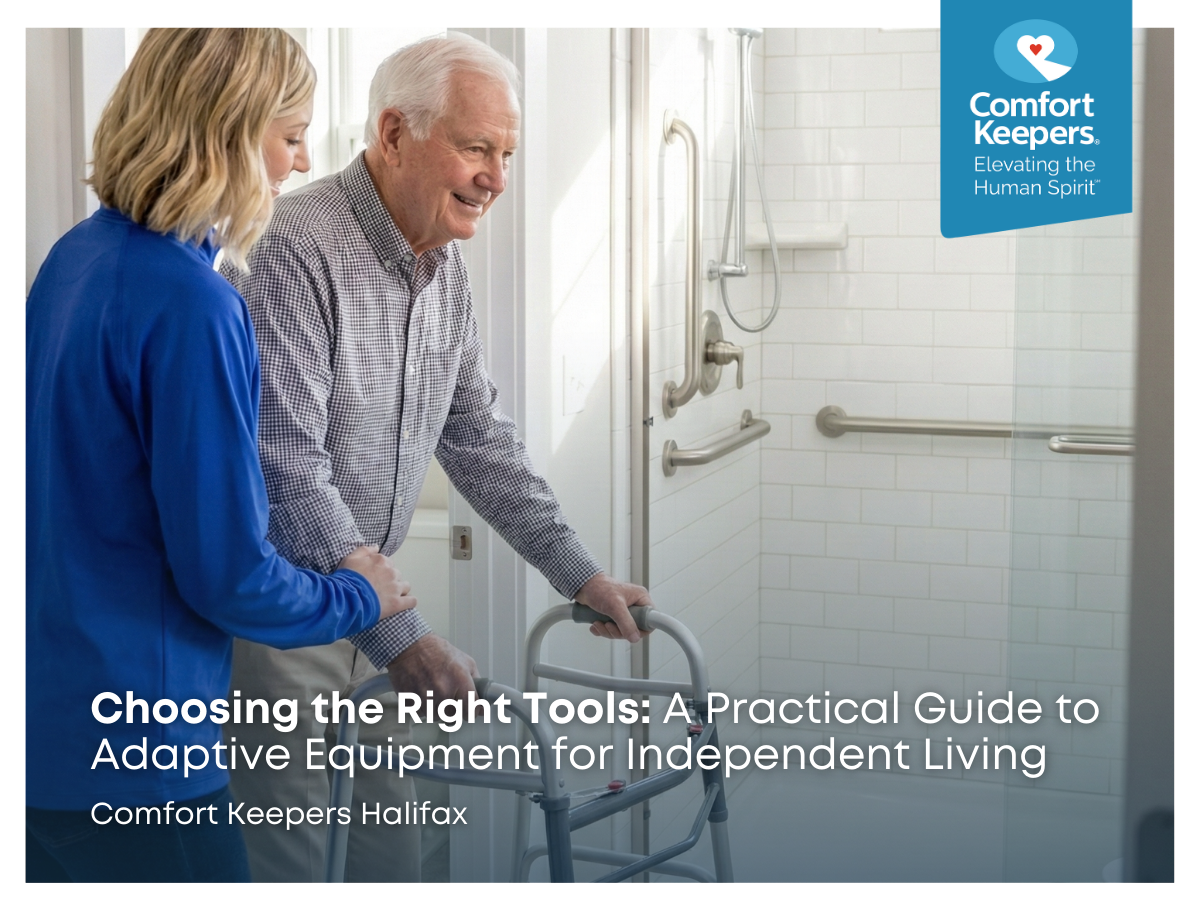
Making decisions about in-home safety can feel overwhelming. You’re balancing a deep desire for independence – a feeling shared by nearly 90% of older adults who want to age in place – with the practical need for safety and support. The sheer number of adaptive devices available can turn a clear goal into a confusing maze of options.
But what if we re-framed the conversation? Instead of seeing assistive devices as a concession, think of them as tools of empowerment. These are not just gadgets; they are enablers of freedom, confidence, and the life you want to live in the home you love. In fact, research shows that over 90% of adults who use assistive technology report a marked improvement in their quality of life and independence.
This guide is designed to cut through the noise. We’ll provide a clear, practical framework to help you evaluate your needs, compare the right solutions, and make confident choices for yourself or a loved one.
Before You Buy: A Personalized Approach to Your Needs
The most effective adaptive equipment is the equipment that solves a specific, personal challenge. A device that’s perfect for your neighbour might not be the right fit for you. That’s why the first and most crucial step is a thoughtful assessment of your daily life.
Before you start shopping, consider these key areas:
- Mobility and Fall Prevention: Where do you feel least stable? Is it navigating stairs, walking long distances in your home, or getting up from a chair? With nearly 3 million seniors treated in emergency rooms for fall-related injuries each year, this is the most critical area to address.
- Bathroom Safety: The combination of hard surfaces and water makes the bathroom a high-risk zone. Think about the specific moments of difficulty: getting in and out of the tub, using the toilet, or standing for a shower.
- Daily Routines: Which daily tasks have become strenuous or difficult? This could be anything from opening a jar and chopping vegetables in the kitchen to fastening a button or pulling on socks.
- Medication Management: Are you or your loved one juggling multiple prescriptions? Ensuring medications are taken correctly and on time is fundamental to health and well-being.
While a self-assessment is a great start, consulting with a professional like an occupational therapist can provide invaluable insights. They can identify needs you might not have noticed and recommend specific solutions. This professional input is a key part of the holistic approach that ensures every aspect of your well-being is considered.
A Clear-Eyed Comparison of Essential Adaptive Equipment
Once you have a better sense of your needs, you can start evaluating specific categories of equipment. Here’s a breakdown of the most common and impactful devices, focusing on the key factors to consider for each.
Enhancing Mobility & Preventing Falls
This category of equipment is designed to provide stability where and when you need it most, directly addressing one of the biggest risks to independent living.
- Walkers and Rollators: A standard walker offers maximum stability for those who need significant weight support. A rollator (a walker with wheels, a seat, and brakes) is better suited for individuals who have more balance but need support and a place to rest while walking longer distances. Key consideration: Match the device to the user’s stability and strength. A rollator can be a hazard for someone who needs to put their full weight on the device.
- Canes: A single-point cane provides minimal support and is best for minor balance issues. A quad cane, with four feet at the base, offers significantly more stability. Key consideration: Proper height is critical for a cane to be effective and not create other posture problems. The top of the handle should be at wrist level when your arm is hanging naturally at your side.
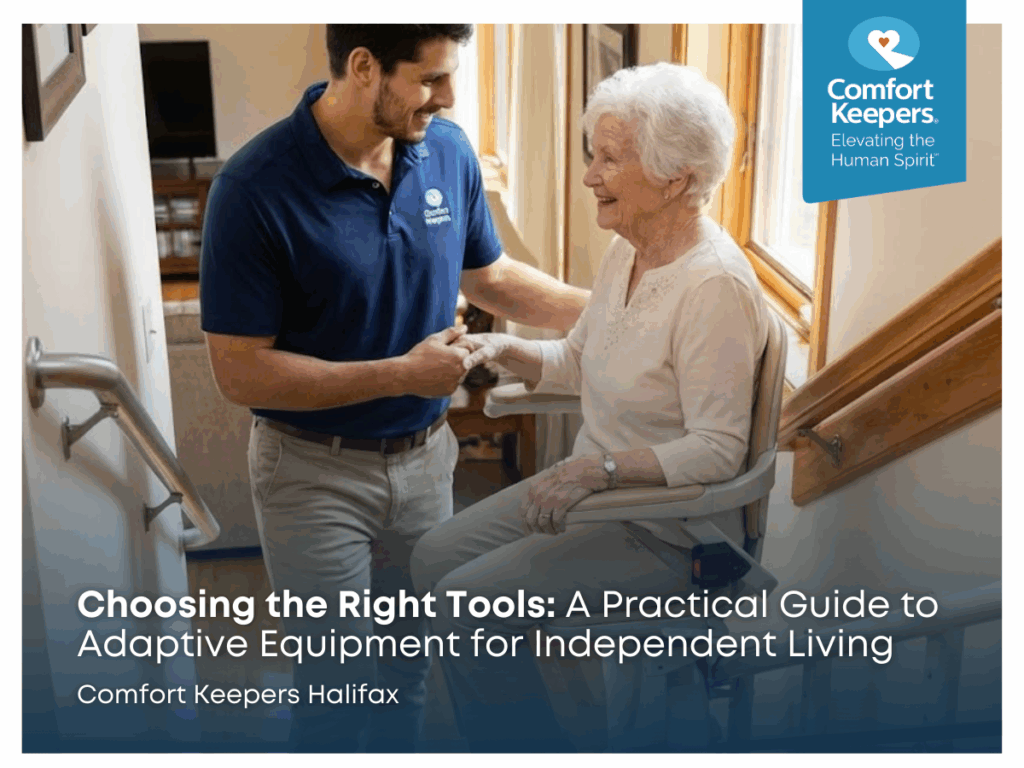
- Stairlifts: For multi-level homes, a stairlift can be a truly life-changing investment. They eliminate the daily risk of a fall on the stairs. Key consideration: Look for models with essential safety features like a swivel seat for safe dismounting, obstruction sensors, and a battery backup in case of a power outage. Professional installation is non-negotiable to ensure it meets safety standards.
Reclaiming the Bathroom: Safety and Dignity
Creating a safer bathroom environment is one of the most effective ways to build confidence and maintain privacy.
- Grab Bars: These are not the same as towel racks. Professionally installed grab bars are anchored into wall studs and are designed to support hundreds of pounds of force. Key consideration: Placement is everything. You need bars where you’ll actually use them – inside the shower, next to the toilet, and by the bathtub. Adhering to the CSA Accessibility Standards for height and placement is a reliable benchmark for safety.
- Shower Chairs and Benches: A shower chair allows you to sit safely while bathing, reducing the risk of a slip and fall due to fatigue or instability. Key consideration: Look for non-slip rubber feet, a textured seat, and a weight capacity that comfortably exceeds the user’s weight.
- Raised Toilet Seats: By adding a few inches to the height of the toilet, these devices significantly reduce the strain on knees and hips when sitting down and standing up. Many models come with integrated armrests for extra support.
Simplifying Daily Routines
Sometimes, the smallest tools make the biggest difference, easing frustration and allowing daily activities to continue smoothly. Think of long-handled reachers for grabbing items from high shelves, ergonomic jar openers, specialized utensils for those with arthritis, and simple dressing aids like button hooks and zipper pulls. These tools empower you to perform daily tasks without assistance, reinforcing a powerful sense of self-reliance.
The Rise of Smart Home Technology for Senior Safety
While traditional equipment is foundational, smart home technology offers a modern, often discreet, layer of safety and connection. Many families are turning to these solutions for added peace of mind.
- Medical Alert Systems: Modern systems have evolved beyond the simple push-button pendant. Many now include automatic fall detection that can call for help even if the user is unable to. Voice-activated systems integrated with smart speakers also provide an easy way to call for help from anywhere in the room.
- Smart Lighting and Sensors: Motion-activated lights in hallways, bathrooms, and bedrooms can prevent nighttime falls by illuminating a clear path. Door and window sensors can provide peace of mind to family caregivers, confirming that everything is secure.
- Automated Pill Dispensers: These devices can be programmed to dispense the correct medication at the right time, with alarms and notifications sent to a caregiver if a dose is missed. This technology is a powerful tool for maintaining health and independence.
Integrating these technologies requires a bit of planning, but the result is a home that actively supports your well-being. For a deeper look, you can explore the benefits in a comprehensive care plan.
Navigating the Financials of Home Modifications
Cost is a valid concern, with over half of older adults facing financial challenges related to home modifications. It’s helpful to view these expenses as an investment in long-term independence. The cost of a few key modifications is often significantly less than a single month in an assisted living facility.
Several funding avenues can help offset the cost:
- Provincial Programs: The Nova Scotia Accessible Housing Program provides funding for seniors with disabilities for home modifications that improve accessibility and safety for seniors.
- Veterans Affairs: Eligible veterans may have access to grants for home modifications to accommodate disabilities.
- Canadian Red Cross: Specialized equipment can be loaned via the Live Well at Home program.
Frequently Asked Questions About Adaptive Equipment
How do I know which device is truly right for me or my loved one?
The best way is to start with a professional evaluation. An in-home assessment can identify specific risks and needs, leading to personalized recommendations that make a real impact. This avoids the costly mistake of buying equipment that isn’t right for your situation.
Will my home look and feel like a hospital?
Not at all. The industry has made huge strides in design. Many modern grab bars, shower chairs, and stairlifts feature sleek, stylish designs that can blend seamlessly with your home decor, preserving the warm, familiar environment you cherish.
Is professional installation really necessary?
For certain items, absolutely. Anything that bears weight, like a grab bar or a stairlift, must be installed correctly to be safe. A professional ensures the device is anchored securely and meets all safety standards, providing true peace of mind.
How does in-home care support the use of this equipment?
This is a crucial link. Having the right tools is the first step; using them correctly and consistently is the second. A caregiver can provide gentle reminders and assistance, ensuring the equipment is used safely. They also play a vital role in monitoring changing needs, so your safety plan can evolve right along with you.
Your Next Step to a Safer, More Independent Home
Choosing the right adaptive equipment is a powerful step toward securing your independence and safety at home. By starting with a clear assessment of your needs and understanding the key factors for each device, you can make informed decisions that enhance your quality of life.
The right equipment, combined with the right support system, creates an environment where you can thrive. If you’re ready to explore how a personalized plan can help, learning about the full spectrum is a great place to start.
The Best, Expert Senior Home Care in Halifax, Nova Scotia is Comfort Keepers®
At Comfort Keepers®, we provide personalized, compassionate in-home care services for seniors in Halifax, Bedford, Dartmouth, Sackville, St. Margaret’s Bay, Jeddor, Musquodoboit and surrounding areas.
The team at Comfort Keepers Halifax is proud to provide home care that keeps seniors safe. We support thousands of families each year with home care services for seniors—helping loved ones remain happy, and independent in the homes they love.
Home is The Best Place to Be for Senior Care
Providing home care can be very draining and taxing on family caretakers. That’s where we come in. With in-home assisted living as a lifestyle choice seniors can start a new, fresh take on daily living while remaining in the comfort and familiarity of home.
Comfort Keepers® Halifax offers professional, flexible care solutions that lighten the load for families and give everyone peace of mind—knowing their loved one is in good hands.
We offer a range of services that include elderly home care for seniors, Alzheimer’s and dementia care, personal care services, respite care, and more.
Comfort Keepers® Halifax Can Help with Companion Care and Interactive Caregiving™
Our trained caregivers, or Comfort Keepers, help provide our elderly clients with personal home care to help maintain the highest possible quality of life. Our Interactive Caregiving™ Approach elevates the spirits of senior loved ones and their families, delivering a system of care that addresses safety, nutrition, mind, body, and activities of daily living (ADLs).
Interactive Caregiving™ is an opportunity to interact one-to-one with a senior, engage them, learn about them, and give them the gift of personalized, thoughtful attention that allows them to maintain their independence. At Comfort Keepers® Halifax, we believe keeping our clients physically, mentally, emotionally and socially involved can make a difference in their well-being. .
Comfort Keepers® Halifax Provides Home Care and a Wide Range of In-Home Care Services for Seniors.
Are you looking for reliable home care in Halifax? Learn more about our unique service, which offers personal care, companionship care, palliative, and end-of-life care in Halifax, Bedford, Dartmouth, Sackville, and surrounding areas. Contact the Comfort Keepers® Halifax office today, our professional staff will be happy to explain our customizable in-home care options and to schedule a free in-home consultation.
Recommended Immunizations for Halifax’s Seniors

Seniors stay healthier by keeping up to date with vaccinations that protect against common, preventable diseases.
Over 60 percent of seasonal flu-related hospitalizations occur in people 65 years and older.

Research indicates that many older adults are not receiving the vaccinations needed to lower their risk of serious illnesses. As we age, our immune systems weaken, making us much more vulnerable to infections. While many of these illnesses can affect younger adults, they usually recover without lasting issues. For seniors, however, the complications that can develop are often far more dangerous.
Respiratory infections like pneumonia and influenza, for instance, are the eighth leading cause of death among older adults. Seniors with chronic health conditions face even greater dangers—people with diabetes are three times more likely to die from the flu than healthy adults. Fortunately, vaccines can help lower the risk of contracting these illnesses.
Vaccinations are one of the most effective ways to prevent certain diseases and can lessen the severity of symptoms if illness does occur. Staying up to date on immunizations can make a meaningful difference in a senior’s overall health. Older adults should consult their healthcare providers to ensure they are current with all recommended vaccines.
Commonly recommended vaccinations for seniors:
- Influenza vaccine
- Shingles vaccine
- Tdap vaccine
- Pneumococcal vaccine
- Hepatitis B
Comfort Keepers® Halifax Can Help
Maintaining senior health and wellbeing is a priority for the team at Comfort Keepers®. Our caregivers can assist in providing seniors with transportation to and from the doctor’s office or clinics to receive their vaccinations. In addition, caregivers can also work to promote a healthy lifestyle by supporting physician-recommended diet and exercise plans, as well as medication reminders.

The Best, Expert Senior Home Care in Halifax, Nova Scotia is Comfort Keepers®
At Comfort Keepers®, we provide personalized, compassionate in-home care services for seniors in Halifax, Bedford, Dartmouth, Sackville, St. Margaret’s Bay, Jeddor, Musquodoboit and surrounding areas.
The team at Comfort Keepers Halifax is proud to provide home care that keeps seniors safe. We support thousands of families each year with home care services for seniors—helping loved ones remain happy, and independent in the homes they love.
Home is The Best Place to Be for Senior Care
Providing home care can be very draining and taxing on family caretakers. That’s where we come in. With in-home assisted living as a lifestyle choice seniors can start a new, fresh take on daily living while remaining in the comfort and familiarity of home.
Comfort Keepers® Halifax offers professional, flexible care solutions that lighten the load for families and give everyone peace of mind—knowing their loved one is in good hands.
We offer a range of services that include elderly home care for seniors, Alzheimer’s and dementia care, personal care services, respite care, and more.
Comfort Keepers® Halifax Can Help with Companion Care and Interactive Caregiving™
Our trained caregivers, or Comfort Keepers, help provide our elderly clients with personal home care to help maintain the highest possible quality of life. Our Interactive Caregiving™ Approach elevates the spirits of senior loved ones and their families, delivering a system of care that addresses safety, nutrition, mind, body, and activities of daily living (ADLs).
Interactive Caregiving™ is an opportunity to interact one-to-one with a senior, engage them, learn about them, and give them the gift of personalized, thoughtful attention that allows them to maintain their independence. At Comfort Keepers® Halifax, we believe keeping our clients physically, mentally, emotionally and socially involved can make a difference in their well-being. .
Comfort Keepers® Halifax Provides Home Care and a Wide Range of In-Home Care Services for Seniors.
Are you looking for reliable home care in Halifax? Learn more about our unique service, which offers personal care, companionship care, palliative, and end-of-life care in Halifax, Bedford, Dartmouth, Sackville, and surrounding areas. Contact the Comfort Keepers® Halifax office today, our professional staff will be happy to explain our customizable in-home care options and to schedule a free in-home consultation.
References:
Consumer Reports. “The 4 Vaccines Older Adults Need.” Web. 2017.
People. “What to Know About the New Shingles Vaccine – And Why You Should Get It ASAP if You’re Over 50.” Web. 2018.
National Council on Aging. “NCOA Blog: Healthy Living – Healthy Aging in Winter and Beyond: 4 Important Vaccines for Seniors Covered by Medicare.” Web. 2017.
Centers for Disease Control and Prevention. “Vaccine Information for Adults.” Web. 2018.
WebMD. “What to know if you have Diabetes and the Flu.” Web. 2019
A Practical Guide to Caregiver Resources and Respite Care in Halifax
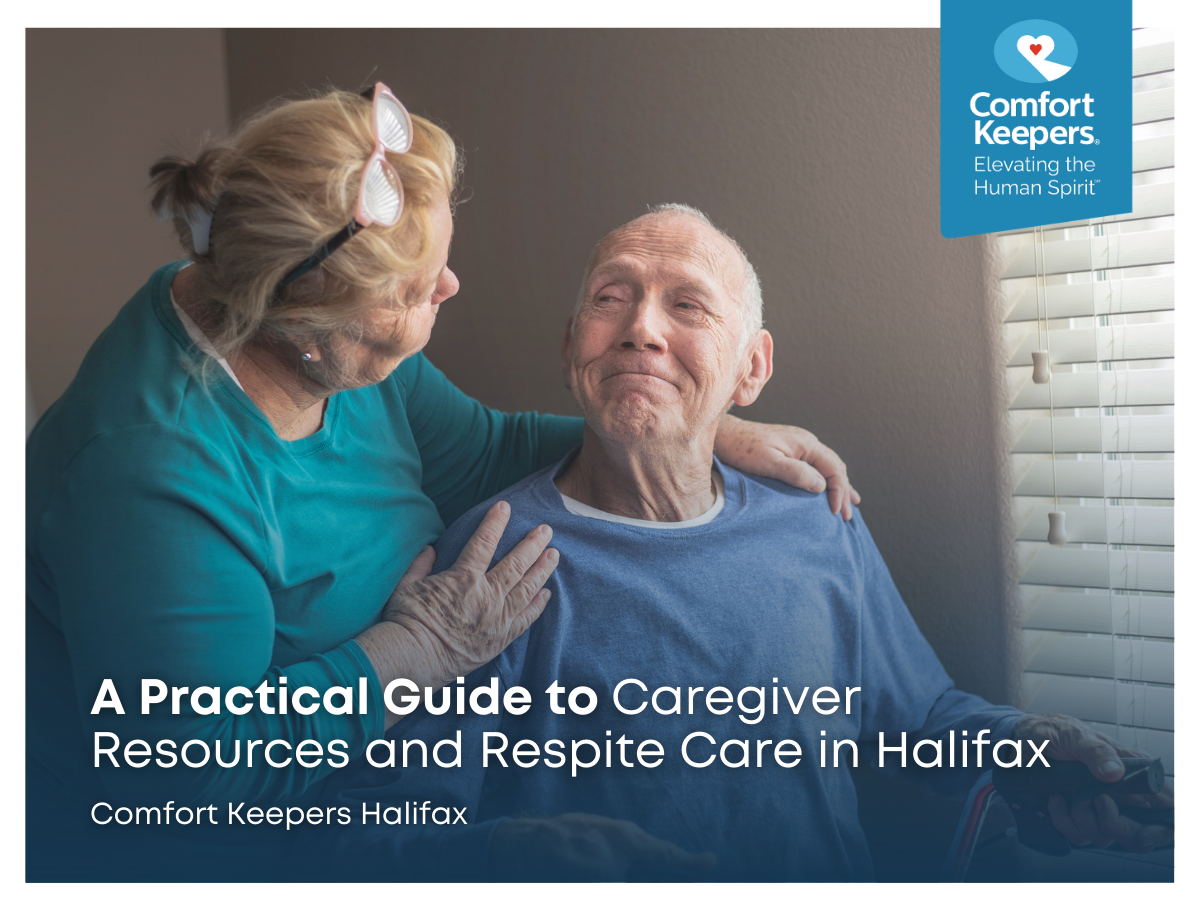
If you’re a family caregiver in Halifax, you’re part of a dedicated community. In fact, an incredible 28% of Nova Scotians provide unpaid care to a loved one, contributing over 221 million hours of support each year. It’s a role born from love and commitment, but it often comes with immense pressure and the risk of burnout.
Feeling overwhelmed isn’t a sign of weakness; it’s a sign that you need support. Taking a break is essential for your well-being and allows you to continue providing the best possible care.
Navigating the maze of local resources, government programs, and respite options can feel like a full-time job in itself. This guide is designed to change that. We’ve consolidated the authoritative information from government sources and combined it with the practical, step-by-step guidance you need to find relief. Think of this as your clear, simple roadmap to getting the support you deserve.
Understanding Your Respite Options: Finding the Right Fit
Respite care is a short-term break for caregivers. It comes in several forms, each with unique benefits. Understanding the differences is the first step toward choosing what’s best for your family’s situation.
| Respite Option | Best For | Key Benefits | Things to Consider |
| In-Home Respite Care | Seniors who value comfort and routine, or those with mobility challenges. | Care is provided in a familiar, comfortable environment. Maintains your loved one’s daily schedule. Highly flexible and personalized. | Cost can be a factor. Less opportunity for socialization outside the home. |
| Facility-Based Respite | Individuals needing 24/7 medical supervision or those who could benefit from a structured environment. | Access to round-the-clock professional medical staff. A safe, secure setting. | The environment is unfamiliar, which can be disorienting for some, especially those with dementia. |
| Adult Day Programs | Seniors who are lonely or isolated would benefit from social engagement. | Provides structured activities, peer interaction, and mental stimulation. Offers a consistent routine. | Transportation may be required. Hours are typically limited to daytime on weekdays. |
Financial Support: How to Access Nova Scotia’s Caregiver Grants
One of the biggest hurdles for families is the cost of care. The good news is that Nova Scotia has programs designed to provide direct financial relief to caregivers.
The Nova Scotia Caregiver Benefit Program
This is the province’s primary program for financial support, providing a direct payment of $400 per month to eligible low-income caregivers. This money helps you care for a loved one at home and can be used for anything from personal expenses to hiring additional support.
Quick Eligibility Checklist:
Could you be eligible? See if you meet the basic criteria:
- Are you at least 19 years old?
- Are you a resident of Nova Scotia with a valid health card?
- Do you provide 20 or more hours of unpaid care per week to an adult?
- Does the person you care for have a significant disability or impairment?
- Does your total household income fall below the established threshold?
This checklist is a starting point. The official assessment will be more detailed, but if you answered “yes” to these questions, it’s worth making the call to apply.
You may also find support through other programs like the Direct Family Support for Children (DFSC) if you care for a child with a disability.
Your 4-Step Guide to Getting Respite Care in Halifax
The process for accessing government-funded home care or facility-based respite can seem complex. We’ve broken it down into four manageable steps.
Step 1: The First Call
Your journey starts with a single phone call to Continuing Care at their province-wide toll-free number: 1-800-225-7225. This is the central intake line for all government-funded home care and long-term care services. When you call, a representative will ask for basic information about your situation and the person you care for.
Step 2: The Care Assessment
After the initial call, a Care Coordinator will schedule an in-home assessment. This is not a test. The coordinator’s job is to understand your loved one’s needs, your role as a caregiver, and what challenges your family is facing. Be open and honest about the difficulties you’re experiencing – this helps them determine the right level of support.
Step 3: Gathering Your Documents
To process your application for funding and services, you’ll likely need to provide a few key documents. Having them ready can speed things up. Common requirements include:
- The Nova Scotia Health Card for the person needing care
- Proof of income for the household (like a Notice of Assessment)
- Any relevant medical information or diagnoses
Step 4: Receiving Approval and Finding a Provider
Once the assessment is complete and your eligibility is confirmed, the Care Coordinator will discuss the approved services with you. This could include a set number of hours for in-home support or a spot in a facility-based respite program. They will then help connect you with approved providers in your area.
Halifax Community Support Networks: More Help is Close By
You don’t have to manage this journey alone. Several outstanding local organizations offer resources, education, and peer support specifically for caregivers.
- Caregivers Nova Scotia: An invaluable resource offering support groups, educational workshops, and a helpline. They are experts in the emotional journey of caregiving.
- Alzheimer Society of Nova Scotia: Provides crucial support and resources for families navigating dementia and cognitive decline.
- Local Senior Centers: Many community centers in Halifax and Dartmouth offer activities and day programs that can provide social engagement for your loved one.
A Flexible Option: How Professional In-Home Respite Works
While the public system provides essential support, it can sometimes involve waitlists or have limitations on the type and amount of care. That’s where professional in-home care offers a flexible and immediate solution.
At Comfort Keepers Halifax, our approach to in-home respite care is designed to fit your family’s unique routine. We can work alongside government-funded services to fill in any gaps, or act as your primary source of support if you are not eligible for public programs or prefer a private option.
Whether it’s for a few hours a week to give you time for errands, a full day of companion care so you can recharge, or even 24-hour care while you take a much-needed vacation, our goal is to provide peace of mind. Our caregivers are not just helpers; they are trained to provide companionship and engage your loved one in meaningful activities, a philosophy we call Interactive Caregiving™.
Frequently Asked Questions about Caregiver Support in Halifax
How do I handle the guilt of needing a break?
This is the most common feeling caregivers experience. It’s vital to reframe respite care: it is not about abandoning your loved one, but about recharging so you can continue to be a strong, effective caregiver. A rested caregiver is a better caregiver.
What if we need respite care in an emergency?
Some facility-based respite programs hold beds for emergency situations. Your first step should still be to call the Continuing Care line at 1-800-225-7225 and explain the urgency of your situation. Professional home care agencies like Comfort Keepers can also often arrange for care on very short notice.
Is private in-home care affordable?
Many families are surprised to find how flexible and adaptable private care can be. You can book services for as little as a few hours a week, tailoring a plan that fits your budget and provides the most critical support when you need it most.
Let’s Find the Right Support for You
Navigating your caregiving responsibilities is a marathon, not a sprint. Getting the right support in place is the key to sustaining your own health and providing the best possible care for your loved one.
If you have questions about the process or want to explore how personalized in-home care could ease your burden, we’re here to help. Reach out to our team at Comfort Keepers Halifax for a compassionate, no-obligation conversation about your family’s needs.
The Best, Expert Senior Home Care in Halifax, Nova Scotia is Comfort Keepers®
At Comfort Keepers®, we provide personalized, compassionate in-home care services for seniors in Halifax, Bedford, Dartmouth, Sackville, St. Margaret’s Bay, Jeddor, Musquodoboit and surrounding areas.
The team at Comfort Keepers Halifax is proud to provide home care that keeps seniors safe. We support thousands of families each year with home care services for seniors—helping loved ones remain happy, and independent in the homes they love.
Home is The Best Place to Be for Senior Care
Providing home care can be very draining and taxing on family caretakers. That’s where we come in. With in-home assisted living as a lifestyle choice seniors can start a new, fresh take on daily living while remaining in the comfort and familiarity of home.
Comfort Keepers® Halifax offers professional, flexible care solutions that lighten the load for families and give everyone peace of mind—knowing their loved one is in good hands.
We offer a range of services that include elderly home care for seniors, Alzheimer’s and dementia care, personal care services, respite care, and more.
Comfort Keepers® Halifax Can Help with Companion Care and Interactive Caregiving™
Our trained caregivers, or Comfort Keepers, help provide our elderly clients with personal home care to help maintain the highest possible quality of life. Our Interactive Caregiving™ Approach elevates the spirits of senior loved ones and their families, delivering a system of care that addresses safety, nutrition, mind, body, and activities of daily living (ADLs).
Interactive Caregiving™ is an opportunity to interact one-to-one with a senior, engage them, learn about them, and give them the gift of personalized, thoughtful attention that allows them to maintain their independence. At Comfort Keepers® Halifax, we believe keeping our clients physically, mentally, emotionally and socially involved can make a difference in their well-being. .
Comfort Keepers® Halifax Provides Home Care and a Wide Range of In-Home Care Services for Seniors.
Are you looking for reliable home care in Halifax? Learn more about our unique service, which offers personal care, companionship care, palliative, and end-of-life care in Halifax, Bedford, Dartmouth, Sackville, and surrounding areas. Contact the Comfort Keepers® Halifax office today, our professional staff will be happy to explain our customizable in-home care options and to schedule a free in-home consultation.
Keeping Halifax’s Seniors Socially Connected

Social isolation is a common concern for the loved ones of seniors. However, fostering relationships and maintaining social connections are vital for older adults. Research consistently demonstrates that seniors who remain socially engaged benefit from better physical and mental health. There are many opportunities to help the older adults in your life stay connected.
Ensuring a senior receives the highest quality physical and mental care is a team effort. The CARP notes that almost one in five family caregivers offers unpaid assistance to an adult with health or functional needs. Beyond primary caregivers, family and friends play a vital role in providing social support and fostering significant interactions with their senior loved one.

Six Tips for Keeping Halifax’s Seniors Socially Connected
For those trying to connect with a senior in their life, they can consider the following options:
#1. Teach them something new:
While many seniors are adept at using technology, some could use extra help getting set up for video chats or finding sources of online connection. Helping a senior learn to use new technology can be a fun bonding experience and pays off in continued contact!
And if the family member or friend isn’t an expert, they can consider taking a class together.
A study by William Chopik, a professor at Michigan State University, found “greater technology use was associated with better self-rated health, fewer chronic conditions, higher subjective well-being and lower depression.”
#2. Involve others:
Group video chats have never been easier to set up, and there are free options that are great for small groups or paid options for larger gatherings of friends and families. Seeing each other’s faces and sharing stories is a great way to stay connected.
#3. Play together online:
Popular board games have gone virtual! Classics like Monopoly, Scattergories and Scrabble can be played online together, and there are a host of sites with card games, trivia and other fun activities to do together. Sometimes, a game night is all it takes to make people feel closer.
About one-third of Canadians 65 and older don’t use the internet. Even among those who use it, roughly one-third aren’t confident when performing tasks online.
#4. Spend time in-person when possible:
While it may not always be possible, it’s great to see loved ones when the situation permits. Families should take some time out of their week when possible to take their senior loved ones to community events, or plan special meals at home. This can be especially important for seniors with mobility issues that can keep them from doing the activities they love outside of the home.
#5. Become pen pals:
The art of writing letters may be rare today, but everyone still loves to receive notes in the mail. Send letters with updates, drawings, photos and other small mementos, and encourage the recipient to reply. Letters and cards will quickly become cherished memories that can be shared and revisited in times of separation.
#6. Consider hiring an in-home caregiver:
For seniors that need a little extra help around the house, a caregiver not only provides assistance with daily living, but companionship and conversation too. And, a caregiver can facilitate calls and video chats with loved ones. Caregivers are also trained to keep seniors safe in their home, and can be a great option to provide companionship during periods of illness or isolation.
Comfort Keepers® Halifax Can Help
For seniors that need companionship or help fighting loneliness, Comfort Keepers caregivers can help with encouragement, support and assistance with daily living. And, caregivers can encourage overall health through meal planning, grocery shopping, meal preparation and activities. Our custom care plans focus on physical and mental health and wellness activities. Our goal is to see that clients have the means to find the joy and happiness in each day, regardless of age or acuity.
The Best, Expert Senior Home Care in Halifax, Nova Scotia is Comfort Keepers®
At Comfort Keepers®, we provide personalized, compassionate in-home care services for seniors in Halifax, Bedford, Dartmouth, Sackville, St. Margaret’s Bay, Jeddor, Musquodoboit and surrounding areas.
The team at Comfort Keepers Halifax is proud to provide home care that keeps seniors safe. We support thousands of families each year with home care services for seniors—helping loved ones remain happy, and independent in the homes they love.
Home is The Best Place to Be for Senior Care
Providing home care can be very draining and taxing on family caretakers. That’s where we come in. With in-home assisted living as a lifestyle choice seniors can start a new, fresh take on daily living while remaining in the comfort and familiarity of home.
Comfort Keepers® Halifax offers professional, flexible care solutions that lighten the load for families and give everyone peace of mind—knowing their loved one is in good hands.
We offer a range of services that include elderly home care for seniors, Alzheimer’s and dementia care, personal care services, respite care, and more.
Comfort Keepers® Halifax Can Help with Companion Care and Interactive Caregiving™
Our trained caregivers, or Comfort Keepers, help provide our elderly clients with personal home care to help maintain the highest possible quality of life. Our Interactive Caregiving™ Approach elevates the spirits of senior loved ones and their families, delivering a system of care that addresses safety, nutrition, mind, body, and activities of daily living (ADLs).
Interactive Caregiving™ is an opportunity to interact one-to-one with a senior, engage them, learn about them, and give them the gift of personalized, thoughtful attention that allows them to maintain their independence. At Comfort Keepers® Halifax, we believe keeping our clients physically, mentally, emotionally and socially involved can make a difference in their well-being. .
Comfort Keepers® Halifax Provides Home Care and a Wide Range of In-Home Care Services for Seniors.
Are you looking for reliable home care in Halifax? Learn more about our unique service, which offers personal care, companionship care, palliative, and end-of-life care in Halifax, Bedford, Dartmouth, Sackville, and surrounding areas. Contact the Comfort Keepers® Halifax office today, our professional staff will be happy to explain our customizable in-home care options and to schedule a free in-home consultation.