


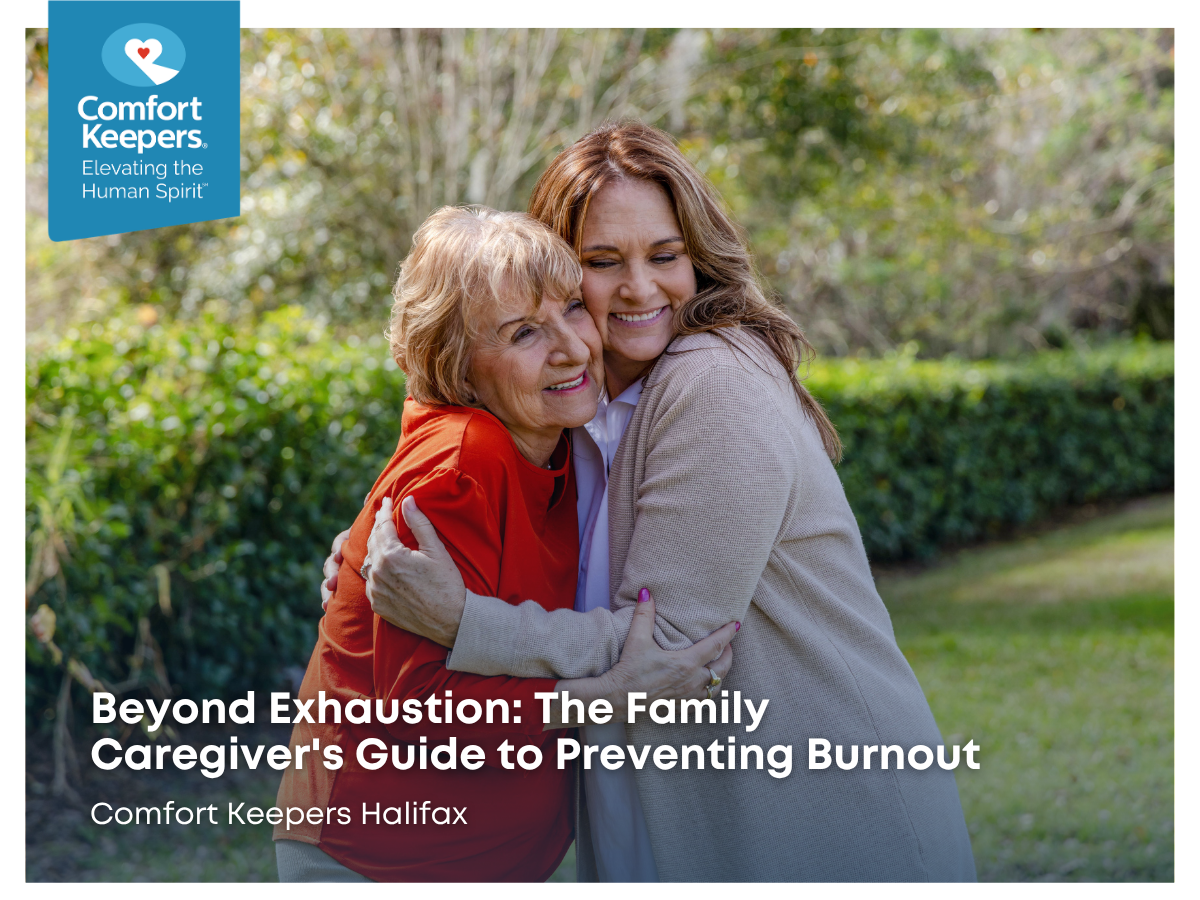
If you’re a family caregiver, you’ve likely heard the airplane oxygen mask analogy: you have to put on your own mask before helping others. But when you’re on the ground, in the midst of daily responsibilities, that advice can feel abstract, even impossible. The reality is that an astonishing 88% of caregivers report increased stress and anxiety, and it’s a quiet crisis happening in homes across Halifax.
You are managing appointments, medications, meals, and the profound emotional needs of a loved one. It’s a role born of love, but it carries a significant weight. This isn’t just about feeling tired; it’s about the risk of burnout – a state of emotional, physical, and mental exhaustion that can diminish your ability to care for anyone, including yourself.
This guide moves beyond simple advice. It’s a resource for understanding the complex emotions you’re facing, recognizing the true signs of burnout, and building a sustainable plan for your own well-being. Because the most important person in your loved one’s care network is you.

Are You Just Stressed, or Is It Burnout?
Stress is a common part of life, but burnout is a more severe state that can compromise your health. Research from Johns Hopkins shows that caregivers experiencing chronic emotional strain have a 63% higher mortality risk than their non-caregiving peers. Recognizing the difference is the first step toward prevention.
Psychologists often define burnout through three key dimensions, a framework developed by Christina Maslach. See if any of these resonate with your experience:
- Overwhelming Exhaustion: This goes beyond physical tiredness. It’s a deep emotional and mental fatigue that sleep doesn’t seem to fix. You might feel drained, depleted, and unable to cope with the demands of your day.
- Depersonalization (Growing Detachment): You may start to feel distant or cynical about your caregiving role. This isn’t a reflection of your love; it’s a coping mechanism. It can manifest as feeling numb, irritable, or less compassionate than you used to be.
- A Reduced Sense of Personal Accomplishment: You might feel like you’re not making a difference, or that your efforts are unappreciated. This can lead to a sense of ineffectiveness and erode your confidence, despite how much you’re doing.
A Quick Self-Check
Ask yourself these questions honestly:
- Do you feel tired most of the time?
- Have you been getting sick more often than usual?
- Do you feel increasingly resentful or irritable toward your loved one or others?
- Are you withdrawing from friends and activities you once enjoyed?
- Do you feel hopeless about the future?
Answering “yes” to several of these doesn’t mean you’re failing. It means you’re human, and it’s time to take proactive steps to protect your well-being.
The Emotions No One Talks About: Guilt, Resentment, and Anger
For many caregivers, the most challenging part of the journey isn’t the physical tasks but the complex, often conflicting, emotions. You might feel immense guilt for wanting a break or resentment for the sacrifices you’re making, quickly followed by more guilt for feeling that way.
These feelings are normal. They are signals from your mind and body that your needs are not being met. The key is not to suppress them but to reframe them. This is a core principle of Cognitive Behavioral Therapy (CBT), which provides a powerful tool called cognitive reframing.
Instead of thinking: “It’s selfish of me to want an evening to myself.”
- Try this reframe: “Taking an evening for myself will recharge my energy, making me a more patient and present caregiver tomorrow. My well-being is essential for my loved one’s well-being.”
Instead of thinking: “I am the only one who can care for them properly.”
- Try this reframe: “Allowing others to help gives my loved one a chance to connect with different people and gives me a necessary break. It takes a team to provide the best care.”
Acknowledging these emotions without judgment is the first step. They don’t make you a bad person; they make you a person in a demanding situation.
Building Your Resilience: How to Balance Demands with Resources
Think of your energy as a bank account. Caregiving tasks are withdrawals. To avoid going bankrupt, you must make deposits. This idea is similar to the Job Demands-Resources (JD-R) model used in psychology, which shows that burnout happens when job demands consistently outweigh the resources available to cope with them.
As a caregiver, your demands are high. So, how do you increase your resources?
1. Master the Art of the “Specific Ask”
Many caregivers are reluctant to ask for help, and when they do, a vague “I need help” can be hard for friends and family to act on. Instead, be specific.
- “Could you sit with Mom for two hours on Thursday afternoon so I can go to a doctor’s appointment?”
- “Would you be able to pick up groceries for us this week? Here’s the list.”
- “I’m feeling really overwhelmed. Could we just talk on the phone for 15 minutes tonight?”
People are often more willing and able to help when they know exactly what’s needed.
2. Explore Professional Respite Care
Sometimes, your support network isn’t enough, and that’s okay. Professional support is a vital resource. One of the most effective tools for preventing burnout is using respite care in Halifax. This is a short-term break for caregivers, where a professional steps in to provide care. It can be for a few hours, a full day, or even longer. This isn’t just a break; it’s a strategic part of a sustainable care plan that benefits both you and your loved one.
3. Set and Protect Your Boundaries
Boundaries are not walls; they are guidelines that protect your energy and relationships. This means learning to say “no” when you’re at your limit, scheduling non-negotiable personal time into your week (even just 30 minutes), and communicating your limits clearly to family members.
Your Partner in the Journey: How In-Home Care Supports the Caregiver
When you’re evaluating your options, it’s crucial to see professional care not as a replacement for your role, but as a support system that strengthens it. At Comfort Keepers Halifax, our philosophy of Interactive Caregiving™ is designed to engage your loved one, but it has a profound secondary benefit: it provides you with peace of mind and practical relief.
Our compassionate caregivers can assist with a wide range of needs. This could involve personal care, meal preparation, or simply providing companionship while you run errands, attend an appointment, or take a much-needed walk. For families navigating complex conditions, our specialized dementia care support can provide expert assistance and reduce your stress.
By integrating professional in-home care services into your routine, you are not stepping back. You are strategically building a stronger, more resilient care team.
Frequently Asked Questions About Caregiver Well-being
Q1. How is caregiver burnout different from depression?
A1. While they share symptoms like exhaustion and low mood, burnout is directly tied to your caregiving role. If you find your feelings of hopelessness and exhaustion lift when you get a break from your duties, it’s likely burnout. However, chronic burnout can lead to depression, so it’s important to seek professional medical advice if your symptoms are persistent and pervasive across all areas of your life.
Q2. I feel too guilty to spend money on respite care. How can I justify it?
A2. Think of it as a necessary health expense. Just as you manage your loved one’s medical needs, managing your own well-being is critical to the quality and sustainability of the care you provide. The cost of burnout – physically, emotionally, and financially – is far greater than the investment in regular, planned respite.
Q3. What is the very first step I should take if I feel completely overwhelmed right now?
A3. Here is what to do:
- Acknowledge it: Say it out loud to yourself or a trusted friend: “I am feeling burned out, and I need help.”
- Make one specific ask: Identify one small task you can delegate in the next 48 hours and ask someone for that specific help.
- Contact a professional: Reach out to your doctor to discuss how you’re feeling, or call a local resource like Comfort Keepers Halifax to learn about support options. You don’t have to have it all figured out to make the first call.

Comfort Keepers Halifax Can Help
You have undertaken one of the most important and challenging roles a person can have. Your dedication is remarkable. Now, it’s time to extend that same level of care and compassion to yourself.
Building a support system isn’t a sign of weakness; it’s a sign of strength and foresight. If you’re ready to explore how professional in-home care can provide you with the support you need to thrive, not just survive, we’re here to listen.
Let’s create a care plan that supports your loved one and protects your own well-being. Contact us for a no-obligation consultation and let us be a part of your team.
The Best, Expert Senior Home Care in Halifax, Nova Scotia is Comfort Keepers®
At Comfort Keepers®, we provide personalized, compassionate in-home care services for seniors in Halifax, Bedford, Dartmouth, Sackville, St. Margaret’s Bay, Jeddor, Musquodoboit and surrounding areas.
The team at Comfort Keepers Halifax is proud to provide home care that keeps seniors safe. We support thousands of families each year with home care services for seniors—helping loved ones remain happy, and independent in the homes they love.
Home is The Best Place to Be for Senior Care
Providing home care can be very draining and taxing on family caretakers. That’s where we come in. With in-home assisted living as a lifestyle choice seniors can start a new, fresh take on daily living while remaining in the comfort and familiarity of home.
Comfort Keepers® Halifax offers professional, flexible care solutions that lighten the load for families and give everyone peace of mind—knowing their loved one is in good hands.
We offer a range of services that include elderly home care for seniors, Alzheimer’s and dementia care, personal care services, respite care, and more.
Comfort Keepers® Halifax Can Help with Companion Care and Interactive Caregiving™
Our trained caregivers, or Comfort Keepers, help provide our elderly clients with personal home care to help maintain the highest possible quality of life. Our Interactive Caregiving™ Approach elevates the spirits of senior loved ones and their families, delivering a system of care that addresses safety, nutrition, mind, body, and activities of daily living (ADLs).
Interactive Caregiving™ is an opportunity to interact one-to-one with a senior, engage them, learn about them, and give them the gift of personalized, thoughtful attention that allows them to maintain their independence. At Comfort Keepers® Halifax, we believe keeping our clients physically, mentally, emotionally and socially involved can make a difference in their well-being. .
Comfort Keepers® Halifax Provides Home Care and a Wide Range of In-Home Care Services for Seniors
Are you looking for reliable home care in Halifax? Learn more about our unique service, which offers personal care, companionship care, palliative, and end-of-life care in Halifax, Bedford, Dartmouth, Sackville, and surrounding areas. Contact the Comfort Keepers® Halifax office today, our professional staff will be happy to explain our customizable in-home care options and to schedule a free in-home consultation.
A Practical Guide to Caregiver Resources and Respite Care in Halifax
If you’re a family caregiver in Halifax, you’re part of a dedicated community. In fact, an incredible 28% of Nova Scotians provide unpaid care to a loved one, contributing over 221 million hours of support each year. It’s a role born from love and commitment, but it often comes with immense pressure and the risk of burnout.
Feeling overwhelmed isn’t a sign of weakness; it’s a sign that you need support. Taking a break is essential for your well-being and allows you to continue providing the best possible care.
Navigating the maze of local resources, government programs, and respite options can feel like a full-time job in itself. This guide is designed to change that. We’ve consolidated the authoritative information from government sources and combined it with the practical, step-by-step guidance you need to find relief. Think of this as your clear, simple roadmap to getting the support you deserve.
Understanding Your Respite Options: Finding the Right Fit
Respite care is a short-term break for caregivers. It comes in several forms, each with unique benefits. Understanding the differences is the first step toward choosing what’s best for your family’s situation.
| Respite Option | Best For | Key Benefits | Things to Consider |
| In-Home Respite Care | Seniors who value comfort and routine, or those with mobility challenges. | Care is provided in a familiar, comfortable environment. Maintains your loved one’s daily schedule. Highly flexible and personalized. | Cost can be a factor. Less opportunity for socialization outside the home. |
| Facility-Based Respite | Individuals needing 24/7 medical supervision or those who could benefit from a structured environment. | Access to round-the-clock professional medical staff. A safe, secure setting. | The environment is unfamiliar, which can be disorienting for some, especially those with dementia. |
| Adult Day Programs | Seniors who are lonely or isolated would benefit from social engagement. | Provides structured activities, peer interaction, and mental stimulation. Offers a consistent routine. | Transportation may be required. Hours are typically limited to daytime on weekdays. |
Financial Support: How to Access Nova Scotia’s Caregiver Grants
One of the biggest hurdles for families is the cost of care. The good news is that Nova Scotia has programs designed to provide direct financial relief to caregivers.
The Nova Scotia Caregiver Benefit Program
This is the province’s primary program for financial support, providing a direct payment of $400 per month to eligible low-income caregivers. This money helps you care for a loved one at home and can be used for anything from personal expenses to hiring additional support.
Quick Eligibility Checklist:
Could you be eligible? See if you meet the basic criteria:
- Are you at least 19 years old?
- Are you a resident of Nova Scotia with a valid health card?
- Do you provide 20 or more hours of unpaid care per week to an adult?
- Does the person you care for have a significant disability or impairment?
- Does your total household income fall below the established threshold?
This checklist is a starting point. The official assessment will be more detailed, but if you answered “yes” to these questions, it’s worth making the call to apply.
You may also find support through other programs like the Direct Family Support for Children (DFSC) if you care for a child with a disability.
Your 4-Step Guide to Getting Respite Care in Halifax
The process for accessing government-funded home care or facility-based respite can seem complex. We’ve broken it down into four manageable steps.
Step 1: The First Call
Your journey starts with a single phone call to Continuing Care at their province-wide toll-free number: 1-800-225-7225. This is the central intake line for all government-funded home care and long-term care services. When you call, a representative will ask for basic information about your situation and the person you care for.
Step 2: The Care Assessment
After the initial call, a Care Coordinator will schedule an in-home assessment. This is not a test. The coordinator’s job is to understand your loved one’s needs, your role as a caregiver, and what challenges your family is facing. Be open and honest about the difficulties you’re experiencing – this helps them determine the right level of support.
Step 3: Gathering Your Documents
To process your application for funding and services, you’ll likely need to provide a few key documents. Having them ready can speed things up. Common requirements include:
- The Nova Scotia Health Card for the person needing care
- Proof of income for the household (like a Notice of Assessment)
- Any relevant medical information or diagnoses
Step 4: Receiving Approval and Finding a Provider
Once the assessment is complete and your eligibility is confirmed, the Care Coordinator will discuss the approved services with you. This could include a set number of hours for in-home support or a spot in a facility-based respite program. They will then help connect you with approved providers in your area.
Halifax Community Support Networks: More Help is Close By
You don’t have to manage this journey alone. Several outstanding local organizations offer resources, education, and peer support specifically for caregivers.
- Caregivers Nova Scotia: An invaluable resource offering support groups, educational workshops, and a helpline. They are experts in the emotional journey of caregiving.
- Alzheimer Society of Nova Scotia: Provides crucial support and resources for families navigating dementia and cognitive decline.
- Local Senior Centers: Many community centers in Halifax and Dartmouth offer activities and day programs that can provide social engagement for your loved one.
A Flexible Option: How Professional In-Home Respite Works
While the public system provides essential support, it can sometimes involve waitlists or have limitations on the type and amount of care. That’s where professional in-home care offers a flexible and immediate solution.
At Comfort Keepers Halifax, our approach to in-home respite care is designed to fit your family’s unique routine. We can work alongside government-funded services to fill in any gaps, or act as your primary source of support if you are not eligible for public programs or prefer a private option.
Whether it’s for a few hours a week to give you time for errands, a full day of companion care so you can recharge, or even 24-hour care while you take a much-needed vacation, our goal is to provide peace of mind. Our caregivers are not just helpers; they are trained to provide companionship and engage your loved one in meaningful activities, a philosophy we call Interactive Caregiving™.
Frequently Asked Questions about Caregiver Support in Halifax
How do I handle the guilt of needing a break?
This is the most common feeling caregivers experience. It’s vital to reframe respite care: it is not about abandoning your loved one, but about recharging so you can continue to be a strong, effective caregiver. A rested caregiver is a better caregiver.
What if we need respite care in an emergency?
Some facility-based respite programs hold beds for emergency situations. Your first step should still be to call the Continuing Care line at 1-800-225-7225 and explain the urgency of your situation. Professional home care agencies like Comfort Keepers can also often arrange for care on very short notice.
Is private in-home care affordable?
Many families are surprised to find how flexible and adaptable private care can be. You can book services for as little as a few hours a week, tailoring a plan that fits your budget and provides the most critical support when you need it most.
Let’s Find the Right Support for You
Navigating your caregiving responsibilities is a marathon, not a sprint. Getting the right support in place is the key to sustaining your own health and providing the best possible care for your loved one.
If you have questions about the process or want to explore how personalized in-home care could ease your burden, we’re here to help. Reach out to our team at Comfort Keepers Halifax for a compassionate, no-obligation conversation about your family’s needs.
The Best, Expert Senior Home Care in Halifax, Nova Scotia is Comfort Keepers®
At Comfort Keepers®, we provide personalized, compassionate in-home care services for seniors in Halifax, Bedford, Dartmouth, Sackville, St. Margaret’s Bay, Jeddor, Musquodoboit and surrounding areas.
The team at Comfort Keepers Halifax is proud to provide home care that keeps seniors safe. We support thousands of families each year with home care services for seniors—helping loved ones remain happy, and independent in the homes they love.
Home is The Best Place to Be for Senior Care
Providing home care can be very draining and taxing on family caretakers. That’s where we come in. With in-home assisted living as a lifestyle choice seniors can start a new, fresh take on daily living while remaining in the comfort and familiarity of home.
Comfort Keepers® Halifax offers professional, flexible care solutions that lighten the load for families and give everyone peace of mind—knowing their loved one is in good hands.
We offer a range of services that include elderly home care for seniors, Alzheimer’s and dementia care, personal care services, respite care, and more.
Comfort Keepers® Halifax Can Help with Companion Care and Interactive Caregiving™
Our trained caregivers, or Comfort Keepers, help provide our elderly clients with personal home care to help maintain the highest possible quality of life. Our Interactive Caregiving™ Approach elevates the spirits of senior loved ones and their families, delivering a system of care that addresses safety, nutrition, mind, body, and activities of daily living (ADLs).
Interactive Caregiving™ is an opportunity to interact one-to-one with a senior, engage them, learn about them, and give them the gift of personalized, thoughtful attention that allows them to maintain their independence. At Comfort Keepers® Halifax, we believe keeping our clients physically, mentally, emotionally and socially involved can make a difference in their well-being. .
Comfort Keepers® Halifax Provides Home Care and a Wide Range of In-Home Care Services for Seniors.
Are you looking for reliable home care in Halifax? Learn more about our unique service, which offers personal care, companionship care, palliative, and end-of-life care in Halifax, Bedford, Dartmouth, Sackville, and surrounding areas. Contact the Comfort Keepers® Halifax office today, our professional staff will be happy to explain our customizable in-home care options and to schedule a free in-home consultation.