

Keeping an Older Adult Warm and Safe at Home This Winter: Hypothermia, Heating and Space Heater Safety
To keep an older adult warm and safe at home in winter, keep the main living areas at about 20°C or warmer, learn the warning signs of indoor hypothermia (a body temperature below 35°C), use only space heaters with automatic shut-off placed at least 1 metre from anything that can burn, and install working carbon monoxide alarms.
Victoria winters are mild compared to the rest of Canada, which is exactly why cold-related risks are easy to underestimate. Damp, chilly days, long nights and the occasional storm or cold snap all put older adults at risk, especially those who live alone or keep the heat low to save money. This guide explains why seniors feel the cold differently, how to spot hypothermia early and how to heat a home safely.
TL;DR
- Keep it at 20°C or warmer. Main living areas should stay at about 20°C during the day, with bedrooms not much below 18°C at night.
- Hypothermia can happen indoors. A body temperature below 35°C is a medical emergency, and it can develop slowly in a cool home.
- Seniors may not feel cold. Age, medications and conditions like dementia reduce the body’s ability to sense and respond to cold.
- Space heaters need rules. Use automatic shut-off models, plug them directly into the wall and keep them 1 metre from anything that burns.
- Test carbon monoxide alarms. Gas furnaces, fireplaces and wood stoves all need a working CO alarm near sleeping areas.
Why Are Older Adults More Sensitive to the Cold?
Older adults lose body heat faster and notice it later than younger people. With age, the layer of fat under the skin thins, circulation slows and the body becomes less efficient at producing heat through shivering. Many seniors also lose some of their ability to sense temperature, so they may feel comfortable in a room that is too cold for them.
Health conditions and medications add to the risk. Diabetes, thyroid conditions, Parkinson’s disease, heart conditions and dementia can all affect how the body regulates temperature. Some medications for blood pressure, sleep, mood and anxiety can have the same effect. If your parent takes several medications, ask their pharmacist whether any of them affect how they handle cold.
Can Seniors Get Hypothermia Indoors?
Yes, older adults can develop hypothermia inside their own homes. Indoor hypothermia usually builds slowly over days in a house that is kept too cool, rather than from one very cold night. It is most common in seniors who live alone, have memory changes or turn the heat down to keep bills low.
In Victoria, damp air makes a cool home feel colder and can pull heat from the body faster. Older homes with single-pane windows, drafty doors or baseboard heaters that are only used in one room can leave parts of the house much colder than the thermostat suggests.
Warning Signs of Hypothermia
| Stage | Signs to Watch For | What to Do |
|---|---|---|
| Early | Cold hands and feet, pale or puffy face, shivering, mild confusion, unusual sleepiness | Warm the room, add layers and blankets, offer a warm (not hot) drink, stay with them |
| Moderate | Slurred speech, clumsy movements, strong confusion, shivering that stops | Call 9-1-1, move them to a warm room, cover with blankets while you wait |
| Severe | Very slow breathing, weak pulse, stiff muscles, loss of consciousness | Call 9-1-1 immediately and handle the person gently |
Older adults may not shiver at all. Confusion, drowsiness or unusual behaviour in a cool home should always be treated as a possible sign of hypothermia.
What Temperature Should a Senior’s Home Be in Winter?
Keep the main living areas at about 20°C or warmer during the day. Bedrooms can be slightly cooler at night, but avoid letting them drop much below 18°C. A simple indoor thermometer in the living room and bedroom helps you check the real temperature, since thermostats in older homes are not always accurate.
If heating costs are a concern, it is safer to heat the rooms your parent uses most and close off unused rooms than to turn the whole house down.
How Can Seniors Use Space Heaters Safely?
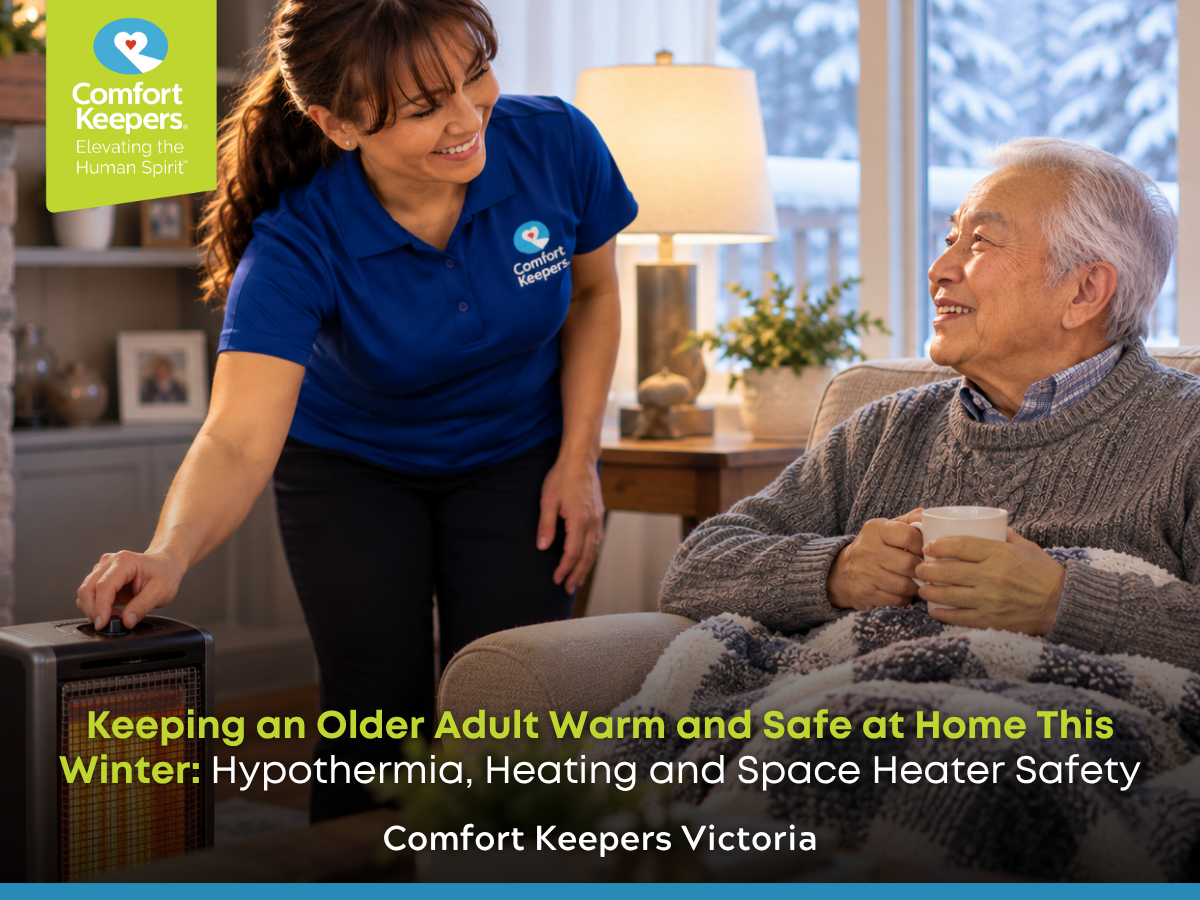
Space heaters are one of the most common causes of home fires in winter, and older adults are more likely to be hurt in a fire because they may move slowly or not hear an alarm. Follow these rules for every heater in the home.
| Do | Don’t |
|---|---|
| Choose a heater with automatic tip-over and overheat shut-off | Use an old heater with a frayed cord or no safety shut-off |
| Plug it directly into a wall outlet | Use an extension cord or power bar |
| Keep it at least 1 metre from beds, curtains, furniture and paper | Place it in a walkway where it can be tripped over |
| Set it on a hard, level floor | Use it to dry clothes or warm blankets |
| Turn it off when leaving the room or going to sleep | Leave it running overnight or when no one is home |
Why Is Carbon Monoxide a Winter Risk for Seniors?
Carbon monoxide (CO) is an odourless gas produced by fuel-burning appliances, and the risk rises in winter when furnaces, fireplaces and wood stoves run more often and windows stay closed. Early symptoms like headache, dizziness, nausea and confusion are easy to mistake for the flu, especially in older adults.
- Install a CO alarm on every level of the home and near sleeping areas, and test it monthly.
- Have the furnace and fireplace serviced each fall before the heating season starts.
- Never use a barbecue, camp stove or generator indoors, even during a power outage after a windstorm.
- Choose alarms with flashing lights or vibration if your parent has hearing loss.
How Can Seniors Stay Warm Without Raising the Heating Bill?
- Dress in thin layers, with warm socks, slippers with non-slip soles and a hat or cardigan indoors.
- Eat regular warm meals and drink fluids throughout the day, since the body needs fuel to make heat.
- Block drafts with door snakes, heavy curtains and window film on single-pane glass.
- Use a heated throw or mattress pad with an automatic shut-off instead of heating the whole house overnight.
- Stay active indoors with short walks around the house or seated exercises to keep circulation going.
How Can In-Home Caregivers Help Seniors Through Winter?
An in-home caregiver adds a regular, trusted check on warmth and safety during the months when seniors are most at risk. During each visit, a caregiver can check the thermostat, make sure heaters are placed and used safely, prepare warm meals, help with dressing in layers and watch for early signs of hypothermia or illness.
Comfort Keepers Victoria supports older adults across Greater Victoria who want to stay safely in their own homes. Companion care visits are especially helpful in winter, when dark afternoons and wet weather keep many seniors inside and alone, and they give families who live away peace of mind that someone is checking in. Learn more about how Comfort Keepers Victoria supports seniors year-round.
Frequently Asked Questions
What temperature should a senior’s home be in winter?
Keep the main living areas of a senior’s home at about 20°C or warmer during the day, and avoid letting the bedroom drop much below 18°C overnight. Older adults lose body heat faster and may not feel cold, so a thermostat set too low for comfort can quietly lead to indoor hypothermia.
Can an older adult get hypothermia inside their home?
Yes. Indoor hypothermia happens when body temperature falls below 35°C in a home that is kept too cool for a long time. It is more likely in seniors who live alone, take certain medications, have dementia or turn down the heat to save money, and it can develop over several days.
What are the warning signs of hypothermia in seniors?
Early signs include cold hands and feet, pale or puffy skin, shivering, confusion and unusual sleepiness. Serious signs include slurred speech, slow breathing, a weak pulse and stiff movements. Older adults may not shiver at all, so confusion or drowsiness in a cool home should always be taken seriously.
Are space heaters safe for elderly people?
Space heaters can be used safely if they have automatic tip-over and overheat shut-off, are plugged directly into a wall outlet and are kept at least 1 metre from beds, curtains and furniture. They should be turned off when the person leaves the room or goes to sleep.
Does a senior’s home need a carbon monoxide alarm?
Yes. Any home with a gas furnace, gas fireplace, wood stove or attached garage needs a working carbon monoxide alarm near sleeping areas. Carbon monoxide has no smell, and early symptoms such as headache, dizziness and nausea are easy to mistake for the flu in older adults.
How can I check that my parent is staying warm if I live far away?
Ask a neighbour, friend or caregiver to check the thermostat and heater setup during regular visits. A smart thermostat lets family see the home temperature remotely, and scheduled companion care visits can confirm that your parent is eating, dressing warmly and using heaters safely.
Action Steps
- Set the thermostat to about 20°C in main living areas and place a thermometer in the bedroom.
- Learn the warning signs of hypothermia and call 9-1-1 for slurred speech, strong confusion or slow breathing.
- Check every space heater for automatic shut-off, a direct wall plug and 1 metre of clearance.
- Test carbon monoxide and smoke alarms and book a furnace and fireplace service before the cold sets in.
- Contact Comfort Keepers Victoria to set up regular winter check-ins and in-home support.
A warm home, safe heaters, working alarms and regular check-ins are the best protection against hypothermia and heating-related accidents for older adults in Victoria this winter.