



Receiving a cancer diagnosis later in life is often a frightening and overwhelming experience. This news can leave individuals feeling helpless, powerless, and as if their world is spinning out of their control.
#DYK: 60% of people who have cancer are 65 or older.
For seniors facing a cancer diagnosis, creating a tailored plan can be a powerful way to reclaim control and make well-informed decisions about their treatment. Even in challenging times, it remains possible to focus on quality of life and discover moments of joy through thoughtful, deliberate actions.

Here are Six Strategies for Coping with a Cancer Diagnosis:
#1. Absorb the information:
People need to give themselves as much time as they need to take in the news. Processing a diagnosis can be difficult, and the person should feel comfortable taking the time and space they need to come to terms with the next steps in their treatment plans.
#2. Encourage education:
As the saying goes, “Knowledge is power.” Encourage them to learn as much as they can about their type of cancer and the treatment options available. Health care professionals are more than willing to provide resources to help someone understand their diagnosis.
#3. Express feelings:
It’s normal to feel depressed, angry, sad or overwhelmed after being diagnosed with cancer. There are many opportunities to talk about their feelings, whether it’s with someone in their life that they trust, a mental health professional or a local support group.
#4. Maintain healthy habits:
Continuing healthy habits is important following a cancer diagnosis. Those with a cancer diagnosis should follow a doctor’s advice regarding nutrition and exercise, and make an effort to take care of themselves mentally and physically.
#5. Evaluate financial needs:
Reviewing insurance and having a plan for how they will pay for their treatment will help relieve stress down the road.
#6. Focus on other parts of life:
Focusing on the things in life that can be controlled will help people remember that they have the power to decide how they live life.

Comfort Keepers® Calgary Can Help with Senior Cancer Care
If you need help during your battle with cancer, Comfort Keepers provides services for clients with a range of needs and physical abilities. Whether it is a ride to the doctor or help around the house, our goal is to provide compassionate care that helps clients find joy and happiness each day.
To learn more about our in-home care services, contact your local Comfort Keepers location today.
Comfort Keepers® Calgary Offers Comprehensive Homecare Services for Seniors in Alberta
Comfort Keepers® in Calgary, AB, is the leading provider of care for seniors, providing individualized homecare options to meet the unique needs of your loved ones.
Each Comfort Keepers client has unique care needs. That is why we offer a full range of in-home care services for seniors and other adults – to tailor care plans that provide our senior and other adult clients the right amount and types of help to support independent living at home.
Our comprehensive in-home care services are designed to support seniors and their families throughout Calgary, Alberta. We offer compassionate companionship, personalized personal care, light housekeeping, and meal preparation, as well as specialized care for individuals living with dementia or requiring end-of-life support.
We also assist with safe transportation to medical appointments, grocery shopping, and pharmacy visits. For those who need continuous support, Comfort Keepers provides reliable 24-hour and live-in care options to ensure comfort, safety, and peace of mind.
Personal Care and Companionship Services for Seniors are Available at Comfort Keepers® Calgary
Through personalized home care services in Calgary, we empower seniors to remain engaged and connected. Every care plan is thoughtfully designed to suit individual preferences, ensuring the client receives more than care; they receive companionship, encouragement, and dignity.
Home is the Best Place to Be: The Interactive Caregiving™ Difference
Interactive Caregiving™ provides a system of care that addresses safety, nutrition, mind, body, and activities of daily living (ADLs). Our trained caregivers in Calgary use Interactive Caregiving to engage clients in meaningful ways, creating stronger emotional bonds and promoting mental clarity through conversation, games, gentle exercises, and purposeful routines.
Aging-in-Place with Top-Notch Personalized Senior Care
Comfort Keepers® Calgary is here to help you and your loved ones get the best care possible. If you live in Calgary, Chestermere, and Okotoks, and require homecare services for senior personal care and wellbeing, contact our local Comfort Keepers® office at 403-228-0072.
References
Cancer.net. “Aging and Cancer.” Web. 2018.
American Cancer Society. “Coping with Cancer.” Web.
American Society of Clinical Oncology. “Geriatric Oncology.” Web.
What Are the Top Superfoods Seniors in Calgary Should Include in Their Diet?

What are the top superfoods for seniors for optimal health? While many guidelines recommend eating five to seven servings of fruits and vegetables daily, the Centers for Disease Control and Prevention suggests the optimal intake may be closer to 13 servings, depending on factors such as age, gender, and physical activity level.

Senior Nutrition: Clearing the Plate
Think back to a time when you were a child and your parents made you eat all of the vegetables and fruits from your plate. Although it may have seemed like a chore at the time, it should seem obvious now that they were doing you a favor. Fruits and vegetables were important then for your growth and wellbeing, but as we begin to age, they become increasingly vital. In many cases, these are the foods that play an important role in reducing the risk of serious conditions and diseases later in life, including heart disease, stroke, hypertension, digestive problems, and even forms of cancer.
Senior Nutrition: Why Fruits and Vegetables Matter
In fact, there are a number of fruits and vegetables that have been classified as “superfoods.” This signifies that they represent an all-natural (generally plant-based) source of vitamins, minerals, and other nutrients conducive to healthy living. And because these foods are so nutrient-dense, they are ideal for aging adults, who are often challenged with reaching their required daily intake of essential vitamins, folic acid, and niacin.
Below you will find some of the fruit and vegetable superfoods that your aging loved ones can incorporate into their diets. Be sure that they consult a physician before modifying any diet, especially if they do not have a comprehensive understanding of their food allergies.
Fruit and Vegetables: The Top Superfoods for Seniors
#1. Blueberries:
Packed with vitamins C and K, blueberries provide seemingly innumerable health benefits. Regular consumption has been linked to maintenance of brain functionality, due primarily to high flavonoid levels. Its manganese levels help regulate metabolism, while the fiber lowers cholesterol and, in turn, maintains blood sugar.
#2. Apples:
Similar to blueberries, apples are a significant source of soluble fiber (daily consumption is said to reduce LDL cholesterol by 40%), but they’re also rich in potassium and vitamin C, both of which benefit blood pressure. Moreover, apple skin contains an antioxidant called quercetin that provides antihistamine and anti-inflammatory support.
#3. Cherries:
Did you know that cherries get their red color from an antioxidant known as anthocyanin? Not only does it provide the small fruit with a vibrant color, it gives it some pretty significant inflammation-reducing and triglyceride-lowering power. Cherries can also help regulate sleep cycles because of their melatonin richness.
#4. Grapes:
In addition to its abundance of resveratrol, a powerful antioxidant that helps promote heart health, studies have shown that the seed extract in grapes can potentially slow the development of Alzheimer’s disease.
#5. Asparagus:
High in lycopene, which reduces the risk of prostate cancer, asparagus also helps the immune system with its plentiful supply of vitamin A. Additionally, its fiber contains prebiotics that promote healthy gut bacteria.
#6. Broccoli:
It’s almost become a cliché, but broccoli could very well be considered a miracle food. With plentiful fiber, vitamins A, C, B9, and K, just about every aspect of your body is directly benefited. New research suggests that broccoli may also help aid in reducing the risk of certain cancers, due to its anti-carcinogenic compounds such as diindolylmethane and glucoraphanin. What’s more, many of its nutrients (zeaxanthin, beta-carotene, and phosphorus) protect the eyes from macular degeneration and cataracts.
#7. Kale:
Often considered a close relative of broccoli, kale does just about everything, from protecting arteries to reducing cholesterol. And whether it’s prepared raw or cooked, these leafy greens are an excellent source of iron and fiber. Kale also contains a plethora of carotenoids and flavonoids – powerful antioxidants that can help protect the body from chronic diseases.
#8. Butternut Squash:
Loaded with beta-carotene (essential for eye health) and vitamin C, this vegetable is a vital asset, especially when it comes to controlling blood pressure. And because of its high fiber, butternut squash is great for maintaining blood sugar and lowering cholesterol.
A Balanced Diet for Seniors
Despite the fact these superfoods are nutrient-dense and help the body in a number of ways, they should not become one’s entire diet. Balance and moderation are both vital when it comes to all aspects of physical well-being, and consumption of fruits and vegetables is no exception. You can still gain weight from the over-indulgence of healthy foods – especially if they’ve been processed. Be wary of “too good to be true” marketing devices, do your research, and always try to find the purest form of the foods listed above.
And remember that fruits and vegetables should represent a component of your daily nutritional intake. If your senior loved ones are looking to understand what constitutes a balanced meal, encourage them to check out ChooseMyPlate. The site is a wealth of information regarding healthy eating, but it also looks at all angles of senior well-being, including recommended physical activities.
You might also want to look at Canada’s Food Guide (https://www.canada.ca/en/health-canada/services/canada-food-guides.html).

Comfort Keepers® Calgary Can Help
We understand how vital proper nutrition is for your aging loved ones. That’s why our caregivers – we call them Comfort Keepers® – help promote nutritious eating habits, as directed by a physician/dietitian.
Comfort Keepers® Calgary Offers Comprehensive Homecare Services for Seniors in Alberta
Comfort Keepers® in Calgary, AB, is the leading provider of care for seniors, providing individualized homecare options to meet the unique needs of your loved ones.
Each Comfort Keepers client has unique care needs. That is why we offer a full range of in-home care services for seniors and other adults – to tailor care plans that provide our senior and other adult clients the right amount and types of help to support independent living at home.
Our comprehensive in-home care services are designed to support seniors and their families throughout Calgary, Alberta. We offer compassionate companionship, personalized personal care, light housekeeping, and meal preparation, as well as specialized care for individuals living with dementia or requiring end-of-life support.
We also assist with safe transportation to medical appointments, grocery shopping, and pharmacy visits. For those who need continuous support, Comfort Keepers provides reliable 24-hour and live-in care options to ensure comfort, safety, and peace of mind.
Personal Care and Companionship Services for Seniors are Available at Comfort Keepers® Calgary
Through personalized home care services in Calgary, we empower seniors to remain engaged and connected. Every care plan is thoughtfully designed to suit individual preferences, ensuring the client receives more than care; they receive companionship, encouragement, and dignity.
Home is the Best Place to Be: The Interactive Caregiving™ Difference
Interactive Caregiving™ provides a system of care that addresses safety, nutrition, mind, body, and activities of daily living (ADLs). Our trained caregivers in Calgary use Interactive Caregiving to engage clients in meaningful ways, creating stronger emotional bonds and promoting mental clarity through conversation, games, gentle exercises, and purposeful routines.
Aging-in-Place with Top-Notch Personalized Senior Care
Comfort Keepers® Calgary is here to help you and your loved ones get the best care possible. If you live in Calgary, Chestermere, and Okotoks, and require homecare services for senior personal care and wellbeing, contact our local Comfort Keepers® office at 403-228-0072.
References:
- AARP. “Top 15 Superfoods for People Over 50” by Julia Bencomo Lobacco. Web. 2016.
- Live Science. “What Are Superfoods?” by Christopher Wanjek. Web. 2015.
- Health.com. “23 Healthiest Superfruits You Need Now” by Benjamin Packet
- Everyday Health. “5 Tricks for Getting Enough Fruit and Veggies” by Krisha McCoy. Web. 2017.
- MindBodyGreen. “Top 10 Health Benefits of Eating Kale” by Alison Lewis. Web. 2012.
When Aging Brings Change: Starting the Conversation About Senior In-Home Care in Calgary

Starting the conversation about preparing for old age, including financial security, long-term care, health directives, and residential preferences, are often delayed or avoided. The delay is often caused by the emotional and complex nature of these discussions. As a result, people tend to postpone them, creating a significant challenge that can lead to poorer outcomes, heightened stress, and important decisions being made without clearly expressed wishes.

Starting the Conversation About In-Home Care for Calgary’s Seniors
Comfort Keepers® Calgary provides helpful advice for adult children and their parents on how to initiate and navigate crucial conversations. These discussions often focus on sensitive subjects like long-term senior care, finances, healthcare and end-of-life planning, driving safety, and general home safety, all of which can be sources of discomfort that prevent them from happening.
PROtip: The best advice is to plan carefully and think through such conversations so that they are as positive and productive as possible. Write down what you think needs to be discussed so you don’t forget anything.
To ensure positive and productive outcomes, it’s best to plan important conversations carefully. Write down the points you want to cover so you don’t overlook anything.
View this not as “The Conversation,” but as the start of an ongoing series of discussions. By addressing issues one at a time, the process is less intimidating, making it more likely you will initiate the conversation and keep it going.
Six Tips for Families About Starting the Conversation:
#1. Get Started Early:
Begin early when your parent’s health allows them to fully participate and share their wants, needs and preferences. Otherwise, your decisions may be dictated by a life-changing event and may not necessarily reflect your parent’s wishes.
#2. Find a Friendly Environment:
Choose a time and place that makes everyone comfortable. Avoid special family gatherings, like a birthday or holiday celebration. Choose a time that is not hemmed in by other obligations so you can have a relaxed, unhurried conversation, giving your parents plenty of time to share his or her wishes.
#3. Make it a Family Discussion
Include other family members but meet before approaching your parents to make sure everyone’s on the same page to avoid an unproductive, confrontational situation.
#4. Concern Over Confrontation
Make the experience non-threatening by letting your parents know you’re concerned for his or her well-being and want to know how you can help them. Explain that you would like to help them write down their plans to help assure that they are followed. You also can help open the discussion about long-term planning by inquiring whether there are any responsibilities – such as home maintenance, yard work or bill paying—they would like you or someone else to help with to make life easier.
#5. Connect Through Communication
Use good communication skills. Maintain good eye contact and get close enough to your parents, without invading personal space. Closeness builds trust and allows you to speak – and be heard – in an even, controlled voice.
#6. Connect on Common Ground
Share an experience such as your own retirement or estate planning as a way to gracefully transition into a conversation about your parents’ thoughts regarding the future. A friend or relative’s medical emergency could also serve as an opening for dialogue.

Six More Tips for Families About Starting the Conversation:
#7. Get the Paperwork In Order
Ask about records and documents. Ask your parents where they keep important documents such as insurance policies, wills, trust documents, investment and banking records, tax returns, living wills and durable powers of attorney. Explain that you want to be prepared to help them when needed. This could also serve as a way of finding out what plans he or she has already made and what needs to be done.
#8. Invite Conversation
Ask open-ended questions that encourage your parents to share feelings. Then sit back and carefully listen to learn what is important to him or her.
#9. Options and Solutions
Offer options, not advice. Pose questions and offer more than one acceptable solution. Ask your parents which choice they prefer. This involves them in the decision process and enables them to exercise control and independence.
#10. Respect Rather Than Restrict
Speak with respect. Approach the discussion as a partner with your parents. In other words, make sure your parent is an active participant in the conversation. Start listening and respecting their desire and need to maintain control over their lives. Avoid reversing roles in the discussion, that is, you acting as the parent and your parent as the child. This could cause your parents to resist your attempts to open discussion.
#11. Keep It Simple for Success
Keep it simple. As stated earlier, do not try to resolve everything at once. The goal is to open an ongoing, honest dialogue about your parent’s future, to share information and to understand your parent’s wishes and needs so that decisions can be made.
#12. Source External Supports
Involve third parties if your parent resists your efforts to begin the discussion. He or she may be more open to the guidance of a respected non-family member, such as a doctor, a member of the clergy, a geriatric care manager, representative of an area agency on aging or trusted friends and neighbors who may have already helped a loved one in a similar situation.
Starting the Conversation: Seniors Can Initiate the Discussion
If you are a senior who is looking ahead and wanting to plan for the future, you do not have to wait for your children to bring up the subject. Often adult children don’t like thinking about their parents getting older and are reluctant to initiate the discussion.
Three Tips for Seniors About Starting the Conversation with Your Family
#1. Take the initiative:
If you begin having difficulty with activities of daily living, such as bathing, driving, or managing finances, speak with your physician or other healthcare professional. Also bring up the subject with family and ask for their suggestions and assistance.
#2. Share your preferences with family and friends:
Do you want to continue living at home but with the help of a caregiver who can assist with certain tasks around the house? Or if you are finding it more difficult to prepare nutritious meals for yourself, would you prefer having meals delivered or having someone prepare meals for you in your home?
#3. Learn about available services to help you as you age:
Physicians, social workers, geriatric care managers and other healthcare professionals can guide you in this, and your local Area Agency or Council on Aging can provide a listing of services available in your area.
Comfort Keepers® Calgary Offers Comprehensive Homecare Services for Seniors in Alberta
Comfort Keepers® in Calgary, AB, is the leading provider of care for seniors, providing individualized homecare options to meet the unique needs of your loved ones.
Each Comfort Keepers client has unique care needs. That is why we offer a full range of in-home care services for seniors and other adults – to tailor care plans that provide our senior and other adult clients the right amount and types of help to support independent living at home.
Our comprehensive in-home care services are designed to support seniors and their families throughout Calgary, Alberta. We offer compassionate companionship, personalized personal care, light housekeeping, and meal preparation, as well as specialized care for individuals living with dementia or requiring end-of-life support.
We also assist with safe transportation to medical appointments, grocery shopping, and pharmacy visits. For those who need continuous support, Comfort Keepers provides reliable 24-hour and live-in care options to ensure comfort, safety, and peace of mind.
Personal Care and Companionship Services for Seniors are Available at Comfort Keepers® Calgary
Through personalized home care services in Calgary, we empower seniors to remain engaged and connected. Every care plan is thoughtfully designed to suit individual preferences, ensuring the client receives more than care; they receive companionship, encouragement, and dignity.
Home is the Best Place to Be: The Interactive Caregiving™ Difference
Interactive Caregiving™ provides a system of care that addresses safety, nutrition, mind, body, and activities of daily living (ADLs). Our trained caregivers in Calgary use Interactive Caregiving to engage clients in meaningful ways, creating stronger emotional bonds and promoting mental clarity through conversation, games, gentle exercises, and purposeful routines.
Aging-in-Place with Top-Notch Personalized Senior Care
Comfort Keepers® Calgary is here to help you and your loved ones get the best care possible. If you live in Calgary, Chestermere, and Okotoks, and require homecare services for senior personal care and wellbeing, contact our local Comfort Keepers® office at 403-228-0072.
Winter Health Risks for Calgary’s Seniors

What are Calgary’s winter health risks for seniors? While spending time with loved ones, enjoying nature, and participating in activities all contribute to a senior’s quality of life, the cold winter weather in Calgary can disrupt their regular schedules. Winter presents multiple challenges beyond just snow and ice, including post-holiday isolation, increased risk of illness, and the direct physical effects of cold temperatures.
For an older person, a body temperature of 95°F or lower can cause many health problems, such as a heart attack, kidney problems, liver damage, or worse.
Knowing what to look for, and creating a strategy for combatting winter health risks, can help seniors maintain positive mental health and physical wellness.

Seasonal Factors to Consider as Winter Health Risks:
#1. Winter Blues:
Cold air and gloomy skies can make anyone feel less cheerful during the winter months. However, depression can have an outsized effect on seniors and their long-term mental health. Creating opportunities for socialization and finding joyful moments isn’t just for fun – it can help foster critical connection and combat loneliness. There are a variety of uplifting activities that can be enjoyed during the winter months. These include movie nights, reminiscing by the fire, and getting outside on a rare sunny day.
#2. Winter Illnesses:
- Pneumonia: Pneumonia is an infection that can be dangerous for seniors due to lung issues that come with age, weakened immune systems and conditions that make pneumonia more severe. Older adults should talk to their doctor about healthy lifestyle changes and vaccines that can help.
- Joint pain: Joint pain can be more common for seniors in cold conditions – whether they suffer from arthritis or not. Dressing in layers, regulating temperature inside and stretching exercises can help. A healthcare professional can also suggest exercise, medication or other coping strategies.
- Heart issues: Heart attacks and high blood pressure are more common in winter because cold snaps increase blood pressure and strain on the heart. The heart must work harder to maintain body heat, while falling temperatures may cause an unhealthy rise in high blood pressure, especially in seniors.
#3. Winter Safety:
Being mindful of winter safety issues is important for seniors and their families. Cold weather can be more dangerous for those with some health conditions, like Parkinson’s disease, diabetes or thyroid problems. Seniors should talk to their doctor to learn more. Other types of accidents or injuries can be avoided through education too. Examples include being mindful about fall risks, monitoring carbon dioxide levels and preventing hypothermia.

Comfort Keepers® Calgary Can Help
Our goal is to provide uplifting in-home care that benefits seniors and their families. The individualized care plans we create for our clients consider physical goals as well as non-physical mental health needs. Our caregivers can provide companionship or transportation to community events, and support physician-prescribed exercise regimens, provide companionship and help to families that want to stay connected through technology. We strive to elevate the human spirit through quality, compassionate, joyful care.
Comfort Keepers® Calgary Offers Comprehensive Homecare Services for Seniors in Alberta
Comfort Keepers® in Calgary, AB, is the leading provider of care for seniors, providing individualized homecare options to meet the unique needs of your loved ones.
Each Comfort Keepers client has unique care needs. That is why we offer a full range of in-home care services for seniors and tailor care plans that provide our senior clients the right amount and types of help to support independent living at home.
Our comprehensive in-home care services are designed to support seniors and their families throughout Calgary, Alberta. We offer compassionate companionship, personalized personal care, light housekeeping, and meal preparation, as well as specialized care for individuals living with dementia or requiring end-of-life support.
We also assist with safe transportation to medical appointments, grocery shopping, and pharmacy visits. For those who need continuous support, Comfort Keepers provides reliable 24-hour and live-in care options to ensure comfort, safety, and peace of mind.
Personal Care and Companionship Services for Seniors are Available at Comfort Keepers® Calgary
Through personalized home care services in Calgary, we empower seniors to remain engaged and connected. Every care plan is thoughtfully designed to suit individual preferences, ensuring the client receives more than care; they receive companionship, encouragement, and dignity.
Home is the Best Place to Be: The Interactive Caregiving™ Difference
Interactive Caregiving™ provides a system of care that addresses safety, nutrition, mind, body, and activities of daily living (ADLs). Our trained caregivers in Calgary use Interactive Caregiving to engage clients in meaningful ways, creating stronger emotional bonds and promoting mental clarity through conversation, games, gentle exercises, and purposeful routines.
Aging-in-Place with Top-Notch Personalized Senior Care
Comfort Keepers® Calgary is here to help you and your loved ones get the best care possible. If you live in Calgary, Chestermere, and Okotoks, and require homecare services for senior personal care and wellbeing, contact our local Comfort Keepers® office at 403-228-0072
References
Medical Alert. “How to Avoid the Winter Blues or Seasonal Affective Disorder.” Web. 2020.
American Lung Association. “Lung Health and Diseases: Learn About Pneumonia.” Web. 2018.
U.S. News. 10 Ways to Avoid Winter Joint Pain. Web. 2015.
American Heart Association. “Cold Weather and Cardiovascular Disease.” Web. 2015.
National Institute on Aging. “Cold Weather Safety for Older Adults.” Web. 2018.
Fire Safety and Prevention Tips for Seniors in Calgary, AB


Fire Safety and Prevention Tips for Seniors
Fire Safety and Prevention Tips for Seniors | According to the NFPA (National Fire Protection Association), the leading cause of fire deaths in the home for adults 65 years of age and older is smoking. The second leading cause is heating equipment.
Where There’s Smoke: Elder Fire Safety
Fire is considered one of the most powerful forces known to man. Our early ancestors relied on it for warmth and protection – and in modern times, we utilize it (cautiously) in certain ecological management efforts. Powerful though it may be, fire is wholly volatile and demands our utmost respect. There’s no denying its potential for destruction. Consider, for instance, the thousands of wildfires that occur in the United States each year, often leaving behind nothing but a trail of devastation. House fires also number in the thousands annually. And while fire undoubtedly knows no bounds and can affect anyone, a certain age group tends to fall victim to fire more than any other.
Data continually indicates that older adults (those 65 years of age and older) face a greater overall risk of dying in a fire. In fact, according to the U.S. Fire Administration, older adults made up approximately 14 percent of the total U.S. population in 2014, and yet they represented nearly 40 percent of all fire deaths. What’s more, seniors are two and a half times more likely to die in a fire than those in other age groups. And what exactly accounts for these alarming statistics? As it turns out, there are quite a few.
Senior Fire Safety: Risk Factors
As we age, it’s more common for our physical and mental abilities to decline. Naturally, this can have a direct effect on one’s possibility of survival from a fire. For example, the limited mobility (or even range of motion) that a senior experiences can impede his or her ability to escape a house when it’s aflame. But think of the senses we rely on each and every day (vision, hearing, smell, taste, touch), and how many of them play pivotal roles in alerting us when danger is close. It’s easy to take these for granted when we’re younger, but it can become increasingly difficult to depend on them to work at peak efficiency, once we’re older.
Reaction time is also a factor. Studies indicate that our physical response time can diminish with age, due to certain changes in the corpus callosum as well as other neural deficiencies. Some medications can also hinder a senior’s ability to react quickly. Similarly, seniors can become drowsy or fall asleep altogether from specific medication, which makes them highly vulnerable to smoke inhalation.
The factors above represent why older adults are more likely to be injured or die in a fire – but what causes these fires to occur? Not surprisingly, a majority result from accidents in the kitchen. If cooking food is left unattended, or if there’s a buildup of grease, a fire can form within minutes. It’s also quite common for fires to start because of problems with electrical distribution (overloaded outlets, faulty wiring, etc.), alternative heating sources, unattended candles, and smoking cigarettes in the home.
With so many potential sources of danger in the home, many of which can be seemingly out of sight and out of mind, it’s not unreasonable for a senior to feel like it’s only a matter of time before a fire occurs. Fires aren’t necessarily inevitable, but it also doesn’t take much for them to start and spread. Fortunately, there are several steps older adults can take to not only alert them of when a fire occurs, but also reduce the risk of fire formation.
Senior Fire Safety/Risk Reduction Tips
- Detect Smoke: If there are currently no smoke detectors in the home, make sure they are installed immediately. There should be a detector on the ceiling, in close proximity to each sleeping area, and on each level of the home or apartment. Ensure that the detectors are cleaned and that the batteries are changed at least twice a year. If you have difficulty hearing, be sure to test the detectors to ensure that you can hear them.
- Have A Plan: While being alerted is a vital component of fire safety, it doesn’t mean much if you don’t also have a plan for escape. Be sure you understand exactly where you can go if there’s a fire, and what alternative route is available through the home, should the primary escape route be compromised. Any escape plan should adhere to your specific needs and capabilities. That means ensuring that any aids you need to maneuver through the home (e.g., eyeglasses, walking cane, or wheelchair) are with you at any given point.
- Cook Safely: As previously mentioned, the kitchen represents one of the areas of the home where a fire can ignite in the blink of an eye. Never leave cooking food unattended, and be sure to avoid wearing loose clothing when near a heat source. Similarly, you’ll want to ensure that any other flammable materials (paper towels, towels, mail, magazines, etc.) are as far away from the heat as possible. Finally, every kitchen should have a class ABC fire extinguisher installed or in the immediate vicinity.
- Smoke Responsibly: Smoking in the home is extraordinarily dangerous. Even if you think that a cigarette is extinguished, there’s a chance that hot ashes can find their way onto furniture or other flammable materials in the room. For similar reasons, one should never smoke while in bed. Ashtrays should be emptied either into the toilet, sink, or an empty metal container. If emptied into a waste bin, the ashes could ignite the surrounding trash.
- Check Wiring: We often hear about faulty wiring being responsible for house fires, but you may find yourself asking what actually indicates that there’s a problem with wiring? If you notice that lights are dimming as you use an appliance, or if you have to unplug one appliance in order for another one to work, bad wiring may be the culprit. Blown fuses also indicate that a problem exists. Be sure that you schedule for an electrician to provide a thorough inspection.
Comfort Keepers® Calgary Can Help with Fire Safety and Prevention Tips for Seniors
If you are concerned about the safety of your aging loved ones, especially in regard to fire, we can help. While it’s important to rely on the expertise of licensed professionals for certain precautions, we can provide home safety assessments and ensure your loved ones’ environment is safe.
Contact the Comfort Keepers Calgary office to learn more about how we can help maintain safety, comfort, and happiness in the home.
References:
- Love to Know. “Elderly Fire Safety” by Terry Hurley. Web. 2017.
- U.S. Fire Administration. “Fire Safety Outreach Materials for Older Adults.” Web. 2017.
- Real Insurance. “The Most Common Causes of House Fires.” Web. 2013.
Looking Forward to Fall and Winter: Senior Activities for the Cooler Months
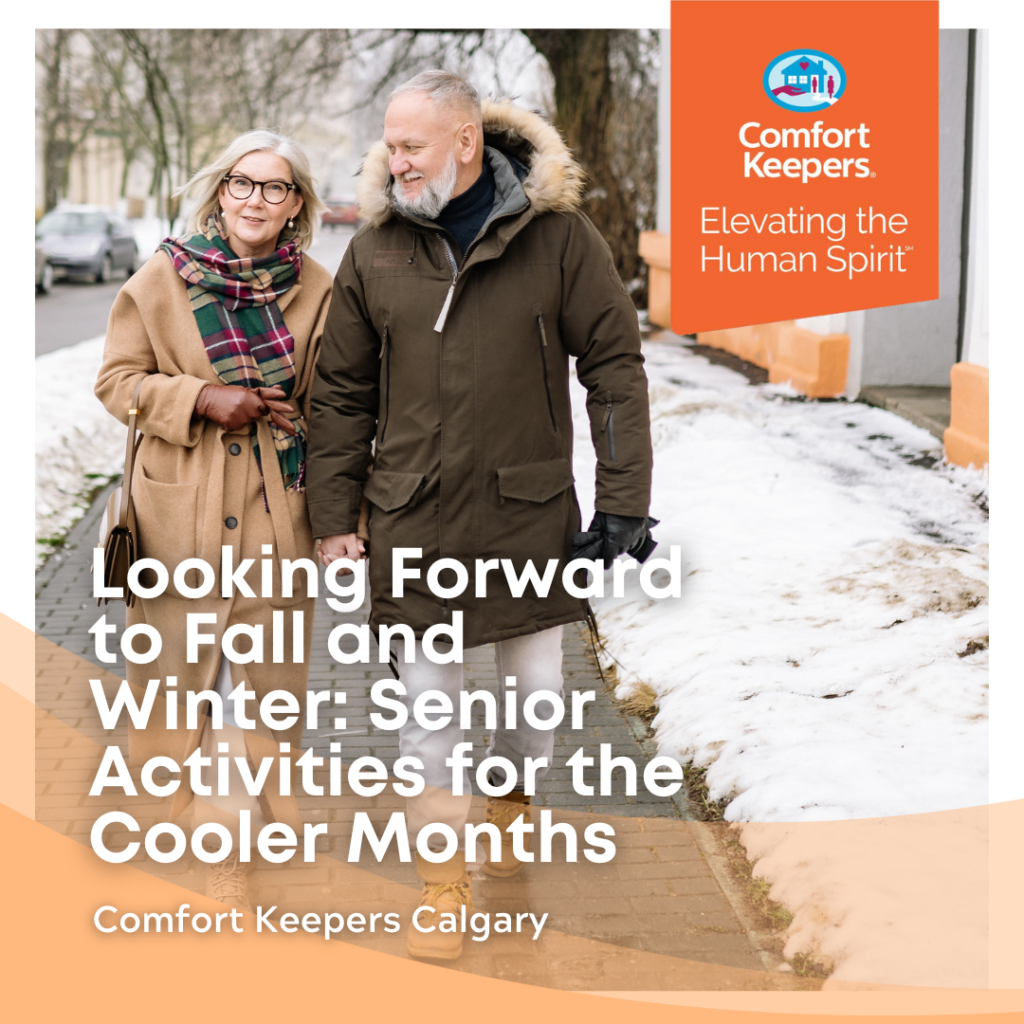
Senior Activities for the Cooler Months in Calgary
Senior activities for the cooler months look a little different this year. Many seniors continue to isolate at home because of the Coronavirus pandemic and this can take a toll on their mental health.
It’s important for seniors to work with their families, caregivers and health professionals to develop a plan that allows them to safely take part in activities they love and maintain positive mental health through activity and connection.
At any age, our health and wellbeing are enhanced by regularly participating in the things that bring us purpose, hope and joy. For seniors, taking part in these activities can be more difficult, older people who feel younger than their age show less brain aging, better memory and less depression. And studies show that staying engaged is important for a senior’s mental and physical health. Medical professionals recognize that social determinants of health, especially those that affect mental, social, emotional and spiritual wellbeing, impact health outcomes and quality of life.
There are always opportunities for meaningful moments and joyful days with a little planning, conversation and intentional action.
Fall Senior Activities
Fall activities tend to focus on connecting with loved ones, enjoying the turning season and spending time outside before the weather gets icy.
- This year, many people can’t see their favorite sports teams play in person. But fall is a dream for seniors that enjoy football, baseball and hockey and there are ways to participate virtually. Seniors and their loved ones can watch together over a video call or have a socially distanced viewing party at home, as long as everyone adheres to recommended safety guidelines.
- Enjoying fall foliage is an activity in itself, and can be done sitting on the porch, going for a short walk or on a longer hike outside. Raking leaves can even be fun when done with loved ones.
- Eating is another activity that seems to be more fun in the fall – family dinners for those isolating together, baking projects and Halloween fun are all opportunities for seniors to participate in activities they enjoy while maintaining their nutrition goals.
Winter Senior Activities
The holidays are filled with opportunities to enjoy music, celebrations with family and community service.
- Holiday shopping is a fun activity usually done outside of the house. However, online shopping may be the best way for seniors to get their gifts without visiting the mall.
- Singing, dancing, playing instruments and listening to holiday carols are ways that seniors can enjoy music, no matter what the weather looks like outside. Streaming music services often have a wide selection, allowing seniors to pick their favorites to listen to through a phone, virtual assistant or computer.
- While there are ways that seniors can serve others year-round, volunteering can be even more meaningful around the holidays. Finding virtual volunteer opportunities is even easier this year – writing letters, knitting blankets and finding old coats and sweaters to donate can all be done safely at home.
Comfort Keepers® Calgary Can Help
At Comfort Keepers®, we create individual care plans for every client. These plans include wellness goals that consider physical, mental and emotional health. Our caregivers can help support physician-prescribed diet and exercise plans, provide medication reminders, provide transportation to appointments and help seniors engage in the activities they love the most. And, our caregivers can help senior stay connected with loved ones through video chats, phone calls and care updates. We believe that every senior should experience the best in life.
Contact the Comfort Keepers Calgary office to learn more about how we can help maintain safety, comfort, and happiness in the home.
References
AARP. “Keep Your Brain Active by Doing Things You Love.” Web (video).
Science Daily. “Feeling Young Could Mean Your Brain is Aging More Slowly.” Web. 2018.
Forbes. “The Risks of Social Isolation for Older Adults.” Web. 2017.
Lifehack. “19 Fun Activities for Seniors to Stay Active Physically and Mentally.” Web.
Autumn Safety for Seniors


Seasonal Changes for Seniors – Both Good and Bad
There’s much to enjoy about the transition from summer to autumn. The intense heat begins to subside, the leaves change color, and we ready ourselves for the holiday season. But like all other seasonal transitions, there’s a trade off, and with the positive changes come certain challenges to our health and safety. Seniors, in particular, are at risk around this time of year. Colder temperatures, the presence of influenza, and even fallen leaves can severely threaten seniors’ well-being and independence.
#DYK | Older adults account for more than 50% of flu-related hospitalizations and more than 80% of flu-related deaths.
Fortunately, by following a few tips and best practices, seniors can stay safe and enjoy everything that the autumn season has to offer. Here are a few to share with senior clients.
Autumn Safety Tips for Seniors
- Get the influenza vaccine: While the flu may not be as detrimental to the health of younger people, seniors are at risk from flu complications, such as pneumonia and bronchitis. These complications can result in serious illness, hospitalization, and even death. Adding to this, the flu can also worsen pre-existing conditions. Vaccines to consider include Fluzone High-Dose, Fluad, and Flublok Quadrivalent – but it’s important to talk to a physician or other healthcare professional about the most appropriate option.
- Reduce the risk of influenza: In addition to vaccination, it’s best to take additional steps toward reducing the risk of the flu:
- Avoid contact with those who are sick
- Wash hands with warm water and soap frequently throughout the day, or use alcohol-based hand sanitizer.
- Regularly disinfect surfaces that are likely to be contaminated
- Improve the immune system through regular exercise (with physician approval)
- Reduce fire risk: As the temperature falls, it’s common to start using space heaters or fireplaces to warm up the home. Seniors should ensure that flammable objects are kept far away from these types of appliances. It’s also important to inspect fire extinguishers to ensure they are in working condition, and that batteries are replaced in smoke detectors.
- Keep warm: While on the subject of dropping temperatures, it’s imperative that seniors protect themselves from the cold. Although autumn doesn’t present the same bitter weather as winter, there’s still a palpable risk. In fact, the National Institutes of Health reports that hypothermia can develop rather quickly after being exposed to relatively mild cold temperatures. Seniors should venture outside only when absolutely necessary. When they do, it’s important to dress in layers of loose-fitting clothing.
- Clear away the leaves: Though certainly pleasing to the eye, fallen leaves can easily cause seniors to slip and fall. They should be raked away from the driveway and sidewalks. This is especially important once they become slippery and soggy from the rain.
Comfort Keepers® Calgary Can Help
There’s a lot to enjoy when it comes to autumn. The professional care team at Comfort Keepers® wants to ensure that senior clients have the means to experience all the season has to offer. Our caregivers can help them with the safety tips above. We can also provide companionship, meal preparation, and mobility assistance – inside and outside the home. And if they aren’t able to drive to their destinations, we can help them get there safely.
Contact the Comfort Keepers Calgary office to learn more about how we can help maintain safety, comfort, and happiness in the home.
References:
Medical Alert System Reviews. “5 Autumn Safety Tips for Seniors” by Susie Slack. Web. 2016.
Centers for Disease Control and Prevention. “CDC Says ‘Take 3’ Actions to Fight the Flu.” Web. 2018. WebMD. “Flu Can Have Dangerous Domino Effect on Seniors” by Robert Preidt. Web. 2018.
Steps Seniors Can Take to Prepare for Natural Disasters

SEPTEMBER IS #NationalPreparednessMonth
Steps Seniors Can Take to Prepare for Natural Disasters | We often underestimate the volatility of Mother Nature, forgetting that our possessions, our homes, and even those we love can be taken away from us in the blink of an eye because of a tornado, hurricane, wildfire, flood, or any number of other natural disasters. Of course, we’ve gotten smarter and more sophisticated with the way these catastrophic events are forecasted and handled. Local officials have detailed plans for evacuations, and relief teams are at the ready to help however possible. Experience also counts for a lot. Think of how many disasters you’ve witnessed up to this point, and how the learnings from those experiences will aid you and others in any future events. Seniors, in particular, have a wealth of knowledge to pull from.
#DYK | The Red Cross delivered more food, relief items, and shelter stays in 2017 than in the last four years combined?
American Red Cross

Despite this knowledge and expertise, seniors are often those most vulnerable during natural disasters because of chronic health conditions or diminished hearing and vision. Even those in excellent health may just not be as agile as they once were. Fortunately, age-related limitations don’t have to stop seniors from being able to handle whatever Mother Nature throws their way. Below are some helpful tips that senior clients can follow – together with family caregivers – to prepare for natural disasters.
Steps Seniors Can Take to Prepare for Natural Disasters | Disaster Preparedness Tips
- Become and stay informed
- Study up on which natural disasters are likely to affect your area.
- Learn your community’s established response and evacuation plans.
- Sign up for text or email alert notifications available in your community.
- Create a supply kit that includes the following:
- Water for drinking and sanitation (1 gallon per person, per day – for at least 3 days)
- Non-perishable food (3-day supply)
- Medications (to last at least 7 days)
- First aid kit and manual
- Personal documents (ID, birth certificate, deed to home, medication list that includes dosages, etc.)
- Manual can opener
- Tools (screwdriver, wrench, pliers, etc.)
- Emergency blankets
- Personal hygiene items
- Change of clothes
- Cell phone and extra chargers
- Flashlights and extra batteries
- Battery-operated or hand crank radio
- Put a plan in place
- Determine who your emergency contacts are, and ensure that they know of community plans.
- Double check that you have a thorough list of family contacts, not only in your phone but also written down.
- Make an assessment of your home, and determine the best escape routes, considering specific factors such as limited mobility.
- Write down all plans so that you can reference them at any time.
- Check out ca. This is a nation-wide resource that connects millions of people to services for a number of situations, including emergencies and disaster situations.
Comfort Keepers® Can Help Seniors Prepare for Natural Disasters
Helping seniors and other adults feel safe and comfortable in their homes is what we prioritize at Comfort Keepers®, and part of that includes helping them feel prepared for any crises that may arise. Our caregivers can go through the above tips to ensure clients have what they need to safeguard against natural disasters. Contact the Comfort Keepers Calgary office to learn more about how we can help maintain safety, comfort, and happiness in the home.
References:
Red Cross. “Disaster Preparedness for Seniors by Seniors.” Web. 2018.
Ready.gov. “Seniors.” Web. 2018.