


A holiday visit home can be the first time in weeks or months that you spend real, unhurried time with a parent. And sometimes, what you notice over an Easter weekend (the state of the fridge, the way they grip the counter when they stand, a conversation that circles back to the same question) raises concerns you weren’t expecting.
You’re not imagining things. Many adult children first recognize that aging parents may need support during exactly this kind of visit, when a break in routine reveals what phone calls cannot.
The challenge is knowing what to look for and what it might mean.
This guide is a practical, room-by-room care check you can use during your Easter visit, or any in-person visit, to understand how your parent is managing at home. It isn’t about finding fault. It’s about paying attention with care so you can respond with the right support at the right time.
It is also a chance to notice what is still going well, and where a little support could help protect your parent’s comfort, confidence, and independence.
Why an Easter Visit Is a Natural Time to Check In
Holiday visits tend to be longer and more relaxed than a quick stop at the door. You’re sitting at the kitchen table, walking through the house, sharing a meal. That slower pace gives you time to notice things a brief call or a short afternoon drop-in would miss.
Seasonal timing matters, too. In much of Canada, late March and early April mark the shift from winter to spring. A parent who has spent months managing icy sidewalks, shorter days, and cold-weather isolation may be showing the cumulative toll of a long, difficult season.
You may notice that groceries have thinned out, housework has slipped, or your parent seems less steady on their feet than they did at Thanksgiving. You may also notice many things that remain familiar: routines they still value, meals they still enjoy, or small habits that continue to anchor daily life.
This isn’t about turning a family holiday into an inspection. It’s about using a natural opportunity to pay quiet attention. That way, if something has shifted, you can begin thinking about next steps before a crisis forces a decision.
The Kitchen and Fridge: What Food Can Tell You

The kitchen is one of the most revealing rooms in the house. Open the fridge. Look in the pantry. Watch what happens at mealtime.
Signs of nutritional decline or unsafe kitchen habits:
- Expired food, spoiled produce, or containers of leftovers that have clearly been sitting too long
- A fridge that is nearly empty, or one stocked only with items that require no preparation (crackers, canned soup, pre-made pudding) but nothing fresh
- Duplicates of the same item, which may suggest your parent is forgetting what they already have
- Burn marks on pots or pans, or signs that food has been left on the stove unattended
- Noticeable weight loss or gain since your last visit
- A parent who says they’ve eaten but can’t describe what they had, or who picks at food during the meal
A parent who was once a confident cook but now relies entirely on toast and tea isn’t simply being lazy. That shift often reflects difficulty with planning, sequencing tasks, standing for long periods, or remembering to eat.
Poor nutrition in older adults is linked to increased fall risk, weakened immunity, slower recovery from illness, and cognitive decline.
If the fridge tells a worrying story, the response doesn’t have to be dramatic. A weekly meal delivery, a caregiver who helps with groceries and light cooking, or even reorganizing the kitchen so things are easier to reach can make a real difference.
In many cases, the goal is not to take favourite routines away, but to make them easier and safer to keep.
Medication: More Than Just Counting Pills

Medication management is one of the earliest areas where older adults begin to struggle quietly, and one of the top reasons families first seek in-home support. Even people who have managed medications well for years can find the routine harder if prescriptions change, days feel less structured, or energy and memory begin to shift.
Warning signs of medication mismanagement:
- Pill organizers that aren’t being used correctly: compartments skipped, wrong days filled, or pills left for days already passed
- Prescription bottles with refill dates that don’t add up, too many pills remaining, or bottles that should have been refilled weeks ago
- Multiple prescriptions from different pharmacies, which increases the risk of drug interactions going unnoticed
- Medications stored in confusing locations: scattered across countertops, tucked into drawers, or mixed into a single unlabeled container
- Your parent expressing confusion about what a medication is for, or mentioning side effects they haven’t discussed with their doctor
- New medications you weren’t aware of, or discontinued ones still sitting in the cabinet
Medication errors in older adults can lead to hospitalization, worsening of chronic conditions, and accelerated cognitive decline. If your parent manages multiple prescriptions, even small lapses can have serious consequences.
That can sound alarming, but these situations often develop gradually, and they can often be improved with the right support.
Asking directly helps. During your visit, try: “Can you walk me through what you take in the morning?” Their answer will tell you whether they feel confident managing their medications or whether the process has become overwhelming.
Mobility and Home Safety: How Aging Parents Move Through Their Own Space
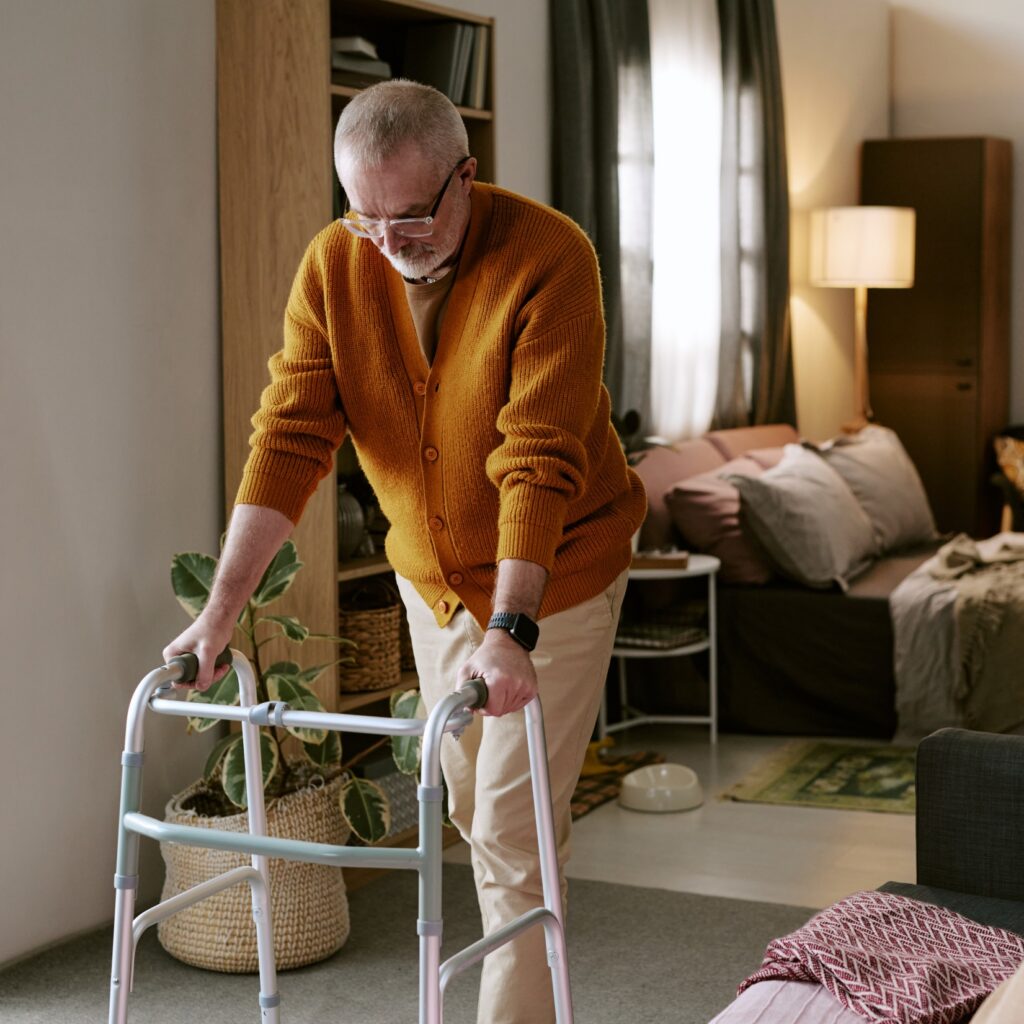
Falls are the leading cause of injury-related hospital admissions among Canadian seniors. According to the Public Health Agency of Canada (2014), 20 to 30 percent of seniors experience a fall each year, with the risk rising sharply after age 80. Roughly half of fall-related hospitalizations among seniors occur at home.
During your visit, watch how your parent moves. Not just whether they can walk, but how confidently and safely they navigate their home. You may notice that they are still moving around independently, but with a little more caution or effort than before. That kind of change is worth paying attention to early.
Fall risks and mobility warning signs at home:
- Hesitation or unsteadiness when standing up from a chair, getting out of bed, or turning in a hallway
- Gripping furniture, walls, or doorframes for balance while walking
- Reluctance to use stairs, or going up and down one step at a time with visible effort
- Throw rugs, electrical cords, or clutter on the floor creating tripping hazards
- A bathroom without grab bars, non-slip mats, or adequate lighting
- Unexplained bruises, or injuries they brush off
- Shoes that are worn, loose-fitting, or impractical for walking safely indoors
- Uncleared snow or ice on front steps or walkways
Also look for signs of a fall that has already happened. Aging parents may not tell you, especially if they feel embarrassed or worry it will trigger a conversation about losing independence.
Unexplained bruises, a new reluctance to move around, or furniture rearranged to create shorter walking paths can all point to an incident they haven’t shared.
Simple changes reduce fall risk considerably: grab bars in the bathroom, better lighting in hallways and stairwells, removing loose rugs, and ensuring frequently used items are within easy reach.
These are practical steps that preserve independence without requiring major renovations. Often, a few thoughtful changes can help your parent feel more confident moving through the home they know so well.
Signs of Cognitive Change: What Conversations and Behaviour Reveal

Cognitive changes can be among the hardest things to assess during a visit. Partly because they develop gradually and partly because a parent may work hard to mask difficulties in front of family.
Holiday gatherings, with their familiar rituals and predictable conversations, can make it easier for someone to follow along even when their memory or reasoning has declined. At the same time, familiar routines can also highlight strengths, such as the traditions, stories, and relationships your parent still holds onto with ease.
Behaviours that may signal cognitive decline:
- Repeating the same story, question, or comment within a single conversation
- Difficulty following a group discussion, or withdrawing from conversations they would normally enjoy
- Confusion about dates, times, or upcoming events (not realizing Easter is this weekend despite having been told several times)
- Trouble with tasks that involve planning or sequencing: setting the table, following a recipe, managing the steps of getting dressed for an outing
- Unpaid bills, unopened mail, or financial paperwork in disarray
- Misplacing items in unusual places
- Personality or mood changes: increased anxiety, suspicion, irritability, or apathy that feels out of character
- Difficulty recognizing familiar faces or calling family members by the wrong name
It’s worth distinguishing between the normal forgetfulness that comes with aging and changes that interfere with daily functioning. Occasionally forgetting where you left your glasses is common. Regularly forgetting to pay bills, missing appointments, or getting lost on a familiar route is not.
If you notice signs of cognitive change, encourage your parent to speak with their family doctor. Some causes (medication side effects, nutritional deficiencies, untreated depression, infections, thyroid issues) are treatable, and early identification matters.
Housekeeping and Personal Care: The Details That Add Up

A decline in housekeeping is often one of the earliest visible signs that a parent is struggling, and it tends to appear before more dramatic changes in health or cognition.
Signs that housekeeping or personal care has declined:
- Laundry piling up, or clothes that look unwashed or worn repeatedly
- Surfaces that haven’t been dusted or cleaned in some time
- Garbage or recycling that hasn’t been taken out
- A bathroom noticeably less clean than it used to be
- An overall sense that the home feels less tended: dishes in the sink, papers stacked on every surface, a disorder unlike your parent’s usual standard
- Changes in personal grooming: unwashed hair, body odour, stained or ill-fitting clothing, or dental hygiene that has clearly declined
These changes don’t always signal something serious. A tough winter, a bout of illness, or a dip in energy can make it hard to keep up. But when they persist, they often reflect physical limitations (pain, fatigue, reduced mobility), cognitive shifts (difficulty planning and completing multi-step tasks), or emotional withdrawal (depression, grief, loss of motivation).
What matters is the comparison. Think about how the home looked on your last visit and notice what has changed. A one-time slip is different from a pattern.
And if some things still reflect your parent’s usual habits and preferences, that matters too. Those steady details can help show where support may be most useful without disrupting daily life more than necessary.
Mood, Social Connection, and Emotional Well-Being

A parent’s emotional state can be just as important as their physical safety. It’s something families often overlook because it’s harder to measure than a cluttered hallway or an empty fridge.
Research from Statistics Canada (2023) shows that nearly one in five seniors aged 65 and older report experiencing loneliness, and roughly 30 percent are at risk of social isolation. Those who are widowed, live alone, have limited mobility, or live in urban areas with fewer community ties face greater risk.
Signs of social isolation or emotional withdrawal:
- A parent who seems more withdrawn, quieter, or less interested in activities they used to enjoy
- Loss of interest in hobbies, social clubs, religious services, or regular outings
- Mention of friends who have passed away, moved, or stopped coming around
- A television on all day as background noise; suggesting it has become their primary company
- Expressions of hopelessness, purposelessness, or feeling like a burden
- Increased alcohol use or reliance on sleep to pass the time
- Reluctance to leave the house, even for short errands or appointments
Social isolation doesn’t just affect mood. It is associated with increased risk of heart disease, stroke, cognitive decline, and premature death. The Canadian Coalition for Seniors’ Mental Health emphasizes that loneliness is not an inevitable part of aging, and that even modest increases in meaningful social contact can measurably benefit physical and mental health.
If your parent seems isolated, one of the most helpful things you can do during your visit is spend unhurried time together doing something they enjoy, not just discussing logistics or health concerns.
A walk, a card game, cooking a meal together, looking through old photographs. These are the moments that remind someone they’re valued, not just looked after. They can also remind you what still lights your parent up, which is just as important as noticing what has become harder.
How to Decide Whether What You Noticed Means Your Parent Needs Support

No single observation should cause alarm on its own. An empty fridge after a long winter is not the same as a pattern of weight loss, missed medications, and mounting confusion.
After your visit, take a few minutes to reflect. Consider writing down what you noticed. This is not to build a case, but to track changes over time.
If you have siblings or other family members, compare notes. You may find that each of you has seen different things that, together, tell a clearer story.
Ask yourself:
- Has something noticeably changed since my last visit?
- Would I feel comfortable leaving my parent alone for a week based on what I’ve seen?
- Is there a pattern across more than one area: nutrition, medication, mobility, cognition, mood?
- Has my parent mentioned anything suggesting daily life has become harder?
- Am I noticing things my parent seems unaware of or reluctant to discuss?
If the answers concern you, that concern is worth acting on. Not with panic, but with a thoughtful conversation and a plan. And if you noticed strengths alongside concerns, keep those in view too. They can help shape support that feels respectful, familiar, and easier for your parent to accept.
How to Start the Conversation

Raising concerns with a parent about their ability to manage at home is one of the most delicate conversations an adult child can have. It touches on independence, identity, and how your parent sees themselves.
Lead with what you’ve noticed, not what you’ve decided
Instead of “I think you need help,” try: “I noticed a few things this weekend that I wanted to talk about with you.” This keeps the conversation open and respects your parent as someone who should be part of any decision about their own life.
Ask questions rather than making declarations
“How has grocery shopping been going for you lately?” or “Do you feel steady getting in and out of the shower?” invites honest conversation rather than defensiveness.
Acknowledge what’s working, not just what concerns you
If your parent is managing some things well, say so. This keeps the conversation from feeling like a list of failures.
Focus on their goals, not yours
Most seniors want to stay at home, maintain their routines, and keep doing the things that give them purpose. Framing any discussion of support around those goals makes it easier for your parent to consider accepting help.
When Home Care Can Help

Not every concern that surfaces during an Easter visit calls for a dramatic response. Sometimes what’s needed is modest, targeted support that helps a parent manage daily life more safely at home.
Senior assistance can take many forms: someone who stops by a few times a week to help with meals and groceries, a caregiver who provides medication reminders and light housekeeping, a companion who ensures your parent gets out for appointments and social activities, or more comprehensive support after a hospital stay or health change.
The right kind of care isn’t about taking over. It’s about doing things with your parent wherever possible. Engaging them in meal planning, encouraging movement, supporting routines, and preserving the habits and preferences that make their home feel like theirs.
For family caregivers, professional in-home care also provides something essential: relief. Respite care services allow you to step back, recharge, and attend to your own responsibilities, knowing your parent is in capable hands.
Caring for elderly parents is meaningful work, but it’s also demanding. And sustainable caregiving requires support for the whole family.
How to Get a Professional Home Care Assessment
If your Easter visit has left you with questions, you don’t have to sort it all out alone.
Comfort Keepers Canada offers a free in-home care consultation that includes a home safety assessment. It’s a low-pressure way to get a professional perspective on your parent’s situation, understand what level of support might help, and learn about the options in your area.
There’s no obligation, and the assessment is designed to be useful whether you decide to move forward with care or not.
Sometimes the most important thing you can do for aging parents is take one small step: a conversation, a phone call, an assessment. Something that turns worry into clarity while helping your parent stay safe, comfortable, and as independent as possible.
Contact your local Comfort Keepers office to schedule a free in-home consultation.
References
- Public Health Agency of Canada. Surveillance Report on Falls Among Older Adults in Canada. Government of Canada, 2022. Available at: https://www.canada.ca/en/public-health/services/publications/healthy-living/surveillance-report-falls-older-adults-canada.html
- Public Health Agency of Canada. Falls Among Older Adults in Canada — Data Blog. Health Infobase Canada. Available at: https://health-infobase.canada.ca/falls-in-older-adults/
- Statistics Canada. A Look at Loneliness Among Seniors. 2023. Available at: https://www.statcan.gc.ca/o1/en/plus/4881-look-loneliness-among-seniors
- Canadian Coalition for Seniors’ Mental Health (CCSMH). Social Isolation and Loneliness — Older Adults and Care Partners. Available at: https://ccsmh.ca/areas-of-focus/social-isolation-and-loneliness/older-adults-and-care-partners/
- National Institute on Ageing (NIA). Understanding the Factors Driving the Epidemic of Social Isolation and Loneliness Among Older Canadians. 2023. Available at: https://www.niageing.ca/loneliness23
- Public Health Agency of Canada. Seniors’ Falls in Canada: Second Report. 2014. Available at: https://www.canada.ca/en/public-health/services/health-promotion/aging-seniors/publications/publications-general-public/seniors-falls-canada-second-report.html
- Statistics Canada. Understanding Seniors’ Risk of Falling and Their Perception of Risk. Health Reports. Available at: https://www150.statcan.gc.ca/n1/pub/82-624-x/2014001/article/14010-eng.htm
- National Institute on Aging (U.S.). Caring for Older Patients with Cognitive Impairment. Available at: https://www.nia.nih.gov/health/health-care-professionals-information/caring-older-patients-cognitive-impairment
- Parachute Canada. Falls in Seniors — Prevention Resources. Available at: https://parachute.ca/en/injury-topic/fall-prevention-for-seniors/
- Gillespie et al. Medicines Management Issues in Dementia and Coping Strategies Used by People Living with Dementia and Family Carers: A Systematic Review. International Journal of Geriatric Psychiatry, 2018. Available at: https://pmc.ncbi.nlm.nih.gov/articles/PMC6282522/
- Elliott, R.A. et al. Ability of Older People with Dementia or Cognitive Impairment to Manage Medicine Regimens: A Narrative Review. Current Clinical Pharmacology, 2016. Available at: https://pmc.ncbi.nlm.nih.gov/articles/PMC5396255/
- Public Health Agency of Canada. Social Isolation, Loneliness and Positive Mental Health Among Older Adults in Canada During the COVID-19 Pandemic. Health Promotion and Chronic Disease Prevention in Canada, Vol. 43, No. 4, April 2023. Available at: https://www.canada.ca/en/public-health/services/reports-publications/health-promotion-chronic-disease-prevention-canada-research-policy-practice/vol-43-no-4-2023/social-isolation-loneliness-positive-mental-health-older-adults-canada-covid-19-pandemic.html
Frequently Asked Questions
The earliest signs often include changes in nutrition (an empty or disorganized fridge, weight loss, missed meals), a decline in housekeeping or personal grooming, difficulty managing medications, and reduced social activity.
These changes tend to appear gradually, which is why in-person visits are so valuable for spotting patterns that phone calls can’t reveal.
Occasional forgetfulness is a normal part of aging. Concern is warranted when memory problems begin to interfere with daily functioning: repeatedly forgetting medications, missing important appointments, struggling with familiar tasks, or getting confused about dates and times.
If you notice a pattern, encourage your parent to speak with their doctor. Some causes of cognitive difficulty are treatable.
Start by describing what you’ve observed, not what you’ve concluded. Ask open-ended questions like “How has getting around the house been lately?” rather than making statements like “You need help.”
Acknowledge their strengths, focus the conversation on their goals (staying home, maintaining routines), and frame any discussion of support as a way to protect the independence they value.
A home safety assessment is a professional evaluation of a senior’s living environment, identifying fall hazards, accessibility issues, and areas where small modifications could reduce risk.
Comfort Keepers Canada offers a free home safety assessment as part of its in-home care consultation. The assessment provides practical recommendations, grab bars; better lighting; rearranging furniture, and helps families understand what level of support may be appropriate.
Yes. Home care is not all-or-nothing. Many families start with just a few hours a week: help with meal preparation, medication reminders, light housekeeping, or companionship. This kind of targeted support can make a real difference in daily safety and quality of life without disrupting routines or undermining independence.
Care plans can be adjusted over time as needs change.