

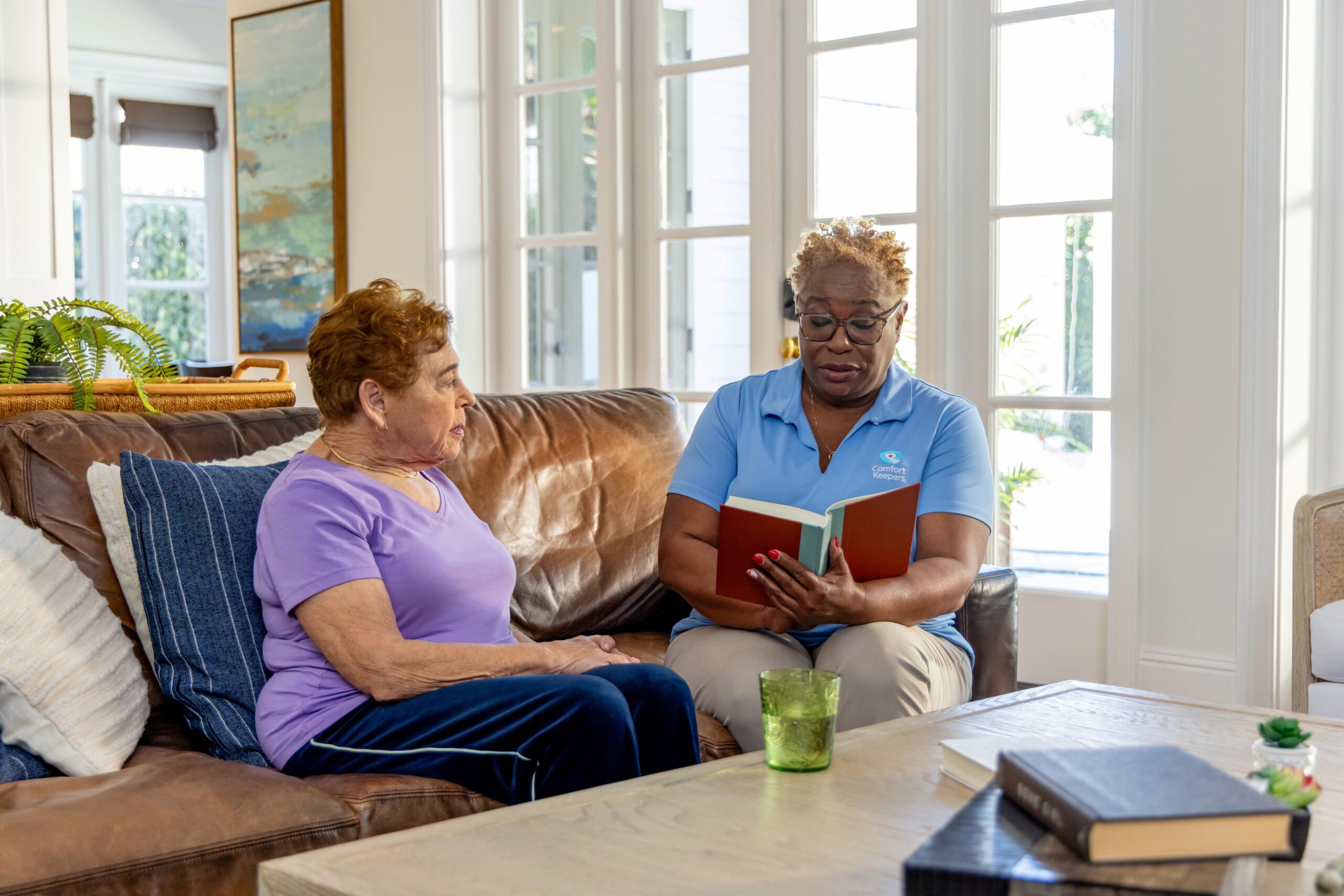
When most people picture in-home senior care, they think of someone who comes in, completes a checklist of tasks, and leaves. Laundry done, meal prepared, medications reminded.
That kind of help matters, but it misses something fundamental: the person at the centre of it all. A parent who used to cook elaborate Sunday dinners is not just someone who needs to be fed. A retired engineer who spent decades solving problems is not just someone who needs to be watched.
When care focuses only on tasks, the person receiving it can begin to feel sidelined in their own life.
Interactive Caregiving™ is Comfort Keepers’ answer to that gap. It is both a philosophy and a practical model of care built around one idea: people thrive when they remain active participants in daily life, not passive recipients of help.
Interactive Caregiving™ in Brief

Interactive Caregiving means that caregivers do things with seniors, not just for them. Rather than taking over, a caregiver encourages and supports participation in everyday activities to the extent that is safe and comfortable.
This might mean preparing a meal together, walking to a nearby park instead of sitting indoors, or working through a puzzle or photo album side by side. The goal is to keep the mind engaged, the body moving, nutrition on track, and the living environment safe.
These four areas are known as the four pillars of Interactive Caregiving: mind, body, nutrition, and safety.
The approach is grounded in well-documented evidence that physical activity, cognitive stimulation, social connection, and proper nutrition can meaningfully improve quality of life and slow loss of independence in older adults.
Why Task-Completion Care Falls Short
Standard home care often follows a straightforward service model: arrive, complete assigned duties, document, leave. This can be helpful, especially for someone recovering from surgery or managing a physical limitation.
But over time, task-only care can create a pattern of increasing dependence.
When someone else always handles the cooking, the laundry, and the errands, the senior may gradually stop doing things they are still capable of. Physical strength declines from inactivity. Cognitive sharpness fades without stimulation. Social isolation deepens if the caregiver’s role is limited to tasks rather than interaction.
The Public Health Agency of Canada identifies physical inactivity and social isolation among the modifiable risk factors for cognitive decline and loss of independence among older Canadians.
This is not a criticism of the people providing that care. It is a structural problem. When a care model is designed around tasks, even a compassionate caregiver has limited room to focus on engagement.
The Four Pillars of Interactive Caregiving
Each pillar addresses a root cause of decline rather than a symptom.
Mind
Cognitive engagement is not about formal brain-training exercises. It is about staying curious, involved, and mentally active. A caregiver using the Interactive Caregiving approach might play cards with a senior, read together, discuss the news, reminisce over family photos, or help organize a closet, which involves sorting, decision-making, and conversation.
These moments matter. Research using data from the Canadian Longitudinal Study on Aging has found that cognitive and social engagement is associated with better memory performance and emotional well-being in older adults.
For someone who lives alone and has few regular visitors, the mental stimulation that comes from genuine interaction with a caregiver can be a meaningful source of connection.
Body
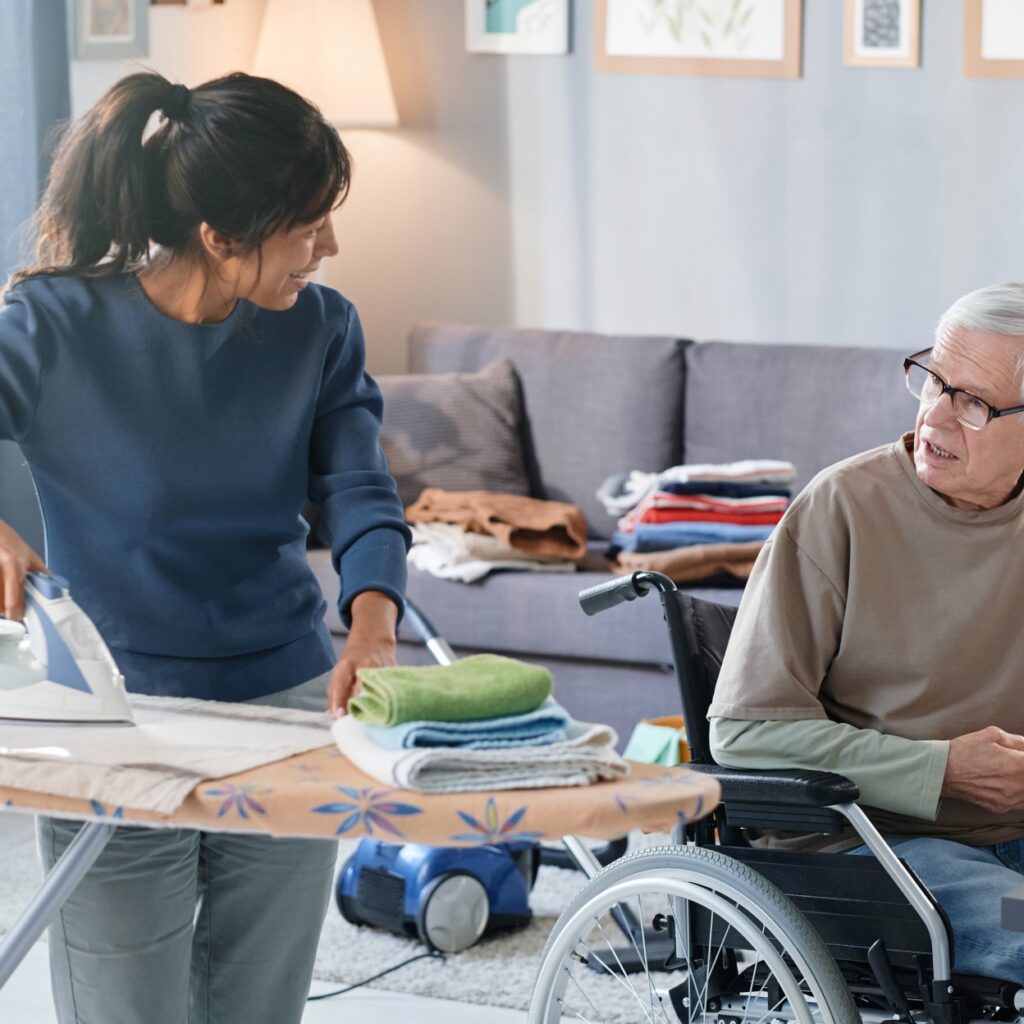
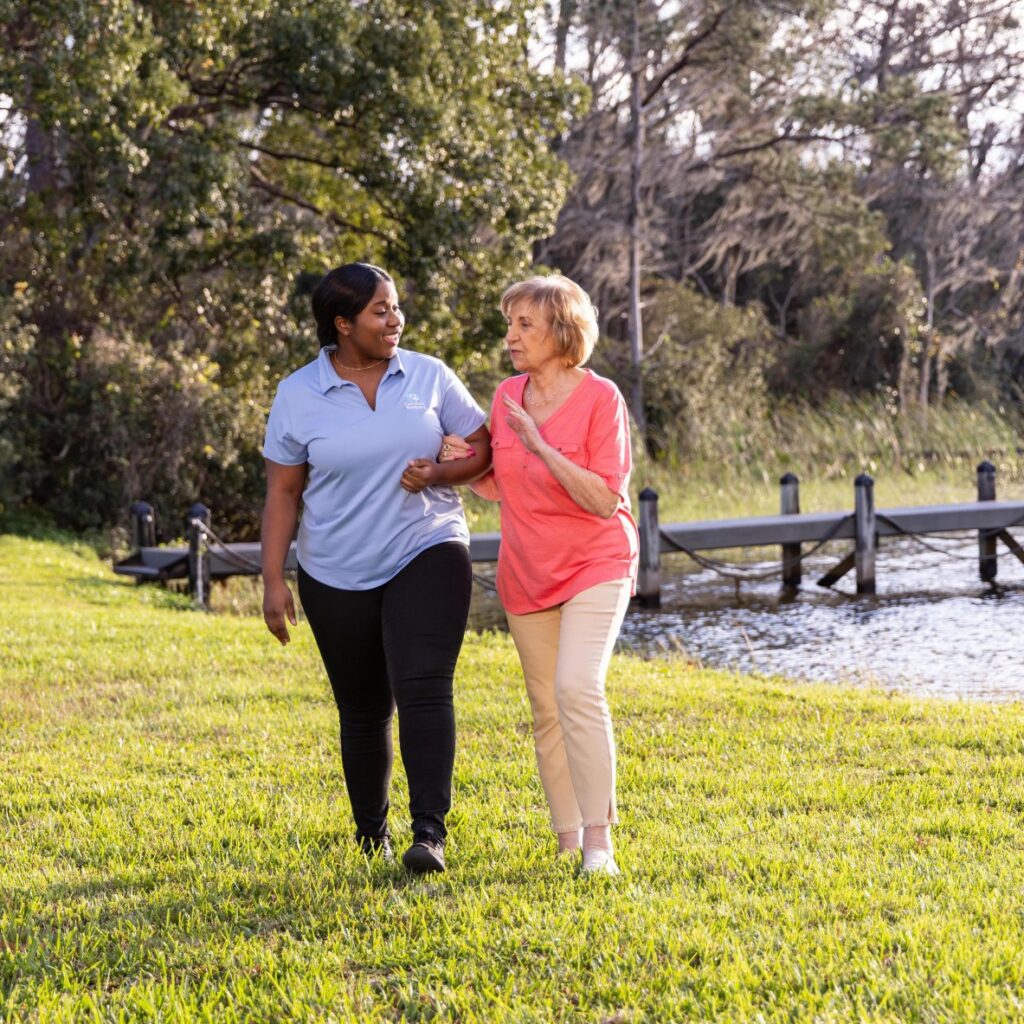
Physical activity does not have to mean structured exercise, though it can. In the context of Interactive Caregiving, keeping the body active often looks like folding laundry together, walking to get the mail, gardening, stretching while watching television, or doing light tidying as a team.
The emphasis is on movement that fits the person’s abilities and interests. For a senior recovering from a hip replacement, it might mean supported walking around the home. For someone with arthritis, it might mean gentle range-of-motion activities built into daily tasks.
The Canadian Society for Exercise Physiology recommends that older adults get at least 150 minutes of moderate physical activity per week, including balance and strength activities, to reduce fall risk and maintain independence.
Interactive Caregiving weaves this kind of movement into the natural rhythm of the day.
Nutrition
Nutrition is one of the most overlooked factors in senior health. Skipping meals, eating the same thing every day, or relying heavily on processed food can lead to weight loss, muscle weakness, weakened immunity, and worsening chronic conditions.
Yet these problems often go unnoticed because they develop gradually.
Interactive Caregiving addresses this by making meal preparation a shared activity. A caregiver might plan a meal with a senior, review a grocery list together, and then cook side by side in the kitchen.
This preserves the senior’s involvement and preferences while also ensuring meals are balanced and appealing.
Eating together helps too. Shared meals have been shown to improve appetite and food intake among older adults. For someone managing diabetes or heart disease, having a caregiver who understands how to support healthier eating habits within the senior’s own tastes and routines can make a real difference, without turning every meal into a clinical exercise.
Safety
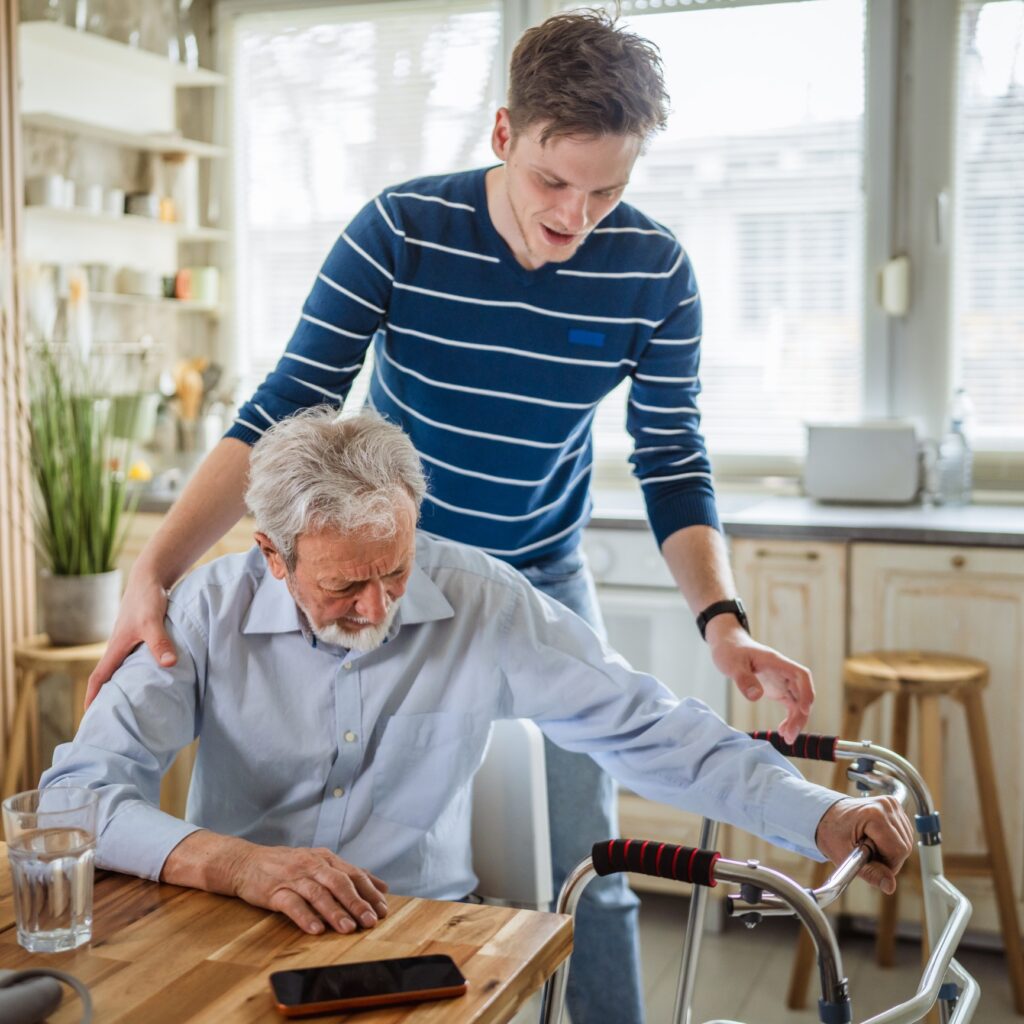
Falls are the leading cause of injury-related hospitalization among Canadians aged 65 and older. The Public Health Agency of Canada reports that each year, between 20% and 30% of older adults experience a fall, and many of those falls happen at home.
Interactive Caregiving takes a proactive approach to safety. Rather than simply responding when something goes wrong, caregivers are trained to identify risks in the home, support safe mobility, and encourage habits that reduce fall risk.
This includes everything from ensuring walkways are clear and lighting is adequate to encouraging proper footwear and supporting balance during daily activities.
Safety in this context is not about restricting what a senior can do. It is about making sure they can continue doing what they want to do, with appropriate support in place.
What Interactive Caregiving Looks Like Day to Day

The practical difference between task-based care and Interactive Caregiving often shows up in small but meaningful ways.
A task-based caregiver might prepare lunch and set it on the table. An Interactive Caregiver might ask, “What sounds good today?” and then prepare the meal alongside the senior, letting them chop soft vegetables or stir the pot if they are able.
One approach feeds someone. The other keeps them involved in a life skill they may have practiced for decades.
Similarly, a task-based caregiver might tidy the living room while the senior watches from a chair. An Interactive Caregiver might say, “Let’s go through these books together. Are there any you’d like to pass along to your grandchildren?”
That conversation turns a chore into a moment of connection and purpose.
These interactions are not extras. They are the care. They reinforce a sense of capability, dignity, and belonging that task-only models often erode without meaning to.
When This Approach Matters Most
Interactive Caregiving is valuable across a range of situations, but it tends to make the greatest difference when gradual decline is a concern:
- After a hospital stay, when someone is at risk of losing confidence and mobility during recovery
- When a senior is becoming increasingly isolated, especially after losing a spouse or close friend
- When a family notices that a parent is less active, less engaged, or less interested in things they used to enjoy
- When mild cognitive changes are making it harder to manage daily routines independently, creating frustration, forgetfulness, or uncertainty in everyday tasks
- When a family caregiver is stretched thin and needs support that goes beyond covering basic needs, especially when balancing care with work, family responsibilities, and their own well-being begins to feel overwhelming
In these moments, care that simply maintains the status quo may not be enough. Care that actively supports engagement, movement, nutrition, and safety can help prevent the kind of slow withdrawal that leads to a steeper decline.
How This Approach Supports Family Caregivers
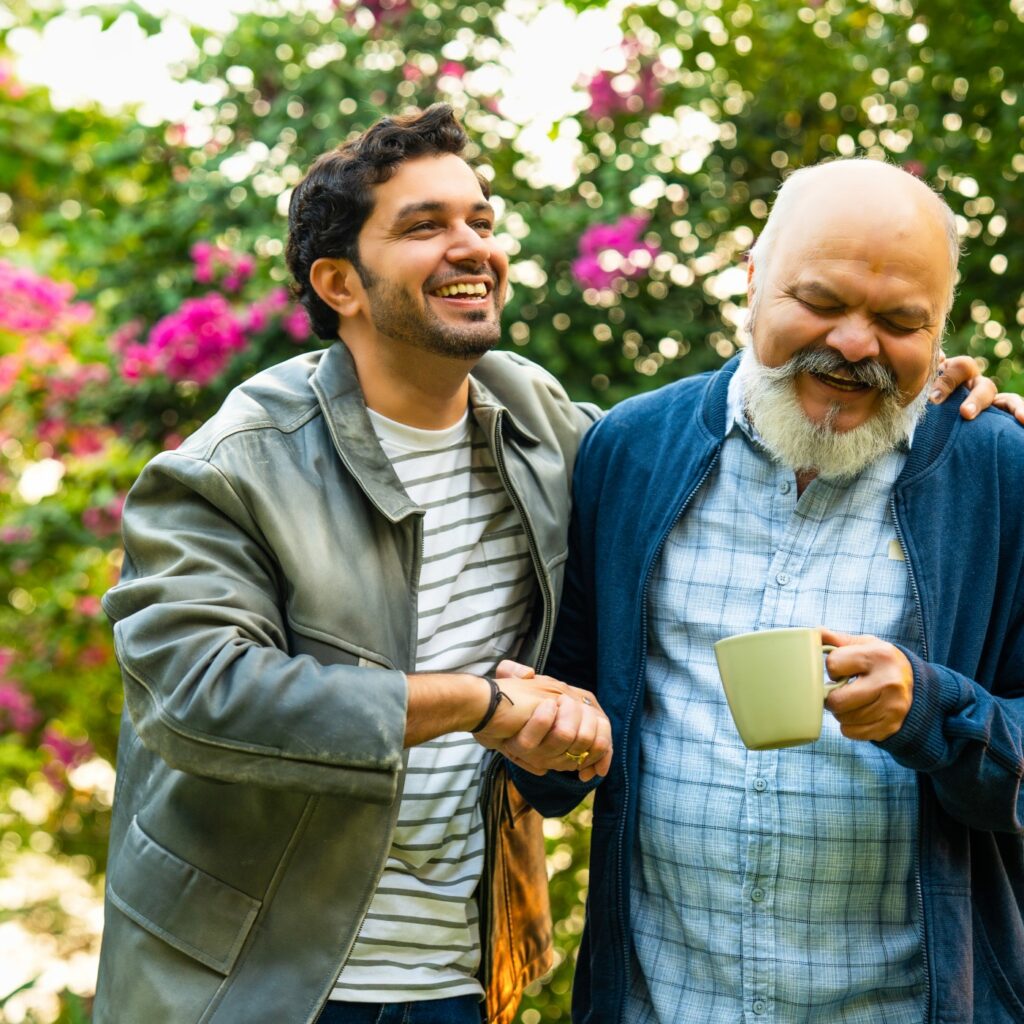
Family caregivers often carry an enormous load. According to Statistics Canada, as of 2018, approximately one in four Canadians over the age of 15 provides some form of care to a family member or friend with a long-term health condition, disability, or aging-related need.
Many of those caregivers are managing their own work, families, and health at the same time.
Interactive Caregiving is not about replacing what families do. It is about adding a layer of support that addresses what families may not have the time, energy, or training to take on alone.
When a professional caregiver is actively engaging a senior in physical activity, cognitive stimulation, balanced nutrition, and safe daily routines, the family caregiver can step back from some of the daily pressure and focus on the relationship itself rather than the logistics of care.
Knowing that a parent is not just being looked after but is being encouraged to stay active and involved can bring real peace of mind.
How to Start a Supportive, Low-Pressure Conversation About Care
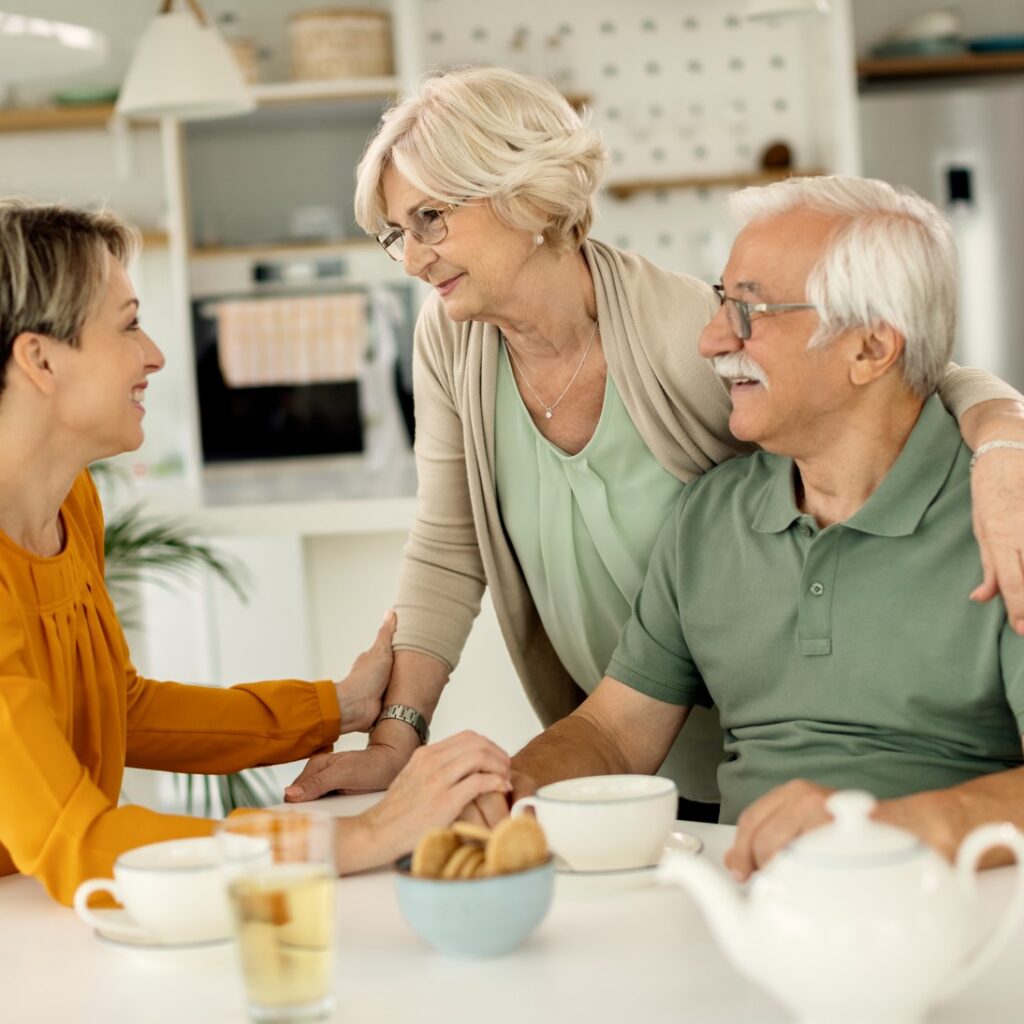
Framing care as a way to do more, not less, often resonates better. For many people, learning about a model like Interactive Caregiving helps shift the perception of home care from loss of independence to support for independence.
Instead of “I think you need help,” a more effective opening might be, “I noticed you mentioned you haven’t been cooking much lately. Would it help to have someone come by a couple of times a week to make meals with you?”
If you have been noticing changes in a parent’s daily routine, energy, or engagement, or if you are a senior thinking about what kind of support might help you stay active and comfortable at home, Comfort Keepers can help you explore what would fit your situation.
A conversation with a local care team is a low-pressure way to learn what options for senior care are available and what daily life could look like with the right kind of help in place.
References
- Public Health Agency of Canada. (2014). Seniors’ Falls in Canada: Second Report. Government of Canada. https://www.canada.ca/en/public-health/services/health-promotion/aging-seniors/publications/publications-general-public/seniors-falls-canada-second-report.html
- Canadian Society for Exercise Physiology. (2021). Canadian 24-Hour Movement Guidelines for Adults aged 65 years and older. https://csepguidelines.ca/guidelines/adults-65/
- Statistics Canada. (2020). Caregivers in Canada, 2018. Catalogue no. 11-001-X. https://www150.statcan.gc.ca/n1/daily-quotidien/200108/dq200108a-eng.htm
- Public Health Agency of Canada. (2021). A Dementia Strategy for Canada: Together We Aspire. Government of Canada. https://www.canada.ca/en/public-health/services/publications/diseases-conditions/dementia-strategy.html
- Health Canada. (2019). Canada’s Food Guide. Government of Canada. https://food-guide.canada.ca/en/
- Canadian Longitudinal Study on Aging. (2023). Research findings on cognitive aging and social engagement. https://www.clsa-elcv.ca/
Frequently Asked Questions
Interactive Caregiving is Comfort Keepers’ approach to in-home senior care. It focuses on doing things with seniors rather than for them, engaging them in daily activities that support mental sharpness, physical movement, proper nutrition, and home safety.
Standard home care often focuses on completing tasks like cooking, cleaning, and medication reminders. Interactive Caregiving goes further by actively involving the senior in those activities to maintain their skills, confidence, and quality of life.
The four pillars are mind, body, nutrition, and safety. Each one targets a root cause of decline in older adults: cognitive disengagement, physical inactivity, poor nutrition, and preventable safety risks in the home.
Yes. The approach is adapted to each person’s abilities. For someone with early cognitive changes, engaging activities like sorting, reminiscing, or simple cooking tasks can support cognitive function and reduce agitation, while the safety pillar helps manage environmental risks.
It can reduce fall risk. Caregivers are trained to identify hazards in the home, encourage safe movement habits, and support physical activities that build balance and strength, all of which are evidence-based strategies for fall prevention.
By providing professional, engagement-focused care, it relieves some of the daily pressure on family caregivers. Families can focus more on their relationship with their loved one, knowing that physical, cognitive, nutritional, and safety needs are being actively supported.
Yes. Comfort Keepers provides Interactive Caregiving across Canada, with locally based care teams who understand the community and can personalize care to each senior’s situation.
Signs that a more engaged approach may help include increased isolation, declining interest in hobbies or socializing, missed meals, reduced physical activity, or noticeable changes in mood or motivation. These patterns often signal that task-only care is not enough.