





Choosing the Right Tools: A Practical Guide to Adaptive Equipment for Independent Living
Senior Independent Living | December 23, 2025
Making decisions about in-home safety can feel overwhelming. You’re balancing a deep desire for independence – a feeling shared by nearly 90% of older adults who want to age in place – with the practical need for safety and support. The sheer number of adaptive devices available can turn a clear goal into a confusing maze of options.
But what if we re-framed the conversation? Instead of seeing assistive devices as a concession, think of them as tools of empowerment. These are not just gadgets; they are enablers of freedom, confidence, and the life you want to live in the home you love. In fact, research shows that over 90% of adults who use assistive technology report a marked improvement in their quality of life and independence.
This guide is designed to cut through the noise. We’ll provide a clear, practical framework to help you evaluate your needs, compare the right solutions, and make confident choices for yourself or a loved one.
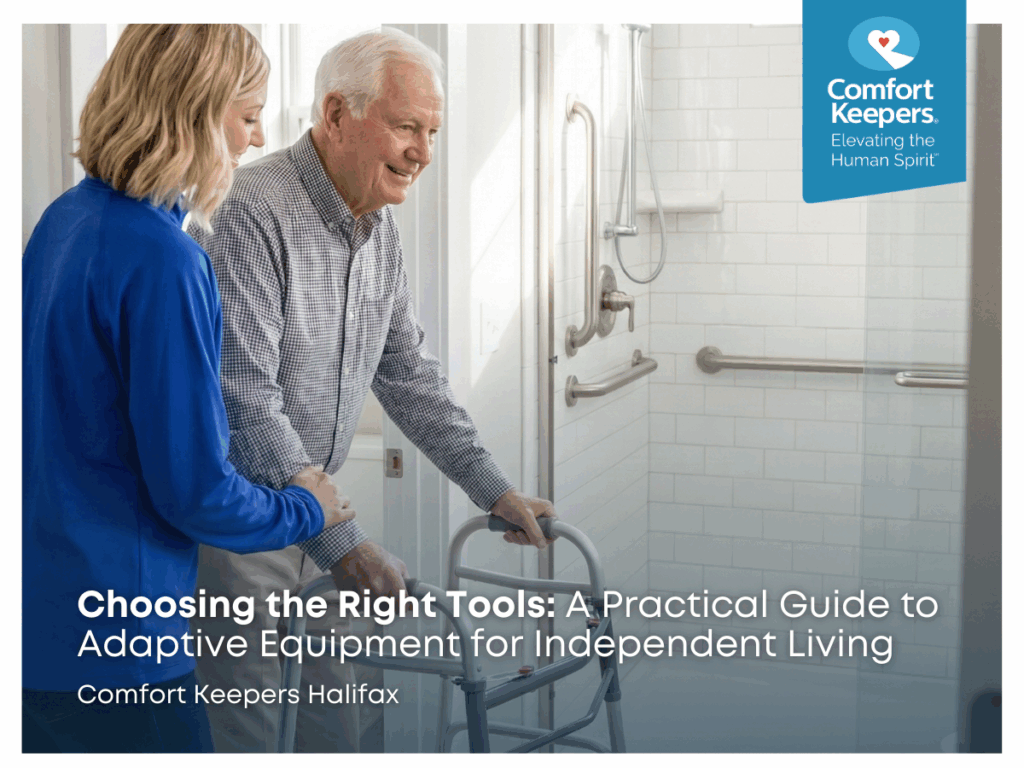
Before You Buy: A Personalized Approach to Your Needs
The most effective adaptive equipment is the equipment that solves a specific, personal challenge. A device that’s perfect for your neighbour might not be the right fit for you. That’s why the first and most crucial step is a thoughtful assessment of your daily life.
Before you start shopping, consider these key areas:
- Mobility and Fall Prevention: Where do you feel least stable? Is it navigating stairs, walking long distances in your home, or getting up from a chair? With nearly 3 million seniors treated in emergency rooms for fall-related injuries each year, this is the most critical area to address.
- Bathroom Safety: The combination of hard surfaces and water makes the bathroom a high-risk zone. Think about the specific moments of difficulty: getting in and out of the tub, using the toilet, or standing for a shower.
- Daily Routines: Which daily tasks have become strenuous or difficult? This could be anything from opening a jar and chopping vegetables in the kitchen to fastening a button or pulling on socks.
- Medication Management: Are you or your loved one juggling multiple prescriptions? Ensuring medications are taken correctly and on time is fundamental to health and well-being.
While a self-assessment is a great start, consulting with a professional like an occupational therapist can provide invaluable insights. They can identify needs you might not have noticed and recommend specific solutions. This professional input is a key part of the holistic approach that ensures every aspect of your well-being is considered.
A Clear-Eyed Comparison of Essential Adaptive Equipment
Once you have a better sense of your needs, you can start evaluating specific categories of equipment. Here’s a breakdown of the most common and impactful devices, focusing on the key factors to consider for each.
Enhancing Mobility & Preventing Falls
This category of equipment is designed to provide stability where and when you need it most, directly addressing one of the biggest risks to independent living.
- Walkers and Rollators: A standard walker offers maximum stability for those who need significant weight support. A rollator (a walker with wheels, a seat, and brakes) is better suited for individuals who have more balance but need support and a place to rest while walking longer distances. Key consideration: Match the device to the user’s stability and strength. A rollator can be a hazard for someone who needs to put their full weight on the device.
- Canes: A single-point cane provides minimal support and is best for minor balance issues. A quad cane, with four feet at the base, offers significantly more stability. Key consideration: Proper height is critical for a cane to be effective and not create other posture problems. The top of the handle should be at wrist level when your arm is hanging naturally at your side.
- Stairlifts: For multi-level homes, a stairlift can be a truly life-changing investment. They eliminate the daily risk of a fall on the stairs. Key consideration: Look for models with essential safety features like a swivel seat for safe dismounting, obstruction sensors, and a battery backup in case of a power outage. Professional installation is non-negotiable to ensure it meets safety standards.
Reclaiming the Bathroom: Safety and Dignity
Creating a safer bathroom environment is one of the most effective ways to build confidence and maintain privacy.
- Grab Bars: These are not the same as towel racks. Professionally installed grab bars are anchored into wall studs and are designed to support hundreds of pounds of force. Key consideration: Placement is everything. You need bars where you’ll actually use them – inside the shower, next to the toilet, and by the bathtub. Adhering to the CSA Accessibility Standards for height and placement is a reliable benchmark for safety.
- Shower Chairs and Benches: A shower chair allows you to sit safely while bathing, reducing the risk of a slip and fall due to fatigue or instability. Key consideration: Look for non-slip rubber feet, a textured seat, and a weight capacity that comfortably exceeds the user’s weight.
- Raised Toilet Seats: By adding a few inches to the height of the toilet, these devices significantly reduce the strain on knees and hips when sitting down and standing up. Many models come with integrated armrests for extra support.
Simplifying Daily Routines
Sometimes, the smallest tools make the biggest difference, easing frustration and allowing daily activities to continue smoothly. Think of long-handled reachers for grabbing items from high shelves, ergonomic jar openers, specialized utensils for those with arthritis, and simple dressing aids like button hooks and zipper pulls. These tools empower you to perform daily tasks without assistance, reinforcing a powerful sense of self-reliance.
The Rise of Smart Home Technology for Senior Safety
While traditional equipment is foundational, smart home technology offers a modern, often discreet, layer of safety and connection. Many families are turning to these solutions for added peace of mind.
- Medical Alert Systems: Modern systems have evolved beyond the simple push-button pendant. Many now include automatic fall detection that can call for help even if the user is unable to. Voice-activated systems integrated with smart speakers also provide an easy way to call for help from anywhere in the room.
- Smart Lighting and Sensors: Motion-activated lights in hallways, bathrooms, and bedrooms can prevent nighttime falls by illuminating a clear path. Door and window sensors can provide peace of mind to family caregivers, confirming that everything is secure.
- Automated Pill Dispensers: These devices can be programmed to dispense the correct medication at the right time, with alarms and notifications sent to a caregiver if a dose is missed. This technology is a powerful tool for maintaining health and independence.
Integrating these technologies requires a bit of planning, but the result is a home that actively supports your well-being. For a deeper look, you can explore the benefits in a comprehensive care plan.
Navigating the Financials of Home Modifications
Cost is a valid concern, with over half of older adults facing financial challenges related to home modifications. It’s helpful to view these expenses as an investment in long-term independence. The cost of a few key modifications is often significantly less than a single month in an assisted living facility.
Several funding avenues can help offset the cost:
- Provincial Programs: The Nova Scotia Accessible Housing Program provides funding for seniors with disabilities for home modifications that improve accessibility and safety for seniors.
- Veterans Affairs: Eligible veterans may have access to grants for home modifications to accommodate disabilities.
- Canadian Red Cross: Specialized equipment can be loaned via the Live Well at Home program.
Frequently Asked Questions About Adaptive Equipment
How do I know which device is truly right for me or my loved one?
The best way is to start with a professional evaluation. An in-home assessment can identify specific risks and needs, leading to personalized recommendations that make a real impact. This avoids the costly mistake of buying equipment that isn’t right for your situation.
Will my home look and feel like a hospital?
Not at all. The industry has made huge strides in design. Many modern grab bars, shower chairs, and stairlifts feature sleek, stylish designs that can blend seamlessly with your home decor, preserving the warm, familiar environment you cherish.
Is professional installation really necessary?
For certain items, absolutely. Anything that bears weight, like a grab bar or a stairlift, must be installed correctly to be safe. A professional ensures the device is anchored securely and meets all safety standards, providing true peace of mind.
How does in-home care support the use of this equipment?
This is a crucial link. Having the right tools is the first step; using them correctly and consistently is the second. A caregiver can provide gentle reminders and assistance, ensuring the equipment is used safely. They also play a vital role in monitoring changing needs, so your safety plan can evolve right along with you.
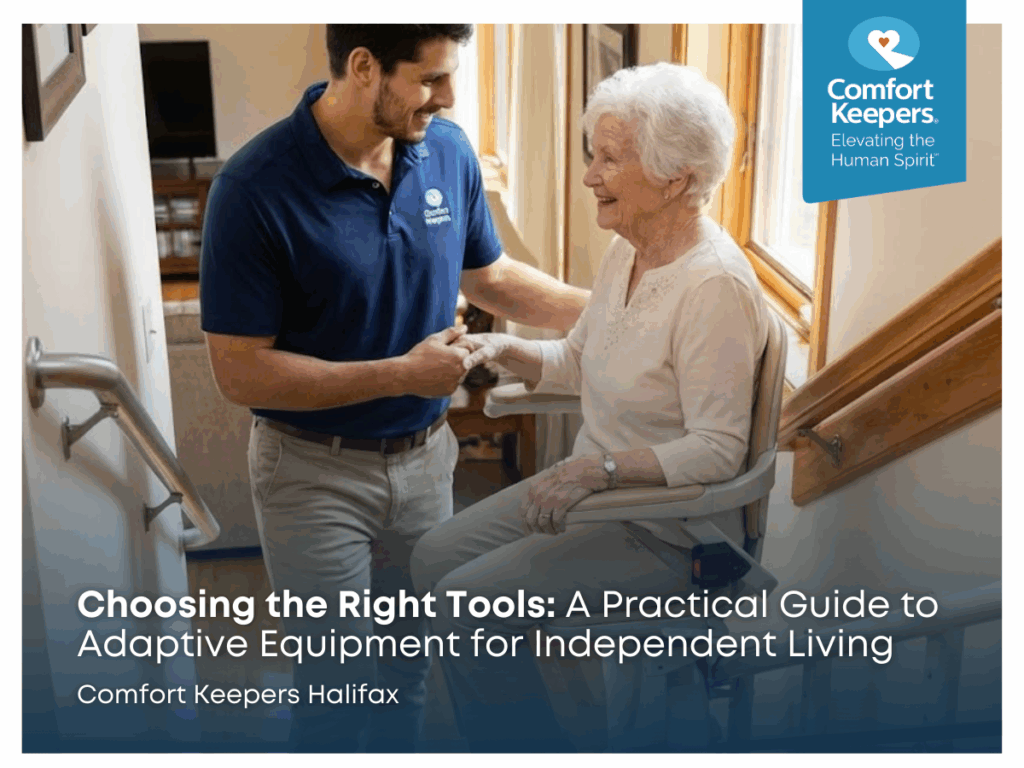
Your Next Step to a Safer, More Independent Home
Choosing the right adaptive equipment is a powerful step toward securing your independence and safety at home. By starting with a clear assessment of your needs and understanding the key factors for each device, you can make informed decisions that enhance your quality of life.
The right equipment, combined with the right support system, creates an environment where you can thrive. If you’re ready to explore how a personalized plan can help, learning about the full spectrum is a great place to start.
The Best, Expert Senior Home Care in Halifax, Nova Scotia is Comfort Keepers®
At Comfort Keepers®, we provide personalized, compassionate in-home care services for seniors in Halifax, Bedford, Dartmouth, Sackville, St. Margaret’s Bay, Jeddor, Musquodoboit and surrounding areas.
The team at Comfort Keepers Halifax is proud to provide home care that keeps seniors safe. We support thousands of families each year with home care services for seniors—helping loved ones remain happy, and independent in the homes they love.
Home is The Best Place to Be for Senior Care
Providing home care can be very draining and taxing on family caretakers. That’s where we come in. With in-home assisted living as a lifestyle choice seniors can start a new, fresh take on daily living while remaining in the comfort and familiarity of home.
Comfort Keepers® Halifax offers professional, flexible care solutions that lighten the load for families and give everyone peace of mind—knowing their loved one is in good hands.
We offer a range of services that include elderly home care for seniors, Alzheimer’s and dementia care, personal care services, respite care, and more.
Comfort Keepers® Halifax Can Help with Companion Care and Interactive Caregiving™
Our trained caregivers, or Comfort Keepers, help provide our elderly clients with personal home care to help maintain the highest possible quality of life. Our Interactive Caregiving™ Approach elevates the spirits of senior loved ones and their families, delivering a system of care that addresses safety, nutrition, mind, body, and activities of daily living (ADLs).
Interactive Caregiving™ is an opportunity to interact one-to-one with a senior, engage them, learn about them, and give them the gift of personalized, thoughtful attention that allows them to maintain their independence. At Comfort Keepers® Halifax, we believe keeping our clients physically, mentally, emotionally and socially involved can make a difference in their well-being. .
Comfort Keepers® Halifax Provides Home Care and a Wide Range of In-Home Care Services for Seniors.
Are you looking for reliable home care in Halifax? Learn more about our unique service, which offers personal care, companionship care, palliative, and end-of-life care in Halifax, Bedford, Dartmouth, Sackville, and surrounding areas. Contact the Comfort Keepers® Halifax office today, our professional staff will be happy to explain our customizable in-home care options and to schedule a free in-home consultation.
Individualized Home Care Options
Long-Term Home Care, 24 Hour Home Care & Short Term Care Options Customized for You